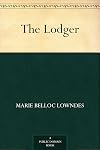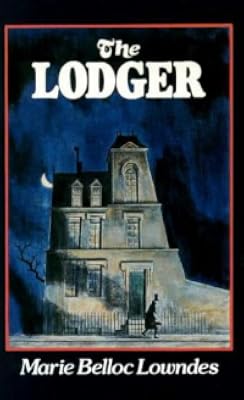
The Lodger
by Marie Belloc Lowndes
On This Page
Description
If you like your detective fiction with a strong psychological component and a continental flair, try The Lodger by Maire Belloc Lowndes. Used as the basis for one of Alfred Hitchcock's early silent films, the novel is based loosely on the Jack the Ripper case, and it's sure to please discerning mystery fans who appreciate sophisticated characterization..
Tags
Recommendations

























Member Reviews
This book was surprisingly good and felt much more modern than something written in the 1910's! Loosely based on Jack the Ripper and another serial killer from the same general time, the novel follows a retired (not by choice) couple of house servants who have been trying to earn money by running a lodging house but are close to ruin. That is, until a stranger comes to stay with them and pays them generously for very little in the way of attention. The lodger is more than a bit strange and gradually the couple (each on their own) come to suspect him of being an infamous murderer who is currently on the loose. What makes this novel stand out is that it is more of a psychological novel than a murder mystery and the author does a fantastic show more job of looking at the public fascination with murder as well as the mindset of the wife as she both suspects yet wants to protect her lodger. It is really well done. show less
Mr. and Mrs. Bunting, after years of working in service, put their savings into running a lodging house. But things haven’t worked out as profitably as they’d like, and they find themselves very near to starvation when one day the perfect lodger knocks on their door. He wants to rent out all the rooms – he claims he needs peace and quiet for his work – and pays a large sum up front. At first the Buntings are ecstatic, but their eccentric lodger’s arrival in their lives coincides with the beginning of a string of murders near their London neighborhood, and Mrs. Bunting begins to suspect that it may not be a coincidence at all.
Inspired by the theory that Jack the Ripper was himself a lodger of this kind, the story does a great show more job of exploring the gamut of emotions and thoughts and fears that someone in Mrs. Bunting’s position might experience. Lowndes strikes a nice balance of good story and eerie atmosphere as well. show less
Inspired by the theory that Jack the Ripper was himself a lodger of this kind, the story does a great show more job of exploring the gamut of emotions and thoughts and fears that someone in Mrs. Bunting’s position might experience. Lowndes strikes a nice balance of good story and eerie atmosphere as well. show less
Excellent, understated, psychological thriller. A middle aged couple is looking for lodgers to fill their rented accommodation, which they are finding difficult to maintain. They used to be servants for upper class families and are used to live in expensive houses and to take care of the wishes of their masters. They have used up all their savigns and are at an stage in which they are beginning to be hungry. Then, a peculiar gentleman decides to become their lodger and make their financial situation stable. His arrival coincides with the appearance, in the streets of London, of a serial killer who escapes detection. A young friend of the couple, a policeman, keeps the couple informed of the developments of the investigation and makes show more the landlady suspect that the lodger might not be the trustworthy gentleman that he appears to be. This is an excellent novel that keeps the reader wondering until the end. The characters are well drawn and the setting is quite atmospheric. show less
I vaguely recall a movie based on this novel, but didn’t remember much of it at all. Basically it’s a riff on Jack the Ripper - what if he was your lodger? A couple living on their last shillings receive a reprieve from starvation and poverty when a gentleman lets the rooms on their upper floors. He has little baggage, strange hours, and most important of all, ready money. The pounds he pays for his room and board put them back on the road to financial security and all seems right in the world. Except the coincidence of his late-night excursions and reports of killings in the paper. At first the wife suspects that he may be the killer and tiptoes around him and her family, hoping that no one else notices what she has. How can they show more though? Friend and policeman Joe Chandler has never laid eyes on the man since his are reserved for Daisy alone. Bunting hardly interacts with the lodger at all and Mrs. Bunting has all the duties of caring for him sewn up. Until the night Bunting accidentally meets the lodger in the night fog of the neighborhood. Did he really have blood on his sleeve? Did he really throw away his rubber-soled boots after a footprint was printed in the paper? Did he really utter threats against the Buntings and the police? Is he the Avenger? It’s not as tense or gory as it sounds, but is pretty entertaining.
Read more: http://thebookmarque.blogspot.com/search?updated-max=2012-08-10T14:47:00-07:00#i... show less
Read more: http://thebookmarque.blogspot.com/search?updated-max=2012-08-10T14:47:00-07:00#i... show less
Tremendously creepy and suspenseful (though not graphic). However, in the end, I wanted resolution and I felt that it wasn't there. Early on, I thought that it might be left up to the reader to decide whether or not the lodger was guilty, but no, that gets spelled out pretty clearly. Then I thought there would be some kind of comeuppance, but nope, it's left hanging. I know this story is based on the Jack the Ripper murders, so I guess that's why the resolution is so unsatisfying, since they were never solved in real life? I also thought that the landlord and his wife might express more regret, but...I'm still not sure how they really felt about their actions or lack thereof.
The ending is quite anti-climatic and disappointing. Readers are probably expecting some huge confrontation with the killer. However, the killer merely runs from his lodgers once he realizes that they are onto him. He does not return to collect his things, nor does he attempt to silence them like other killers might. Additionally, there was a lack of action.
I was so frustrated at how oblivious that the main characters were. Even with avid details from the newspapers and their detective friend, they remain oblivious for majority of the book. When they finally do accept who the killer is, they chose not to inform their detective friend or the police. Their reasoning was that they did not want to be swarmed by the police. It irritates me show more so much! This guy is a serial killer for crying out-loud! Who has been killing women for years! We also do not learn why he only targets blonde women.
The wife is also so stubborn in her old-fashioned mannerism and beliefs that I just wanted to scream! This was the most frustrated and annoyed that I've been with characters this year. I'm relieved that I've finally finished it. show less
I was so frustrated at how oblivious that the main characters were. Even with avid details from the newspapers and their detective friend, they remain oblivious for majority of the book. When they finally do accept who the killer is, they chose not to inform their detective friend or the police. Their reasoning was that they did not want to be swarmed by the police. It irritates me show more so much! This guy is a serial killer for crying out-loud! Who has been killing women for years! We also do not learn why he only targets blonde women.
The wife is also so stubborn in her old-fashioned mannerism and beliefs that I just wanted to scream! This was the most frustrated and annoyed that I've been with characters this year. I'm relieved that I've finally finished it. show less
This is a free Kindle ebook, written around 1913.
It's not a horror novel, by today's standards, but it is a fascinating observation about morals and class differences in that time period. It made me think more carefully about what people are willing to do or not do to be comfortable in life. It's a bit slow paced but I thought it was worth the time.
It's not a horror novel, by today's standards, but it is a fascinating observation about morals and class differences in that time period. It made me think more carefully about what people are willing to do or not do to be comfortable in life. It's a bit slow paced but I thought it was worth the time.
Members
- Recently Added By
Lists

Scary Stories for the Season
160 works; 94 members

Best books set in London
26 works; 1 member

Mysteries to Read, PD
42 works; 1 member

221B Baker Street and Beyond
66 works; 1 member

Jones & Newman: Best Horror Books Further Recommended Reading
577 works; 4 members

Haycraft Queen Cornerstones
181 works; 3 members

Art Bourgeau's Favorites [Mystery Lovers Companion, 1986]
124 works; 2 members
Author Information

81+ Works 957 Members
Some Editions
Awards and Honors
Notable Lists
Series
Belongs to Publisher Series
Work Relationships
Is contained in
Has the adaptation
Is an expanded version of
Common Knowledge
- Canonical title
- The Lodger
- Original title
- The Lodger
- Alternate titles
- Jack the Ripper
- Original publication date
- 1913
- People/Characters
- Robert Bunting; Ellen Bunting; Daisy Bunting; Joe Chandler; Mr. Sleuth; The Avenger (show all 7); Jack the Ripper
- Important places
- London, England, UK; Whitechapel, London, England, UK
- Important events
- Whitechapel Murders (1888 | 1891)
- Related movies
- The Lodger: A Story of the London Fog (1927 | IMDb); The Phantom Fiend (1932 | IMDb); The Lodger (1944 | IMDb); Man in the Attic (1953 | IMDb); The Lodger (2009 | IMDb)
- First words
- "There he is at last, and I'm glad of it, Ellen. 'Tain't a night you would wish a dog to be out in."
- Last words
- (Click to show. Warning: May contain spoilers.)Mr. Bunting and his Ellen are now in the service of an old lady, by whom they are feared as well as respected, and whom they make very comfortable.
- Original language
- English
- Disambiguation notice
- This work is the novel, first published 1913. please do not combine with the short story of the same name by the same author, first published 1911.
Classifications
Statistics
- Members
- 579
- Popularity
- 50,851
- Reviews
- 20
- Rating
- (3.81)
- Languages
- 10 — Czech, Danish, Dutch, English, French, German, Italian, Portuguese, Spanish, Swedish
- Media
- Paper, Audiobook, Ebook
- ISBNs
- 90
- ASINs
- 34