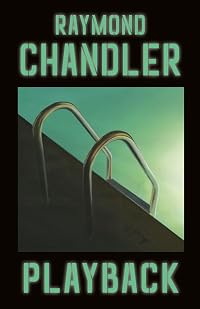
On This Page
Description
Crime fiction master Raymond Chandler's final novel featuring Philip Marlowe, the "quintessential urban private eye" (Los Angeles Times).In noir master Raymond Chandler's Playback, Philip Marlowe is hired by an influential lawyer he's never heard of to tail a gorgeous redhead, but then decides he'd rather help out the redhead. She's been acquitted of her alcoholic husband's murder, but her father-in-law prefers not to take the court's word for it.
"Chandler wrote like a slumming angel and show more invested the sun-blinded streets of Los Angeles with a romantic presence:" — Ross Macdonald. Fiction. Mystery. show less
Tags
Recommendations















Member Reviews
My theory: you can't appreciate this shortest and last of the Marlowe novels unless you've read all that came before it. At the same time, for those of us who've read the first six, this one isn't quite what we expected, although it's under-200-page length is a big hint that there's less plot here, less characterization, less everything. Marlowe takes a job tailing an of course beautiful redhead (are there ugly redheads in literature? I think not) and decides not too far into the job that he's on her side, or wants to be. The question that propels most of the simple plot: is she lying to him?
This book almost feels as if Chandler is playing a trick on Marlowe's fans. Hard to explain, just a sense I got while reading. Or maybe he wrote show more this book out of a duty not to leave Marlowe sad and long-goodbye-ing. Whatever the case, that last chapterof love's music in the air comes out of nowhere and, though good for Marlowe, leaves me wanting more. But I won't be reading Poodle Springs. Nobody should have written Marlowe but Chandler; and even the four chapters that are his reportedly read like a first draft because, well, they are a first draft. So this is the end of Marlowe's story for me. (Almost. Happily, I still have the short stories left to read, but they're chronologically set before this book.)
It's been a gritty, smoky, whiskey-washed, wise-cracking, gut-punching journey; and Philip Marlowe will always be one of my favorite characters in literature. show less
This book almost feels as if Chandler is playing a trick on Marlowe's fans. Hard to explain, just a sense I got while reading. Or maybe he wrote show more this book out of a duty not to leave Marlowe sad and long-goodbye-ing. Whatever the case, that last chapter
It's been a gritty, smoky, whiskey-washed, wise-cracking, gut-punching journey; and Philip Marlowe will always be one of my favorite characters in literature. show less
Playback, Raymond Chandler's final novel, is "kind of cute in a low-down sort of way" (pg. 86). It's not as good as the previous Philip Marlowe stories, but it's short enough for that not to matter much. It is fast-moving, has some decent dialogue and Marlowe bedding some beautiful dames. The plot is pretty limp (there are a lot of coincidences and hand-waving scenarios towards the end) but the actual plot denouements have never been a main draw of Chandler anyway.
Playback has less literary quality than its predecessors – in the previous books, you always got the sense that there was some larger, undefined theme being unpacked in the margins and in the recesses of the prose, but you don't get that here. It's suspiciously short (which show more is especially glaring as it comes after the lengthy The Long Goodbye) – like the writer realized it wasn't going to a special place and just wanted to get it out from under his feet.
I'm certainly going to miss Marlowe's voice on the page (though I still have some of Chandler's short stories to read) and there's a sort of eternal balance to the character that keeps you wanting more. On page 181, one of the characters asks how he can be so hard and so gentle a man at the same time, and Marlowe replies: "If I wasn't hard, I wouldn't be alive. If I couldn't ever be gentle, I wouldn't deserve to be alive." That about sums him up, and every pulp detective pales beside him. Playback might not show him in his best form, but over the last seven novels the character has earned a place in the reader's heart. "I had a dream here once, a year and a half ago. There's still a shred of it left," he says on page 88. And a shred's enough, when it's Chandler's and Marlowe's shred. show less
Playback has less literary quality than its predecessors – in the previous books, you always got the sense that there was some larger, undefined theme being unpacked in the margins and in the recesses of the prose, but you don't get that here. It's suspiciously short (which show more is especially glaring as it comes after the lengthy The Long Goodbye) – like the writer realized it wasn't going to a special place and just wanted to get it out from under his feet.
I'm certainly going to miss Marlowe's voice on the page (though I still have some of Chandler's short stories to read) and there's a sort of eternal balance to the character that keeps you wanting more. On page 181, one of the characters asks how he can be so hard and so gentle a man at the same time, and Marlowe replies: "If I wasn't hard, I wouldn't be alive. If I couldn't ever be gentle, I wouldn't deserve to be alive." That about sums him up, and every pulp detective pales beside him. Playback might not show him in his best form, but over the last seven novels the character has earned a place in the reader's heart. "I had a dream here once, a year and a half ago. There's still a shred of it left," he says on page 88. And a shred's enough, when it's Chandler's and Marlowe's shred. show less
I'm wallowing in Raymond Chandler today. During 'Playback', our friend Marlowe essentially takes a holiday, or comes as close to it as he ever does. He is employed to tail a woman, which takes him out into the sticks for much of the book. He is surprised to discover that the police outside LA are actually human. As ever, liquor, dangerous dames, hired goons, and corpses all crop up. Marlowe responds in his usual style, which I think of as sardonic flirtation. The only character to out-talk him is an elderly hotel guest named Henry Clarendon IV, who gets several magnificent monologues. At one point, Marlowe sarcastically eats a chocolate ice-cream sundae. At another, he encounters what seems to be a female version of himself. Yet show more another, he tells a parrot to watch its language. The last few chapters demonstrate just how much of a loose cannon Marlowe is; they just don't get much looser. The whole novel is a delight.
And now, the portion of the review in which I quote random phrases that I especially appreciated.
I am sad that there's only a single unread Marlowe novel remaining for me to discover: 'Farewell My Lovely'. I think 'Playback' is one of my favourites, although I didn't care so much about the crime as Marlowe going on a road trip. But the point of Chandler mysteries is never to secure tidy justice or send criminals to jail. Marlowe is far too cool and postmodern for that. show less
And now, the portion of the review in which I quote random phrases that I especially appreciated.
'"I have a suggestion for you, Mr. Umney. Why don't you go kiss a duck?"'
'The subject was as easy to spot as a kangaroo in a dinner jacket.'
'"Guns never settle anything," I said. "They are just a fast curtain to a bad second act."'
'On the dancefloor half a dozen couples were throwing themselves around with the reckless abandon of a night watchman with arthritis.'
I am sad that there's only a single unread Marlowe novel remaining for me to discover: 'Farewell My Lovely'. I think 'Playback' is one of my favourites, although I didn't care so much about the crime as Marlowe going on a road trip. But the point of Chandler mysteries is never to secure tidy justice or send criminals to jail. Marlowe is far too cool and postmodern for that. show less
The last Marlowe novel is a slim one and has more obvious sex in it than previous outings where any hookups he might have had were all oblique. Not this time out. Plotwise it isn't stellar, but it works and as always the writing is crisp and unique even on page one!
"I'm old, tired and full of no coffee." (Marlowe is woken early by a phone call, but still quick of tongue!)
"On the dance floor half a dozen couples were throwing themselves around with the reckless abandon of a night watchman with arthritis." p 39
"Javonen smiled - very slightly. Call it a down payment on a smile." p 98
The ending is pretty final and sentimental, but after this long journey I'm hopeful that Marlowe finds some happiness.
"I'm old, tired and full of no coffee." (Marlowe is woken early by a phone call, but still quick of tongue!)
"On the dance floor half a dozen couples were throwing themselves around with the reckless abandon of a night watchman with arthritis." p 39
"Javonen smiled - very slightly. Call it a down payment on a smile." p 98
The ending is pretty final and sentimental, but after this long journey I'm hopeful that Marlowe finds some happiness.
A kötet kisregényeiben Philip Marlowe háromszor feszül neki, hogy a kizökkent időt helyreállítsa, csak épp a harmadik elbeszélésben nem úgy hívják. (Nem tudom, miért – talán mert Chandler szerette volna bemutatni a szállodai detektívek életét is, ami Marlowe profiljába nem fért volna bele.) Van itt minden, amit megszokhattunk a noir óriásától: kőkemény rosszfiúk, korrupt politikusok és persze a szokásos gyanús nőszemélyek, akiknek valahogy (a jó ég tudja, hogy) a lakásában felbukkan egy hulla, de szerencséjükre akad egy magánszimat (aki valószínűleg titokban egy idő-féreglyukból odapottyant középkori nemes lovag), és kihúzza őket a katyvaszból. (Ezt a motívumot mindhárom sztoriban show more eladja nekünk Chandler… ami azért kicsit mókás…) No most én Marlowe-t nem tudom másképp elképzelni, mint Humphrey Bogart arcával, úgyhogy ő nekem a kaliforniai Ady Endre: sok költői hasonlat, még több cinizmus, mély vonzalom a femme fatale-ok iránt, és persze levesestányér méretű bús szemek. No meg ez a megalkuvás nélküli igazságvágy, hogy ebben az elcseszett nagyvárosi mocsokban megtalálja és felszínre hozza azt a cseppnyi jót, amiért élni érdemes. Mert ő nem menti meg a világot – csak picit élhetőbbé teszi.
Maguk a történetek azért nem túl acélosak. A Visszajátszás cselekménye olyan karcsú, hogy időnként nem csak én, de szerintem Marlowe se tudja, hogy dolgozik-e egyáltalán valamin, ami ügynek nevezhető. Viszont kapunk sok sziporkát kedvenc privát hekusunktól, aki időnként mintha egyenesen a közönségnek játszana. Ja, és hősünknek ezúttal két nőszemélyt is sikerül ágyba csábítania (vagy őt csábítják ágyba, ez nem olyan egyértelmű*), sőt! mindennek a tetejében a végén még egy igazi l’amour megbimbósodását is kénytelenek vagyunk megemészteni. A másik két sztori valamivel hajtósabbra van megcsinálva – ami azt illeti, kicsit túl hektikusan is kavarognak a dolgok időnként. De azért jó volt, finom volt, majd kérek még, köszi. Kicsit később.
* Amúgy azt hiszem, Chandlernél az autonóm nő azt jelenti, hogy autonóm módon mászik be Marlowe ágyába, és nem kell nagyon kapacitálni. show less
Maguk a történetek azért nem túl acélosak. A Visszajátszás cselekménye olyan karcsú, hogy időnként nem csak én, de szerintem Marlowe se tudja, hogy dolgozik-e egyáltalán valamin, ami ügynek nevezhető. Viszont kapunk sok sziporkát kedvenc privát hekusunktól, aki időnként mintha egyenesen a közönségnek játszana. Ja, és hősünknek ezúttal két nőszemélyt is sikerül ágyba csábítania (vagy őt csábítják ágyba, ez nem olyan egyértelmű*), sőt! mindennek a tetejében a végén még egy igazi l’amour megbimbósodását is kénytelenek vagyunk megemészteni. A másik két sztori valamivel hajtósabbra van megcsinálva – ami azt illeti, kicsit túl hektikusan is kavarognak a dolgok időnként. De azért jó volt, finom volt, majd kérek még, köszi. Kicsit később.
* Amúgy azt hiszem, Chandlernél az autonóm nő azt jelenti, hogy autonóm módon mászik be Marlowe ágyába, és nem kell nagyon kapacitálni. show less
“The next hour was three hours long.”
“I was doing a cheap sneaky job for people I didn’t like, but - that’s what you hire out for, chum. They pay the bills, you dig the dirt. Only this time I could taste it.”
Yup, that’s Marlowe’s thoughts about the job he’s hired to do in this one, following a girl for a man named Clyde Umney, a lawyer. And that's pretty much what he does for the entire book! It's not boring, but not a lot is going on. Except, of course, that the writing is done by Mr. Raymond Chandler, so even without a lot of action, it's still beautiful to read! And, as it is the last Philip Marlowe book, it ends rather well - for him! Unfortunately, it is my last read in this series, which is a total bummer. Maybe show more in a few years I'll revisit the collection, and this time read them in order! I'll miss ya' Marlowe!
Fun facts - Clyde Umney (in name) appears is Stephen King's short story "Umney's Last Case". “Playback” is Chandler’s last completed novel. It is the only Marlowe novel completed by him that is set somewhere other than Los Angeles. The setting is the town of Esmeralda, a fictional name for La Jolla. And oddly, of all Chandler's novels, “Playback” is the only one never to have been adapted into a film. Weird… show less
“I was doing a cheap sneaky job for people I didn’t like, but - that’s what you hire out for, chum. They pay the bills, you dig the dirt. Only this time I could taste it.”
Yup, that’s Marlowe’s thoughts about the job he’s hired to do in this one, following a girl for a man named Clyde Umney, a lawyer. And that's pretty much what he does for the entire book! It's not boring, but not a lot is going on. Except, of course, that the writing is done by Mr. Raymond Chandler, so even without a lot of action, it's still beautiful to read! And, as it is the last Philip Marlowe book, it ends rather well - for him! Unfortunately, it is my last read in this series, which is a total bummer. Maybe show more in a few years I'll revisit the collection, and this time read them in order! I'll miss ya' Marlowe!
Fun facts - Clyde Umney (in name) appears is Stephen King's short story "Umney's Last Case". “Playback” is Chandler’s last completed novel. It is the only Marlowe novel completed by him that is set somewhere other than Los Angeles. The setting is the town of Esmeralda, a fictional name for La Jolla. And oddly, of all Chandler's novels, “Playback” is the only one never to have been adapted into a film. Weird… show less
To a certain extent, the sumptuous atmosphere of Chandler's stories rely upon the setting - the seedy underbelly of Los Angeles. This final novel moves elswhere, a sort of Holiday on the Buses-style jaunt that retains the witty repartee between Marlowe and his various acquaintances but loses a little soul on the way to Esmerelda. As for the plot - the resolution is pretty rushed. Sad that such a great character bows out like this.
Members
- Recently Added By
Lists

Best Noir Fiction
160 works; 14 members

Books Read in 2018
4,360 works; 110 members

1950s
340 works; 22 members

Nifty Fifties
129 works; 14 members

Books Read in 2014
2,343 works; 89 members

American Lit for Eng 11 Research Project
368 works; 6 members

A Good Read (Radio 4)
221 works; 1 member
Author Information

278+ Works 47,969 Members
Raymond Chandler was born in Chicago, Illinois on July 23, 1888. Before becoming a professional writer in 1933, he worked as a reporter, an accountant, bookkeeper, and auditor. He wrote several novels featuring private detective Philip Marlowe including The Big Sleep, The High Window, The Lady in the Lake, The Little Sister, and The Long Goodbye. show more In addition to novels and short stories, he wrote screenplays. He won two academy awards, for Double Indemnity (1944) and The Blue Dahlia (1946). He died on March 26, 1959. (Bowker Author Biography) show less
Some Editions
Series

Belongs to Publisher Series
Work Relationships
Is contained in
The Lady in the Lake, The Little Sister, The Long Goodbye, Playback (Everyman's Library) by Raymond Chandler
Has the adaptation
Common Knowledge
- Canonical title
- Playback
- Original title
- Playback
- Original publication date
- 1958
- People/Characters
- Philip Marlowe; Linda Loring
- Important places
- San Diego, California, USA; Esmeralda, California, USA
- Dedication*
- Jeanille ja Helgalle,
joita ilman tätä kirjaa
ei olisi milloinkaan kirjoitettu - First words
- The voice on the telephone seemed to be sharp and peremptory, but I didn't hear too well what it said - partly because I was only half awake and partly because I was holding the receiver upside down. I fumbled it around and g... (show all)runted.
- Quotations
- "Guns never solve anything," I said. "They are just a fast curtain to a bad second act."
"Well, what do you know," she drawled. "A dick with scruples. Tell it to the seagulls, buster. On me it's just confetti."
"How can such a hard man be so gentle?" she asked wonderingly.
"If I wasn't hard, I wouldn't be alive. If I couldn't ever be gentle, I wouldn't deserve to be alive." - Last words*
- (Click to show. Warning: May contain spoilers.)Ilma oli säveliä täynnä.
- Original language
- English
*Some information comes from Common Knowledge in other languages. Click "Edit" for more information.
Classifications
Statistics
- Members
- 2,018
- Popularity
- 10,366
- Reviews
- 34
- Rating
- (3.65)
- Languages
- 17 — Bulgarian, Catalan, Czech, Danish, Dutch, English, Estonian, Finnish, French, German, Hungarian, Italian, Norwegian (Bokmål), Polish, Portuguese, Spanish, Swedish
- Media
- Paper, Audiobook, Ebook
- ISBNs
- 74
- ASINs
- 39