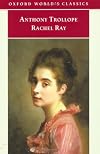
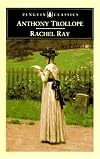
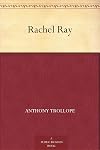
Rachel Ray
by Anthony Trollope
On This Page
Description
This is Trollope's most detailed and concise study of middle-class life in a small provincial community - in this case Baslehurst, in the luscious Devon countryside. It is also a charming love-story, centring on sweet-natured Rachel Ray and her suitor Luke Rowan, whose battle to wrest controlover Baslehurst's brewery involves a host of typically Trollopian local characters.Tags
Recommendations
















Member Reviews
Rachel Ray by Anthony Trollope
I liked this relatively brief (for Trollope) novel about a young woman named Rachel Ray who is swept off her feet by Luke Rowan. They then face the scrutiny and interference by their families and communities. Rachel is seen to be grasping above her station and Luke is burning bridges with a local family over business. Which brings me to a storyline I really enjoyed. Luke is part owner of a local brewery which is known for making bad beer, but doing it successfully enough. Luke wants to make good beer, much to his partner's chagrin. I thought this whole story line was funny and actually paralleled the craft beer vs. large market beer industry which is still a thing in America today. I also really liked a few show more of the female characters in this book, who I felt were realistically drawn and had contrasting viewpoints that were all realistic. There was a local election that did bother me a bit because one of the men running was Jewish and there were many different local reactions to his Jewishness. Luckily I read this as a group read, and the context provided about what was happening in English politics at the time made me feel a little more accepting of it being included at all.
Definitely recommended for Trollope fans, but not as a starting point. show less
I liked this relatively brief (for Trollope) novel about a young woman named Rachel Ray who is swept off her feet by Luke Rowan. They then face the scrutiny and interference by their families and communities. Rachel is seen to be grasping above her station and Luke is burning bridges with a local family over business. Which brings me to a storyline I really enjoyed. Luke is part owner of a local brewery which is known for making bad beer, but doing it successfully enough. Luke wants to make good beer, much to his partner's chagrin. I thought this whole story line was funny and actually paralleled the craft beer vs. large market beer industry which is still a thing in America today. I also really liked a few show more of the female characters in this book, who I felt were realistically drawn and had contrasting viewpoints that were all realistic. There was a local election that did bother me a bit because one of the men running was Jewish and there were many different local reactions to his Jewishness. Luckily I read this as a group read, and the context provided about what was happening in English politics at the time made me feel a little more accepting of it being included at all.
Definitely recommended for Trollope fans, but not as a starting point. show less
Absolutely and completely delighful, happy read. :) From my limited Trollope reading so far, I take back what I said about beginning him with "Ayala's Angel" and think THIS book a far better representation of the general feel and scope of his work.
While not anywhere near as thoughtful, or thought-provoking as, say, the Barsetshire Chronicles, more light, fluffy, happy, and, I'll say it--romantic ;) but altogether a novel one wants to fall into and never return from. This is Victorian English Country-side escapism for the modern reader at its best! Even though Trollope didn't go into too much detail of the little cottage at Bragg's End (Rachel's home) I could still practically smell the roses.
Anyway, this edition, Penguin Classics, has show more a great intro that makes the book and its subject matter of even more interest. A great friend of Trollope's, who happened to be 1) an Evangelical minister; and 2) the editor of a very popular Evangelical literary magazine, asked Trollope to write him a short novella for his magazine, tending the theme and format to the particular readers he catered to, the Evangelical/Baptist population in Britian.
Trollope knew his friend well, and knew in particular, that this Evangelical friend was no lover of the dour, "this world is a vale-of-tears-and-nothing-else" preachings and teachings of some of his set. Trollope undertook to play to those feelings and in "Rachel Ray" we encounter 1) the idea that dancing isn't all bad; 2) two preachers, one somewhat hypocritical yet kindly, and one somewhat hypocritical and totally creepy; and 3) the idea that Evangelicals (as Trollope saw them) weren't the only good Christians around (in fact, some of them were particularly foolish and un-Christian.)
So, this friend of Trollope's, the editor and preacher, may have liked the book personally, but he knew it just wouldn't go with his audience and he declined to publish it. As much as I love Trollope and think he was a very good man, he acted, in this instance, kind of like a baby, insisted on his pay regardless (which was his due) but put a few fresh barbs against what he thought of as the silliness of the movement into his manuscript and found another buyer, all the while criticizing his friend publicly (that last was the part I thought was poor sportsman-like). Anyway, I found the story and the intro fascinating.
Returning to the actual book, this is pure Trollopiana. You love the main characters, Rachel, Luke, and Rachel's mother. You want to hate Rachel's sister and the nasty Tappits family, but you end up seeing another side of them that you just can't totally despise. Unfortunately you don't ever love the nasty Mr. Prong (the icky ultra-dour preacher), but we love to be disgusted with him anyway--not as any type of comment on Evangelicals, but only on his greasy character.
So anyway, anyone in need of a delightful, quick, nostalgic read, go for it.
This might be of interest to anyone who contemplates true courtship and maidenly modesty and obedience of children to parents and ecclesiastical leaders show less
While not anywhere near as thoughtful, or thought-provoking as, say, the Barsetshire Chronicles, more light, fluffy, happy, and, I'll say it--romantic ;) but altogether a novel one wants to fall into and never return from. This is Victorian English Country-side escapism for the modern reader at its best! Even though Trollope didn't go into too much detail of the little cottage at Bragg's End (Rachel's home) I could still practically smell the roses.
Anyway, this edition, Penguin Classics, has show more a great intro that makes the book and its subject matter of even more interest. A great friend of Trollope's, who happened to be 1) an Evangelical minister; and 2) the editor of a very popular Evangelical literary magazine, asked Trollope to write him a short novella for his magazine, tending the theme and format to the particular readers he catered to, the Evangelical/Baptist population in Britian.
Trollope knew his friend well, and knew in particular, that this Evangelical friend was no lover of the dour, "this world is a vale-of-tears-and-nothing-else" preachings and teachings of some of his set. Trollope undertook to play to those feelings and in "Rachel Ray" we encounter 1) the idea that dancing isn't all bad; 2) two preachers, one somewhat hypocritical yet kindly, and one somewhat hypocritical and totally creepy; and 3) the idea that Evangelicals (as Trollope saw them) weren't the only good Christians around (in fact, some of them were particularly foolish and un-Christian.)
So, this friend of Trollope's, the editor and preacher, may have liked the book personally, but he knew it just wouldn't go with his audience and he declined to publish it. As much as I love Trollope and think he was a very good man, he acted, in this instance, kind of like a baby, insisted on his pay regardless (which was his due) but put a few fresh barbs against what he thought of as the silliness of the movement into his manuscript and found another buyer, all the while criticizing his friend publicly (that last was the part I thought was poor sportsman-like). Anyway, I found the story and the intro fascinating.
Returning to the actual book, this is pure Trollopiana. You love the main characters, Rachel, Luke, and Rachel's mother. You want to hate Rachel's sister and the nasty Tappits family, but you end up seeing another side of them that you just can't totally despise. Unfortunately you don't ever love the nasty Mr. Prong (the icky ultra-dour preacher), but we love to be disgusted with him anyway--not as any type of comment on Evangelicals, but only on his greasy character.
So anyway, anyone in need of a delightful, quick, nostalgic read, go for it.
This might be of interest to anyone who contemplates true courtship and maidenly modesty and obedience of children to parents and ecclesiastical leaders show less
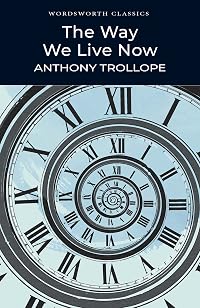
I do love books by Anthony Trollope, but I had to knock off half a star for this one because the anti-Semitism bothered me too much. A couple others of his that I’ve read had something like this – but those ones were much longer, so it wasn’t as big a plot point – and had more mitigating factors. For example, in The Way We Live Now, a getting-up-in-age girl from a good family wants to marry a wealthy Jewish man and her family and friend put up some violent, anti-Semitic opposition. However, most of them are portrayed as snobby and unsympathetic and the girl herself is bit of a golddigger. Here, an election for MP pits a country squire type against a Jewish businessman, and the campaigning gets rather ugly. It wasn’t the main show more storyline, but was still annoying. Trollope does imply that the Gentile candidate was less qualified and that their religion-bating tactics weren’t the best, but the man’s wife – who does a lot of the campaigning – is supposed to be sympathetic. She takes the part of the main character, Rachel Ray.
Besides the unfortunate anti-Semitic overtones, the book has what I like about Trollope – heavy-handed narrating, lots of descriptions of the varieties of clergymen and their trivial yet monumental (to them) squabbles, well-written conflicts on the way to marriage. As opposed to some Victorian novelists who strive for realism in narration, Trollope makes all sorts of comments about the characters, passing judgment, saying who is right and wrong, even in some cases spoiling the ending. I love this tendency. He does that a lot in this book, which made normal opening-chapter character descriptions very interesting. For example, Rachel’s sister Mrs. Prime is one of the unsympathetic characters – but Trollope shows that she has good intentions and does good work – but, in her inflexibility, judgmental behavior and overzealous adherence to religion is, in his opinion, quite wrong.
Also loved the clergyman squabbling. Unlike Barchester Towers, the religious conflicts take a backseat to Rachel’s romance with Luke Rowan, but we still get satisfying glimpses of the varying species of clergymen. Like who goes to what church – where Rachel and her mother side with the genial, worldly Mr. Comfort and indifferent Dr. Harford, while Mrs. Prime takes up the cause of the zealous, critical Mr. Prong -
“Mrs. Prime, however, did not choose to say anything against Mr. Comfort, with whom her husband had been curate, and who, in her younger days, had been a light to her own feet. Mr. Comfort was by no means such a one as Dr. Harford, though the two old men were friends. Mr. Comfort had been regarded as a Calvinist when he was young, as Evangelical in middle life, and was still known as a Low Churchman in his old age. Therefore Mrs. Prime would spare him in her sneers, though she left his ministry. He had become lukewarm, but not absolutely stone cold, like the old rector at Baslehurst. So said Mrs. Prime. Old men would become lukewarm, and therefore she could pardon Mr. Comfort. But Dr. Harford had never been warm at all,—had never been warm with the warmth which she valued. Therefore she scorned him and sneered at him. In return for which Rachel scorned Mr. Prong and sneered at him.”
Some of Trollope’s love stories may seem antiquated now – generally two young people in love, but face all sorts of 19th c. societal obstacles – from the wrong class, need to marry for money etc. But I like to read about all the fuss over what seems not a big deal now. And it was back then – but despite the fact that some may think Trollope is making a huge fuss over trivial love problems, who doesn’t make a fuss over their own love problems today? No matter how not-original or small your own romantic complications are, of course the world seems like it’s ending when they happen. The relationship problems here concern Rachel Ray, from a clergy-connected but poor family, and Luke Rowan, part owner of the brewery, who falls in love with her. First, fuss is made about her being alone with a MAN! Then, when his intentions prove honorable, other characters decide that he shouldn’t be throwing himself away on a penniless girl. They get into a fight over wording of a letter. That is the majority of the conflict. But I don’t care – I love Trollope’s precise delineation of the characters throughout their difficulties. Just wish there was less anti-Semitism here. show less
Besides the unfortunate anti-Semitic overtones, the book has what I like about Trollope – heavy-handed narrating, lots of descriptions of the varieties of clergymen and their trivial yet monumental (to them) squabbles, well-written conflicts on the way to marriage. As opposed to some Victorian novelists who strive for realism in narration, Trollope makes all sorts of comments about the characters, passing judgment, saying who is right and wrong, even in some cases spoiling the ending. I love this tendency. He does that a lot in this book, which made normal opening-chapter character descriptions very interesting. For example, Rachel’s sister Mrs. Prime is one of the unsympathetic characters – but Trollope shows that she has good intentions and does good work – but, in her inflexibility, judgmental behavior and overzealous adherence to religion is, in his opinion, quite wrong.
Also loved the clergyman squabbling. Unlike Barchester Towers, the religious conflicts take a backseat to Rachel’s romance with Luke Rowan, but we still get satisfying glimpses of the varying species of clergymen. Like who goes to what church – where Rachel and her mother side with the genial, worldly Mr. Comfort and indifferent Dr. Harford, while Mrs. Prime takes up the cause of the zealous, critical Mr. Prong -
“Mrs. Prime, however, did not choose to say anything against Mr. Comfort, with whom her husband had been curate, and who, in her younger days, had been a light to her own feet. Mr. Comfort was by no means such a one as Dr. Harford, though the two old men were friends. Mr. Comfort had been regarded as a Calvinist when he was young, as Evangelical in middle life, and was still known as a Low Churchman in his old age. Therefore Mrs. Prime would spare him in her sneers, though she left his ministry. He had become lukewarm, but not absolutely stone cold, like the old rector at Baslehurst. So said Mrs. Prime. Old men would become lukewarm, and therefore she could pardon Mr. Comfort. But Dr. Harford had never been warm at all,—had never been warm with the warmth which she valued. Therefore she scorned him and sneered at him. In return for which Rachel scorned Mr. Prong and sneered at him.”
Some of Trollope’s love stories may seem antiquated now – generally two young people in love, but face all sorts of 19th c. societal obstacles – from the wrong class, need to marry for money etc. But I like to read about all the fuss over what seems not a big deal now. And it was back then – but despite the fact that some may think Trollope is making a huge fuss over trivial love problems, who doesn’t make a fuss over their own love problems today? No matter how not-original or small your own romantic complications are, of course the world seems like it’s ending when they happen. The relationship problems here concern Rachel Ray, from a clergy-connected but poor family, and Luke Rowan, part owner of the brewery, who falls in love with her. First, fuss is made about her being alone with a MAN! Then, when his intentions prove honorable, other characters decide that he shouldn’t be throwing himself away on a penniless girl. They get into a fight over wording of a letter. That is the majority of the conflict. But I don’t care – I love Trollope’s precise delineation of the characters throughout their difficulties. Just wish there was less anti-Semitism here. show less
This was very typical Trollope, and very enjoyable, but does not seem to be a very well known work. Perhaps Trollope wrote too many of these kinds of novels, which are essentially micro examinations of a few fairly stereotypical, one dimensional characters. Despite this, the work is fantastic to read - in my opinion, Trollope is by far the easiest Victorian novelist to digest.
There is Rachel, the good, dutiful, constant Trollopian (?) heroine, who is sweet, demure, and gets what she wants in the end. There is her mother, the tea-loving, god-fearing mother who wants the best for her daughter, but goes by the advice of her clergyman when providing her guidance. There is Mr. Rowan, the bull-in-a-chinashop lover, who has as much tact as a show more sledgehammer. Still, he loves dear Rachel, and there is no denying him.
And finally, as in so many of these examinations of the Victorian countryside, there are the Evangelicals. There is Rachel's sister, Mrs. Prime, who thinks that dancing should basically be banned, there is Miss Pucker, who thinks that the most virtuous activity one could undertake is needlework, or indeed any kind of work, provided it is done in the spirit of Christian charity. And there is Mr. Prong whose name, although possibly not considered in this way by Trollope, reflects a more modern synonym for that word. He is a total prick.
As usual, there are also the wonderfully named lawyers, Mr. Sharpit and Mr. Longfite. No prizes for guessing what they are like.
All in all, a most enjoyable read and I was so delighted to get back into some Trollope! show less
There is Rachel, the good, dutiful, constant Trollopian (?) heroine, who is sweet, demure, and gets what she wants in the end. There is her mother, the tea-loving, god-fearing mother who wants the best for her daughter, but goes by the advice of her clergyman when providing her guidance. There is Mr. Rowan, the bull-in-a-chinashop lover, who has as much tact as a show more sledgehammer. Still, he loves dear Rachel, and there is no denying him.
And finally, as in so many of these examinations of the Victorian countryside, there are the Evangelicals. There is Rachel's sister, Mrs. Prime, who thinks that dancing should basically be banned, there is Miss Pucker, who thinks that the most virtuous activity one could undertake is needlework, or indeed any kind of work, provided it is done in the spirit of Christian charity. And there is Mr. Prong whose name, although possibly not considered in this way by Trollope, reflects a more modern synonym for that word. He is a total prick.
As usual, there are also the wonderfully named lawyers, Mr. Sharpit and Mr. Longfite. No prizes for guessing what they are like.
All in all, a most enjoyable read and I was so delighted to get back into some Trollope! show less
Luke Rowan comes to Baslehurst to enforce his right to inherit a half-share in the brewery. He is resisted in this by the existing partner, Mr Tappitt. Through Mr Tappitt's daughters Luke meets Rachel Ray and courts her successfully. However, as his dispute with Mr Tappitt is heating up he leaves town to pursue legal remedies and Rachel's weak mother is induced by her clergyman to force Rachel to break the engagement off.
I found this novel well-constructed and the brewery storyline was entertaining. I also enjoyed the Prime/Prong "romance" and Mrs Ray's vacillations. On the other hand, not a lot really happened otherwise. Luke was not sufficiently herolike for my tastes. Poor Rachel's letter to him was so clearly written to make it show more clear that she dissociated herself from every word, but he was unable to perceive this and left her waiting for a cruel length of time. Rachel seemed unable ever to be honest with him about her feelings, which got a bit tiresome. Also, I don't think Mrs Rowan was treated as severely as she deserved. show less
I found this novel well-constructed and the brewery storyline was entertaining. I also enjoyed the Prime/Prong "romance" and Mrs Ray's vacillations. On the other hand, not a lot really happened otherwise. Luke was not sufficiently herolike for my tastes. Poor Rachel's letter to him was so clearly written to make it show more clear that she dissociated herself from every word, but he was unable to perceive this and left her waiting for a cruel length of time. Rachel seemed unable ever to be honest with him about her feelings, which got a bit tiresome. Also, I don't think Mrs Rowan was treated as severely as she deserved. show less
Early Trollope—lacks the complexity, the humor, and the gutting character portraits of his more mature work.
For completists.
For completists.
Yawn.
Quotes:
On marriage:
“’I only wish we had known him longer.’
‘I am not sure that these things always go much better because young people have known each other all their lives.’”
And:
“A wife does not cease to love her husband because he gets into trouble. She does not turn against him because others have quarreled with him. She does not separate her lot from his because he is in debt! Those are the times when a wife, a true wife, sticks closest to her husband, and strives the hardest to lighten the weight of his cares by the tenderness of her love!”
Quotes:
On marriage:
“’I only wish we had known him longer.’
‘I am not sure that these things always go much better because young people have known each other all their lives.’”
And:
“A wife does not cease to love her husband because he gets into trouble. She does not turn against him because others have quarreled with him. She does not separate her lot from his because he is in debt! Those are the times when a wife, a true wife, sticks closest to her husband, and strives the hardest to lighten the weight of his cares by the tenderness of her love!”
Members
- Recently Added By
Lists

Favourite 19th century fiction
257 works; 62 members

Fiction with Women's Names in the Title
378 works; 15 members
Talk Discussions
Past Discussions
Group read: Rachel Ray by Anthony Trollope in 75 Books Challenge for 2021 (April 2022)
Author Information

335+ Works 50,725 Members
Anthony Trollope was born in London, England on April 24, 1815. In 1834, he became a junior clerk in the General Post Office, London. In 1841, he became a deputy postal surveyor in Banagher, Ireland. He was sent on many postal missions ending up as a surveyor general in the post office outside of London. His first novel, The Macdermots of show more Ballycloran, was published in 1847. His other works included Castle Richmond, The Last Chronicle of Barset, Lady Anna, The Two Heroines of Plumplington, and The Noble Jilt. He died after suffering from a paralytic stroke on December 6, 1882. (Bowker Author Biography) show less
Some Editions
Series
Belongs to Publisher Series
Work Relationships
Common Knowledge
- Canonical title
- Rachel Ray
- Original title
- Rachel Ray
- Original publication date
- 1863
- People/Characters
- Rachel Ray; Mrs. Ray; Dorothea Prime; Thomas Tappitt; Margaret Tappitt; Augusta Tappitt (show all 25); Martha Tappitt; Cherry Tappitt; Luke Rowan; Mrs. Rowan; Mary Rowan; Reverend Samuel Prong; Miss Pucker; Farmer Sturt; Mrs. Sturt; Reverend Charles Comfort; Mrs. Patty Cornbury; Butler Cornbury; Mr. Goodall; Aldophus Griggs; Mr. Hart; Mr. Honyman; Reverend Mr. Harford; Mr. Worts; Fawcett Family
- Important places
- Baslehurst, Devon, England, UK
- First words
- There are women who cannot grow alone as standard trees—for whom the support and warmth of some wall, some paling, some post, is absolutely necessary—who, in their growth, will bend and incline themselves towards some suc... (show all)h prop for their life, creeping with their tendrils along the ground till they reach it when the circumstances of life have brought no such prop within their natural and immediate reach.
- Last words
- (Click to show. Warning: May contain spoilers.)I do not, however, think it probable that he will succeed in his professed object of shutting up the apple orchards of the county.
- Original language
- English
Classifications
Statistics
- Members
- 960
- Popularity
- 27,718
- Reviews
- 9
- Rating
- (3.63)
- Languages
- English, French, Hungarian
- Media
- Paper, Audiobook, Ebook
- ISBNs
- 49
- ASINs
- 21