On This Page
Description
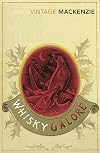
Wartime food rationing is bad enough, but when the whisky supplies run out on the Hebridean islands of Great and Little Todday, nothing seems to go right. Then the fifty-thousand-bottle cargo of the shipwrecked S. S. Cabinet Minister brings salvation - in its most giddily intoxicating form.Tags
Recommendations






















Member Reviews
A very surprising book. The plot is quite simple. The natives of two small islands in the Highlands region of Scotland are suffering privation; the supply of whisky has run out, because (as this is World War II) the supply must be sent to the US to earn money to fight the war. The natives feel this very keenly. One even dies from the shock of being told he can't have any spirits. Meanwhile, two different couples are trying to get around obstacles to marriage -- one, a father-in-law who has a difficult time committing to anything, and the other, a ferocious, domineering mother-in-law. A deus ex machina (very much holy, as some of the prelates on the islands note) comes in the form of a shipwreck that provides thousands upon thousands of show more bottles of prime Scotch whisky to the thirsty natives. Much to the annoyance of the pompous and officious commander of the local Home Guard forces. All's well that end's well, however, as couples get their love, and the natives keep their whisky out of the hands of the Excise. A surprisingly mild, colourful, and indeed romantic novel, which is a pleasure to read. No one, save the S/S Cabinet Minister, is truly hurt during the proceedings, though a few get mildly embarrassed. The book was later adapted into two highly successful film versions, one (the 1949 one) being a classic of Ealing-type comedy. Warmly recommended. show less
Accents are funny things. Think of a Welsh accent and, unless you’re welsh, you probably think of a blend of coal-dust and valley-dwelling simpleton blended with the sort of ready access to phlegm that is a pre-requirement of pronouncing all those words with too many ‘L’s in them. The Irish accent can be southern, all deedily deedily, or northern, used to shout sectarian claptrap. The English accent is a different proposition altogether. If asked what an English accent was like, most people would affect a posh voice and trot out a home counties drawl, all gymkanas and strangled vowel sounds. But of course Brummie is an English accent too, as is scouse or East Anglian, although that last is too close to folk music to be rightly show more considered an accent.
The Scottish accent is usually played by its stunt-double, Glasweigan. But the odd thing about the Scottish accent is that the further north you go, the clearer and more musical it becomes until, in the highlands and islands, the soft and marvellous accent is possibly posher and clearer than anything the English can attempt, but with an added musical lilt that lifts it into the realms of the otherworldly, much like the people that softly speak it. Probably this is because when the weather is wild, the people can’t be and while the climate may be foul, your neighbours at least should be civil to you.
What’s quite uncivil is war. Even here in the remotest parts of Scotland, the second world war is making its ugly presence felt, touching even the smallest and remotest of communities. The young men are either going into the services or into the merchant marine, the morale is the island is scrutinized by officious officials from the mainland who consider the combination of abuse, banter and complaint that flows around the hotel bar as more than the simple ABC of conversation but rather a threat to national security and, worst of all, there’s rationing. And not just any rationing, we’re not talking about powdered egg or a lack of curved yellow fruit, no, we’re talking alcohol rationing, in particular, whisky!
Whisky galore describes the drink in such loving detail that it will have you reaching, grasping and gasping, for a dram. The first half deals with the whisky drought on the island and the cruel effects of the rationing on the inhabitants as they euologise about the drink they are denied. The longer the drought persists, the more the topic is discussed and the more acutely the lack is felt. And when the drought breaks, in the form of a genteely shipwrecked cargo ship that is transporting boundless bottles of bounty to America, exported to help the war effort, the transformation is startling as the islanders are soaked in scotch and good humour.
Whisky is the 40% proof life blood of this little community. Nothing gets done without it, especially those activities that require inspiration and moral courage and poetry in the soul, such as wooing, standing up to your mother and composing poetry. Luckily it also assists the more mundane pastimes of sitting down and blethering and, of course, binge drinking.
The novel also offers an interesting take on sectarianism, with one island being protestant and the other catholic and the only resulting tension being that each set is shamed into being devout by the other, believing that an observed lapse would lead to a loss of face. The protestants in particular have a hard time of it ‘keeping the Sabbath’ essentially entailing, as it does, a day of enforced inactivity – something of a religious trial when the activity concerned is a spot of rowing combined with a little light salvage.
‘Galore’ is, in and of itself, such a marvellous word. One simply cannot associate it with anything negative. ‘Nazis galore’ for instance, is a phrase one is unlikely to see. Ah, but whisky galore is glorious, as musical as the language, as wild as the landscape and as rich in flavour as a truly great scotch, with a ruggedness balanced by notes of wet heather, warm peat fires and warmer characters. show less
The Scottish accent is usually played by its stunt-double, Glasweigan. But the odd thing about the Scottish accent is that the further north you go, the clearer and more musical it becomes until, in the highlands and islands, the soft and marvellous accent is possibly posher and clearer than anything the English can attempt, but with an added musical lilt that lifts it into the realms of the otherworldly, much like the people that softly speak it. Probably this is because when the weather is wild, the people can’t be and while the climate may be foul, your neighbours at least should be civil to you.
What’s quite uncivil is war. Even here in the remotest parts of Scotland, the second world war is making its ugly presence felt, touching even the smallest and remotest of communities. The young men are either going into the services or into the merchant marine, the morale is the island is scrutinized by officious officials from the mainland who consider the combination of abuse, banter and complaint that flows around the hotel bar as more than the simple ABC of conversation but rather a threat to national security and, worst of all, there’s rationing. And not just any rationing, we’re not talking about powdered egg or a lack of curved yellow fruit, no, we’re talking alcohol rationing, in particular, whisky!
Whisky galore describes the drink in such loving detail that it will have you reaching, grasping and gasping, for a dram. The first half deals with the whisky drought on the island and the cruel effects of the rationing on the inhabitants as they euologise about the drink they are denied. The longer the drought persists, the more the topic is discussed and the more acutely the lack is felt. And when the drought breaks, in the form of a genteely shipwrecked cargo ship that is transporting boundless bottles of bounty to America, exported to help the war effort, the transformation is startling as the islanders are soaked in scotch and good humour.
Whisky is the 40% proof life blood of this little community. Nothing gets done without it, especially those activities that require inspiration and moral courage and poetry in the soul, such as wooing, standing up to your mother and composing poetry. Luckily it also assists the more mundane pastimes of sitting down and blethering and, of course, binge drinking.
The novel also offers an interesting take on sectarianism, with one island being protestant and the other catholic and the only resulting tension being that each set is shamed into being devout by the other, believing that an observed lapse would lead to a loss of face. The protestants in particular have a hard time of it ‘keeping the Sabbath’ essentially entailing, as it does, a day of enforced inactivity – something of a religious trial when the activity concerned is a spot of rowing combined with a little light salvage.
‘Galore’ is, in and of itself, such a marvellous word. One simply cannot associate it with anything negative. ‘Nazis galore’ for instance, is a phrase one is unlikely to see. Ah, but whisky galore is glorious, as musical as the language, as wild as the landscape and as rich in flavour as a truly great scotch, with a ruggedness balanced by notes of wet heather, warm peat fires and warmer characters. show less
I have to say it - this was a rollicking good read! Rollicking - exuberantly lively and amusing - this is the perfect description for Whisky Galore! Set durning WW2 on two neighbouring Hebridean islands. Can you believe it? Both islands are dry, there’s not a drop of whisky nor a bottle of beer to be had anywhere! How can a man be hospitable if he can’t offer up a dram or two to a visitor. If the ship hadn’t run aground when it did, life wouldn’t have been worth living. Now all the villagers have to do is get the thousands of bottles of whisky salvaged before the excise men arrive. Can they do it?? Lots of great characters and a good fun read!
An amusing tale of involuntarily abstemious Scottish island life during WWII, with unforgettable characters and a lot of rollicking fun.
This is a gentle, lilting book about the inhabitants of the islands of Great and Little Todday in the midst of World War Two. They are stuck in terrible circumstances: there has nae been a drop o'whisky on the island for weeks! This is of particular concern to one sassenach who has just got engaged to a lovely local girl: however will they have the "rayjack" without a drop of the amber nectar?
This probably makes the plot sound about as dramatic as it is, i.e. not very. But it's still a lovely book to read. Mackenzie peoples this novel with entertaining characters to root for and against (with a couple of suitably not terribly villainous villains) and the plot gently moves towards its inevitable conclusion. But it's his descriptions of show more island life, the surroundings and their impact on those who visit that linger afterwards: the smell of salt on the air over the sand dunes and marram grass, looking out towards the Atlantic Ocean with a wee dram in hand. show less
This probably makes the plot sound about as dramatic as it is, i.e. not very. But it's still a lovely book to read. Mackenzie peoples this novel with entertaining characters to root for and against (with a couple of suitably not terribly villainous villains) and the plot gently moves towards its inevitable conclusion. But it's his descriptions of show more island life, the surroundings and their impact on those who visit that linger afterwards: the smell of salt on the air over the sand dunes and marram grass, looking out towards the Atlantic Ocean with a wee dram in hand. show less
Set on two islands off the coast of Scotland during WW II, this is a humourous look at the eccentric people who live there. The story focuses on the marriage plans of Sergeant-Major Odd to Peggy Macroon and the shortage of whiskey because of the War. The whiskey shortage is taken care of by a shipwreck in which the major cargo is whiskey being sent to America to help pay for war materials. Full of funny moments when the locals who do not seem to take the war effort too seriously run up against the straight laced military types who do not see the irony in some of their statements. Great satire. Great fun.
Hilarious, and yet with some placid, sentimental (in the best sense of the word) moments. I must have read it at least half a dozen times, and although it no longer makes me roar with laughter, it still never fails to improve my mood.
Members
- Recently Added By
Lists

The Guardian's 1000 Novels Everyone Must Read
1,005 works; 550 members

Mustich's 1000 Books to Read Before You Die: A Life Changing List
1,001 works; 19 members
Author Information

137+ Works 2,450 Members
Author Compton Mackenzie was born in West Hartlepool, England on January 17, 1883. He studied law at Magdalen College in Oxford, but stopped in 1907 to focus on his writing career. He served with British Intelligence during World War I and later published four books about his experiences during this time. He published ninety books including The show more Passionate Elopement, Carnival, and Sinister Street. He was also a broadcaster and founded and edited the magazine Gramophone. He was knighted in 1952 and died in Edinburgh, Scotland on November 30, 1972. (Bowker Author Biography) show less
Awards and Honors
Series

Belongs to Publisher Series
Penguin Books (1220)
Work Relationships
Common Knowledge
- Canonical title*
- Massor av whisky
- Original title
- Tight Little Island
- Original publication date
- 1947
- Important places
- Outer Hebrides, Scotland, UK
- Related movies
- Whisky Galore! (1949 | IMDb); Whisky Galore (2016 | IMDb)
- Dedication
- To all my dear friends in Barra in grateful memory of much kindness and much laughter through many happy years
- First words
- From the bridge of the Island Queen, which three times a week made the voyage between Obaig and the outer islands of the Hebrides, Captain Donald MacKechnie gazed across a smooth expanse of grey seas to where the rugge... (show all)d outline of Great Todday stood out dark against a mass of deepening cloud in which a dull red gash showed that the sun was setting behind it.
- Quotations
- Love makes the world go round? Not at all. Whisky makes it go round twice as fast.
- Last words
- (Click to show. Warning: May contain spoilers.)And the curlew fluted once more.
*Some information comes from Common Knowledge in other languages. Click "Edit" for more information.
Classifications
Statistics
- Members
- 669
- Popularity
- 42,982
- Reviews
- 15
- Rating
- (3.78)
- Languages
- 6 — Danish, Dutch, English, French, German, Swedish
- Media
- Paper, Audiobook, Ebook
- ISBNs
- 23
- ASINs
- 19