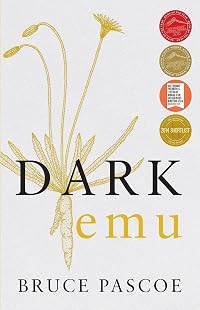
Dark Emu
by Bruce Pascoe
On This Page
Description
Dark Emu puts forward an argument for a reconsideration of the hunter-gatherer tag for pre-colonial Aboriginal Australians. The evidence insists that Aboriginal people right across the continent were using domesticated plants, sowing, harvesting, irrigating, and storing, behaviours inconsistent with the hunter-gatherer tag. Gerritsen and Gammage in their latest books support this premise but Pascoe takes this further and challenges the hunter-gatherer tag as a convenient lie. Almost all the show more evidence in Dark Emu comes from the records and diaries of the Australian explorers, impeccable sources. show lessTags
Recommendations


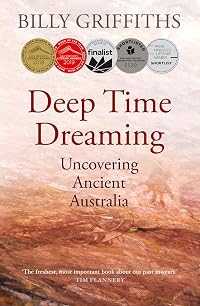
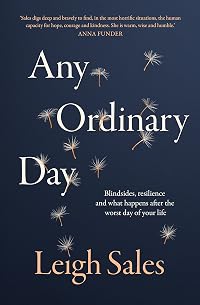
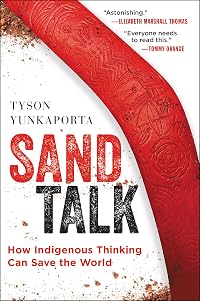
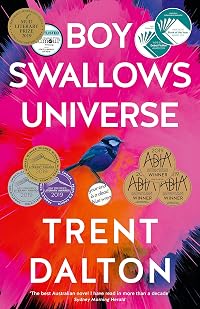





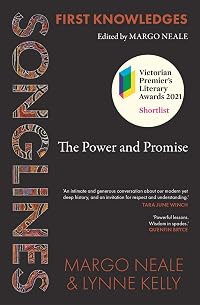
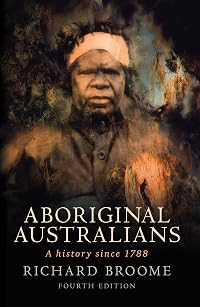

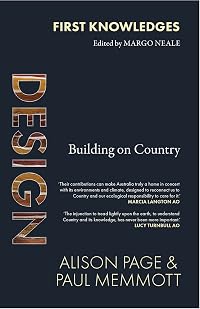
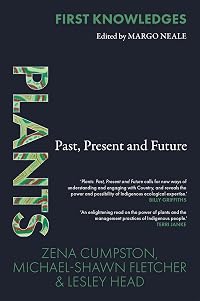


Member Recommendations
Cynfelyn 'Farmers or Hunter-Gatherers?' is a critique of 'Dark Emu' and a further exploration of the same ground. Both were caught up in a heated debate that seemed to me, an outsider, to have more than a little to do with the colonial legacy of "terra nullius". After all, who wouldn't feel more guilty about dispossessing a farmer than a hunter-gatherer? (Not my attitude, I hasten to add). See also the Fenner Circle's appeal for yindyamarra.
11
Member Reviews
Bruce seems to be pretty much a man with a mission. And that mission is to redeem the image of the Australian Aboriginals as primitive hunter gatherers and have them recognised as farmers, agriculturalists, architects and creators of elaborate engineering works. Well he half convinces me. The issue is that he seems to go overboard. He cites Bill Gammage (author of "The biggest estate on earth") a lot. And I make the same comment about Bill Gammage...that they both take SOME evidence and generalise it, and, to my mind anyway, both of them over-claim on the basis of the evidence.
Apparently a new book has just been published which is a scholarly review of Pascoe's book and it makes some of these points. For example, when I read Pascoe's show more book and an account of Sturt seeing a sophisticated village of some seventy huts (p78) on the Darling River....I had assumed that it was an active, occupied village....but apparently, Bruce has been a little selective about what he quotes and leaves out the fact that the village was unoccupied and looked like it had been that way for some time. OK this is a minor criticism but it worries me that Bruce might have done similar things elsewhere and slanted his reporting and maybe cherry picked his data. Because there seem to be innumerable contemporary reports of Aboriginals being hunter gathers but relatively few about them cultivating or planting seed.
I spent a lot of my holidays around Dayleys Point on the central coast of NSW and there were significant middens there accumulated over thousands of years I guess. On the sandstone shelf above those caves with middens there were carvings of fish, sharks and, (I think) people though no plants. But the location would not have been all that great for cultivation or farming and with the abundance of shellfish and actual fish in the waters alongside, I suspect there would be very little incentive to make life difficult and to go out planting kangaroo grass or yams. (Though Kangaroo grass does grow around that area ...so might have been harvested).
I was fascinated by the stories told by many of the explorers about large stocks of grain being found; of yams being cultivated, and of mitchell grass being harvested. (It must have been hard work because the seeds are so small). So I think Bruce is onto something here. Clearly there were places that were on the cusp of agriculture. And there were places, like Brewarrina, where fish traps had been built. But maybe he overstates the engineering skills involved. I have many recollections as a kid camping by rivers with rocky bottoms and lots of water worn stones, and damming up the water ...just to make a deeper swimming hole; and making some races to capture fish. (I would have been about 11 years old with no instruction from adults etc....it was just play to us. But if your life depended on catching fish (maybe as at Brewarrina) then I guess things might have become more sophisticated). So yes, there were fish traps ...and maybe they have been there for a long while but I'm not sure they should be "talked-up" as marvels of modern engineering.
I was also fascinated by the reports of stone houses. (Well, the bases were stone and apparently the upper structure was of bark.). I was unaware of this development around Victoria. Though was it widespread throughout Australia? He quotes Basedow in 1925 writing about stone slabs on beams ..used for roofing in South Australia (though that's 135 years after European settlement so there could be an element of copying) and states (without evidence) that buildings in the Kimberley were built with large slabs of stone. However, from what I know, the practice of building substantial structures with stone was not widespread...and even the explorers (such as Mitchell and Sturt) that he quotes extensively, mainly describe bark dwellings.
So I come away from Bruce's book slightly mystified. Yes, it does seem that there were elements of the start of Agriculture and there were some permanent dwellings, and there were places where mildly complex fish traps had been built; And certainly, there were some fairly sophisticated articles made from fibre (nets, containers, etc). But the evidence appears to be a bit sparse that these innovations were universal.
Of course the whole issue is terribly muddled by the impact of smallpox on the indigenous population. It spread faster than the colonialists and clearly disrupted the social structures and caused a massive decline in the population, and presumably to practices such as farming or building. Pascoe draws attention to this. He rightly draws attention to the fact that aboriginal structures were burned and stones used for fences. (A bit like what happened to the Aztecs with their temple stones being repurposed to build churches). He rightly draws attention to the fact that there was evidence of large buildings used by large numbers of people and the people were no longer present in obvious numbers.
So, as I said above, Bruce has half convinced me. I would be more convinced if he had appeared to be more objective and not "over-claim". That's a pity, because I think he's raised some really important issues here. I guess, he felt that it was better to make a big bold claim and have impact than a more modest, less impactful claim. I am also impressed by the variety of sources he has rescued from archives and libraries. A pity that (as cited above) he seems to have been a bit selective in how he quotes the original reports.
He writes well and it's an interesting and easy read. I give it four stars. show less
Apparently a new book has just been published which is a scholarly review of Pascoe's book and it makes some of these points. For example, when I read Pascoe's show more book and an account of Sturt seeing a sophisticated village of some seventy huts (p78) on the Darling River....I had assumed that it was an active, occupied village....but apparently, Bruce has been a little selective about what he quotes and leaves out the fact that the village was unoccupied and looked like it had been that way for some time. OK this is a minor criticism but it worries me that Bruce might have done similar things elsewhere and slanted his reporting and maybe cherry picked his data. Because there seem to be innumerable contemporary reports of Aboriginals being hunter gathers but relatively few about them cultivating or planting seed.
I spent a lot of my holidays around Dayleys Point on the central coast of NSW and there were significant middens there accumulated over thousands of years I guess. On the sandstone shelf above those caves with middens there were carvings of fish, sharks and, (I think) people though no plants. But the location would not have been all that great for cultivation or farming and with the abundance of shellfish and actual fish in the waters alongside, I suspect there would be very little incentive to make life difficult and to go out planting kangaroo grass or yams. (Though Kangaroo grass does grow around that area ...so might have been harvested).
I was fascinated by the stories told by many of the explorers about large stocks of grain being found; of yams being cultivated, and of mitchell grass being harvested. (It must have been hard work because the seeds are so small). So I think Bruce is onto something here. Clearly there were places that were on the cusp of agriculture. And there were places, like Brewarrina, where fish traps had been built. But maybe he overstates the engineering skills involved. I have many recollections as a kid camping by rivers with rocky bottoms and lots of water worn stones, and damming up the water ...just to make a deeper swimming hole; and making some races to capture fish. (I would have been about 11 years old with no instruction from adults etc....it was just play to us. But if your life depended on catching fish (maybe as at Brewarrina) then I guess things might have become more sophisticated). So yes, there were fish traps ...and maybe they have been there for a long while but I'm not sure they should be "talked-up" as marvels of modern engineering.
I was also fascinated by the reports of stone houses. (Well, the bases were stone and apparently the upper structure was of bark.). I was unaware of this development around Victoria. Though was it widespread throughout Australia? He quotes Basedow in 1925 writing about stone slabs on beams ..used for roofing in South Australia (though that's 135 years after European settlement so there could be an element of copying) and states (without evidence) that buildings in the Kimberley were built with large slabs of stone. However, from what I know, the practice of building substantial structures with stone was not widespread...and even the explorers (such as Mitchell and Sturt) that he quotes extensively, mainly describe bark dwellings.
So I come away from Bruce's book slightly mystified. Yes, it does seem that there were elements of the start of Agriculture and there were some permanent dwellings, and there were places where mildly complex fish traps had been built; And certainly, there were some fairly sophisticated articles made from fibre (nets, containers, etc). But the evidence appears to be a bit sparse that these innovations were universal.
Of course the whole issue is terribly muddled by the impact of smallpox on the indigenous population. It spread faster than the colonialists and clearly disrupted the social structures and caused a massive decline in the population, and presumably to practices such as farming or building. Pascoe draws attention to this. He rightly draws attention to the fact that aboriginal structures were burned and stones used for fences. (A bit like what happened to the Aztecs with their temple stones being repurposed to build churches). He rightly draws attention to the fact that there was evidence of large buildings used by large numbers of people and the people were no longer present in obvious numbers.
So, as I said above, Bruce has half convinced me. I would be more convinced if he had appeared to be more objective and not "over-claim". That's a pity, because I think he's raised some really important issues here. I guess, he felt that it was better to make a big bold claim and have impact than a more modest, less impactful claim. I am also impressed by the variety of sources he has rescued from archives and libraries. A pity that (as cited above) he seems to have been a bit selective in how he quotes the original reports.
He writes well and it's an interesting and easy read. I give it four stars. show less
Growing up in Australia in the 1970s and 80s, there were a grand total of three mentions of Aboriginal people in the curriculum; when I was five we got to colour in a picture of an Aboriginal man, a book told us that a European explorer on the Murray got some spears chucked at him and another book told us that all the Kaurna people, the traditional owners of Adelaide, had all died out. Imagine my confusion when I later met Kaurna elders.
This all vaguely ties into "Dark Emu" as European Australians have done such a bang up job erasing the achievements of pre-contact Indigenous Australia that we have no idea of many ways Australia leads the world; the oldest human built structure in the world, the first parliament, the first farmers, the show more first builders (to name a few examples). Pascoe provides very readable evidence that Australian Aboriginal and Torres Strait Islanders were far more advanced than we have given them credit for. Check it out. show less
This all vaguely ties into "Dark Emu" as European Australians have done such a bang up job erasing the achievements of pre-contact Indigenous Australia that we have no idea of many ways Australia leads the world; the oldest human built structure in the world, the first parliament, the first farmers, the show more first builders (to name a few examples). Pascoe provides very readable evidence that Australian Aboriginal and Torres Strait Islanders were far more advanced than we have given them credit for. Check it out. show less
I'd been meaning to read this for a long time and thought I knew the general gist of it, but it's 1000% more so. It outlines an overwhelming number of lavishly referenced examples of fields of grain or yam crops, wells and dams, fish weirs and kangaroo battues, hunting alliances with killer whales and dolphins, mosaic fires relying on predictable changes in wind direction, and more. The sheer extent of agriculture, aquaculture, soil management, storage of excess harvests, permanent settlements, and social systems so stable that they could maintain all the above sustainably over tens of thousands of years - and the extent to which European settler simultaneously admired and denied the results of all this, and simultaneously used and show more destroyed its fruits - leads inexorably to the conclusion embodied in a word never written in the text: genocide.
But while the author's feelings about the destruction of the culture and of even the memory of it are very clear, he ends on the optimistic note that if [we] settlers can move beyond "saying sorry" to "saying thanks" we could then take the next step to equality - perhaps "insufficient to account for the loss of the land, but in our current predicament it is not a bad place to start". By acknowledging and reviving traditional practices of managing the land, Australia could revert from the desert it's unjustly famous for, back to the rich, productive farmland that first met the European colonists. show less
But while the author's feelings about the destruction of the culture and of even the memory of it are very clear, he ends on the optimistic note that if [we] settlers can move beyond "saying sorry" to "saying thanks" we could then take the next step to equality - perhaps "insufficient to account for the loss of the land, but in our current predicament it is not a bad place to start". By acknowledging and reviving traditional practices of managing the land, Australia could revert from the desert it's unjustly famous for, back to the rich, productive farmland that first met the European colonists. show less
On 26 January 1788, a fleet of ships led by Captain Arthur Philip, arrived in Port Jackson, to claim what became known as Australia for the British, and to establish a permanent colony. This commenced the erasure of the fifty thousand year history and evidence of the indigenous inhabitants.
On 3 June 1992, the High Court of Australia decided that terra nullius should not have been applied to Australia. The Mabo decision recognised that Aboriginal and Torres Strait Islander peoples have rights to the land – rights that existed before the British arrived and can still exist today.
On 13 February 2008, Prime Minister Kevin Rudd made a formal apology to Australia’s Indigenous peoples, particularly to the Stolen Generations whose lives had show more been blighted by past government policies of forced child removal and Indigenous assimilation.
Bruce Pascoe’s book ‘Dark Emu’ is an introduction to the evidence of the indigenous civilisation that existed up to European arrival, and shows the existence of agriculture, not just a hunter gatherer existence. Current Australians, particular in responding to climate change, have much to learn from aboriginal agricultural practices.
He rightly points out that Australian, having said sorry, have failed to say thank-you.
Reading this book is an essential step in progress towards appreciation of the heritage of all Australians, and the process of reconciliation with our indigenous peoples. show less
On 3 June 1992, the High Court of Australia decided that terra nullius should not have been applied to Australia. The Mabo decision recognised that Aboriginal and Torres Strait Islander peoples have rights to the land – rights that existed before the British arrived and can still exist today.
On 13 February 2008, Prime Minister Kevin Rudd made a formal apology to Australia’s Indigenous peoples, particularly to the Stolen Generations whose lives had show more been blighted by past government policies of forced child removal and Indigenous assimilation.
Bruce Pascoe’s book ‘Dark Emu’ is an introduction to the evidence of the indigenous civilisation that existed up to European arrival, and shows the existence of agriculture, not just a hunter gatherer existence. Current Australians, particular in responding to climate change, have much to learn from aboriginal agricultural practices.
He rightly points out that Australian, having said sorry, have failed to say thank-you.
Reading this book is an essential step in progress towards appreciation of the heritage of all Australians, and the process of reconciliation with our indigenous peoples. show less
As I read Dark Emu, I felt that it was an important book, but also in many ways a frustrating one. It's important because it overthrows much of the disinformation about pre-invasion Aboriginal Australian society that is given to Australians all the way from primary school to adulthood. We were told that Indigenous people were hunter-gatherers, but in fact in many places they farmed; we were told that they were nomads, but in fact in many places they were sedentary, or moved only rarely; we were told that they lived in primitive humpies, but in fact they built large, secure shelters that required skill to build and were part of their social fabric. All of this is tremendously important because it changes how we think of the invasion of show more Australia and Australian Indigenous cultures as they exist today. It's also important because, as Pascoe eloquently points out, if we allow it to, Aboriginal knowledge can help us learn how to live in in Australia today without degrading our environment. But that won't happen if we try to only access the technical knowledge. We need to understand the way Aboriginal societies made decisions, co-existed and thought in order to understand the kind of sustainability they achieved.
The frustration comes from two sources, one of which is no fault of the author's. Although Pascoe has found many interesting accounts of early contact, there is just so much that we don't and can't know. As part of the attempted genocide of Australia's first peoples there was a policy of diminishing and erasing Aboriginal achievements and culture. Much of what was erased can never be recovered, both the technical knowledge and the cultural and spiritual. This loss haunts the book, so that much of Pascoe's commentary is necessarily partial or speculative.
The latter frustration just comes from the fact that this book is not all it could be. Ideally, this should be a tour de force, a magnum opus. Consider the coherence and scope of a book like Guns, Germs and Steel by Jared Diamond. Regardless of what you think about it's premises or its conclusions, it hangs together and puts together a forceful argument that is entertaining to read. Dark Emu is instead partial, somewhat repetitive and occasional awkwardly written. Pascoe talks only a little about the fact that the popular image of pre-invasion indigenous societies is in fact an image of post-invasion communities massively diminished by land theft, violence and disease. On that last point, there is nothing, or almost nothing, in the book, whereas it would have been interesting to learn whether it was true that many communities were essentially post-plague before they were even invaded.
Of course this second frustration is a harsh one. Jared Diamond was able to make Guns, Germs and Steel a magnum opus because he had the tenure and detachment to write it at leisure. Pascoe is amid the wreckage of a war that continues to be fought, sifting through evidence that has been destroyed at every opportunity.
So I was certainly able to get over my frustration in order to find the powerful arguments and evidence in this book both moving and challenging to my world view. I'll finish with two quotes which summarise the challenging notions that I'll take away from this book:
"Aboriginal and Torres Strait Islander people were on the same cognitive trajectory as the rest of the human family, albeit in a different stream and a unique channel in that stream."
"It seems improbably that a country can continue to hide from the actuality of its history in order to validate the fact that having said sorry we refuse to say thanks." [I interepret this as our refusal to say thanks for their custodianship of the land we now live in] show less
The frustration comes from two sources, one of which is no fault of the author's. Although Pascoe has found many interesting accounts of early contact, there is just so much that we don't and can't know. As part of the attempted genocide of Australia's first peoples there was a policy of diminishing and erasing Aboriginal achievements and culture. Much of what was erased can never be recovered, both the technical knowledge and the cultural and spiritual. This loss haunts the book, so that much of Pascoe's commentary is necessarily partial or speculative.
The latter frustration just comes from the fact that this book is not all it could be. Ideally, this should be a tour de force, a magnum opus. Consider the coherence and scope of a book like Guns, Germs and Steel by Jared Diamond. Regardless of what you think about it's premises or its conclusions, it hangs together and puts together a forceful argument that is entertaining to read. Dark Emu is instead partial, somewhat repetitive and occasional awkwardly written. Pascoe talks only a little about the fact that the popular image of pre-invasion indigenous societies is in fact an image of post-invasion communities massively diminished by land theft, violence and disease. On that last point, there is nothing, or almost nothing, in the book, whereas it would have been interesting to learn whether it was true that many communities were essentially post-plague before they were even invaded.
Of course this second frustration is a harsh one. Jared Diamond was able to make Guns, Germs and Steel a magnum opus because he had the tenure and detachment to write it at leisure. Pascoe is amid the wreckage of a war that continues to be fought, sifting through evidence that has been destroyed at every opportunity.
So I was certainly able to get over my frustration in order to find the powerful arguments and evidence in this book both moving and challenging to my world view. I'll finish with two quotes which summarise the challenging notions that I'll take away from this book:
"Aboriginal and Torres Strait Islander people were on the same cognitive trajectory as the rest of the human family, albeit in a different stream and a unique channel in that stream."
"It seems improbably that a country can continue to hide from the actuality of its history in order to validate the fact that having said sorry we refuse to say thanks." [I interepret this as our refusal to say thanks for their custodianship of the land we now live in] show less
The author writes with gentle compassion as witness to the remaining archeology and as a reader of the early journals, accounts, and diaries of the first European explorers and "settlers" of Australia. The myths of a "primitive" and empty continent are annihilated.
Bruce Pascoe, an Australian of Bunurong, Tasmanian and Yuin heritage, quotes from the first person accounts, and then contrasts the representations which followed about the level of aboriginal development. The truth about the advanced Agriculture, Aquaculture, Housing, use of Fire, and the understandings of Language and Law, is re-exposed. Dated stonework and physical evidence demonstrates that Australia is the site of the earliest sailing, seasonal navigation, irrigation, show more planting, use of battue nets and fishing weirs, so far discovered.
The yam culture supported a relatively large population in which the ugliness of war was almost unknown. Linguistically, it is obvious that weapons and tools are loaded with "moral and spiritual obligation and significance". [193] The idea of conquest as inevitable "progress" is challenged--viewing the European colonials seizure of a continent and reducing it to mono-cultures, war, and overpopulation, in historical context with a careful examination of outcomes. Sustainability requires more than "touchy-feely wise blackfellow versus the destructive imperialist whitefellow" but a value on conservative economic practices and the evolution of the species. [195] The author succeeds in explaining progress using a model of "change generated by the spirit" applied to political action. The interconnected economic system in operation could be considered "jigsaw mutualism", in that individuals had rights and responsibilities for its parts, and were motivated to add to, rather than detract from, each other and the "epic integrity of the land". [199]
This book clears away the myths and reestablishes the facts. Quoting Bill Stanner, "The worst imperialisms are those of preconceptions." [200] The author reports that the contemporary scientists are looking at the Aboriginal food products. Two major crops domesticated by Aboriginal people are native yams and grains. These may be perfect plants for dryland farms where European grains and sheep have been abandoned. After tens of thousands of years of sustainability, the recent introduction of superphosphates, herbicides and drenches required for European grains have leached and salinated vast regions, all just in the last century. It is exciting to read that the early explorers who ate the native food found it to be the best they had ever indulged--Mitchell's light and sweet bread and panicum. [214 ff]. The gist of this work is that the recovery of slaughtered and altered elements in history--the advanced people, and their crops, irrigation, and fisheries--"may hold the keys to future prosperity". [224] One can only share these concrete models which point to the glorious hope : "Human survival on a healthy planet is not a soft liberal pipe dream; it is sound global management, and the deepest of religious impulses". [226] Pascoe has ignited the journey. show less
Bruce Pascoe, an Australian of Bunurong, Tasmanian and Yuin heritage, quotes from the first person accounts, and then contrasts the representations which followed about the level of aboriginal development. The truth about the advanced Agriculture, Aquaculture, Housing, use of Fire, and the understandings of Language and Law, is re-exposed. Dated stonework and physical evidence demonstrates that Australia is the site of the earliest sailing, seasonal navigation, irrigation, show more planting, use of battue nets and fishing weirs, so far discovered.
The yam culture supported a relatively large population in which the ugliness of war was almost unknown. Linguistically, it is obvious that weapons and tools are loaded with "moral and spiritual obligation and significance". [193] The idea of conquest as inevitable "progress" is challenged--viewing the European colonials seizure of a continent and reducing it to mono-cultures, war, and overpopulation, in historical context with a careful examination of outcomes. Sustainability requires more than "touchy-feely wise blackfellow versus the destructive imperialist whitefellow" but a value on conservative economic practices and the evolution of the species. [195] The author succeeds in explaining progress using a model of "change generated by the spirit" applied to political action. The interconnected economic system in operation could be considered "jigsaw mutualism", in that individuals had rights and responsibilities for its parts, and were motivated to add to, rather than detract from, each other and the "epic integrity of the land". [199]
This book clears away the myths and reestablishes the facts. Quoting Bill Stanner, "The worst imperialisms are those of preconceptions." [200] The author reports that the contemporary scientists are looking at the Aboriginal food products. Two major crops domesticated by Aboriginal people are native yams and grains. These may be perfect plants for dryland farms where European grains and sheep have been abandoned. After tens of thousands of years of sustainability, the recent introduction of superphosphates, herbicides and drenches required for European grains have leached and salinated vast regions, all just in the last century. It is exciting to read that the early explorers who ate the native food found it to be the best they had ever indulged--Mitchell's light and sweet bread and panicum. [214 ff]. The gist of this work is that the recovery of slaughtered and altered elements in history--the advanced people, and their crops, irrigation, and fisheries--"may hold the keys to future prosperity". [224] One can only share these concrete models which point to the glorious hope : "Human survival on a healthy planet is not a soft liberal pipe dream; it is sound global management, and the deepest of religious impulses". [226] Pascoe has ignited the journey. show less
Bruce Pascoe's book is a much-needed exposition of the realities of indigenous society and economy at the outset of British colonisation. He presents incontrovertible evidence that the Aboriginals had sophisticated systems of agriculture, aquaculture and housing. For somebody such as myself, raised on the notion of Aboriginals as nomadic hunter-gatherers, this is a head-snapping and sobering correction to one's assumptions.
Some of Pascoe's most riveting examples involve the Brewarrina fish traps, which are arguably the oldest man-made structures on earth. A detail that left an indelible impression on me was a map showing the extent of Australia that early white explorers described as growing grain when they first encountered them, show more overlaid with the far smaller extent of grain farming today. The message is unmistakeable; indigenous agriculture was able to produce thriving grain crops in the areas that we now romanticise as the arid and inhospitable Outback, which was only made so by the rapid destruction of the soil caused by the exotic animals that the colonists introduced.
Pascoe makes a solid argument that Australia's economy can benefit greatly if we recognise this achievement instead of perpetuating the hunter-gatherer myth, and try to change our existing agricultural practices to re-introduce crops such as yam daisy, kangaroo grass and native rice, as well as growing a commercial kangaroo meat industry, drastically reducing the damage done by cattle and sheep. This is a both an entrepreneurial opportunity and a means of placing indigenous culture and knowledge at the centre of our economic planning, which should not be missed. This book is a must-read for any Australian. show less
Some of Pascoe's most riveting examples involve the Brewarrina fish traps, which are arguably the oldest man-made structures on earth. A detail that left an indelible impression on me was a map showing the extent of Australia that early white explorers described as growing grain when they first encountered them, show more overlaid with the far smaller extent of grain farming today. The message is unmistakeable; indigenous agriculture was able to produce thriving grain crops in the areas that we now romanticise as the arid and inhospitable Outback, which was only made so by the rapid destruction of the soil caused by the exotic animals that the colonists introduced.
Pascoe makes a solid argument that Australia's economy can benefit greatly if we recognise this achievement instead of perpetuating the hunter-gatherer myth, and try to change our existing agricultural practices to re-introduce crops such as yam daisy, kangaroo grass and native rice, as well as growing a commercial kangaroo meat industry, drastically reducing the damage done by cattle and sheep. This is a both an entrepreneurial opportunity and a means of placing indigenous culture and knowledge at the centre of our economic planning, which should not be missed. This book is a must-read for any Australian. show less
Members
- Recently Added By
Lists

Native American / Indigenous Literature
172 works; 100 members

2021 - List of books read
53 works; 1 member

Best Australian Books of the 21st Century
88 works; 2 members

Books in the Bibliography of The Dawn of Everything by Graeber & Wengrow
478 works; 2 members

Books cited in Progress by Samuel McDonald
160 works; 1 member
Author Information

83+ Works 1,617 Members
Bruce Pascoe was born in 1947 in Melbourne, Australia. He is an Indigenous writer. His latest books include Fog a Dox (winner of the Prime Minister's Literary Awards in 2013), Convincing Ground, Dark Emu, and Mrs Whitlam. He received the 2016 NSW Premier's Literary Awards Indigenous Writers Prize, Joint Winner. In 2018, he won the Australia show more Council Award for Lifetime Achievement in Literature. It acknowledges prominent literary writers over 60 who have made outstanding and lifelong contribution to Australian literature. (Bowker Author Biography) show less
Some Editions
Awards and Honors
Work Relationships
Common Knowledge
- Canonical title
- Dark Emu
- Original title
- Dark Emu: Black Seeds Agriculture or Accident?; Dark Emu: Aboriginal Australia and the Birth of Agriculture
- Original publication date
- 2014
- Important places
- Australia; Brewarrina, New South Wales, Australia; Arnhem Land, Northern Territory, Australia
- Dedication
- To the Australians
- First words
- After my book on the colonial frontier battles, "Convincing Ground", was published in Australia in 2007, I was inundated with more than 200 letters and emails--many of them from fourth-generation farmers and Aboriginal people... (show all).
- Quotations
- There is a photograph of early explorer and pastoralist Angus McMillan sitting with two Aboriginal men. The image has always disturbed me. [221]
Mike Morwood, the archaelogist credited with the discovery of the 'Hobbit' skeletons on Flores in Indonesia, is conducting intensive research on the paintings. He believes the paintings to be 40,000 to 45,000 years old..." [1... (show all)58]
This stain is deep in our chalk, and until we can accept what the explorers saw as part of the national story, our debate about the national origins, character, and attributes is hobbled by ignorance. [104]
On seeing houses built to accommodate forty people in groups of fifty or more, both explorers [Mitchell and Sturt] resort to words such as 'huts' or 'hovels' to describe buildings that in rural Ireland would have been called ... (show all)croft houses. [104] - Last words
- (Click to show. Warning: May contain spoilers.)To deny Aboriginal and Torres Strait Islander agricultural and spiritual achievement is the single greatest impediment to intercultural understanding and, perhaps, to Australian moral wellbeing and economic prosperity.
- Blurbers
- Allen, Darina
- Original language
- English
Classifications
- Genres
- History, Nonfiction, Anthropology, General Nonfiction, Science & Nature
- DDC/MDS
- 338.7630994 — Society, government, & culture Economics Production Business Enterprises By Industry Agriculture
- LCC
- GN666 .P37 — Geography, Anthropology and Recreation Anthropology Anthropology Ethnology. Social and cultural anthropology Ethnic groups and races By region or country
- BISAC
Statistics
- Members
- 1,016
- Popularity
- 25,630
- Reviews
- 23
- Rating
- (4.16)
- Languages
- English
- Media
- Paper, Audiobook, Ebook
- ISBNs
- 20
- ASINs
- 5