On This Page
Description
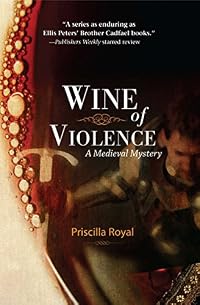
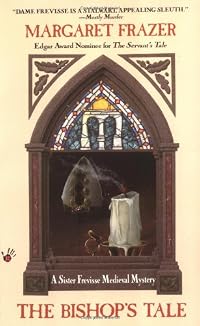
Late summer, 1270. Although the Simon de Montfort rebellion is over, the smell of death still hangs over the land. In the small priory of Tyndal, the monks and nuns of the Order of Fontevraud long for a return to routine. Their hopes are dashed, however, when the young and inexperienced Eleanor of Wynethorpe is appointed their new prioress. Only a day after her arrival, a brutally murdered monk is found in the cloister gardens, and Brother Thomas, a young priest with a troubled past, arrives show more to bring her a more personal grief. Now Eleanor must not only struggle to gain the respect of her terrified and resentful flock but also cope with violence, lust, and greed. show lessTags
Recommendations













Member Reviews
This first book in a historical fiction mystery series is set in an isolated monastic community on the East Anglican coast in 1270. Tyndal Priory was an actual double monastery for both priests and nuns in the French Order of Fentevraud. It operated as a hospital, and was unique in being run by women. As a preface notes:
“In an age in which women were viewed as the lesser sex, untrustworthy and frivolous and emotional, daughters of Even meant to be guided and ruled by male wisdom, many saw Fontevraud’s matriarchy as scandalous, subversive, even offensive to God.”
[The abbey of Fontevrault in France was founded in 1100. Today it is best known as the burial place of Eleanor of Aquitaine. It disappeared in the French Revolution but was show more revived as an order for women only in 1806. According to the online Catholic Encyclopedia “New Advent,” the governing power in the hands of the abbess “was said to be based upon the text of St. John (xix, 27), ‘Behold thy Mother,’ but want of capacity among the brethren who surrounded the founder would seem to be the most natural explanation.” ]
The fictional character of Eleanor of Wynethorpe - only twenty years old - has just been sent to Tyndal to replace the deceased, elderly prioress, and not all welcome her arrival. One nun in particular, the bitter and angry Sister Ruth, thought she should have been given the job. Brother Simeon, vain, pompous, ambitious, and a misogynist, also wanted Sister Ruth to be appointed, since he could control her. Eleanor, on the other hand, seemed actually to believe that she, not one of the monks, should be in charge.
Another new arrival to Tyndal is Brother Thomas, who was forced to take holy vows after be discovered in a homosexual relationship. Eleanor is immediately attracted to Thomas, having no idea he has no interest in women, and in spite of her own choice of vocation which implies a life of chastity. [“Implies” is the operative word, since readers quickly discovers that not all the residents of the monastery are living the chaste life.]
Indeed, everyone’s struggles with the decision to forgo sex seems to be at the forefront of the action in this story, which begins with the discovery of the body one of the priests, who not only has had his throat slit, but has been castrated to boot.
Eleanor’s first task on the job therefore is to find the murderer, a chore made more difficult by additional acts of violence in subsequent days.
The murder doesn’t preoccupy the residents of Tyndal as much as sex though, or the lack thereof. A number of other issues also are woven into the story, including the challenge of maintaining the solvency of the community, the assignment of positions that fit the skills of the residents, and relations with the villagers, whose Saxon background clashes with the Normans of the monastery.
Through it all, we get to know the strengths and weaknesses of the important monks and nuns who live at Tyndal. Their interactions presumably will be further developed in subsequent installments of the series.
Evaluation: I was hoping for more insight into medieval society. At times I felt like I was reading a book about the promise and perils of interrelationships at a boarding school instead. Nevertheless, I did like some of the characters, and may opt to continue with the series. show less
“In an age in which women were viewed as the lesser sex, untrustworthy and frivolous and emotional, daughters of Even meant to be guided and ruled by male wisdom, many saw Fontevraud’s matriarchy as scandalous, subversive, even offensive to God.”
[The abbey of Fontevrault in France was founded in 1100. Today it is best known as the burial place of Eleanor of Aquitaine. It disappeared in the French Revolution but was show more revived as an order for women only in 1806. According to the online Catholic Encyclopedia “New Advent,” the governing power in the hands of the abbess “was said to be based upon the text of St. John (xix, 27), ‘Behold thy Mother,’ but want of capacity among the brethren who surrounded the founder would seem to be the most natural explanation.” ]
The fictional character of Eleanor of Wynethorpe - only twenty years old - has just been sent to Tyndal to replace the deceased, elderly prioress, and not all welcome her arrival. One nun in particular, the bitter and angry Sister Ruth, thought she should have been given the job. Brother Simeon, vain, pompous, ambitious, and a misogynist, also wanted Sister Ruth to be appointed, since he could control her. Eleanor, on the other hand, seemed actually to believe that she, not one of the monks, should be in charge.
Another new arrival to Tyndal is Brother Thomas, who was forced to take holy vows after be discovered in a homosexual relationship. Eleanor is immediately attracted to Thomas, having no idea he has no interest in women, and in spite of her own choice of vocation which implies a life of chastity. [“Implies” is the operative word, since readers quickly discovers that not all the residents of the monastery are living the chaste life.]
Indeed, everyone’s struggles with the decision to forgo sex seems to be at the forefront of the action in this story, which begins with the discovery of the body one of the priests, who not only has had his throat slit, but has been castrated to boot.
Eleanor’s first task on the job therefore is to find the murderer, a chore made more difficult by additional acts of violence in subsequent days.
The murder doesn’t preoccupy the residents of Tyndal as much as sex though, or the lack thereof. A number of other issues also are woven into the story, including the challenge of maintaining the solvency of the community, the assignment of positions that fit the skills of the residents, and relations with the villagers, whose Saxon background clashes with the Normans of the monastery.
Through it all, we get to know the strengths and weaknesses of the important monks and nuns who live at Tyndal. Their interactions presumably will be further developed in subsequent installments of the series.
Evaluation: I was hoping for more insight into medieval society. At times I felt like I was reading a book about the promise and perils of interrelationships at a boarding school instead. Nevertheless, I did like some of the characters, and may opt to continue with the series. show less
I hovered between 2.5 and 3 stars for this historical fiction mystery. I liked the setting and the characters were believable for the most part. I only skimmed the foreword but the author has clearly taken the time to research the Fontevraud order and the time period of the late 13th century England. But some parts of it still struck me as a bit off (Eleanor, the daughter of a Norman noble, being taught to read and write in English for example).
I also found the plot, while probable, slightly distasteful.(There was a lot about sodomy in the book & one of the main characters is a gay man. That is fine, probably accurate, and even an interesting perspective on the times. But the motive of the murders turned out to be the repeated rape of show more a boy in the village. Good motive but yuck! I will try another from the series before coming to a final judgement. show less
I also found the plot, while probable, slightly distasteful.
Pretty good historical mystery. This is the first of a series, and I've bought the second one to continue. The story is set in 1270 in a small priory in England. A young nun named Eleanor is newly appointed as prioress, and struggles to gain the respect and acceptance of the other nuns and monks that reside there. On her first day at the priory Eleanor has to cope with the discovery of an older monk found murdered in the garden, as well as a newly arrived monk named Brother Thomas for which she develops a disturbing and unwanted attraction.
The characters and setting were very well drawn. Eleanor is both kind and smart, although some of her actions and attitudes seemed a little too modern to me. I felt much sympathy for the young Brother show more Thomas, who was forced into the order as an alternative to death after being caught in a homosexual encounter with a boyhood friend. And the medical character of Anne was intriguing - I will look forward to learning more about her past. Unfortunately the murder mystery itself became to lose my interest around the middle of the book, but I persevered. I didn't love the resolution only because it removed a character that I thought had a lot of interesting potential. But overall I look forward to reading the next book in the series. Three and a half stars. show less
The characters and setting were very well drawn. Eleanor is both kind and smart, although some of her actions and attitudes seemed a little too modern to me. I felt much sympathy for the young Brother show more Thomas, who was forced into the order as an alternative to death after being caught in a homosexual encounter with a boyhood friend. And the medical character of Anne was intriguing - I will look forward to learning more about her past. Unfortunately the murder mystery itself became to lose my interest around the middle of the book, but I persevered. I didn't love the resolution only because it removed a character that I thought had a lot of interesting potential. But overall I look forward to reading the next book in the series. Three and a half stars. show less
I really loved the setting: a "progressive" priory in the 12th century CE.
I am not a medieval scholar, so I have no idea how authentic this setting is... but I very much enjoyed it, both as it showed common human actions and reactions, and as it depicted a very different world.
The characters were well-drawn, too- distinct, and each with their own priorities and motivations.
The plot was twisty, though somewhat predictable.
This is the second book I've read in the series, and it hearkens back to the beginning; my first novel here was set much more in the future. I was fascinated in reading more of the back-story behind it, and look forward to reading more in the series.
I am not a medieval scholar, so I have no idea how authentic this setting is... but I very much enjoyed it, both as it showed common human actions and reactions, and as it depicted a very different world.
The characters were well-drawn, too- distinct, and each with their own priorities and motivations.
The plot was twisty, though somewhat predictable.
This is the second book I've read in the series, and it hearkens back to the beginning; my first novel here was set much more in the future. I was fascinated in reading more of the back-story behind it, and look forward to reading more in the series.
I hovered between 2.5 and 3 stars for this historical fiction mystery. I liked the setting and the characters were believable for the most part. I only skimmed the foreword but the author has clearly taken the time to research the Fontevraud order and the time period of the late 13th century England. But some parts of it still struck me as a bit off (Eleanor, the daughter of a Norman noble, being taught to read and write in English for example).
I also found the plot, while probable, slightly distasteful.(There was a lot about sodomy in the book & one of the main characters is a gay man. That is fine, probably accurate, and even an interesting perspective on the times. But the motive of the murders turned out to be the repeated rape of show more a boy in the village. Good motive but yuck! I will try another from the series before coming to a final judgement. show less
I also found the plot, while probable, slightly distasteful.
This is probably a 3.5 star book for me. I enjoyed the setting and the two main characters, and the way the story initially unfolded, alternating from their points of view, captured my attention. Ultimately, however, the mystery wasn't that interesting, the characters were generally pretty one-dimensional, and I found myself halfway wishing for the story to resolve so I could move on to another book.
A good story in an assured setting, with fair characterisation. I found the layout a bit topsy turvy - the contents and copyright pages were at the back, along with (oddly) a description of the book. I could have done without quite a bit of the lengthy historical explanation at the beginning (annoying in an ebook when it's harder to flip past it)and bibliography and page and a half of acknowledgements at the end. Most of the American spellings were tolerable (after all, English spelling of the period was hardly set in stone) but the reference to a chipmunk really stood out in 13th century England! Still, I enjoyed it and will probably read the next one.
Members
- Recently Added By
Lists

mom
729 works; 1 member
Author Information

21 Works 1,168 Members
Series

Common Knowledge
- Canonical title
- Wine of Violence
- Original publication date
- 2003
- People/Characters
- Prioress Eleanor; Prior Theobald; Brother Simeon; Sister Anne; Sister Ruth; Brother Thomas (show all 7); Ralf
- Important places
- Tyndal Priory, England, UK; East Anglia, England, UK
- Important events
- 1270
- Epigraph
- Hear, O my son, and receive my sayings; and the years of thy life shall be many. Enter not into the path of the wicked, and go not in the way of evil men. For they eat the bread of wickedness and drink the wine of violence.... (show all) -- Proverbs 4:10, 14,17 (King James Version)
- Dedication
- To my mother, Betty J. Hallenbeck Royal (1905-1998), who taught me the joy of reading and the love of a good story.
- First words
- During the dark morning hours of a winter day in the year 1270, an aged prioress realized she was dying.
- Blurbers
- Seigel, Sheldon
Classifications
Statistics
- Members
- 284
- Popularity
- 113,039
- Reviews
- 14
- Rating
- (3.51)
- Languages
- English
- Media
- Paper, Audiobook, Ebook
- ISBNs
- 23
- ASINs
- 7