On This Page
Description
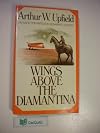
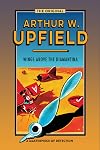
The discovery of a stolen red monoplane on the dry, flat bottom of Emu Lake meant many things for different folks. For Elizabeth Nettlefold, the chance to nurse its strangely ill meant renewed purpose in life. For Dr Knowles, brilliant physician and town drunk, it meant the revival of a romantic dream. For some it meant a murder plan gone awry, and for Bonaparte, it meant one of the toughest cases of his career.Tags
Recommendations






















Member Reviews
Upfield writes about an aboriginal half-caste in Australia. This book was written in 1939, so some people might not like it, as it has speech of that time. Those people, however, are missing out on a great series. The half-caste in the series is Detective Inspector Napoleon Bonaparte, called "Bony" by his friends and co-workers.
Usually Bony's best weapon in investigation is his patience. In this case, however, patience is his enemy. A young woman has been drugged and is dying. Time is against him. Even though it is one of the earlier books in the series, it is an excellent representation of the books that follow.
Usually Bony's best weapon in investigation is his patience. In this case, however, patience is his enemy. A young woman has been drugged and is dying. Time is against him. Even though it is one of the earlier books in the series, it is an excellent representation of the books that follow.
A small plane is found abandoned in remote Queensland. There is no sign of a pilot but a young woman, who appears to be in a coma, is found within. She is removed and taken to a nearby station (similar to an American ranch) where she is looked after by the owner’s daughter though she fails to recover and hovers near death. Inspector Napoleon Bonaparte, the part Aboriginal, part white policeman known to all as Bony who has developed a reputation for solving mysteries of the outback, is called in on the case and must act with unusual urgency if he is to provide information to aid the young woman’s recovery as well as catch the culprit. The fact that the plane has been all but destroyed by fire before Bony can inspect it adds to the show more mystery and results in Bony, and two local Aboriginal men, having to use all the tracking skills at their disposal.
Even today the far western Queensland location in which the events of this book take place provides one of the most isolated inhabited spots in the world and WINGS ABOVE THE DIAMANTINA takes full advantage of this unusual setting. Distances are vast, people are of necessity self-reliant and mother nature has a way of letting them know that even if they think they know what they’re doing she can always surprise them. It’s a toss up whether the cloying sand cloud scenario that develops at the novel’s half-way point or the the dramatic rain storm that occurs near the end is the most memorable natural phenomenon but I bet most readers remember at least one long after the novel is over. As far as the book’s setting in time goes there are plenty of things which identify it as being between the wars but in a way the remoteness of the location makes the novel seem less dated than it otherwise might. Even with modern communications and technology remote Australia is still a pretty inhospitable place and it is not too hard to imagine a similar kind of story unfolding today.
Aside from the unusual setting the book is really a classic whodunnit; almost an outback version of the country house mystery (though not all the potential suspects are in the one house they are all within the same few miles). The scene is laid – and possible culprits identified – in the first few chapters and then our protagonist enters proceedings. Bony is introduced when he arrives at the local policeman’s official residence and interrupts the completion of some paperwork. When ready, Sergeant Cox raises his head from his desk to see
“…a man of medium height and build dressed in a light grey tweed. His tie matched his shirt and so did the soft felt hat now resting on the edge of the writing table. The visitor’s face was turned downwards to the busy fingers engaged in making a cigarette and with no little astonishment the sergeant noticed that the man’s hair was fine and straight and black and that his skin was dark brown. And then he was gazing into a pair of bright blue eyes regarding him with a smile”
Almost all of Bony’s first encounters – either in this book or others – involve some form of astonishment on the part of those he is meeting for the first time. I can’t help but wonder if such a man had existed in real life he could have been quite so jovially accepting of other people’s low expectations of him as Bony is depicted as being. For all his unique qualities though Bony is at heart very similar to the other crime solvers that populate this era’s whodunnits – Poirot et al – in that it is his particular intelligence and way of seeing the world that allows him to solve the puzzles others cannot.
For me the plot of this novel was its weakest element. Some of it is annoyingly blokey (there is a thread in which a chap falls in love with the comatose woman which I found truly creepy) and I found my mind wavering a little during some of the minutiae of the investigation. It relied on a visual imagery of relative distances between various locations I couldn’t quite imagine and was heavy on the detail for some things I couldn’t summon much interest in (I wonder if any of the physical versions of the book have a map, it would definitely benefit from one). Perhaps I am truly gruesome enough to require a dead body for my crime reading senses to be completely engaged?
That said I did enjoy the novel much more than I thought I would based on my reading of a couple of the series when I was much younger. The author’s genuine affection for his adopted country (he was born in England and moved here at the age of 20) is obvious, though perhaps he owes his his unusually (for the time) enlightened attitude towards our indigenous people to the fact he was not Australian by birth? Regardless of how it was developed it is clear from the warmth and realism with which he depicts them that he has met and grown to really know people like the fictional black fellas he has created here.
The audio format: I know this format isn’t for everyone but if you are a fan I highly recommend local actor Peter Hosking’s narration (of this and the many other Australian titles he has narrated over the years). This is a novel dominated in part by dialogue and Hosking does a superb job with the different cadences and speaking styles of the disparate characters and it really does add another layer of depth to the story. show less
Even today the far western Queensland location in which the events of this book take place provides one of the most isolated inhabited spots in the world and WINGS ABOVE THE DIAMANTINA takes full advantage of this unusual setting. Distances are vast, people are of necessity self-reliant and mother nature has a way of letting them know that even if they think they know what they’re doing she can always surprise them. It’s a toss up whether the cloying sand cloud scenario that develops at the novel’s half-way point or the the dramatic rain storm that occurs near the end is the most memorable natural phenomenon but I bet most readers remember at least one long after the novel is over. As far as the book’s setting in time goes there are plenty of things which identify it as being between the wars but in a way the remoteness of the location makes the novel seem less dated than it otherwise might. Even with modern communications and technology remote Australia is still a pretty inhospitable place and it is not too hard to imagine a similar kind of story unfolding today.
Aside from the unusual setting the book is really a classic whodunnit; almost an outback version of the country house mystery (though not all the potential suspects are in the one house they are all within the same few miles). The scene is laid – and possible culprits identified – in the first few chapters and then our protagonist enters proceedings. Bony is introduced when he arrives at the local policeman’s official residence and interrupts the completion of some paperwork. When ready, Sergeant Cox raises his head from his desk to see
“…a man of medium height and build dressed in a light grey tweed. His tie matched his shirt and so did the soft felt hat now resting on the edge of the writing table. The visitor’s face was turned downwards to the busy fingers engaged in making a cigarette and with no little astonishment the sergeant noticed that the man’s hair was fine and straight and black and that his skin was dark brown. And then he was gazing into a pair of bright blue eyes regarding him with a smile”
Almost all of Bony’s first encounters – either in this book or others – involve some form of astonishment on the part of those he is meeting for the first time. I can’t help but wonder if such a man had existed in real life he could have been quite so jovially accepting of other people’s low expectations of him as Bony is depicted as being. For all his unique qualities though Bony is at heart very similar to the other crime solvers that populate this era’s whodunnits – Poirot et al – in that it is his particular intelligence and way of seeing the world that allows him to solve the puzzles others cannot.
For me the plot of this novel was its weakest element. Some of it is annoyingly blokey (there is a thread in which a chap falls in love with the comatose woman which I found truly creepy) and I found my mind wavering a little during some of the minutiae of the investigation. It relied on a visual imagery of relative distances between various locations I couldn’t quite imagine and was heavy on the detail for some things I couldn’t summon much interest in (I wonder if any of the physical versions of the book have a map, it would definitely benefit from one). Perhaps I am truly gruesome enough to require a dead body for my crime reading senses to be completely engaged?
That said I did enjoy the novel much more than I thought I would based on my reading of a couple of the series when I was much younger. The author’s genuine affection for his adopted country (he was born in England and moved here at the age of 20) is obvious, though perhaps he owes his his unusually (for the time) enlightened attitude towards our indigenous people to the fact he was not Australian by birth? Regardless of how it was developed it is clear from the warmth and realism with which he depicts them that he has met and grown to really know people like the fictional black fellas he has created here.
The audio format: I know this format isn’t for everyone but if you are a fan I highly recommend local actor Peter Hosking’s narration (of this and the many other Australian titles he has narrated over the years). This is a novel dominated in part by dialogue and Hosking does a superb job with the different cadences and speaking styles of the disparate characters and it really does add another layer of depth to the story. show less
Inspector Napoleon Bonaparte is called in when a small plane is found abandoned on a sheep station in a remote area of Queensland. The plane doesn't appear to have crashed, but there's no pilot inside (or footprints outside to indicate anyone climbed out of the plane). There is a young woman strapped into the passenger seat but she's no help in solving the mystery: She's conscious but incapable of movement or speech.
The plot's fine as far as it goes, though perhaps a bit far-fetched with all the flying around and some questionable interpersonal relationships. But there are two set pieces that showcase some spectacular aspects of the Australian bush climate — one a giant sandstorm and a climactic rainstorm that is apocalyptic in show more nature. We see both of these through the eyes of Bony, who is caught out in the elements both times and must use his intelligence guided by experience to survive. show less
The plot's fine as far as it goes, though perhaps a bit far-fetched with all the flying around and some questionable interpersonal relationships. But there are two set pieces that showcase some spectacular aspects of the Australian bush climate — one a giant sandstorm and a climactic rainstorm that is apocalyptic in show more nature. We see both of these through the eyes of Bony, who is caught out in the elements both times and must use his intelligence guided by experience to survive. show less
I am changing my rating from 3 to 4 stars after this reread (June 2016). I know that I have read this book before (something I can't say about all the books on my shelves!) but even now I am finished, it was like I was reading it for the first time. A bit surprising as I thought that I knew all of this series well!
This is an early entry in the Inspector Bonaparte series (1936) and Upfield hadn't quite gotten to his best work yet - relying onBony's friend and mentor Illawalli to save the day is a bit of a 'cheat' but didn't detract from my enjoyment. I admire how well Upfield shows us enough of Bony's thought process that the reader feels like he is solving it along with the Inspector yet doesn't make it obvious.
This is an early entry in the Inspector Bonaparte series (1936) and Upfield hadn't quite gotten to his best work yet - relying on
Once again, it is Detective Inspector Napoleon Bonaparte, known to most as Bony, to the rescue. This is the third installment of this series by Arthur Upfield, and it begins with a very strange occurrence. An airplane lands and there is no pilot; just a girl who is unconscious. There are no footprints anywhere, so it seems that the plane has just dropped out of the sky with its passenger. The young woman is quickly taken in by the Nettlefold family, where she remains unconscious, sliding toward death. Bony must solve the mystery of who she is, how she got there, and what type of drug is causing her illness before she dies.
I like these books, although I must say that modern readers may find Upfield's depiction of the local Australian show more aborigines somewhat racist. I am okay with it since he writes within the context of a time when racism was the reality and whites felt superior (not that I think that's right; I just understand that it was the times), but some may find it offensive. Other than that caveat, I love these books for their look at the raw Australian outback of the 1930s.
recommended show less
I like these books, although I must say that modern readers may find Upfield's depiction of the local Australian show more aborigines somewhat racist. I am okay with it since he writes within the context of a time when racism was the reality and whites felt superior (not that I think that's right; I just understand that it was the times), but some may find it offensive. Other than that caveat, I love these books for their look at the raw Australian outback of the 1930s.
recommended show less
Arthur W. Upfield wrote his 'Bony' series between the 1930s and the 1960s. 'Bony' or 'Napoleon Boneparte' is a half aboriginal detective working in the Australian Outback. Tony Hillermans work is heavily influenced by Upfield, and Hillerman evangelized the 'Bony' series on a number of occasions.
This is my first introduction to the series, and it won't be the last book I read.
After the initial 60+ pages of scene setting Bony is called in to help solve the problem.
Old School mystery at it's best.
This is my first introduction to the series, and it won't be the last book I read.
After the initial 60+ pages of scene setting Bony is called in to help solve the problem.
Old School mystery at it's best.
A early Bony mystery in a classic outback setting. A plane lands in a waterless lake in western Queensland (Bony's home state where he made his erly career) --a dtugged young woman is found in the plane, but no pilot.
Members
- Recently Added By
Author Information

56+ Works 6,464 Members
Author Arthur W. Upfield was born in Gosport, Hampshire, England on September 1, 1890. He moved to Australia and adopted it as his homeland. He is best known for his series of books featuring Detective Inspector Napoleon "Bony" Bonaparte of the Queensland State Police. He died on February 13, 1964. (Bowker Author Biography)
Series

Belongs to Publisher Series
Doubleday Crime Club (1943.46)
Common Knowledge
- Canonical title
- Wings Above The Diamantina
- Original title
- Wings Above The Diamantina
- Alternate titles
- Wings Above The Claypan; Winged Mystery; When Wings Are Clipped (serialisation) (serialisation)
- Original publication date
- 1936
- People/Characters
- Napoleon 'Bony' Bonaparte (Detective Inspector)
- Important places
- Queensland, Australia; Australia
- First words
- Because the day was still and cool and invigorating, Elizabeth elected to accompany her father on a tour of the fifteen hundred square miles of country called Coolibah.
- Last words
- (Click to show. Warning: May contain spoilers.)"My worst policeman," he said. ""My best detective!"
- Disambiguation notice
- WINGS ABOVE THE DIAMANTINA has also been published as WINGS ABOVE THE CLAYPAN.
Classifications
Statistics
- Members
- 231
- Popularity
- 140,889
- Reviews
- 9
- Rating
- (3.89)
- Languages
- English, Finnish, French, German
- Media
- Paper, Audiobook, Ebook
- ISBNs
- 21
- ASINs
- 11