On This Page
Description
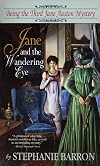
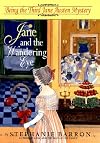
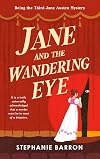
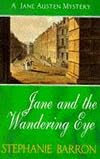
Fiction. Mystery. Historical Fiction. HTML:As Christmas of 1804 approaches, Jane Austen finds herself "insupportably bored with Bath, and the littleness of a town." It is with relief that she accepts a peculiar commission from her Gentleman Rogue, Lord Harold Trowbridge—to shadow his niece, Lady Desdemona, who has fled to Bath to avoid the attentions of the unsavoury Earl of Swithin.But Jane's idle diversion turns deadly when a man is discovered stabbed to death in the Theatre Royal. show more Adding to the mystery is an unusual object found on the victim's body—a pendant that contains a portrait of an eye! As Jane's fascination with scandal leads her deeper into the investigation, it becomes clear that she will not uncover the truth without some dangerous playacting of her own.... show less
Tags
Recommendations







Member Reviews
I love Regency and Victorian mystery series, and I thought I'd read most of the ones of any note, and then I discovered the Jane Austin Mystery series. I was extremely happy to find another series with well-drawn Regency characters and wonderful plotting. The idea of Jane Austen as sleuth is not that far-fetched since she was such an intelligent woman. Ms. Barron does a fine job of imitating Miss Austen's writing style, and she captures her personality very well. This is the third book in the series. It is set around Christmas time 1804, and is set in Bath where Miss Austen lived for a few years after her father left the ministry. There are plenty of wonderful period details and snippets of information in the footnotes that bring this show more period to life. Jane is involved with Lord Harold again as they try to track a murderer. The murder occurs at a masquerade ball in the Lord Harold's aunt's house. Delicious! show less
Murder Amongst Actors and Artists
July 2001
The book opens on a masquerade in honor of an acting company, with our fictional Jane Austen in the guise of a Shepardess, and the scene ends with a murdered Harlequin, stabbed during a dramatic soliloquy from Macbeth (the "cursed play"). Harlequin turns out to be Richard Portal, manager of the troupe. A young man is standing over the body, knife in hand, but all is not as it seems, as is usual in mystery books.
It turns out this young man is a relative of Lord Harold, Jane's old nemesis-turned-ally from the first of the Jane Mysteries. Lord Harold and Miss Austen comb the worlds of acting, staging a scene of their own in order to rifle Mr. Portal's papers, and of artistry, as it turns out that show more the "Wandering Eye" of the title, a mysterious, expensively-made eye portrait had been found on the corpse. As is usual in Ms. Barron's Jane mysteries, one learns much of the cultural history of the Regency period -- the tumultuous politics of the time, the fashions in dress and affectation (Jane runs into some of the dandies of the day), and the ways in which people's reputations her broadcast (imagine, they had gossip columns -- one can't blame current media for starting the practice of nosing into people's private lives!)
I found the solution to the mystery a little disappointing, but the characters much more interesting than in the two previous books. Jane and her sister Cassandra's relationship strains with their increasing age and obvious spinsterhood, Jane reacts to the smearing of her own good name, and Jane loses a very close friend. Ms. Barron has done an excellent job of weaving Jane Austen's real biography (and actual words - I noted several phrases from Austen's own novels and letters inserted liberally into the text) into dramatic action. I think Jane herself would have found these books amusing; we now think of Austen as having a retired, uneventful life, and these books paint a portrait very different. The queen of irony would have smirked. show less
July 2001
The book opens on a masquerade in honor of an acting company, with our fictional Jane Austen in the guise of a Shepardess, and the scene ends with a murdered Harlequin, stabbed during a dramatic soliloquy from Macbeth (the "cursed play"). Harlequin turns out to be Richard Portal, manager of the troupe. A young man is standing over the body, knife in hand, but all is not as it seems, as is usual in mystery books.
It turns out this young man is a relative of Lord Harold, Jane's old nemesis-turned-ally from the first of the Jane Mysteries. Lord Harold and Miss Austen comb the worlds of acting, staging a scene of their own in order to rifle Mr. Portal's papers, and of artistry, as it turns out that show more the "Wandering Eye" of the title, a mysterious, expensively-made eye portrait had been found on the corpse. As is usual in Ms. Barron's Jane mysteries, one learns much of the cultural history of the Regency period -- the tumultuous politics of the time, the fashions in dress and affectation (Jane runs into some of the dandies of the day), and the ways in which people's reputations her broadcast (imagine, they had gossip columns -- one can't blame current media for starting the practice of nosing into people's private lives!)
I found the solution to the mystery a little disappointing, but the characters much more interesting than in the two previous books. Jane and her sister Cassandra's relationship strains with their increasing age and obvious spinsterhood, Jane reacts to the smearing of her own good name, and Jane loses a very close friend. Ms. Barron has done an excellent job of weaving Jane Austen's real biography (and actual words - I noted several phrases from Austen's own novels and letters inserted liberally into the text) into dramatic action. I think Jane herself would have found these books amusing; we now think of Austen as having a retired, uneventful life, and these books paint a portrait very different. The queen of irony would have smirked. show less
I enjoy Regencies, Jane Austen, and mysteries; how could I not like this book? Of course, I read it and all the footnotes, and I thoroughly loved it.
Barron plays fair with the readers concerning the guilty party. This one had me guessing to the end, so it was quite satisfying. The historical footnotes always have good information about the time and the customs; I always learn something new. And while this can be read out of order, start with the first book, Jane and the Unpleasantness at Scargrave Manor.
The series is highly recommended for fans of Regencies and mysteries.
Barron plays fair with the readers concerning the guilty party. This one had me guessing to the end, so it was quite satisfying. The historical footnotes always have good information about the time and the customs; I always learn something new. And while this can be read out of order, start with the first book, Jane and the Unpleasantness at Scargrave Manor.
The series is highly recommended for fans of Regencies and mysteries.
Jane Austen, still living in Bath, is invited to a costume ball (our words, it's a rout and fancy dress) with her brother and his wife where a theatre manager is stabbed offstage while an actor is performing a Shakespearean monologue.Found with the murder weapon in hand, the grandson of the dowager whose home and rout this is is arrested and convicted of murder; this is from the prefingerprint and forensic science days when a suspect arrested with evidence was assumed guilty unless proven innocent. Austen once again teams up with her Gentleman Rogue, Lord Harold Trowbridge, from the previous novel in this series, in order to find out who actually committed the murder.
This is still the only Jane Austen spin-off I enjoy enough to read show more more than once as Stephanie Barron does a good job of voice, style, era, etc. Naturally, the entire Jane-Austen-solves-mysteries is a bit off the wall, but for this Jane Austen puriist, at least it's been fairly well thought out, we don't suddenly have sex every other chapter (not in keeping with Austen's style or the era), there's nothing paranormal, etc. She does push the envelope a bit at times, and it's getting rather formulaic, although genre mysteries often are. I'm not likely to read the next one for some time, and most likely to fill some challenge. However, if you enjoy historical mysteries and haven't read any of these, I quite enjoyed the first one when it was all new to me, and you might like them all. show less
This is still the only Jane Austen spin-off I enjoy enough to read show more more than once as Stephanie Barron does a good job of voice, style, era, etc. Naturally, the entire Jane-Austen-solves-mysteries is a bit off the wall, but for this Jane Austen puriist, at least it's been fairly well thought out, we don't suddenly have sex every other chapter (not in keeping with Austen's style or the era), there's nothing paranormal, etc. She does push the envelope a bit at times, and it's getting rather formulaic, although genre mysteries often are. I'm not likely to read the next one for some time, and most likely to fill some challenge. However, if you enjoy historical mysteries and haven't read any of these, I quite enjoyed the first one when it was all new to me, and you might like them all. show less
This was the first of the series that I felt was less-solidly built. I think it had a lot to do with its locale. While the first mystery takes place at a manor and the second in a small sea-side community (both mean a small cast of characters and easy-to-follow plots), Jane and the Wandering Eye takes place in Bath (this means a large cast of characters, constantly shifting in and out of town). Well-versed Janeites will know, of course, that Austen hated living in Bath, a trait that she gave her final heroine, Anne Elliot. She missed the country, and it shows in Barron's version of her.
But the cast of this novel is too large. In its scope, it's more like "Law & Order" and less like "Columbo"...not that I don't love "Law & Order," but show more you know how sometimes they introduce characters at minute 10 and minute 25 (right around introducing the person who actually did it) and by the time you get to their testimony in minute 51, you can't remember who the hell they are? That's how this plot felt. Though the story did deal quite a bit with actors and the theatre, which is something that always makes me perk up a bit (especially on "Law & Order"!) Lord Harold, who appears in the previous two books, is present yet again, but as it is his direction that leads to Austen's involvement in the plot-thickening, as it were, the whole thing seems a little convoluted.
As for the wandering eye of the title, I was kind of hoping it would be about those paintings where the eyes follow you around the room? You know, like the Mona Lisa or those paintings in the Haunted Mansion. But actually it's about eye portraits of the eighteenth century - instead of miniatures of a lover's face or torso (think Wickham's/Darcy's miniatures in Pride & Prejudice), artists would do portraits of just someone's eye in the same size, and then the painting would be set in a locket or a watch or a brooch....seriously, how creepy can we get here?
That's like the eighteenth-century version of creepy Skype-ing. Very digital get down. "Oh, Lord so-and-so I'm so very erotically to always have this painting of your eye close to my heart." Gross. No wonder none Austen's books have crap like that - it's disturbing! I mean, Captain Benwick's miniature likeness being drawn up for Fanny Harville is one thing. That's like keeping a photo of a loved one in your wallet (so I guess his then having the painting re-set and engraved for Louisa Musgrove...that'd be like stealing from someone's wallet...?), but just an eye? Creepy. Barron handles the creepiness tolerably and assigns the owners of such tokens with a decent amount of both validity and eccentricity.
But while she succeeds there, she seems to fail in Lord Harold. Maybe it's the romantic in me, but the stop-and-start of his emotions is too much. Isn't Bath busy enough without the added ruckus? I'm hoping the next novel (Jane and the Genius of the Place is a little less crowded (based on the fact that we're moving chronologically, and the fact that I know Austen lived in Bath until 1805, and on the fact that Wandering Eye takes place in December 1804, I have reason to hope that we may be granted a reprieve from that awful city). show less
But the cast of this novel is too large. In its scope, it's more like "Law & Order" and less like "Columbo"...not that I don't love "Law & Order," but show more you know how sometimes they introduce characters at minute 10 and minute 25 (right around introducing the person who actually did it) and by the time you get to their testimony in minute 51, you can't remember who the hell they are? That's how this plot felt. Though the story did deal quite a bit with actors and the theatre, which is something that always makes me perk up a bit (especially on "Law & Order"!) Lord Harold, who appears in the previous two books, is present yet again, but as it is his direction that leads to Austen's involvement in the plot-thickening, as it were, the whole thing seems a little convoluted.
As for the wandering eye of the title, I was kind of hoping it would be about those paintings where the eyes follow you around the room? You know, like the Mona Lisa or those paintings in the Haunted Mansion. But actually it's about eye portraits of the eighteenth century - instead of miniatures of a lover's face or torso (think Wickham's/Darcy's miniatures in Pride & Prejudice), artists would do portraits of just someone's eye in the same size, and then the painting would be set in a locket or a watch or a brooch....seriously, how creepy can we get here?
That's like the eighteenth-century version of creepy Skype-ing. Very digital get down. "Oh, Lord so-and-so I'm so very erotically to always have this painting of your eye close to my heart." Gross. No wonder none Austen's books have crap like that - it's disturbing! I mean, Captain Benwick's miniature likeness being drawn up for Fanny Harville is one thing. That's like keeping a photo of a loved one in your wallet (so I guess his then having the painting re-set and engraved for Louisa Musgrove...that'd be like stealing from someone's wallet...?), but just an eye? Creepy. Barron handles the creepiness tolerably and assigns the owners of such tokens with a decent amount of both validity and eccentricity.
But while she succeeds there, she seems to fail in Lord Harold. Maybe it's the romantic in me, but the stop-and-start of his emotions is too much. Isn't Bath busy enough without the added ruckus? I'm hoping the next novel (Jane and the Genius of the Place is a little less crowded (based on the fact that we're moving chronologically, and the fact that I know Austen lived in Bath until 1805, and on the fact that Wandering Eye takes place in December 1804, I have reason to hope that we may be granted a reprieve from that awful city). show less
1804 December. Jane is bored with Bath and is glad when friend Lord Harold Trowbridge asks her to shadow his niece Lady Desdemona. Resulting in an invitation to his mothers' party. But a body is soon discovered, and it is Lord Kinsfell, sister to Desdemona who is taken into custody. The magistrate having no choice as he was standing over the body with a knife in his hands. Jane and Lord Harold investigate determined to prove his inncoent.
An enjoyable and well-written mystery
An enjoyable and well-written mystery
Ms. Barron does such a masterful job of combining real events with her fictional murder-mysteries. I like the character that she has created in Jane - despite her family's disapproval, Jane persists in keeping company with Lord Trowbridge in their combined attempt to find the real killer. Lots of false leads and multiple possibilities.
Members
- Recently Added By
Lists

Austenland
166 works; 12 members

British Mystery
469 works; 14 members
Author Information

21+ Works 8,418 Members
Series

Work Relationships
Common Knowledge
- Canonical title
- Jane and the Wandering Eye
- Original publication date
- 1998-11-03
- People/Characters
- Jane Austen; Lord Harold Trowbridge; Lady Desdemona Trowbridge; Eliza Austen, Comtesse de Feuillide; Henry Austen; Hugh Conyngham (show all 16); Maria Conyngham; Anne Lefroy; Eugenie, the Dowager Duchess of Wilborough; Simon, Marquis of Kinsfell; Wilberforce Elliot; the Earl of Swithin; Richard Cosway; Colonel George Easton; Thomas Lawrence; Cassandra Austen
- Important places
- Bath, Somerset, England, UK
- Dedication
- Dedicated with love to my sister,
Liz Ferretti-
she of the truest eye - First words
- A rout-party, when depicted by a pen more accomplished than my own, is invariably a stupid affair of some two or three hundred souls pressed elbow-to-elbow in the drawing-rooms of the great.
- Quotations
- "More lives have been ruined — more spirits broken — from a fear of idle gossip and report, than are numbered on Napoleon's battlefields, Miss Austen."
The precarious ground of Camden Place might readily serve as metaphor, for all in mankind that prefer false grandeur to a more stable propriety.
For any man may possess a heart, and the most wounded sensibility, though he parade like a peacock and grin like a monkey.
"I do confess, Lord Harold, that with so much of sorrow to be found in the everyday — tragedies, perhaps, of a smaller scale — I can but wonder that we pay so often for the privilege of enduring it. When I exert my... (show all) energies towards the theatre, I hope to be transported — to leave such griefs and disappointments behind."
(From Jane and the Wandering Eye p 24)
"when 'tis done, then 'twere well
It were done quickly. If th' assassination
Could trammel up the consequence, and catch
With his surcease, success; that but th... (show all)is blow-"
(From Jane and the Wandering Eye p 24)
"Might be the be-all and the end-all here,
But here, upon this bank and shoal of time,
We'ld jump the life to come. But in these cases
We still have judgement h... (show all)ere, that we but teach
Bloody instructions, which, being taught, return
To plague th' inventor. This even-handed justice
Commends th' ingredient of our poison'd chalice
To our own lips. He's here in double trust:
First, as I am his kinsman and his subject,"
(From Jane and the Wandering Eye p 24-25)
"Strong both against the deed; then, as his host
Who should against his furtherer shut the door,
Not bear the knife myself. Besides, this Duncan
Hath borne h... (show all)is faculties so meek, hath been
so clear in his great office, that his virtues
Will plead like angels, trumpet-tongu'd, against
The deep damnation of his taking-off;
And pity, like a naked new-born babe,
Striding the blast, or heaven's cherubim, hors'd
Upon the sightless couriers of the air,
Shall blow the horrid deed in every eye,
That tears shall drown the wind."
(From Jane and the Wandering Eye p 25)
"I have no spur
To prick the sides of my intent, but only
Vaulting ambition, which o'erleaps itself,
And falls on th' other-"
(From Jane and the Wandering Eye p 298)
"Yet my enemies need not be crowing
To my chain I have always a key,
And no prison can keep me from going.
"Small and week are my hands I'll allow,
Yet ... (show all)for striking my character's great,
Though ruined by one fatal blow,
My strokes, if hard pressed, I repeat."
(From Jane and the Wandering Eye p 299)
"Divided, I'm a gentleman
In public deeds and powers;
United I'm a monster, who
That gentleman devours."
(From Jane and the Wandering Eye p 299)
"When my first is a task to a young girl of spirit,
And my second confines her to finish the piece,
How hard is her fate! But how great is her merit,
If ... (show all)by taking my all she effects her release!"
(From Jane and the Wandering Eye p 300-301)
"My first has the making of honey to charm,
My second brings breakfast to bed on your arm.
My third bores a hole in leather so fine,
while united the whole... (show all) breaks a heart most kind!" - Last words
- (Click to show. Warning: May contain spoilers.)I lifted my voice, and sang aloud with the rest.
Classifications
Statistics
- Members
- 694
- Popularity
- 41,274
- Reviews
- 11
- Rating
- (3.81)
- Languages
- 5 — Chinese, English, French, German, Italian
- Media
- Paper, Audiobook, Ebook
- ISBNs
- 15
- ASINs
- 5