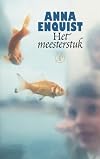
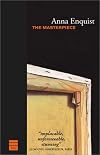
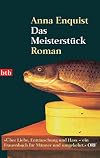
The Masterpiece
by Anna Enquist
On This Page
Description
Enquist's impassioned novel revolves around the artist Johan Steenkamer, the women who are drawn to him, and his troubled family relationships: an absent father, a manipulative mother and an emotionally crippled brother. The three days leading up to the opening of his grand exhibition are depicted with a dramatic sense of light and shade; Enquist describes making jam and making love with equally vivid intensity. Present events are shadowed by the past, and the section describing the loss of show more Steenkamer's daughter is an exploration of grief that will leave no reader unmoved. There are undertones of "Don Giovanni in the portrayal of the central character and in moments of the narrative; timeless dilemmas are counterpointed with those familiar to all contemporary working women. This beautifully observed and affecting novel introduces to English-speaking audiences the work of one of Europe's finest writers. "The Masterpiece has been translated by Jeannette K. Ringold, it was originally published in1994 as "Het Meesterstuk. show lessTags
Recommendations








Member Reviews
Enquist's début novel Het meesterstuk obviously picks up on both sides of her professional background, although there's rather more psychology and less music than in the later Contrapunt. The painter Johan Steenkamer is preparing for the opening of an important retrospective exhibition in one of Amsterdam's top museums. Johan's ex-wife's-best-friend, Lisa, a psychiatrist, looks on with a mixture of fascination and detached amusement whilst tension mounts among the members of the Steenkamer family: something spectacular is clearly going to happen at the opening.
It soon becomes obvious that this is a Freudian whodunnit in the best Oedipal tradition, with a fine assortment of suspects including Johan's absent father, controlling mother, show more dead child and jealous sibling. There's more fish-imagery than you can find in a barrel of herrings, and when you start looking at the names of the characters you begin to wonder whether there might not be a Don Giovanni thing going on here as well. Especially when you see that Johan has defiantly invited his missing father (now living in New York as Charles Stone...) to the party.
Thankfully, Enquist manages to avoid most of the tramlines that all this structure is trying to force her into, and delivers a novel that is never quite predictable and a set of characters who refuse to sit themselves in neat little boxes. And some passages of wonderfully - sometimes heartbreakingly - memorable intensity. If it is a Don Giovanni, it's a Don Giovanni that makes us think more about what happens to Anna, Elvira, Zerlina and Ottavio and less about the Don and Leporello. But I felt that this did come at a certain cost: by avoiding the pitfalls that the structure has set for her, she diverts a lot of the emotional impact away from the big finale and leaves us feeling a little bit unsatisfied at the end of the novel. We weren't really expecting Johan literally to be dragged down into the flames of Hell in the foyer of the Nationaalmuseum, but a few trombones at least would have been nice... show less
It soon becomes obvious that this is a Freudian whodunnit in the best Oedipal tradition, with a fine assortment of suspects including Johan's absent father, controlling mother, show more dead child and jealous sibling. There's more fish-imagery than you can find in a barrel of herrings, and when you start looking at the names of the characters you begin to wonder whether there might not be a Don Giovanni thing going on here as well. Especially when you see that Johan has defiantly invited his missing father (now living in New York as Charles Stone...) to the party.
Thankfully, Enquist manages to avoid most of the tramlines that all this structure is trying to force her into, and delivers a novel that is never quite predictable and a set of characters who refuse to sit themselves in neat little boxes. And some passages of wonderfully - sometimes heartbreakingly - memorable intensity. If it is a Don Giovanni, it's a Don Giovanni that makes us think more about what happens to Anna, Elvira, Zerlina and Ottavio and less about the Don and Leporello. But I felt that this did come at a certain cost: by avoiding the pitfalls that the structure has set for her, she diverts a lot of the emotional impact away from the big finale and leaves us feeling a little bit unsatisfied at the end of the novel. We weren't really expecting Johan literally to be dragged down into the flames of Hell in the foyer of the Nationaalmuseum, but a few trombones at least would have been nice... show less
Met veel plezier gelezen, vermoedelijk voor de tweede keer, al herkende ik maar kleine stukjes uit het boek. Dit kwam uit ma's boekenkast, met kruisjes bij sommige alinea's. Het heftigste deel van het boek was het overlijden van dochtertje Saar en de rouw van de moeder, Ellen. Prachtig geschreven en in het licht van het latere overlijden van de dochter van Anna Enquist ook een soort wrange vooruitblik.
Van http://mom.biblion.nl/ : De dichteres Anna Enquist (1945) debuteerde met 'Het meesterstuk' als romancière. Het boek heeft in de schrijfwijze veel weg van haar poëzie, die ook zowel beeldend als analyserend is. Er wordt met veel vaart en inleving in verteld, op een manier die gerust meeslepend genoemd mag worden; tevens wordt er veel uitgelegd, vooral door de psychiater Liza, die als betrokken buitenstaander het drama van deze roman meemaakt en analyseert. Haar vriendin, een vrouw van middelbare leeftijd, is in een huwelijkscrisis verzeild geraakt; ze is welzijnswerkster, wat ook al heel wat gepsychologiseer met zich meebrengt. Zij en haar ex-man, een kunstschilder, hebben een tienjarig kind verloren, een ervaring die hen uit show more elkaar heeft gedreven. Verder wordt de roman bevolkt door de stokerige moeder van de schilder en zijn, bijzonder jaloerse, broer. Het geheel is geschreven op het stramien van Mozarts opera 'Don Giovanni'. Enquist bewijst, door een spanningverwekkende dosering van gebeurtenissen, dat zij weet wat een plot is. De personages komen goed tot hun recht en groeien uit tot volle karakters. Vrij kleine druk. - Redactie show less
Prachtig boek over de rivaliteit tussen twee volwassen broers en de verwrongen relatie die zij beiden met hun moeder hebben, Het gezichtspunt is ook vaak vanuit de vrouw van 1 van de mannen. De beschrijving van de dood van haar dochter, daarvan draaide mijn hart bijna om. Vooral omdat Anna Enquist jaren later haar eigen dochter heeft verloren
Nov 25, 2009Dutch
Het psycho-analytische model is hinderlijk nadrukkelijk aanwezig. Echt alle verhoudingen komen wel uit de casestudies van Freud en aanverwanten. Natuurlijk zijn broers jaloers en moeders bezitterig, natuurlijk hunkeren zoons naar erkenning van hun vaders. En dan de onvolprezen Lisa die in het hier en nu kan leven, haar moeder heeft kunnen loslaten en toch omhelzen, die daadkrachtig kan zijn in haar werk, die zonder schaamte, spelletjes en bangigheid van vriendschap kan genieten. Prachtig allemaal voor Lisa, maar iets meer ambivalentie zou literair niet onaardig zijn. Bovendien lijkt het perspectief van Lisa dichtbij dat van de auteur te liggen en dat geeft een en ander iets zelfgenoegzaams. Niettemin, ik kan het niet wegleggen. Het show more heeft ook wel weer iets om zo zonder omwegen op "grote emoties" en "belangrijke relaties" af te koersen. En soms vind ik opeens iets mooi. Bijvoorbeeld, er komt een tweeling voor in het boek, en die twee jongens begrijpen elkaar vanzelf. Ze staan en lopen vaak dicht bij elkaar, maar stoten nooit per ongeluk tegen elkaar aan: "als een dier met vier poten". show less
Sep 13, 2009Dutch
Anna Enquist is een verfijnd schrijver. Dit bewijst ze in haar poëzie en blijkt ook in haar eerst roman. Sommige passages zijn ontroerend mooi geschreven. De manier waarop de schrijfster het verdriet van de moeder na de dood van haar tienjarig dochter beschrijft is ingehouden en er intens.
Toch is het 'Meesterstuk' een roman van wat ongelijke kwaliteit. Het uitgesponnen Don Giovanni motief en de uitgesproken psychoanalytische bespiegelingen en handelingen zorgen ervoor dat het boek als geheel gekunsteld overkomt. Misschien heeft de schrijfster wat veel in één boek willen zeggen. Zelf hou ik meer van de latere Enquist, van het uitgepuurde en sobere werk..
Toch is het 'Meesterstuk' een roman van wat ongelijke kwaliteit. Het uitgesponnen Don Giovanni motief en de uitgesproken psychoanalytische bespiegelingen en handelingen zorgen ervoor dat het boek als geheel gekunsteld overkomt. Misschien heeft de schrijfster wat veel in één boek willen zeggen. Zelf hou ik meer van de latere Enquist, van het uitgepuurde en sobere werk..
Jan 12, 2013Dutch
2
Noch drei Tage, dann hat der Maler Johan Steenkamer seine große Ausstellung. In der Familie macht sich Aufregung breit: sogar Vater Charles Steenkamer, selbst erfolgloser Maler, der die Söhne nach dem Krieg verließ, wird nach 50 Jahren aus Amerika zurück erwartet. Nur Oskar, Johans unterlegener Bruder, nimmt sich fest vor, wegzubleiben. Doch dann findet er im Magazin des Museums zufällig ein altes Bild seines Vaters Charles, das einem Werk des Bruders auffällig gleicht. Er beschließt, es mit in die Ausstellung zu bringen ...
May 14, 2020 (Edited)German
Members
- Recently Added By
Author Information

55+ Works 2,889 Members
Awards and Honors
Awards
Notable Lists
Series
Belongs to Publisher Series
btb (73695)
Common Knowledge
- Canonical title
- The Masterpiece
- Original title
- Het Meesterstuk
- Original publication date
- 1994 (Dutch) (Dutch); 1995 (Deutsch) (Deutsch)
- Important places*
- Amsterdam, Noord-Holland, Nederland
- First words
- The goldfish have eaten their young.
- Last words*
- (Click to show. Warning: May contain spoilers.)Alles is goed.
- Original language*
- Niederländisch
- Disambiguation notice
- Original Dutch title: Het meesterstuk
*Some information comes from Common Knowledge in other languages. Click "Edit" for more information.
Classifications
- Genres
- General Fiction, Fiction and Literature
- DDC/MDS
- 839.31 — Literature & rhetoric German & related literatures Other Germanic literatures Netherlandish literatures Dutch
- LCC
- PT5881.15 .N68 .M44 — Language and Literature German, Dutch and Scandinavian literatures Dutch literature Individual authors or works 1961-2000
Statistics
- Members
- 459
- Popularity
- 66,360
- Reviews
- 8
- Rating
- (3.54)
- Languages
- 8 — Chinese, Danish, Dutch, English, French, German, Italian, Swedish
- Media
- Paper, Ebook
- ISBNs
- 22
- ASINs
- 1