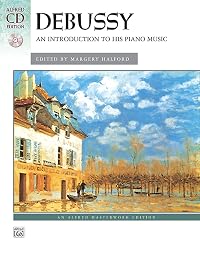
Debussy: An Introduction to His Piano Music
by Claude Debussy
On This Page
Description
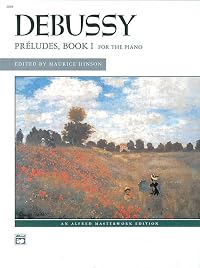
This collection of Debussy's popular intermediate pieces includes "Clair de lune," "Reverie," "Le petit nègre," the complete "Children's Corner Suite" and other works. The introductory pages discuss symbolist poetry, French Impressionist painters and Debussy's musical style. A variety of photographs taken throughout the composer's life are also included.Tags
Recommendations

























Members
- Recently Added By
Author Information

1,454+ Works 4,033 Members
The French composer Claude Debussy is regarded as the chief musical figure in the early twentieth-century impressionist school that was centered in Paris. Debussy showed great musical talent at an early age and began studying music at the Paris Conservatory at the age of 10. By the age of 22, he had won the Grand Prix de Rome. Debussy's use of the show more whole-tone scale in his compositions, which were common to Russian and Asian music, led to expressive harmonies and the achievement of surprising nuances of mood. He also used numerous harsh-sounding harmonies and other new and original compositional techniques and elements. His music, like impressionist painting and poetry, stirs the imagination by its evocation of dreamlike sights and sounds. Because of his revolutionary changes and inventions, Debussy is considered to be one of the most creative and influential forces in the history of music. A list of composers influenced by his work would include nearly every distinguished composer during the first half of the twentieth century. Prelude to the Afternoon of a Faun (1894), a symphonic poem, is Debussy's famous orchestral work that has been choreographed for ballet and is an example of his use of stunning orchestral coloration. Other outstanding orchestral works are Nocturnes (1899) and La Mer (The Sea) (1905). Among Debussy's impressive piano works are 24 preludes, 12 etudes, and the Suite Bergamasque (1905), which contains the popular "Clair de Lune." Debussy also wrote many individual songs for voice and an opera, Pelleas et Melisande (1892-1902), considered by many to be his masterpiece. Debussy died in Paris of cancer in 1918. (Bowker Author Biography) show less
All Editions
Series
Belongs to Publisher Series
Common Knowledge
- Canonical title
- Debussy: An Introduction to His Piano Music
Classifications
Statistics
- Members
- 33
- Popularity
- 857,875
- Languages
- English
- Media
- Paper
- ISBNs
- 2
- UPCs
- 2