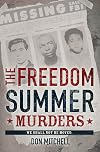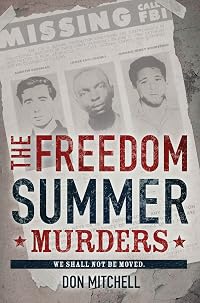
The Freedom Summer Murders
by Don Mitchell
On This Page
Description
Coinciding with the fiftieth anniversary of the Freedom Summer murders, traces the events surrounding the KKK lynching of three young civil rights activists who were trying to register African Americans for the vote. In June of 1964, three idealistic young men (one black and two white) were lynched by the Ku Klux Klan in Mississippi. They were trying to register African Americans to vote as part of the Freedom Summer effort to bring democracy to the South. Their disappearance and murder show more caused a national uproar and was one of the most significant incidents of the Civil Rights Movement, and contributed to the passage of the Civil Rights Act of 1964. Mitchell takes a comprehensive look at the brutal murders of James Chaney, Andrew Goodman, and Michael Schwerner, through to the conviction in 2005 of mastermind Edgar Ray Killen. show lessTags
Recommendations



Member Reviews
ARC provided by NetGalley
In June 1964, at the height of the Civil Rights movement, one of the most horrific events occurred when three young men (one black and two white) were lynched by the Ku Klux Klan of Mississippi for trying to register African Americans to vote. The horror though did not end with their murder, but the failure of the courts to convict the guilty parties of their murder, some of whom were members of local law enforcement. This book, published on the 50th anniversary of James Chaney, Andrew Goodman, and Michael Schwerner’s murders, is the first comprehensive book for a young adult audience to understand the racial hatred and prejudices that led to these murders and the guilty being free for so long.
Writing about show more the murders and miscarriages of justices during the Civil Rights movement is never an easy task, particularly with these three murders, as many people want to forget the blind eye that turned to these types of events. Don Mitchell though shines the biggest light possible unto the event and leaves no stone unturned. Working with court records, printed sources, and original interviews with surviving family members, Mitchell sets the scene for readers. Mitchell doesn’t just recite facts...he tells us about the lives of the three young men, why they did what they did, who their families are, and those that were left behind with their murders. In a few short pages these three men become more than names on a page, but people that we know and care for. And then...they’re gone. Cruelly and violently murdered. Mitchell walks us through the scene, describes the murders, and recounts the efforts to bring the killers to justice...and the travesties that occurred while doing so. But Mitchell doesn’t just describe those that helped these men escape justice, he also describes the people that never stopped telling the truth, the ones that lived their lives in fear, but did what was right.
This is a timely and honest look at the Civil Rights era and how the government ignored lynchings and brutal murders, until two white men were killed. Mitchell lays out the facts that are clear for all to see and to make connections to what continues to be a problem to this day. This book should be required reading for all students, in the hopes that we can learn from the past to change the present. I give the book 5 out of 5 stars. show less
In June 1964, at the height of the Civil Rights movement, one of the most horrific events occurred when three young men (one black and two white) were lynched by the Ku Klux Klan of Mississippi for trying to register African Americans to vote. The horror though did not end with their murder, but the failure of the courts to convict the guilty parties of their murder, some of whom were members of local law enforcement. This book, published on the 50th anniversary of James Chaney, Andrew Goodman, and Michael Schwerner’s murders, is the first comprehensive book for a young adult audience to understand the racial hatred and prejudices that led to these murders and the guilty being free for so long.
Writing about show more the murders and miscarriages of justices during the Civil Rights movement is never an easy task, particularly with these three murders, as many people want to forget the blind eye that turned to these types of events. Don Mitchell though shines the biggest light possible unto the event and leaves no stone unturned. Working with court records, printed sources, and original interviews with surviving family members, Mitchell sets the scene for readers. Mitchell doesn’t just recite facts...he tells us about the lives of the three young men, why they did what they did, who their families are, and those that were left behind with their murders. In a few short pages these three men become more than names on a page, but people that we know and care for. And then...they’re gone. Cruelly and violently murdered. Mitchell walks us through the scene, describes the murders, and recounts the efforts to bring the killers to justice...and the travesties that occurred while doing so. But Mitchell doesn’t just describe those that helped these men escape justice, he also describes the people that never stopped telling the truth, the ones that lived their lives in fear, but did what was right.
This is a timely and honest look at the Civil Rights era and how the government ignored lynchings and brutal murders, until two white men were killed. Mitchell lays out the facts that are clear for all to see and to make connections to what continues to be a problem to this day. This book should be required reading for all students, in the hopes that we can learn from the past to change the present. I give the book 5 out of 5 stars. show less
I lived in the deep South during this time and this story brought back so many memories of what I saw and experienced. Roads to the Negroes homes were NOT paved, and libraries were closed to black people. Water fountains and rest rooms were marked White and Black, and when I attempted to drink from a 'colored" drinking fountain, was told that they were tainted. This was in the public library where I worked, and at the time, black people could not use the library. This separation was for the negro help! I still have horrible thoughts about what I now to be the truth of what the Negro endured. Reading author Don Mitchell's accounting woke me up to how I slowly put this aside for other matters of my world. It is so easy being white and not show more having had to suffer as they did.
The details of the murders of the three social workers who wanted to end civil unrest and segregation in the South should strike EVERYONE as tragic and not to be done again. But as we know, segregation is still a fact ,if not in observations, but in the minds of so many. Just as WW2 was hoped to be always remembered , so that we would try to get along, so exposing the horrors of the 1960's has done nothing to stop further discrimination.
I heartily recommend this book, which should be required reading in every school, every police station, and in every religious institution, as we, in our endless struggle to close this gap, need reminders. Buy this book for anyone who has a narrow view of others, who for those who have not moved on in their empathy and wonder why Negros are still looked down on in the South. show less
The details of the murders of the three social workers who wanted to end civil unrest and segregation in the South should strike EVERYONE as tragic and not to be done again. But as we know, segregation is still a fact ,if not in observations, but in the minds of so many. Just as WW2 was hoped to be always remembered , so that we would try to get along, so exposing the horrors of the 1960's has done nothing to stop further discrimination.
I heartily recommend this book, which should be required reading in every school, every police station, and in every religious institution, as we, in our endless struggle to close this gap, need reminders. Buy this book for anyone who has a narrow view of others, who for those who have not moved on in their empathy and wonder why Negros are still looked down on in the South. show less
In 1964, two young white men (civil rights workers), headed down to Mississippi from New York to help register black people to vote. Andy Goodwin and Mickey Schwerner, along with a 21-year old black man, James Chaney, were murdered by local KKK (including local law enforcement). It made headlines throughout the U.S.
It's scary to read about the kinds of things that were happening in the South at the time; apparently Mississippi was the worst place to be. At the same time, it's heartwarming to read about the civil rights workers who went there, knowing what it might be like and that they were putting their lives at risk, to do the right thing. If they were all black men, it would never have made headlines like it did. It took years to show more bring some of the men who committed the murders to justice. This book also looked at little bit at the lives of the three men, in general, and what brought them to where they were. As this book is apparently marketed toward young adults, it was a quick read and it was populated with many photos of the people involved, their families, and the events. show less
It's scary to read about the kinds of things that were happening in the South at the time; apparently Mississippi was the worst place to be. At the same time, it's heartwarming to read about the civil rights workers who went there, knowing what it might be like and that they were putting their lives at risk, to do the right thing. If they were all black men, it would never have made headlines like it did. It took years to show more bring some of the men who committed the murders to justice. This book also looked at little bit at the lives of the three men, in general, and what brought them to where they were. As this book is apparently marketed toward young adults, it was a quick read and it was populated with many photos of the people involved, their families, and the events. show less
This book is a masterpiece for teaching students about the Civil Rights movement. Many books on these topics will mention what the important history is, why it is important, and suggest some further reading for those who are interested. Don Mitchell goes out of his way in "The Freedom Summer Murders" to cover the all aspects of the case of the murder of three civil rights activists in Meridian, Mississippi on June 21, 1964 by the Ku Klux Klan. He covers the lead up to the case, the case as it played out in Mississippi, and finally the work that went into creating a federal case against the indicted men to overrule the local exoneration. For me, the best two ways to experience history are to either come across some element of history show more that you were never aware of or to experience an aspect of history that you know fairly well in such exhaustive and enriching detail that you cannot help but be overwhelmed by what you read. Mitchell includes everything a take on civil rights history meant for popular consumption could want: photos of the people and important places so that visual learners can associate a real person with what they are reading, extensive quotes from people present and details from primary sources of the time to get a sense of both the emotions tied to these events as well as the base information, and finally extensive after notes and further information about important actors in this story for those history buffs who want to learn more about the people and places in this story. As a student and fanatic of history myself, that is much appreciated.
The biggest draw overall for this book is that Mitchell makes a very compelling case for the accuracy of his work. The book mentions his extensive education as well as his critical acclaim as a nonfiction writer for young adults. Also, as a man of history myself, what I look for the most when reviewing a book for accuracy is the material cited by the author as sources. There are no citations from for profit ".com" type websites. There are some other sources quoted that are from for profit publishing agencies, but many of them appear to have been used for the purpose of collecting their primary sources for use in the book. The number of books of photography mentioned in the book's end notes and bibliography support this assertion. Also there are plenty of academically published works cited as well. So, even though this was published by Scholastic, a for profit education book publishing company, I believe that Don Mitchell really sought to inform his readership about these events and why they are important. Given the resurgence of civil rights and their role in the criminal justice system in recent years, I believe it to be imperative that people read this book so that they can learn what mistakes were made in the past so that we do not repeat them. show less
The biggest draw overall for this book is that Mitchell makes a very compelling case for the accuracy of his work. The book mentions his extensive education as well as his critical acclaim as a nonfiction writer for young adults. Also, as a man of history myself, what I look for the most when reviewing a book for accuracy is the material cited by the author as sources. There are no citations from for profit ".com" type websites. There are some other sources quoted that are from for profit publishing agencies, but many of them appear to have been used for the purpose of collecting their primary sources for use in the book. The number of books of photography mentioned in the book's end notes and bibliography support this assertion. Also there are plenty of academically published works cited as well. So, even though this was published by Scholastic, a for profit education book publishing company, I believe that Don Mitchell really sought to inform his readership about these events and why they are important. Given the resurgence of civil rights and their role in the criminal justice system in recent years, I believe it to be imperative that people read this book so that they can learn what mistakes were made in the past so that we do not repeat them. show less
"When historians weigh the sixth decade of the twentieth century in the United States, they will call this murder one of the revealing acts of this decade. It was a planned, deliberate murder to try to prevent racial change; and it was committed by men who called themselves Christians and thought they were doing right. - William Bradford Huie
This particular quote stood out to me about the events that took place in this book from the dreams of what the Freedom Summer of '64 would accomplish by getting blacks registered to vote in Mississippi, the murder of the three civil rights workers by the Ku Klux Klan, the attempted cover up by the local authorities, and the amount of time it took to finally prosecute one of the men involved.
The show more families can take heart that as a result of the mens death a national spotlight was shown on the situation in Mississippi and the need for Civil Rights and Voter Rights Legislation was propelled forward.
The book is a young adult non-fiction which I did not realize when I picked the book up from the New Release shelf. With that said adults and young adults alike should take the time to read and learn about this part of our history. Plus it had some recommendations for further reading more adult oriented along with one movie and a documentary film.
This is one that should be on school reading lists not only for African Americans but for all to show that their were white Americans who embraced the fact they could not stand idle and even if it might be dangerous they needed to stand with their fellow man and help them attain the rights they already enjoyed. show less
This particular quote stood out to me about the events that took place in this book from the dreams of what the Freedom Summer of '64 would accomplish by getting blacks registered to vote in Mississippi, the murder of the three civil rights workers by the Ku Klux Klan, the attempted cover up by the local authorities, and the amount of time it took to finally prosecute one of the men involved.
The show more families can take heart that as a result of the mens death a national spotlight was shown on the situation in Mississippi and the need for Civil Rights and Voter Rights Legislation was propelled forward.
The book is a young adult non-fiction which I did not realize when I picked the book up from the New Release shelf. With that said adults and young adults alike should take the time to read and learn about this part of our history. Plus it had some recommendations for further reading more adult oriented along with one movie and a documentary film.
This is one that should be on school reading lists not only for African Americans but for all to show that their were white Americans who embraced the fact they could not stand idle and even if it might be dangerous they needed to stand with their fellow man and help them attain the rights they already enjoyed. show less
My review on this book is possibly influenced by my love of the movie Mississippi Burning which I saw when I was in college. The movie left a lasting impression and the book filled in a lot of details that I hadn't garnered from the movie 20 years ago. I enjoyed reading this for a number of reasons: 1) The story is well told in terms of a biographical portrait of the three victims and what led them to Mississippi that summer. 2) It is well researched and includes materials from multiple sources including trial footage and original interviews. 3) Mitchell does an excellent job of taking what I believe to be an extremely important era history that should not be forgotten and making it accessible to young adults.
Curricular connection : show more this would be a great addition to a reading list about civil right , I also think it would be excellent to use in the classroom to discuss racial tension then vs. now and compare and contrast. show less
Curricular connection : show more this would be a great addition to a reading list about civil right , I also think it would be excellent to use in the classroom to discuss racial tension then vs. now and compare and contrast. show less
An excellent account of the brutal murders of Civil Rights workers James Chaney, Andrew Goodman, and Michael Schwerner in Mississippi. I particularly like how Mitchell emphasizes the selfless devotion of these young men to the cause they passionately believed in and their incredible courage to work for it under extremely dangerous conditions.
Members
- Recently Added By
Author Information
4 Works 379 Members
Don Mitchell was born in 1961. He is a graduate of San Diego State University and Pennsylvania State University. He received a Ph.D. from Rutgers University in 1992, working with Neil Smith. He taught at the University of Colorado, Boulder before joining Syracuse University as a professor of geography in the late 1990s. He is best known for his show more work on cultural theory and the People's Geography Project. He works on labor struggles, human rights, and justice. In 1998, he became a MacArthur Fellow, and in 2008 a Guggenheim Fellow. He was awarded the Anders Retzius Medal from the Swedish Society for Anthropology and Geography in 2012. He is the author of several books including The Right to the City: Social Justice and the Fight for Public Space, The People's Property?: Power, Politics and the Public, and The Freedom Summer Murders. (Bowker Author Biography) show less
Awards and Honors
Awards
Common Knowledge
- People/Characters
- Ku Klux Klan
- Important places
- Mississippi, USA
- Important events
- Civil Rights Movement, USA
Classifications
- Genres
- Nonfiction, Teen
- DDC/MDS
- 323.1196 — Society, government, & culture Political science Civil Rights & Liberties/ Human Rights Minority Politics Specific Groups Biography And History African Origin
- LCC
- E185.93 .M6 .M58 — History of the United States United States Elements in the population Afro-Americans
- BISAC
Statistics
- Members
- 189
- Popularity
- 173,962
- Reviews
- 9
- Rating
- (4.50)
- Languages
- English
- Media
- Paper, Ebook
- ISBNs
- 5
- ASINs
- 2