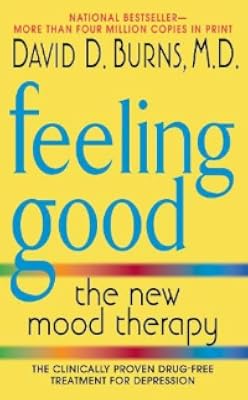
Feeling Good: The New Mood Therapy
by David D. Burns
On This Page
Description
The good news is that anxiety, guilt, pessimism, procrastination, low self-esteem, and other 'black holes' of depression can be cured without drugs. In Feeling Good, eminent psychiatrist David D. Burns, M.D. outlines the remarkable, scientifically proven techniques that will immediately lift your spirits and help you develop a positive outlook on life. Now, in this updated edition, Dr. Burns adds an all-new Consumer's Guide To Antidepressant Drugs, as well as a new introduction to help show more answer your questions about the many options available for treating depression. - Recognise what causes your mood swings. - Nip negative feelings in the bud. - Deal with guilt. - Handle hostility and criticism. - Overcome addiction to love and approval. - Build self-esteem. - Feel good everyday. Some text and images that appeared in the print edition of this book are unavailable in the electronic edition due to rights reasons. show lessTags
Recommendations










Member Recommendations
Member Reviews
Feeling Good is both utterly brilliant and yet limited. To learn about cognitive distortions, I can't imagine a better resource. It's so good, in fact, that at least 6 scientific studies have been done just on this book, studying how well simply reading it does for reducing symptoms of depression. Bibliotherapy is a thing, and this is perhaps the book for improving your life simply by reading.
That being said, the book is limited (I believe) because its premise is an overstatement. CPT (Cognitive Behaviorial Therapy) - the subject of the book - is based on the idea that our moods are caused by our thoughts. Therefore, by controlling your thoughts, you will control you mood. Your first impulse, or at least mine, was complete skepticism. show more The more I read, the more convinced I became of my own cognitive distortions. In fact, you can rest assured that your cognitive distortions affect your moods (and your life) much more than you realize, or would like to admit. That is the brilliance and power of this book, and I can hardly recommend it enough.
That being said, I happen to follow this book with another, The Body Keeps the Score, to learn the brain is much more complicated than Feeling Good lets on. Our moods/feelings are often controlled and influenced by parts of the brain that are not rational.
For the rational person, and one lucky enough to avoid much trauma, it's a perfect a resource. Or if you're wanting to learn about CBT and your own cognitive distortions, it's great! For those with more trauma, I'd recommend The Body Keeps the Score or something like it. show less
That being said, the book is limited (I believe) because its premise is an overstatement. CPT (Cognitive Behaviorial Therapy) - the subject of the book - is based on the idea that our moods are caused by our thoughts. Therefore, by controlling your thoughts, you will control you mood. Your first impulse, or at least mine, was complete skepticism. show more The more I read, the more convinced I became of my own cognitive distortions. In fact, you can rest assured that your cognitive distortions affect your moods (and your life) much more than you realize, or would like to admit. That is the brilliance and power of this book, and I can hardly recommend it enough.
That being said, I happen to follow this book with another, The Body Keeps the Score, to learn the brain is much more complicated than Feeling Good lets on. Our moods/feelings are often controlled and influenced by parts of the brain that are not rational.
For the rational person, and one lucky enough to avoid much trauma, it's a perfect a resource. Or if you're wanting to learn about CBT and your own cognitive distortions, it's great! For those with more trauma, I'd recommend The Body Keeps the Score or something like it. show less
I am embarrassed about loving a self-help book, but I do.
This book is brilliant. Practical advice and steps to help you control your own thoughts.
Even if you think you are in full control of your own mind it will probably be interesting to you as it gives you some idea of how cognitive therapy works and why it is so much more effective than everything that came before.
I don't think he's right about every feeling you have being brought about by your thoughts but, regardless of that, controlling them can only be useful.
This book is brilliant. Practical advice and steps to help you control your own thoughts.
Even if you think you are in full control of your own mind it will probably be interesting to you as it gives you some idea of how cognitive therapy works and why it is so much more effective than everything that came before.
I don't think he's right about every feeling you have being brought about by your thoughts but, regardless of that, controlling them can only be useful.
The field of Cognitive Psychology is the underlying basis of this book on combating anxiety and depression. The first few chapters were very off-putting because the author tediously reiterated why buying his book was not a waste of money and then went on to give too much information about the development of cognitive psych. An additional oversight was the lack of explanation on whether anxiety is always an inextricable symptom of clinical depression. As a therapist, he could have explained simply and without all the self-justification that tainted the beginning chapters.
Once the reader has delved far enough into the book, around chapter 4, we get to the meat of the topic. These chapters were engaging and well-written. If one perseveres, show more genuine insights are available and the book becomes rewarding.
By comparison, other self-help books have more stringent editing with equally-effective techniques for self-help and education. It is always wise to read more than one author in a topic, as well. I recommend this book as worth your time, even if you skim a few of the irrelevant sections. For a comparison, check out The Body Keeps the Score (Bessel van der Kolk).
Note, the e-book copy of Burn's book (via Overdrive) was not formatted properly for either reading via a browser or an e-reader; if these display issues are an extreme irritant, I recommend borrowing the physical book. show less
Once the reader has delved far enough into the book, around chapter 4, we get to the meat of the topic. These chapters were engaging and well-written. If one perseveres, show more genuine insights are available and the book becomes rewarding.
By comparison, other self-help books have more stringent editing with equally-effective techniques for self-help and education. It is always wise to read more than one author in a topic, as well. I recommend this book as worth your time, even if you skim a few of the irrelevant sections. For a comparison, check out The Body Keeps the Score (Bessel van der Kolk).
Note, the e-book copy of Burn's book (via Overdrive) was not formatted properly for either reading via a browser or an e-reader; if these display issues are an extreme irritant, I recommend borrowing the physical book. show less
My mother got this book to deal with her anxiety, so I was curious and read it. For the most part, I think it's pretty silly, but it did teach me an important thing-- that everyone has control over their own emotional and psycological well-being. We're brought up to believe that mental illness is just that- an illness, completely out of our control.
But, not to denigrate anyone with mental illness, a great deal of it IS under our control- and that continuing to tell people that they have no control will contribute to their problems. Cognitive behavioral therapy won't work for everyone, but I think it's a very helpful approach which should definitely play a prominent role in psychology's extensive repetoire.
But, not to denigrate anyone with mental illness, a great deal of it IS under our control- and that continuing to tell people that they have no control will contribute to their problems. Cognitive behavioral therapy won't work for everyone, but I think it's a very helpful approach which should definitely play a prominent role in psychology's extensive repetoire.
This is a great introduction to the principles of cognitive-behavioral therapy, but the author seems overly dismissive of drug therapy. I don't have the credentials of the author, but in my own experience, CBT was only half the solution to feeling good.
This is good, really good. So why did I not finish it? There's so many examples and so many things possible to do it just exhausted me and started making me think I needed to do everything or I wouldn't heal, so I got stressed and overwhelmed myself. No fault of the book, but I do wish it was more digestible and introduced one thing at a time instead of 10. I'll perhaps return to this book once I try other books of this genre that I hope are easier to get started on my journey. There's also all kind of exercises once can find on Google, just by typing cognitive behavior therapy, so I think giving those a go and then diving deeper when one feels needs a push or more help to heal is the ideal course. For me, of course, and people like me show more that get easily overwhelmed or stressed because they want perfection or feel fear from missing out. show less
A lot of good analysis on the thoughts and behaviours of depressed people. This book not only explains what happens to you and your thoughts when you're depressed and what to do about it but it also discusses how to prevent depression from re-occurring once you've gotten better. I like to review various parts of this book whenever I feel mildly depressed so I can remember what is happening to me and what I can do about it instead of just sitting around and feeling bad.
There are a lot of (somewhat lengthy) writing exercises that can be used to get going in your daily life. I tried a few of the exercises and while they did motivate me to work for the most part, I felt that a seriously depressed person would probably find them far too much show more effort to do, and would likely not do them at all. But I guess that's what most of the struggle is: doing something-- anything-- instead of nothing is the most difficult for those who are depressed. While this book offers various techniques to get going, it is ultimately up to yourself to try them out.
List of cognitive distortions:
1) All-or-nothing thinking: You look at things in absolute, black-and-white categories.
2) Over-generalization: You view a negative event as a never-ending pattern of defeat.
3) mental filter: You dwell on the negatives and ignore the positives.
4) Discounting the positives: You insist that your positives don't "count."
5) Jumping to conclusions: (a) Mind-reading--you assume that people are reacting negatively to you when there's no definite evidence for this; (b) Fortune-telling--you arbitrarily predict that things will turn out badly.
6) Magnification or minimization: You blow things way out of proportion or you shrink their importance inappropriately.
7) Emotional reasoning: You reason from how you feel--ex. "I feel like an idiot, so I really must be one," "I don't feel like doing this, so I'll put it off."
8) Should statements: You criticize yourself or others with should's, shouldn't's, must's, ought's, and have to's.
9) Labeling: You identify with your shortcomings; instead of telling yourself, "I made a mistake," you tell yourself, "I'm a jerk, a fool, a loser."
10) Personalization and blame: You blame yourself for something you weren't entirely responsible for, or you blame other people and overlook ways that your own attitudes and behaviors contribute to a problem. show less
There are a lot of (somewhat lengthy) writing exercises that can be used to get going in your daily life. I tried a few of the exercises and while they did motivate me to work for the most part, I felt that a seriously depressed person would probably find them far too much show more effort to do, and would likely not do them at all. But I guess that's what most of the struggle is: doing something-- anything-- instead of nothing is the most difficult for those who are depressed. While this book offers various techniques to get going, it is ultimately up to yourself to try them out.
List of cognitive distortions:
2) Over-generalization: You view a negative event as a never-ending pattern of defeat.
3) mental filter: You dwell on the negatives and ignore the positives.
4) Discounting the positives: You insist that your positives don't "count."
5) Jumping to conclusions: (a) Mind-reading--you assume that people are reacting negatively to you when there's no definite evidence for this; (b) Fortune-telling--you arbitrarily predict that things will turn out badly.
6) Magnification or minimization: You blow things way out of proportion or you shrink their importance inappropriately.
7) Emotional reasoning: You reason from how you feel--ex. "I feel like an idiot, so I really must be one," "I don't feel like doing this, so I'll put it off."
8) Should statements: You criticize yourself or others with should's, shouldn't's, must's, ought's, and have to's.
9) Labeling: You identify with your shortcomings; instead of telling yourself, "I made a mistake," you tell yourself, "I'm a jerk, a fool, a loser."
10) Personalization and blame: You blame yourself for something you weren't entirely responsible for, or you blame other people and overlook ways that your own attitudes and behaviors contribute to a problem.
Members
- Recently Added By
Lists

Best Self Help Books
87 works; 18 members

Psicología - Clásicos
165 works; 2 members

Books To Get From The Library
115 works; 5 members

Books tagged "feel good"
129 works; 20 members

HarperCollins Publishers
144 works; 3 members

Books That Changed Our Perspective
423 works; 168 members
Author Information

18 Works 5,420 Members
Series
Belongs to Publisher Series
Common Knowledge
- Canonical title
- Feeling Good: The New Mood Therapy
- Original publication date
- 1980
- Dedication
- This book is dedicated to Aaron T. Beck, M.D., in admiration of his knowledge and courage and in appreciation of his patience, dedication and empathy.
- First words
- Depression has been called the world's number one public health problem.
- Disambiguation notice
- Feeling Good: The New Mood Therapy Revised and updated is the second edition of Feeling Good: The New Mood Therapy, with only minor changes and a new introduction. It is not a separate work, so please do not se... (show all)parate the two editions of this work.
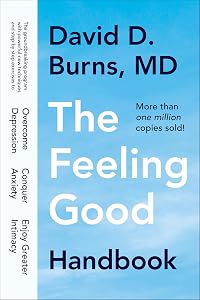
On the other hand, The Feeling Good Handbook IS a separate work from Feeling Good, as it is a companion book to this one.
Classifications
- Genres
- Nonfiction, General Nonfiction
- DDC/MDS
- 616.852706 — Applied science & technology Medicine & health Diseases, Allergies, Skin Conditions Nervous Disorders: Autism, Anorexia, OCD Miscellaneous Neuroses Depression
- LCC
- RC537 .B87 — Medicine Internal medicine Internal medicine Neurosciences. Biological psychiatry. Neuropsychiatry Psychiatry Psychopathology Neuroses
- BISAC
Statistics
- Members
- 2,948
- Popularity
- 6,064
- Reviews
- 38
- Rating
- (3.89)
- Languages
- 7 — Chinese, English, French, German, Italian, Polish, Spanish
- Media
- Paper, Audiobook, Ebook
- ISBNs
- 32
- UPCs
- 2
- ASINs
- 25