On This Page
Description
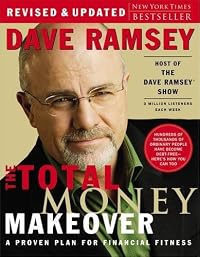
"Ramsey offers a bold, no-nonsense approach to money matters, providing not only the how-to but also a grounded and uplifting hope for getting out of debt and achieving total financial health. Ramsey debunks the many myths of money (exposing the dangers of cash advance, rent-to-own, debt consolidation) and attacks the illusions and downright deceptions of the American dream, which encourages nothing but overspending and massive amounts of debt. "Don't even consider keeping up with the show more Joneses," Ramsey declares in his typically candid style. "They're broke!" This book isn't theory. It works every single time. It works because it is simple. It works because it gets to the heart of the money problems: you"--Publisher's description. show lessTags
Recommendations
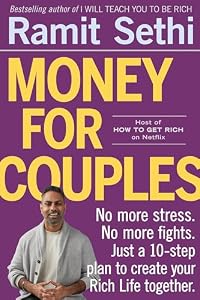
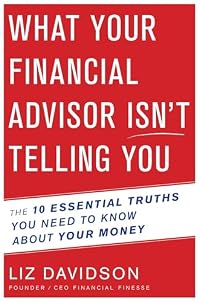
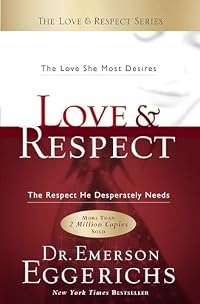
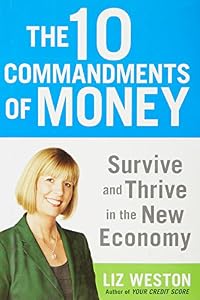


Member Recommendations
fulner Once you start your "Total Money Makeover" it can be difficult to keep going. Finical peace is a necessity, but its not lasting if you aren't having Fun. I highly recommend "Fun is Good" be added to your library.
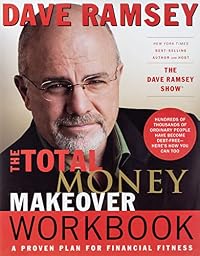
fulner The Total Money Makeover is a good read, but the support of Finical Peace University and the entire Finical Peace Plan really make the baby steps doable and achievable.
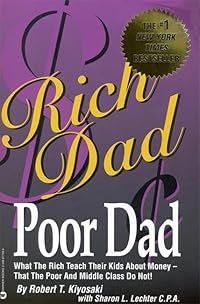
Rich Dad, Poor Dad: What the Rich Teach Their Kids About Money That the Poor and Middle Class Do Not! by Robert T. Kiyosaki
fulner I really feel like Ramsey and Kiyosaki's works compliment each other. Kiyosaki's is actually more challenging and has more intellectual reasons of HOW and WHY things work, while Ramsey is more nuts and bolts "do this or you are screwed" and works on them heart strings. Get both, and stay out of debt.
Member Reviews
I will say this with a lot of caveats--this book helped us get out of debt quickly and gave us the motivation to stay out of debt and be in control of our finances. That being said, I don't really take investing advice from Dave Ramsey (there are better resources) and we do use credit cards that we pay off every month and reap A TON of rewards from. I understand his schtick and why he has to be this way, but I've also been out of det for many years and am a big boy who can use credit cards and understand that credit scores ARE actually relevant.
Overall, this is a great gameplan that will help anyone get out of debt and do it quickly if you're willing to stick with it. Does it make the most sense mathematically? Not really, no. But the show more whole idea behind the book is to do a debt SNOWBALL and create momentum. Take the smallest debt, kill it, build momentum, take the next biggest debt, kill it, rinse, and repeat. It works, I assume, because it psychologically feels like you're progressing. show less
Overall, this is a great gameplan that will help anyone get out of debt and do it quickly if you're willing to stick with it. Does it make the most sense mathematically? Not really, no. But the show more whole idea behind the book is to do a debt SNOWBALL and create momentum. Take the smallest debt, kill it, build momentum, take the next biggest debt, kill it, rinse, and repeat. It works, I assume, because it psychologically feels like you're progressing. show less
A lot of fluff, not a lot of content. The actual relevant information contained within could be written out on a half sheet of lined notebook paper. If you wanted to be wordy about it, you could stretch it to a full page, maybe even front and back if you wrote in large enough font. Once that's out of the way, the remaining 95% of the book is repetitive phrases like "gazelle-ness" or anecdotes preaching (it's downright religious in its over the top worship and sincerity) the Ramsey Way. Quite honestly, it reads more like proselytizing or propaganda than an educational manuscript.
I do not doubt this method works, the same way nearly any budget or diet works for those who stick to it. I think parts of it are ludicrous and fail to consider show more real life, but if life goes smoothly and you don't need more than $1000 worth of emergency funds while you're depleting your savings to pay off your debts in steps 1 and 2, you'll get somewhere. Great, but don't spend $20 on this book, because just a glance through the reviews finds it summarized for free here, without all the truly obnoxious propaganda I skipped over trying to find the actual meat.
One positive I will point out, it's nice to read a finance book that doesn't spend six chapters telling you to quit buying Starbucks or avocados or whatever the latest tiny item the world has decided is keeping the youngings poor, instead of a job market built on patchwork gig work that pays minimum wage. That said, it gives little to no details on how to actually put money away beyond "do it" or get another job, which, again, it's 2020, lots of people in debt are working multiple jobs, including yours truly, so being told that's a fix is humorous, considering that's the norm. show less
I do not doubt this method works, the same way nearly any budget or diet works for those who stick to it. I think parts of it are ludicrous and fail to consider show more real life, but if life goes smoothly and you don't need more than $1000 worth of emergency funds while you're depleting your savings to pay off your debts in steps 1 and 2, you'll get somewhere. Great, but don't spend $20 on this book, because just a glance through the reviews finds it summarized for free here, without all the truly obnoxious propaganda I skipped over trying to find the actual meat.
One positive I will point out, it's nice to read a finance book that doesn't spend six chapters telling you to quit buying Starbucks or avocados or whatever the latest tiny item the world has decided is keeping the youngings poor, instead of a job market built on patchwork gig work that pays minimum wage. That said, it gives little to no details on how to actually put money away beyond "do it" or get another job, which, again, it's 2020, lots of people in debt are working multiple jobs, including yours truly, so being told that's a fix is humorous, considering that's the norm. show less
The book is motivating with the stories. However, if you don't know anything about Dave Ramsey's baby steps, this book can be confusing. It is not laid out in a manner that is concise. Dave rambles a lot, which is fine if you are already familiar with his plan but, not if you aren't. While familiar with his plan, I had more expectations for this book.
Dave Ramsey’s The Total Money Makeover should be the first book on the reading list of anyone who is struggling with debt or, as the author says, is “sick and tired of being sick and tired.” In straightforward, simple, and rather blunt terms Ramsey walks his readers through the seven baby steps that will lead them out of debt and into financial peace.
Many people hesitate to take the advice of financial experts because it is difficult to know if their advice works. Ramsey’s advice, however, has been field tested. Dave Ramsey has seen both the highs and lows of financial life. By the age of 26 he had created a rental real estate portfolio worth more than $4 million. His entire net worth had been built on debt, however, and when show more the banks came calling he was forced into bankruptcy. Since then, Ramsey has eschewed debt and has rebuilt his fortune many times over.
I am not going to go over every single step in the book. Instead, I will discuss the main themes of the book. Ramsey is an ardent believer in personal responsibility. Consider him the AA of personal finance. Until you are able to admit that your debt is the result of your actions and that only you can get yourself out of it, nothing else will work. The key, in Ramsey’s opinion, is the written budget. Everything he teaches begins there. You must know exactly where every dollar you make is going, before you even earn it. If you don’t plan this out, you will never be able to take control of your finances and take control of your life.
This book is not for advanced investors. Ramsey does not discuss specific investments much at all. This is a book about the theory and emotions of personal finance and is a simple and honest plan for taking control of your financial life. Highly recommended. show less
Many people hesitate to take the advice of financial experts because it is difficult to know if their advice works. Ramsey’s advice, however, has been field tested. Dave Ramsey has seen both the highs and lows of financial life. By the age of 26 he had created a rental real estate portfolio worth more than $4 million. His entire net worth had been built on debt, however, and when show more the banks came calling he was forced into bankruptcy. Since then, Ramsey has eschewed debt and has rebuilt his fortune many times over.
I am not going to go over every single step in the book. Instead, I will discuss the main themes of the book. Ramsey is an ardent believer in personal responsibility. Consider him the AA of personal finance. Until you are able to admit that your debt is the result of your actions and that only you can get yourself out of it, nothing else will work. The key, in Ramsey’s opinion, is the written budget. Everything he teaches begins there. You must know exactly where every dollar you make is going, before you even earn it. If you don’t plan this out, you will never be able to take control of your finances and take control of your life.
This book is not for advanced investors. Ramsey does not discuss specific investments much at all. This is a book about the theory and emotions of personal finance and is a simple and honest plan for taking control of your financial life. Highly recommended. show less
I bought this book used at the advice of a well-meaning family member. I can only hope the "update and revised" editions are better. To be completely honest, I began to skim the text after the author displayed a fairly fundamental misunderstanding of the banking system and used "intellectual" and "academic" as insults. The "folksy" tone and constant use of Bible verses was also off-putting.
This book has very little to offer anyone who is using their credit responsibly and are not already drowning in debt. The behavioral changes he recommends are likely very helpful for those who have irresponsibly over extended themselves already. A large portion of his advice seems like good advice; however, it doesn't really extend beyond common show more sense.
Perhaps my biggest complaint is simply a nit pick. The author translates the "college experience" into "they want to party" when discussing why there is no reason to not work during college. Since the author uses "intellectual" as an insult, I guess I shouldn't expect him to understand the many intellectual benefits of not having to work during college. I worked during my 3rd and 4th years; however, I worked far fewer hours than he seems to be suggesting. Not working during college gives one the ability to go to interesting lectures and seminars taking place in other departments, grapple with difficult material, read books and articles outside the required material, and attend art and cultural events. Obviously, not working (or working only a few hours) is not an option for everyone, but there are benefits to the "college experience" that were well worth taking on a bit of debt for. To claim that the "college experience" only consists of "partying" seems to underscore the author's singular focus on a portion of the population with severely misaligned priorities.
Perhaps I was simply hoping for a book that would go over the nuts and bolts of creating wealth. show less
This book has very little to offer anyone who is using their credit responsibly and are not already drowning in debt. The behavioral changes he recommends are likely very helpful for those who have irresponsibly over extended themselves already. A large portion of his advice seems like good advice; however, it doesn't really extend beyond common show more sense.
Perhaps my biggest complaint is simply a nit pick. The author translates the "college experience" into "they want to party" when discussing why there is no reason to not work during college. Since the author uses "intellectual" as an insult, I guess I shouldn't expect him to understand the many intellectual benefits of not having to work during college. I worked during my 3rd and 4th years; however, I worked far fewer hours than he seems to be suggesting. Not working during college gives one the ability to go to interesting lectures and seminars taking place in other departments, grapple with difficult material, read books and articles outside the required material, and attend art and cultural events. Obviously, not working (or working only a few hours) is not an option for everyone, but there are benefits to the "college experience" that were well worth taking on a bit of debt for. To claim that the "college experience" only consists of "partying" seems to underscore the author's singular focus on a portion of the population with severely misaligned priorities.
Perhaps I was simply hoping for a book that would go over the nuts and bolts of creating wealth. show less
Sound, solid advice for those who struggle with debt and "keeping up with the Joneses" mentality. Perhaps not as advanced or comprehensive as some other financial planning and wealth building books but a great introduction to how to get started with getting your money under control.
I'm an atheist and found his continual references to god to be cringy and annoying, however the meat of the book has proved very helpful to my finances.
Members
- Recently Added By
Published Reviews
ThingScore 50
The bedrock of his system is simple: work hard, pay what you owe and stay out of debt. His main commandment is "Pay cash." He first exhorts the reader to take "baby steps," which are designed to build on each other: first, save $1,000 as an emergency fund; then, pay off all debts from smallest to largest; save a larger three-to-six-month emergency fund; finally, start to save for college and show more pay off your home mortgage. Ramsey understands the difficulty in putting these steps into action, and therefore packs his book with personal testimonials from everyday people who have used his system and have become debt free, with obvious struggles. show less
added by mikeg2
Lists

Sycamore Baptist Church Book Study Reading List
156 works; 5 members

Books on My Journey
18 works; 1 member

BitLife
212 works; 4 members
Author Information

199+ Works 16,294 Members
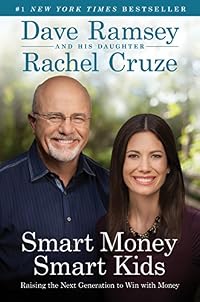
Dave Ramsey was born in Antioch, Tennessee on September 3, 1960. He graduated from the College of Business Administration at the University of Tennessee, Knoxville in 1982. By the time he was 26, he had a net worth of a little over a million dollars and was making $250,000 a year. When the Tax Reform Act of 1986 began to have a negative impact on show more the real estate business, he was forced to file for bankruptcy relief. After losing everything, he went on a quest to find out how money really works, how to get control of it and how to have confidence in handling it. In 1992, he formed The Lampo Group to counsel individuals hurting from the results of financial stress. He wrote the book, Financial Peace, and started a local radio call-in show called The Money Game, now nationally syndicated as The Dave Ramsey Show. His other books include The Money Answer Book: Quick Answers to Everyday Financial Questions, The Total Money Makeover: A Proven Plan for Financial Fitness, Smart Money Smart Kids: Raising the Next Generation to Win with Money, and The Legacy Journey: A Radiacal View of Biblical Wealth and Generosity. He also writes children's books dealing with finance including Careless at the Carnival: Junior Discovers Spending, The Big Birthday Surprise: Junior Discovers Giving, My Fantastic Fieldtrip: Junior Discovers Saving, and Battle of the Chores: Junior Discovers Debt. (Bowker Author Biography) show less
Awards and Honors
Distinctions
Series

Common Knowledge
- Canonical title
- The Total Money Makeover: Classic Edition: A Proven Plan for Financial Fitness; The Total Money Makeover: A Proven Plan for Financial Fitness
- Original publication date
- 2003
- First words
- "As lost as a ball in tall weeds!" That is exactly how I felt.
- Last words
- (Click to show. Warning: May contain spoilers.)Are you next? I hope so.
Classifications
Statistics
- Members
- 5,192
- Popularity
- 2,626
- Reviews
- 79
- Rating
- (4.08)
- Languages
- English, Spanish
- Media
- Paper, Audiobook, Ebook
- ISBNs
- 30
- UPCs
- 8
- ASINs
- 19