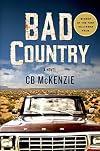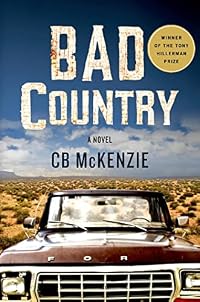
Bad Country
by CB McKenzie
On This Page
Description
"The newest winner of the Tony Hillerman Prize, a debut mystery set in the Southwest starring a former rodeo cowboy turned private investigator, told in a transfixingly original style. Rodeo Grace Garnet lives alone, save for his old dog, in a remote corner of Arizona known to locals as the Hole. He doesn't get many visitors, but a body found near his home has drawn police attention to his front door. The victim is not one of the many illegal immigrants who risk their lives to cross the show more border just south of the Hole, but is instead a member of one of the local Indian tribes. Retired from the rodeo circuit and scraping by on piece-work as a private investigator, Rodeo doesn't have much choice but to say yes when offered an unusual case. An elderly Indian woman has hired him to help discover who murdered her grandson, but she seems strangely uninterested in the results. Her indifference seems heartless, but as Rodeo pursues his case he learns that it's nothing compared to true hatred. And he's about to realize just how far hate can go. CB McKenzie's Bad Country captures the rough-and-tumble corners of the Southwest in accomplished, confident prose, with a hardnosed plot that will keep readers riveted"-- show lessTags
Recommendations
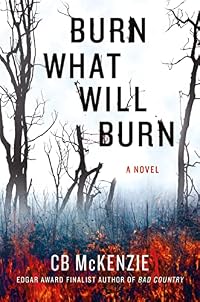



Member Reviews
"Bad Country" is long, slow, sometimes uncomfortable journey into one man's experience of trying to live his life in the unforgiving terrain of the South West Arizona. The journey is strung across the frame of an investigation of the death of a young boy, shot and left to bleed out under a highway.
The man making the journey and carrying out the investigation is a Native American man, Rodeo Garnet, former rodeo star and now a low key, low rent Private Investigator. Accompanied only by his old dog (whose name we never learn) Rodeo chooses to live a mostly solitary life, based in a run-down house on an abandoned development in a remote location where the desert meets the mountains.
Much of the pleasure of the book comes from the way Rodeo show more looks at the world with quiet, careful accuracy and reacts to it with a pragmatic calm that remains determined rather than fatalistic or cynical. Mostly, Rodeo sees other people and himself for who they are. He is neither surprised nor disappointed with what he sees, it is what it is, and only some of what he sees requires him to do anything.
As Rodeo slowly and carefully compiles the information he needs to understand what happened to the boy who's death he is investigating, he constantly crosses and recrosses a trail that seems to link together the deaths of a number of Native Americans, one of whom was dumped almost at his door. Rodeo thinks about this and works it through with quiet stoicism.
"Bad Country" looks at Arizona not as an exotic location but as home. It's not a very hospitable home but it's home nonetheless. The plot is set in a stable context of people who have known and each other for so long that they have mostly come to terms with one another. There's no deep existential angst here. No "ain't it awful that my life is so hard". Instead the, main impression I was left with was a very non-Anglo spirit of endurance.
This is CB McKenzie's debut novel and, despite the prizes that it won, I felt that showed through more often than I would have liked. Sometimes the descriptions tried a little too hard. Sometimes the pace was so slow that I was checking for a pulse. Yet mostly, what comes through is a unique voice and a lot of talent.
I listened to the audiobook version and was deeply impressed by the way in which Mark Bramhall's narration enriched the atmosphere of the book, both from the unhurried pace of his delivery and the accuracy of the accents he used. show less
The man making the journey and carrying out the investigation is a Native American man, Rodeo Garnet, former rodeo star and now a low key, low rent Private Investigator. Accompanied only by his old dog (whose name we never learn) Rodeo chooses to live a mostly solitary life, based in a run-down house on an abandoned development in a remote location where the desert meets the mountains.
Much of the pleasure of the book comes from the way Rodeo show more looks at the world with quiet, careful accuracy and reacts to it with a pragmatic calm that remains determined rather than fatalistic or cynical. Mostly, Rodeo sees other people and himself for who they are. He is neither surprised nor disappointed with what he sees, it is what it is, and only some of what he sees requires him to do anything.
As Rodeo slowly and carefully compiles the information he needs to understand what happened to the boy who's death he is investigating, he constantly crosses and recrosses a trail that seems to link together the deaths of a number of Native Americans, one of whom was dumped almost at his door. Rodeo thinks about this and works it through with quiet stoicism.
"Bad Country" looks at Arizona not as an exotic location but as home. It's not a very hospitable home but it's home nonetheless. The plot is set in a stable context of people who have known and each other for so long that they have mostly come to terms with one another. There's no deep existential angst here. No "ain't it awful that my life is so hard". Instead the, main impression I was left with was a very non-Anglo spirit of endurance.
This is CB McKenzie's debut novel and, despite the prizes that it won, I felt that showed through more often than I would have liked. Sometimes the descriptions tried a little too hard. Sometimes the pace was so slow that I was checking for a pulse. Yet mostly, what comes through is a unique voice and a lot of talent.
I listened to the audiobook version and was deeply impressed by the way in which Mark Bramhall's narration enriched the atmosphere of the book, both from the unhurried pace of his delivery and the accuracy of the accents he used. show less
Bad Country gives readers a real feel for how life is lived in the forgotten places of the desert far away from cities. Rodeo lives so far out that the area is called El Hoyo-- The Hole. Out here, it's important that you have friends you can trust and rely on. At first it seems as though where his friends are concerned, Rodeo is all take and no give, but the further into the story you go, you understand why these few are Rodeo's friends.
This book doesn't follow the rules-- just like Rodeo. There are no quotation marks, and a lot of this book is dialogue. There are no chapter headings. Instead there are breaks between scenes. Some Spanish is spoken, and it's not always translated. You know what? It doesn't matter one little bit. I had show more absolutely no problem knowing which character was speaking, and the breaks between scenes instead of formal chapter headings made perfect sense. As for the Spanish, what words I didn't immediately recognize were easily decipherable just by reading the next line or two.
There's a popular rule in writing: Show. Don't tell. I've seen few writers follow that rule as closely as C.B. McKenzie. None of Rodeo's friends are going to tell you a thing about him. It's up to you to form your own opinion as Rodeo goes out into the desert around his property to leave water for the illegal immigrants traveling through this inhospitable land. It's up to you to see how he treats his old dog. It's up to you to watch him become more concerned about the death of a young boy than anyone in the boy's own family. As Rodeo investigates, he never takes the word of someone else about anything-- he goes to that person, speaks with him, observes his behavior, and forms his own opinion.
This adherence to "Show. Don't tell." is like a breath of fresh air. It provides a depth of clarity and characterization that is difficult to describe but a joy to experience. All I know is that I was sucked into this story, and I didn't want it to end. I want more Rodeo Grace Garnet. show less
This book doesn't follow the rules-- just like Rodeo. There are no quotation marks, and a lot of this book is dialogue. There are no chapter headings. Instead there are breaks between scenes. Some Spanish is spoken, and it's not always translated. You know what? It doesn't matter one little bit. I had show more absolutely no problem knowing which character was speaking, and the breaks between scenes instead of formal chapter headings made perfect sense. As for the Spanish, what words I didn't immediately recognize were easily decipherable just by reading the next line or two.
There's a popular rule in writing: Show. Don't tell. I've seen few writers follow that rule as closely as C.B. McKenzie. None of Rodeo's friends are going to tell you a thing about him. It's up to you to form your own opinion as Rodeo goes out into the desert around his property to leave water for the illegal immigrants traveling through this inhospitable land. It's up to you to see how he treats his old dog. It's up to you to watch him become more concerned about the death of a young boy than anyone in the boy's own family. As Rodeo investigates, he never takes the word of someone else about anything-- he goes to that person, speaks with him, observes his behavior, and forms his own opinion.
This adherence to "Show. Don't tell." is like a breath of fresh air. It provides a depth of clarity and characterization that is difficult to describe but a joy to experience. All I know is that I was sucked into this story, and I didn't want it to end. I want more Rodeo Grace Garnet. show less
While I enjoy the puzzles contained in mysteries, those puzzles mean little to me if they do not involve memorable characters. (In other words, who cares about the whodunit if there aren't substantive "who"s to latch upon?) A well-described setting that feels fully inhabited is also a plus.
Puzzle. Characters. Setting. Bad Country has them all.
Indians are being killed in the desert of Arizona's border country. At the beginning of the story, one body is lying on the approach to the casita of Rodeo Grace Garnet, a former rodeo star (himself half-Indian) who now works, when he can get any, as a PI.
Who is the man? Why was he killed? Something to do with immigration? Drugs? Is his death related to the others? Is there a serial killer on the show more loose?
Rodeo is hired for a seemingly unrelated other case (the convention of mysteries is that there is always a "seemingly unrelated" case that we know, of course, will be tied in at the end), and in the course of his investigation meets a roster of rough-edged characters, each distinctive. It is indeed a "bad country"--not only because of its harsh terrain and climate, but because it breeds such hard people. Rodeo moves among them all with admirable cool. He knows how to handle an arsenal of weapons, but he leave food and water for border-crossers negotiating their way through the desert and he reads his Bible every night.
The plot is intricate, the writing good.
I understand this is C.B. McKenzie's first novel. I, for one, look forward to seeing more of Rodeo. show less
Puzzle. Characters. Setting. Bad Country has them all.
Indians are being killed in the desert of Arizona's border country. At the beginning of the story, one body is lying on the approach to the casita of Rodeo Grace Garnet, a former rodeo star (himself half-Indian) who now works, when he can get any, as a PI.
Who is the man? Why was he killed? Something to do with immigration? Drugs? Is his death related to the others? Is there a serial killer on the show more loose?
Rodeo is hired for a seemingly unrelated other case (the convention of mysteries is that there is always a "seemingly unrelated" case that we know, of course, will be tied in at the end), and in the course of his investigation meets a roster of rough-edged characters, each distinctive. It is indeed a "bad country"--not only because of its harsh terrain and climate, but because it breeds such hard people. Rodeo moves among them all with admirable cool. He knows how to handle an arsenal of weapons, but he leave food and water for border-crossers negotiating their way through the desert and he reads his Bible every night.
The plot is intricate, the writing good.
I understand this is C.B. McKenzie's first novel. I, for one, look forward to seeing more of Rodeo. show less
Rodeo Grace Garnet and his old dog live in a long ago abandoned office of a planned community trailer park originally known, according to the faded sign skewered on a splintered pole, as “Vista Montana Estates--An Active Life Community.” Considering this is Arizona the use of “Montana” might be just one of the many reasons the project failed. Not only is there no community, the only things active on this day is Rodeo, his dog, and the engine on the aging truck they sit inside as they contemplate the male corpse faced down in the dirt in front of them. The body isn’t going to go anywhere so Rodeo heads back down the road to find cell phone reception. Once he is able to call it in to Los Jarros County Sheriff “Apache” Ray show more Molina he is told that Rodeo’s dead body is going to have to wait a bit longer in the blistering Arizona sun because the Sheriff and everyone he has to use is over at the place known as “The Boulder Turn-Out” with another dead body. It has been a bad few days in the county as these are not the only two bodies found recently.
Rodeo Grace Garnet likes his privacy, and for good reason, and therefore lives as far away from others as possible in an area the locals call “El Hoyo” or “The Hole.” There is more than a hint of noir and loneliness to the old rodeo cowboy who feels the pains every day of his bull riding past. Unfortunately, having a dead body at the gates to his place brings the police and unwanted attention.
Considering some of the things that Rodeo has been involved in due to his assorted low paying and sporadic jobs of bounty hunter, warrant server, and private investigator, situations have not always gone as well as they should have. Garnett has quite a reputation in the area and some of it is decidedly negative. A dead body outside his gates is another problem and makes him a murder suspect in the mind of some. Not that he really cares what most folks think even when it comes down to getting a job. He does have quite a few bills to pay, not much in the bank, and private detective Rodeo Grace Garnett needs to work. Good thing he knows a few people across Arizona and they don’t have much choice in detectives and don’t trust outsiders.
A recent winner of the Spur Award, The Tony Hillerman Prize, as well as an Edgar Award nominee, author CB McKenzie’s debut novel is a good one. A highly atmospheric read, this novel takes readers on a mystery unlike many others. Part of that is the stylistic choice of all narration with no use of quotation marks to set off the dialogue, a lack of attribution in many cases, as well as the occasional run on sentence. A significant part of that is due to the noir loner character of Rodeo Grace Garnet who clearly prefers his time alone with his elderly dog under the wide open desert vistas to his occasional efforts at communicating with other people. Not only does Garnet hate to talk to folks, many of the characters involved are Native American and depicted as having limited language skills. Therefore, at times, the dialogue is a bit clunky and does not flow well.
The above makes this a read that does not work for some folks if a quick survey of various one and two sentence reviews with as many stars is indicative of anything. The dialogue bothers some as does the occasional run on sentence as well as the few typos. Most seem to reference a lack of editing while not understanding that the dialogue/narration issue is the author’s style and therefore editing of said book should not change the author’s style. It is also interesting to note that despite the fact that so many readers on various lists claim that it is the kiss of death to kill, or in this case injure a beloved pet, those who are reviewing this book pro or con are not mentioning the dog’s injury that occurs late in the read.
While some would and have used the phrase “transcends the genre” and ones like it to describe Bad Country (which will drive some folks absolutely nuts), the phrase not only compliments the work, it also explains the situation accurately. Bad Country by CB McKenzie, is a solidly good read that is just a bit different from many crime and or mystery novels. One does hope this is the successful start to a possible series.
Bad Country
CB McKenzie
http://www.cbmckenziejr.com
A Thomas Dunne Book (Minotaur Books)
November 2014
ISBN# 978-1-250-05354-1
Hardback (also available in e-book and audio formats)
304 Pages
$24.99
Material supplied by the good folks of the Plano Public Library System.
Kevin R. Tipple ©2015
http://kevintipplescorner.blogspot.com/ show less
Rodeo Grace Garnet likes his privacy, and for good reason, and therefore lives as far away from others as possible in an area the locals call “El Hoyo” or “The Hole.” There is more than a hint of noir and loneliness to the old rodeo cowboy who feels the pains every day of his bull riding past. Unfortunately, having a dead body at the gates to his place brings the police and unwanted attention.
Considering some of the things that Rodeo has been involved in due to his assorted low paying and sporadic jobs of bounty hunter, warrant server, and private investigator, situations have not always gone as well as they should have. Garnett has quite a reputation in the area and some of it is decidedly negative. A dead body outside his gates is another problem and makes him a murder suspect in the mind of some. Not that he really cares what most folks think even when it comes down to getting a job. He does have quite a few bills to pay, not much in the bank, and private detective Rodeo Grace Garnett needs to work. Good thing he knows a few people across Arizona and they don’t have much choice in detectives and don’t trust outsiders.
A recent winner of the Spur Award, The Tony Hillerman Prize, as well as an Edgar Award nominee, author CB McKenzie’s debut novel is a good one. A highly atmospheric read, this novel takes readers on a mystery unlike many others. Part of that is the stylistic choice of all narration with no use of quotation marks to set off the dialogue, a lack of attribution in many cases, as well as the occasional run on sentence. A significant part of that is due to the noir loner character of Rodeo Grace Garnet who clearly prefers his time alone with his elderly dog under the wide open desert vistas to his occasional efforts at communicating with other people. Not only does Garnet hate to talk to folks, many of the characters involved are Native American and depicted as having limited language skills. Therefore, at times, the dialogue is a bit clunky and does not flow well.
The above makes this a read that does not work for some folks if a quick survey of various one and two sentence reviews with as many stars is indicative of anything. The dialogue bothers some as does the occasional run on sentence as well as the few typos. Most seem to reference a lack of editing while not understanding that the dialogue/narration issue is the author’s style and therefore editing of said book should not change the author’s style. It is also interesting to note that despite the fact that so many readers on various lists claim that it is the kiss of death to kill, or in this case injure a beloved pet, those who are reviewing this book pro or con are not mentioning the dog’s injury that occurs late in the read.
While some would and have used the phrase “transcends the genre” and ones like it to describe Bad Country (which will drive some folks absolutely nuts), the phrase not only compliments the work, it also explains the situation accurately. Bad Country by CB McKenzie, is a solidly good read that is just a bit different from many crime and or mystery novels. One does hope this is the successful start to a possible series.
Bad Country
CB McKenzie
http://www.cbmckenziejr.com
A Thomas Dunne Book (Minotaur Books)
November 2014
ISBN# 978-1-250-05354-1
Hardback (also available in e-book and audio formats)
304 Pages
$24.99
Material supplied by the good folks of the Plano Public Library System.
Kevin R. Tipple ©2015
http://kevintipplescorner.blogspot.com/ show less
Better than I expected based on the reviews I read. It maybe that someone has to understand the multicultural aspect of Arizona for this complex story to resonate. The characters are what make this story so compelling. The are so true to life and yet border on caricature. Funny, I know so many people just like them.
The desert is the ever present character shaping the drama, the lives of its people and making a setting that is harsh and yet serene. The desert is a healing place for some and a goad to others. This fictional corner of my state is open, empty and varigated in muted colors. It lacks the riotous tangle of cactus seen just a hundred miles north and lacks the exuberant colors seen in the Hopi and Navajo reservations. This show more corner, next to Mexico, is quiet and deadly. It is the ancestral home to the Chiricaua Apaches, empty without being bleak, vast and humbling. This book makes the desert an ever present compelling part of the story.
I hope you read this wonderful story. show less
The desert is the ever present character shaping the drama, the lives of its people and making a setting that is harsh and yet serene. The desert is a healing place for some and a goad to others. This fictional corner of my state is open, empty and varigated in muted colors. It lacks the riotous tangle of cactus seen just a hundred miles north and lacks the exuberant colors seen in the Hopi and Navajo reservations. This show more corner, next to Mexico, is quiet and deadly. It is the ancestral home to the Chiricaua Apaches, empty without being bleak, vast and humbling. This book makes the desert an ever present compelling part of the story.
I hope you read this wonderful story. show less
I disliked this book for all the reasons that others who disliked it have detailed. There is a big difference between trying to write like James Lee Burke or Cormac McCarthy, and being those two authors, to name but two.
This book hit all of the requirements to be a critics darling.
1. Author has a gritty blue collar background.
2. Author got an MFA
3. Author is overly descriptive regarding people, places, things that don't require that much detail. ( do I really need to know the name of every concert ticket the deceased has in his room.
4. Use words to demonstrate how vast your vocabulary is thanks to your MFA.
5. Add in one or more foreign languages ( Spanish, American Indian ) for no additional benefit to the reader.
6. Be creative. In this show more case, don't use quotation marks ever, but still have lots of dialogue exchanges. Oh and don't have chapters.
This book is beyond pretentious to the point of being laughable, the story never goes anywhere the dog is either bionic or the fittest dog on the planet, and the main character is neither interesting nor someone the reader can empathize with.
Overall this book was for me a complete waste of time. show less
This book hit all of the requirements to be a critics darling.
1. Author has a gritty blue collar background.
2. Author got an MFA
3. Author is overly descriptive regarding people, places, things that don't require that much detail. ( do I really need to know the name of every concert ticket the deceased has in his room.
4. Use words to demonstrate how vast your vocabulary is thanks to your MFA.
5. Add in one or more foreign languages ( Spanish, American Indian ) for no additional benefit to the reader.
6. Be creative. In this show more case, don't use quotation marks ever, but still have lots of dialogue exchanges. Oh and don't have chapters.
This book is beyond pretentious to the point of being laughable, the story never goes anywhere the dog is either bionic or the fittest dog on the planet, and the main character is neither interesting nor someone the reader can empathize with.
Overall this book was for me a complete waste of time. show less
I loved the hot gritty setting, in a different part of the southwest for me. The old dog and the past affair with Sirena were used very well. Long live Rodeo and Luis. The ending lost me a bit and the baddie was confusingly complex which isn't necessarily a bad thing.
Members
- Recently Added By
Lists

Must-Read Books About the Southwest
98 works; 2 members
Author Information
2 Works 218 Members
Awards and Honors
Awards
Common Knowledge
- Canonical title
- Bad Country
- Important places
- Tucson, Arizona, USA
Classifications
Statistics
- Members
- 153
- Popularity
- 213,338
- Reviews
- 17
- Rating
- (3.56)
- Languages
- English, Italian
- Media
- Paper, Audiobook, Ebook
- ISBNs
- 10
- ASINs
- 3