On This Page
Description
Nominated for a 2014 Lime Award for Excellence in FictionNamed a Best Book of Summer 2014 by Publishers Weekly
Named a Pick of the Week for the week of June 30th by Publishers Weekly
"An earnest, well-done historical novel that skillfully blends fact and fiction."
—Publishers Weekly
"A profound story of how one unforeseen event may tear a family apart, but another can just as unexpectedly bring them back together again."
—Publishers Weekly, Best Book of Summer 2014 Pick
"Solomon show more enticingly described the novel Sing in the Morning, Cry at Night by Barbara J. Taylor (Akashic), set in a coal-mining town in 1913, as 'one of those sit on the couch and don't bother me' reads."
—Shelf Awareness, NCIBA Spring Rep Picks
"An absolute gem of a book filled with beautiful characters and classical writing techniques rarely seen in modern literature."
—The Christian Manifesto, Top Fiction Pick of 2014
"This story is at once poignant and hopeful, spiced up by such characters as Billy Sunday, the revivalist, and Grief, the specter who haunts Grace to the very edge of sanity. A rich debut."
—Historical Novel Society
"Like Dickens, the novel faces family tragedy, in this case the town blaming 8-year-old Violet Morgan for her older sister's death. As her parents fall victim to their own vices, Violet learns how to form her own friendships to survive."
—Arts.Mic
"A fantastic novel worthy of the greatest accolades. Writing a book about a historical event can be difficult, as is crafting a bestseller, but Barbara J. Taylor is successful at both."
—Downtown Magazine
"Taylor's careful attention to detail and her deep knowledge of the community and its people give the novel a welcome gravity."
—The Columbus Dispatch
"One of the most compelling books I've ever read...a haunting story that will stay with the reader long after reading this novel."
—Story Circle Book Reviews
"Rave reviews are pouring in for this historical novel of a family tragedy."
—The Halifax Reader, "6 New Books to Look for in July"
"This well-written book is peopled with characters the reader can really care about and captures the feeling of a gritty twentieth century coal mining community."
—Breakthrough, newsletter of the Osteogenesis Imperfecta Foundation
"This book has...prizewinner written all over it....Worth the read!"
—I've Read This
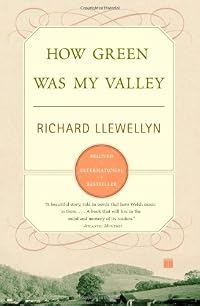
"This haunting story of tragedy and hope in an early twentieth century mining town is...an expertly crafted arrow that shoots straight for the heart. Reminiscent of classics such as How Green Was My Valley...this book is a must-read for fans of character-driven, authentic historical fiction."
—Amy Drown Blog
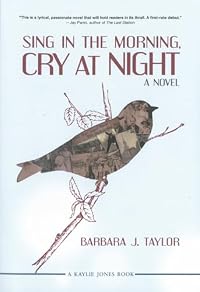
Almost everyone in town blames eight-year-old Violet Morgan for the death of her nine-year-old sister, Daisy. Sing in the Morning, Cry at Night opens on September 4, 1913, two months after the Fourth of July tragedy. Owen, the girls' father, "turns to drink" and abandons his family. Their mother Grace falls victim to the seductive powers of Grief, an imagined figure who has seduced her off-and-on since childhood. Violet forms an unlikely friendship with Stanley Adamski, a motherless outcast who works in the mines as a breaker boy. During an unexpected blizzard, Grace goes into premature labor at home and is forced to rely on Violet, while Owen is "off being saved" at a Billy Sunday Revival. Inspired by a haunting family story, Sing in the...
. show less
Tags
Recommendations



















Member Reviews
Barbara J. Taylor’s Sing in the Morning, Cry at Night (released at the start of this month) is an ambitious novel, one that attempts to capture a time period and a region, as well as a cast of characters. The period is the nineteen-teens; the region Pennsylvania’s coal mining towns, specifically Scranton; the characters are a family broken by the loss of a child, the town itself, and Grief.
On July 4, 1923, eight-year-old Violet Morgan is quarreling with her older sister, Daisy, their pinches and shoves knock over their mother who is about to put a pie in the oven, and their father yells at them to go outside. On the front porch the two girls find the sparklers their father has hidden for a celebration that evening. The girls decide show more to light one, and Daisy’s dress goes up in flames. Three days later, Daisy is dead.
There’s plenty of guilt and pain to go around. Grace, the girls’ mother, mourns the loss of her favorite, in her worst moments blaming Violet for the tragedy. Father Owen blames himself for sending the girls outside and for buying the sparklers. Poor Violet blames herself not just for her sister’s death, but for all the misfortunes that befall her family and her best friend.
The novel has two remaining characters, who deserve introduction. First, the town itself, which narrates occasional chapters in a collective voice, passing on gossip and speculation. The final character is Grief, who Grace has been seeing and conversing with for years as one tragedy after another has struck her family. He’s a pernicious companion, always available, always working to grind down any emerging sense of hope.
To this mix add Billy Sunday, ex-baseball player and the most well-known evangelist of the early Twentieth Century. He’s planning a Scranton crusade, hoping to drive out cards, dancing, and alcohol—and to save a few thousand souls in the process.
Sing in the Morning, Cry at Night is thick with action and emotion, making it a hard-to-put-down read. Taylor knows how to end a chapter so that the reader feels compelled to continue for “just one more.” In less capable hands, this narrative would turn into melodrama. Taylor walks that fine edge, but the vividness of the characters she portrays and the structural originality of the novel prevent her from crossing over.
This book is a great read for anyone trying to understand the contradictions of the early Twentieth Century, the combination of Bible thumping and union busting, but that isn’t the only reason to read this book: it’s just good fiction of the sort one want this time of year, offering both action and well-delineated characters. show less
On July 4, 1923, eight-year-old Violet Morgan is quarreling with her older sister, Daisy, their pinches and shoves knock over their mother who is about to put a pie in the oven, and their father yells at them to go outside. On the front porch the two girls find the sparklers their father has hidden for a celebration that evening. The girls decide show more to light one, and Daisy’s dress goes up in flames. Three days later, Daisy is dead.
There’s plenty of guilt and pain to go around. Grace, the girls’ mother, mourns the loss of her favorite, in her worst moments blaming Violet for the tragedy. Father Owen blames himself for sending the girls outside and for buying the sparklers. Poor Violet blames herself not just for her sister’s death, but for all the misfortunes that befall her family and her best friend.
The novel has two remaining characters, who deserve introduction. First, the town itself, which narrates occasional chapters in a collective voice, passing on gossip and speculation. The final character is Grief, who Grace has been seeing and conversing with for years as one tragedy after another has struck her family. He’s a pernicious companion, always available, always working to grind down any emerging sense of hope.
To this mix add Billy Sunday, ex-baseball player and the most well-known evangelist of the early Twentieth Century. He’s planning a Scranton crusade, hoping to drive out cards, dancing, and alcohol—and to save a few thousand souls in the process.
Sing in the Morning, Cry at Night is thick with action and emotion, making it a hard-to-put-down read. Taylor knows how to end a chapter so that the reader feels compelled to continue for “just one more.” In less capable hands, this narrative would turn into melodrama. Taylor walks that fine edge, but the vividness of the characters she portrays and the structural originality of the novel prevent her from crossing over.
This book is a great read for anyone trying to understand the contradictions of the early Twentieth Century, the combination of Bible thumping and union busting, but that isn’t the only reason to read this book: it’s just good fiction of the sort one want this time of year, offering both action and well-delineated characters. show less
Sing in the Morning, Cry at Night is an immediately engaging read and ultimately a decidedly successful work of literary art. Author Barbara J. Taylor uses manifold techniques -- some quite ingenious -- to reveal the palpable humanity of her characters' experiences and tap the natural sympathies of her readers.
For example, the reader's first perspective on the family and its tragedy, which form the centerpiece of the novel, is that of an outsider. A woman in the community gives voice to the collective local perception of the subjects; this perspective is embedded in the biases harbored and access to information members of closed communities have about one another's lives as a matter of course. This first perspective grounds the reader show more in the human setting of the story using a familiar type of lens.
When the reader is introduced directly to the life of the family at the heart of the story, Taylor very quickly employs a more unusual technique to provide perspective on the family's experience. She embodies the grief impacting the family acutely as an actor in the story itself -- Grief, a three-dimensional person who inhabits the family home and speaks for itself. By rendering an emotion as a living being, Taylor is able to remind the reader explicitly and pointedly of the nature of grief's general effects on human psychology by illustrating various specific effects as action and dialogue in the story. This elicits the readers' sympathy powerfully and continuously. The connection Taylor ensures between her readers and her characters makes the reading experience a great pleasure. I highly recommend this novel.
Please be advised I received a free copy of the book through the LibraryThing Early Reviewers program in return for a promise to write an honest review. show less
For example, the reader's first perspective on the family and its tragedy, which form the centerpiece of the novel, is that of an outsider. A woman in the community gives voice to the collective local perception of the subjects; this perspective is embedded in the biases harbored and access to information members of closed communities have about one another's lives as a matter of course. This first perspective grounds the reader show more in the human setting of the story using a familiar type of lens.
When the reader is introduced directly to the life of the family at the heart of the story, Taylor very quickly employs a more unusual technique to provide perspective on the family's experience. She embodies the grief impacting the family acutely as an actor in the story itself -- Grief, a three-dimensional person who inhabits the family home and speaks for itself. By rendering an emotion as a living being, Taylor is able to remind the reader explicitly and pointedly of the nature of grief's general effects on human psychology by illustrating various specific effects as action and dialogue in the story. This elicits the readers' sympathy powerfully and continuously. The connection Taylor ensures between her readers and her characters makes the reading experience a great pleasure. I highly recommend this novel.
Please be advised I received a free copy of the book through the LibraryThing Early Reviewers program in return for a promise to write an honest review. show less
 This review was written for LibraryThing Early Reviewers.
This is the story of a Welsh family and their neighbors in early 20th century Scranton, PA. The father is a coal miner; there is an inordinate number of ways for people to be killed or maimed in this time and place, and the Morgans have experienced several of them. There is a lot of sadness here, and Grief is a character who speaks and entices Grace Morgan to succumb completely to his "charms". Her daughter, Violet, struggles with guilt over her older sister's death, and because the adults are preoccupied with their own grief and guilt, she misinterprets many an action or remark to her own detriment. She is "saved" by her love for her friend Stanley and his benefactress, the widow Lankowski. Taylor has the locale and the history pitch show more perfect, and I really enjoyed reading this book, being able to follow almost every step of the characters through Providence, Chinchilla, Greenridge and the Patch....although occasionally I had to go look at old maps to see how certain streets used to connect with others where they are now blocked by flood control measures or commercial development or expressways, or University expansion. Even without knowing the local area intimately as I do, you can find a heartfelt story to enjoy here. show less
Sing in the Morning, Cry at Night by Barbara J. Taylor is a very highly recommended historical novel. Based on real events from the author's family, Sing in the Morning, Cry at Night is a novel rich in detail and historical references. Set in 1913 in the anthracite coal mining region of Wyoming Valley, Pennsylvania, this is a novel of tragedy and hope.
The Morgan family is composed of Owen, the father, Grace, the mother and their two girls, nine year old Daisy and 8 year old Violet. On July 4, 1913, there is a horrible accident and Daisy is left mortally burned. As Daisy slowly dies over three days, Violet plays the piano for her while Daisy sings hymns. The whole town blames Violet for the death of her sister and neither parent is able show more to set aside their own grief to comfort or console her.
Grace Morgan is already emotionally fragile and the death of her daughter pushes her into a severe depression. She has personified Grief as a real person since the death of her father when she was a child, and with each death and each miscarriage she has had, Grief has grown stronger. Daisy's death pushes Grace to the edge of the abyss and she is totally emotionally crippled.
Owen also takes Daisy's death hard and can't cope with Grace's depression at the same time. He turns to drinking. After he returns home drunk very late one night, he has an explosive altercation with Grace. He then leaves his family, choosing to live in a rented room above the gin mill.
In this tangle emotional miasma, Violet is left to try and deal with her grief on her own, even while the adults around her holds her responsible for the death of her sister and seemingly even the disintegration of her family. If not for her new friend, Stanley whom with she plays hooky from school with to fish and explore, Violet would have no support system. When an older widow befriends the two, they both get a modicum of the mothering they both need.
During this same time period the famed evangelist Billy Sunday is coming to Scranton for a huge revival meeting. The town is building a temple to prepare for the special event and attendance is expected to be high.
As a sort of Greek chorus in the background, Taylor includes comments from the church women in sections between several chapters. Preceded by some helpful homemaking advice from the time period, the chorus of comments that follow are from the widows and spinsters who are always there, doing things for the church and keeping track of everyone's business. Perhaps they mean well, bless their hearts, but perhaps they are spreading tales and making things worse.
This is an incredibly well written novel that has the kind of historical accuracy and details that make reading historical novels a treasure. It is hard to believe based on the description, but this is also a novel of hope, grace, survival and even joy. Picked as a best summer book for 2014 by Publisher's Weekly, Barbara J. Taylor's Sing in the Morning, Cry at Night is not to be missed.
Disclosure: My Kindle edition was courtesy of Akashic Book for review purposes. http://www.akashicbooks.com/ show less
The Morgan family is composed of Owen, the father, Grace, the mother and their two girls, nine year old Daisy and 8 year old Violet. On July 4, 1913, there is a horrible accident and Daisy is left mortally burned. As Daisy slowly dies over three days, Violet plays the piano for her while Daisy sings hymns. The whole town blames Violet for the death of her sister and neither parent is able show more to set aside their own grief to comfort or console her.
Grace Morgan is already emotionally fragile and the death of her daughter pushes her into a severe depression. She has personified Grief as a real person since the death of her father when she was a child, and with each death and each miscarriage she has had, Grief has grown stronger. Daisy's death pushes Grace to the edge of the abyss and she is totally emotionally crippled.
Owen also takes Daisy's death hard and can't cope with Grace's depression at the same time. He turns to drinking. After he returns home drunk very late one night, he has an explosive altercation with Grace. He then leaves his family, choosing to live in a rented room above the gin mill.
In this tangle emotional miasma, Violet is left to try and deal with her grief on her own, even while the adults around her holds her responsible for the death of her sister and seemingly even the disintegration of her family. If not for her new friend, Stanley whom with she plays hooky from school with to fish and explore, Violet would have no support system. When an older widow befriends the two, they both get a modicum of the mothering they both need.
During this same time period the famed evangelist Billy Sunday is coming to Scranton for a huge revival meeting. The town is building a temple to prepare for the special event and attendance is expected to be high.
As a sort of Greek chorus in the background, Taylor includes comments from the church women in sections between several chapters. Preceded by some helpful homemaking advice from the time period, the chorus of comments that follow are from the widows and spinsters who are always there, doing things for the church and keeping track of everyone's business. Perhaps they mean well, bless their hearts, but perhaps they are spreading tales and making things worse.
This is an incredibly well written novel that has the kind of historical accuracy and details that make reading historical novels a treasure. It is hard to believe based on the description, but this is also a novel of hope, grace, survival and even joy. Picked as a best summer book for 2014 by Publisher's Weekly, Barbara J. Taylor's Sing in the Morning, Cry at Night is not to be missed.
Disclosure: My Kindle edition was courtesy of Akashic Book for review purposes. http://www.akashicbooks.com/ show less
In the mining town of Scranton, Pennsylvania, the tragedy of Daisy Morgan’s death has everyone pointing their fingers at her little sister Violet. Even the church, the school and the students let Violet know by their whispers and side-way glances that it is her fault. Her mom and dad, consumed in their heartache over losing their beloved and beautiful oldest daughter never talk to her about that day. The only one her mother, Grace, talks to is Grief—a creepy imaginary, disgusting being who is feeding off her sorrow. Her dad, Owen, moves out to drown his sorrow in bottles of whiskey. Then there is the gossipy narrator whose syrupy voice smothers all concern for Violet under the guise of Christian caring. Between mining accidents and show more getting ready for the Evangelist Billy Sunday; this “town without mercy” has left 8 year old Violet dealing with guilt and navigating adult issues alone. Her only confidantes are Stinky Stanley a bullied classmate, whose father is an angry miner, and a Catholic Polish widow who has no children. Every character is beautifully written, and relatable. It’s set in 1913, but it’s relevant for today’s audience.
Barbara Taylor has written a stunning novel, inspired by a family story, which will engage your heart, soul, and mind right up to the last page. Great book for book clubs, and I’d love to see it made into a TV movie. Many thanks to the Goodreads First Reads program for sending me a copy of this 5 star novel. show less
Barbara Taylor has written a stunning novel, inspired by a family story, which will engage your heart, soul, and mind right up to the last page. Great book for book clubs, and I’d love to see it made into a TV movie. Many thanks to the Goodreads First Reads program for sending me a copy of this 5 star novel. show less
I received an Advance Reader’s Copy. This is my honest review.
Set in a Scranton, PA coal mining community in 1913, a small town blames 8 years old Violet Morgan for the sudden death of her 9 years old sister, Daisy. The once happy and loving family crumbles amongst ruthless gossip and judgment from pious neighbors (that I just wanted to punch in the face). But these rotten characters are balanced with wonderful, inspiring and charming characters that I fell in love with. There’s entertainment in every chapter as the story unfolds. The detailed descriptions of the mines left me feeling suffocated and the character Grief, only existing for the mother, is such a creep. I needed more from the ending; it happens quickly for such an epic show more family history but wraps up nicely. This novel is heartbreaking and full of hope. I would highly recommend it. A great book for a broad audience. show less
Set in a Scranton, PA coal mining community in 1913, a small town blames 8 years old Violet Morgan for the sudden death of her 9 years old sister, Daisy. The once happy and loving family crumbles amongst ruthless gossip and judgment from pious neighbors (that I just wanted to punch in the face). But these rotten characters are balanced with wonderful, inspiring and charming characters that I fell in love with. There’s entertainment in every chapter as the story unfolds. The detailed descriptions of the mines left me feeling suffocated and the character Grief, only existing for the mother, is such a creep. I needed more from the ending; it happens quickly for such an epic show more family history but wraps up nicely. This novel is heartbreaking and full of hope. I would highly recommend it. A great book for a broad audience. show less
This review was written for LibraryThing Early Reviewers.Sing in the Morning, Cry at Night by Barbara J. Taylor will hold you spell bound with its richness of historic detail and story of a family dealing with tragedy. The setting is the Wyoming Valley of Pennsylvania, a historic anthracite area in 1913. Sensitive writing and strong characters compel you forward in this story.
Owen Morgan is the father who had a drinking problem before he married and took a pledge written in the family bible to not drink. He is also a miner who goes to work to support his family and lives with a deep sense of fatalism. When the whistle blows, people know there has been a mining accident and they crowd in to hear the news. Back then, if a father died, the eldest son was to go to the mines and work even if he show more was very young like eight years old. That would mean the end of childhood, long hours and the daily chance of death.
Grace Morgan is the mother. She has had a number of miscarriages and she has a ghost, named Greif. Grief first came to her when her father committed suicide and returned with every death in her family. Grief tempts seductively and does not want to lose her.
The oldest daughter, Daisy dies in a terrible accident involving a sparkler. She was burned badly except for her face and is angelic in death. She asks her sister to the play the piano while she is waiting to die and she sings along.
The younger daughter, Violet, has to deal with it all. After the accident, her father leaves and her mother retreats to be with her ghost. The town holds her responsible for the accident. Neither of her parents console her. She finds school unbearable with its ostracism and starts playing hooky with her new friend Stanley. His father sees no point in schooling for him since he is going to work in the mines anyway and his mother has died long ago.
The town is excited about the coming revival meeting with Billy Sunday, a colorful and dramatic evangelist who used to be a famous baseball player for the Chicago White Sox. My mother saw him speak in her childhood so I was really interested in his portrayal in this book.
I find nothing that could be improved in this book. It was a journey into family grief and depressing time and place in history. I highly recommend it, and think anyone who reads it will be riveted to this song until the finish.
I received this Advance Reading Copy as a win from FirstReads and that in no way influenced my thoughts or feelings in this review. show less
Owen Morgan is the father who had a drinking problem before he married and took a pledge written in the family bible to not drink. He is also a miner who goes to work to support his family and lives with a deep sense of fatalism. When the whistle blows, people know there has been a mining accident and they crowd in to hear the news. Back then, if a father died, the eldest son was to go to the mines and work even if he show more was very young like eight years old. That would mean the end of childhood, long hours and the daily chance of death.
Grace Morgan is the mother. She has had a number of miscarriages and she has a ghost, named Greif. Grief first came to her when her father committed suicide and returned with every death in her family. Grief tempts seductively and does not want to lose her.
The oldest daughter, Daisy dies in a terrible accident involving a sparkler. She was burned badly except for her face and is angelic in death. She asks her sister to the play the piano while she is waiting to die and she sings along.
The younger daughter, Violet, has to deal with it all. After the accident, her father leaves and her mother retreats to be with her ghost. The town holds her responsible for the accident. Neither of her parents console her. She finds school unbearable with its ostracism and starts playing hooky with her new friend Stanley. His father sees no point in schooling for him since he is going to work in the mines anyway and his mother has died long ago.
The town is excited about the coming revival meeting with Billy Sunday, a colorful and dramatic evangelist who used to be a famous baseball player for the Chicago White Sox. My mother saw him speak in her childhood so I was really interested in his portrayal in this book.
I find nothing that could be improved in this book. It was a journey into family grief and depressing time and place in history. I highly recommend it, and think anyone who reads it will be riveted to this song until the finish.
I received this Advance Reading Copy as a win from FirstReads and that in no way influenced my thoughts or feelings in this review. show less
Members
- Recently Added By
Author Information

3 Works 135 Members
Awards and Honors
Distinctions
Series

Common Knowledge
- Blurbers
- Parini, Jay
Classifications
- Genres
- Fiction and Literature, General Fiction, Historical Fiction, Christian Fiction
- DDC/MDS
- 813.6 — Literature & rhetoric American literature in English American fiction in English 2000-
- LCC
- PS3554 .E9288 .T395 — Language and Literature American literature American literature Individual authors 1961-
- BISAC
Statistics
- Members
- 84
- Popularity
- 378,326
- Reviews
- 21
- Rating
- (4.02)
- Languages
- English
- Media
- Paper, Ebook
- ISBNs
- 3
- ASINs
- 1