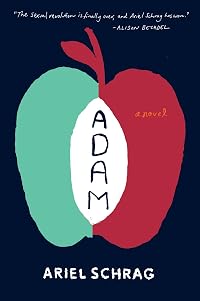
Adam
by Ariel Schrag
On This Page
Description
Fiction. Literature. HTML:When Adam Freedman — a skinny, awkward, inexperienced teenager from Piedmont, California — goes to stay with his older sister Casey in New York City, he is hopeful that his life is about to change. And it sure does.It is the summer of 2006. Gay marriage and transgender rights are in the air, and Casey has thrust herself into a wild lesbian subculture. Soon Adam is tagging along to underground clubs, where there are hot older women everywhere he turns. It takes show more some time for him to realize that many in this new crowd assume he is trans—a boy who was born a girl. Why else would this baby-faced guy always be around?
Then Adam meets Gillian, the girl of his dreams — but she couldn't possibly be interested in him. Unless passing as a trans guy might actually work in his favor . . .
Ariel Schrag's scathingly funny and poignant debut novel puts a fresh spin on questions of love, attraction, self-definition, and what it takes to be at home in your own skin. show less
Tags
Recommendations











Member Reviews
my feelings about this book are complicated. i think her idea of "what if someone did this terrible thing" is a valid one, and seeing where it goes could be a reasonable exploration of identity, self, sexuality, gender expression/identity, and moral ambiguity. i think, on its face, her idea toes the line of offensive, but is potentially an interesting thought experiment.
the pros:
- the writing is really good, actually. i didn't think so at first, but that's because i didn't like the way the main character spoke, and all the offensive things he thought/said. i think it pretty accurately reflects a teenager and his outlook, though, and as the book went on i realized how well it was written.
- it's really readable. i probably read the entire show more thing in 3 or 4 sittings.
- i thought she did a really good job, actually, in making someone who is making really bad, offensive decisions, if not relatable, at least understandable. i felt like i'd read something adam said/did and would be totally appalled, and then think back to being 17, and imagining not knowing anything about the queer community or trans people, being self-absorbed (because, again 17 years old), and finding that while i didn't like what he was doing, i understood why he'd do it. she made him as sympathetic as possible, considering. if anyone else was the main character in the book, adam would be the villain. but because he's the protagonist, we have to see more about why he makes the mistakes he does, and she takes us through that deftly.
- the tone was generally light, but she actually gave a good amount of information about the queer and trans community. there were a lot of trans characters, and she made sure there were always allies to gender them correctly.
- she very much normalized lesbians being attracted to and sleeping with trans men.
- she described someone falling into an activist circle well. casey was learning, too (it wasn't just adam), and she wasn't always sure where she should fall on issues, and allowed her new friends to guide her quite a bit. i think we all do this as both as we come into new friend groups if we're insecure or shy, and also as we learn about issues that other people are more well-versed in. i thought her assuredness being questioned at the gay marriage rally was a good representation of this.
- she has adam becoming, at last, understanding at the end. not at trans camp, where he finally starts to get it, but later when he starts really studying gender. i could see him doing good and really making a difference later. it's not the redemption the story deserved, though.
- i generally appreciate explorations of identity and gender. this takes that theme and twists it around in a way that ends up making it not actually much of an exploration of identity or gender, but is still an interesting premise. turning something on its head is also a useful thought experiment, and having the queer, trans body be what is coveted might not be realistic, but is great.
the cons:
- i mean, the main character pretends to be trans. any putting on the costume of an oppressed class of people, especially for personal gain, is gross.
-his girlfriend says she's a lesbian, and it's like she is "cured" of this by having sex with his real penis. it didn't feel weird that she slept with him knowing he was cis (although he needed to have repercussions), but it felt weird that she continued to sleep with cis guys after him. (not if this was her story. she gets to be bi if that's what she is, but this felt much more like the old trope of the lesbian turning straight once she has some real dick. and it's particularly hurtful when that comes from a lesbian writer.)
- how can he lie like that and not face any (literally, any!) consequences? even if you're his girlfriend and you can understand (like myself as a reader could) why he fell into this lie and could see it just get out of control and out of his hands, you can't really be ok with this lie being told to you, can you? you can't feel like you know him when he'd lie about something that big.
- ok, so gillian somehow didn't mind that her boyfriend was lying to her about being trans (and all the layers of lying that had to go into both sleeping with her and telling her about his history), but also ethan didn't care that he pretended to be trans? he thought it was funny? again, i found myself able to go with it when reading it, but i really don't think that being there in front of him, that i could forgive that. especially if i was trans myself.
- the other lie is equally important, even if not on an emotional level. he is 17 and she is 22. she is unknowingly (and then once knowingly) committing an illegal act every time they hook up because of the lies he tells her. i hate when authors do this, when they could just make the character 18 and avoid this mess.
- there are real, awful stories about (usually) straight men who feel tricked by trans women and who then commit unspeakable acts of violence upon those (and other) trans women. i worry that this, to some degree, plays into that. people claim to be afraid of what adam did here - pretend to be trans to be around a bunch of women to try to sleep with (or assault/attack) them.
i'm not sure she got the point she was making quite across. i think thathe would have needed to face some much more immediate and significant consequences for his lying and appropriation to be the book she intended. (although maybe she isn't sure about the book she intended. mostly i read about her wanting to explore this "what if" scenario, but i also read one interview where she said that the point of the book was that gillian wasn't allowed to not be a lesbian. if that's true, it's nowhere in the text of the book until the end (and not really even there). so i think that overall this was an interesting, if dangerous, premise, that made for a pretty good read, but wasn't executed as well as it should have been for such a touchy subject. schrag used to write (for some amount of time) for the l word, a show that was problematic over and over again, so part of me also just wonders if she misses the nuance or doesn't quite "get it" enough to do this tastefully, or without offending people. show less
the pros:
- the writing is really good, actually. i didn't think so at first, but that's because i didn't like the way the main character spoke, and all the offensive things he thought/said. i think it pretty accurately reflects a teenager and his outlook, though, and as the book went on i realized how well it was written.
- it's really readable. i probably read the entire show more thing in 3 or 4 sittings.
- i thought she did a really good job, actually, in making someone who is making really bad, offensive decisions, if not relatable, at least understandable. i felt like i'd read something adam said/did and would be totally appalled, and then think back to being 17, and imagining not knowing anything about the queer community or trans people, being self-absorbed (because, again 17 years old), and finding that while i didn't like what he was doing, i understood why he'd do it. she made him as sympathetic as possible, considering. if anyone else was the main character in the book, adam would be the villain. but because he's the protagonist, we have to see more about why he makes the mistakes he does, and she takes us through that deftly.
- the tone was generally light, but she actually gave a good amount of information about the queer and trans community. there were a lot of trans characters, and she made sure there were always allies to gender them correctly.
- she very much normalized lesbians being attracted to and sleeping with trans men.
- she described someone falling into an activist circle well. casey was learning, too (it wasn't just adam), and she wasn't always sure where she should fall on issues, and allowed her new friends to guide her quite a bit. i think we all do this as both as we come into new friend groups if we're insecure or shy, and also as we learn about issues that other people are more well-versed in. i thought her assuredness being questioned at the gay marriage rally was a good representation of this.
- she has adam becoming, at last, understanding at the end. not at trans camp, where he finally starts to get it, but later when he starts really studying gender. i could see him doing good and really making a difference later. it's not the redemption the story deserved, though.
- i generally appreciate explorations of identity and gender. this takes that theme and twists it around in a way that ends up making it not actually much of an exploration of identity or gender, but is still an interesting premise. turning something on its head is also a useful thought experiment, and having the queer, trans body be what is coveted might not be realistic, but is great.
the cons:
- i mean, the main character pretends to be trans. any putting on the costume of an oppressed class of people, especially for personal gain, is gross.
-
- how can he lie like that and not face any (literally, any!) consequences? even if you're his girlfriend and you can understand (like myself as a reader could) why he fell into this lie and could see it just get out of control and out of his hands, you can't really be ok with this lie being told to you, can you? you can't feel like you know him when he'd lie about something that big.
- ok, so gillian somehow didn't mind that her boyfriend was lying to her about being trans (and all the layers of lying that had to go into both sleeping with her and telling her about his history), but also ethan didn't care that he pretended to be trans? he thought it was funny? again, i found myself able to go with it when reading it, but i really don't think that being there in front of him, that i could forgive that. especially if i was trans myself.
- the other lie is equally important, even if not on an emotional level. he is 17 and she is 22. she is unknowingly (and then once knowingly) committing an illegal act every time they hook up because of the lies he tells her. i hate when authors do this, when they could just make the character 18 and avoid this mess.
- there are real, awful stories about (usually) straight men who feel tricked by trans women and who then commit unspeakable acts of violence upon those (and other) trans women. i worry that this, to some degree, plays into that. people claim to be afraid of what adam did here - pretend to be trans to be around a bunch of women to try to sleep with (or assault/attack) them.
i'm not sure she got the point she was making quite across. i think that
This is a big pile of no for me. The writing is breezy and witty and the idea of a YA-ish book that treats gender and sexuality in an open and interesting way is great, but the plot is basically offensive. The main character is unpleasant, the way he passes as a trans man to get laid is depressingly awful and the final twist, that the lesbian woman he deceives is basically fine with it and, in fact, is turned straight by the power of his dick is just gross.
More broadly, the book is clearly trying to provide some sort of education for straight clueless teenagers like the titular Adam about queer issues, but so much of the good work is undermined by the complete lack of comeuppance for him for his complete deception of his dream-girl show more (also: ugh to the idea that Gillian is the embodiment of some fantasy he had on his way to NYC). show less
More broadly, the book is clearly trying to provide some sort of education for straight clueless teenagers like the titular Adam about queer issues, but so much of the good work is undermined by the complete lack of comeuppance for him for his complete deception of his dream-girl show more (also: ugh to the idea that Gillian is the embodiment of some fantasy he had on his way to NYC). show less
This book horrified me. It had all the understanding of trans people that a minstrel show has toward black people. I can only think that Ariel Schrag gets away with the deeply insulting way that trans men are used in her book because she is a lesbian--maybe her cis/straight reviewers get mixed up about the letters in "LGBT" and think this is a book from an insider, a book that gives them a view into a world they don't understand. I have to imagine the praise this book has received is from ignorance, and from a desire on the part of reviewers to be sensitive to the author's own minority status.
What a disappointment. This book isn't edgy. It's exploitative. And, it's wrong. I wish I could get my $$ going to Ariel Schrag's royalty payment show more back again--I feel like I've supported something that hurts people who are already misunderstood and maligned and put in danger every day just by being themselves. show less
What a disappointment. This book isn't edgy. It's exploitative. And, it's wrong. I wish I could get my $$ going to Ariel Schrag's royalty payment show more back again--I feel like I've supported something that hurts people who are already misunderstood and maligned and put in danger every day just by being themselves. show less
Torn between giving it two or three stars, I have mixed feelings about this book. Upon reading its summary, I was appalled — a teenage boy pretends to be trans in order to get into girls' pants? — and would have never tortured myself to read it, had the main character not been from Piedmont. Even suffering through an offense premise is worth seeing how an author represents Piedmont High in fiction, I thought. On that front, the novel didn't offer much. Adam doesn't attend public school; he goes to a fancy, entirely fictional private school called East Bay Prep, although some existing Bay Area schools are mentioned, including Bishop O'Dowd. At first, I thought Adam to be from Berkeley, since all his and his sister's friends go to show more Berkeley High. That might be believable for someone living in Albany, but it's hard to understand for a Piedmonter. Of course, the author herself grew up in Berkeley, so I'm not surprised that she'd add that element in exchange for an accurate portrayal of Piedmont youth.
I generally avoid novels written or narrated by men, and Adam was a good reminder of why. Adam watches pornography, masturbates obsessively, and literally cannot look at a girl without getting a hard-on. His best friend, Brad, is even worse. A borderline rapist, he dates girls for the sex, and then discards them when he's bored. He coaxes his girlfriend into cyber sex while Adam is reading the whole thing too, unawares to her. And the scene that I found one of the most painful to read: he drags Adam into the backyard so the two of them can watch, through the curtains, Adam's lesbian sister have sex with her girlfriend. Offensive doesn't even describe it. Male behavior in this novel straight-up horrifying, and I pitied every woman who had any interaction with these characters.
At the same time, the novel was addictive. I kept putting it down and then picking it up again, until I finished it in nearly one sitting. Plot-wise, Adam quickly leaves Piedmont and heads to New York to spend a summer at his sister's, where he finds himself immersed in the queer community. In exquisite detail, Ariel Schrag paints a vivid and realistic picture of queer/trans politics, circa 2006. From characters who read Donna Haraway ("She identifies as a cyborg" p. 146) to zie and hir pronouns to intracommunity clashes over the radicalness of same-sex marriage ("He could tell Casey was quickly realizing there was something not cool about being for gay marriage" p. 116), this aspect of the novel feels very real, and it's thrilling to see this reality represented in fiction. The scene is portrayed with some distance, from a narrator who is neither gay, trans, or female and is decidedly unaware of what's going on, at least at the beginning of the novel.
Schrag obviously has had first-hand experience in the scene she describes, and it's a fantastic opportunity to offer some critique, which I was eager for. Occasionally, you get glimmers of criticism in some lines:
"'What do you mean 'gay marriage is not the solution'?" said Hazel. 'It's the solution to gay people not being able to get married.'" (p. 120)
"'You guys were dating,' said Adam. 'He sucks.'
"'It's just, it's kind of a trans thing, though,' she said. 'He's new to his body, his sexuality. As an emerging trans person, he needs to be free to explore sexual experiences now that he's not constricted by his assigned gender.'
"Casey was doing that thing where she repeats something someone else told her and it sounds totally weird coming out of her mouth.
"'I guess,' said Adam. He'd learned that anything that had anything to do with 'being trans' was not a thing you questioned." (pp. 101–102)
"'You guys from L.A., the Bay, or what?' said Schuyler.
"'We're from San Francisco.'
"San Francisco?
"'We live in Piedmont,' said Adam.
"Casey glared at him. 'Nobody knows Piedmont. We're from the Bay Area — people know San Francisco.'
[...]
"'Isn't Piedmont kind of rich?' said Schuyler.
"'It's near Oakland,' said Casey."
(p. 86)
(Despite the book's Berkeley-centricism elsewhere, that last excerpt offered a flawless portrayal of Piedmont youth and their rush to disavow themselves of visible privilege.)
So I hoped, really hoped, that Schrag would offer a scathing critique of both the disgusting, entitled male mindset and the toxic queer culture she portrayed. Unfortunately, this was rather lacking. Adam, who has never had any female friends, as far as I could tell, and only approaches women in order to get sexual satisfaction from them, imagines a beautiful red-haired girl who will fall in love with him and make him the envy of his male friends. Is his absurd fantasy and objectification of women challenged? No, to the contrary: It's validated, when he does meet his fantasy redhead, who falls for him immediately. His friend, Brad, exploits women left and right and, let me repeat again, had the idea to watch Casey and her girlfriend have sex through the window. Does Adam end the friendship, outraged by his appalling behavior? Only when it turns out that Brad is, unsurprisingly, a raging transphobe as well as a misogynist. At the same time, the queer scene is full of disturbingly coercive sex. The whole cast of characters ends up at a "play party," where women are being beaten, splayed out naked, and judged for their abilities to fellate dildos. One of the few characters who seemed to have any integrity, Casey's roommate June, jumps on Casey when the latter is drunk out of her mind, rips off her clothes in front of a crowd of people, and begins to "hand-fuck" her in front of everybody. The only person who seems at all taken aback by such incidents, offering mild criticism of the abusive characters involved in such scenes, is Adam. Who is in no place to talk about manipulation and rape culture.
Let's get back to the core of the story. Adam is not trans. He's not gay. A heterosexual virgin, embittered by girls' rejection of him, he realizes that when lesbian and bisexual women read him as a trans guy, he may have a way into their pants. And so he goes for it, quickly picking up aforementioned redhead fantasy girl, a character established to be a lesbian. There's not much reflection on the phenomenon of lesbians dating trans men (except for this brief exchange: "[Adam, to his up-to-that-point-lesbian-identified sister] I thought you were gay?" [Casey] "[...] I'm queer, or whatever"), but it is obvious from the text that these characters are only interested in female-bodied partners, despite their mantra "Trans men are men." And, taking advantage of that, Adam maintains the façade that he, too, has a vagina, only he doesn't want anyone to see or touch it, because of "gender stuff." Failing to tell Gillian the truth on their first date, he continues the charade into a sexually active and growingly serious relationship, spinning lies about testosterone doses and top surgery.
So, wow. Blatant disregard for lesbians' boundaries (Adam's love interest, Gillian, expresses multiple times how turned off she is by "bio guys") and shameless appropriation of trans men's lives.
But a shitty main character isn't necessarily a sympathetic portrayal. And the novel could have redeemed itself — had there been some serious reflection on how terrible Adam is. But, besides a lot of guilt pooling in the bottom of Adam's stomach, especially when he hears the news of a trans girl murdered by men who slept with her, he faces no consequences for his actions. His growth as a character is represented by clapping enthusiastically at Julia Serano's unnecessarily long reading of the spoken word piece "Cocky" at Camp Trans. I was not impressed.In fact, when he finally tells Gillian that he's not actually trans, she doesn't even blink. "I know," she says, and immediately rewards him with PIV. Literally. She later goes on to date another "bio" man, proving that lesbians can be "converted" after all!
What a mess.
There's also a strange current of (internalized and externalized) antisemitism in the novel, from comments about "the Jews," as the Hasidic landlord and co. get called, and Gillian's fetishization of Adam's Jewishness. I'm not sure how to read that, since Schrag is Jewish, and I'm not, but I'll just throw that out there.
So what to say. I really don't know. On the back cover of the paperback, Alison Bechdel described the book as "the most twisted, hilarious, and deeply gratifying reading experience [she has] had in a long time." And, finding it hard to put down, I was consumed by the novel as well. But, ultimately, it failed spectacularly at what it could have delivered, instead reinforcing oppressive narratives and offering a slap in the face to lesbians and trans men. show less
I generally avoid novels written or narrated by men, and Adam was a good reminder of why. Adam watches pornography, masturbates obsessively, and literally cannot look at a girl without getting a hard-on. His best friend, Brad, is even worse. A borderline rapist, he dates girls for the sex, and then discards them when he's bored. He coaxes his girlfriend into cyber sex while Adam is reading the whole thing too, unawares to her. And the scene that I found one of the most painful to read: he drags Adam into the backyard so the two of them can watch, through the curtains, Adam's lesbian sister have sex with her girlfriend. Offensive doesn't even describe it. Male behavior in this novel straight-up horrifying, and I pitied every woman who had any interaction with these characters.
At the same time, the novel was addictive. I kept putting it down and then picking it up again, until I finished it in nearly one sitting. Plot-wise, Adam quickly leaves Piedmont and heads to New York to spend a summer at his sister's, where he finds himself immersed in the queer community. In exquisite detail, Ariel Schrag paints a vivid and realistic picture of queer/trans politics, circa 2006. From characters who read Donna Haraway ("She identifies as a cyborg" p. 146) to zie and hir pronouns to intracommunity clashes over the radicalness of same-sex marriage ("He could tell Casey was quickly realizing there was something not cool about being for gay marriage" p. 116), this aspect of the novel feels very real, and it's thrilling to see this reality represented in fiction. The scene is portrayed with some distance, from a narrator who is neither gay, trans, or female and is decidedly unaware of what's going on, at least at the beginning of the novel.
Schrag obviously has had first-hand experience in the scene she describes, and it's a fantastic opportunity to offer some critique, which I was eager for. Occasionally, you get glimmers of criticism in some lines:
"'What do you mean 'gay marriage is not the solution'?" said Hazel. 'It's the solution to gay people not being able to get married.'" (p. 120)
"'You guys were dating,' said Adam. 'He sucks.'
"'It's just, it's kind of a trans thing, though,' she said. 'He's new to his body, his sexuality. As an emerging trans person, he needs to be free to explore sexual experiences now that he's not constricted by his assigned gender.'
"Casey was doing that thing where she repeats something someone else told her and it sounds totally weird coming out of her mouth.
"'I guess,' said Adam. He'd learned that anything that had anything to do with 'being trans' was not a thing you questioned." (pp. 101–102)
"'You guys from L.A., the Bay, or what?' said Schuyler.
"'We're from San Francisco.'
"San Francisco?
"'We live in Piedmont,' said Adam.
"Casey glared at him. 'Nobody knows Piedmont. We're from the Bay Area — people know San Francisco.'
[...]
"'Isn't Piedmont kind of rich?' said Schuyler.
"'It's near Oakland,' said Casey."
(p. 86)
(Despite the book's Berkeley-centricism elsewhere, that last excerpt offered a flawless portrayal of Piedmont youth and their rush to disavow themselves of visible privilege.)
So I hoped, really hoped, that Schrag would offer a scathing critique of both the disgusting, entitled male mindset and the toxic queer culture she portrayed. Unfortunately, this was rather lacking. Adam, who has never had any female friends, as far as I could tell, and only approaches women in order to get sexual satisfaction from them, imagines a beautiful red-haired girl who will fall in love with him and make him the envy of his male friends. Is his absurd fantasy and objectification of women challenged? No, to the contrary: It's validated, when he does meet his fantasy redhead, who falls for him immediately. His friend, Brad, exploits women left and right and, let me repeat again, had the idea to watch Casey and her girlfriend have sex through the window. Does Adam end the friendship, outraged by his appalling behavior? Only when it turns out that Brad is, unsurprisingly, a raging transphobe as well as a misogynist. At the same time, the queer scene is full of disturbingly coercive sex. The whole cast of characters ends up at a "play party," where women are being beaten, splayed out naked, and judged for their abilities to fellate dildos. One of the few characters who seemed to have any integrity, Casey's roommate June, jumps on Casey when the latter is drunk out of her mind, rips off her clothes in front of a crowd of people, and begins to "hand-fuck" her in front of everybody. The only person who seems at all taken aback by such incidents, offering mild criticism of the abusive characters involved in such scenes, is Adam. Who is in no place to talk about manipulation and rape culture.
Let's get back to the core of the story. Adam is not trans. He's not gay. A heterosexual virgin, embittered by girls' rejection of him, he realizes that when lesbian and bisexual women read him as a trans guy, he may have a way into their pants. And so he goes for it, quickly picking up aforementioned redhead fantasy girl, a character established to be a lesbian. There's not much reflection on the phenomenon of lesbians dating trans men (except for this brief exchange: "[Adam, to his up-to-that-point-lesbian-identified sister] I thought you were gay?" [Casey] "[...] I'm queer, or whatever"), but it is obvious from the text that these characters are only interested in female-bodied partners, despite their mantra "Trans men are men." And, taking advantage of that, Adam maintains the façade that he, too, has a vagina, only he doesn't want anyone to see or touch it, because of "gender stuff." Failing to tell Gillian the truth on their first date, he continues the charade into a sexually active and growingly serious relationship, spinning lies about testosterone doses and top surgery.
So, wow. Blatant disregard for lesbians' boundaries (Adam's love interest, Gillian, expresses multiple times how turned off she is by "bio guys") and shameless appropriation of trans men's lives.
But a shitty main character isn't necessarily a sympathetic portrayal. And the novel could have redeemed itself — had there been some serious reflection on how terrible Adam is. But, besides a lot of guilt pooling in the bottom of Adam's stomach, especially when he hears the news of a trans girl murdered by men who slept with her, he faces no consequences for his actions. His growth as a character is represented by clapping enthusiastically at Julia Serano's unnecessarily long reading of the spoken word piece "Cocky" at Camp Trans. I was not impressed.
What a mess.
There's also a strange current of (internalized and externalized) antisemitism in the novel, from comments about "the Jews," as the Hasidic landlord and co. get called, and Gillian's fetishization of Adam's Jewishness. I'm not sure how to read that, since Schrag is Jewish, and I'm not, but I'll just throw that out there.
So what to say. I really don't know. On the back cover of the paperback, Alison Bechdel described the book as "the most twisted, hilarious, and deeply gratifying reading experience [she has] had in a long time." And, finding it hard to put down, I was consumed by the novel as well. But, ultimately, it failed spectacularly at what it could have delivered, instead reinforcing oppressive narratives and offering a slap in the face to lesbians and trans men. show less
I think it is possible that Ariel Schrag sat down at her desk one day and said to herself, "Self, I think you should write a novel that will introduce teens to important concepts of queer theory, and to some of the realities of trans men and women's lives, but from the perspective of a cis hetero male so they don't reject it out of hand."
And so she did.
And so she did.
Adam is seventeen, lives in an affluent suburb of Berkeley, California and attends a private high school. He's also directionless, insecure and hanging onto inclusion in the popular group through the skin of his teeth. He's looking to escape all of that when he convinces his parents to let him stay for the summer with his college-age sister and her roommates in Brooklyn. His sister, Casey, is a lesbian and through her Adam meets a variety of lesbians and trans men. Adam is preoccupied with sex (he is seventeen, after all), but also dreams of romantic love, which he finds with a pretty red-haired girl.
Adam is a young adult novel, and Ariel Schrag is writing for older teenagers. I'm no longer the audience for this book, and had to set show more aside my irritation with the simplicity and repetition of the genre. In many ways, this reads like a Very Special Episode, but airing on late night HBO. Which is not to downplay the importance of a book about lesbian and transgender issues that is aimed at heterosexual teenagers. Schrag treats her characters like real people, so that just because a character is a trans man doesn't mean he can't also be an oblivious jerk. Adam, himself, is a complex guy, with his insecurities and concern that he look and behave in exactly the right way as well as the real affection he has for the girl he likes and his relationship with the sister he admires and worries about.
On the other hand, there were a few serious flaws in this novel. There's a secret Adam is keeping from his girlfriend, a secret which forms the central conflict in the book. Yet, at the last minute, Schrag pulls her punch here and makes that secret not a big deal, and that secret is revealed in a scene in which there is a question of consent that should have been treated as more than not a big deal, especially considering the personalities of the characters before that point. There were two fairly significant issues dropped into the novel towards the end that were there as far as I could see only to provide a bit of interest as the novel wrapped up, and a lot of lessons about gender issues that felt like they'd been copied directly from the author's research notes.
This isn't a novel without merit, but it's too flawed to be able to recommend it whole-heartedly. It will be interesting to see what Ariel Schrag writes next, as she shows potential and a willingness to dive into difficult issues. show less
Adam is a young adult novel, and Ariel Schrag is writing for older teenagers. I'm no longer the audience for this book, and had to set show more aside my irritation with the simplicity and repetition of the genre. In many ways, this reads like a Very Special Episode, but airing on late night HBO. Which is not to downplay the importance of a book about lesbian and transgender issues that is aimed at heterosexual teenagers. Schrag treats her characters like real people, so that just because a character is a trans man doesn't mean he can't also be an oblivious jerk. Adam, himself, is a complex guy, with his insecurities and concern that he look and behave in exactly the right way as well as the real affection he has for the girl he likes and his relationship with the sister he admires and worries about.
On the other hand, there were a few serious flaws in this novel. There's a secret Adam is keeping from his girlfriend, a secret which forms the central conflict in the book. Yet, at the last minute, Schrag pulls her punch here and makes that secret not a big deal, and that secret is revealed in a scene in which there is a question of consent that should have been treated as more than not a big deal, especially considering the personalities of the characters before that point. There were two fairly significant issues dropped into the novel towards the end that were there as far as I could see only to provide a bit of interest as the novel wrapped up, and a lot of lessons about gender issues that felt like they'd been copied directly from the author's research notes.
This isn't a novel without merit, but it's too flawed to be able to recommend it whole-heartedly. It will be interesting to see what Ariel Schrag writes next, as she shows potential and a willingness to dive into difficult issues. show less
The book made me uncomfortable because it made me feel weird about what it means to be a non-trans person thinking about trans people as trans people rather than just as people. I'd be really curious to learn how the book reads to trans folk. There were some funny bits and some fairly poignant bits but mostly it read to me like young-adult literature with more swear words and more explicit sex. Even the funny and poignant bits were hard to take in, since as a cis person, it's hard even to know whether I'm allowed to read a thing as funny or poignant or whether even those readings -- sympathetic as they are -- constitute a sort of appropriation by a person of privilege. I can't and wouldn't use certain racial epithets, for example, while show more it's acceptable for members of the groups they've historically been applied to to use them. Is it ok, then, for me to partake in the sort of behind-the-curtain view of the world that this book purports to give glimpses of while not belonging quite to that part of its world? Probably I should just read books instead of thinking about thinking about what thinking about the reading of them means. show less
Members
- Recently Added By
Lists

Houghton Mifflin Harcourt
45 works; 1 member

2015 Tournament of Books
16 works; 19 members
Author Information

19+ Works 1,176 Members
Awards and Honors
Common Knowledge
Classifications
Statistics
- Members
- 179
- Popularity
- 183,375
- Reviews
- 18
- Rating
- (2.60)
- Languages
- English
- Media
- Paper, Audiobook, Ebook
- ISBNs
- 4
- ASINs
- 1