
On This Page
Description
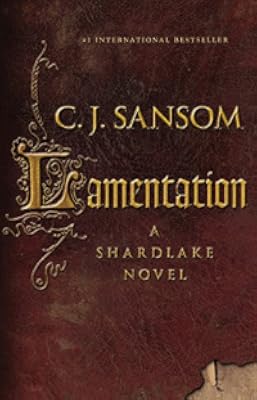
"As Henry VIII lies on his deathbed, an incendiary manuscript threatens to tear his court apart. Summer, 1546. King Henry VIII is slowly, painfully dying. His Protestant and Catholic councilors are engaged in a final and decisive power struggle; whoever wins will control the government. As heretics are hunted across London, and radical Protestants are burned at the stake, the Catholic party focuses its attack on Henry's sixth wife--and Matthew Shardlake's old mentor--Queen Catherine Parr. show more Shardlake, still haunted by his narrow escape from death the year before, steps into action when the beleaguered and desperate Queen summons him to Whitehall Palace to help her recover a dangerous manuscript. The Queen has authored a confessional book, Lamentation of a Sinner, so radically Protestant that if it came to the King's attention it could bring both her and her sympathizers crashing down. Although the secret book was kept hidden inside a locked chest in the Queen's private chamber, it has inexplicably vanished. Only one page has been recovered--clutched in the hand of a murdered London printer. Shardlake's investigations take him on a trail that begins among the backstreet printshops of London, but leads him and his trusty assistant Jack Barak into the dark and labyrinthine world of court politics, a world Shardlake swore never to enter again. In this crucible of power and ambition, Protestant friends can be as dangerous as Catholic enemies, and those with shifting allegiances can be the most dangerous of all" -- show lessTags
Recommendations




















Member Recommendations

Member Reviews
When you see the name of King Henry VIII, what's the image that comes to your mind? One in which the monarch has the physique and appearance of a model (as portrayed by Jonathan Rhys in the TV series The Tudors)? Or the way that Henry himself wanted to be portrayed; A man of authority who, even when he's not kitted out in full royal regalia exudes power. One of the most famous of contemporary portraits shows him directly facing the viewer, legs firmly planted apart and arms akimbo to emphasise his powerful physique. The message is clear: don't even think of messing around with me.
In C.J Sansom's historical series featuring a 'detective' lawyer, Shardlake, the man of law has learned over the years to fear his encounters with the King show more and the powerful men who surround him. Lamentation, the latest episode in the series sees Shardlake once again become embroiled in the kind of political intrigue that could easily cost him his head. This time it's the King's wife Katherine who needs his help when a book of spiritual reflections she has written is stolen from her bedroom. In the religious turmoil of the 1540s, this book could incite even further discord in the land if it is published. Katherine's own safety as risk. For the King;s own wife to write such a text without his knowledge could be considered as treason. Shardlake has a soft spot for the queen so accepts her plea to find the book before the King discovers what's happened.
What ensues is a romp around London, from its leafy Inns of Court and the splendour of its royal palaces to the seedy streets of the poorer quarters as Shardlake tries to discover who is behind the theft and why. It brings him into personal danger with sword fights and a spell in the dreaded dungeons of The Tower. It's all very entertaining if somewhat improbable on many occasions —although Shardlake suffers from his physical deformity and often refers to his aching back, the man still seems to have an extraordinary level of stamina, always dashing about on horse or foot for hours.
That's really a minor point in a novel that otherwise exudes authenticity. Sansom's evocation of the period always feels authoritative and sure (he even provides extensive notes at the back of the book to substantiate his interpretation.) In Lamentation he plunges us into a time when the King's health is a matter for concern though he and his courtiers go to great lengths to keep up a pretence in his public engagements that all is well. Shardlake however stumbles upon some scenes within the inner sanctum of the palace that show the extent to which this once powerful man has declined. In a quiet courtyard he sees the King propped up by two helpers shuffle along the path: show less
In C.J Sansom's historical series featuring a 'detective' lawyer, Shardlake, the man of law has learned over the years to fear his encounters with the King show more and the powerful men who surround him. Lamentation, the latest episode in the series sees Shardlake once again become embroiled in the kind of political intrigue that could easily cost him his head. This time it's the King's wife Katherine who needs his help when a book of spiritual reflections she has written is stolen from her bedroom. In the religious turmoil of the 1540s, this book could incite even further discord in the land if it is published. Katherine's own safety as risk. For the King;s own wife to write such a text without his knowledge could be considered as treason. Shardlake has a soft spot for the queen so accepts her plea to find the book before the King discovers what's happened.
What ensues is a romp around London, from its leafy Inns of Court and the splendour of its royal palaces to the seedy streets of the poorer quarters as Shardlake tries to discover who is behind the theft and why. It brings him into personal danger with sword fights and a spell in the dreaded dungeons of The Tower. It's all very entertaining if somewhat improbable on many occasions —although Shardlake suffers from his physical deformity and often refers to his aching back, the man still seems to have an extraordinary level of stamina, always dashing about on horse or foot for hours.
That's really a minor point in a novel that otherwise exudes authenticity. Sansom's evocation of the period always feels authoritative and sure (he even provides extensive notes at the back of the book to substantiate his interpretation.) In Lamentation he plunges us into a time when the King's health is a matter for concern though he and his courtiers go to great lengths to keep up a pretence in his public engagements that all is well. Shardlake however stumbles upon some scenes within the inner sanctum of the palace that show the extent to which this once powerful man has declined. In a quiet courtyard he sees the King propped up by two helpers shuffle along the path: show less
Wow. If that’s a finale, it’s a great one. Although I will miss future books, it’s satisfying and fitting. Warning - spoilers on the move.
Like all of the prior books, the plot in Lamentation has two branches; the main mystery and task set before Shardlake and his team and a secondary problem, usually a case Matthew is working on. In this one he’s caught up in royal court intrigues because he cannot refuse Queen Catherine Parr (nee Lady Latimer) anything. Because it involves religion it’s pretty much the most dangerous task he’s ever been set. He refuses to involve Barak because of his growing family, but eventually he has to bring him into confidence and it is his downfall. When he’s stabbed and his hand is severed, I had show more to stop listening. It disturbed me on so many levels. It was so shocking, irretrievable and possibly fatal that I had to take a break.
I should have trusted Sansom a little here; it’s clear he loves his characters and I should have realized he wouldn’t write something like that lightly. In the end, Barak, while maimed, lives and finds new employment with a new lawyer since Tammy refuses to let him have anything to do with Matthew. It seems he’s going to be ok and is trying to talk Tammy ‘round. Guy has a new and reliable assistant and his practice is growing although his friendship with Matthew is as strained as it has been in a while. Religion. Of course. The scourge of mankind.
And Matthew’s enemies are contained in the end. One by death; Bealknap has gone down in a pool of spite and hatred and no one misses him. One by circumstance; Queen Catherine saves Matthew from the future savaging he’s most likely have taken by Sir Richard Rich and goes into the service of Lady Elizabeth, then only something like 12. She’ll need a lawyer and she likes him. Even his household is at a point where there isn’t much speculation; he’s had to get rid of another steward and the girl he rescued from his last steward is married. All very neat and satisfactory.
But it isn’t just that to make me think it’s the end; it’s the extensive historical note also.
I don’t remember such a long and involved one included in earlier books. And it also goes into the futures of many characters - Catherine Parr, King Edward, Mary Tudor and Richard Rich. If he intended to write more books, he would have included a lot of it there.
If this is indeed the last book I will miss the rich world that Sansom has created. I will miss gentle, forthright Matthew Shardlake and his tender-hearted need for friendship and justice. I’ll miss Barak’s scheming and quick tongue. I’ll miss Guy and his quest for understanding and better science. I’ll miss the sinister underpinnings to proper Tudor society. Luckily I have all 6 books and can go back anytime. show less
Like all of the prior books, the plot in Lamentation has two branches; the main mystery and task set before Shardlake and his team and a secondary problem, usually a case Matthew is working on. In this one he’s caught up in royal court intrigues because he cannot refuse Queen Catherine Parr (nee Lady Latimer) anything. Because it involves religion it’s pretty much the most dangerous task he’s ever been set. He refuses to involve Barak because of his growing family, but eventually he has to bring him into confidence and it is his downfall. When he’s stabbed and his hand is severed, I had show more to stop listening. It disturbed me on so many levels. It was so shocking, irretrievable and possibly fatal that I had to take a break.
I should have trusted Sansom a little here; it’s clear he loves his characters and I should have realized he wouldn’t write something like that lightly. In the end, Barak, while maimed, lives and finds new employment with a new lawyer since Tammy refuses to let him have anything to do with Matthew. It seems he’s going to be ok and is trying to talk Tammy ‘round. Guy has a new and reliable assistant and his practice is growing although his friendship with Matthew is as strained as it has been in a while. Religion. Of course. The scourge of mankind.
And Matthew’s enemies are contained in the end. One by death; Bealknap has gone down in a pool of spite and hatred and no one misses him. One by circumstance; Queen Catherine saves Matthew from the future savaging he’s most likely have taken by Sir Richard Rich and goes into the service of Lady Elizabeth, then only something like 12. She’ll need a lawyer and she likes him. Even his household is at a point where there isn’t much speculation; he’s had to get rid of another steward and the girl he rescued from his last steward is married. All very neat and satisfactory.
But it isn’t just that to make me think it’s the end; it’s the extensive historical note also.
I don’t remember such a long and involved one included in earlier books. And it also goes into the futures of many characters - Catherine Parr, King Edward, Mary Tudor and Richard Rich. If he intended to write more books, he would have included a lot of it there.
If this is indeed the last book I will miss the rich world that Sansom has created. I will miss gentle, forthright Matthew Shardlake and his tender-hearted need for friendship and justice. I’ll miss Barak’s scheming and quick tongue. I’ll miss Guy and his quest for understanding and better science. I’ll miss the sinister underpinnings to proper Tudor society. Luckily I have all 6 books and can go back anytime. show less
This is the sixth novel in the author's Shardlake series. It is now the dying months of Henry VIII's reign and religious paranoia, twists in official policy and the rise and fall of various figures in the opposing factions, reflect a society in a state of totalitarian oppression akin to that of Stalin's Soviet Union. The plot surrounds the radical religion of Queen Katherine Parr, as shown in the book she has written, The Lamentation of a Sinner, which may fall foul of the shifting religious sands. Murder and deception play themselves out in the usual complex and multi-faceted plot, with well written and convincing descriptions of Tudor London and the small details of street life. As in a couple of the others, I thought it was show more occasionally over-written, but overall extremely good and I felt for the recurring characters as they faced danger. The ending of the novel suggested a closure to the series (though Wikipedia suggests there will be further novels to come). show less
Religious turmoil has been rocking England between the two polarities of reformists who would move England solidly away from Roman Catholicism, and the conservative factions who would have the King return to Rome's fold. Henry VIII has reinstated the Mass and made it a treasonous offense to deny that transubstantiation (the transformation of the wine and wafer into the actual body and blood of Christ) takes place during communion. Extremists in both camps do not hesitate to use every tool at their disposal to win the day for their side. Will the King move toward one side or the other? Will he give up the power he has snatched away from Rome? Will he set the queen aside as some urge him to do?
At this time of confusion and deadly show more religious struggle, Catherine Parr has written her second small book, The Lamentations of a Sinner. Although she doesn't deny the Mass and although the book isn't strictly heretical, it does fall on the reformists' side of the fence. With Bishop Gardiner watching her every move like a hawk to find her out in a heresy, thus discrediting any of Henry's urges in the direction of reform, this was a politically dangerous thing to do. It becomes potentially perilous for Catherine and all the Parrs when the book is stolen from a locked chest in her room.
Enter Sergeant Shardlake to track down the book. What follows is a masterpiece of intrigue, spying, murder, and danger in what I feel is one of the best books in the series so far. The King is very ill and is slowly dying but he still wields supreme power. The courtiers, lords, spies, churchmen, and lawyers all circle around his enormous (in every sense of the word) and decaying form, vying for power and position. Lost somewhere in all of this is the Queen's book but where, and which side has it?
Sansom is brilliant at portraying this dance but he is also superb at showing us the life of every level of Tudor society, from the poorest beggars to the rich lawyers like Shardlake, from the tough men for hire who haunt the waterfront taverns to the opportunistic and immoral privileged folk like Richard Rich. I feel like I'm there while I'm reading these stories, smelling the rotten smells of the middens and tanneries, feeling the danger of a hundred eyes watching everywhere for every slip and misstep to turn to their advantage. Sansom's knowledge of daily life, right down to the fabrics worn and the tools used, underscore this sense of it all being so real.
We know what comes next with Bloody Mary and then the Virgin Queen. I just hope Sansom takes us through this next phase of things to the end of Shardlake's involvement with them. He gives us historical novels at their very best: accurate, incredibly well researched, with characters about whom we have come to care very much indeed. show less
At this time of confusion and deadly show more religious struggle, Catherine Parr has written her second small book, The Lamentations of a Sinner. Although she doesn't deny the Mass and although the book isn't strictly heretical, it does fall on the reformists' side of the fence. With Bishop Gardiner watching her every move like a hawk to find her out in a heresy, thus discrediting any of Henry's urges in the direction of reform, this was a politically dangerous thing to do. It becomes potentially perilous for Catherine and all the Parrs when the book is stolen from a locked chest in her room.
Enter Sergeant Shardlake to track down the book. What follows is a masterpiece of intrigue, spying, murder, and danger in what I feel is one of the best books in the series so far. The King is very ill and is slowly dying but he still wields supreme power. The courtiers, lords, spies, churchmen, and lawyers all circle around his enormous (in every sense of the word) and decaying form, vying for power and position. Lost somewhere in all of this is the Queen's book but where, and which side has it?
Sansom is brilliant at portraying this dance but he is also superb at showing us the life of every level of Tudor society, from the poorest beggars to the rich lawyers like Shardlake, from the tough men for hire who haunt the waterfront taverns to the opportunistic and immoral privileged folk like Richard Rich. I feel like I'm there while I'm reading these stories, smelling the rotten smells of the middens and tanneries, feeling the danger of a hundred eyes watching everywhere for every slip and misstep to turn to their advantage. Sansom's knowledge of daily life, right down to the fabrics worn and the tools used, underscore this sense of it all being so real.
We know what comes next with Bloody Mary and then the Virgin Queen. I just hope Sansom takes us through this next phase of things to the end of Shardlake's involvement with them. He gives us historical novels at their very best: accurate, incredibly well researched, with characters about whom we have come to care very much indeed. show less
If only my Grade 9 History teacher had made English History as interesting as C. J. Sansom does (apologies to Mr. Majeski who was a good teacher and a good friend to my mom) I might have retained more about the Tudors and other English royalty. I still would have thought that Henry VIII was an awful person but not just because he beheaded two wives. He didn't treat his surviving wife, Catherine Parr, much better.
In this book Serjeant Matthew Shardlake is caught up in events at Whitehall Palace despite his previous vow to have nothing more to do with politics. Catherine Parr needs his help again and he cannot deny her. This time Catherine is in fear for her own life because a personal memoir, Lamentation of a Sinner, has been stolen from show more a locked chest in her bedroom. A few days later the front page was found clutched in the hand of a murdered printer. The printer's neighbour realized what the page could mean for the reformist cause and went to Catherine's uncle and closest advisor, Lord Parr. Now the Parrs want Shardlake to search for it before it can be printed and Catherine be accused of treason. She doesn't believe the actual contents are heresy but she know the King would be angered by her keeping the volume and its theft a secret from him. The King is in ill health and some of his closest advisers want him to move England back to Catholicism before he dies. The reformers, which includes the Parrs and the Seymours, are anxious that anything would cause Henry to turn against the reformist cause. It was a time of great turmoil in the capital city. One of the first scenes in the book is Shardlake's witnessing of the burning of three heretics, a sight that continues to haunt him throughout the book. Although Shardlake is sworn to secrecy he finds that he has to take his assistant, Jack Barak, and his student, Nicholas Overton, in on the investigation thus putting them in danger also.
I recently read another book about Catherine Parr, The Taming of the Queen by Philippa Gregory which covers much of this same period. There is a quote on the back of this book from a review Gregory did in The Guardian: "An utterly convincing world, drawing the reader into the darker corners of history." So I think you can take it that Sansom has done a stellar job of recreating this period. show less
In this book Serjeant Matthew Shardlake is caught up in events at Whitehall Palace despite his previous vow to have nothing more to do with politics. Catherine Parr needs his help again and he cannot deny her. This time Catherine is in fear for her own life because a personal memoir, Lamentation of a Sinner, has been stolen from show more a locked chest in her bedroom. A few days later the front page was found clutched in the hand of a murdered printer. The printer's neighbour realized what the page could mean for the reformist cause and went to Catherine's uncle and closest advisor, Lord Parr. Now the Parrs want Shardlake to search for it before it can be printed and Catherine be accused of treason. She doesn't believe the actual contents are heresy but she know the King would be angered by her keeping the volume and its theft a secret from him. The King is in ill health and some of his closest advisers want him to move England back to Catholicism before he dies. The reformers, which includes the Parrs and the Seymours, are anxious that anything would cause Henry to turn against the reformist cause. It was a time of great turmoil in the capital city. One of the first scenes in the book is Shardlake's witnessing of the burning of three heretics, a sight that continues to haunt him throughout the book. Although Shardlake is sworn to secrecy he finds that he has to take his assistant, Jack Barak, and his student, Nicholas Overton, in on the investigation thus putting them in danger also.
I recently read another book about Catherine Parr, The Taming of the Queen by Philippa Gregory which covers much of this same period. There is a quote on the back of this book from a review Gregory did in The Guardian: "An utterly convincing world, drawing the reader into the darker corners of history." So I think you can take it that Sansom has done a stellar job of recreating this period. show less
So I'm all caught up with Shardlake with this last volume, so far, in the series and it was a humdinger! I'd say it was over the top in the gore department, both at the beginning and the end, but one was sufficiently prepared for some of it, if not all of it. Sansom does not beat around the bush about how much closer to the edge people lived then compared to the way we live now. Queen Katherine calls upon Shardlake for help, she has, ill-advisely, written a book "Lamentations of a Sinner" that reveal her protestant, reformist leanings. It has been stolen. Shardlake is chosen to try and retrieve it. The plot is utterly serpentine, and while I did have an inkling, it was still surprising. Really well done, if painful reading near the end show more - which resolves into a very very satisfying ending. Enjoyed the historical notes at the end too. **** show less
In summer 1546, Henry VIII’s much-abused, overindulged body begins to fail, and the London court vultures jostle for a perch from which to become regent for the next king, the boy Prince Edward. Religious conflict will likely determine who triumphs in this struggle, and those deemed heretics pay with their lives, often at the stake. In this combustible atmosphere, Queen Catherine, who’d like to be regent for her stepson, has made a potentially fatal blunder. In secret, without telling Henry, she has written a religious confession, Lamentation of a Sinner, which wouldn’t pass theological muster, and which has been stolen.
Very likely, the thief acted on behalf of a powerful lord who desires her downfall, and there are many of those. show more Pick your preferred form of treason: disloyalty to the throne, or heresy? Either crime could send Catherine to the block, just like two of her predecessors, whose jewels and clothes she wears. And despite Henry’s ill health, his mind’s still sharp, as are his executioners’ axes.
Through her uncle, Lord Parr, she summons Matthew Shardlake, a lawyer who has helped her before with his superior skills at detection and reasoning. A commoner, a hunchback, and more of a free-thinker than he reveals to any but his intimates, Matthew must exercise the greatest caution around ruthless, ambitious courtiers jealous of their prerogatives, who despise him for his looks, birth, and possible heresy.
Accusations of heresy have become an effective, if two-edged, political weapon, often based on such concepts as whether Christ’s blood and flesh appear in fact at communion or symbolically. Given the loose, abstract nature of the argument, any utterance may be (mis)construed according to the hearer’s wishes or prejudices, one way to dispose of an enemy. Further complicating Matthew’s investigation, printers known for or suspected of heretical thinking have been murdered. Did they have the queen’s manuscript? And if so, do the killers possess it now? Do they mean to publish it and destroy the queen that way, or do they have other plans?
Sansom skillfully intertwines these mysteries with the politics of the day. It takes getting used to the notion that anyone would persecute anyone else over such fine distinctions of ritual and believe themselves righteous in doing so. But before long, you understand the mindset that makes this possible, because the social attitudes in this book feel internal to the characters, not merely slipped into their mouths.
To back off this extraordinary novel a second, I’m irritated when I tell people I write historical fiction, and all they focus on is the research I must have to do, as if that were the hard, original part. What about the supreme difficulties of crafting a credible, compelling narrative, in words nobody else has used in exactly that way, and which must pull the reader in on every page? So when I hear such remarks, I’m tempted to reply that anyone can go to the library.
Well, Sansom is the library. He knows every building in sixteenth-century London: which ones stood next to it, what it looked like, who built it, with what materials, who owned it, and how they came by it. That’s just for starters; you see the lords strut, the hangers-on fawn, the supplicants grovel for a sinecure with the great. Among the common folk, you see beggars, lawyers, peddlers, merchants, artisans — you name it.
Such knowledge of detail, almost always wielded with impressive dexterity, conveys a dazzlingly rich portrait of Tudor London. To be sure, Sansom occasionally resorts to information dumps, and he sometimes repeats phrases or facts. But in a narrative as long as this one, with as many reversals as I can count, all revolving around Byzantine power struggles, a reminder of who’s in whose camp doing what can be helpful. And talk about pulling the reader in on every page; Lamentation is a mesmerizing story.
The characters appeal to me less. Matthew, aside from his penchant for setting the record straight, which invariably costs his friends, has no great flaw that I can see. Most characters, though rendered in physical vividness, seem ruled by a single trait, or at most, two. But the excellent storytelling and the never-flagging sense of the physical involve you, and you'll keep guessing the outcome until the end. show less
Very likely, the thief acted on behalf of a powerful lord who desires her downfall, and there are many of those. show more Pick your preferred form of treason: disloyalty to the throne, or heresy? Either crime could send Catherine to the block, just like two of her predecessors, whose jewels and clothes she wears. And despite Henry’s ill health, his mind’s still sharp, as are his executioners’ axes.
Through her uncle, Lord Parr, she summons Matthew Shardlake, a lawyer who has helped her before with his superior skills at detection and reasoning. A commoner, a hunchback, and more of a free-thinker than he reveals to any but his intimates, Matthew must exercise the greatest caution around ruthless, ambitious courtiers jealous of their prerogatives, who despise him for his looks, birth, and possible heresy.
Accusations of heresy have become an effective, if two-edged, political weapon, often based on such concepts as whether Christ’s blood and flesh appear in fact at communion or symbolically. Given the loose, abstract nature of the argument, any utterance may be (mis)construed according to the hearer’s wishes or prejudices, one way to dispose of an enemy. Further complicating Matthew’s investigation, printers known for or suspected of heretical thinking have been murdered. Did they have the queen’s manuscript? And if so, do the killers possess it now? Do they mean to publish it and destroy the queen that way, or do they have other plans?
Sansom skillfully intertwines these mysteries with the politics of the day. It takes getting used to the notion that anyone would persecute anyone else over such fine distinctions of ritual and believe themselves righteous in doing so. But before long, you understand the mindset that makes this possible, because the social attitudes in this book feel internal to the characters, not merely slipped into their mouths.
To back off this extraordinary novel a second, I’m irritated when I tell people I write historical fiction, and all they focus on is the research I must have to do, as if that were the hard, original part. What about the supreme difficulties of crafting a credible, compelling narrative, in words nobody else has used in exactly that way, and which must pull the reader in on every page? So when I hear such remarks, I’m tempted to reply that anyone can go to the library.
Well, Sansom is the library. He knows every building in sixteenth-century London: which ones stood next to it, what it looked like, who built it, with what materials, who owned it, and how they came by it. That’s just for starters; you see the lords strut, the hangers-on fawn, the supplicants grovel for a sinecure with the great. Among the common folk, you see beggars, lawyers, peddlers, merchants, artisans — you name it.
Such knowledge of detail, almost always wielded with impressive dexterity, conveys a dazzlingly rich portrait of Tudor London. To be sure, Sansom occasionally resorts to information dumps, and he sometimes repeats phrases or facts. But in a narrative as long as this one, with as many reversals as I can count, all revolving around Byzantine power struggles, a reminder of who’s in whose camp doing what can be helpful. And talk about pulling the reader in on every page; Lamentation is a mesmerizing story.
The characters appeal to me less. Matthew, aside from his penchant for setting the record straight, which invariably costs his friends, has no great flaw that I can see. Most characters, though rendered in physical vividness, seem ruled by a single trait, or at most, two. But the excellent storytelling and the never-flagging sense of the physical involve you, and you'll keep guessing the outcome until the end. show less
Members
- Recently Added By
Published Reviews
ThingScore 100
"The rich period details burnish Sansom’s status as one of today’s top historical writers."
added by bookfitz
"Shakespearean characterization and Byzantine plotting: Amid all the stink and muck of Tudor London, Sansom offers a master class in royal intrigue."
added by bookfitz
"Lamentation, like its predecessors, is a triumph both as detective fiction and as a novel, and its 615 pages never drag."
added by bookfitz
Lists

Top Five Books of 2018
802 works; 265 members

British Mystery
469 works; 14 members

Top Five Books of 2015
811 works; 241 members

Books Read in 2015
3,299 works; 129 members

Books Read in 2024
4,623 works; 126 members
Author Information

Some Editions
Awards and Honors
Series

Work Relationships
Is contained in
Has the adaptation
Common Knowledge
- Canonical title
- Lamentation
- Original title
- Lamentation
- Original publication date
- 2014-10-23 (UK) (UK)
- People/Characters
- Matthew Shardlake; Katherine Parr (as Catherine); Jack Barak; Anne Askew; William Cecil, 1st Baron Burghley; Nicholas Overton (show all 20); Guy Malton; Philip Coleswyn; Stephen Bealknap; Isabel Slanning; Edward Cotterstoke; Mary Odell; William Parr, Lord of Horton (Lord Parr); Henry VIII, King of England; Richard Rich, 1st Baron Rich; William Paget, 1st Baron Paget; Thomas Seymour (1st Baron Seymour of Sudeley); Stephen Gardiner, Bishop of Winchester; Thomas Wriothesley, 1st Earl of Southampton; Thomas Cranmer, Archbishop of Canterbury
- Important places
- Whitehall Palace, London, England, UK (as Whitehall Palace, London, England); Hampton Court Palace, Richmond, London, England, UK; Lincoln's Inn, London, England, UK (as Lincoln's Inn, London, England); Smithfield, London, England, UK (as Smithfield, London, England); Tower of London, London, England, UK (as Tower of London, London, England); London, England, UK (as London, England)
- Important events
- Death of Henry VIII, King of England (1547); Burning of Anne Askew (1546)
- Dedication
- To Roz Brody, Mike Holmes, Jan King and William Shaw, the stalwart writers' group, for all their comments and suggestions for Lamentation as for the last seven books.
- First words
- I did not want to attend the burning.
- Last words
- (Click to show. Warning: May contain spoilers.)They carried me downriver, to Elizabeth.
- Blurbers
- Gregory, Philippa; Cannon, Margaret
- Original language
- English UK
Classifications
Statistics
- Members
- 1,227
- Popularity
- 20,085
- Reviews
- 49
- Rating
- (4.26)
- Languages
- 7 — English, Finnish, French, German, Norwegian (Bokmål), Russian, Spanish
- Media
- Paper, Audiobook, Ebook
- ISBNs
- 40
- ASINs
- 12