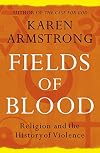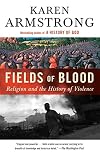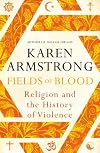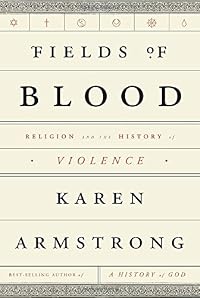
Fields of Blood: Religion and the History of Violence
by Karen Armstrong
On This Page
Description
"From the renowned and best-selling author of A History of God, a sweeping exploration of religion's connection to violence. For the first time in American history, religious self-identification is on the decline. Some have cited a perception that began to grow after Sept 11: That faith in general is a source of aggression, intolerance and divisiveness--something bad for society. But how accurate is that view? And does it apply equally to all faiths? In these troubled times, we risk basing show more decisions of real and dangerous consequence on mistaken understandings of the faiths subscribed around us, in our immediate community as well as globally. And so, with her deep learning and sympathetic understanding, Karen Armstrong examines the impulse toward violence in each of the world's great religions. show lessTags
Recommendations








Member Reviews
When I began reading this book I started asking people if they thought religion causes violence. Invariably I received some version of this response: "Duh!......" So it was intriguing to have Armstrong begin her book by declaring the problem not quite so simple and proceed to give a long, interesting and surprising history of how religion and violence have been intertwined, although not always in a strictly causative manner. In short, what I think Armstrong is claiming that because throughout most of our known history there has been no separation between the secular and the spiritual, even theoretically, that therefore our communal identity (which included the political and religious) was the cause of conflict, not religion as a show more separate entity. Equally to blame for the beginning of organized violence was the agrarian revolution, c9000-8500 BCE, and civilization, with its need to support and control larger populations. Armstrong also examines the dilemma religions have faced pretty much as soon as they developed: "... if a ruling elite adopted an ethical tradition, such as Buddhism, Christianity, or Islam, the aristocratic clergy usually adapted their theology so that it could support the structural violence of the state."
The scholarship is far-reaching and not quickly digested, but it is fascinating. Folded into the narrative are numerous digressions which add to the conclusion that the book's question requires a much broader range of scholarship than might be obvious. And there are some very interesting facts and events to read about, among them:
The first Crusaders, "psychotic" as they massacred thousands of Muslims and Jews, then celebrating their actions in Christian ceremonies.
The siege of Béziers in 1209 by the abbot of Citeaux in an effort to wipe out the Cathari, a popular Christian sect dedicated to poverty, chastity and nonviolence. When asked by his troops how to tell the heretics from the orthodox he had them kill everyone, leaving it to God to "know his own".
John Locke's introduction into the Western philosophical canon of "the myth of religious violence", as he pushed to separate religion and politics.
The Puritans leader John Cotton, exhorting his followers on the "principle of nature" which gave "vacant" land to those who would use it, and justified unprovoked attacks on the natives as "a special Commission from God to take their land", and the Puritans' highly selective use of bellicose Old Testament excerpts rather than the pacifist teaching of Jesus as they killed their native neighbors.
Early Virginia, where it was assumed that "all citizens should have the same faith and that it was the duty of any government to enforce religious observance".
The election of 1800, in which Jefferson was accused of being a Muslim! (Doesn't that sound familiar?)
Calvin's non-literal interpretation of parts of the Bible, including Genesis, and fundamentalism's turn to Biblical literalism and denial of science as a recoil from modern life, especially after WWI.
The introduction of papal infallibility - in 1870!
The change in Israelite belief towards monotheism - but not until 6th century BCE.
I could go on and on, but suffice to say this is one fascinating book and sure to interest anyone with curiosity about the religion/violence connection. show less
The scholarship is far-reaching and not quickly digested, but it is fascinating. Folded into the narrative are numerous digressions which add to the conclusion that the book's question requires a much broader range of scholarship than might be obvious. And there are some very interesting facts and events to read about, among them:
The first Crusaders, "psychotic" as they massacred thousands of Muslims and Jews, then celebrating their actions in Christian ceremonies.
The siege of Béziers in 1209 by the abbot of Citeaux in an effort to wipe out the Cathari, a popular Christian sect dedicated to poverty, chastity and nonviolence. When asked by his troops how to tell the heretics from the orthodox he had them kill everyone, leaving it to God to "know his own".
John Locke's introduction into the Western philosophical canon of "the myth of religious violence", as he pushed to separate religion and politics.
The Puritans leader John Cotton, exhorting his followers on the "principle of nature" which gave "vacant" land to those who would use it, and justified unprovoked attacks on the natives as "a special Commission from God to take their land", and the Puritans' highly selective use of bellicose Old Testament excerpts rather than the pacifist teaching of Jesus as they killed their native neighbors.
Early Virginia, where it was assumed that "all citizens should have the same faith and that it was the duty of any government to enforce religious observance".
The election of 1800, in which Jefferson was accused of being a Muslim! (Doesn't that sound familiar?)
Calvin's non-literal interpretation of parts of the Bible, including Genesis, and fundamentalism's turn to Biblical literalism and denial of science as a recoil from modern life, especially after WWI.
The introduction of papal infallibility - in 1870!
The change in Israelite belief towards monotheism - but not until 6th century BCE.
I could go on and on, but suffice to say this is one fascinating book and sure to interest anyone with curiosity about the religion/violence connection. show less
Very dense, even by Karen Armstrong's standards. The historical study is also, as to her standard, sweeping, spanning from Ancient Sumeria to China to the development/spread of Monotheistic Abrahamic 'Religions.' Always interesting to read her unpack how 'Religion' as we understand it today & the demand for the separation of religion & state was only introduced in Modernity; otherwise unthinkable requests for most of history. Felt rather discomforted by the essentialist insistence that humans have a natural propensity for aggression (in the beginning she spoke touchingly about how rituals set up by hunter-gatherers were often an antidote to the immense guilt & grief in having to kill animals for survival, one would think modern apathy show more to violence makes us seem less compassionate to our supposedly more primal/aggressive ancestors) but she does seem to capture a pattern that has repeated across civilizations starting with the violence of agrarian society. The first half of the book was much stronger for me because of this, I had hoped she could have managed to present the repeated violence of nationalism in modern times with the same strength, though in retrospect that is a lot to ask for (I think she did it quite well in A History of God though). Also, though this wasn't the concern of her thesis, I did wonder why she was so adamant & what has so secured her conviction & agreement with scholars that say that despite the immense cruelty of civilization, this was the only possible way humans could have progressed (did we really, though? especially since the metrics of progress have already been pre-determined as based on wealth though it is restricted, consistently, to the top 1%, it was never progress for anyone else). show less
I spent most of my time reading Fields of Blood, Karen Armstrong’s epic history of violence and religion, waiting for the other shoe to drop. Just what was Armstrong’s end game? She leads off repeating the straw man argument that religion is responsible for all wars on the planet (an argument she places on the lips of anonymous folks rather than actually quoting one). But surely, if that’s all she was up to, it wouldn’t take more than 500 pages and 5000 years of human history to debunk. That would be rhetorical overkill.
A secondary argument to counter – one I’ve actually seen in the wild, at least – appears in the afterword, identified by Armstrong as the idea that religion is responsible for more death than any other show more cause. It’s another pretty easily rebutted argument, but one that, curiously, Armstrong can’t defeat, due to the way she frames the entire book.
The frame, essentially, involves two foundations. First, civilization – not just modern civilization, but all civilization – is inherently violent. Coercive violence is inherent in civilization and its development because without the ability to take other people’s stuff no upper classes will ever develop that will then have time to do things like invent stuff, ponder the great questions, and write large tomes about the history of religion. Second, until a few hundred years ago (in Europe – other places caught up later) religion was intrinsically linked with the rest of life, including politics. The idea of “religion” as a separate thing just didn’t exist.
As a result of all this (and we’ll assume, for our purposes, that her foundations are accurate), we can’t single out “religion” as the cause of any nasty things because it’s just part of a society as a whole that’s doing them. Religion, Armstrong argues, is an attempt by humans to give meaning to their lives, including the horrible violent things they do. Sometimes, it might even reign in our worst impulses. Having said that, she admits near the end that those attempts usually fail.
The upshot of all this is that not just religion in general, but specific religions, are made up of various strains that are at odds with one another, even if they arise from the same holy text. Armstrong does a good job at showing how particular religions throughout history morph from one form to another in order to keep up with prevailing times.
One particular example comes from Judaism, in which the Talmudic stories of King David and the conquest of Palestine – written at a time when such conquering was going on and needed justification – were retconned by future rabbis after the Romans brutally put down a Jewish revolt and destroyed the temple in Jerusalem. In other words, presented with evidence that a more martial glaze on the old stories wasn’t working, they changed their meaning into one of metaphorical struggle of an oppressed people.
Now, here’s the thing – that’s actually good. People who change their minds when new evidence comes to light are rational, thoughtful, and should be applauded. But they weren’t just revising a political philosophy, they were recasting stories of an allegedly divine origin. This is something Armstrong never deals with that distinguishes religion from other schools of thought. Religious texts are (mostly) based on the idea that they are pipelines to a higher truth. If that’s true, they shouldn’t be so malleable in human hands. Otherwise, what’s the point?
Having said that, it’s hard to disagree with Armstrong, so far as her basic thesis goes. As an atheist, I certainly agree that religion is a human construct, not the product of revelation or supernatural spiritual insight. It’s a messy contradictory thing precisely because it’s rooted in humanity. But I’m not sure what that gets her, since she appears to be trying defend religion from unfair criticism.
Armstrong can’t win the second argument noted above with this conception of religion. If it has been, for millennia, an integral part of society, so much so that people didn’t have a separate concept of it, then it’s as responsible for past violence as society as a whole. So what is Armstrong’s goal in doing all this?
It winds up being a gargantuan No True Scotsman fallacy, in which Armstrong suggests that people who claim religious motivations for violent acts are, in essence, bad a religion. This is most clearly evident in her discussion of Al Qaeda and the September 11 attacks.
After a lengthy examination of how a lot of modern Islamic fundamentalism is a response to ham-handed colonial policies (on that theme I think she’s right), Armstrong notes how many of the 9/11 hijackers were fairly Westernized. Nor, she argues, were they particularly devout Muslims before becoming involved with Al Qaeda. This is not unusual, as she cites a study of more than 500 people involved in carrying out the attacks that shows only 25% fit the mold of holy warriors when they joined Al Qaeda.
However, she then struggles with the fact that, once a part of Al Qaeda, they did become holy warriors engaged in jihad, filled with tales of martyrdom. To her, the problem wasn’t religion itself, but not enough of it – had the hijackers really known what the Koran said, they would never have carried out the attacks. She specifically concedes that the hijackers themselves surely saw themselves as religiously motivated, but that’s only because they were bad at Islam. In Armstrong’s telling, religion never fails, it is only failed by the humans acting in its name.
Armstrong returns to this defense – “but the book says . . .” – over and over again, but it doesn’t do her any good. First, it presumes there is one correct way to read any holy text. As her own history extensively shows, different people read the same texts very differently. Second, it ignores the fact that actions matter more than words. In another example, she notes that a particular group of terrorists in the Middle East thought themselves bound by Islamic law to avoid violence against civilians. Nonetheless, she explains how they took civilians hostage, which is a violent act in anybody’s book. Actions, not words, are what counts.
Third, and most troubling for the entire book, is Armstrong wants to view religion’s role in violence as simply as the critics to which she is responding. If it’s not THE cause, she seems to argue, it is exonerated. She ignores (or breezes right past) the role religion can play in making killing of the other guy all right, even if the underlying cause isn’t religious. The American Civil War is an example of a war that was purely political, but both sides thought they were doing God’s work. Ever listened to the “Battle Hymn of the Republic”? It’s all about how righteous the Union cause was.
Another issue that pervades the book is Armstrong’s problems with actually deciding what “violence” is, as seen in her discussion of American fundamentalists. They, compared to their overseas counterparts, are not violent, Armstrong says, ignoring the various instances (Ku Klux Klan, Jim Crow, abortion-related murders and bombings, gay bashing, etc.) where they have been. But then she turns around and charts their rise partly to a reaction against “psychological violence,” which she defines as, essentially, modern secularists saying mean things about them. By stretching the term to meet an immediate rhetorical goal, it loses all relevance.
I think the biggest disappointment with Fields of Blood is that I actually agree with a lot of points Armstrong makes. She’s absolutely correct that the causes of conflict are numerous, complex, intersecting, and can’t be reduced to sound bite descriptions. Similarly, the irrationality that can be the hallmark of religion can be replaced with secular variants of irrationality, too, such as cults of personality or the aftermath of the French Revolution (not to mention the otters). Nor is she wrong that secular states – like the United States – have a record of violence that is nothing to be proud of.
In fact, I think Armstrong and I would agree a lot on what’s wrong in the world and how to fix it. On this issue, however, she’s just not able to get around the fact that some people do horrible things to other human beings (to quote Frank Zappa) “’cause they don’t go for what’s in the book / ‘n that makes ’em bad.” Until she confronts that, Armstrong has a massive blind spot that even a tome like Fields of Blood can’t fill.
www.jdbyrne.net show less
A secondary argument to counter – one I’ve actually seen in the wild, at least – appears in the afterword, identified by Armstrong as the idea that religion is responsible for more death than any other show more cause. It’s another pretty easily rebutted argument, but one that, curiously, Armstrong can’t defeat, due to the way she frames the entire book.
The frame, essentially, involves two foundations. First, civilization – not just modern civilization, but all civilization – is inherently violent. Coercive violence is inherent in civilization and its development because without the ability to take other people’s stuff no upper classes will ever develop that will then have time to do things like invent stuff, ponder the great questions, and write large tomes about the history of religion. Second, until a few hundred years ago (in Europe – other places caught up later) religion was intrinsically linked with the rest of life, including politics. The idea of “religion” as a separate thing just didn’t exist.
As a result of all this (and we’ll assume, for our purposes, that her foundations are accurate), we can’t single out “religion” as the cause of any nasty things because it’s just part of a society as a whole that’s doing them. Religion, Armstrong argues, is an attempt by humans to give meaning to their lives, including the horrible violent things they do. Sometimes, it might even reign in our worst impulses. Having said that, she admits near the end that those attempts usually fail.
The upshot of all this is that not just religion in general, but specific religions, are made up of various strains that are at odds with one another, even if they arise from the same holy text. Armstrong does a good job at showing how particular religions throughout history morph from one form to another in order to keep up with prevailing times.
One particular example comes from Judaism, in which the Talmudic stories of King David and the conquest of Palestine – written at a time when such conquering was going on and needed justification – were retconned by future rabbis after the Romans brutally put down a Jewish revolt and destroyed the temple in Jerusalem. In other words, presented with evidence that a more martial glaze on the old stories wasn’t working, they changed their meaning into one of metaphorical struggle of an oppressed people.
Now, here’s the thing – that’s actually good. People who change their minds when new evidence comes to light are rational, thoughtful, and should be applauded. But they weren’t just revising a political philosophy, they were recasting stories of an allegedly divine origin. This is something Armstrong never deals with that distinguishes religion from other schools of thought. Religious texts are (mostly) based on the idea that they are pipelines to a higher truth. If that’s true, they shouldn’t be so malleable in human hands. Otherwise, what’s the point?
Having said that, it’s hard to disagree with Armstrong, so far as her basic thesis goes. As an atheist, I certainly agree that religion is a human construct, not the product of revelation or supernatural spiritual insight. It’s a messy contradictory thing precisely because it’s rooted in humanity. But I’m not sure what that gets her, since she appears to be trying defend religion from unfair criticism.
Armstrong can’t win the second argument noted above with this conception of religion. If it has been, for millennia, an integral part of society, so much so that people didn’t have a separate concept of it, then it’s as responsible for past violence as society as a whole. So what is Armstrong’s goal in doing all this?
It winds up being a gargantuan No True Scotsman fallacy, in which Armstrong suggests that people who claim religious motivations for violent acts are, in essence, bad a religion. This is most clearly evident in her discussion of Al Qaeda and the September 11 attacks.
After a lengthy examination of how a lot of modern Islamic fundamentalism is a response to ham-handed colonial policies (on that theme I think she’s right), Armstrong notes how many of the 9/11 hijackers were fairly Westernized. Nor, she argues, were they particularly devout Muslims before becoming involved with Al Qaeda. This is not unusual, as she cites a study of more than 500 people involved in carrying out the attacks that shows only 25% fit the mold of holy warriors when they joined Al Qaeda.
However, she then struggles with the fact that, once a part of Al Qaeda, they did become holy warriors engaged in jihad, filled with tales of martyrdom. To her, the problem wasn’t religion itself, but not enough of it – had the hijackers really known what the Koran said, they would never have carried out the attacks. She specifically concedes that the hijackers themselves surely saw themselves as religiously motivated, but that’s only because they were bad at Islam. In Armstrong’s telling, religion never fails, it is only failed by the humans acting in its name.
Armstrong returns to this defense – “but the book says . . .” – over and over again, but it doesn’t do her any good. First, it presumes there is one correct way to read any holy text. As her own history extensively shows, different people read the same texts very differently. Second, it ignores the fact that actions matter more than words. In another example, she notes that a particular group of terrorists in the Middle East thought themselves bound by Islamic law to avoid violence against civilians. Nonetheless, she explains how they took civilians hostage, which is a violent act in anybody’s book. Actions, not words, are what counts.
Third, and most troubling for the entire book, is Armstrong wants to view religion’s role in violence as simply as the critics to which she is responding. If it’s not THE cause, she seems to argue, it is exonerated. She ignores (or breezes right past) the role religion can play in making killing of the other guy all right, even if the underlying cause isn’t religious. The American Civil War is an example of a war that was purely political, but both sides thought they were doing God’s work. Ever listened to the “Battle Hymn of the Republic”? It’s all about how righteous the Union cause was.
Another issue that pervades the book is Armstrong’s problems with actually deciding what “violence” is, as seen in her discussion of American fundamentalists. They, compared to their overseas counterparts, are not violent, Armstrong says, ignoring the various instances (Ku Klux Klan, Jim Crow, abortion-related murders and bombings, gay bashing, etc.) where they have been. But then she turns around and charts their rise partly to a reaction against “psychological violence,” which she defines as, essentially, modern secularists saying mean things about them. By stretching the term to meet an immediate rhetorical goal, it loses all relevance.
I think the biggest disappointment with Fields of Blood is that I actually agree with a lot of points Armstrong makes. She’s absolutely correct that the causes of conflict are numerous, complex, intersecting, and can’t be reduced to sound bite descriptions. Similarly, the irrationality that can be the hallmark of religion can be replaced with secular variants of irrationality, too, such as cults of personality or the aftermath of the French Revolution (not to mention the otters). Nor is she wrong that secular states – like the United States – have a record of violence that is nothing to be proud of.
In fact, I think Armstrong and I would agree a lot on what’s wrong in the world and how to fix it. On this issue, however, she’s just not able to get around the fact that some people do horrible things to other human beings (to quote Frank Zappa) “’cause they don’t go for what’s in the book / ‘n that makes ’em bad.” Until she confronts that, Armstrong has a massive blind spot that even a tome like Fields of Blood can’t fill.
www.jdbyrne.net show less
There is an idea that has become so widely accepted that nearly everyone hears it without questioning: that religion is responsible for most (if not all) of the war and violence that has happened in the world. And when you see news of "Islamic terrorists" waging jihad (holy war) against the West, it seems to make sense. The Holocaust targeted Jews, so WWII must have been about religion, right? Well, not really, and fortunately not everyone accepts this idea at face value.
In Fields of Blood: Religion and the History of Violence, Karen Armstrong says that our modern-day understanding of "religion" actually came about around the time of the Protestant Reformation. People prior to that wouldn't have understood our distinction between a show more secular government and a religious one. She looks back to the ancient civilizations such as the Sumerians and others that sprang up in India, China, and the Middle East and examines the beginnings of the major belief systems (Hindu, Confucianism, Buddhism, Judaism, Christianity, and Islam). She analyzes what is known about the beliefs as they developed and says that religion didn't usually play the same role in people’s lives as we think of today. Furthermore, she says, religion was never the driving force behind wars of conquest: it was all about land and wealth and is a result of agrarian society and the rise of an “upper” or governing class. The fact that religion may have been involved in such aggression was peripheral to the goals, and more often than not religion was a tempering force against such violence.
Armstrong makes a compelling case, even when she discusses the Middle Ages when the Holy Roman Empire held sway over Europe and the Crusaders went to Jerusalem to take back the Holy Land. Even the so-called Religious Wars weren't drawn along the lines of religion, and adherents of different beliefs fought on the same sides. And when it comes to more modern times she explains how religion became the more personal belief we have today and how nationalism became the driving force for violence with the rise of nation states.
Not only is this book very well-researched, it is also very methodical and almost painstaking in its delivery and does so in a very scholarly and academic manner. I felt I was in over my head until it got to more modern times and although I sometimes felt like abandoning the book early on, I'm glad I kept at it. In fact, there's so much information here I feel like this is a book I'd like to re-read again in a few years. I didn’t always find it thoroughly convincing, although that might be due to my unfamiliarity with much of the history, but sometimes it felt like Armstrong was squirming a bit to explain some more modern troubles. But it's a solid and thought-provoking counter-argument to books that claim any gains in peace are due solely to "Enlightenment philosophies" (which she ties to the rise of nation-states and nationalism) and I’m sure I'm doing a poor job of explaining her arguments. But personally, my greatest qualm with the book – as a religious person – is that it’s written with such an agnostic viewpoint that it felt like it was defending the benefits of religious belief systems while denying the Godly power behind them, but I understand the need for a scholarly viewpoint. (I received this book from the bloggingforbooks program in exchange for an unbiased review.) show less
In Fields of Blood: Religion and the History of Violence, Karen Armstrong says that our modern-day understanding of "religion" actually came about around the time of the Protestant Reformation. People prior to that wouldn't have understood our distinction between a show more secular government and a religious one. She looks back to the ancient civilizations such as the Sumerians and others that sprang up in India, China, and the Middle East and examines the beginnings of the major belief systems (Hindu, Confucianism, Buddhism, Judaism, Christianity, and Islam). She analyzes what is known about the beliefs as they developed and says that religion didn't usually play the same role in people’s lives as we think of today. Furthermore, she says, religion was never the driving force behind wars of conquest: it was all about land and wealth and is a result of agrarian society and the rise of an “upper” or governing class. The fact that religion may have been involved in such aggression was peripheral to the goals, and more often than not religion was a tempering force against such violence.
Armstrong makes a compelling case, even when she discusses the Middle Ages when the Holy Roman Empire held sway over Europe and the Crusaders went to Jerusalem to take back the Holy Land. Even the so-called Religious Wars weren't drawn along the lines of religion, and adherents of different beliefs fought on the same sides. And when it comes to more modern times she explains how religion became the more personal belief we have today and how nationalism became the driving force for violence with the rise of nation states.
Not only is this book very well-researched, it is also very methodical and almost painstaking in its delivery and does so in a very scholarly and academic manner. I felt I was in over my head until it got to more modern times and although I sometimes felt like abandoning the book early on, I'm glad I kept at it. In fact, there's so much information here I feel like this is a book I'd like to re-read again in a few years. I didn’t always find it thoroughly convincing, although that might be due to my unfamiliarity with much of the history, but sometimes it felt like Armstrong was squirming a bit to explain some more modern troubles. But it's a solid and thought-provoking counter-argument to books that claim any gains in peace are due solely to "Enlightenment philosophies" (which she ties to the rise of nation-states and nationalism) and I’m sure I'm doing a poor job of explaining her arguments. But personally, my greatest qualm with the book – as a religious person – is that it’s written with such an agnostic viewpoint that it felt like it was defending the benefits of religious belief systems while denying the Godly power behind them, but I understand the need for a scholarly viewpoint. (I received this book from the bloggingforbooks program in exchange for an unbiased review.) show less
Does religion cause war?
Like several Karen Armstrong books I’ve read, Fields of Blood is so rich with information and ideas that it has years worth of material to reflect on and discuss. Even reading slowly and carefully it felt like I was just skimming its surface, but that was still enough to make me question some of my thinking patterns. For years Armstrong has heard people from all walks of life confidently making the broad mostly unexamined pronouncement that religion has been the cause of all major wars in history--I have been guilty of similar shortcut thinking myself--so she wrote Fields of Blood to address that claim with a fascinating, wide-reaching, and detailed world history of culture, politics, violence, and religion show more from the prehistoric pre-agrarian era to the post-9/11 present day.
The central themes of the entire 400+ page book are well summarized in its nine page Afterword, but the particulars of history in the earlier sections are what makes this book so interesting. One of the main ideas Armstrong makes a case for, as best as I can do justice to it, is that religion isn’t the cause of violence, the same religious texts can inspire very different actions, and it’s societal stratification and expansion brought about by the development of agriculture and then industrialization that began the cycle of subjugation and violence as we understand it today. Among the book’s many other interesting points to ponder, whether or not you end up agreeing with Armstrong, are that most people don’t make the claim that WWI or WWII--two of history’s largest wars--were caused by religion, that before the French Revolution there was no separation of church or religion and state so separating out religion as the cause of war is problematic, and that belief systems, even secular belief systems, can play a role in stemming violence and preserving the best aspects of our humanity.
I read an advanced review copy of this book supplied by the publisher. The review opinions are mine. show less
Like several Karen Armstrong books I’ve read, Fields of Blood is so rich with information and ideas that it has years worth of material to reflect on and discuss. Even reading slowly and carefully it felt like I was just skimming its surface, but that was still enough to make me question some of my thinking patterns. For years Armstrong has heard people from all walks of life confidently making the broad mostly unexamined pronouncement that religion has been the cause of all major wars in history--I have been guilty of similar shortcut thinking myself--so she wrote Fields of Blood to address that claim with a fascinating, wide-reaching, and detailed world history of culture, politics, violence, and religion show more from the prehistoric pre-agrarian era to the post-9/11 present day.
The central themes of the entire 400+ page book are well summarized in its nine page Afterword, but the particulars of history in the earlier sections are what makes this book so interesting. One of the main ideas Armstrong makes a case for, as best as I can do justice to it, is that religion isn’t the cause of violence, the same religious texts can inspire very different actions, and it’s societal stratification and expansion brought about by the development of agriculture and then industrialization that began the cycle of subjugation and violence as we understand it today. Among the book’s many other interesting points to ponder, whether or not you end up agreeing with Armstrong, are that most people don’t make the claim that WWI or WWII--two of history’s largest wars--were caused by religion, that before the French Revolution there was no separation of church or religion and state so separating out religion as the cause of war is problematic, and that belief systems, even secular belief systems, can play a role in stemming violence and preserving the best aspects of our humanity.
I read an advanced review copy of this book supplied by the publisher. The review opinions are mine. show less
This book addresses an assumption widely held in the West today, that religion is the cause much if not most of the strife in the world , and has indeed been so throughout history. I have tended to share that view. A quick survey of history, from the Crusades through the Wars of Religion right up to Islamic State, certainly seems to provide evidence. Ms. Armstrong, however, picks apart the apparent causality through a extensive survey of the history of warfare, in tandem with a review of what various holy texts have said about war. After reading her book, I was at least 75% convinced that I had been wrong: that religion like violence are parts of being human that often overlap, but that religion does not cause violence.
The book proceeds show more forward through time from the Neolithic to today, and as it does one of Ms. Armstrong's key points emerges. It is only for the past two hundred years or so, and only in the West, that religion has been separated from the state, to become a private matter for the individual conscience. Through most of history, the state and religion of been interlinked, and religion has been essentially public, evinced in rituals that were at the heart of social relations. Protestantism introduced the idea of religion as a personal, non-mediated choice, and in time the Enlightenment enshrined tolerance and the separation of church and state. But this is very recent: through most of history, religion and politics and social relations and warfare have been inextricably linked. Ms. Armstrong also points out that secularization has not ended warfare -- far from it. The 20th century saw the most horrible and destructive wars in history without much religious involvement. Indeed, these wars were characterized by the replacement of religion by the quasi-religion of the nation state.
Her survey of religious texts shows clearly that no major faith is unequivocally violent, or non-violent. In parts of the New Testament, Jesus calls upon us to turn the other cheek. In others, he brings not peace but a sword. The Koran has sections that praise peace and tolerance, and others that call for war on unbelievers. Rather, religion becomes a motive for war when other forces are pushi in the same direction; when that happens, a justifying text is always available.
Finally, Ms. Armstrong's analysis argues convincingly that the linkage of violence and religion in recent years, particularly in the Middle East, reflects in large part wrenching social and political change. Moreover, with a very few exceptions, that change did not emerge from within countries or societies, it was imposed upon them by colonial powers. This has contributed to a perceived link between modernity and Western imperialism, which in turn contributed to a turn to what was presented as traditional faith as part of a rejection of the West and all its works. When combined with a powerful sense of grievance, this has led to frightening results.. She is not attempting to justify Islamic violence, but she does argue that it can be understood.
This book did not engross me quite so much as some of Ms. Armstrong's earlier works, particularly "The Case For God". Some of the earlier part of the history section drags a bit. Also, there are instances where I think religion was more of a motivating force than she assumes, particularly the European Wars of Religion.
Overall, however, "Fields of Blood" has many virtues. It is commendably readable given the weightiness of its topic. It is carefully researched and documented. And, most important, it is a convincing argument against an assumption that could become very dangerous. If we in the West decide that religion -- or one religion -- is the main reason for violence aimed against us, we could take action against people solely because of their religion. show less
The book proceeds show more forward through time from the Neolithic to today, and as it does one of Ms. Armstrong's key points emerges. It is only for the past two hundred years or so, and only in the West, that religion has been separated from the state, to become a private matter for the individual conscience. Through most of history, the state and religion of been interlinked, and religion has been essentially public, evinced in rituals that were at the heart of social relations. Protestantism introduced the idea of religion as a personal, non-mediated choice, and in time the Enlightenment enshrined tolerance and the separation of church and state. But this is very recent: through most of history, religion and politics and social relations and warfare have been inextricably linked. Ms. Armstrong also points out that secularization has not ended warfare -- far from it. The 20th century saw the most horrible and destructive wars in history without much religious involvement. Indeed, these wars were characterized by the replacement of religion by the quasi-religion of the nation state.
Her survey of religious texts shows clearly that no major faith is unequivocally violent, or non-violent. In parts of the New Testament, Jesus calls upon us to turn the other cheek. In others, he brings not peace but a sword. The Koran has sections that praise peace and tolerance, and others that call for war on unbelievers. Rather, religion becomes a motive for war when other forces are pushi in the same direction; when that happens, a justifying text is always available.
Finally, Ms. Armstrong's analysis argues convincingly that the linkage of violence and religion in recent years, particularly in the Middle East, reflects in large part wrenching social and political change. Moreover, with a very few exceptions, that change did not emerge from within countries or societies, it was imposed upon them by colonial powers. This has contributed to a perceived link between modernity and Western imperialism, which in turn contributed to a turn to what was presented as traditional faith as part of a rejection of the West and all its works. When combined with a powerful sense of grievance, this has led to frightening results.. She is not attempting to justify Islamic violence, but she does argue that it can be understood.
This book did not engross me quite so much as some of Ms. Armstrong's earlier works, particularly "The Case For God". Some of the earlier part of the history section drags a bit. Also, there are instances where I think religion was more of a motivating force than she assumes, particularly the European Wars of Religion.
Overall, however, "Fields of Blood" has many virtues. It is commendably readable given the weightiness of its topic. It is carefully researched and documented. And, most important, it is a convincing argument against an assumption that could become very dangerous. If we in the West decide that religion -- or one religion -- is the main reason for violence aimed against us, we could take action against people solely because of their religion. show less
Subtitled Religion and the History of Violence, Fields of Blood is a well-researched, weighty tome, dark with the world’s dark history, and honest in its analysis of church and state.
The author’s research reveals a historical past where faith was part of a community’s self-expression, and where conquering nations didn’t, in fact, fight because of faith, or destroy the faiths of those they ruled. Secular power-grabs resulted in wars, and faith, at the service of state, emphasized the fight for God’s purity, uniting peoples under the state's command. But in time of peace, those same religions upheld the value of neighbors' lives under God as a mitigating factor to the danger of state brutality. Secular powers fight wars. But in show more peace it's often religion that demands fair treatment be offered to enemies and strangers. In the end, while state may indeed be separated from faith in our Western world, state without faith might prove far more dangerous than any scape-goated religion, its unbridled force becoming the most dangerous enemy.
Fields of Blood is a long slow read, filled with intriguing facts, convincing arguments, and thought-provoking analysis. Details from the past lead up to modern war and terrorism, with every argument backed up by well-researched statistics. There are some seriously interesting surprises presented, offering truths not often told when they don’t fit the plot. And the world’s history of violence proves not to be the same as its history of religion. But this book tells both, offers food and facts for thought, and is highly recommended.
Disclosure: Blogging for Books provided this book to me for free in exchange for an honest review. show less
The author’s research reveals a historical past where faith was part of a community’s self-expression, and where conquering nations didn’t, in fact, fight because of faith, or destroy the faiths of those they ruled. Secular power-grabs resulted in wars, and faith, at the service of state, emphasized the fight for God’s purity, uniting peoples under the state's command. But in time of peace, those same religions upheld the value of neighbors' lives under God as a mitigating factor to the danger of state brutality. Secular powers fight wars. But in show more peace it's often religion that demands fair treatment be offered to enemies and strangers. In the end, while state may indeed be separated from faith in our Western world, state without faith might prove far more dangerous than any scape-goated religion, its unbridled force becoming the most dangerous enemy.
Fields of Blood is a long slow read, filled with intriguing facts, convincing arguments, and thought-provoking analysis. Details from the past lead up to modern war and terrorism, with every argument backed up by well-researched statistics. There are some seriously interesting surprises presented, offering truths not often told when they don’t fit the plot. And the world’s history of violence proves not to be the same as its history of religion. But this book tells both, offers food and facts for thought, and is highly recommended.
Disclosure: Blogging for Books provided this book to me for free in exchange for an honest review. show less
Members
- Recently Added By
Lists

Mike's Theology Books
74 works; 2 members

SantaThing 2014 Gifts
299 works; 17 members

Books Read in 2015
3,298 works; 126 members
Author Information

57+ Works 36,352 Members
Karen Armstrong is one of the foremost commentators on religious affairs in both Britain and the United States. She spent seven years as a Roman Catholic nun and received a degree at Oxford University. (Publisher Provided)
Awards and Honors
Distinctions
Notable Lists
Common Knowledge
- Original publication date
- 2014-10-28
- First words
- Every year in ancient Israel the high priest brought two goats into the Jerusalem temple on the Day of Atonement.
- Last words
- (Click to show. Warning: May contain spoilers.)The scapegoat ritual was an attempt to sever the community's relationship with its misdeeds; it cannot be a solution for us today.
- Canonical DDC/MDS
- 201.72
- Canonical LCC
- BL65.V55
Classifications
- Genres
- Religion & Spirituality, History, Nonfiction, General Nonfiction
- DDC/MDS
- 201.72 — Religion Religion Religious mythology, general classes of religion, interreligious relations and attitudes, social theology Attitudes of religions toward social issues Political affairs
- LCC
- BL65 .V55 — Philosophy, Psychology and Religion Religions. Mythology. Rationalism Religions. Mythology. Rationalism Philosophy of religion. Psychology of religion. Religion
- BISAC
Statistics
- Members
- 996
- Popularity
- 26,098
- Reviews
- 21
- Rating
- (3.97)
- Languages
- 8 — Bosnian, Chinese, Dutch, English, German, Portuguese, Spanish, Swedish
- Media
- Paper, Audiobook, Ebook
- ISBNs
- 24
- ASINs
- 15