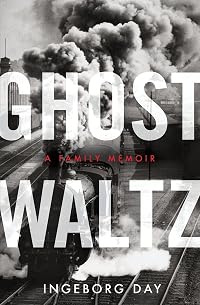
Ghost Waltz: A Family Memoir
by Ingeborg Day
On This Page
Description
A woman comes to terms with her family's dark Nazi past in this memoir from the author of Nine and a Half Weeks--A moving and profound exploration of the legacy of war and hate on an individual life. Born in Austria at the height of Word War II, Ingeborg Day grew up knowing little about the early years of her life. When she came to America in 1957 as an exchange student, she heard for the first time references to Hitler, Nazis, and the Holocaust, topics that were forbidden in her homeland show more and her own house. Day married an American and stayed in the U.S. permanently, a separation that created great physical and psychological distance between herself and her father-- a Nazi nobody, an out-of-work locksmith's apprentice who ended up joining the Austrian army, where his musical talents blossomed in a military band. An early member of the Nazi Party, he was automatically incorporated into the SS after the Anschluss in 1938. But with the fall of the Third Reich, he refused to speak of the past, determined to remain silent. Ghost Waltz, Day's astonishing and beautiful memoir, tells of her efforts to understand the legacy of her Austrian past--one of unbearable horror mixed with ordinary human patrimonies of family loyalty and affection. Moving back and forth in time, from 1980s New York to World War I Austria under Kaiser Franz Josef, she illuminates her country's painful modern history as well as her own memories of the war, of the Russian and English occupations, and of the strangely silent 1950s. Day confronts the question whether and how she was bequeathed a legacy of unvoiced anti-Semitism, an inheritance that Ghost Waltz eloquently repudiates and dispels. show lessTags
Recommendations






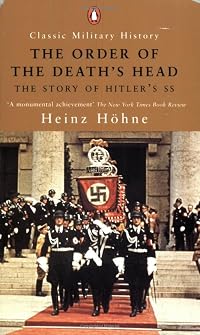
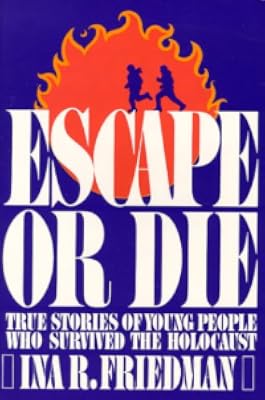

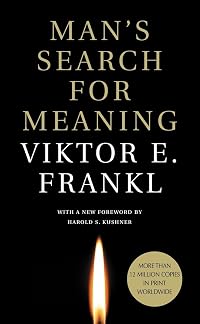
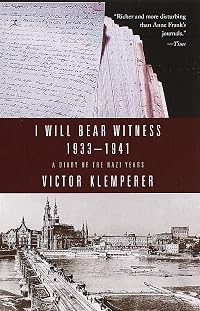



Member Recommendations
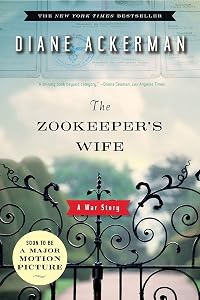
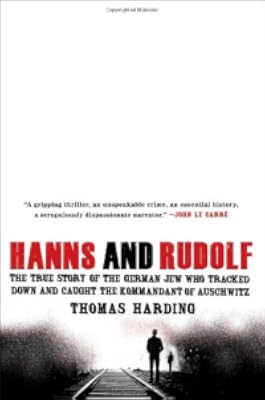
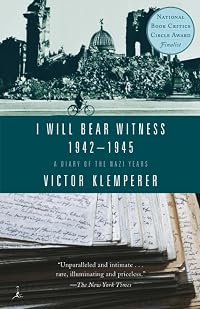
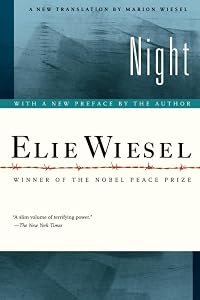
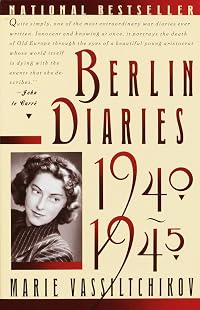
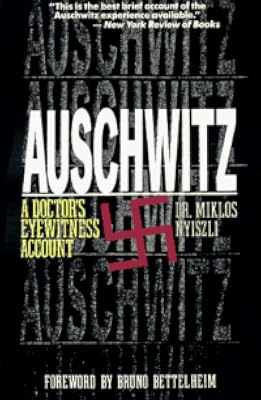
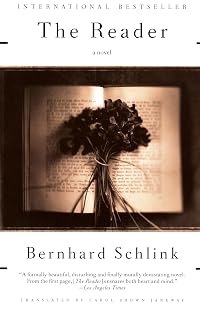
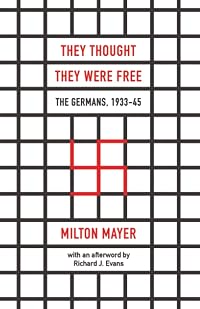
sparemethecensor Different subject matter but similar nonlinear styles and reflective prose.
Member Reviews
I read Ghost Waltz: A Family Memoir by Ingeborg Day on recommendation from a patron. She assured me that I would love it and that it was right up my alley as it was a nonfiction book that covered events from WWII. What hooked me into reading it was that it was covering the events of WWII from the perspective of someone who was on the 'other side' aka the Nazi perspective (as opposed to the 3rd person nonfiction narrative or survivor memoir). Ingeborg wanted to uncover the secrets of her father's past and hopefully work out exactly what his role was as a member of the Nazi Party and SS. She revisited old memories of times spent living in shared accommodation with other families, rationing, and the charged silence around the dinner table. show more She continually reiterated that she had no memories of her parents ever saying anything about Jewish people or showing any violence whatsoever toward anyone...and yet the undertones of the book were very anti-Semitic. I honestly found this a very uncomfortable book to read especially considering that she seemed to vacillate on her own beliefs and feelings towards those who were slaughtered en masse while her father served as a member of the Nazi party. (Her conflicting beliefs made this a very disjointed read.) For those interested in knowing just what his role was and his innermost beliefs, you will be sorely disappointed. There is no clear cut conclusion to be found among the pages of Ghost Waltz. The author herself couldn't seem to work out her own feelings much less those of a man who she had no contact with as an adult (there was an event after she left home which led to a rift). This wasn't my favorite read of the year for multiple reasons but mostly for those stated above: anti-Semitic sentiment and unsatisfactory conclusion. It's a 2/10 for me. :-/ show less
Ghost Waltz: A Family Memoir by Ingeborg Day is a difficult book to review for more than one reason. This book is a search to find out the truth about what her father did in World War II as a Nazi. Her father never talked about the war. He also never talked about Jews so she wanted to know if her father could have been a monster as depicted in American movies. She grew up in a small town in Austria.
In 1956. when she was sixteen, she went to United States as an exchange student. She was very surprised at how different the two countries were. She became enamored with snack foods like Lorna Doones, and saw late night movie after movie about the horrible Nazis. Back home, there was total silence about them. The main things that she learned show more in Austria was a strong work ethic and keep to yourself. She had not heard of the Holocaust in her school or her home. So it was all a shock. She stated read everything that she could about it.
When she returned home, her parents easily talked about how they felt about blacks but not Jews. She could not get them to talk. She wanted to escape so when she received a proposal from an American she snapped it up. After being married, having two kids and some major events in her life she starts reading everything that she can find about Nazis and Hilter. Her bed is a sea of red and black books. She had to know what happened and did her father have a role in. She examines her own prejudices and tries to figure how she came to have them. Why did this happen? She offers economic and cultural reasons. How do the Austrians feel about Russia and why. How do they feel about Germany?
This is a very introspective memoir with the author honestly exposing her feelings whether she like them or not, and whether the reader liked them or not. It is a difficult book to read because it makes you think about prejudice, and what your own feelings are.
I do recommend this book for readers who want to know what it is like to be daughters and sons of Nazis, however it is a difficult book to read because of the consequences of prejudices.
I received this advance reading copy from FirstReads as a win but that in no way influenced the thoughts and feelings in my review. show less
In 1956. when she was sixteen, she went to United States as an exchange student. She was very surprised at how different the two countries were. She became enamored with snack foods like Lorna Doones, and saw late night movie after movie about the horrible Nazis. Back home, there was total silence about them. The main things that she learned show more in Austria was a strong work ethic and keep to yourself. She had not heard of the Holocaust in her school or her home. So it was all a shock. She stated read everything that she could about it.
When she returned home, her parents easily talked about how they felt about blacks but not Jews. She could not get them to talk. She wanted to escape so when she received a proposal from an American she snapped it up. After being married, having two kids and some major events in her life she starts reading everything that she can find about Nazis and Hilter. Her bed is a sea of red and black books. She had to know what happened and did her father have a role in. She examines her own prejudices and tries to figure how she came to have them. Why did this happen? She offers economic and cultural reasons. How do the Austrians feel about Russia and why. How do they feel about Germany?
This is a very introspective memoir with the author honestly exposing her feelings whether she like them or not, and whether the reader liked them or not. It is a difficult book to read because it makes you think about prejudice, and what your own feelings are.
I do recommend this book for readers who want to know what it is like to be daughters and sons of Nazis, however it is a difficult book to read because of the consequences of prejudices.
I received this advance reading copy from FirstReads as a win but that in no way influenced the thoughts and feelings in my review. show less
Ratings
Members
- Recently Added By
Author Information
2 Works 44 Members
Common Knowledge
- Canonical title
- Ghost Waltz: A Family Memoir
Classifications
- Genres
- Nonfiction, Biography & Memoir, History, General Nonfiction
- DDC/MDS
- 943.6 — History & geography History of Europe Central Europe: Germany, Austria, Switzerland, Czech, Poland, Hungary Austria and Liechtenstein
- LCC
- CT918 .D39 .A33 — Auxiliary Sciences of History Biography Biography National biography
- BISAC
Statistics
- Members
- 42
- Popularity
- 702,035
- Reviews
- 2
- Rating
- (2.50)
- Languages
- English
- Media
- Paper, Ebook
- ISBNs
- 3
- ASINs
- 1