Infotopia: How Many Minds Produce Knowledge
by Cass R. Sunstein
On This Page
Description
How can we ensure that the accurate information emerges and is heeded? This book develops an optimistic understanding of the human potential to pool information, combat groupthink, and to use that knowledge to improve our lives.Tags
Recommendations





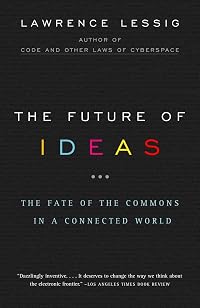







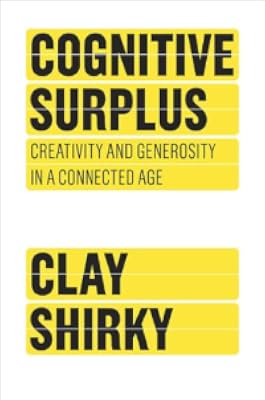







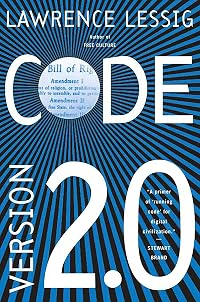








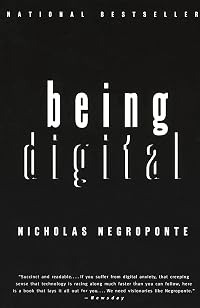
















Member Reviews
In Infotopia, Cass Sunstein offers an accessible and informative overview of important empirical data which work to undermine the epistemic value of group or public deliberation. The bulk of the book is devoted to expounding the two most common methods of aggregating individual information - statistical aggregation and deliberative processes - and then highlighting various empirical studies which demonstrate some of the more pernicious deliberative pathologies. Sunstein goes on to argue that modern methods of information aggregation offer a more promising means of accessing the various information which is distributed among a group. He is particularly interested in prediction markets and various ways in which the internet can be show more harnessed in the attempt to elicit and make use of dispersed knowledge.
While I take Sunstein's primary goal in this work to be the propagation of price systems and private markets as valuable information aggregation tools, my interest was primarily in the deliberative pathologies elaborated in the middle chapters. A clear secondary goal in this book was the undermining of deliberative accounts of democracy, which point to the epistemic value of the public deliberative process as playing a major justificatory role for systems of self-rule. I'm not certain I've finished sifting through Sunstein's argument in my mind, but at a preliminary level I'll say that I have some concerns about how quickly he moves from deliberative pathologies which manifest in deliberation over factual issues with discrete answers to a generalization to political and moral thought. While I'm sympathetic to the claim that the results do generalize, I'm not sure that he's given adequate foundation for the move.
Overall, a quick and enjoyable read. The book should be accessible to just about anyone, not only social scientists or political theorists, and gives good food for thought. Generally recommended if you have any interest in the topics. show less
While I take Sunstein's primary goal in this work to be the propagation of price systems and private markets as valuable information aggregation tools, my interest was primarily in the deliberative pathologies elaborated in the middle chapters. A clear secondary goal in this book was the undermining of deliberative accounts of democracy, which point to the epistemic value of the public deliberative process as playing a major justificatory role for systems of self-rule. I'm not certain I've finished sifting through Sunstein's argument in my mind, but at a preliminary level I'll say that I have some concerns about how quickly he moves from deliberative pathologies which manifest in deliberation over factual issues with discrete answers to a generalization to political and moral thought. While I'm sympathetic to the claim that the results do generalize, I'm not sure that he's given adequate foundation for the move.
Overall, a quick and enjoyable read. The book should be accessible to just about anyone, not only social scientists or political theorists, and gives good food for thought. Generally recommended if you have any interest in the topics. show less
Smart, well thought out, and balanced book. The best book I've read about the implications of Wikipedia, blogs etc.
It reads like the first half of a book, and I kind of wish he'd waited until he had some more concrete conclusions. But maybe it's not a bad thing to have an open ended book on this subject. I recommend it.
It reads like the first half of a book, and I kind of wish he'd waited until he had some more concrete conclusions. But maybe it's not a bad thing to have an open ended book on this subject. I recommend it.
My review is at http://blog.tarn.org/2009/01/30/book-review-infotopia/. It concludes as follows.
Infotopia provides a valuable and informative summary of some important concepts. Its measured and thoughtful tone stands out amongst works of a more evangelical nature that cover similar ground, and is therefore highly recommended. There are gaps, but perhaps in time those will be filled by others.
Infotopia provides a valuable and informative summary of some important concepts. Its measured and thoughtful tone stands out amongst works of a more evangelical nature that cover similar ground, and is therefore highly recommended. There are gaps, but perhaps in time those will be filled by others.
http://www.worldchanging.com/archives/005507.html - review by Ethan Zuckerman.
Meine Rezension befindet sich hier: MBI Blog
Feb 21, 2009German
Ratings
Members
- Recently Added By
Published Reviews
"This book is, essentially, about the democratic processes of the Internet from blogs and wikis to 'prediction markets'."
added by private library
Author Information

89+ Works 10,266 Members
Cass R. Sunstein is a law professor at Harvard Law School and is the most cited law professor in the United States. (Bowker Author Biography)
Common Knowledge
- Original publication date
- 2006
- Dedication
- For Leon Wieseltier
- Blurbers
- Lessig, Lawrence; Zittrain, Jonathan; MacCoun, Robert; Mauboussin, Michael J.
Classifications
- Genres
- Technology, Nonfiction, General Nonfiction, Politics and Government
- DDC/MDS
- 303.4833 — Society, government, & culture Social sciences, sociology & anthropology Social processes Social change Causes of change Development of science and technology Communication
- LCC
- HD30.2 .S85 — Social sciences Industries. Land use. Labor Industries. Land use. Labor Management. Industrial management
- BISAC
Statistics
- Members
- 409
- Popularity
- 75,810
- Reviews
- 6
- Rating
- (3.61)
- Languages
- English, German, Polish
- Media
- Paper, Ebook
- ISBNs
- 7
- ASINs
- 5