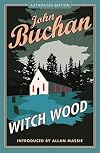
Witch Wood
by John Buchan
On This Page
Description
Buchan's favourite of all his novels, Witch Wood deals with the hypocrisy that can lie beneath god-fearing respectability.The book is set in the terrifying times of the first half of the seventeenth century when the Church of Scotland unleashed a wave of cruelty and intolerance. Minister Sempill witnesses devil worship in the 'Witch Wood' and is persecuted. It comes with an introduction by Allan Massie.Tags
Recommendations




















Member Reviews
As Allan Massie notes in his introduction to this edition, John Buchan considered "Witch Wood" his best novel. Its challenge to the modern reader is the close entwining of politics with religious belief and practice in the mid-seventeenth century Scotland; by incorporating a lot of dialect into the dialogue, Buchan does not make it any easier. However, I am pleased I persevered, although the ending is a bit odd, perhaps more in keeping with one of Buchan's "shocker" adventure novels.
The setting is a rural parish, but with the military activity of the Marquess of Montrose taking place largely off stage. A few years before the start of the novel, there had been widespread outrage in Scotland when in 1638 Charles I had attempted to show more introduce a Prayer Book into Scotland's Established Church. This had resulted in the signing of the National Covenant; the abolition of a Church structure based on bishops (introduced a generation earlier by James VI & I) and reinstatement of Presbyterian form of Church government; and the wars which resulted in Covenanter control of Scotland.
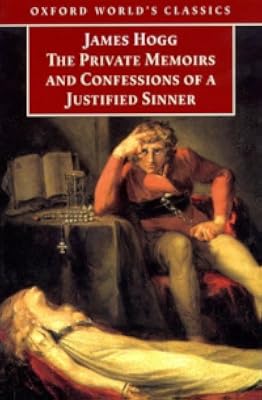
Set within a landscape, changing seasons and weather which are vividly described, the story follows the ministry of the-newly arrived parish minister, which goes from bad to worse despite the good intentions of the minister. Themes include : predestination; a theology dominated by the crueller parts of Scripture; a body of clergy intent on consolidating their recently-acquired power; the belief in witchcraft; the survival of pagan practices; and the limited understanding of the causes and treatments of disease. A century earlier James Hogg had covered the problem of a belief in guaranteed salvation in his novel "Confessions of a Justified Sinner". It's possible that a source for the trial of the young minister was "The Kilmun Heresy" of 1896 - the trial of the Revd Alexander Robinson by the Presbytery of Dunoon for promulgating views opposed to and subversive of the teaching of the Confession of Faith - so perhaps we have in "Witch Wood" Buchan's comment on Church Courts. Buchan would be surprised that the religious fundamentalism he describes remains widespread in the twenty-first century, when limited education and community isolation are no longer a plausible explanation. show less
The setting is a rural parish, but with the military activity of the Marquess of Montrose taking place largely off stage. A few years before the start of the novel, there had been widespread outrage in Scotland when in 1638 Charles I had attempted to show more introduce a Prayer Book into Scotland's Established Church. This had resulted in the signing of the National Covenant; the abolition of a Church structure based on bishops (introduced a generation earlier by James VI & I) and reinstatement of Presbyterian form of Church government; and the wars which resulted in Covenanter control of Scotland.
Set within a landscape, changing seasons and weather which are vividly described, the story follows the ministry of the-newly arrived parish minister, which goes from bad to worse despite the good intentions of the minister. Themes include : predestination; a theology dominated by the crueller parts of Scripture; a body of clergy intent on consolidating their recently-acquired power; the belief in witchcraft; the survival of pagan practices; and the limited understanding of the causes and treatments of disease. A century earlier James Hogg had covered the problem of a belief in guaranteed salvation in his novel "Confessions of a Justified Sinner". It's possible that a source for the trial of the young minister was "The Kilmun Heresy" of 1896 - the trial of the Revd Alexander Robinson by the Presbytery of Dunoon for promulgating views opposed to and subversive of the teaching of the Confession of Faith - so perhaps we have in "Witch Wood" Buchan's comment on Church Courts. Buchan would be surprised that the religious fundamentalism he describes remains widespread in the twenty-first century, when limited education and community isolation are no longer a plausible explanation. show less
It’s the early 1600s and the time of the Covenanters in Scotland. In the wood of Melanudrigill, a coven meets on Beltane, Midsummer, and Lammas. It’s not quite clear what the coven believes — are they Satanists or Pagans? (most likely Satanists but why do they celebrate the old festivals?) But they do sacrifice chickens.
The leader of the coven is a sinister person as he pretends to be an upstanding member of the Kirk, and is willing to sacrifice one of his number to the witch-pricker in order to save his own skin.
The young minister of the parish discovers the beauty of Nature but it is despoiled for him by the activities of the coven, as he stumbles upon one of their
The main goal of the book seems to be to expose the hypocrisy of the Kirk, but also the fact that cunning folk and witches were willing to sacrifice one of their number to save themselves from burning (in Scotland and Europe) and hanging (in England and Wales). Perhaps it’s just to point out that humans are not very nice.
At the end, the minister (who isn’t keen on witch-pricking, especially as the leader of the coven gets away and an innocent woman dies) is excommunicated and he goes abroad with one of Montrose’s army.
At least Montrose gets good press in this book (the battle reenactment group I used to belong to was keen on him and I met one of his descendants once so I am glad Buchan liked him too).
Wasn't for me.
I've read a few John Buchan books and enjoyed them. This one, however, I really struggled to get into and had to give up... so I confess my rating is based on a book only half read. The Scots dialect in the book is very strong and frequently used, so if you are a stranger to it you may struggle like me! There are references to the back of the book so that you can look up expressions you're not familiar with, but the frequency of needing to look them up, I found detracted from the story itself. I'm sure somebody else would enjoy this... but it definitely wasn't for me!
I've read a few John Buchan books and enjoyed them. This one, however, I really struggled to get into and had to give up... so I confess my rating is based on a book only half read. The Scots dialect in the book is very strong and frequently used, so if you are a stranger to it you may struggle like me! There are references to the back of the book so that you can look up expressions you're not familiar with, but the frequency of needing to look them up, I found detracted from the story itself. I'm sure somebody else would enjoy this... but it definitely wasn't for me!
A young minister in a rural Scottish community finds that many leaders of the village are involved in a witchcult; with the aid of a group of local eccentrics, he breaks up the witches' meeting. So fr, all is good, but then his beloved wife (who had inspired him to challenge the witches) dies, his oddball friends fail to support him, and the hypocritical witches retain their power. Very depressing ending. I must admit i think Buchan had a valid point that the lovable eccentrics that often form bands of heroes in adventure fiction are unlikely to prove reliable in real life, but overall, i did not enjoy this book. I may say the witches do not seem to ave genuine occult powers, so this is not fantasy.
Synopsis: Witch Wood is a story of seventeenth-century witchcraft in the Wood of Caledon in the Scottish Borders. The parish minister tries in vain to prevent devil worship and protect his protestant congregation. Meanwhile, civil unrest of the Scottish Wars of the Covenant divides the minister's loyalties. Buchan also weaves in a romantic love story.
Review: I bought this book from Treadwells Esoteric Bookstore and was immediately captured by its writing style. It is set in Scotland and, for the most part, deals with a young minister's trials in dealing with the local witches in his village.
The "wars" referred to in the synopsis are those that divided the church and, eventually, led to the almost complete eradication of superstitions show more and pagan practices that continued under the more lax provisions of the Catholic (papist) and other churches.
Aside from all this, the story is engaging and Mr Buchan has a very distinctive and somewhat old-fashioned writing style. The reader will notice that all the characters speak with a heavy Scots accent - a dictionary of slang may come in handy.
I loved it as a work of fiction and will be keeping my copy to read on dark, windy and wintry nights (oooh, spooky). show less
Review: I bought this book from Treadwells Esoteric Bookstore and was immediately captured by its writing style. It is set in Scotland and, for the most part, deals with a young minister's trials in dealing with the local witches in his village.
The "wars" referred to in the synopsis are those that divided the church and, eventually, led to the almost complete eradication of superstitions show more and pagan practices that continued under the more lax provisions of the Catholic (papist) and other churches.
Aside from all this, the story is engaging and Mr Buchan has a very distinctive and somewhat old-fashioned writing style. The reader will notice that all the characters speak with a heavy Scots accent - a dictionary of slang may come in handy.
I loved it as a work of fiction and will be keeping my copy to read on dark, windy and wintry nights (oooh, spooky). show less
Probably only for the Buchan completist.
Witch Wood is a story of seventeenth-century witchcraft in the Wood of Caledon in the Scottish Borders. The parish minister tries in vain to prevent devil worship and protect his protestant congregation. Meanwhile, civil unrest of the Scottish Wars of the Covenant divides the minister's loyalties. Buchan also weaves in a romantic love story.
John Buchan, Baron Tweedsmuir, was a Scottish diplomat, barrister, journalist, historian, poet and novelist. He wrote adventure novels, short-story collections and biographies. His passion for the Scottish countryside is reflected in much of his writing. Buchan's adventure stories are high in romance and are peopled by a large cast of characters. Richard Hannay, Dickson McCunn and Sir Edward Leithen show more are three that reappear several times. Alfred Hitchcock adapted his most famous book The Thirty-Nine Steps for the cinema. show less
John Buchan, Baron Tweedsmuir, was a Scottish diplomat, barrister, journalist, historian, poet and novelist. He wrote adventure novels, short-story collections and biographies. His passion for the Scottish countryside is reflected in much of his writing. Buchan's adventure stories are high in romance and are peopled by a large cast of characters. Richard Hannay, Dickson McCunn and Sir Edward Leithen show more are three that reappear several times. Alfred Hitchcock adapted his most famous book The Thirty-Nine Steps for the cinema. show less
Members
- Recently Added By
Lists

Lovecraft's 'Supernatural Horror in Literature' Reading List
216 works; 8 members

Cawthorn and Moorcock's Fantasy: The 100 Best Books
110 works; 7 members
Author Information

280+ Works 17,557 Members
John Buchan was born in Perth on 26th August, 1875. Educated at Glasgow University and Brasenose College, Oxford, in 1898 Buchan won the Newdigate Prize for poetry. Although trained as a lawyer, Buchan became private secretary to Lord Alfred Milner, high commissioner for South Africa. In 1903 he returned to England where he became a director of show more the publishing company, Thomas Nelson & Sons. In 1910 Buchan had his first novel, Prester John, published. In July 1914, Blackwood's Magazine began serializing Buchan's The Thirty-Nine Steps. With Britain on the verge of war, the nation was obsessed with German spy fever and its subject matter made it an immediate success. When it was published in book form, it sold over 25,000 copies in three months. Charles Masterman, the journalist, was appointed head of the government's War Propaganda Bureau. Masterman recruited Buchan and asked him to organise the publication of a history of the war in the form of a monthly magazine. Published by his own company, the first installment of the Nelson's History of the War appeared in February, 1915. A further twenty-three appeared at regular intervals throughout the war. In the spring of 1915, Buchan agreed to become one of the five journalists attached to the British Army. He was given responsibility for providing articles for The Times and the Daily News. In June 1916, Buchan was recruited by the British Army to draft communiqués for Sir Douglas Haig and other members of the General Headquarters Staff. Given the rank of Second Lieutenant in the Intelligence Corps, Buchan was also provided with the documents needed to write the Nelson's History of the War. Buchan's History of the War provided the public with a completely false impression of what was going on the Western Front. Buchan also wrote a series of propoganda pamphlets published by Oxford University Press. In February, 1917, the government established a Department of Information. Given the rank Lieutenant Colonel, Buchan was put in charge on the department on an annual salary of £1,000 a year. After the war Buchan continued to write adventures stories such as Huntingtower, The Three Hostages, and Witch Wood (1927). He also became involved in politics and in 1927 was elected Conservative MP for the Scottish Universities. Buchan held the seat until granted the title Baron Tweedsmuir in 1935. Buchan was president of the Scottish History Society from 1929 to 1932, and wrote biographies of Montrose and Sir Walter Scott. Buchan also served as governor-general of Canada from 1935 to 1937 and chancellor of Edinburgh University from 1937 to 1940. John Buchan died on 12th February, 1940. (Bowker Author Biography) show less
Some Editions
Awards and Honors
Notable Lists
Work Relationships
Is contained in
Has as a reference guide/companion
Common Knowledge
- Original publication date
- 1927
- People/Characters
- James Graham, 1st Marquess of Montrose; Katrine Yester; Nicholas Hawkshaw; Mark Kerr; David Semphill; Ephraim Caird (show all 7); Isobel Veitch
- Important places
- Mannan, Scotland, UK (fictional)
- Important events
- Jacobite Risings
- Related movies
- Witch Wood (1964 | IMDb)
- Dedication
- TO WALTER BUCHAN
- First words
- Time, my grandfather used to say, stood still in that glen of his. But the truth of the saying did not survive his death, and the first daisies had scarcely withered on his grave before a new world was knocking at the gate.
- Quotations
- The Kirk has made the yett of grace ower wide for sinful men, and all ither yetts ower narrow. It has banned innocence and so made a calling of hypocrisy, for human nature is human nature, and if you tell a man that honest pl... (show all)easure is a sin in God's sight he finds a way to get the pleasure, and yet keep the name for godliness.
- Last words
- (Click to show. Warning: May contain spoilers.)Two men with wistful eyes leaned over the stern bulwarks, and watched the hills of Lothian dwindle in the bleak April dawn.
Classifications
Statistics
- Members
- 309
- Popularity
- 103,129
- Reviews
- 7
- Rating
- (3.81)
- Languages
- English
- Media
- Paper, Audiobook, Ebook
- ISBNs
- 18
- ASINs
- 17