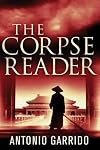
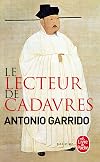
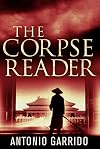
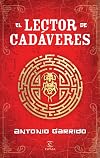
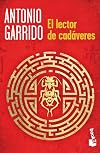
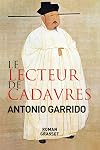
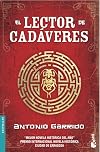
The Corpse Reader
by Antonio Garrido
On This Page
Description
"After his grandfather dies, avid scholar and budding forensic investigator Cí Song begrudgingly gives up his studies to help his family. But when another tragedy strikes, he's forced to run and also deemed a fugitive. Dishonored, he has no choice but to accept work as a lowly gravedigger, a position that allows him to sharpen his corpse-reading skills. Soon, he can deduce whether a person killed himself--or was murdered. His prowess earns him notoriety, and Cí receives orders to unearth show more the perpetrator of a horrific series of mutilations and deaths at the Imperial Court. Cí's gruesome investigation quickly grows complicated thanks to old loyalties and the presence of an alluring, enigmatic woman. But he remains driven by his passion for truth--especially once the killings threaten to take down the Emperor himself."--Publisher's website. show lessTags
Recommendations







Member Reviews
A historical novel set soundly and appropriately in 13th century China, I didn't catch the usual historical novelization errors of imposing our cultural mores on the setting, which pleased me. The tale itself was gripping, and kept me absorbed in the characters. Although graphic at times, this was a more brutal era, one full of filth and blood outside the hidden jewels of the Palace where Song Cí eventually finds himself.
Through medical training in a world which was reluctantly giving up the idea of magic, Song Cí finds himself able to be a necromancer, and speak for the dead. Forced into a parody of what he really wants to do, he leaps at the chance to attend a prestigious school and study medicine and the law. But with fame comes a show more price, and one that could take not only his life, but those of people who have become dear to him...
The protagonist, Song Cí, is a real person, the man who is considered the father of forensics (now you see why I was so excited to not only find this, but realize it was well-done). The secondary characters come to life as well, and I found myself rooting for the hero as he tried to take care of his family and himself in a world with utter disregard for human life. I highly recommend this book. show less
Through medical training in a world which was reluctantly giving up the idea of magic, Song Cí finds himself able to be a necromancer, and speak for the dead. Forced into a parody of what he really wants to do, he leaps at the chance to attend a prestigious school and study medicine and the law. But with fame comes a show more price, and one that could take not only his life, but those of people who have become dear to him...
The protagonist, Song Cí, is a real person, the man who is considered the father of forensics (now you see why I was so excited to not only find this, but realize it was well-done). The secondary characters come to life as well, and I found myself rooting for the hero as he tried to take care of his family and himself in a world with utter disregard for human life. I highly recommend this book. show less
This is historical fiction. The type that takes what we know about a person and expands on it.
Ci Song actually existed and was actually possibly the founder of forensic medicine, or at least of a great many investigative forensic methods. We don't know a whole lot about his life, however. Garrido takes many liberties, as one does, in creating the fictional Ci Song, who has almost finished his studies in medicine when he is forced to return to the country and somehow survive with his family. Circumstances change and he gets a second chance at studying dead bodies, sometimes acting on his own because official paths are not available to him.
He has to find his way around those whose jealousy try to get rid of him. Meanwhile people learn show more that the "corpse reader" might be able to discern what caused the deaths of their loved ones. He is able to examine so many bodies that he learns a lot about how death is caused and how it can be seen.
It's a long book but not boring. I was really surprised to learn that such a person was doing this kind of work so very long ago. It seems that a lot of it was ignored until quite recently. The book is not without drama and intrigue as well. show less
Ci Song actually existed and was actually possibly the founder of forensic medicine, or at least of a great many investigative forensic methods. We don't know a whole lot about his life, however. Garrido takes many liberties, as one does, in creating the fictional Ci Song, who has almost finished his studies in medicine when he is forced to return to the country and somehow survive with his family. Circumstances change and he gets a second chance at studying dead bodies, sometimes acting on his own because official paths are not available to him.
He has to find his way around those whose jealousy try to get rid of him. Meanwhile people learn show more that the "corpse reader" might be able to discern what caused the deaths of their loved ones. He is able to examine so many bodies that he learns a lot about how death is caused and how it can be seen.
It's a long book but not boring. I was really surprised to learn that such a person was doing this kind of work so very long ago. It seems that a lot of it was ignored until quite recently. The book is not without drama and intrigue as well. show less
This was one of those books that you know very little about when you start it but quickly captivates you and has you hooked. This tells the incredible story of Ci Song and his early life. Ci Song is often known as one of the founding fathers of forensic science, having lived in late 13th century / early 14th century China.
If you are interested in historical fiction, Chinese history or the early days of forensic science I would certainly recommend this book to you. Ci Song has such early adventures it is a wonder he ever lived to become the founding father of forensic science. Three words, read and enjoy!
If you are interested in historical fiction, Chinese history or the early days of forensic science I would certainly recommend this book to you. Ci Song has such early adventures it is a wonder he ever lived to become the founding father of forensic science. Three words, read and enjoy!
First Line: Shang didn't know death was coming for him until he tasted the blood spurting up into his throat.
In obeyance with custom in 13th century China, budding forensic investigator Ci Song unwillingly gives up his studies to help his family. After another tragedy strikes, Ci finds himself a fugitive and has no other recourse but to take a job as a lowly gravedigger-- which does allow him to sharpen his skills as a "corpse reader." His abilities make him sought after, and he soon receives a summons from the Imperial Court itself-- a summons that will take every ounce of his corpse reading skill to keep the Emperor-- and Ci himself-- out of danger.
The author did much research on an actual person-- Song Ci, considered the founding show more father of CSI-style forensic science. Garrido tells us about his research and how he went about writing the book in a section at the end. This section is well worth reading. In fact I would have to say that I probably enjoyed it more than I did the story itself.
I found the villain to be glaringly obvious, but even more than that is the fact that Garrido's main character drove me crazy. As written by the author, Ci is academically brilliant and socially obtuse. For a person who is supposedly as brilliant as he at piecing together the most obscure forensic details, Ci is completely ignorant of the people around him. In addition, each time he's cornered by someone who's unraveled one of his personal secrets, his only reaction is to run-- yet he has the courage to face down the Emperor himself over a small forensic detail?
As you can see, my enjoyment of this book was hampered by two things: (1) my inability to put myself in the time period and cultural beliefs of 13th century China, and (2) my reaction to the main character. Something tells me that if I fell into a time machine and opened the door onto this era in China, I wouldn't last very long. I don't have a feudal "decapitate-first-don't-bother-asking-questions" mentality, and I've always had a problem-- in books and in real life-- with people who are book smart yet have absolutely no common sense.
This book sets you down right in the heart of China 800 years ago. If-- unlike me-- you can be more forgiving of that time period's mindset and of a main character who's almost too naive to live, your mileage will most certainly vary from mine. I sincerely hope it does, and even though everything was not to my liking, I really appreciated a glimpse into the mind of a truly brilliant man, Song Ci. show less
In obeyance with custom in 13th century China, budding forensic investigator Ci Song unwillingly gives up his studies to help his family. After another tragedy strikes, Ci finds himself a fugitive and has no other recourse but to take a job as a lowly gravedigger-- which does allow him to sharpen his skills as a "corpse reader." His abilities make him sought after, and he soon receives a summons from the Imperial Court itself-- a summons that will take every ounce of his corpse reading skill to keep the Emperor-- and Ci himself-- out of danger.
The author did much research on an actual person-- Song Ci, considered the founding show more father of CSI-style forensic science. Garrido tells us about his research and how he went about writing the book in a section at the end. This section is well worth reading. In fact I would have to say that I probably enjoyed it more than I did the story itself.
I found the villain to be glaringly obvious, but even more than that is the fact that Garrido's main character drove me crazy. As written by the author, Ci is academically brilliant and socially obtuse. For a person who is supposedly as brilliant as he at piecing together the most obscure forensic details, Ci is completely ignorant of the people around him. In addition, each time he's cornered by someone who's unraveled one of his personal secrets, his only reaction is to run-- yet he has the courage to face down the Emperor himself over a small forensic detail?
As you can see, my enjoyment of this book was hampered by two things: (1) my inability to put myself in the time period and cultural beliefs of 13th century China, and (2) my reaction to the main character. Something tells me that if I fell into a time machine and opened the door onto this era in China, I wouldn't last very long. I don't have a feudal "decapitate-first-don't-bother-asking-questions" mentality, and I've always had a problem-- in books and in real life-- with people who are book smart yet have absolutely no common sense.
This book sets you down right in the heart of China 800 years ago. If-- unlike me-- you can be more forgiving of that time period's mindset and of a main character who's almost too naive to live, your mileage will most certainly vary from mine. I sincerely hope it does, and even though everything was not to my liking, I really appreciated a glimpse into the mind of a truly brilliant man, Song Ci. show less
The Corpse Reader
By: Antonio Garrido, Thomas Bunstead (translator)
This book is based on China in the middle ages. It was pretty good at giving the reader the culture and society's life during that time. We follow a young man through one horrible situation in life to another. He continues to thrive despite all life throws at him. He is bright and works hard which lands him in a place to prove himself and save others. Very nicely done!
By: Antonio Garrido, Thomas Bunstead (translator)
This book is based on China in the middle ages. It was pretty good at giving the reader the culture and society's life during that time. We follow a young man through one horrible situation in life to another. He continues to thrive despite all life throws at him. He is bright and works hard which lands him in a place to prove himself and save others. Very nicely done!
Una novela basada en la vida de Song Cí, conocido como el padre de la medicina forense. Nacido en la China medieval en 1217 fue un reputado forense o "lector de cadáveres", quien elaboró tratados y estudios del tema que hoy en día son considerados los precursores de esta actividad y que además en muchas de sus formas siguen siendo vigentes hoy en día.
Novelada magistralmente por Garrido, conocemos la vida de Cí, un hombre pobre que logró destacar por su inteligencia, sin embargo, y lo aclaro tal como lo aclara el autor en sus notas finales, esta es solo una novela donde se destaca el trabajo de Cí, el primer lector de cadáveres y que nos cuenta un thriller absolutamente absorbente.
Destaco no solo la historia que ya en sí es show more suficiente para catalogar este libro como uno de los buenos, si no el gran trabajo de documentación por parte del autor.
Una historia trepidante, contada de tal manera que es imposible soltar el libro y que me ha parecido muy ilustrativa, puesto que yo no tenía ni idea de que las raíces de la medicina forense fueran tan antiguas y provinieran además de China.
El autor al final del libro nos hace una largo comentario sobre lo que para él y para muchos conocedores sería catalogado como una "novela histórica" pero me quedo con esto "los libros solo pueden ser catalogados como buenos o malos" y éste lo dejo en la categoría de los muy buenos.
La parte novelada nos relata una trama de intrigas, asesinatos y juicios que realmente vale la pena leerse, eso sí toda la primera parte nos relata la vida de Cí y sus penurias para lograr llegar a la muy destacada academia donde podría poner en práctica su sueño de estudiar y convertirse en juez o alguacil. show less
Novelada magistralmente por Garrido, conocemos la vida de Cí, un hombre pobre que logró destacar por su inteligencia, sin embargo, y lo aclaro tal como lo aclara el autor en sus notas finales, esta es solo una novela donde se destaca el trabajo de Cí, el primer lector de cadáveres y que nos cuenta un thriller absolutamente absorbente.
Destaco no solo la historia que ya en sí es show more suficiente para catalogar este libro como uno de los buenos, si no el gran trabajo de documentación por parte del autor.
Una historia trepidante, contada de tal manera que es imposible soltar el libro y que me ha parecido muy ilustrativa, puesto que yo no tenía ni idea de que las raíces de la medicina forense fueran tan antiguas y provinieran además de China.
El autor al final del libro nos hace una largo comentario sobre lo que para él y para muchos conocedores sería catalogado como una "novela histórica" pero me quedo con esto "los libros solo pueden ser catalogados como buenos o malos" y éste lo dejo en la categoría de los muy buenos.
La parte novelada nos relata una trama de intrigas, asesinatos y juicios que realmente vale la pena leerse, eso sí toda la primera parte nos relata la vida de Cí y sus penurias para lograr llegar a la muy destacada academia donde podría poner en práctica su sueño de estudiar y convertirse en juez o alguacil. show less
I just love stories from/about the Orient. This one takes place in China at the beginning of the 13th century. It is the story of Ci who finds himself an orphan and his struggles to clear his father's name and to stay alive! Ci Song is a scholar and a forensic student. There is much intrigue in the courts and at the palace of the emperor. The book is about Ci Song's bad luck and stupid mistakes. I found it somewhat confusing with the plethora of minute characters. The last third of the book seemed to drag; it was about only one episodic story line. Another downside was that sometimes there was not enough differentiation amongst the Chinese names: Fung, Mung, Fang, Shung, Song, Shur, Shi, etc. All in all though, it was a good average show more read. 494 pages 3 stars. show less
Members
- Recently Added By
Lists

Books translated from Romance Languages into English
102 works; 7 members
Author Information

8 Works 549 Members
Some Editions
Awards and Honors
Common Knowledge
- Original title
- El lector de cadáveres
- Original publication date
- 2011
Classifications
Statistics
- Members
- 327
- Popularity
- 97,312
- Reviews
- 26
- Rating
- (3.66)
- Languages
- 7 — English, French, German, Italian, Portuguese, Romanian, Spanish
- Media
- Paper, Audiobook, Ebook
- ISBNs
- 20
- ASINs
- 6