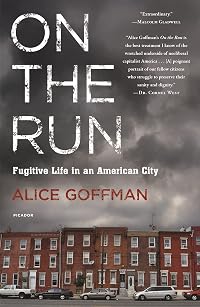
On the Run: Fugitive Life in an American City
by Alice Goffman
On This Page
Description
Forty years in, the War on Drugs has done almost nothing to prevent drugs from being sold or used, but it has nonetheless created a little-known surveillance state in America's most disadvantaged neighborhoods. Arrest quotas and high-tech surveillance techniques criminalize entire blocks, and transform the very associations that should stabilize young lives--family, relationships, jobs--into liabilities, as the police use such relationships to track down suspects, demand information, and show more threaten consequences. Alice Goffman spent six years living in one such neighborhood in Philadelphia, and her close observations and often harrowing stories reveal the pernicious effects of this pervasive policing. Goffman introduces us to an unforgettable cast of young African American men who are caught up in this web of warrants and surveillance--some of them small-time drug dealers, others just ordinary guys dealing with limited choices. All find the web of presumed criminality, built as it is on the very associations and friendships that make up a life, nearly impossible to escape. show lessTags
Recommendations
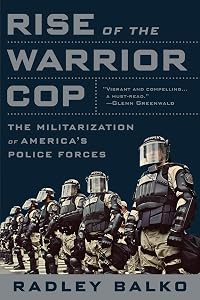
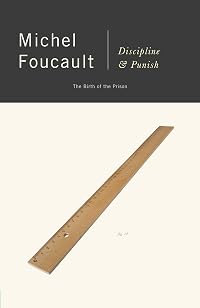

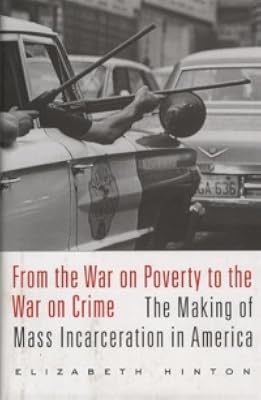
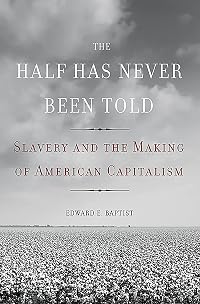
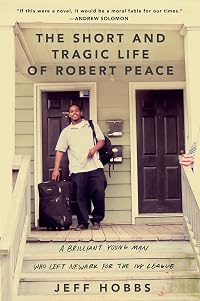
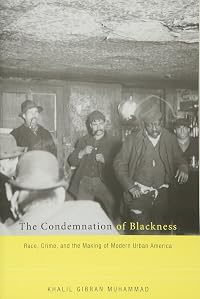



Member Recommendations

Member Reviews
This is a work of ethnography, whose author, a middle-class white student, spent years living in a poor black neighbourhood in an attempt to understand what life was like for people in a very different world. It's generated a lot of controversy, including accusations of focusing too much on the criminal elements and treating the community as a source of dramatic entertainment for outsiders, or something along those lines.
But I found it really informative and worth reading, especially in light of recent events in Ferguson, Staten Island, etc.—lots of poor black people are getting killed by the police for no good reason, and the police are getting away with it. I didn't know nearly enough about the interactions of the criminal justice show more system with poor black communities, so I feel like I learned a lot from this book. There's mention of how young children get entangled in the criminal justice system, like one boy who's maybe 11 and is riding in a car with his older brother; it turns out the car is stolen, so the 11-year-old is treated as an accomplice to a crime and the process begins. There's also discussion of how police threaten and intimidate women to make them inform on their sons, brothers, or boyfriends: in poor neighbourhoods, where living conditions aren't always great, it's easy to say that their homes are unacceptable and threaten to take away their children, or just arrest the women themselves for various secondary crimes like obstructing justice etc. There are plenty of violent police raids. The pressure to inform creates an atmosphere of distrust and rips apart the social fabric; men who are wanted by the police have to make a habit of being unpredictable, not letting anyone know where they'll be at a given time, and so on. I also had no idea just how many types of warrants there are for various offenses: besides actually committing crimes, people are often wanted for things like not paying court fees. And men who often have multiple warrants out for their arrest can't take advantage of basic services like medical care; showing up at the hospital when they've suffered a serious injury or their partner is about to give birth can result in arrest, so it's often too risky.
So there's lots of thought-provoking material here, and I feel like I learned a lot about a world that was completely unfamiliar to me. My only complaint is the organization of the book in thematic sections; the lack of a continuous narrative made it easy to set the book down, so I didn't read it straight through, and I often found myself wanting to read more about Alice herself and her place in this world. But there's a lengthy afterword where she does talk more about her own experiences, which was also really interesting. She had taken her project so far that she avoided any media that her friends in the neighbourhood weren't also reading or watching, with the result that she had trouble interacting with people in graduate school after missing out on years of typical undergrad experiences. She had developed a fear of young-ish white men with short hair—i.e., people who could potentially be police officers—which made it difficult to interact with some of her professors. Etc.
I'm glad I read this one. show less
But I found it really informative and worth reading, especially in light of recent events in Ferguson, Staten Island, etc.—lots of poor black people are getting killed by the police for no good reason, and the police are getting away with it. I didn't know nearly enough about the interactions of the criminal justice show more system with poor black communities, so I feel like I learned a lot from this book. There's mention of how young children get entangled in the criminal justice system, like one boy who's maybe 11 and is riding in a car with his older brother; it turns out the car is stolen, so the 11-year-old is treated as an accomplice to a crime and the process begins. There's also discussion of how police threaten and intimidate women to make them inform on their sons, brothers, or boyfriends: in poor neighbourhoods, where living conditions aren't always great, it's easy to say that their homes are unacceptable and threaten to take away their children, or just arrest the women themselves for various secondary crimes like obstructing justice etc. There are plenty of violent police raids. The pressure to inform creates an atmosphere of distrust and rips apart the social fabric; men who are wanted by the police have to make a habit of being unpredictable, not letting anyone know where they'll be at a given time, and so on. I also had no idea just how many types of warrants there are for various offenses: besides actually committing crimes, people are often wanted for things like not paying court fees. And men who often have multiple warrants out for their arrest can't take advantage of basic services like medical care; showing up at the hospital when they've suffered a serious injury or their partner is about to give birth can result in arrest, so it's often too risky.
So there's lots of thought-provoking material here, and I feel like I learned a lot about a world that was completely unfamiliar to me. My only complaint is the organization of the book in thematic sections; the lack of a continuous narrative made it easy to set the book down, so I didn't read it straight through, and I often found myself wanting to read more about Alice herself and her place in this world. But there's a lengthy afterword where she does talk more about her own experiences, which was also really interesting. She had taken her project so far that she avoided any media that her friends in the neighbourhood weren't also reading or watching, with the result that she had trouble interacting with people in graduate school after missing out on years of typical undergrad experiences. She had developed a fear of young-ish white men with short hair—i.e., people who could potentially be police officers—which made it difficult to interact with some of her professors. Etc.
I'm glad I read this one. show less
I'm years late to the party, but On the Run is a tour de force. Based on ethnographic research done in the early 2000s, Goffman describes the lives of a handful of young men and their families under the full repressive apparatus of the war on drugs. The obvious parallel is with Simon and Burns' The Corner, but while Simon and Burns are journalists and look for the story, Goffman is an academic and she's looking for the theory. There's no hope that any of her protagonists will escape.
What this book is about is about being on the run. The protagonists, Mike, Alex, Chuck, and Reggie, are in their late teens or early 20s. They've all been in and out of jail. Most have outstanding warrants. They've never had basic parts of the straight world show more like a driver's license or a bank account. If they have money, it's because they're selling drugs. And any stability in their lives is purely provisional before they have to run from the cops in earnest, spend years in jail, or wind up dead or crippled from violence that is their stock in trade.
Fugitive life as Goffman describes it is a life of paranoia, of knowing how to spot the cops and outrun them. It's a pattern of unpatterns, since stable residences, relationships, and jobs are just places to get caught. It's knowing that friends, lovers, and relatives will turn you in to the police, and trying to figure out who can be relied on in extremity.
I'm a Foucauldian by training and orientation, so for me the purpose of power is to normalize deviance; to correct it and render it safe. Instead, what Goffman reveals is the opposite of a panopticon. State power for these young men operates in a kind of wrath of god mode, where any interaction is liable to be negative, given that they're by default wanted men for anything from unpaid court fees to possession of drugs to attempted murder. You can run for a long time, for years even, but the odds of making it to 30 free and alive are basically nil. And the path starts at a very young age. Power here, the police and courts, don't deter or correct anyone. They just let you keep going until a bad break, and then it flattens you.
A lot of the negative reviews seem to misunderstand both the scope and limits of this book. While the topic is adjacent to a study of race in America or the sociology of mass incarceration, what this actually is is an ethnography of a few young men and their relations at the bottom of the war on drugs. Goffman did most of the primary fieldwork as an undergraduate; she started tutoring a young woman on the border of the street and got sucked in to the primary. And yeah, she's the white child of academics writing about black criminal men, but this book is nowhere near as unreflective as the critics claim. She got as a close as a person could get, and if it's not the Truth, I dare you to find a better mirror. The official story from the police ain't it. The self-posing gangster biographies (apparently an enter genre of literature I was unaware of) aren't it either. On the Run is fascinating and challenging and well worth the read. show less
What this book is about is about being on the run. The protagonists, Mike, Alex, Chuck, and Reggie, are in their late teens or early 20s. They've all been in and out of jail. Most have outstanding warrants. They've never had basic parts of the straight world show more like a driver's license or a bank account. If they have money, it's because they're selling drugs. And any stability in their lives is purely provisional before they have to run from the cops in earnest, spend years in jail, or wind up dead or crippled from violence that is their stock in trade.
Fugitive life as Goffman describes it is a life of paranoia, of knowing how to spot the cops and outrun them. It's a pattern of unpatterns, since stable residences, relationships, and jobs are just places to get caught. It's knowing that friends, lovers, and relatives will turn you in to the police, and trying to figure out who can be relied on in extremity.
I'm a Foucauldian by training and orientation, so for me the purpose of power is to normalize deviance; to correct it and render it safe. Instead, what Goffman reveals is the opposite of a panopticon. State power for these young men operates in a kind of wrath of god mode, where any interaction is liable to be negative, given that they're by default wanted men for anything from unpaid court fees to possession of drugs to attempted murder. You can run for a long time, for years even, but the odds of making it to 30 free and alive are basically nil. And the path starts at a very young age. Power here, the police and courts, don't deter or correct anyone. They just let you keep going until a bad break, and then it flattens you.
A lot of the negative reviews seem to misunderstand both the scope and limits of this book. While the topic is adjacent to a study of race in America or the sociology of mass incarceration, what this actually is is an ethnography of a few young men and their relations at the bottom of the war on drugs. Goffman did most of the primary fieldwork as an undergraduate; she started tutoring a young woman on the border of the street and got sucked in to the primary. And yeah, she's the white child of academics writing about black criminal men, but this book is nowhere near as unreflective as the critics claim. She got as a close as a person could get, and if it's not the Truth, I dare you to find a better mirror. The official story from the police ain't it. The self-posing gangster biographies (apparently an enter genre of literature I was unaware of) aren't it either. On the Run is fascinating and challenging and well worth the read. show less
This is an astonishing, critical field study into the lives of black men and women and the cycle of perpetual incarceration in a Philadelphia neighborhood (and of course in all of urban America). Every cog in this wheel, from the young men to their mothers to the police to the defenders to the judicial and the jailers know the futility and the utter waste these policies leave in their wake.
Alice is a white undergrad who starts out as a tutor and becomes a 6th Street neighborhood resident and friend to the "dirty" (men and boys with warrants/criminal records) and the "clean" (same as above but with no record). The span between their lives is seemingly unconquerable and to a great extent based on whether or not their parents had stable show more jobs.
Goffman's position, as the only white woman in this environment, is precarious at first. In her conclusion, she provides insight into her ongoing awareness of her white privilege in this book, the basis for her academic thesis. Her struggles with deciding how deeply to immerse herself into 6th Street make for a tale all of its own.
As a member of several anti-racism groups on Facebook, I have mixed feelings about praising this book to the skies - if it was written by a black woman, would any attention have been paid? But I can't ignore how much knowledge I gained by reading On The Run. This is mandatory reading for all progressive people, and might even change a few hearts and minds who currently don't get it. show less
Alice is a white undergrad who starts out as a tutor and becomes a 6th Street neighborhood resident and friend to the "dirty" (men and boys with warrants/criminal records) and the "clean" (same as above but with no record). The span between their lives is seemingly unconquerable and to a great extent based on whether or not their parents had stable show more jobs.
Goffman's position, as the only white woman in this environment, is precarious at first. In her conclusion, she provides insight into her ongoing awareness of her white privilege in this book, the basis for her academic thesis. Her struggles with deciding how deeply to immerse herself into 6th Street make for a tale all of its own.
As a member of several anti-racism groups on Facebook, I have mixed feelings about praising this book to the skies - if it was written by a black woman, would any attention have been paid? But I can't ignore how much knowledge I gained by reading On The Run. This is mandatory reading for all progressive people, and might even change a few hearts and minds who currently don't get it. show less
Alice Goffman, On the Run: Fugitive Life in an American City: Goffman, first as an undergraduate at Penn and then as a grad student, studied a group of mostly young black men in inner-city Philadelphia whose constant encounters with the law shaped every aspect of their lives. In order to avoid what they believed to be the threat of arrest in almost any formal situation and from any predictable behavior, they avoided hospitals (missing the birth of their children and avoiding treatment for serious injuries), calling the police, regular employment, etc. A second economy served them—with everyone taking a taste, of course—providing fake documents, clean urine, unlicensed healthcare, contraband in prison (being incarcerated is show more expensive), etc. She argues that these strategies for staying out of prison were incompatible with maintaining family, work, and friendships. Even the nature of the underground economy wasn’t conducive to strong relationships within that economy—people provided individual services like cell phones but didn’t act collectively.
Meanwhile, the women in these men’s lives routinely faced threats of arrest, eviction, and loss of child custody if they didn’t help the police—putting them in a position where they had to choose between their security or men’s freedom. “In this community, there is simply not enough safety from the authorities to go around.” Arrest was a scarier threat for women on average, because fewer women in the community did go to jail, and other people offered less support to women in jail than to men in jail—“visiting people in prison is considered women’s work.” Jails ran ID checks, so people who were wanted even on misdemeanor warrants didn’t dare come visit. Also, former inmates weren’t allowed to visit jails, and paperwork delays meant that supposedly short exclusion periods could become permanent.
Becoming a snitch risked condemnation from neighbors and family, while staying loyal to a man on the run meant strengthening commitment to a man “just as he ceases to play an active role in her daily life, to furnish her with any concrete future, or to assist her financially.” The police actively worked to destroy relationships, telling women that men had cheated and showing men statements that women had made about them. At the same time, women could use a man’s warrant or probation status to achieve goals of their own—to threaten men for straying, for example. For both men and women, “[g]iving up another person under pressure is seen as a shameful act of betrayal. Doing so voluntarily is considered an act of retribution, or the start of an open conflict. The unintentional bringing of ‘heat’ is taken as a sign of negligence or bad character.” But putting oneself at risk for someone else without a close enough relationship can look desperate and mockable. The overall result was a culture of fear and suspicion, destroying already-fragile family and romantic relationships. “Under the threat of prison, a new and more paranoid social fabric is emerging—one built on the expectation that loved ones may become wanted by the police or may inform on one another to save their own skin.”
The police were routinely brutal: “a little more than twice a month, we watched the police beat up people as they were arresting them.” The police were more violent towards men, but women saw it and knew what the police could do. State violence was therefore commonplace, and the state couldn’t protect people from private violence. Prison guards and other employees of the justice system were often corrupt, and justified themselves as helping people in untenable situations while also recognizing that they were taking money from people who had almost nothing. Along with the costs of being isolated from lawful services, mere interaction with the criminal justice system could cost tens of thousands of dollars, based only on court costs and fines. And, further complicating matters, many criminally involved men were involved with women who worked in the criminal justice system, given women’s generally better educational and employment prospects.
Much of these men’s lives were organized around prison as well as staying out of it. Jail was such a constant part of these men’s lives that some people left money at the bail office until they needed it, using the bail office as a short-term bank that offered no interest but was safer than having the money outside. Being wanted could even be used to explain personal failures, such as failure to find work. Trials/sentencings were moments at which relationship status could be publicly recognized: the woman sitting next to a defendant’s mother is his main partner; the person who’s trusted to manage a man’s possessions when he’s inside is also socially important.
Goffman didn’t spend as much time with the many men in the neighborhood who stayed out of the prison system, but she did talk to them about their experiences—often they stayed indoors as much as possible, playing video games and drinking beer instead of smoking pot in order to avoid failing the urine tests common at their jobs.
Goffman argues that the result of punitive policies is to foster escalating illegality, such as the underground economy and fake papers men use to avoid warrants, and to disrupt the social bonds that could otherwise have controlled disorder. Law-abiding residents want violent young men to change their ways, but they don’t trust the police and have good reason not to do so; the violence and forced betrayals of today’s policing make the cops an additional problem instead of a solution. Instead of social programs and jobs, we have arrests. Goffman argues that the ghetto offers a clear example of the social and cultural effects of living under a repressive regime.
Near the end, Goffman discusses her own personal involvement in great detail. As a young white woman getting a college education, she had freedoms her interviewees didn’t have. She ended up identifying so completely with them, though, that she describes automatically perceiving white men as threats in the way they did. A friend of one of her key informant’s was shot and killed while exiting her car; “one of the bullets pierced my windshield, and the man’s blood spattered my shoes and pants as we ran away.” She went on a car ride with others looking for revenge after that informant was ultimately killed.
Slate published Dwayne Betts’ critique of Goffman as a kind of racial tourist, arguing that her emphasis on black criminality is likely to backfire and further entrench the police state she argues is producing criminality. http://www.slate.com/articles/news_and_politics/jurisprudence/2014/07/alice_goff... Meanwhile, the story of police overpolicing petty offenses, resulting in snowballing fines and jail time for poor black people who couldn’t pay in the first place, is a big part of the Ferguson story, http://www.vox.com/2014/8/19/6043409/a-local-public-defender-on-the-deeply-dysfu... which makes clear that Goffman’s account is not some unique feature of Philadelphia policing. I share Betts’ concern that deeply entrenched racist attitudes make backlash rather than reform a more probable outcome from publicizing how discriminatory current practices are; yet what is the alternative? (He also argues that she overstated how much surveillance goes on in places like hospitals—I’m not sure that fully answers her argument, which I read as being that many young men believe that they could be arrested essentially at any time if they interact with hospitals, regular jobs, etc., so that they are further alienated from non-criminal alternatives.) show less
Meanwhile, the women in these men’s lives routinely faced threats of arrest, eviction, and loss of child custody if they didn’t help the police—putting them in a position where they had to choose between their security or men’s freedom. “In this community, there is simply not enough safety from the authorities to go around.” Arrest was a scarier threat for women on average, because fewer women in the community did go to jail, and other people offered less support to women in jail than to men in jail—“visiting people in prison is considered women’s work.” Jails ran ID checks, so people who were wanted even on misdemeanor warrants didn’t dare come visit. Also, former inmates weren’t allowed to visit jails, and paperwork delays meant that supposedly short exclusion periods could become permanent.
Becoming a snitch risked condemnation from neighbors and family, while staying loyal to a man on the run meant strengthening commitment to a man “just as he ceases to play an active role in her daily life, to furnish her with any concrete future, or to assist her financially.” The police actively worked to destroy relationships, telling women that men had cheated and showing men statements that women had made about them. At the same time, women could use a man’s warrant or probation status to achieve goals of their own—to threaten men for straying, for example. For both men and women, “[g]iving up another person under pressure is seen as a shameful act of betrayal. Doing so voluntarily is considered an act of retribution, or the start of an open conflict. The unintentional bringing of ‘heat’ is taken as a sign of negligence or bad character.” But putting oneself at risk for someone else without a close enough relationship can look desperate and mockable. The overall result was a culture of fear and suspicion, destroying already-fragile family and romantic relationships. “Under the threat of prison, a new and more paranoid social fabric is emerging—one built on the expectation that loved ones may become wanted by the police or may inform on one another to save their own skin.”
The police were routinely brutal: “a little more than twice a month, we watched the police beat up people as they were arresting them.” The police were more violent towards men, but women saw it and knew what the police could do. State violence was therefore commonplace, and the state couldn’t protect people from private violence. Prison guards and other employees of the justice system were often corrupt, and justified themselves as helping people in untenable situations while also recognizing that they were taking money from people who had almost nothing. Along with the costs of being isolated from lawful services, mere interaction with the criminal justice system could cost tens of thousands of dollars, based only on court costs and fines. And, further complicating matters, many criminally involved men were involved with women who worked in the criminal justice system, given women’s generally better educational and employment prospects.
Much of these men’s lives were organized around prison as well as staying out of it. Jail was such a constant part of these men’s lives that some people left money at the bail office until they needed it, using the bail office as a short-term bank that offered no interest but was safer than having the money outside. Being wanted could even be used to explain personal failures, such as failure to find work. Trials/sentencings were moments at which relationship status could be publicly recognized: the woman sitting next to a defendant’s mother is his main partner; the person who’s trusted to manage a man’s possessions when he’s inside is also socially important.
Goffman didn’t spend as much time with the many men in the neighborhood who stayed out of the prison system, but she did talk to them about their experiences—often they stayed indoors as much as possible, playing video games and drinking beer instead of smoking pot in order to avoid failing the urine tests common at their jobs.
Goffman argues that the result of punitive policies is to foster escalating illegality, such as the underground economy and fake papers men use to avoid warrants, and to disrupt the social bonds that could otherwise have controlled disorder. Law-abiding residents want violent young men to change their ways, but they don’t trust the police and have good reason not to do so; the violence and forced betrayals of today’s policing make the cops an additional problem instead of a solution. Instead of social programs and jobs, we have arrests. Goffman argues that the ghetto offers a clear example of the social and cultural effects of living under a repressive regime.
Near the end, Goffman discusses her own personal involvement in great detail. As a young white woman getting a college education, she had freedoms her interviewees didn’t have. She ended up identifying so completely with them, though, that she describes automatically perceiving white men as threats in the way they did. A friend of one of her key informant’s was shot and killed while exiting her car; “one of the bullets pierced my windshield, and the man’s blood spattered my shoes and pants as we ran away.” She went on a car ride with others looking for revenge after that informant was ultimately killed.
Slate published Dwayne Betts’ critique of Goffman as a kind of racial tourist, arguing that her emphasis on black criminality is likely to backfire and further entrench the police state she argues is producing criminality. http://www.slate.com/articles/news_and_politics/jurisprudence/2014/07/alice_goff... Meanwhile, the story of police overpolicing petty offenses, resulting in snowballing fines and jail time for poor black people who couldn’t pay in the first place, is a big part of the Ferguson story, http://www.vox.com/2014/8/19/6043409/a-local-public-defender-on-the-deeply-dysfu... which makes clear that Goffman’s account is not some unique feature of Philadelphia policing. I share Betts’ concern that deeply entrenched racist attitudes make backlash rather than reform a more probable outcome from publicizing how discriminatory current practices are; yet what is the alternative? (He also argues that she overstated how much surveillance goes on in places like hospitals—I’m not sure that fully answers her argument, which I read as being that many young men believe that they could be arrested essentially at any time if they interact with hospitals, regular jobs, etc., so that they are further alienated from non-criminal alternatives.) show less
Alice Goffman’s Ph.D dissertation has turned into an amazing book on the effect of mass incarceration and excessive policing on one poor, black Philadelphia neighborhood. The young men she follows for 6 years of fieldwork struggle to support themselves, to attend court dates, to pay court fees, and to stay away from the police. They are “on the run”. Their lives are chaotic, even as they try to maintain some sense of dignity and honor. At the same time, they also use the criminal justice system with its jails, bonds, and warrants to serve their own needs for sanctuary, banking, and to excuse personal failures.
Goffman also covers how the state of being on the run affects the young men’s relationships with family and loved ones. show more Mothers and lovers shelter and protect men on the run, unless they are turning them over to the police under pressure or in an attempt to protect them from violence. Her book also covers the quiet or “clean” folks of the neighborhood, who have jobs, ambitions, and who avoid street life when they can.
This book is somewhat controversial, but many of the complaints about it are the result of academic nit-picking, grievance-finding, or just plain jealousy. On the run should be required reading for anyone interest in criminal justice reform. show less
Goffman also covers how the state of being on the run affects the young men’s relationships with family and loved ones. show more Mothers and lovers shelter and protect men on the run, unless they are turning them over to the police under pressure or in an attempt to protect them from violence. Her book also covers the quiet or “clean” folks of the neighborhood, who have jobs, ambitions, and who avoid street life when they can.
This book is somewhat controversial, but many of the complaints about it are the result of academic nit-picking, grievance-finding, or just plain jealousy. On the run should be required reading for anyone interest in criminal justice reform. show less
Even though I give this one star mostly for the author's arcane premise that criminals commit crimes because of their social station and life, the book is worth a read for its portray of the actors in the inner city crime problem. The author completely negates the role of personal responsibility as a factor.
I found this book to be full of answers to the questions that we have all asked. We have always been given vague answers to, why our black youths, mainly male are filling up the prisons. We finally get the answers to many of our questions answered by Ms. Goffman.
This was part of Ms. Goffman's thesis which turned into a fantastic book, she wrote it from her own notes and experiences while living in a poor black Philadelphia neighborhood for six years. She became very close with many of the people who lived in an area known as 6th street. She even lived on the block and became roommates with two of the young men who have been in the system from an early age. She describes how hard is to get and hold a job once you've been in the system or show more even finish school. She witnesses the way the police treat all the members of the neighborhood, from completely random stops of the young men to full out beatings. Most of the young men were on probation or parole for low level offenses. They were constantly getting thrown back into the system for not being able to pay the court costs, etc. It was a never ending cycle they were constantly having court appearances or getting arrested that they couldn't hold down a job regardless how hard they tried. Some were forced to sell drugs just to be able to survive. These young men were constantly on the run because from their prospective everyone was the enemy.
The police would put pressure on the young men's mothers who had nothing as it was by night raids by breaking down the door and literally destroy the house. If the person of question wasn't there they would threaten to have whatever benefits they were on cancelled and charge them with harboring a fugitive. A lot of these poor women were terrified, the elderly and sick ones were easy marks for the officers. If the young man had children they would use the same scare tactics with the children's mothers. They were very quick with tossing CPS out to them, which has to be every mother's nightmare. Their own friends weren't immune to this type of "shakedown". They were always threatened with some minor offence that would land them in Jail or Prison. It really opens your eyes to what these young man had forfeit to keep from landing back in the system over something a bench warrant for not being able to pay the fines when they can get arrested showing up for work.
This is a fantastic book, I really wish there were more books like this out to make people understand that it's not the youth that are causing the trouble it's our justice system. Reading this book it was like reading about a war zone in our Country. These men were getting it from other gangs, they were hardly a gang themselves, just a group of boys who grew up together. But they had to protect themselves for the violence these others would cause them or it just escalated. This book also tells of some ingenious ways these young people had to patch themselves up since they couldn't go the hospital.
Ms. Goffman did an excellent job writing this book and you could even say she risked her life and freedom to get this wonderful, insightful book written. I highly recommend this book to anyone who is interested in our society and that should be everyone. It will help you understand the crisis that is going out not only with the police but the whole justice system. less show less
This was part of Ms. Goffman's thesis which turned into a fantastic book, she wrote it from her own notes and experiences while living in a poor black Philadelphia neighborhood for six years. She became very close with many of the people who lived in an area known as 6th street. She even lived on the block and became roommates with two of the young men who have been in the system from an early age. She describes how hard is to get and hold a job once you've been in the system or show more even finish school. She witnesses the way the police treat all the members of the neighborhood, from completely random stops of the young men to full out beatings. Most of the young men were on probation or parole for low level offenses. They were constantly getting thrown back into the system for not being able to pay the court costs, etc. It was a never ending cycle they were constantly having court appearances or getting arrested that they couldn't hold down a job regardless how hard they tried. Some were forced to sell drugs just to be able to survive. These young men were constantly on the run because from their prospective everyone was the enemy.
The police would put pressure on the young men's mothers who had nothing as it was by night raids by breaking down the door and literally destroy the house. If the person of question wasn't there they would threaten to have whatever benefits they were on cancelled and charge them with harboring a fugitive. A lot of these poor women were terrified, the elderly and sick ones were easy marks for the officers. If the young man had children they would use the same scare tactics with the children's mothers. They were very quick with tossing CPS out to them, which has to be every mother's nightmare. Their own friends weren't immune to this type of "shakedown". They were always threatened with some minor offence that would land them in Jail or Prison. It really opens your eyes to what these young man had forfeit to keep from landing back in the system over something a bench warrant for not being able to pay the fines when they can get arrested showing up for work.
This is a fantastic book, I really wish there were more books like this out to make people understand that it's not the youth that are causing the trouble it's our justice system. Reading this book it was like reading about a war zone in our Country. These men were getting it from other gangs, they were hardly a gang themselves, just a group of boys who grew up together. But they had to protect themselves for the violence these others would cause them or it just escalated. This book also tells of some ingenious ways these young people had to patch themselves up since they couldn't go the hospital.
Ms. Goffman did an excellent job writing this book and you could even say she risked her life and freedom to get this wonderful, insightful book written. I highly recommend this book to anyone who is interested in our society and that should be everyone. It will help you understand the crisis that is going out not only with the police but the whole justice system. less show less
Members
- Recently Added By
Lists

Club Read's Recommended Nonfiction Written by Women
618 works; 30 members
Author Information

1 Work 439 Members
Awards and Honors
Classifications
- Genres
- Sociology, Nonfiction, Politics and Government, General Nonfiction, History
- DDC/MDS
- 364.3 — Society, government, & culture Social problems and social services Crime Criminals
- LCC
- HV9956 .P53 .G64 — Social sciences Social pathology. Social and public welfare. Criminology Social pathology. Social and public welfare. Criminal justice administration By region or country
- BISAC
Statistics
- Members
- 438
- Popularity
- 70,148
- Reviews
- 14
- Rating
- (4.01)
- Languages
- English, French, German, Swedish
- Media
- Paper, Audiobook, Ebook
- ISBNs
- 10
- ASINs
- 5