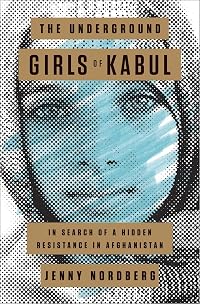
The Underground Girls of Kabul: In Search of a Hidden Resistance in Afghanistan
by Jenny Nordberg
On This Page
Description
An investigative journalist uncovers a hidden custom in Afghanistan that will transform your understanding of what it means to grow up as a girl.“An astonishingly clear picture of this resourceful, if imperfect, solution to the problem of girlhood in a society where women have few rights and overwhelming restrictions.”—The Boston Globe
In Afghanistan, a culture ruled almost entirely by men, the birth of a son is cause for celebration and the arrival of a daughter is often mourned show more as misfortune. A bacha posh (literally translated from Dari as “dressed up like a boy”) is a third kind of child—a girl temporarily raised as a boy and presented as such to the outside world. Jenny Nordberg, the reporter who broke the story of this phenomenon for the New York Times, constructs a powerful and moving account of those secretly living on the other side of a deeply segregated society where women have almost no rights and little freedom.
The Underground Girls of Kabul is anchored by vivid characters who bring this remarkable story to life: Azita, a female parliamentarian who sees no other choice but to turn her fourth daughter Mehran into a boy; Zahra, the tomboy teenager who struggles with puberty and refuses her parents’ attempts to turn her back into a girl; Shukria, now a married mother of three after living for twenty years as a man; and Nader, who prays with Shahed, the undercover female police officer, as they both remain in male disguise as adults.
At the heart of this emotional narrative is a new perspective on the extreme sacrifices of Afghan women and girls against the violent backdrop of America’s longest war. Divided into four parts, the book follows those born as the unwanted sex in Afghanistan, but who live as the socially favored gender through childhood and puberty, only to later be forced into marriage and childbirth. The Underground Girls of Kabul charts their dramatic life cycles, while examining our own history and the parallels to subversive actions of people who live under oppression everywhere.
. show less
Tags
Recommendations
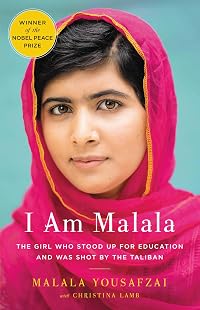


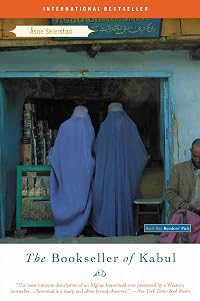
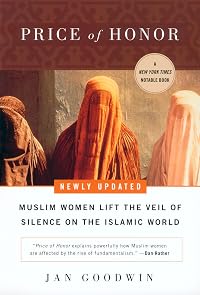
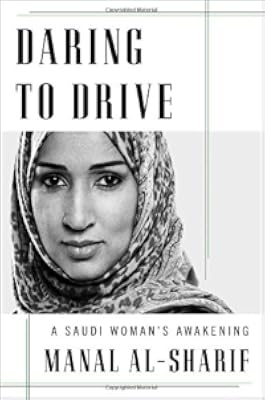






























Member Recommendations

Member Reviews
To say that this book was mind-blowing would not be an understatement. By the end, I wanted to go around and show it to people, demanding that they read it. I learned so much. All along I have never understood the conflict in Afghanistan, and while this isn't a book about the war there, it did begin to put pieces in place for me. Finally, things began to make sense. And a realization about the seeming futility of what the Western world is trying to do there. In the end, though, the book is about the women and girls of Afghanistan, and the lives that they lead due to the political, social, and religious climate there. So much of what the book puts forward makes only convoluted sense, and then, you are reminded this this isn't our show more culture. Our definitions do not apply, and need not apply. I think one of the most telling statements in the book came from a woman who said she would gladly wear two burkas if it meant her freedom. Because ultimately, that is what the book addresses: that the women of Afghanistan do not have freedom; further, they do not have an identity, and that no manner of Western idealism can erase that merely because we wish it so. Nordberg does not try to offer solutions. In fact, she seems to take a certain amount of pride in that. Western ideals are not the solution, she points out. They do not take into account all manner of facts that make this so. As a reader, I did not walk away from the pages with an answer, but I did come away with a greater understanding of a culture that is radically different than the one I live in, and oddly, with a better understanding of my own culture and what it means to be female. Go. Read it. show less
Unforgettable, and please remind me of this book if I ever complain about anything ever again. This is an in depth look at the utter misery of everyone's lives in Afghanistan, with the focus where it should be, on women. The tribal systems, predating Islam, treat women solely as wombs for germinating boys. The gossip mongers, so prevalent in a society where nothing else functions, serve to ruin the lives of anyone who acts "immoral". Married teenaged women are killed or replaced by additional wives for not bearing sons. And so, the remedy for those families is to turn one of their girls into a boy until they reach puberty, by dressing her in pants, cutting her hair, and making her work. This turns out to be the best for these children show more because of the freedom (albeit limited) entailed. But how can you keep them down as women when they've been exaltedly privileged as males? And what happens when you force them to change back? The author spends time with the "bacha posh" (literally "dressed as a boy") and their families to learn the ramifications.
I recently spent time with Regina Calcaterra, author of Etched In Sand, a memoir of a childhood of violence and neglect. She said that she had developed an appreciation for being a foster child here in the US as compared to other countries. Afghanistan, from this book, has to be the worst place in the world to try and survive. Between wars, invasions, grinding poverty, rugged terrain, and especially the subjugation of women, suicide seems like a viable option.
I am not a fan of "poverty porn". I try to keep learning, and this book forced my eyes to be opened to my charmed life as a woman of the first world. I am now changed and a bit humbled. There but for fortune/Go you and I. show less
I recently spent time with Regina Calcaterra, author of Etched In Sand, a memoir of a childhood of violence and neglect. She said that she had developed an appreciation for being a foster child here in the US as compared to other countries. Afghanistan, from this book, has to be the worst place in the world to try and survive. Between wars, invasions, grinding poverty, rugged terrain, and especially the subjugation of women, suicide seems like a viable option.
I am not a fan of "poverty porn". I try to keep learning, and this book forced my eyes to be opened to my charmed life as a woman of the first world. I am now changed and a bit humbled. There but for fortune/Go you and I. show less
Engaging, Informative, Interrogative; Intersectional Gender Studies At Its Best
(Full disclosure: I received a free ARC for review through Goodreads' First Reads program.)
"The bacha posh [...] is a human phenomenon, and exists throughout our history, in vastly different places, with different religions and in many languages. Posing as someone, or something, else is the story of every woman and every man who has experienced repression and made a bid for freedom. It is the story of a gay U.S. Marine who had to pretend he was straight. It is the story of a Jewish family in Nazi Germany posing as Protestants. It is the story of a black South African who tried to make his skin lighter under apartheid. Disguising oneself as a member of the show more recognized and approved group is at the same time a subversive act of infiltration and a concession to an impossible racist, sexist, or otherwise segregating system."
Investigative journalist Jenny Nordberg was researching a larger story about Afghan women when she stumbled upon the practice of bacha posh ("dressed up like a boy" in Dari). During a visit with Azita Rafaat, one of the few women* to be elected to Afghanistan's newly formed Parliament, one of Azita's four children let the family's loosely guarded secret slip: "Our brother is really a girl." And so begins The Underground Girls of Kabul: In Search of a Hidden Resistance in Afghanistan.
Bacha poshes are a sort of "third child": dressed, raised, and/or presented to the outside world as boys, the majority of these girls are nonetheless expected to embrace their womanhood - and the subjugation which accompanies it - once they hit puberty. While the level of freedom afforded a bacha posh varies - depending on the family's reasons for passing their daughter off as a son; their level of income; their local community's feelings on the practice; and the family patriarch's open mindedness, or lack thereof - it's arguably better than existing while female in Afghanistan, where women have few rights. In Azita's words, "I wanted to show my youngest what life is like on the other side."
After meeting six-year-old Mehran (formerly known as Mahnoush), Nordberg inquired around about the practice, only to be dismissed out of hand by the various Western "experts" who flooded Afghanistan in the wake of the U.S. invasion. But more discreet interviews with Afghans themselves revealed that bacha posh is a longstanding tradition, deeply rooted in history, that exists out in the open but is rarely discussed beyond the confines of the home - "don't ask, don't tell," if you will. Nordberg was surprised to find that many of the Afghanis she met knew of at least one bach posh, if even just second- or third-hand (e.g., 'a friend of a friend's cousin'). In a patrilineal culture where "having at least one son is mandatory for a family's good standing and reputation," the pressure to produce a son - one way or another - is overwhelming.
A bacha posh can fill a variety of roles, well beyond preserving her family's reputation - not to mention her mother's worth as a woman. A woman's value is tied to her ability to bear children; and, as it's commonly believed that mothers can choose the sex of their unborn children, an inability to produce male heirs is seen as a personal weakness and moral failing.
Additionally, since bacha poshes are allowed into male spaces, the boundaries of which girls are not allowed to breach, dressing as a boy frees girls to assist their fathers in their shops, or take jobs to help support their families. In households where the husband has died or is frequently absent, a bach posh is crucial to upholding the honor of her mother and sisters - not to mention, the day-to-day functioning of the household. In a culture where women are tied to men - children are considered the property of their father and, upon marriage, this ownership passes from a woman's father to her husband - a woman who doesn't have a man, be it father, husband, or son, is adrift; vulnerable; in a legal no-man's-land.
Sometimes, the role of a bacha posh is much more fleeting; it's believed that "magical" bacha poshes can help encourage their mothers to give birth to "real" sons, in a process that's similar to the Western concept of "manifesting."
Bacha poshes may be "turned back" into girls once a biological son arrives; other times, they continue to pass as boys "just in case" (Afghanistan has one of the highest child mortality rates in the world, despite an increase in average life expectancy.), or to further elevate the family's status. They may be presented to the world as boys immediately after birth, or undergo the transition during infancy or toddlerhood as needed. However, one thing remains a near-universal truth: bacha poshes are expected to revert back to girlhood upon reaching puberty - or preferably just before. While most girls don't choose their boyhood, many come to enjoy it; and not all bacha poshes willing to go back. Many would rather trade their gender for their freedom.
Yet some of Nordberg's subjects - she interviewed roughly 36 current and former bacha poshes for this book - continue to defy and confuse gender roles long after it's considered acceptable to do so. There's fifteen-year-old Zahra, a "magical" bacha posh, who refuses to go back to being a girl now that she's no longer needed to play at being a boy; she went into shock when she first got her period. Shukria lived as a man until a month before her wedding; her parents made her a bacha posh at birth in order to protect her older brother - their "real," valuable son - from attempts on his life by their father's first wife. (Having a man's only son elevates a wife's status in polygamous marriages.)
On the other end of the spectrum lies Nader, another "magical" bacha posh, who was lucky enough to have a liberal-minded father who let her decide whether she wanted to live as a man or woman upon reaching puberty. At thirty years old, she's nearly aged herself out of the marriage market, at which point the societal pressure to return to being a woman will decrease markedly. Nader serves as a sort of mentor to other bacha poshes, young and old(er).
A member of an elite paramilitary force, Nader's friend Shahed is a bacha posh who challenges gender norms on multiple fronts: her participation in combat "changes the honor narrative of war" by challenging the old 'damsel in distress' trope. Shahed is not a woman in need of protection. Her family first started dressing her as a boy in childhood, so that she could help her father paint houses. She chose to become a man so that she could care for her aging mother and unmarried sisters. For Shahed, a masculine persona is "a survival strategy that turned into an identity."
Through these women's stories, Nordberg traces the life span of a bacha posh from boyhood through adulthood - whether that entails marriage and motherhood, or something entirely different. Yet Azita's own surprising journey - from the daughter of an erudite Afghani Communist, to the second wife of an illiterate farmer, to a politician in Kabul ("the lioness of Badghis") - forms the backbone of The Underground Girls of Kabul.
In a society characterized by rigidly defined gender roles and strict gender segregation, how could such a practice be permitted? If the Taliban comes to power, it won't be. But as of yet Afghan law remains silent on bacha posh, despite the strict regulations regarding women's dress and appearance. As a Westerner, it's a contradiction I have trouble wrapping my head around. Nordberg explains it this way (and of course I'm paraphrasing here): crossdressing is most subversive during a woman's fertile years, since she's "of no use" as a woman before or after.
And yet bacha poshes challenge the very idea of gender as an inborn, natural construct. Many bacha poshes (Shukria is a prime example), raised as boys, have trouble navigating the world as women: cooking, cleaning, staying silent, deferring to men, taking up as little space as possible, even just walking in a burqa. These are learned behaviors, and bacha poshes remain largely uneducated on performing femininity. As Robin Morgan observes, "[Birth] sex is a reality; gender and freedom are ideas."
While the discussion of bacha poshes is fascinating, I especially love how Nordberg ties it to larger social issues: The importance of nature vs. nurture in gender development. The origins of the patriarchy and the patrilineal tradition. The problems with identifying one's gender identity and sexuality in a culture that recognizes neither in women. The well-intentioned but often misguided use of foreign aid. The Russian and American invasions of Afghanistan. The importance of peace to social change ("War does away with ambition for change."). The objectification and commodification of women's bodies ("Those who hold the power of life control the universe.") Solidifying oppression by turning the oppressed against one other. The importance of men and male allies to changing conditions for women.
Most importantly, that women are not a "side issue" to be addressed after the more pressing problems have be tackled; women are the core issue. The rights afforded to women is a barometer of a society's overall health, stability, and prosperity.
There's so much to say about The Underground Girls of Kabul, but I'm afraid that I've rambled on enough already (as I'm wont to do when I fall head over heels for a book). And nothing I might say could really do it justice anyway. Nuanced, engaging, highly educational - but also quite readable - The Underground Girls of Kabul is a wonderful example of intersectional feminist journalism. I cannot recommend it highly enough.
* I say "few" because, although 28% of the seats went to women, these numbers still fall woefully short of truly equal representation; and yet, Afghanistan still fared 11 percentage points better than the United States for the same year. So there's that.
http://www.easyvegan.info/2014/10/10/the-underground-girls-of-kabul-by-jenny-nor... show less
(Full disclosure: I received a free ARC for review through Goodreads' First Reads program.)
"The bacha posh [...] is a human phenomenon, and exists throughout our history, in vastly different places, with different religions and in many languages. Posing as someone, or something, else is the story of every woman and every man who has experienced repression and made a bid for freedom. It is the story of a gay U.S. Marine who had to pretend he was straight. It is the story of a Jewish family in Nazi Germany posing as Protestants. It is the story of a black South African who tried to make his skin lighter under apartheid. Disguising oneself as a member of the show more recognized and approved group is at the same time a subversive act of infiltration and a concession to an impossible racist, sexist, or otherwise segregating system."
Investigative journalist Jenny Nordberg was researching a larger story about Afghan women when she stumbled upon the practice of bacha posh ("dressed up like a boy" in Dari). During a visit with Azita Rafaat, one of the few women* to be elected to Afghanistan's newly formed Parliament, one of Azita's four children let the family's loosely guarded secret slip: "Our brother is really a girl." And so begins The Underground Girls of Kabul: In Search of a Hidden Resistance in Afghanistan.
Bacha poshes are a sort of "third child": dressed, raised, and/or presented to the outside world as boys, the majority of these girls are nonetheless expected to embrace their womanhood - and the subjugation which accompanies it - once they hit puberty. While the level of freedom afforded a bacha posh varies - depending on the family's reasons for passing their daughter off as a son; their level of income; their local community's feelings on the practice; and the family patriarch's open mindedness, or lack thereof - it's arguably better than existing while female in Afghanistan, where women have few rights. In Azita's words, "I wanted to show my youngest what life is like on the other side."
After meeting six-year-old Mehran (formerly known as Mahnoush), Nordberg inquired around about the practice, only to be dismissed out of hand by the various Western "experts" who flooded Afghanistan in the wake of the U.S. invasion. But more discreet interviews with Afghans themselves revealed that bacha posh is a longstanding tradition, deeply rooted in history, that exists out in the open but is rarely discussed beyond the confines of the home - "don't ask, don't tell," if you will. Nordberg was surprised to find that many of the Afghanis she met knew of at least one bach posh, if even just second- or third-hand (e.g., 'a friend of a friend's cousin'). In a patrilineal culture where "having at least one son is mandatory for a family's good standing and reputation," the pressure to produce a son - one way or another - is overwhelming.
A bacha posh can fill a variety of roles, well beyond preserving her family's reputation - not to mention her mother's worth as a woman. A woman's value is tied to her ability to bear children; and, as it's commonly believed that mothers can choose the sex of their unborn children, an inability to produce male heirs is seen as a personal weakness and moral failing.
Additionally, since bacha poshes are allowed into male spaces, the boundaries of which girls are not allowed to breach, dressing as a boy frees girls to assist their fathers in their shops, or take jobs to help support their families. In households where the husband has died or is frequently absent, a bach posh is crucial to upholding the honor of her mother and sisters - not to mention, the day-to-day functioning of the household. In a culture where women are tied to men - children are considered the property of their father and, upon marriage, this ownership passes from a woman's father to her husband - a woman who doesn't have a man, be it father, husband, or son, is adrift; vulnerable; in a legal no-man's-land.
Sometimes, the role of a bacha posh is much more fleeting; it's believed that "magical" bacha poshes can help encourage their mothers to give birth to "real" sons, in a process that's similar to the Western concept of "manifesting."
Bacha poshes may be "turned back" into girls once a biological son arrives; other times, they continue to pass as boys "just in case" (Afghanistan has one of the highest child mortality rates in the world, despite an increase in average life expectancy.), or to further elevate the family's status. They may be presented to the world as boys immediately after birth, or undergo the transition during infancy or toddlerhood as needed. However, one thing remains a near-universal truth: bacha poshes are expected to revert back to girlhood upon reaching puberty - or preferably just before. While most girls don't choose their boyhood, many come to enjoy it; and not all bacha poshes willing to go back. Many would rather trade their gender for their freedom.
Yet some of Nordberg's subjects - she interviewed roughly 36 current and former bacha poshes for this book - continue to defy and confuse gender roles long after it's considered acceptable to do so. There's fifteen-year-old Zahra, a "magical" bacha posh, who refuses to go back to being a girl now that she's no longer needed to play at being a boy; she went into shock when she first got her period. Shukria lived as a man until a month before her wedding; her parents made her a bacha posh at birth in order to protect her older brother - their "real," valuable son - from attempts on his life by their father's first wife. (Having a man's only son elevates a wife's status in polygamous marriages.)
On the other end of the spectrum lies Nader, another "magical" bacha posh, who was lucky enough to have a liberal-minded father who let her decide whether she wanted to live as a man or woman upon reaching puberty. At thirty years old, she's nearly aged herself out of the marriage market, at which point the societal pressure to return to being a woman will decrease markedly. Nader serves as a sort of mentor to other bacha poshes, young and old(er).
A member of an elite paramilitary force, Nader's friend Shahed is a bacha posh who challenges gender norms on multiple fronts: her participation in combat "changes the honor narrative of war" by challenging the old 'damsel in distress' trope. Shahed is not a woman in need of protection. Her family first started dressing her as a boy in childhood, so that she could help her father paint houses. She chose to become a man so that she could care for her aging mother and unmarried sisters. For Shahed, a masculine persona is "a survival strategy that turned into an identity."
Through these women's stories, Nordberg traces the life span of a bacha posh from boyhood through adulthood - whether that entails marriage and motherhood, or something entirely different. Yet Azita's own surprising journey - from the daughter of an erudite Afghani Communist, to the second wife of an illiterate farmer, to a politician in Kabul ("the lioness of Badghis") - forms the backbone of The Underground Girls of Kabul.
In a society characterized by rigidly defined gender roles and strict gender segregation, how could such a practice be permitted? If the Taliban comes to power, it won't be. But as of yet Afghan law remains silent on bacha posh, despite the strict regulations regarding women's dress and appearance. As a Westerner, it's a contradiction I have trouble wrapping my head around. Nordberg explains it this way (and of course I'm paraphrasing here): crossdressing is most subversive during a woman's fertile years, since she's "of no use" as a woman before or after.
And yet bacha poshes challenge the very idea of gender as an inborn, natural construct. Many bacha poshes (Shukria is a prime example), raised as boys, have trouble navigating the world as women: cooking, cleaning, staying silent, deferring to men, taking up as little space as possible, even just walking in a burqa. These are learned behaviors, and bacha poshes remain largely uneducated on performing femininity. As Robin Morgan observes, "[Birth] sex is a reality; gender and freedom are ideas."
While the discussion of bacha poshes is fascinating, I especially love how Nordberg ties it to larger social issues: The importance of nature vs. nurture in gender development. The origins of the patriarchy and the patrilineal tradition. The problems with identifying one's gender identity and sexuality in a culture that recognizes neither in women. The well-intentioned but often misguided use of foreign aid. The Russian and American invasions of Afghanistan. The importance of peace to social change ("War does away with ambition for change."). The objectification and commodification of women's bodies ("Those who hold the power of life control the universe.") Solidifying oppression by turning the oppressed against one other. The importance of men and male allies to changing conditions for women.
Most importantly, that women are not a "side issue" to be addressed after the more pressing problems have be tackled; women are the core issue. The rights afforded to women is a barometer of a society's overall health, stability, and prosperity.
There's so much to say about The Underground Girls of Kabul, but I'm afraid that I've rambled on enough already (as I'm wont to do when I fall head over heels for a book). And nothing I might say could really do it justice anyway. Nuanced, engaging, highly educational - but also quite readable - The Underground Girls of Kabul is a wonderful example of intersectional feminist journalism. I cannot recommend it highly enough.
* I say "few" because, although 28% of the seats went to women, these numbers still fall woefully short of truly equal representation; and yet, Afghanistan still fared 11 percentage points better than the United States for the same year. So there's that.
http://www.easyvegan.info/2014/10/10/the-underground-girls-of-kabul-by-jenny-nor... show less
This is not a good book. But it is a necessary book. The world needs to know the extent to which women and girls are enslaved and dominated. We need to know that the birth of a daughter is cause for mourning, so much so that families without sons at times will sometimes dress a daughter as a boy and the community "accepts" that child as a cherished son. We need to know how these [i]bacha posh[/I] enjoy freedom, privileges and esteem from their families and are one day ordered to become daughters. They must revert to being second class citizens and give up all they've enjoyed. Some go willingly, some reluctantly, some not at all.
The stories were heartbreaking. They were enraging. They were horrifying. And there seems to be no end in show more sight for their plights.
This is not a good book. Everyone should read it. show less
The stories were heartbreaking. They were enraging. They were horrifying. And there seems to be no end in show more sight for their plights.
This is not a good book. Everyone should read it. show less
I gave this four stars because the author took me into the lives of these women in a way I did not expect. When I finished it and closed the book, I experienced an immediate, undeniably fierce and physical awareness of my own freedom, the freedom of my body and the freedom of my life, as a woman and as a human being.
I was also surprised to find myself forced into an inner dialogue about the meaning of gender and its politics, as I read this book.
A full understanding of the complexity of these women's lives will not come from one book. But Jenny Nordberg is passionate and convincing in her attempt, and I feel privileged to have been allowed to be there with her. I appreciate her feminist perspective and her understanding of the origins show more and real-life implications of patriarchal systems. This is a requirement if an honest look is to be taken.
Although I thought I "knew" how the women in Afghanistan live, reading this book was shocking to me, in the way it pulled me into their lives, as if into the very clothes they wear. Imagining myself veiled from head to toe, looking through a small mesh "window" over my eyes (making my chaperoned excursions outside almost dangerous from my literal lack of perspective and peripheral vision), imagining that my skin is a purely sexual covering, imagining myself peeking through the curtains of my prison/home to catch a glimpse of life outdoors, and imagining a lifetime of dim lighting in perpetually darkened rooms, this book gave me chills.
This book will be unforgettable to me. Thank you, Ms. Nordberg. show less
I was also surprised to find myself forced into an inner dialogue about the meaning of gender and its politics, as I read this book.
A full understanding of the complexity of these women's lives will not come from one book. But Jenny Nordberg is passionate and convincing in her attempt, and I feel privileged to have been allowed to be there with her. I appreciate her feminist perspective and her understanding of the origins show more and real-life implications of patriarchal systems. This is a requirement if an honest look is to be taken.
Although I thought I "knew" how the women in Afghanistan live, reading this book was shocking to me, in the way it pulled me into their lives, as if into the very clothes they wear. Imagining myself veiled from head to toe, looking through a small mesh "window" over my eyes (making my chaperoned excursions outside almost dangerous from my literal lack of perspective and peripheral vision), imagining that my skin is a purely sexual covering, imagining myself peeking through the curtains of my prison/home to catch a glimpse of life outdoors, and imagining a lifetime of dim lighting in perpetually darkened rooms, this book gave me chills.
This book will be unforgettable to me. Thank you, Ms. Nordberg. show less
Nordberg has written a fascinating book focused on a strange practice prevalent in Afghanistan called bacha posh. Afghanistan is an intensely patriarchical society where families with girls feel the need to have one of them masquerade as a boy during their preadolescent years. Nordberg does a wonderful job of explaining the multiple issues surrounding this strange practice, using several young women to illustrate its complexity. Likewise, she explores the flip side: mada posht: “He whose women will only deliver girls.” This represents the shame felt by all families who do not produce a male progeny. Grim statistics clearly illustrate the unfortunate consequence of this obsession: 18,000 Afghan women die of childbirth each year (i.e. show more ~ 50/day or one every half hour). Life expectancy for Afghan women is 44 and most spend their short lives pregnant and in a desperate quest for a boy child. Marriages are arranged for political and economic reasons and often trap the woman-frequently just girls—in homes where they are often abused—and where divorce is not a viable option.
Although not recognized in the Afghan culture, the practice of bacha posh seems widely tolerated as a method of coping with the lack of a male heir. Most of the bacha posh girls revert at puberty, but some refuse and can experience problems as a result. Is this practice good, bad or neutral for the girls? Nordberg attempts to show the ramifications of the various outcomes—some are clearly bad but others seem to be more beneficent. Of the women who elect to remain posing as males, most do it because of the freedom they feel in this intensely male dominated society.
One of the more interesting insights Nordberg has is to emphasize that this problem is not isolated just to Afghanistan. Instead it exists throughout the world and, to a subtle extent, even in the first world where men decide women’s health issues and powerful females are often viewed negatively. show less
Although not recognized in the Afghan culture, the practice of bacha posh seems widely tolerated as a method of coping with the lack of a male heir. Most of the bacha posh girls revert at puberty, but some refuse and can experience problems as a result. Is this practice good, bad or neutral for the girls? Nordberg attempts to show the ramifications of the various outcomes—some are clearly bad but others seem to be more beneficent. Of the women who elect to remain posing as males, most do it because of the freedom they feel in this intensely male dominated society.
One of the more interesting insights Nordberg has is to emphasize that this problem is not isolated just to Afghanistan. Instead it exists throughout the world and, to a subtle extent, even in the first world where men decide women’s health issues and powerful females are often viewed negatively. show less
Swedish journalist Jenny Nordberg was waiting to interview a female member of Afghan's Parliament whom she calls Azita.
She was sitting in Azita's parlor being entertained by Azita's daughters when one had a surprising confidence - “My brother is a girl”, the little girl said.
So begins Nordberg's foray into the Afghan practice bacha posh (dressed up like a boy).
Nordberg found the practice not as rare as Westerners might guess. Many Afghanis admitted to knowing one of these girls, if not directly than as 'my cousin's cousin' or 'a girl in the next village' way. As to why this practice is not more recognized in the west – as Azita says Westerners, especially aid societies for Afghan women, are often better at instructing than show more listening.
These girls whose families choose to dress them as boys do so for many reasons. All of them reflect the realities of living in a culture where boys are valued and girls are not. First off, women need a male escort to travel outside their homes. Again. this is much easier if one has a son in the family.
In Azita's case, if she had not had a son, running for political office would have been much more difficult for her. She would have been judged by many as having deserted her duty by giving up childbearing before a son was produced. The other alternative to having one of her daughters dress as a son would to have been to let her husband take another wife (in his case a third) to produce a male heir.
Some believe that dressing a daughter as a son is a sort of magic – that being in the constant presence of a boy child means that the next child will also be male. Nordbend believes that there is evidence that this practice is very old and dates to the pre-Islamic era.
Another somewhat magical belief is that i a woman can willfully determine the sex of her child, so that abearing a female child is seen as an act of defiance.
And then there are the families that would like their daughter to have an education and see this as the only way to achieve this.
For any and all of the reasons, these girls take on all the characteristics, mannerisms and bravado of a boy. They are accepted in society as boys until shortly before puberty; at that time a son may instantly turn back into a daughter. This process is relatively easy as Afghanistan does not issue birth certificates. The local mullah (holy man) often proclaims the birth and sex of a newborn. Obviously, then the mullahs may be in complicity when a girl becomes bacha posh at birth.
Although most bacha posh marry, (the only path open to Afghani girls) a few refuse and become 'honorary uncles' living with the women of a household, but dressing and acting as men throughout their lifetimes.
Muslim fundamentalists, however, forbid the practice and it was treated harshly under the rule of the Taliban. The acclaimed Afghani movie Osama tells the bleak story of one girl who attempted this under Taliban rule.
This was an incredibly intriguing look at gender roles from a very different, non-Western point of view. I came away from this book with a much greater understanding of life in a conservative Muslim nation, as well as sadness for the necessities of bacha posh.
Highly recommended. show less
She was sitting in Azita's parlor being entertained by Azita's daughters when one had a surprising confidence - “My brother is a girl”, the little girl said.
So begins Nordberg's foray into the Afghan practice bacha posh (dressed up like a boy).
Nordberg found the practice not as rare as Westerners might guess. Many Afghanis admitted to knowing one of these girls, if not directly than as 'my cousin's cousin' or 'a girl in the next village' way. As to why this practice is not more recognized in the west – as Azita says Westerners, especially aid societies for Afghan women, are often better at instructing than show more listening.
These girls whose families choose to dress them as boys do so for many reasons. All of them reflect the realities of living in a culture where boys are valued and girls are not. First off, women need a male escort to travel outside their homes. Again. this is much easier if one has a son in the family.
In Azita's case, if she had not had a son, running for political office would have been much more difficult for her. She would have been judged by many as having deserted her duty by giving up childbearing before a son was produced. The other alternative to having one of her daughters dress as a son would to have been to let her husband take another wife (in his case a third) to produce a male heir.
Some believe that dressing a daughter as a son is a sort of magic – that being in the constant presence of a boy child means that the next child will also be male. Nordbend believes that there is evidence that this practice is very old and dates to the pre-Islamic era.
Another somewhat magical belief is that i a woman can willfully determine the sex of her child, so that abearing a female child is seen as an act of defiance.
And then there are the families that would like their daughter to have an education and see this as the only way to achieve this.
For any and all of the reasons, these girls take on all the characteristics, mannerisms and bravado of a boy. They are accepted in society as boys until shortly before puberty; at that time a son may instantly turn back into a daughter. This process is relatively easy as Afghanistan does not issue birth certificates. The local mullah (holy man) often proclaims the birth and sex of a newborn. Obviously, then the mullahs may be in complicity when a girl becomes bacha posh at birth.
Although most bacha posh marry, (the only path open to Afghani girls) a few refuse and become 'honorary uncles' living with the women of a household, but dressing and acting as men throughout their lifetimes.
Muslim fundamentalists, however, forbid the practice and it was treated harshly under the rule of the Taliban. The acclaimed Afghani movie Osama tells the bleak story of one girl who attempted this under Taliban rule.
This was an incredibly intriguing look at gender roles from a very different, non-Western point of view. I came away from this book with a much greater understanding of life in a conservative Muslim nation, as well as sadness for the necessities of bacha posh.
Highly recommended. show less
 This review was written for LibraryThing Early Reviewers.
Members
- Recently Added By
Published Reviews
ThingScore 100
“The Underground Girls of Kabul: In Search of a Hidden Resistance in Afghanistan,” delves into the practice of “bacha posh,” in which prepubescent Afghan girls are dressed and passed off as boys in families, schools and communities. Through extensive interviews with former bacha posh, observation of present ones and conversations with doctors and teachers, Nordberg unearths details of show more a dynamic that one suspects will be news to the armies of aid workers and gender experts in post-invasion Afghanistan. show less
added by ozzer
Lists

Top Five Books of 2015
811 works; 241 members

Women in Islam
120 works; 8 members

Books Read in 2017
4,249 works; 129 members

Books Read in 2015
3,299 works; 129 members

School library books removed after TX state legislator inquiry
429 works; 6 members

Club Read's Recommended Nonfiction Written by Women
618 works; 30 members

List of Removed Books from Nimitz Library
353 works; 1 member
Author Information

3 Works 780 Members
Jenny Nordberg is an award-winning journalist based in New York. A correspondent and columnist for the Swedish national newspaper Svenska Dagbladet and an investigative reporter for other publications, she also contributed to a New York Times series that won the 2005 Pulitzer Prize for National Reporting.
Awards and Honors
Awards
Distinctions
Common Knowledge
- Original publication date
- 2014
- People/Characters
- Azita; Dr Fareiba; Zahra; Shukria; Nader; Shahed
- Important places
- Kabul, Afghanistan; Badghis, Afghanistan
- Dedication
- To every girl
who figured out that she could run faster,
and climb higher, in trousers - First words
- "Our brother is really a girl."
- Last words
- (Click to show. Warning: May contain spoilers.)"We know what it's like to be men. But they know nothing about us."
Classifications
- Genres
- General Nonfiction, Nonfiction, Sexuality and Gender Studies, Religion & Spirituality
- DDC/MDS
- 305.309581 — Society, government, & culture Social sciences, sociology & anthropology Social group - Age, Gender, Ethnicity People by gender or sex Biography and History by Region Asia
- LCC
- HQ1075.5 .A3 .N67 — Social sciences The family. Marriage, Women and Sexuality The Family. Marriage. Women Sex role
- BISAC
Statistics
- Members
- 778
- Popularity
- 35,965
- Reviews
- 64
- Rating
- (4.18)
- Languages
- 9 — Danish, Dutch, English, Finnish, German, Polish, Portuguese, Spanish, Swedish
- Media
- Paper, Audiobook, Ebook
- ISBNs
- 21
- UPCs
- 1
- ASINs
- 11