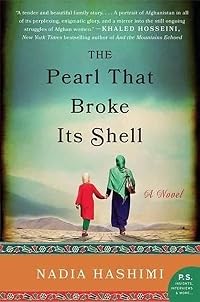
The Pearl That Broke Its Shell
by Nadia Hashimi
On This Page
Description
Afghan-American Nadia Hashimi's literary debut novel is a searing tale of powerlessness, fate, and the freedom to control one's own fate that combines the cultural flavor and emotional resonance of the works of Khaled Hosseini, Jhumpa Lahiri, and Lisa See.In Kabul, 2007, with a drug-addicted father and no brothers, Rahima and her sisters can only sporadically attend school, and can rarely leave the house. Their only hope lies in the ancient custom of bacha posh, which allows young Rahima to show more dress and be treated as a boy until she is of marriageable age. As a son, she can attend school, go to the market, and chaperone her older sisters.
But Rahima is not the first in her family to adopt this unusual custom. A century earlier, her great-great grandmother, Shekiba, left orphaned by an epidemic, saved herself and built a new life the same way.
Crisscrossing in time, The Pearl the Broke Its Shell interweaves the tales of these two women separated by a century who share similar destinies. But what will happen once Rahima is of marriageable age? Will Shekiba always live as a man? And if Rahima cannot adapt to life as a bride, how will she survive?
. show less
Tags
Recommendations





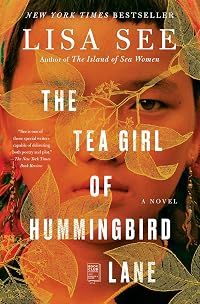

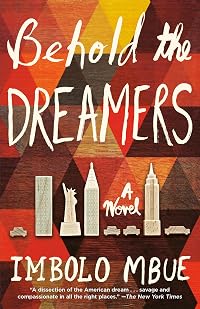
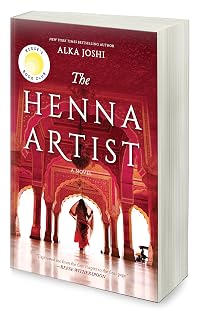
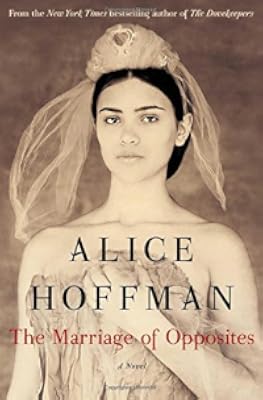




















Member Recommendations
Member Reviews
I quite enjoyed this book, having read several non-fiction accounts of the Bacha Posh tradition. This certainly isn't a book for everyone - the situations are quite foreign to a Western mentality, and the author doesn't pretty it up for our sensibilities. It isn't that things are terribly graphic or brutal, but the situations are definitely not something that we are used to when we think about what is normal. I think, in that, that the book does a great service. While the author could have made things much more brutal than she did, by giving us glimpses of what life is like for Rahima and her great-great-(great?)-grandmother, we can engage without being alienated, which is always a risk when a culture is so different than our own. I show more didn't find myself being outraged while reading, but rather, drawn in and curious to learn more. Despite the subject matter, and situations, I still found this a pretty book. There were many beautiful things about it to appreciate while reading, and I certainly would recommend it to others. show less
The Pearl That Broke It’s Shell is the debut book by author Nadia Hashimi and delivers a powerful story of two young Afghan women, separate by a century, who disguise themselves as boys in order to survive. The story alternates between Rahima and Shekiba’s stories, weaving them together in an engrossing and disturbing story.
After she and her sisters are harassed while walking alone, Rahima becomes a bascha posh, an ancient custom of allowing a girl to dress, act and be treated like a boy, until she reaches marriageable age. She loves the freedom being male brings her but with a drug-addicted father and five girls in the family, money is an issue and eventually her father sells three of the girls, including Rahima, into marriage show more within a powerful warlord family.
A hundred years earlier, Shekiba, Rahima’s great-great-grandmother who is left orphaned by an epidemic and mistreated badly by her remaining relatives finds herself passed along as a servant to one family and then, given to the royal palace to become a male-like guard at the harem. Shekiba is betrayed and falsely accused by a fellow guard and again finds herself powerless and without much hope.
The Pearl That Broke It’s Shell is beautifully written with a moving story line and complex, realistic characters. These two stories are about amazing women who live in a world where men have all the power. Every step they take has to be planned and executed with great care as position and power are guarded jealously by other women. Heartbreaking and informative, this is a book to make women of the Western world appreciate the freedoms that we so casually possess. show less
After she and her sisters are harassed while walking alone, Rahima becomes a bascha posh, an ancient custom of allowing a girl to dress, act and be treated like a boy, until she reaches marriageable age. She loves the freedom being male brings her but with a drug-addicted father and five girls in the family, money is an issue and eventually her father sells three of the girls, including Rahima, into marriage show more within a powerful warlord family.
A hundred years earlier, Shekiba, Rahima’s great-great-grandmother who is left orphaned by an epidemic and mistreated badly by her remaining relatives finds herself passed along as a servant to one family and then, given to the royal palace to become a male-like guard at the harem. Shekiba is betrayed and falsely accused by a fellow guard and again finds herself powerless and without much hope.
The Pearl That Broke It’s Shell is beautifully written with a moving story line and complex, realistic characters. These two stories are about amazing women who live in a world where men have all the power. Every step they take has to be planned and executed with great care as position and power are guarded jealously by other women. Heartbreaking and informative, this is a book to make women of the Western world appreciate the freedoms that we so casually possess. show less
The tradition of being a bacha posh is fascinating, and Ms. Hashimi does an excellent job of emphasizing the issues with “switching” genders. The reasons for becoming a bacha posh only serve to emphasize the gender disparities, and it is no wonder that the girls have such a difficult job identifying as women and adjusting to their new subservient roles. In fact, one could argue that the very freedoms they enjoyed when they were considered men doomed them from ever being very happy as a grown woman because there is no such thing as gender parity in their world.
This idea of being able to switch genders leads to a myriad of questions of gender identity in other cultures. In Afghanistan, apparently girls can become boys by nothing more show more than cutting their hair and donning a pair of pants. Even the terminology is curious, as the girls have to “switch back” to being females. It really begs for more research into the sociology and psychology behind this tradition, how it started, and even how it does not raise greater discussion for its ongoing adoption.
While Rahima and Shekiba’s stories end on a hopeful note, the rest of their story is rather bleak. Rahima and Shekiba have absolutely no say in what happens to them. Physical abuse is an every day part of their lives in addition to mental and emotional abuse. They are little more than slaves in the eyes of their family members. It is as upsetting a glimpse into someone else’s life as one can get.
The Pearl That Broke Its Shell is a powerful story about making one’s own destiny. It is the type of novel that lends itself well to discussion as it raises so many questions about Sharia law, cultural differences, gender disparity, and others. It also allows American readers the chance to catch a rare glimpse of life inside the Afghanistan borders from an Afghan point of view. The scenes of violence and abuse are stomach-churning, but it only makes them more important specifically because they are difficult to read. Ms. Hashimi never pontificates. Instead, she lets the girls tell their own stories. As such, there is a matter-of-factness to everything that serves to confirm the truth behind their experiences; all judgment is left for readers to make. Challenging novels tend to be the most important ones to read in order to grow in empathy and understanding, and The Pearl That Broke Its Shell is most definitely a challenging novel. show less
This idea of being able to switch genders leads to a myriad of questions of gender identity in other cultures. In Afghanistan, apparently girls can become boys by nothing more show more than cutting their hair and donning a pair of pants. Even the terminology is curious, as the girls have to “switch back” to being females. It really begs for more research into the sociology and psychology behind this tradition, how it started, and even how it does not raise greater discussion for its ongoing adoption.
While Rahima and Shekiba’s stories end on a hopeful note, the rest of their story is rather bleak. Rahima and Shekiba have absolutely no say in what happens to them. Physical abuse is an every day part of their lives in addition to mental and emotional abuse. They are little more than slaves in the eyes of their family members. It is as upsetting a glimpse into someone else’s life as one can get.
The Pearl That Broke Its Shell is a powerful story about making one’s own destiny. It is the type of novel that lends itself well to discussion as it raises so many questions about Sharia law, cultural differences, gender disparity, and others. It also allows American readers the chance to catch a rare glimpse of life inside the Afghanistan borders from an Afghan point of view. The scenes of violence and abuse are stomach-churning, but it only makes them more important specifically because they are difficult to read. Ms. Hashimi never pontificates. Instead, she lets the girls tell their own stories. As such, there is a matter-of-factness to everything that serves to confirm the truth behind their experiences; all judgment is left for readers to make. Challenging novels tend to be the most important ones to read in order to grow in empathy and understanding, and The Pearl That Broke Its Shell is most definitely a challenging novel. show less
Rahima is the third of five daughters in her family. Living in Afghanistan, even in the early twenty-first century is difficult for girls. Rahima and her sisters can only sporadically attend school, not having a male family member to escort them safely between there and home. Add to that the problem of Rahima's opium-addicted father who disappears for long periods to fight under warlord Abdul Khaliq, and Rahima's family is all too often left with too little money and too little safety to get by.
Luckily, Rahima's outspoken Aunt Shaima has a story and an idea to solve the family's problems. Shaima's story is of the girls' great-aunt Shekiba, who, facing hardship, was forced to dress as a man to serve as a harem guard for the King nearly a show more century earlier. Shaima encourages her sister, Rahima's mother, to take advantage of the custom of bacha posh that allows for a daughter to dress and be treated as a boy until she is of marriageable of age. Suddenly, Rahima is Rahim, learning what it is to enjoy the much greater freedoms of being a boy in Afghan culture. As a bacha posh, she can escort her sisters, go to the market, go to school without being harassed, and even have a job to provide for some of the family's needs. But, what will life hold for Rahima once she is of marriageable age? How will a girl who was busy learning how to be a boy, learn how to be a bride?
In The Pearl That Broke Its Shell, Hashimi makes the daring choice to tell Rahima's story side-by-side with Shekiba's, giving nearly equal time to each. All too often, this approach leaves me disappointed in one character's story and hungering for more of the other. Not so here, Hashimi handles her two main characters, separated by time but united with some of the every same problems, with skill. Both Rahima's story and Shekiba's are equally compelling, and I found myself racing through the pages because, regardless of which character was the focus, I was always excited to hurry after the outcome of the other character's story as well.
The Pearl That Broke Its Shell is a well-told and incredibly engaging novel that explores what it is to be a woman in a culture that in the past and even much more recently values women chiefly by their ability to produce sons and serve their households. The book digs into themes of womanhood and destiny. Is it a woman's destiny to be married off by her father to a man who will mistreat her? Is it her destiny to be cast off by her family if she has a physical defect? The Pearl That Broke Its Shell asks whether it is an Afghan woman's fate to be swept along by the tides of her life into any situation or whether, in fact, destiny is something that can be changed if only a woman might be brave enough to take action.
In Rahima and Shekiba, Hashimi has created a pair of women characters who face seemingly insurmountable challenges in their lives. Other women in their culture and circumstances might give in to the powerful forces that seem bent on keeping them in their places, but these two brave Afghan women fight to emerge from the circumstances that bind them and change the courses of their lives in the process. In The Pearl That Broke its Shell, Nadia Hashimi has given us two indomitable characters to root for, but, even more than that, she has also given us a picture of a culture that can be transformed by women brave enough to speak and to know that their paths in life don't have to be subject to a destiny beyond their control. show less
Luckily, Rahima's outspoken Aunt Shaima has a story and an idea to solve the family's problems. Shaima's story is of the girls' great-aunt Shekiba, who, facing hardship, was forced to dress as a man to serve as a harem guard for the King nearly a show more century earlier. Shaima encourages her sister, Rahima's mother, to take advantage of the custom of bacha posh that allows for a daughter to dress and be treated as a boy until she is of marriageable of age. Suddenly, Rahima is Rahim, learning what it is to enjoy the much greater freedoms of being a boy in Afghan culture. As a bacha posh, she can escort her sisters, go to the market, go to school without being harassed, and even have a job to provide for some of the family's needs. But, what will life hold for Rahima once she is of marriageable age? How will a girl who was busy learning how to be a boy, learn how to be a bride?
In The Pearl That Broke Its Shell, Hashimi makes the daring choice to tell Rahima's story side-by-side with Shekiba's, giving nearly equal time to each. All too often, this approach leaves me disappointed in one character's story and hungering for more of the other. Not so here, Hashimi handles her two main characters, separated by time but united with some of the every same problems, with skill. Both Rahima's story and Shekiba's are equally compelling, and I found myself racing through the pages because, regardless of which character was the focus, I was always excited to hurry after the outcome of the other character's story as well.
The Pearl That Broke Its Shell is a well-told and incredibly engaging novel that explores what it is to be a woman in a culture that in the past and even much more recently values women chiefly by their ability to produce sons and serve their households. The book digs into themes of womanhood and destiny. Is it a woman's destiny to be married off by her father to a man who will mistreat her? Is it her destiny to be cast off by her family if she has a physical defect? The Pearl That Broke Its Shell asks whether it is an Afghan woman's fate to be swept along by the tides of her life into any situation or whether, in fact, destiny is something that can be changed if only a woman might be brave enough to take action.
In Rahima and Shekiba, Hashimi has created a pair of women characters who face seemingly insurmountable challenges in their lives. Other women in their culture and circumstances might give in to the powerful forces that seem bent on keeping them in their places, but these two brave Afghan women fight to emerge from the circumstances that bind them and change the courses of their lives in the process. In The Pearl That Broke its Shell, Nadia Hashimi has given us two indomitable characters to root for, but, even more than that, she has also given us a picture of a culture that can be transformed by women brave enough to speak and to know that their paths in life don't have to be subject to a destiny beyond their control. show less
I'll be honest. I wouldn't have picked up this book, much less bought it, if I hadn't heard the author speak at an author event a few months ago.
I am SO glad I bought it! What an eye-opening story of women's lives in Afghanistan, both now, and a century ago.
The story sucks you in right away, making you cheer for these Afghan women who dare to think for themselves, dare to dream of a life much better than what is handed to them (or what men and society deem they are worthy of.)
This is the authors first book. I will definitely read her other novel.
I am SO glad I bought it! What an eye-opening story of women's lives in Afghanistan, both now, and a century ago.
The story sucks you in right away, making you cheer for these Afghan women who dare to think for themselves, dare to dream of a life much better than what is handed to them (or what men and society deem they are worthy of.)
This is the authors first book. I will definitely read her other novel.
Nadia Hashimi's The Pearl that Broke Its Shell is a devastating lens on the horrors of being a woman in Afghanistan, plain and simple. Not the sort of novel one picks up for a light afternoon read, Hashimi, while retaining literary integrity, reveals the myriad daily, devastating details of the absolute subjugation, ownership and commodification of the female sex within this patriarchal, warlord society which is governed by a bastardization of Islam. The novel is relentless.
Hashimi employs a simple narrative style, without embellishment, allowing actions to carry her message. Her characterization is very strong. Her environmental detail is seamless, weaving into the narrative without arresting pauses.
Altogether a novel you should read show more if for no other reason than to expand your understanding of a culture alien and frightening to Western thinking. show less
Hashimi employs a simple narrative style, without embellishment, allowing actions to carry her message. Her characterization is very strong. Her environmental detail is seamless, weaving into the narrative without arresting pauses.
Altogether a novel you should read show more if for no other reason than to expand your understanding of a culture alien and frightening to Western thinking. show less
I finished this book sometime ago but have been struggling with how to write my review. I wasn’t happy with the ending (I wanted to know more about what happened next I think?), but I also think it ended precisely where it should have. An incredibly well written book and an important story for everyone to read about how women in parts of the world are still treated. The audio was beautifully made. But, alas, the ending left me flat. Maybe another reason it left me flat: I’ve no doubt, but I’m so saddened, about how women can hurt one another so badly. I’ve had a few in my life and it’s a devastating truth that rather than giving support in what are already trying times, some women can only make things worse for other women. show more This book emphasized this sad truth. show less
Members
- Recently Added By
Lists

Childhood: Books for or about children in different cultures around the wor
345 works; 18 members

Afghanistan
42 works; 2 members

Muslim Women Write: A Year of Fiction
12 works; 1 member
Author Information

14+ Works 2,841 Members
Afghan-American Nadia Hashimi was born and raised in New York and New Jersey. She graduated from Brandeis University with degrees in Middle Eastern Studies and Biology. She enrolled in medical school in Brooklyn and completed her pediatric training at NYU/Bellevue hospitals in New York City. The Pearl That Broke Its Shell is her debut novel. Nadia show more is also the author of When the Moon is Low, A House Without Windows and One Half from the East. (Bowker Author Biography) show less
Awards and Honors
Awards
Distinctions
Series
Belongs to Publisher Series
Common Knowledge
- Canonical title
- The Pearl That Broke Its Shell
- Original title
- The Pearl That Broke Its Shell
- Original publication date
- 2014
- People/Characters
- Rahima; Shekiba
- Important places
- Kabul, Afghanistan
- Epigraph
- Seawater begs the pearl
To break its shell
- from the ecstatic poem "Some Kiss We Want," by Jalal Ad-Din Mohammad Rumi, thirteenth-century Persian poet - Dedication
- To my precious daughter, Zayla. To our precious daughters.
- First words
- Shahla stood by our front door, the bright green metal rusting on the edges.
- Original language
- English
Classifications
Statistics
- Members
- 1,229
- Popularity
- 20,103
- Reviews
- 80
- Rating
- (4.10)
- Languages
- 7 — English, French, German, Italian, Norwegian (Bokmål), Swedish, Portuguese (Portugal)
- Media
- Paper, Audiobook, Ebook
- ISBNs
- 31
- UPCs
- 1
- ASINs
- 12