On This Page
Description
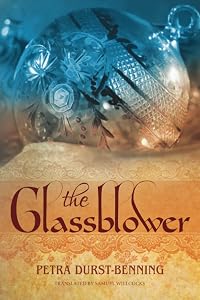
"In the village of Lauscha in Germany, things have been done the same way for centuries. The men blow the glass, and the women decorate and pack it. But when glassblower Joost Steinmann passes away unexpectedly one September night, his three daughters must learn to fend for themselves. While feisty Johanna takes a practical approach to looking for work, Ruth follows her heart, aiming to catch the eye of a handsome young villager. But it is dreamy, quiet Marie who has always been the most show more captivated by the magic and sparkling possibilities of the craft of glassblowing. As the spirited sisters work together to forge a brighter future for themselves on their own terms, they learn not only how to thrive in a man's world, but how to remain true to themselves--and their hearts--in the process."--p.[4] of cover. show lessTags
Recommendations
























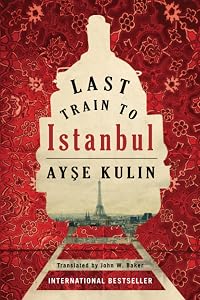
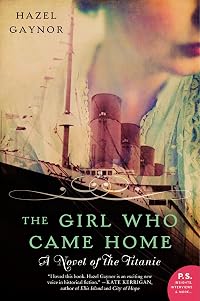
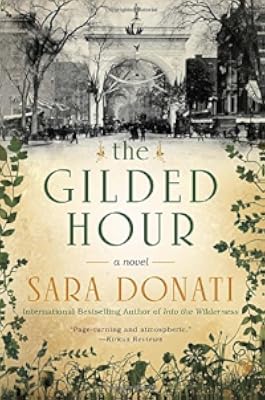







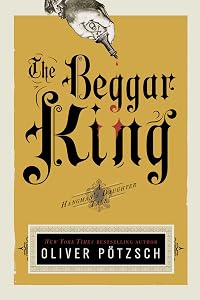


Member Recommendations

Member Reviews
The Glassblower - Petra Durst-Benning
3 stars
One review that I read for this book called it a ‘costumbrista’. I’d never heard that term, so I looked it up. The literary costumbrismo is a composition that portrays the popular customs of a country or a region. In this case, the region is a German town called Lauscha in the late 19th century. The popular custom, as well as the town’s sole industry is, as the title says, glassblowing. This is the first book of a family saga about the Steinmann sisters who must find a way to support themselves after their father dies.
They deal with the customary gender discrimination of their time. This includes not only being underpaid and overworked in the few occupations allowed to them, but also show more domestic violence and workplace rape.
The book supplies many details about the business of glassblowing. I did actually find that interesting. Unfortunately, I never felt myself engaged in the personal lives of this family. It’s possible that the story suffered in translation, but there was too much methodical ‘telling’ and not enough emotional ‘showing’. When one of these sisters made a self destructive decision, I could see the consequences so far in advance that it was tedious to continue reading. The fortuitous spurts of good luck and success were also predictable. I won’t be reading the other books in this series. show less
3 stars
One review that I read for this book called it a ‘costumbrista’. I’d never heard that term, so I looked it up. The literary costumbrismo is a composition that portrays the popular customs of a country or a region. In this case, the region is a German town called Lauscha in the late 19th century. The popular custom, as well as the town’s sole industry is, as the title says, glassblowing. This is the first book of a family saga about the Steinmann sisters who must find a way to support themselves after their father dies.
They deal with the customary gender discrimination of their time. This includes not only being underpaid and overworked in the few occupations allowed to them, but also show more domestic violence and workplace rape.
The book supplies many details about the business of glassblowing. I did actually find that interesting. Unfortunately, I never felt myself engaged in the personal lives of this family. It’s possible that the story suffered in translation, but there was too much methodical ‘telling’ and not enough emotional ‘showing’. When one of these sisters made a self destructive decision, I could see the consequences so far in advance that it was tedious to continue reading. The fortuitous spurts of good luck and success were also predictable. I won’t be reading the other books in this series. show less
Quite good after a slow start. A family saga set in Germany. After the death of their father, in the glassblower's city of Laucha, the three orphaned daughters go to work for other glassblowers. But Marie dreams of her own creations, so secretly she starts using her father's old tools and a family business is born, during the late 1800's when women had never done such work before. She creates "baubles" that eventually get sold by Woolworth's, and through that connection, sister Ruth meets and secretly emigrates to America with Steven.
Non-spoiler review:
I picked this book because I wanted an immersive read, where I could get lost in another time. That didn't happen at all. I don't know if it was the writing or the translation, but I wasn't expecting 1890s Germany to be narrated with phrases like "Ruth flopped down on the bench" or "she knew she would spill the beans." I also didn't love the format of narration in terms of what the reader got to observe. There would be a major event, and then the chapter would just end. No perspective from the characters, and reactions would come in the next chapter as they reflected after the fact...maybe. Romances were pretty poorly developed because of this, and I just wasn't that interested. There are also a number of Plot Robots show more (side characters that have no function or personality other than forwarding the plot of the main characters), which was annoying to deal with as well. I didn't like any characters enough to enjoy their POV chapters.
Some-spoilers review:
The Amazon description of the book said that once the girls' father dies, they learn to survive on their own with Marie making the glass, Ruth keeping the house, and Johanna selling it for them. I looked forward to a feminist stand in tough times. Not only is this not how the book goes, Marie doesn't figure out how to blow glass until halfway through the book, they don't come up with an idea to support themselves until 2/3 of the way through, and it doesn't become a reality until 3/4 of the way through. The early book contains not one but two rape scenes, one from an abusive husband and one from a surprise S&M character. Not what I was looking for. show less
I picked this book because I wanted an immersive read, where I could get lost in another time. That didn't happen at all. I don't know if it was the writing or the translation, but I wasn't expecting 1890s Germany to be narrated with phrases like "Ruth flopped down on the bench" or "she knew she would spill the beans." I also didn't love the format of narration in terms of what the reader got to observe. There would be a major event, and then the chapter would just end. No perspective from the characters, and reactions would come in the next chapter as they reflected after the fact...maybe. Romances were pretty poorly developed because of this, and I just wasn't that interested. There are also a number of Plot Robots show more (side characters that have no function or personality other than forwarding the plot of the main characters), which was annoying to deal with as well. I didn't like any characters enough to enjoy their POV chapters.
Some-spoilers review:
The Amazon description of the book said that once the girls' father dies, they learn to survive on their own with Marie making the glass, Ruth keeping the house, and Johanna selling it for them. I looked forward to a feminist stand in tough times. Not only is this not how the book goes, Marie doesn't figure out how to blow glass until halfway through the book, they don't come up with an idea to support themselves until 2/3 of the way through, and it doesn't become a reality until 3/4 of the way through. The early book contains not one but two rape scenes, one from an abusive husband and one from a surprise S&M character. Not what I was looking for. show less
The Glassblower by Petra Durst-Benning is the story of the Steinmann sisters - Johanna, Ruth, and Marie – attempting to survive after the death of their father. The history of nineteenth century Germany and descriptions of glassblowing are fascinating. My least favorite part of the book is unfortunately the sisters themselves for the focus of the book becomes their relationships with the men they encounter along the way instead of their endeavors for independence.
Read my complete review at: http://www.memoriesfrombooks.com/2014/11/the-glassblower-glassblower-trilogy.htm...
Reviewed based on a publisher’s galley received through NetGalley
Read my complete review at: http://www.memoriesfrombooks.com/2014/11/the-glassblower-glassblower-trilogy.htm...
Reviewed based on a publisher’s galley received through NetGalley
Honestly, nothing special-- although there were some highlights in this book with the characters and description.
The story was OK, Not great writing, but a good story about 3 sisters in Germany in the 1890's. Their father, a glassblower in a town known for this art, passes away and the women must decide how to support themselves.
The characters seemed out of context-a little too strong and opinionated for the time period. Even with that flaw I was well on the way to giving this book 3 stars for the "cuteness" of the tale. Then WHAM-mid way through the book a really ugly piece of violence occurs -I was gob smacked-it just came from no where. I can handle "ugly" in a book, however this just seemed as though it was thrown in there for the shock factor. Before writing this review, I checked some others that are posted and was satisfied to know that it show more just wasn't me.
Find something else to read- show less
The characters seemed out of context-a little too strong and opinionated for the time period. Even with that flaw I was well on the way to giving this book 3 stars for the "cuteness" of the tale. Then WHAM-mid way through the book a really ugly piece of violence occurs -I was gob smacked-it just came from no where. I can handle "ugly" in a book, however this just seemed as though it was thrown in there for the shock factor. Before writing this review, I checked some others that are posted and was satisfied to know that it show more just wasn't me.
Find something else to read- show less
This was a good story about three sisters who's father dies and leaves them on their own to fend for themselves. It takes place in the 1800's. The sister fuss about for a while struggling with different jobs when finally Marie sits at her fathers glassblowing bench and tries to learn th trade. This book is really about each of the sisters different struggles. It's part struggle part love story. It fit together nicely. Kept me interested.
Members
- Recently Added By
Author Information

33+ Works 1,171 Members
Some Editions
Series

Belongs to Publisher Series
Ullstein (25761)
Work Relationships
Is contained in
Common Knowledge
- Canonical title
- The Glassblower
- Original title
- Die Glasbläserin
- Original publication date
- 2000
- People/Characters
- Joost Steinmann; Johanna Steinmann; Marie Steinmann; Ruth Steinmann
- Important places
- Sonneberg, Thuringia, Germany; Lauscha, Thuringia, Germany
- First words*
- Schon zweimal war Ruth an diesem Morgen oben gewesen, um Johanna zu wecken.
- Last words*
- (Click to show. Warning: May contain spoilers.)"Wenn schon, dann ist es ein gläserner Löffel gewesen."
- Original language
- German
*Some information comes from Common Knowledge in other languages. Click "Edit" for more information.
Classifications
- Genres
- Fiction and Literature, General Fiction, Historical Fiction, Romance
- DDC/MDS
- 833.92 — Literature & rhetoric German & related literatures German fiction 1900- 1990-
- LCC
- PT2664 — Language and Literature German, Dutch and Scandinavian literatures German literature Individual authors or works 1961-2000
- BISAC
Statistics
- Members
- 410
- Popularity
- 76,046
- Reviews
- 17
- Rating
- (3.54)
- Languages
- English, German, Spanish
- Media
- Paper, Audiobook, Ebook
- ISBNs
- 18
- ASINs
- 4