On This Page
Description
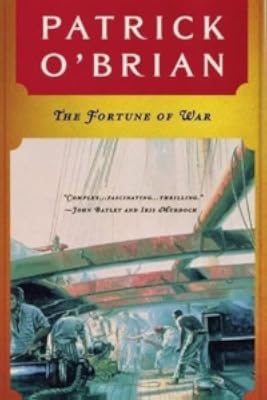
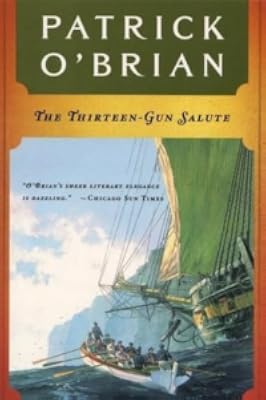
En route home, Aubrey and Maturin find themselves in deep trouble when their ship engages the U.S.S. Constitution in battle-and loses. Aubrey, now a POW in Boston, waits for word of a prisoner exchange, while Maturin renews a most cherished friendship.Tags
Recommendations







Member Reviews
This is book six in Patrick O'Brian's series of sea stories featuring Captain Jack Aubrey and his best buddy/ship's surgeon Stephen Maturin. And it's definitely one of my favorite of the series so far.
It starts out with some fun character moments and appealing bits of humor that I really enjoyed. Admittedly, nothing will ever be quite as entertaining as the sloth in H.M.S. Surprise, but the wombats in this one are pretty fun, too.
Soon enough, however, we get some dramatic reversals of fortune, followed by the first sea battle in any of these books that I actually had no trouble following at all. I don't know if O'Brian started writing them any differently, or if I'm just getting better at understanding them, or what. But I actually show more found this one genuinely exciting, and had lots of appropriate emotional reactions at appropriate moments. (Well, appropriate from one point of view, anyway. They're fighting the Americans, having by this point reached the War of 1812, and as an American myself, I sometimes found myself with the strange feeling that I was rooting for the wrong side.)
Things do get considerably slower after that, with Jack sidelined and Stephen dealing with spy stuff that drags on a little in places, but there are some good moments of action, as well as some good character stuff for Stephen, who is always most interesting when he's suffering, poor thing.
I've been making my way through this series very, very slowly, but if they continue to be this enjoyable, I really must make a point of prioritizing them a little more. show less
It starts out with some fun character moments and appealing bits of humor that I really enjoyed. Admittedly, nothing will ever be quite as entertaining as the sloth in H.M.S. Surprise, but the wombats in this one are pretty fun, too.
Soon enough, however, we get some dramatic reversals of fortune, followed by the first sea battle in any of these books that I actually had no trouble following at all. I don't know if O'Brian started writing them any differently, or if I'm just getting better at understanding them, or what. But I actually show more found this one genuinely exciting, and had lots of appropriate emotional reactions at appropriate moments. (Well, appropriate from one point of view, anyway. They're fighting the Americans, having by this point reached the War of 1812, and as an American myself, I sometimes found myself with the strange feeling that I was rooting for the wrong side.)
Things do get considerably slower after that, with Jack sidelined and Stephen dealing with spy stuff that drags on a little in places, but there are some good moments of action, as well as some good character stuff for Stephen, who is always most interesting when he's suffering, poor thing.
I've been making my way through this series very, very slowly, but if they continue to be this enjoyable, I really must make a point of prioritizing them a little more. show less
O'Brian satisfies again with this sixth installment of the Aubrey‒Maturin series, depicting the opening of the War of 1812. Shipwrecked in the mid-Atlantic, O'Brian subverts the sea-story trope of the dangerous storm, converting it to a godsend that could make even the sternest stoic feel thirsty. Following that is a treat of espionage writing that would make Le Carré proud. While Jack and Stephen's layover in Boston may have been mostly boring for them, O'Brian deftly keeps the story interesting and moving for the reader, never lingering too long in one place.
If you could read but one Aubrey/Maturin novel, this is the one to read if you want a subtle, intelligent spy novel set against a backdrop of early U.S. national history.
If you could read but one Aubrey/Maturin novel, this is the one to read if you want a subtle, intelligent spy novel set against a backdrop of early U.S. national history.
This is a great A-M book because they finally get to fight Americans in a storied battle, and given O'Brian's stickler attitude toward naval detail, you know it's accurately portrayed, as though we were standing on the deck as the canon balls flew. It also reintroduces Diana Villiers back into the storyline which is welcome. I always like to see Stephen a little on his hind foot, trying to understand and please her, rather than pining in her absence.
This book also has one of the funniest description of a cricket game between the Royal Navy and Native people you'll ever read.
The La Flèche, on which Aubrey and Maturin are homeward bound, catches fire off Brazil and burns from under them, and the crew are lost at sea and in dire show more circumstances before they are rescued at the last minute by a passing British ship, the Java, which soon encounters the USS Constitution (a ship whose deck I've walked in Boston Harbor). That famous battle is recounted shot for shot, and the lads are taken prisoner to Boston. Jack, who is injured in the arm, recuperates in an asylum, and there's a number of hilarious scenes where he tries to slyly play as though he's an inmate to his advantage. We meet assorted American characters, and of note, so rather nasty French spies, which Stephen quickly outsmarts and leaves dead.
This book is O'Brian in his Aubrey Maturin prime. Lots of action, many characters old and new, and deftly handled fore and aft. show less
This book also has one of the funniest description of a cricket game between the Royal Navy and Native people you'll ever read.
The La Flèche, on which Aubrey and Maturin are homeward bound, catches fire off Brazil and burns from under them, and the crew are lost at sea and in dire show more circumstances before they are rescued at the last minute by a passing British ship, the Java, which soon encounters the USS Constitution (a ship whose deck I've walked in Boston Harbor). That famous battle is recounted shot for shot, and the lads are taken prisoner to Boston. Jack, who is injured in the arm, recuperates in an asylum, and there's a number of hilarious scenes where he tries to slyly play as though he's an inmate to his advantage. We meet assorted American characters, and of note, so rather nasty French spies, which Stephen quickly outsmarts and leaves dead.
This book is O'Brian in his Aubrey Maturin prime. Lots of action, many characters old and new, and deftly handled fore and aft. show less
The Fortune of War picks up only a few days after where Desolation Island had ended, affirming my impession that by now we’re dealing with an ongoing single novel rather than a series of stringed-together separate novels.Which would make this the sixth chapter in O’Brian’s massive novel The Naval Adventures of Jack Aubrey & Stephen Maturin (a terminology I am going to stick with from now on. Probably.)
What is interesting about this volume in particular is how just when O’Brian seems to have settled down in a comfortable routine and has the novel chuffing along nicely he starts to mess with stuff and play around with his own formula (some slight spoiler in what is following are unfortunately unavoidable). The Fortune of War has show more a basic structure similar to HMS Surprise, i.e. we get a quiet stretch in the middle sandwiched between two action pieces of naval battle at the beginning and at the end of this chapter, all of it told with O’Brian’s customary verve and brio that keeps even those passages where nothing much is happening lively and interesting.
Against this foil of the familiar, then, the ways The Fortune of War deviates from business as usual contrast all the sharper – the most surprising to me at least being that Jack does not command a ship during the whole of this chapter, and that it are other Captains who fight the sea battles while he is just an onlooker or a minor participant. In fact he is unusually passive during all the events depicted here and we’re getting the unusual situation where Steve exercises considerably more agency than Jack does. This, after five chapters where things have been the other way round, gives a slightly off-kilter feeling to The Fortune of War, of things being just faintly out of balance and not in proper focus. It also expands the canvas of O’Brian’s novel even more, by showing as a different perspective on a naval battle than the command deck or the surgeon’s cabin. In short, The Naval Adventures of Jack Aubrey & Stephen Maturin continue to delight, and even manage to spring the occasional surprise on the reader. I’m still wondering whether O’Brian will manage to keep this up over the remaining fourteen chapters, but I’m very eager to find out. show less
What is interesting about this volume in particular is how just when O’Brian seems to have settled down in a comfortable routine and has the novel chuffing along nicely he starts to mess with stuff and play around with his own formula (some slight spoiler in what is following are unfortunately unavoidable). The Fortune of War has show more a basic structure similar to HMS Surprise, i.e. we get a quiet stretch in the middle sandwiched between two action pieces of naval battle at the beginning and at the end of this chapter, all of it told with O’Brian’s customary verve and brio that keeps even those passages where nothing much is happening lively and interesting.
Against this foil of the familiar, then, the ways The Fortune of War deviates from business as usual contrast all the sharper – the most surprising to me at least being that Jack does not command a ship during the whole of this chapter, and that it are other Captains who fight the sea battles while he is just an onlooker or a minor participant. In fact he is unusually passive during all the events depicted here and we’re getting the unusual situation where Steve exercises considerably more agency than Jack does. This, after five chapters where things have been the other way round, gives a slightly off-kilter feeling to The Fortune of War, of things being just faintly out of balance and not in proper focus. It also expands the canvas of O’Brian’s novel even more, by showing as a different perspective on a naval battle than the command deck or the surgeon’s cabin. In short, The Naval Adventures of Jack Aubrey & Stephen Maturin continue to delight, and even manage to spring the occasional surprise on the reader. I’m still wondering whether O’Brian will manage to keep this up over the remaining fourteen chapters, but I’m very eager to find out. show less
The Aubery/Maturin novels just make me happy. This one opens with Jack's complaints that a wombat is eating his best hat. How anyone could fail to be charmed by that is beyond me. Of course, the sea battles and political intrigue (in America) are beautifully written and exciting, but essentially I read the series for the wonderful character comedy and cameos by exotic animals. Although Stephen doesn't get to collect many new specimens in this tale, there are a multitude of hilarious and moving moments.
In which Maturin and Aubrey become prisoners of war of the newly formed United States, both are suspected of being spies, and Diana Villers is back. Daring escapes! Love affairs! Cold blooded murders! And of course, exciting ship battles!
It's a bit odd to see the early US from a British POV, especially since so many of the American characters seem to think they're British. Aubrey and Maturin are in fine form once more--their banter is top notch, and I love the little moments where the reader can see how one sees the other. We also get reintroduced to Haropath (the ancient Chinese scholar) and his unrequited love, Mrs. Wogan (espionage badass, neglectful mother, and delightful conversationalist). And while we get deep in Maturin's head show more while he ruminates on his need for his diary andd an enduring love to combat his crippling depression, the reader also gets more insight into Aubrey. Aubrey isn't in command for this book, being mostly a guest or a prisoner of war throughout, and he's physically weaker than ever before as well.
We're also reminded of how awesome Diana Villers can be. Possibly she gets badass scenes because O'Brian wanted her to seem worthy of Maturin, possibly O'Brian just likes her as much as I do. She's the kind of character who walks past the bloody corpses of former friends to get her jewels; who refuses to translate documents for her protector because she has too much loyalty toward the country of her former citizenship; who shoots rats in the dark hold of a ship while waiting to see if she'll be hanged. For all that this series is purportedly about Napoleonic naval battles, the characterization in it is top-notch.
And the battles! O'Brian whips the tension up until I was so stressed whilst listening to the last battle that I actually had to stop the recording and catch my breath. Tull does a fantastic job reading this, btw--I've complained about his reading style before, but he's much better in this. The long pauses between sentences and even words, the artificially drawled last syllables, the long sighs in the midst of words--none are here! Frabjous day.
One of the best Maturin&Aubrey books yet. show less
It's a bit odd to see the early US from a British POV, especially since so many of the American characters seem to think they're British. Aubrey and Maturin are in fine form once more--their banter is top notch, and I love the little moments where the reader can see how one sees the other. We also get reintroduced to Haropath (the ancient Chinese scholar) and his unrequited love, Mrs. Wogan (espionage badass, neglectful mother, and delightful conversationalist). And while we get deep in Maturin's head show more while he ruminates on his need for his diary andd an enduring love to combat his crippling depression, the reader also gets more insight into Aubrey. Aubrey isn't in command for this book, being mostly a guest or a prisoner of war throughout, and he's physically weaker than ever before as well.
We're also reminded of how awesome Diana Villers can be. Possibly she gets badass scenes because O'Brian wanted her to seem worthy of Maturin, possibly O'Brian just likes her as much as I do. She's the kind of character who walks past the bloody corpses of former friends to get her jewels; who refuses to translate documents for her protector because she has too much loyalty toward the country of her former citizenship; who shoots rats in the dark hold of a ship while waiting to see if she'll be hanged. For all that this series is purportedly about Napoleonic naval battles, the characterization in it is top-notch.
And the battles! O'Brian whips the tension up until I was so stressed whilst listening to the last battle that I actually had to stop the recording and catch my breath. Tull does a fantastic job reading this, btw--I've complained about his reading style before, but he's much better in this. The long pauses between sentences and even words, the artificially drawled last syllables, the long sighs in the midst of words--none are here! Frabjous day.
One of the best Maturin&Aubrey books yet. show less
Patrick O'Brian wrote 21 books of naval adventure set in the early 1800's featuring the rough but amiable Captain Jack Aubrey and his friend the ship's surgeon and spy Stephen Maturin. I like to think of these books as Jane Austen for men. I read the first five books back in 2003 and enjoyed them well enough but found them difficult to read since I kept stumbling over terms like "fo'c'sle." Now I've discovered that the BPL has the Aubrey Maturin series available for free download as audiobooks so I can blissfully listen to the books, naval vocabulary and all.
Our heroes Aubrey & Maturin find themselves passengers on other British ships for most of this book. The first ship burns and sinks, the second ship is captured in battle with the show more USS Constitution, and the third... Well, I won't give away the ending but it has better fortune than the first two ships. The main part of the book is set in Boston where Jack & Stephen are held as prisoners of war during the War of 1812 and Stephen finds himself in the midst of covert spy activity with the French who are also in town. There are a number of humorous moments (including a Bostonian who allows the proper English is spoken in Boston even as far west as Watertown) and some crisp, detailed ship-to-ship battle scenes.
I don't know if it's the audiobook or that the book is set in Boston, but I like this book better than any of the others in the series so far. I look forward to listening to further installments. show less
Our heroes Aubrey & Maturin find themselves passengers on other British ships for most of this book. The first ship burns and sinks, the second ship is captured in battle with the show more USS Constitution, and the third... Well, I won't give away the ending but it has better fortune than the first two ships. The main part of the book is set in Boston where Jack & Stephen are held as prisoners of war during the War of 1812 and Stephen finds himself in the midst of covert spy activity with the French who are also in town. There are a number of humorous moments (including a Bostonian who allows the proper English is spoken in Boston even as far west as Watertown) and some crisp, detailed ship-to-ship battle scenes.
I don't know if it's the audiobook or that the book is set in Boston, but I like this book better than any of the others in the series so far. I look forward to listening to further installments. show less
Members
- Recently Added By
Lists

Folio Society
831 works; 53 members

Huxley's reading log 2017
45 works; 1 member

Books Read in 2018
4,360 works; 110 members
Author Information

154+ Works 77,012 Members
Patrick O'Brian is the author of twenty volumes in the highly respected Aubrey/Maturin series of novels. (Publisher Provided) Patrick O'Brien was born in Ireland in 1914. His education included the Sorbonne. O'Brian has produced a variety of works, including biographies of Picasso and Sir Joseph Banks and translations of the novels and memoirs of show more Simone de Beauvoir, but he is best known for the creation of an unlikely pair of Napoleonic War-era heroes in the Aubrey-Maturin Series. British naval officer Jack Aubrey and Irish scholar and physician Stephen Maturin have been featured in more than a novels published in Great Britain (five of which have also appeared in America). He died on January 2, 2000. (Bowker Author Biography) show less
Some Editions
Series

Work Relationships
Common Knowledge
- Canonical title
- The Fortune of War
- Original title
- The Fortune of War
- Original publication date
- 1979
- People/Characters
- Jack Aubrey; Stephen Maturin; Diana Villiers; Harry Johnson; Louisa Wogan; Michael Herapath (show all 12); Philip Broke (Captain); James Lawrence (Captain); George Herapath; Jean-Paul Pontet-Canet; Jean Dubreuil; Charles Yorke (Captain)
- Important places
- Boston, Massachusetts, USA; Pulo Batang, Java
- Important events
- Age of Sail; Napoleonic Wars
- Dedication
- For Mary, with love.
- First words
- When history and fiction intertwine, the reader may well like to know how far the recorded facts have suffered from the embrace.
Author's note.
The warm monsoon blew gently from the east, wafting HMS Leopard into the bay of Pulo Batang.
Chapter one.
It is with a certain reluctance that I write about myself, in the first place because such an exercise is very rarely successful, and even when it is, the man does not often coincide with his books, which, if the Platonic 'no... (show all)t who but what' is to be accepted, are the only legitimate objects of curiosity.
Black, Choleric & Married?, by Patrick O'Brian. - Quotations
- 'Wallis,' said Maturin, 'I am happy to see you. How is your penis?'
Two weevils crept from the crumbs. 'You see those weevils, Stephen?' said Jack solemnly.
'I do.'
'Which would you choose?'
'There is not a scrap of difference. Arcades ambo. They are the same species of curcul... (show all)io, and there is nothing to choose between them.'
'But suppose you had to choose?'
'Then I should choose the right-hand weevil; it has a perceptible advantage in both length and breadth.'
'There I have you,' cried Jack. 'You are bit -- you are completely dished. Don't you know that in the Navy you must always choose the lesser of two weevils? Oh ha, ha, ha, ha!' [43]
'Oh dear, oh dear,' said Mr Evans. 'I seem fated to move from one blunder to another today. I shall hold my tongue for what remains of it.'
'Where would conversation be, if we were not allowed to exchange our minds freely ... (show all)and to abuse our neighbours from time to time?' said Stephen. [124] - Last words
- (Click to show. Warning: May contain spoilers.)This time Broke understood. He looked hard at the white ensign against the pure blue sky, the proof of his victory; he focused his dazed eyes; a sweet smile showed on his bloody face, and he said very quietly, 'Thank you, Jack.'
- Publisher's editor
- Lawrence, Starling
- Blurbers
- Binyon, T.J.; Murdoch, Iris; Bayley, John; Myers, Kevin
- Original language
- English
Classifications
Statistics
- Members
- 3,410
- Popularity
- 4,937
- Reviews
- 44
- Rating
- (4.16)
- Languages
- 13 — Czech, Dutch, English, Finnish, French, German, Italian, Norwegian (Bokmål), Polish, Portuguese, Russian, Spanish, Swedish
- Media
- Paper, Audiobook, Ebook
- ISBNs
- 67
- ASINs
- 25