A Good House
by Bonnie Burnard
On This Page
Description
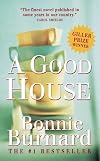
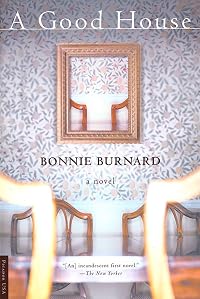
A runaway #1 bestseller in Canada, this richly layered first novel tells the story of the intricacies and rituals that shape a family's life over three generationsA Good House begins in 1949 in Stonebrook, Ontario, home to the Chambers family. The postwar boom and hope for the future colors every facet of life: possibilities seem limitless for Bill, his wife, Sylvia, and their three children.In the fifty years that follow, the possibilities narrow into lives, etched by character, fate, and show more circumstance. Sylvia's untimely death marks her family indelibly but in ways only time will reveal. Paul's perfect marriage yields an imperfect child. Daphne unabashedly follows an unconventional path, while Patrick discovers that his happiness requires a series of compromises. Bill confronts the onset of old age less gracefully than anticipated, and throughout, his second wife, Margaret, remains, surprisingly, the family anchor.With her remarkable ability to probe the hidden, often disturbing landscapes of love and to illuminate the complexities of human experience, Bonnie Burnard brings to her deceptively simple narrative a clarity that is both moving and profound. show lessTags
Recommendations

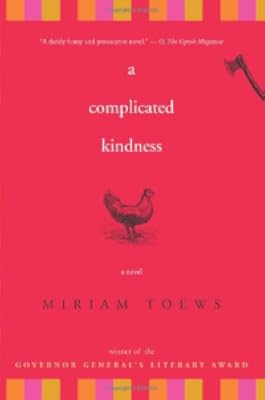


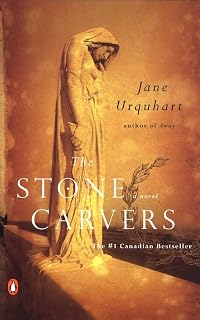


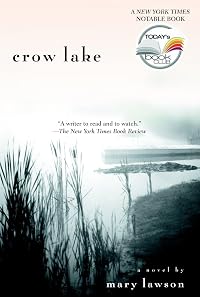
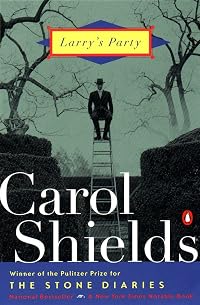



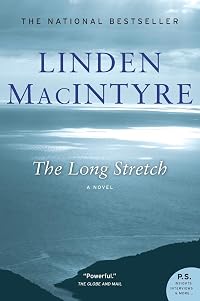






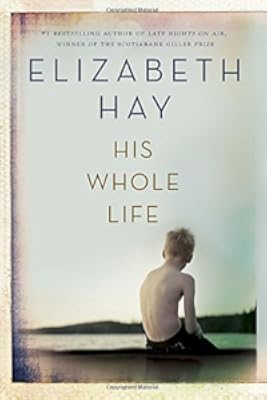
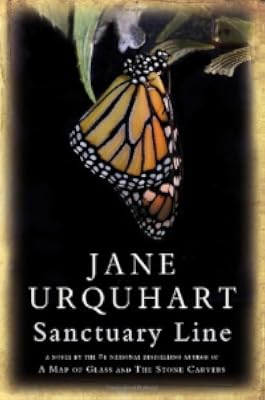


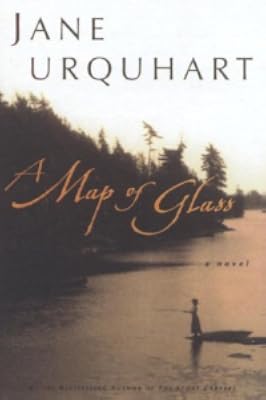





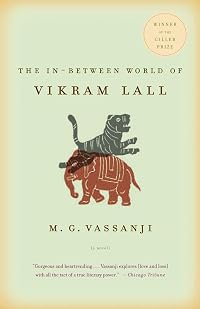
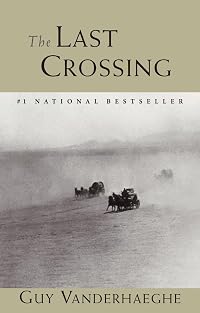


Member Recommendations
Nickelini Both books are set in small towns and cover the story of one family over many years. Oates's book is darker and more satirical; the characters in Burnard's book are more likeable and believable.
Member Reviews
A Good House tells the story of the Chambers family from 1949 through 1997, and follows the waves of their births, deaths, marriages, and divorces. It is set in a fictional small town northwest of London, Ontario toward Lake Huron, but could really be set in any small town in North America. Just substitute "going off to university," with "going off to college," and "Muskoka chair" with "Adirondack chair," and the book could be set in the US.
What I enjoyed most about this novel was Burnard's unique writing style where she packs a wealth of information in each sentence, and then packs her paragraphs with these full sentences. In doing this, she creates nuanced, rounded characters and tells a story without a lot of action. What she show more achieves on the page reminds me of the folk art landscape painting where every element is given equal weight and importance. And like folk art painting, Burnard's book is interesting and worthwhile, but it's not fabulously sophisticated high art either. However, it was good enough to win the 1999 Giller Prize, and that says something.
Recommended for: I think this would appeal to the reader who enjoys books by Carol Shields and that sort. I loved Burnard's packed sentences, but others might find them tedious. It is an impressive first novel. show less
What I enjoyed most about this novel was Burnard's unique writing style where she packs a wealth of information in each sentence, and then packs her paragraphs with these full sentences. In doing this, she creates nuanced, rounded characters and tells a story without a lot of action. What she show more achieves on the page reminds me of the folk art landscape painting where every element is given equal weight and importance. And like folk art painting, Burnard's book is interesting and worthwhile, but it's not fabulously sophisticated high art either. However, it was good enough to win the 1999 Giller Prize, and that says something.
Recommended for: I think this would appeal to the reader who enjoys books by Carol Shields and that sort. I loved Burnard's packed sentences, but others might find them tedious. It is an impressive first novel. show less
This book is set in Stonebrook, Ontario. It begins just after WWII, and the book ends in the year of 1997. The book is a family history of the Chambers family-their lives, loves, births, weddings, divorces and deaths. That's a lot to cover especially when the family is a large and gregarious one. But Ms. Burnard does an admirable job of this. This book was the 1999 winner of the prestigious Giller Prize and I think it was a well-deserved honour. Her writing style is deceptively simple, but the character development of this large cast of characters is remarkable. The book covers all sorts of family events and catastrophies, but does it in such an understated style. It is not often that an author can achieve such a complete job of show more character development within one book. It usually takes a series to achieve this. But Ms. Burnard accomplishes this difficult task with aplomb. These characters live and breathe. The book paints a very rich and complex picture of human nature and human foibles indeed. show less
I hadn't read any of Bonnie Burnard's work before this. I think this was probably a Library Thing recommendation based on my high ratings of books by Canadian authors such as Carol Shields, Elizabeth Hay, Miriam Toews, Alice Munro, Joan Barfoot, and nearly-Canadian Beth Powning. Burnard is, however, not in the same class as this group, in my opinion. I did like her slow, understated style, but I felt I didn't get to know her characters as much as I would have liked. The essential underlying story was well told and worth telling. Of course, being in a 'second tier' of Canadian women authors still puts her way above a lot of her peers!
This is a book I enjoy re-reading. Everytime it comes back to me after being loaned to a friend, I sit down to read the first chapter and I get hooked.
A Good House follows a Canadian family over 5 decades - checking in every five-8 years or so, like the film series Seven Up. A husband comes home from the war. Kids grow up, mothers die, fathers remarry and new bavies come. college, grandchildren, divorce, love affairs. Wedding dinners by a lake. Wakes and funerals. Everything and nothing, but described thoughfully, deeply. Not pretentious or ponderous, it just kind of is. Like life.
A Good House follows a Canadian family over 5 decades - checking in every five-8 years or so, like the film series Seven Up. A husband comes home from the war. Kids grow up, mothers die, fathers remarry and new bavies come. college, grandchildren, divorce, love affairs. Wedding dinners by a lake. Wakes and funerals. Everything and nothing, but described thoughfully, deeply. Not pretentious or ponderous, it just kind of is. Like life.
A moving and very well-written story of the Chambers family of Stonebrook, Ontario as Bill and Sylvia look with hope toward the future for their young family in a post-World War II life. The book moves more or less gracefully from 1949 to 1997 as they confront reality in all its guises: love, loss, family, misfortune and tragedy, and the ravages of age. Throughout, there is a strong sustaining core of love and resilience that gives me hope for my extended family. The only quibble is that the jumps ahead in time are sometimes abrupt and jarring. But all in all, a fine book that filled me with a nice secure feeling that in spite of everything, I do indeed have a good house.
This Canadian author writes with the same grace and precision as fellow Canadians Carol Shields and Margaret Atwood. Spanning fifty years, it is a mult-generational story, which encompasses all the difficulties and joys that bind families. It is, in my opinion, worthy of the Giller prize it received.
In the beginning, before and after Sylvia’s death, while the children were young and falling into love and growing into themselves, I really enjoyed the book. Later, though, as decades passed and the children had children and grandchildren of their own, I just started to lose track. Daphne’s relationship with Murray seems to be the core of the book, but with such a large cast of characters, it’s hard to get really interested in anyone. And I wasn’t really satisfied with anyone’s storyline. Three kids, and not a single one has a calm, ordinary life?
Members
- Recently Added By
Published Reviews
...You don't just read A Good House, you move into it for a while. And if it's a more forgiving place than your childhood home, so much the better. Burnard's characters can show what thriving families have always known.
added by GYKM
Burnard's wise and assured first novel is an accomplishment to celebrate.
added by GYKM
...this gem of a first novel... is essential Burnard: appearances are lovingly, nostalgically recreated to be followed by a devastating insight that belies all we initially see... It is a legend of pain, pretense and hopeless love, the stuff that small towns, even big towns, are made of.
added by GYKM
Lists

Giller Prize Winners
32 works; 6 members

Llibres que he llegit el 2020
50 works; 1 member
Author Information

9+ Works 790 Members
Bonnie Burnard was born in Southwestern Ontario. She has been writer-in-residence at the University of Western Ontario, taught at both Sage Hill and the Humber School of Writing, and was a jury panel member for the Giller Prize. She has read from her work throughout Canada and in the U.S., Europe, Australia and South Africa. Burnard's stories have show more been included in many anthologies, among them: Stories by Canadian Women, published in 1999; Mothers and Daughters, published in 1997; The Arnold Anthology of Post-Colonial Literature, published in 1996; Spin on 2, published in 1995; The Oxford Book of Canadian Short Stories, published in 1995; and Best Canadian Stories, published in 1992 and 1989. She won the Giller Prize, for A Good House in 1999, the Marian Engel Award for body of work in 1995 and the Periodical Publishers Award, for Casino in 1994. She was shortlisted for the Giller Prize, and won the Saskatchewan Book of the Year, both for Casino in 1994 and alson won the Commonwealth Best Book Award, for Women of Influence in 1989. (Bowker Author Biography) show less
Some Editions
Awards and Honors
Awards
Common Knowledge
- Canonical title
- A Good House
- Original publication date
- 1999
- Important places
- Ontario, Canada
- Dedication
- For Anne Szumigalski (1922-1999)
- First words
- Fed by the rolling fields and the running miles of shallows country ditches to the east of town, Stonebrook Creek approached by town aslant, cutting through Livingston's gully, then flowing past the burning mounds of garbage ... (show all)at the dump, a ripe, evolving depth of trash that came alive at night with the industrious plunder of racoons, an afternoon home-away-from-home for the town's mostly good-natured dogs.
- Last words
- (Click to show. Warning: May contain spoilers.)Yes.
Classifications
Statistics
- Members
- 668
- Popularity
- 43,038
- Reviews
- 16
- Rating
- (3.69)
- Languages
- 7 — Catalan, Dutch, English, Estonian, Finnish, German, Spanish
- Media
- Paper, Ebook
- ISBNs
- 23
- ASINs
- 4