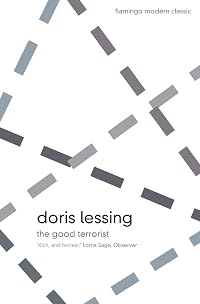
The Good Terrorist
by Doris Lessing
On This Page
Description
The Good Terrorist follows Alice Mellings, a woman who transforms her home into a headquarters for a group of radicals who plan to join the IRA. As Alice struggles to bridge her ideology and her bourgeois upbringing, her companions encounter unexpected challenges in their quest to incite social change against complacency and capitalism. With a nuanced sense of the intersections between the personal and the political, Nobel laureate Doris Lessing creates in The Good Terrorist a compelling show more portrait of domesticity and rebellion. Literature. Thriller. Fiction. show lessTags
Recommendations



















Member Recommendations

Member Reviews
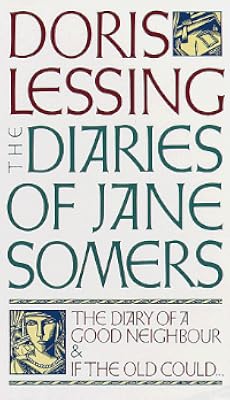
In the mid 1980’s it seemed that Doris Lessing had repudiated the gritty realism of her Children in Violence series to write her science fiction, or space fiction as she called it. She had published ‘Briefing for a Descent into Hell’ in 1971 and then the dystopia of ‘Memoirs of a Survivor’ in 1974 and since that time had written her five Canopus in Argos books. It must have seemed like the return of the classic Lessing when ‘The Good Terrorist’ hit the streets in 1985, because this book has gritty realism by the bucket loads, however Lessing had not abandoned her earlier writing style. In 1983 and 1984 she had written “The Diary of a Good Neighbour” and “If the Old Could…..under the pseudonym of Jane Somers. These show more two novels (neglected masterpieces IMO) explored the decrepit lives of old working class women struggling to survive in London in the 1970’s. She used the knowledge gained from her researches into social conditions to centre her new novel on the lives of younger people living in squats.
The Good Terrorist (is there such a thing; the title of the book seems deeply ironic) tells the story of a group of squatters who see themselves as young revolutionaries, they are going to tear down the rotten capitalist society and their rhetoric and enthusiasm attracts various people living on the edge of society into their nebulous. One of these is Alice a woman older than the rest, but full to the brim with hate and injustice who has a platonic but nonetheless needful relationship with the younger firebrand Jasper. The core of the group have formed their own political party based on communist groups that were prevalent a couple of decades earlier, again Lessing has inside knowledge of how these groups functioned from her own experiences, working in such groups in Zimbabwe. She combines these two strands of writing experience get inside the group of squatters at number 43, so however dysfunctional the house and the lives of these people may seem to the reader, we are being guided through the mess by Lessing’s sure hand. Alice because of her street credibility is the glue that binds the group together, she sorts out the derelict house, she deals with social services, the housing department and when necessary the police. She gets money from handouts and thieving from her family, but it all seems to hinge on her need to keep Jasper as close as she can.
The young group of revolutionaries at number 43 yearn to to do something for the cause (but of course the cause is nothing that they can define), they go on demonstrations, get themselves arrested and bound over, enjoying the buzz, the adrenaline of being able to openly express their hatred for the society that they want to tear down, but their activities are noticed, vaguely by the police, but more circumspectly by more professional groups, for example the I. R. A. and the KGB. They are being examined for their usefulness, sorted as possible recruits for training programmes. Alice becomes aware of this and Lessing says:
“She simply hadn’t had any idea, before! All over the country were these people - networks, to use comrade Andrew’s word. Kindly skilled people watched, and waited, judging when people (like herself) were ripe, could be really useful. Unsuspected by the petit bourgeoise who were in the thrall of the mental superstructures of fascist-imperialistic Britain, the poor slaves of propaganda, were these watchers, the observers, the people who held all the strings in their hands. In factories, in big industries - where comrade Andrew wanted her, Alice, to work; in the Civil Service, in the BBC, in the big newspapers - everywhere in fact was this network, and even in little unimportant places like these two houses Nos 43 and 45, just ordinary squats and communes. Nothing was too small to be overlooked, everyone with any sort of potential was noticed, observed, treasured….. It gave her a safe comfortable feeling.”
These are the thoughts of Alice when she realises that the Squat next door to hers is more professionally politicised, it soon becomes apparent that explosives and arms are being stored their for very short periods. The paragraph above is a frightening view of the underbelly of Britain at the time but readers must remember it is Alice’s view, most of us will never know how accurate it is.
The narrative of the novel takes us into the lives of the people at No 43, they are all to some extent damaged, or think they are, by society, by their parents. They are too unstable to be taken seriously by the professionals and they blunder into taking their own action. A criticism of the book has been that Lessing’s characters are unsympathetic, there is really no one that we want to see turn their lives around to get out of the mess that they are in. They are largely selfish, unconfined by thoughts of finer feelings, they do what they want to do with the excuse that it is all everybody else’s fault. Why should we care about these people? Well the obvious answer is that we should care because there are many people disaffected by their society just like those at No 43 and Lessing’s portrayal rings true for me. There is no order to their lives and their dysfunctionality (to many of us) is reflected in Lessing’s writing style. It is not always clear why her characters say and do the things that they do and this adds to the realism that the book is so keen to employ.
This is a very good novel, up their with Lessing’s best. Perhaps it is uncomfortable reading for many people, who do not want to see people behaving so unfeelingly, screwed up with an inner hatred that they may feel themselves, only very occasionally. From the moment that Alice moves into the squat at No 43 to find that the toilets have been filled with cement by the Council workers and the new tenants are busily filling up buckets of shit and storing them in upstairs rooms; we know we are in for the gritty realism that Lessing is known for, but in this novel a political realism is also very much part of her world view. An important book and a five star read. show less
The Good Terrorist (is there such a thing; the title of the book seems deeply ironic) tells the story of a group of squatters who see themselves as young revolutionaries, they are going to tear down the rotten capitalist society and their rhetoric and enthusiasm attracts various people living on the edge of society into their nebulous. One of these is Alice a woman older than the rest, but full to the brim with hate and injustice who has a platonic but nonetheless needful relationship with the younger firebrand Jasper. The core of the group have formed their own political party based on communist groups that were prevalent a couple of decades earlier, again Lessing has inside knowledge of how these groups functioned from her own experiences, working in such groups in Zimbabwe. She combines these two strands of writing experience get inside the group of squatters at number 43, so however dysfunctional the house and the lives of these people may seem to the reader, we are being guided through the mess by Lessing’s sure hand. Alice because of her street credibility is the glue that binds the group together, she sorts out the derelict house, she deals with social services, the housing department and when necessary the police. She gets money from handouts and thieving from her family, but it all seems to hinge on her need to keep Jasper as close as she can.
The young group of revolutionaries at number 43 yearn to to do something for the cause (but of course the cause is nothing that they can define), they go on demonstrations, get themselves arrested and bound over, enjoying the buzz, the adrenaline of being able to openly express their hatred for the society that they want to tear down, but their activities are noticed, vaguely by the police, but more circumspectly by more professional groups, for example the I. R. A. and the KGB. They are being examined for their usefulness, sorted as possible recruits for training programmes. Alice becomes aware of this and Lessing says:
“She simply hadn’t had any idea, before! All over the country were these people - networks, to use comrade Andrew’s word. Kindly skilled people watched, and waited, judging when people (like herself) were ripe, could be really useful. Unsuspected by the petit bourgeoise who were in the thrall of the mental superstructures of fascist-imperialistic Britain, the poor slaves of propaganda, were these watchers, the observers, the people who held all the strings in their hands. In factories, in big industries - where comrade Andrew wanted her, Alice, to work; in the Civil Service, in the BBC, in the big newspapers - everywhere in fact was this network, and even in little unimportant places like these two houses Nos 43 and 45, just ordinary squats and communes. Nothing was too small to be overlooked, everyone with any sort of potential was noticed, observed, treasured….. It gave her a safe comfortable feeling.”
These are the thoughts of Alice when she realises that the Squat next door to hers is more professionally politicised, it soon becomes apparent that explosives and arms are being stored their for very short periods. The paragraph above is a frightening view of the underbelly of Britain at the time but readers must remember it is Alice’s view, most of us will never know how accurate it is.
The narrative of the novel takes us into the lives of the people at No 43, they are all to some extent damaged, or think they are, by society, by their parents. They are too unstable to be taken seriously by the professionals and they blunder into taking their own action. A criticism of the book has been that Lessing’s characters are unsympathetic, there is really no one that we want to see turn their lives around to get out of the mess that they are in. They are largely selfish, unconfined by thoughts of finer feelings, they do what they want to do with the excuse that it is all everybody else’s fault. Why should we care about these people? Well the obvious answer is that we should care because there are many people disaffected by their society just like those at No 43 and Lessing’s portrayal rings true for me. There is no order to their lives and their dysfunctionality (to many of us) is reflected in Lessing’s writing style. It is not always clear why her characters say and do the things that they do and this adds to the realism that the book is so keen to employ.
This is a very good novel, up their with Lessing’s best. Perhaps it is uncomfortable reading for many people, who do not want to see people behaving so unfeelingly, screwed up with an inner hatred that they may feel themselves, only very occasionally. From the moment that Alice moves into the squat at No 43 to find that the toilets have been filled with cement by the Council workers and the new tenants are busily filling up buckets of shit and storing them in upstairs rooms; we know we are in for the gritty realism that Lessing is known for, but in this novel a political realism is also very much part of her world view. An important book and a five star read. show less
Published in 1985, The Good Terrorist focuses on protagonist Alice Mellings, a woman in her mid-thirties who rejects her comfortable upbringing to join an inept group of wannabe revolutionaries in 1980s London. The story begins with Alice and her comrades moving into an abandoned house, which they attempt to transform into a livable space. Alice continues to borrow money from her disapproving mother, whom she treats abysmally, and seems more committed to creating a comfortable communal home than to any real political action.
The author portrays the dysfunctional commune members with psychological insight into their contradictions, self-deceptions, and the gap between what they say and what they do. The group's political activities show more gradually escalate, but they seem to have no specific goals and their methods are haphazard. Alice constantly rationalizes their increasingly dangerous behavior. She seems driven by a need for belonging. She is against many issues represented by her parents and the government but does not know what she advocates to replace them.
Lessing's prose creates a tense, claustrophobic atmosphere. It is character driven, and not a thriller until the end. The author presents Alice and her comrades as flawed, disorganized, and remarkably indifferent to the harm they are causing. The book provides insights into the psychology of extremism and the appeal of political ideologies to alienated individuals. If you are looking for likeable characters, you will not find them here. It is not the most riveting work, but it is well-written. show less
The author portrays the dysfunctional commune members with psychological insight into their contradictions, self-deceptions, and the gap between what they say and what they do. The group's political activities show more gradually escalate, but they seem to have no specific goals and their methods are haphazard. Alice constantly rationalizes their increasingly dangerous behavior. She seems driven by a need for belonging. She is against many issues represented by her parents and the government but does not know what she advocates to replace them.
Lessing's prose creates a tense, claustrophobic atmosphere. It is character driven, and not a thriller until the end. The author presents Alice and her comrades as flawed, disorganized, and remarkably indifferent to the harm they are causing. The book provides insights into the psychology of extremism and the appeal of political ideologies to alienated individuals. If you are looking for likeable characters, you will not find them here. It is not the most riveting work, but it is well-written. show less
This novel was much more powerful than I expected. I can’t remember who recommended it to me or when, but a copy had been sitting on my shelf for a while. The plot is quite simple: a woman called Alice moves into a squat with some wannabe revolutionaries. Alice is the centre of the novel and proves to be a fascinating character, unreliable narrator, and rife with contradictions. She is strong yet brittle, stable yet prone to violent outbursts, considers herself honest yet steals from her family without guilt, and displays intense practicality and complete idealism in turn. She considers herself excellent at reading people, and indeed often seems to be, yet also makes utter misjudgements. Lessing takes the reader deep into her head, a show more somewhat troubling place to be. She cannot be roundly condemned or sympathised with; at times the reader feels a certain amount of both sentiments. The squat and her emotional investment in it are vividly presented and feel very convincing.
To me, ‘The Good Terrorist’ also provides a snapshot of London in 1985, the year I was born. I couldn’t help but contemplate the difficulties of living such a life today. It is now much harder to claim the successor to the dole, due to all the conditionality that successive governments have added. Since 2012 squatting has been a criminal offence that you can be arrested and jailed for. Housing officers in local authorities no longer have the time, resources, or legal power to be so open-minded about squatting. Building owners monitor their properties with CCTV. Utilities are provided by private companies who will not hesitate cut you off if you don’t pay the bills. Despite these changes, the book also raises difficult questions that still seem very current: what does it mean to be bourgeois? Or to be a revolutionary? Can you be both? Where does politics end and personality begin? That latter question is especially fundamental at the moment, when the two seem to overlap almost completely. Doris Lessing doesn’t have any simple answers to such difficult questions, but Alice’s story prompts you to give them some thought. For a book in which so much time is spent cleaning, ‘The Good Terrorist’ has a lot of depth. My only objection is to the ending, which seemed sudden and arbitrary. I wanted some closure and did not get it. show less
To me, ‘The Good Terrorist’ also provides a snapshot of London in 1985, the year I was born. I couldn’t help but contemplate the difficulties of living such a life today. It is now much harder to claim the successor to the dole, due to all the conditionality that successive governments have added. Since 2012 squatting has been a criminal offence that you can be arrested and jailed for. Housing officers in local authorities no longer have the time, resources, or legal power to be so open-minded about squatting. Building owners monitor their properties with CCTV. Utilities are provided by private companies who will not hesitate cut you off if you don’t pay the bills. Despite these changes, the book also raises difficult questions that still seem very current: what does it mean to be bourgeois? Or to be a revolutionary? Can you be both? Where does politics end and personality begin? That latter question is especially fundamental at the moment, when the two seem to overlap almost completely. Doris Lessing doesn’t have any simple answers to such difficult questions, but Alice’s story prompts you to give them some thought. For a book in which so much time is spent cleaning, ‘The Good Terrorist’ has a lot of depth. My only objection is to the ending, which seemed sudden and arbitrary. I wanted some closure and did not get it. show less
It would be such a stretch to say I liked this book, but it's thought-provoking and reasonably left-wing. Set in Thatcher-era London, it follows 36-year-old Alice, a member of a kind of cultish, dubiously left-wing sect who lives a really miserable life, even though she won't recognise it herself.
So this is a very depressing book to read – it's mind-bogglingly slow, and I spent most of the book frustrated with Alice for refusing to make use of any opportunities that arose to make her life better. For one thing, she's stuck in a horrible relationship, a sexless one designed just to give cover to her secretly-gay partner, who twists her wrists any time he doesn't get his way and takes all her money, by stealth or by force, and blows it show more all on pointless shit until they have no money for like, any bills. (Ah, but as we will get to, paying bills is bourgeois!) She's stolen so much money from her parents to fund his lifestyle that by the beginning of the novel, her parents are sick of her and want nothing to do with her any more. It is just unbelievably frustrating to read about someone who screws her life up like that.
Secondly, the politics of this sect (and, by extension, Alice) are really terrible, which kind of contributes to the terribleness of her life. She condemns basically anyone with a white-collar job as "bourgeois" and "middle-class" (which, to her, are the same thing) and it gets to the point that she condemns people as bourgeois for like, owning furniture, or wanting to not live in a squat. She herself gets condemned as bourgeois by other members of the sect for wanting to live in a squat with hot water and electricity. At one point, she turns down a white-collar job offered to her because she doesn't want to live in a flat she actually pays rent on, which according to her only bourgeois people do. In her mind, the true representatives of the working class are people like the members of her sect, none of which have seemingly ever tried to get a job, and instead live on welfare as a point of principle. Their complete and utter lack of a genuine class analysis leads to the kind of political activity you might be able to guess: unable to work within the working class, organising and strengthening it, they resort to "propaganda of the deed"-style terrorism which kills and injures working-class people and cements them as eternally irrelevant.
I feel like this is a book that would be very easy for right-wing people (or even, say, feminists who are hostile to genuine left-wing politics) to take and say, "hey, look! this PROVES that communism is a terrible idea and communists are terrible people!", similar to 1984. In this sect, the women make the tea and the men do all the "real work"; many of them (including Alice) are anti-intellectual and think it's bourgeois to read, especially to read anything you might disagree with; they dismiss any idea that "the personal is political"; then there's all the "propaganda of the deed" stuff. Like 1984 though, I don't think this book is really hostile to genuine revolutionary politics, but rather to various badnesses that "Marxism" has been used to justify. The Good Terrorist is hostile to terrorism, isolating oneself from ordinary people, being wilfully blind to sexism in the name of "class struggle", and so it goes. But it never tries to defend Thatcherism, the cops are mostly thuggish, bureaucracy unfeeling, and the IRA are depicted positively. If anything, I would call it a book of despair. Which I guess is what Orwell wrote too.
Rating this book is hard, since as I'm sure I've made clear I didn't particularly enjoy reading it, even if I think it has merit. Since I can't give it two and a half, I'll give it two. It wasn't a bad book, just slow and frustrating to read. show less
So this is a very depressing book to read – it's mind-bogglingly slow, and I spent most of the book frustrated with Alice for refusing to make use of any opportunities that arose to make her life better. For one thing, she's stuck in a horrible relationship, a sexless one designed just to give cover to her secretly-gay partner, who twists her wrists any time he doesn't get his way and takes all her money, by stealth or by force, and blows it show more all on pointless shit until they have no money for like, any bills. (Ah, but as we will get to, paying bills is bourgeois!) She's stolen so much money from her parents to fund his lifestyle that by the beginning of the novel, her parents are sick of her and want nothing to do with her any more. It is just unbelievably frustrating to read about someone who screws her life up like that.
Secondly, the politics of this sect (and, by extension, Alice) are really terrible, which kind of contributes to the terribleness of her life. She condemns basically anyone with a white-collar job as "bourgeois" and "middle-class" (which, to her, are the same thing) and it gets to the point that she condemns people as bourgeois for like, owning furniture, or wanting to not live in a squat. She herself gets condemned as bourgeois by other members of the sect for wanting to live in a squat with hot water and electricity. At one point, she turns down a white-collar job offered to her because she doesn't want to live in a flat she actually pays rent on, which according to her only bourgeois people do. In her mind, the true representatives of the working class are people like the members of her sect, none of which have seemingly ever tried to get a job, and instead live on welfare as a point of principle. Their complete and utter lack of a genuine class analysis leads to the kind of political activity you might be able to guess: unable to work within the working class, organising and strengthening it, they resort to "propaganda of the deed"-style terrorism which kills and injures working-class people and cements them as eternally irrelevant.
I feel like this is a book that would be very easy for right-wing people (or even, say, feminists who are hostile to genuine left-wing politics) to take and say, "hey, look! this PROVES that communism is a terrible idea and communists are terrible people!", similar to 1984. In this sect, the women make the tea and the men do all the "real work"; many of them (including Alice) are anti-intellectual and think it's bourgeois to read, especially to read anything you might disagree with; they dismiss any idea that "the personal is political"; then there's all the "propaganda of the deed" stuff. Like 1984 though, I don't think this book is really hostile to genuine revolutionary politics, but rather to various badnesses that "Marxism" has been used to justify. The Good Terrorist is hostile to terrorism, isolating oneself from ordinary people, being wilfully blind to sexism in the name of "class struggle", and so it goes. But it never tries to defend Thatcherism, the cops are mostly thuggish, bureaucracy unfeeling, and the IRA are depicted positively. If anything, I would call it a book of despair. Which I guess is what Orwell wrote too.
Rating this book is hard, since as I'm sure I've made clear I didn't particularly enjoy reading it, even if I think it has merit. Since I can't give it two and a half, I'll give it two. It wasn't a bad book, just slow and frustrating to read. show less
After the Boston Marathon bombing, I had to reread this book. Everything I could say about it within that context -- that it shows the danger of "the cause" trumping morality; that terrorists are frightening not because they're monsters but because they aren't -- sounds trite and obvious. So I won't focus on those points, other than to say that yes, Doris Lessing does them full justice without being the least bit hamhanded.
Many of the Goodreads reviews of this book have mentioned how difficult it is to enjoy a book whose characters are so unlikable. Lessing reminds me in that respect of Shirley Jackson's early novel The Road Through The Wall. The difference is that Jackson's work is peopled with dozens of characters, every one of whom show more is at least off-putting and many of whom are positively repulsive. By the end of the book, the reader is forced to wonder what the point was either of reading or writing that book.
The Good Terrorist, on the other hand, is populated by weak and often annoying characters; but many are sympathetic in spite of their flaws, and seem bewildered to find themselves in this story.
We readers share their bafflement. What could Alice Mellings' parents have done that could possibly be seen as turning their daughter into the title character? Her father and mother are ordinary in many ways, interesting in others.
Her mother, Dorothy, is to me the most compelling character. She alone is utterly clear-eyed. Like many women of her generation, she realizes too late that the ordinary choices she made -- not going on to university, marrying very young -- doomed her to a life she's determined her own daughter won't repeat.
But Alice refuses to learn the lessons her mother struggles to teach her. She goes to university but refuses to look for work. Choosing instead to be a perpetual child, she lives a mangled copy of her mother's life.
Some of Dorothy's insights are disturbingly appropriate to current American political discourse. In a quarrel with a lifelong friend, she says:
"Do you realize I have to think twice before I invite you here? You can't be invited with anyone who has a different political opinion on anything, because you start calling them fascists! You won't meet anyone, even, who reads a right-wing newspaper. You've become a dreary bigot, Zoe, do you know that?"
And later in that conversation come this observation, which I'm terrified may be true:
"People go on [demonstrations] because they get a kick out of it. Like picnics. ...No one bothers to ask any longer if it achieves anything, going on marches or demos. They talk about how they feel. That's what they care about. It's for kicks. It's for fun. ...All you people, marching up and down and waving banners and singing pathetic little songs -- 'All You Need Is Love' -- you are just a joke. To the people who really run this world, you are a joke. They watch you at it and think: Good, that's keeping them busy."
Her friend accuses her of wanting to "smash things up." She means that Dorothy wants "to break with all your friends;" but I think Alice, who overheard this entire conversation, takes this idea quite literally. Dorothy has recently told Alice that Dorothy wasted her life cooking for people (family, friends) and is glad she doesn't have to anymore. Alice, who has spent most of the book making "wholesome" food for her "comrades," never makes another pot of soup. She refuses to stay at home preparing food for the returning hungry warriors, and instead insists on accompanying her friends to a bombing that is as senseless as it is destructive.
This brilliant book is a difficult read. Many other reviewers have pointed out that for a story about terrorism, it's surprisingly slow-moving and low on action. Which is true until the very end. Nothing happens and nothing happens and then everything happens.
But don't be misled by the stretches of seeming calm. Every word, every scene, every conversation is there for a reason. Lessing is too great a writer to waste our time with unnecessary words. show less
Many of the Goodreads reviews of this book have mentioned how difficult it is to enjoy a book whose characters are so unlikable. Lessing reminds me in that respect of Shirley Jackson's early novel The Road Through The Wall. The difference is that Jackson's work is peopled with dozens of characters, every one of whom show more is at least off-putting and many of whom are positively repulsive. By the end of the book, the reader is forced to wonder what the point was either of reading or writing that book.
The Good Terrorist, on the other hand, is populated by weak and often annoying characters; but many are sympathetic in spite of their flaws, and seem bewildered to find themselves in this story.
We readers share their bafflement. What could Alice Mellings' parents have done that could possibly be seen as turning their daughter into the title character? Her father and mother are ordinary in many ways, interesting in others.
Her mother, Dorothy, is to me the most compelling character. She alone is utterly clear-eyed. Like many women of her generation, she realizes too late that the ordinary choices she made -- not going on to university, marrying very young -- doomed her to a life she's determined her own daughter won't repeat.
But Alice refuses to learn the lessons her mother struggles to teach her. She goes to university but refuses to look for work. Choosing instead to be a perpetual child, she lives a mangled copy of her mother's life.
Some of Dorothy's insights are disturbingly appropriate to current American political discourse. In a quarrel with a lifelong friend, she says:
"Do you realize I have to think twice before I invite you here? You can't be invited with anyone who has a different political opinion on anything, because you start calling them fascists! You won't meet anyone, even, who reads a right-wing newspaper. You've become a dreary bigot, Zoe, do you know that?"
And later in that conversation come this observation, which I'm terrified may be true:
"People go on [demonstrations] because they get a kick out of it. Like picnics. ...No one bothers to ask any longer if it achieves anything, going on marches or demos. They talk about how they feel. That's what they care about. It's for kicks. It's for fun. ...All you people, marching up and down and waving banners and singing pathetic little songs -- 'All You Need Is Love' -- you are just a joke. To the people who really run this world, you are a joke. They watch you at it and think: Good, that's keeping them busy."
Her friend accuses her of wanting to "smash things up." She means that Dorothy wants "to break with all your friends;" but I think Alice, who overheard this entire conversation, takes this idea quite literally. Dorothy has recently told Alice that Dorothy wasted her life cooking for people (family, friends) and is glad she doesn't have to anymore. Alice, who has spent most of the book making "wholesome" food for her "comrades," never makes another pot of soup. She refuses to stay at home preparing food for the returning hungry warriors, and instead insists on accompanying her friends to a bombing that is as senseless as it is destructive.
This brilliant book is a difficult read. Many other reviewers have pointed out that for a story about terrorism, it's surprisingly slow-moving and low on action. Which is true until the very end. Nothing happens and nothing happens and then everything happens.
But don't be misled by the stretches of seeming calm. Every word, every scene, every conversation is there for a reason. Lessing is too great a writer to waste our time with unnecessary words. show less
This is a scary book about the banality of terrorism - how easy it is to slip into, how far away the ideals supposedly underpinning it become, the practical arrangements and paranoia that go along with acts of violence. Alice is manipulative and manipulated; she works the system for her ends, leaving casualties and corpses in her way. Deep unhappiness suffuses the book; there is a sense that other narratives are going on in other places, but Alice's monomania and ruthless focus brushes them aside. But what is she trying to achieve? Perhaps the main achievement of the book is to show how pointless fanaticism ultimately is...
The Good Terrorist by Doris Lessing Well written but tedious. Well before half way through I wanted to shake Alice (the main character) and shout "Wake Up" in her ear. But I plodded all the way through. A comprehensive blow by blow account of life inside Alice.I'd save this one for the broken leg and 6 weeks of inactivity.
I'm sure the unconscious desire to kick Alice up the arse will provide suitable physiotherapy to restore those wasted muscles.
I'm sure the unconscious desire to kick Alice up the arse will provide suitable physiotherapy to restore those wasted muscles.
Members
- Recently Added By
Lists

Booker Prize
491 works; 62 members

Man Booker Prize Longlist 1985
6 works; 1 member

Booker Prize Shortlist: Titles Not Yet Read
161 works; 4 members

Fiction: Historical
288 works; 3 members

History: England, Ireland, Scotland, Wales
94 works; 2 members

Recommended Reading : 600 Classics Reviewed, Editors of Salem Press, 2015
634 works; 6 members

Gen X Library
245 works; 4 members

Fiction: Thriller
78 works; 1 member
Author Information

264+ Works 37,211 Members
Doris Lessing was born in Kermanshah, Persia (later Iran) on October 22, 1919 and grew up in Rhodesia (the present-day Zimbabwe). During her two marriages, she submitted short fiction and poetry for publication. After moving to London in 1949, she published her first novel, The Grass Is Singing, in 1950. She is best known for her 1954 Somerset show more Maugham Award-winning experimental novel The Golden Notebook. Her other works include This Was the Old Chief's Country, the Children of Violence series, the Canopus in Argos - Archives series, and Alfred and Emily. She has received numerous awards for her work including the 2001 Prince of Asturias Prize in Literature, the David Cohen British Literature Prize, and the 2007 Nobel Prize for Literature. She died on November 17, 2013 at the age of 94. (Bowker Author Biography) show less
Some Editions
Awards and Honors
Awards
Series
Belongs to Publisher Series
Work Relationships
Common Knowledge
- Canonical title*
- La terrorista bona
- Original title
- The Good Terrorist
- Original publication date
- 1985
- People/Characters
- Alice Mellings; Jasper Willis; Pat; Mary Williams; Bert Barnes; Roberta (show all 8); Faye; Dorothy Mellings
- Important places
- London, England, UK
- First words
- The house was set back from the noisy main road in what seemed to be a rubbish tip.
- Last words
- (Click to show. Warning: May contain spoilers.)Smiling gently, a mug of very strong sweet tea in her hand, looking this morning like a nine year old girl who has had, perhaps, a bad dream, the poor baby sat waiting for it to be time to go out and meet the professionals.
- Original language*
- Anglais (Royaume-Uni) (Royaume-Uni)
*Some information comes from Common Knowledge in other languages. Click "Edit" for more information.
Classifications
Statistics
- Members
- 1,362
- Popularity
- 17,595
- Reviews
- 28
- Rating
- (3.67)
- Languages
- 16 — Catalan, Chinese, Danish, Dutch, English, Finnish, French, German, Greek, Italian, Norwegian (Bokmål), Polish, Portuguese, Spanish, Swedish, Turkish
- Media
- Paper, Audiobook, Ebook
- ISBNs
- 58
- ASINs
- 13