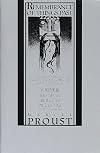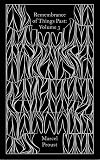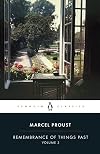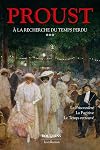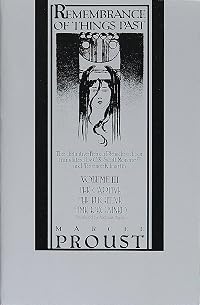
In Search of Lost Time: The Captive, The Fugitive & Time Regained
by Marcel Proust
In Search of Lost Time (Collections — 5-7)
On This Page
Description
Proust's masterpiece is one of the seminal works of the twentieth century, recording its narrator's experiences as he grows up, falls in love and lives through the First World War. A profound reflection on art, time, memory, self and loss, it is often viewed as the definitive modern novel. C. K. Scott Moncrieff's famous translation from the 1920s is today regarded as a classic in its own right and is now available in three volumes in Penguin Classics.Tags
Recommendations







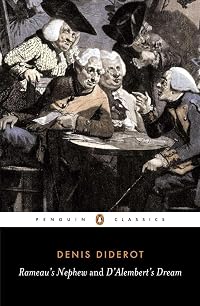
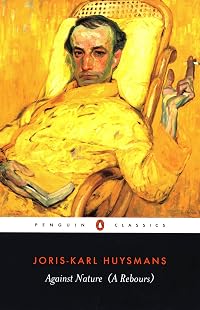
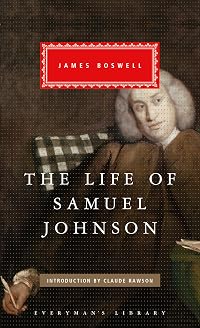


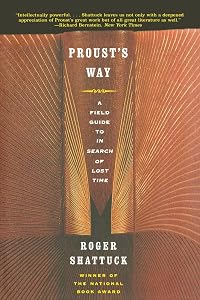

Member Reviews
I felt like Proust's mamma during the last 70 days. I couldn't ignore his plea for one more kiss - such a little boy, such huge, huge eyes. Yet, what a drain, that one! Ironic, that after 4200 pages of examination of the minutiae of a lifetime, Proust's In Search of Lost Time should leave me at the same train station, the same seaside resort, as Shunryu Suzuki's Zen Mind, Beginner's Mind. Two paths, as with Swann's Way and Guermantes Way, yet whether I recline in a beach chair, or sit in the lotus position on a towel, I similarly reflect on the sadness of suffering and impermanence, the preciousness of the present moment, that all is vanity, and, maybe it's just the sunlight, maybe it's always just the sunlight, but in reflecting I am show more yet at peace. So many words? Or, stopping thinking, no words? Same mind. Your mind, my mind, Proust's mind. Yet at the same time different...perhaps as much as arousal and enlightenment...for how come I smile at the thought of a Zen roshi whacking M. de Charlus with a stick? show less
So far, I have to say that I'm appreciating this book more than the last. The first novel in this collection seems to be about the narrator's obsessive jealous, which is a far more interesting topic than why Mme. Verdurin wants to invite M. de Charlus to her dinner parties or not, which is what it seemed at times the entirety of "Cities of the Plain" was about. Obsession is almost always good copy.
After having spent 5+ years reading this entire work I was dreading reaching the end. It has been my constant companion through many changes in my life. After such an investment of time and effort the ending was bound to be a let down...but it wasn't. It was brilliant and completely rewarding.
Time Regained, p. 944, "But since strength of one kind can change into a strength of another kind, since heat which is stored up can become light and the electricity in a flash of lightning can cause a photograph to be taken, since the dull pain in our heart can hoist above itself like a banner the visible permanence of an image for every new grief, let us accept the physical injury which is done to us for the sake of the spiritual knowledge which grief brings; let us submit to the disintegration of our body, since each new fragment which breaks away from it returns in a luminous and significant form to add itself to our work, to complete it at the price of sufferings of which others more richly endowed have no need, to make our work at show more least more solid as our life crumbles away beneath the corrosive action of our emotions. Ideas come to us as the successors to griefs, and griefs, at the moment when they change into ideas, lose some part of their power to injure our heart; the transformation itself, even, for an instant, releases suddenly a little joy. But successors only in the order of time, for the primary element, it seems, is the Idea, and the grief is merely the mode in which certain ideas make their first entry into us. But within the tribe of ideas there are various families and some of them from the very first moment are joys." show less
tl:dr
a life spent navel gazing, and he marvels at how its all a circle. sure it is, if you keep looking in on yourself.
a life spent navel gazing, and he marvels at how its all a circle. sure it is, if you keep looking in on yourself.
Never made it to this one and even if it is on my list of TBR...I doubt very much I will attempt it a third time.
Que dicir? A BELEZA!
Jan 12, 2021Spanish
Members
- Recently Added By
Lists

50 Tough Books for Extreme Readers
71 works; 40 members

Northern Exposure's Chris in the Morning Reading List
31 works; 1 member
Talk Discussions
Past Discussions
***Group Read: The Fugitive, or Sweet Cheat Gone by Marcel Proust in 75 Books Challenge for 2011 (August 2011)
Author Information

872+ Works 47,957 Members
Proust is one of the seminal figures in modern literature, matched only in stature by Joyce, Woolf, Mann and Kafka. By the last decade of the 19th century, the charming and ambitious Proust, born into a wealthy bourgeois family, was already a famous Paris socialite who attended the most fashionable salons of the day. The death of his parents in show more the early years of the 20th century, coupled with his own increasingly ill health, made of Proust a recluse who confined himself to his cork-lined bedroom on the Boulevard Haussmann. There he concentrated on the composition of his great masterpiece, Remembrance of Things Past (1913-27). In recent years, it was discovered that he had already prepared a first draft of the work in the 1890s in Jean Santeuil, which was only published posthumously in 1952. Remembrance of Things Past resists summary. Seeming at turns to be fiction, autobiography, and essay, Remembrance is a vast meditation on the relationship between time, memory, and art. In it the narrator, who bears the same first name as the author, attempts to reconstruct his life from early childhood to middle age. In the process, he surveys French society at the turn of the century and describes the eventual decline of the aristocracy in the face of the rising middle class. The process of reconstruction of Marcel's past life is made possible by the psychological device of involuntary memory; according to this theory, all of our past lies hidden within us only to be rediscovered and brought to the surface by some unexpected sense perception. In the final volume of the work, the narrator, who has succeeded in recapturing his past, resolves to preserve it through the Work of Art, his novel. He died of pneumonia and a pulmonary abscess in 1922. He was buried in the Père Lachaise Cemetery in Paris. (Bowker Author Biography) show less
Series

Belongs to Publisher Series
Penguin Clothbound Classics (2016)
Work Relationships
Contains
Common Knowledge
- Canonical title
- In Search of Lost Time: The Captive, The Fugitive & Time Regained
- Original title
- La Prisonnière; La Fugitive/Albertine disparue; Le Temps retrouvé
- Original publication date
- 1927
- People/Characters
- Marcel, The Narrator
- Last words*
- (Click to show. Warning: May contain spoilers.)Si du moins il m'était laissé assez de temps pour accomplir mon oeuvre, je ne manquerais pas de la marquer au sceau de ce Temps dont l'idée s'imposait à moi avec tant de force aujourd'hui, et j'y décrirais les hommes, cela dût-il les faire ressembler à des êtres monstrueux, comme occupant dans le Temps une place autrement considérable que celle si restreinte qui leur est réservée dans l'espace, une place, au contraire, prolongée sans mesure, puisqu'ils touchent simultanément, comme des géants, plongés dans les années, à des époques vécues par eux, si distantes, - entre lesquelles tant de jours sont venus se placer - dans le Temps.
*Some information comes from Common Knowledge in other languages. Click "Edit" for more information.
Classifications
Statistics
- Members
- 730
- Popularity
- 38,750
- Reviews
- 7
- Rating
- (4.54)
- Languages
- 6 — English, French, German, Italian, Portuguese, Spanish
- Media
- Paper
- ISBNs
- 10
- ASINs
- 7