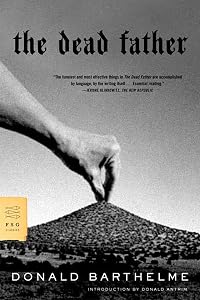
The Dead Father
by Donald Barthelme
On This Page
Description
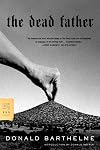
The Dead Father is a gargantuan half-dead, half-alive, part mechanical, wise, vain, powerful being who still has hopes for himself-even while he is being dragged by means of a cable toward a mysterious goal. In this extraordinary novel, marked by the imaginative use of language that influenced a generation of fiction writers, Donald Barthelme offered a glimpse into his fictional universe. As Donald Antrim writes in his introduction, "Reading The Dead Father, one has the sense that its author show more enjoys an almost complete artistic freedom...a permission to reshape, misrepresent, or even ignore the world as we find it...Laughing along with its author, we escape anxiety and feel alive.". show lessTags
Recommendations












Member Reviews
Hasta hace poco, nunca hubiese pensado que me iba a convertir en un aficionado a la literatura posmoderna. Hasta hace poco, huía de autores como Thomas Pynchon, Don DeLillo, David Foster Wallace o Donald Barthelme. Requerían de una atención desmedida a la hora de leerlos, y esto no era precisamente lo que buscaba, me interesaban textos más asequibles y de fácil lectura, libros con argumentos e historias, si no lineales o con el clásico planteamiento-nudo-desenlace, sí con una estructura objetiva y clara. Pero llegó un momento en que necesitaba de historias más potentes, de esas que desarman el cerebro y le dan un revolcón a tu manera de pensar y ver la vida. Y son escritores como los anteriores los que han logrado show more alumbrarme.
Con ‘El Padre Muerto’, Barthelme crea todo un galimatías que le sirve como plataforma para experimentar con el lenguaje (aquí hago un inciso para alabar la labor de la traductora a la hora de hacer frente a esta novela, ya que seguro que no lo ha debido tener fácil). La historia es totalmente surrealista. Haciendo un sucinto resumen, la historia trata sobre el arduo viaje que realizan Thomas y su mujer Julie, junto con una serie de hombres, para acarrear el cuerpo del Padre Muerto, de tamaño gigantesco, en la búsqueda del Vellocino de Oro y la consecución de la vida eterna, o eso piensa el Padre Muerto. Durante este absurdo viaje se tropezarán con los Wend, que son padres de sí mismos, y darán con el libro Manual para hijos, un libro que trata de explicar cómo enfrentarse a esos seres llamados padres.
La lectura de esta novela no es fácil. Hay momentos en que hay una voz narradora clara, pero que en ciertas partes se pierde, mezclándose los diálogos, algo intencionado por parte de Barthelme, y que te obliga a leer con atención para hacerte una idea de lo que están hablando. También hay algunas historias dentro de historias, y algún discurso del Padre Muerto sin pies ni cabeza, algo intencionado. La novela está escrita en los años 70 del pasado siglo, y Barthelme no se corta a la hora de dar voz a sus personajes con un lenguaje sacado de esta década; su prosa es actual, con frases cortas, a ratos pasando por la escatología, y utilizando todos aquellos elementos característicos de su época.
Dentro de la incongruencia de todo esto, puede parecer que la historia carezca de sentido absolutamente. Pero no es así. Barthelme se aprovecha del simbolismo del Padre Muerto para hablarnos de una sociedad lideraba por varones, donde el Padre Muerto representa a todos ellos, al gran varón. Mención aparte para Manual para hijos, un libro dentro del libro, una parte muy inteligente e irónica por parte del autor.
‘El Padre Muerto’ es una novela difícil, delirante, desenfrenada, brillante, recomendada únicamente para aquellos que deseen probar experiencias literarias nuevas. show less
Con ‘El Padre Muerto’, Barthelme crea todo un galimatías que le sirve como plataforma para experimentar con el lenguaje (aquí hago un inciso para alabar la labor de la traductora a la hora de hacer frente a esta novela, ya que seguro que no lo ha debido tener fácil). La historia es totalmente surrealista. Haciendo un sucinto resumen, la historia trata sobre el arduo viaje que realizan Thomas y su mujer Julie, junto con una serie de hombres, para acarrear el cuerpo del Padre Muerto, de tamaño gigantesco, en la búsqueda del Vellocino de Oro y la consecución de la vida eterna, o eso piensa el Padre Muerto. Durante este absurdo viaje se tropezarán con los Wend, que son padres de sí mismos, y darán con el libro Manual para hijos, un libro que trata de explicar cómo enfrentarse a esos seres llamados padres.
La lectura de esta novela no es fácil. Hay momentos en que hay una voz narradora clara, pero que en ciertas partes se pierde, mezclándose los diálogos, algo intencionado por parte de Barthelme, y que te obliga a leer con atención para hacerte una idea de lo que están hablando. También hay algunas historias dentro de historias, y algún discurso del Padre Muerto sin pies ni cabeza, algo intencionado. La novela está escrita en los años 70 del pasado siglo, y Barthelme no se corta a la hora de dar voz a sus personajes con un lenguaje sacado de esta década; su prosa es actual, con frases cortas, a ratos pasando por la escatología, y utilizando todos aquellos elementos característicos de su época.
Dentro de la incongruencia de todo esto, puede parecer que la historia carezca de sentido absolutamente. Pero no es así. Barthelme se aprovecha del simbolismo del Padre Muerto para hablarnos de una sociedad lideraba por varones, donde el Padre Muerto representa a todos ellos, al gran varón. Mención aparte para Manual para hijos, un libro dentro del libro, una parte muy inteligente e irónica por parte del autor.
‘El Padre Muerto’ es una novela difícil, delirante, desenfrenada, brillante, recomendada únicamente para aquellos que deseen probar experiencias literarias nuevas. show less
Espécie de irmão menos bem humorado de Hilda Hilst e onde ambos são filhos de Samuel Beckett, Barthelme nos traz uma história arquetípica cheia de experimentalismo de linguagem, mas que infelizmente não chega à excelência de seus pares.
Better known for his brilliant, perversely funny short stories, Barthelme wrote few novels in his lifetime. This is the one that stays in print, if that tells you anything. A strange, often senseless journey through a dreamscape land of mythology and unconscious desires, it tells the story of the Dead Father, a gargantuan creature that once engaged in godlike acts but who now has withered and is reduced to impotent acts of meaningless violence as a group of his followers drag him across the land on a final quest. Along the way, Barthelme examines, mocks and satirizes the myth of fatherhood, using a variety of stylistic tricks to achieve his often arcane points. At times the book can be tough going, feeling long at only a 150 pages (in show more fact the book's best sequence, an examination of the "Manual for Sons," works well on its own and is included in "60 Stories"). But there are many flashes of brilliance here and the book would make an interesting read for anyone, provided they were at least already familiar with Barthelme's unique fictional world.
(This review originally appeared on zombieunderground.net) show less
(This review originally appeared on zombieunderground.net) show less
Weird. Strange. Surreal. But weird, strange, & surreal can be good. Sometimes. There's nothing wrong necessarily with bizarre.
I don't pretend to understand fully the gist of the Dead Father, so don't ask me what it's about exactly (if it's about anything or even means something) because I'm still scratching my head and I don't have dandruff.
Who is the Dead Father? What does the Dead Father connote or symbolize? Hell if I know. In fact, I'm not sure if the Dead Father is, in fact, dead. Deceased. Is the Dead Father myth, legend, God or god, perhaps; yes to all four? Maybe? Don't care?
Is there a plot? Is their character development? Are you kidding? This is Barthelme, postmodern poster boy, not Nicholas Sparks, so don't ask me about a show more plot or any other standard literary devices, because you won't find them here. I can tell you what The Dead Father is not....it's not very enjoyable. Something about a long cable (we're given an "aerial view " drawing of the cable with 22 dots along a portion of its continuum delineating, apparently, a motley crue of weirdos) which the Dead Father and his son and daughter-in-law and Emma and others follow along, holding it, the cable, while meanwhile killing literal cardboard characters or real creatures along the way. Funny dialogue, though, might've worked better as a play.
Reading Donald Barthelme's The Dead Father is like, dare I say, reading the Bible. Oh, it's Interesting at times all right; cumbersome at times too; archaic, didactic, and obsolete also; difficult to follow & understand as well; mythic, metaphoric, myopic .
But mostly, despite the good mix of humor & innunendo (salacious scenes of The Dead Father seeking to suck the breasts of his daughter-in law, to give you a sneek peek) I was, all in all, bored with the lack of fully fleshed characters I couldn't give a rip about (only their voices are dressed up nicely and somehow move the novel along) and bored too by the complete lack of plot. Not that I need a plot in a book to recommend it. Not that I certainly expected a plot in what I already knew was a novel by a master experimentalist. But if not plot, then I expect the language or at least the philosophy, psychology, something creative or evocative in the narrative to compel me page after plotless page a la plotless, plodding Proust, and Barthelme's language, largely, fails the challenge in the Dead Father. William H. Gass, on the other hand, compels page after plotless page in his fictions, and I'd recommend any of his work without reservation, but I can't quite recommend Barthelme here. I did appreciate, however, in Barthelme's defense, the humorous word play -- the wacky way he can string a seamless, page-long sentence together -- truly satisfies & elicits lots of smiles, but Barthelme's technique cannot, in my estimation, overcome the vacuity & pointlessness of The Dead Father's journey on the page. True, I admire the writing, the obvious talent, and the skill involved, but I don't give a damn about the storytelling. And good storytelling, good descriptive writing, compelling narrative, are reasons why I read, and such traits are greatly lacking here. Based on Barthelme's enormous reputation, I expected more. show less
I don't pretend to understand fully the gist of the Dead Father, so don't ask me what it's about exactly (if it's about anything or even means something) because I'm still scratching my head and I don't have dandruff.
Who is the Dead Father? What does the Dead Father connote or symbolize? Hell if I know. In fact, I'm not sure if the Dead Father is, in fact, dead. Deceased. Is the Dead Father myth, legend, God or god, perhaps; yes to all four? Maybe? Don't care?
Is there a plot? Is their character development? Are you kidding? This is Barthelme, postmodern poster boy, not Nicholas Sparks, so don't ask me about a show more plot or any other standard literary devices, because you won't find them here. I can tell you what The Dead Father is not....it's not very enjoyable. Something about a long cable (we're given an "aerial view " drawing of the cable with 22 dots along a portion of its continuum delineating, apparently, a motley crue of weirdos) which the Dead Father and his son and daughter-in-law and Emma and others follow along, holding it, the cable, while meanwhile killing literal cardboard characters or real creatures along the way. Funny dialogue, though, might've worked better as a play.
Reading Donald Barthelme's The Dead Father is like, dare I say, reading the Bible. Oh, it's Interesting at times all right; cumbersome at times too; archaic, didactic, and obsolete also; difficult to follow & understand as well; mythic, metaphoric, myopic .
But mostly, despite the good mix of humor & innunendo (salacious scenes of The Dead Father seeking to suck the breasts of his daughter-in law, to give you a sneek peek) I was, all in all, bored with the lack of fully fleshed characters I couldn't give a rip about (only their voices are dressed up nicely and somehow move the novel along) and bored too by the complete lack of plot. Not that I need a plot in a book to recommend it. Not that I certainly expected a plot in what I already knew was a novel by a master experimentalist. But if not plot, then I expect the language or at least the philosophy, psychology, something creative or evocative in the narrative to compel me page after plotless page a la plotless, plodding Proust, and Barthelme's language, largely, fails the challenge in the Dead Father. William H. Gass, on the other hand, compels page after plotless page in his fictions, and I'd recommend any of his work without reservation, but I can't quite recommend Barthelme here. I did appreciate, however, in Barthelme's defense, the humorous word play -- the wacky way he can string a seamless, page-long sentence together -- truly satisfies & elicits lots of smiles, but Barthelme's technique cannot, in my estimation, overcome the vacuity & pointlessness of The Dead Father's journey on the page. True, I admire the writing, the obvious talent, and the skill involved, but I don't give a damn about the storytelling. And good storytelling, good descriptive writing, compelling narrative, are reasons why I read, and such traits are greatly lacking here. Based on Barthelme's enormous reputation, I expected more. show less
I love Barthelme's shorter works, but I didn't enjoy this one at all, and and abandoned it after about fifty pages. To me, his writing style, so laden with irony, didn't suit the longer form. Such a constant barrage of irony on so many levels just left me alienated and failing to care. Maybe one day I'll come back to this and see what it has to offer.
It felt tired-- or made me feel so. Trying to hard to be experimental and/or absurdist? Don't know, but I'm not going to wear myself out trying to decide.
A very strange book, interesting, but very strange. And I think I'll leave it at that, because I really can't make any coherent story out of it.
Members
- Recently Added By
Lists

1,001 BYMRBYD Concensus
723 works; 27 members

Books Read in 2016
4,666 works; 197 members
Harold Bloom - The Western Canon: D. The Chaotic Age
833 works; 24 members

My TBR
371 works; 3 members

Canon de la narrativa universal del s. XX (cicutadry)
499 works; 3 members
Author Information

68+ Works 7,812 Members
Donald Barthelme was born on April 7, 1931, and was one of the major U.S. short story writers and novelists of the late twentieth century. Barthelme satirized American life. Born in Philadelphia, Barthelme spent part of his early life in Houston, Texas, and began to write fiction while working as a journalist, director of an art museum and show more university publicist. These occupations became fuel for his creative fire. His arsenal of techniques included parodies of television shows, radio plays and recipes, long and elaborate metaphors, complex dream sequences, and a break-neck narrative pace. After the publication of his first collection, Come Back Dr. Caligari (1964), Barthelme became a full-time writer of short stories and novels. The latter included Snow White (1967), The Dead Father (1975), and Paradise (1986). Barthelme also published three more short story collections, 60 Stories (1981), Overnight to Many Distant Cities (1983), and 40 Stories (1987). Barthelme died of cancer in 1989. (Bowker Author Biography) show less
Awards and Honors
Series
Belongs to Publisher Series
Common Knowledge
- Canonical title*
- Il padre morto
- Original title
- The dead father
- Original publication date
- 1975
*Some information comes from Common Knowledge in other languages. Click "Edit" for more information.
Classifications
Statistics
- Members
- 790
- Popularity
- 35,334
- Reviews
- 9
- Rating
- (3.62)
- Languages
- 7 — English, French, German, Hungarian, Italian, Portuguese, Spanish
- Media
- Paper, Audiobook, Ebook
- ISBNs
- 20
- ASINs
- 7