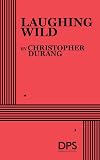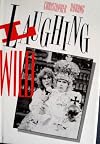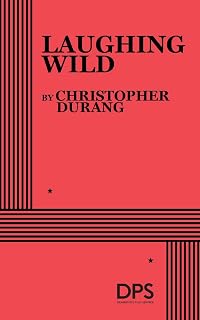
Laughing Wild
by Christopher Durang
85 Members (4.38)
On This Page
Description
"In the first section of the play, a Woman enters and embarks on an increasingly frenetic (and funny) recital of the perils and frustrations of daily life in urban America--waiting in line, rude taxi drivers, inane talk shows and the selfish people who block the aisles in supermarkets. In particular she is incensed by a man who prevented her from buying a can of tuna fish by standing in her way--and whom she attacked in a fit of pique. In the second monologue ('Seeking Wild') the Man show more appears, and while the subjects on which he expounds (nuclear waste, the rigidity of the Catholic Church, particularly in sexual matters, the threat of AIDS) may be broader in context, he also dwells on an incident in a supermarket, when a strange woman hit him over the head in the tuna fish aisle. In the final portion of the play ('Dreaming Wild') the two protagonists meet at last and reenact the supermarket incident via six varying interpretations; tell us more fully of their overlapping dreams; and then launch into an explosively funny parody of a talk show. In the end the two find an accommodation of sorts as they come together at the Harmonic Convergence in Central Park--both still hoping to instill a sense of optimism and purpose in their lives, but both still skeptical that they will succeed in doing so."-- show lessTags
Recommendations


















Member Reviews
Members
- Recently Added By
Lists

Books Read in 2016
4,666 works; 197 members
Author Information

61+ Works 1,989 Members
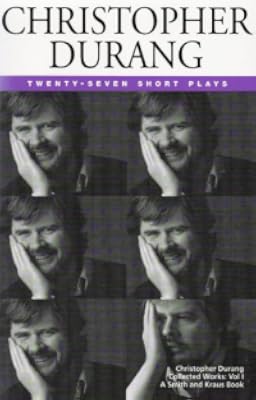
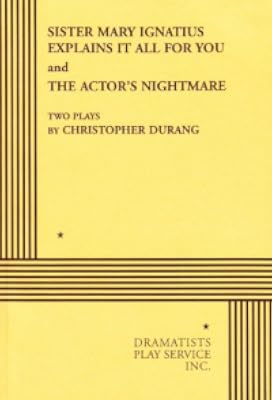
Reared in Berkeley Heights, New Jersey, Christopher Durang spent his childhood acting out plays that he based on television and movie characters. His 12 years in repressive Roman Catholic schools as well as traumatic elements in his home life became the basis for the dark humor of his later plays. Known as one of America's angry young playwrights, show more Durang has focused his satirical wit on Hollywood's myth-making cinemas, the Catholic church, contemporary psychoanalytic practices, and the problems of individual and family identity. Although he has enjoyed only limited success on Broadway, he has become a major voice off-Broadway and in America's burgeoning regional and university theaters. Durang developed as a playwright during the early 1970s while working under Robert Brustein at the Yale Repertory Theatre. Much of his work during this period brought him little critical attention. However, in 1976 his satirical play, A History of the American Film, was read at the O'Neill National Playwrights Conference. The following year the play was premiered at the Hartford Stage Company, the Mark Taper Forum in Los Angeles, and the Arena Stage in Washington. By the close of the decade, the play had become a regional theatre favorite. Sister Mary Ignatius Explains It All for You opened in 1979 at the Ensemble Studio Theatre in New York as a companion piece to works by David Mamet, Marsha Norman, and Tennessee Williams. The play begins with a simple catechism delivered by a seven-year-old student but soon turns into a deadly confrontation between the nun, Sister Mary Ignatius, and a number of her former students. The play, which is concerned with censorship, won the coveted Obie in 1980. The wildly humorous The Actor's Nightmare served as a curtain raiser for the controversial Sister Mary Ignatius when these two plays were presented in 1981 at off-Broadway's Playwrights Horizons. Beyond Therapy opened off-Broadway in 1981 and enjoyed a less successful run the following year on Broadway. This screwball comedy concerns two people who are seeking meaningful relationships but who are hampered by the efforts of their respective therapists. The story shows the patients sorting it out and learning to live beyond beyond therapy. As with other Durang plays, it has enjoyed strong regional support. The Marriage of Bette and Boo, first produced in 1973, was rewritten to open at the Public Theatre in 1985. A brilliant and satirical dissection of the modern American family, the play is Durang's most autobiographical work. Durang himself played the role of Matt, Bette and Boo's son, in the New York production. The play, which earned an Obie, enjoyed critical and popular success and has been viewed as an important breakthrough in Durang's career. (Bowker Author Biography) show less
Work Relationships
Common Knowledge
- Original publication date
- 1986
Classifications
Statistics
- Members
- 85
- Popularity
- 376,917
- Rating
- (4.38)
- Languages
- English
- Media
- Paper
- ISBNs
- 1
- ASINs
- 2