On This Page
Description
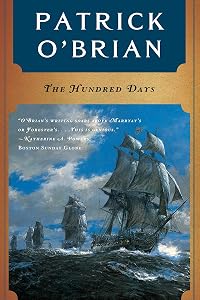
When Napoleon escapes from Elba, the fate of Europe hinges on a desperate mission: Stephen Maturin must ferret out the French dictator's secret link to the powers of Islam, and Jack Aubrey must destroy it. Like a vengeful phoenix, Napoleon pursues his enemies across Europe. If he can corner the British and Prussians before their Russian and Austrian allies arrive, his genius will lead the French armies to triumph at Waterloo.In the Balkans, preparing a thrust northwards into Central Europe show more to block the Russians and Austrians, a horde of Muslim mercenaries is gathering in support of Napoleon. However, they will not move without a shipment of gold ingots from Sheik Ibn Hazm, which, according to British intelligence, is on its way via camel caravan to the coast of North Africa. It is this gold that Aubrey and Maturin must intercept at all costs.
The colorful historical backdrop, engaging plot, and memorable characters make this nineteenth Aubrey-Maturin adventure a must-listen.
. show less
Tags
Recommendations














Member Reviews
I can hardly believe that I only have one and a half Aubrey and Maturin novels left unread. It's unheard of for me to stick with a series for so many books, yet twenty and a half feels like too few. Spending time at sea and on land with Jack and Stephen is a continual delight. [b:The Hundred Days|24521|The Hundred Days (Aubrey & Maturin #19)|Patrick O'Brian|https://i.gr-assets.com/images/S/compressed.photo.goodreads.com/books/1388208747l/24521._SY75_.jpg|1384120] begins with both the dramatic threat of resurgent Napoleon and personal tragedy. The reader learns discreetly of Diana's off-page demise. Stephen is quietly grief-stricken, but luckily has his husband to support him. We are also reassured that he's staying off the hard drugs, show more although he remains addicted to coffee. Another sudden tragedy occurs at the end, as Barrett Bonden is killed in battle.
Despite this sadness hanging over subsequent events, there are some excellent moments of levity. These include the farcical incident with the narwhal horn leading to Killick's disgrace, varying reactions to Naval puddings ("Frankly, sir, I think that I may die"), Stephen leaving Jack's telescope in the maintop, and the wide-eyed ship's boy ("He is to carry the message to the Commodore, but this is the first time he has ever left Stow on the Wold - he sees wonders on every hand, and I fear he may utterly lose his way"). I must also mention Stephen supplying Jack with an argument to save an officer from execution after being accused of sodomy:
This is a particularly plotty episode in the adventures of Aubrey and Maturin, as both work to foil Napoleon. There are exciting sea battles, chases, and the ingenious hoisting of a cannon up a cliff to bombard a ship sheltering in an island cove. Equally exciting are political machinations aiming to cut Napoleon off from allies and resources. These require Stephen to spend some time ashore, where he sees wonderful wildlife. Two splendidly described lions are sadly killed in a hunting expedition undertaken for diplomatic purposes.Stephen's sounding out of the Dey rapidly becomes moot after he is murdered. The next Dey doesn't last long either, so I wondered that no-one made a pun about it; "One is only Dey for a day or two" or similar. They probably thought, correctly, that it would be in poor taste.
The theme of slavery's repugnance recurs at several points, as it periodically does in this series. At one point the Surprise crew observe with horror as chained galley slaves are thrown overboard to drown from the ship they pursue; at another Stephen comes across a pair of Irish children who have been enslaved. O' Brian is very skilled at showing cruelties in their historical context and making clear that they were deplored at the time. This is an exciting and eventful instalment in the series, with fewer quiet moments than some and a fascinating connection to historical events. I turned to [b:The Hundred Days|24521|The Hundred Days (Aubrey & Maturin #19)|Patrick O'Brian|https://i.gr-assets.com/images/S/compressed.photo.goodreads.com/books/1388208747l/24521._SY75_.jpg|1384120] because the two books I'd started were proving hard going. Aubrey and Maturin novels can always be relied upon to immediately absorb, entertain, and delight. show less
Despite this sadness hanging over subsequent events, there are some excellent moments of levity. These include the farcical incident with the narwhal horn leading to Killick's disgrace, varying reactions to Naval puddings ("Frankly, sir, I think that I may die"), Stephen leaving Jack's telescope in the maintop, and the wide-eyed ship's boy ("He is to carry the message to the Commodore, but this is the first time he has ever left Stow on the Wold - he sees wonders on every hand, and I fear he may utterly lose his way"). I must also mention Stephen supplying Jack with an argument to save an officer from execution after being accused of sodomy:
"I repeated your 'No penetration, no sodomy', which floored one and all; although I must say that most of them were glad to be floored. I persuaded the others to find no more than gross indecency."
This is a particularly plotty episode in the adventures of Aubrey and Maturin, as both work to foil Napoleon. There are exciting sea battles, chases, and the ingenious hoisting of a cannon up a cliff to bombard a ship sheltering in an island cove. Equally exciting are political machinations aiming to cut Napoleon off from allies and resources. These require Stephen to spend some time ashore, where he sees wonderful wildlife. Two splendidly described lions are sadly killed in a hunting expedition undertaken for diplomatic purposes.
The theme of slavery's repugnance recurs at several points, as it periodically does in this series. At one point the Surprise crew observe with horror as chained galley slaves are thrown overboard to drown from the ship they pursue; at another Stephen comes across a pair of Irish children who have been enslaved. O' Brian is very skilled at showing cruelties in their historical context and making clear that they were deplored at the time. This is an exciting and eventful instalment in the series, with fewer quiet moments than some and a fascinating connection to historical events. I turned to [b:The Hundred Days|24521|The Hundred Days (Aubrey & Maturin #19)|Patrick O'Brian|https://i.gr-assets.com/images/S/compressed.photo.goodreads.com/books/1388208747l/24521._SY75_.jpg|1384120] because the two books I'd started were proving hard going. Aubrey and Maturin novels can always be relied upon to immediately absorb, entertain, and delight. show less
The Hundred Days, Patrick O’Brian’s nineteenth book in his Aubrey-Maturin series, picks up shortly after the events of The Yellow Admiral, with Napoleon having escaped from his exile on Elba. On land, the Allies are joining to stop Napoleon, but the Austrian and Russian forces are blocked partly by geography and partly through mutual distrust. In order to drive them apart, Napoleon has reached out to Muslim forces in North Africa, the Middle East, and Eastern Europe, seeking funds to hire Assassins as mercenaries. He also works to rebuild his fleet in order to challenge those forces loyal to Louis XVIII.
As the story begins, Dr. Stephen Maturin had briefly left the squadron to bury his wife, Diana, after she died in a carriage show more accident. O’Brian had foreshadowed this in The Yellow Admiral, but it still feels shocking to have so familiar a character die. Maturin throws himself into his intelligence work, relishing the opportunity to stop Napoleon once and for all. Admiral Lord Keith gives Commodore Jack Aubrey new orders to stop the gold from making its way to Napoleon and to convince any French captains he meets to join the side of Louis XVIII. Along with the expected sea maneuvers, O’Brian further examines the nature of luck as Killick accidentally breaks Maturin’s narwhal horn, which the crew held to bring the luck of a unicorn horn. Maturin himself is full in his grief, seeming at times a different character, but the regularity of sea life helps him to find some familiarity in which to recover.
By land, O’Brian uses Maturin to examine the different loyalties of the Muslim leaders regarding the Sunni-Shiite divide and how Napoleon worked to take advantage of it to gain allies, while a trip to meet the local Dey, Omar Pasha, provides some land-based action. Maturin studies the local fauna, gains the necessary intelligence, but worries if it will be actionable when a sirocco wind coming off the land delays either the Surprise or its tender, the Ringle, from returning for him. Fortunately, he makes it in time and brings Aubrey the intelligence and they make a plan to intercept a xebec carrying the gold in the Strait of Gibraltar. The battle goes on for days with Barrett Bonden dying in the first blow, adding yet another shocking death as Bonden had been with Jack’s crew since the first book, Master and Commander. The Surprise and her crew manage to capture the xebec and all its gold, learning on their return to Gibraltar that Napoleon was defeated in the Low Countries and the war is over. Jack now heads off on his mission to Chile.
With The Hundred Days, O’Brian brings the Napoleonic Wars to a close. The series began during the War of the Second Coalition, a war many of the European monarchies fought against revolutionary France, which in turn led to the War of the Third Coalition under Napoleon, who also fought the Wars of the Fourth, Fifth, Sixth, and Seventh Coalitions. O’Brian uses Aubrey to comment on the fact that the period was marked by twenty years of almost constant war with few interruptions. He also demonstrates a great deal of narrative maturity in this novel, for while many members of Aubrey’s ships’ companies had died during the course of the series, the death of Diana and Bonden stand out for the large role they played in Aubrey and Maturin’s lives. The Hundred Days further offers a bit of a look back, with the crew visiting Gibraltar and Port Mahon in Minorca, showing what has changed or remained the same since the events of Master and Commander. This nineteenth novel is easily one of the strongest books in the Aubrey-Maturin series. This Folio Society edition reprints the original text with insets containing historical portraits and sketches to illustrate some of the scenes and maps of the Mediterranean coast on the endpapers. show less
As the story begins, Dr. Stephen Maturin had briefly left the squadron to bury his wife, Diana, after she died in a carriage show more accident. O’Brian had foreshadowed this in The Yellow Admiral, but it still feels shocking to have so familiar a character die. Maturin throws himself into his intelligence work, relishing the opportunity to stop Napoleon once and for all. Admiral Lord Keith gives Commodore Jack Aubrey new orders to stop the gold from making its way to Napoleon and to convince any French captains he meets to join the side of Louis XVIII. Along with the expected sea maneuvers, O’Brian further examines the nature of luck as Killick accidentally breaks Maturin’s narwhal horn, which the crew held to bring the luck of a unicorn horn. Maturin himself is full in his grief, seeming at times a different character, but the regularity of sea life helps him to find some familiarity in which to recover.
By land, O’Brian uses Maturin to examine the different loyalties of the Muslim leaders regarding the Sunni-Shiite divide and how Napoleon worked to take advantage of it to gain allies, while a trip to meet the local Dey, Omar Pasha, provides some land-based action. Maturin studies the local fauna, gains the necessary intelligence, but worries if it will be actionable when a sirocco wind coming off the land delays either the Surprise or its tender, the Ringle, from returning for him. Fortunately, he makes it in time and brings Aubrey the intelligence and they make a plan to intercept a xebec carrying the gold in the Strait of Gibraltar. The battle goes on for days with Barrett Bonden dying in the first blow, adding yet another shocking death as Bonden had been with Jack’s crew since the first book, Master and Commander. The Surprise and her crew manage to capture the xebec and all its gold, learning on their return to Gibraltar that Napoleon was defeated in the Low Countries and the war is over. Jack now heads off on his mission to Chile.
With The Hundred Days, O’Brian brings the Napoleonic Wars to a close. The series began during the War of the Second Coalition, a war many of the European monarchies fought against revolutionary France, which in turn led to the War of the Third Coalition under Napoleon, who also fought the Wars of the Fourth, Fifth, Sixth, and Seventh Coalitions. O’Brian uses Aubrey to comment on the fact that the period was marked by twenty years of almost constant war with few interruptions. He also demonstrates a great deal of narrative maturity in this novel, for while many members of Aubrey’s ships’ companies had died during the course of the series, the death of Diana and Bonden stand out for the large role they played in Aubrey and Maturin’s lives. The Hundred Days further offers a bit of a look back, with the crew visiting Gibraltar and Port Mahon in Minorca, showing what has changed or remained the same since the events of Master and Commander. This nineteenth novel is easily one of the strongest books in the Aubrey-Maturin series. This Folio Society edition reprints the original text with insets containing historical portraits and sketches to illustrate some of the scenes and maps of the Mediterranean coast on the endpapers. show less
To begin with the most descriptive statement about The Hundred Days, which is also the most positive statement I can make of this book, it is a rollicking adventure story. Of course, losing oneself in a rollicking adventure story is the reason one reads any of the twenty completed books in Patrick O'Brian's Aubrey/Maturin series, which has, so far as I can find after having now completed nineteen of the books, no particular literary merit. This is not necessarily intended as a criticism for there is no harm in enjoying some escapism from the travails of daily life between the covers of a novel, but a potential reader should be aware that whatever value each of the books in the series has resides in the superficial plot. After a while, show more one finds even the adventures eminently forgettable. Enjoy the story, but be aware that the thought behind them is not nearly as deep as the oceans on which they largely transpire.
While I would venture to assign the overall series of books certainly no more than three stars for literary quality and lasting interest or impact on the reader, I am tempted to give this particular book four. Its plot not only moves along spritely, for the most part anyway, but the secondary protagonist, Stephen Maturin, physician extraordinaire and spy, finally gets to have a detailed spy-type adventure of his own. Heretofore, his spy adventures have been largely hinted at, but in The Hundred Days he finally gets to act out the part. Way to go, Stephen!
Reviewing a single book in the Aubrey/Maturin series is relatively futile, for each one is truly a long “chapter” in one monstrously long “novel” about Jack Aubrey, ship captain (speaking generally; he actually advances and retreats through various ranks in the British navy during the Napoleonic wars in the early 1800s). Imagine a novel of over 6,000 pages with chapters of about 300 pages each, and you have a pretty accurate concept of the series. The story is progressive, so one should certainly begin with the first book/chapter in the series, Master and Commander and read the rest in the proper order, just as normal chapters in a single-volume novel should be read if one expects to follow the logic of the story.
The first few book/chapters are longer than the later ones, Master and Commander running to 459 pages and Post Captain to 527, while the last complete book/chapter, Blue at the Mizzen, barely ekes out 289. It seems that Richard Patrick Russ, the English author writing under the pseudonym of Patrick O'Brian, was running out of wind for his creative sails.
In brief, Russ/O'Brian has created an immensely long seafaring novel with each of its twenty completed volumes comprising a chapter in that novel. The series is perhaps best described as “recess reading,” a temporary escape from the “classroom” of serious reading. The author generally spins an enjoyable and even sometimes captivating story, and the reader does develop an interest in the fates of Jack Aubrey and Stephen Maturin, but from the standpoint of design, style, or linguistic finesse, Russ/O'Brian comes nowhere near the excellence of a Nabokov, a Melville, a Steinbeck, or a Forester. The series, however, enjoyed quite a bit of popularity upon its publication and, judging by on-line reviews, it continues to do so, but then I suspect we all enjoyed recess at school, so have fun with the escapism the series offers! show less
While I would venture to assign the overall series of books certainly no more than three stars for literary quality and lasting interest or impact on the reader, I am tempted to give this particular book four. Its plot not only moves along spritely, for the most part anyway, but the secondary protagonist, Stephen Maturin, physician extraordinaire and spy, finally gets to have a detailed spy-type adventure of his own. Heretofore, his spy adventures have been largely hinted at, but in The Hundred Days he finally gets to act out the part. Way to go, Stephen!
Reviewing a single book in the Aubrey/Maturin series is relatively futile, for each one is truly a long “chapter” in one monstrously long “novel” about Jack Aubrey, ship captain (speaking generally; he actually advances and retreats through various ranks in the British navy during the Napoleonic wars in the early 1800s). Imagine a novel of over 6,000 pages with chapters of about 300 pages each, and you have a pretty accurate concept of the series. The story is progressive, so one should certainly begin with the first book/chapter in the series, Master and Commander and read the rest in the proper order, just as normal chapters in a single-volume novel should be read if one expects to follow the logic of the story.
The first few book/chapters are longer than the later ones, Master and Commander running to 459 pages and Post Captain to 527, while the last complete book/chapter, Blue at the Mizzen, barely ekes out 289. It seems that Richard Patrick Russ, the English author writing under the pseudonym of Patrick O'Brian, was running out of wind for his creative sails.
In brief, Russ/O'Brian has created an immensely long seafaring novel with each of its twenty completed volumes comprising a chapter in that novel. The series is perhaps best described as “recess reading,” a temporary escape from the “classroom” of serious reading. The author generally spins an enjoyable and even sometimes captivating story, and the reader does develop an interest in the fates of Jack Aubrey and Stephen Maturin, but from the standpoint of design, style, or linguistic finesse, Russ/O'Brian comes nowhere near the excellence of a Nabokov, a Melville, a Steinbeck, or a Forester. The series, however, enjoyed quite a bit of popularity upon its publication and, judging by on-line reviews, it continues to do so, but then I suspect we all enjoyed recess at school, so have fun with the escapism the series offers! show less
It's been a while and I'd forgotten about O'Brian's delicious prose. Delicious prose like ice-cream that's full of flavour and goes down smoothly. Prose that makes a statement. Makes a statement then repeats it, expanding upon it. Prose that really is way harder to imitiate than it looks...
It was a bit of a shock to find Aubrey and Maturin had not only escaped the magically extended 1812 (authors are the gods of their creations and can do anything) but had arrived in 1815 without any apparent intervening time. And they're off to North Africa for political shenanigans and anti-Napoleonic naval action.
There are some surprises here and new destinations, amazing for book 19 of a series that's circum-navigated the globe several times over - show more this is neither the best nor the worst entry and if you've got this far, surely you both know what to expect and are going to stick it out through the 20th and final book... show less
It was a bit of a shock to find Aubrey and Maturin had not only escaped the magically extended 1812 (authors are the gods of their creations and can do anything) but had arrived in 1815 without any apparent intervening time. And they're off to North Africa for political shenanigans and anti-Napoleonic naval action.
There are some surprises here and new destinations, amazing for book 19 of a series that's circum-navigated the globe several times over - show more this is neither the best nor the worst entry and if you've got this far, surely you both know what to expect and are going to stick it out through the 20th and final book... show less
Not perhaps the best in the series, I'm afraid. The deaths of several long-important characters are just sort of lobbed in offhand, it seems like ... and much of the "hundred days" action is of course offstage. There are some lovely moments here, including Stephen's rescue of two Irish children, but this certainly wasn't one of my favorite volumes in the series.
Not him at his best, I think. O' Brian's very clearly tired at this point, and I think writing just in order to spend more time with the characters, rather than in order to say anything new about them. Still eminently readable, of course, but there's a certain spark that's lacking—not to mention the fact that he elided over the departures of two major characters in a way which made my eyebrows shoot up. There's British reticence, and there's that.
I will confess, on a shallower note, to having derived much fangirlish amusement from the crossover potential at having Jack and Stephen sailing to the Ragusa Vecchio, in the company of a Lieutenant Turnbull, while playing music by the Czech composer Zelenka. *g*
I will confess, on a shallower note, to having derived much fangirlish amusement from the crossover potential at having Jack and Stephen sailing to the Ragusa Vecchio, in the company of a Lieutenant Turnbull, while playing music by the Czech composer Zelenka. *g*
After enjoying the Yellow Admiral so very much....this book was quite a disappointment. So much so, that after leafing through #20 a bit, I decided not to spend any more time on it at all. Although I have not read O'Brian's biography, I suppose the death of his wife might have had something to do with his change in tone, and perhaps that's understandable...but still, I wish I hadn't read this one. I would have preferred to have my delight in the series remain unalloyed.
Members
- Recently Added By
Lists

Books Read in 2018
4,360 works; 110 members
Author Information

154+ Works 77,051 Members
Patrick O'Brian is the author of twenty volumes in the highly respected Aubrey/Maturin series of novels. (Publisher Provided) Patrick O'Brien was born in Ireland in 1914. His education included the Sorbonne. O'Brian has produced a variety of works, including biographies of Picasso and Sir Joseph Banks and translations of the novels and memoirs of show more Simone de Beauvoir, but he is best known for the creation of an unlikely pair of Napoleonic War-era heroes in the Aubrey-Maturin Series. British naval officer Jack Aubrey and Irish scholar and physician Stephen Maturin have been featured in more than a novels published in Great Britain (five of which have also appeared in America). He died on January 2, 2000. (Bowker Author Biography) show less
Some Editions
Awards and Honors
Distinctions
Series

Belongs to Publisher Series
Work Relationships
Common Knowledge
- Original publication date
- 1998
- People/Characters
- Jack Aubrey; Stephen Maturin; Preserved Killick; Barrett Bonden; Joe Plaice; Heneage Dundas (show all 15); William Reade; Christy-Palliere; Lady Keith; Lord Keith; Amos Jacob; Mr. Wright; Mr. Adams; Admiral Lord Barmouth; Poll Skeeping
- Important events
- Age of Sail; Napoleonic Wars
- Epigraph
- [None]
- Dedication
- For Mary with love
- First words
- The sudden rearmament that followed Napoleon's escape from Elba had done little to thin the ranks of unemployed sea-officers by the early spring of 1815.
- Last words
- (Click to show. Warning: May contain spoilers.)And at the very end of the mole, when the frigate turned westward along the Strait with a following breeze, stood an elegant young woman with a maidservant, and she too waving, waving, waving ...
- Publisher's editor
- Lawrence, Starling
- Blurbers
- Cornwell, Bernard; Waldegrave, William; Everett, Barbara
- Original language
- English
Classifications
Statistics
- Members
- 2,653
- Popularity
- 7,079
- Reviews
- 25
- Rating
- (4.07)
- Languages
- 5 — English, French, German, Italian, Spanish
- Media
- Paper, Audiobook, Ebook
- ISBNs
- 48
- ASINs
- 19