On This Page
Description
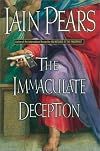
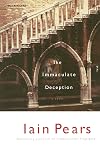
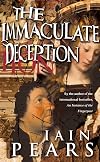
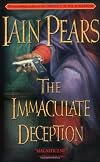
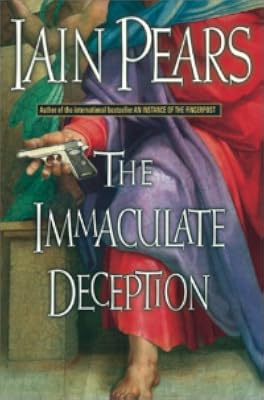
From internationally bestselling author Iain Pears comes the seventh in his Jonathan Argyll series -- an intriguing mystery of love, loss, and artistic license. For newlywed and Italian art theft squad head Flavia di Stefano, the honeymoon is over when a painting, borrowed from the Louvre and en route to a celebratory exhibition, is stolen. Desperate to avoid public embarrassment -- and to avoid paying a ransom -- the Italian prime minister leans hard on Flavia to get it back quickly and show more quietly. Across town, her husband, art historian Jonathan Argyll, begins an investigation of his own, tracing the past of a small Renaissance painting -- an Immaculate Conception -- owned by Flavia's mentor, retired general Taddeo Bottando. Soon both husband and wife uncover astonishing and chilling secrets, and Flavia's investigation takes a sudden turn from the search for an art thief to the hunt for a murderer. show lessTags
Recommendations




Member Reviews
Even though this is the last in a series of novels featuring art crime, it was still engaging and I didn’t feel as though I was at sea with regard to the characters and their situation. Yeah, there’s some backstory there that I didn’t know, but it didn’t matter to the crime. I was puzzled as to who the main character was though, none of them hogged the screen time and since there were two separate mysteries to be solved it could have gone either way.
Early on there’s mention of an old nemesis; an art thief who got away with it and I knew she’d figure into the solution, but I was a tad surprised at how. Maybe if I’d read previous books first I’d have suspected. While I have to take the author’s art expertise on faith, I show more have my doubts because he’s one of those writers who thinks a bullet spins a person around and knocks them backwards. Not on this planet with our current laws of physics. Sigh. It’s so disappointing to read that particular line of bullshit over and over again. Will someone get a clue, please?
Anyway, overall it’s a satisfying mystery with plenty of pastoral Italian atmosphere. It makes you want to wander Florence and Tuscany drinking wine, eating olives and appreciating art. I may pick up earlier volumes in the series when I need something relatively cozy. show less
Early on there’s mention of an old nemesis; an art thief who got away with it and I knew she’d figure into the solution, but I was a tad surprised at how. Maybe if I’d read previous books first I’d have suspected. While I have to take the author’s art expertise on faith, I show more have my doubts because he’s one of those writers who thinks a bullet spins a person around and knocks them backwards. Not on this planet with our current laws of physics. Sigh. It’s so disappointing to read that particular line of bullshit over and over again. Will someone get a clue, please?
Anyway, overall it’s a satisfying mystery with plenty of pastoral Italian atmosphere. It makes you want to wander Florence and Tuscany drinking wine, eating olives and appreciating art. I may pick up earlier volumes in the series when I need something relatively cozy. show less
Flavia di Stefano is now the acting head of the art theft squad in Rome, newly married to art dealer/professor Jonathan Argyll and missing the advice of her former boss, General Bottando. The Italian government is planning an extravaganza of European art, but when one painting disappears after arriving in Rome, Flavia is requested to recover the painting, even if it requires paying a ransom, but on no account is anybody else to know either about the theft or the ransom. An impossible task, Flavia finds, and it is not long before she realizes that the entire operation has its roots deep in the very highest political offices in the land…. This is the seventh and last book in Iain Pears’ 1990s series featuring Flavia and Jonathan, and show more it winds up the series quite nicely. There is political intrigue, historical wrongdoings, beautiful paintings and more than one love affair, not to mention a couple of murders and a lot of money. I really love this series, especially after having visited Italy and seen some of the places depicted; I would recommend it for anybody who likes gently mocking dialogue, tons of art history, well-plotted mysteries and very engaging characters - but start with “The Raphael Affair,” the first in the series, and carry through to this book, the well-deserved end. show less
A Claude picture on loan for a big international exhibition in Rome is stolen and held for ransom, but Flavia is ordered by the Prime Minister not to investigate but just hand over the ransom. What is going on?
Although it has its whimsical touches, this book is not as light-hearted as the rest of the series and in some ways is unnecessary as the previous book would have worked just as well as a wrap-up. Also I'm not entirely sure what we learn about two characters' back story is compatible with what we were told in previous books.
So it's not a bad book and would have worked well as a standalone, but it just doesn't fit in with the series as a whole in tone or, I suspect, content.
Although it has its whimsical touches, this book is not as light-hearted as the rest of the series and in some ways is unnecessary as the previous book would have worked just as well as a wrap-up. Also I'm not entirely sure what we learn about two characters' back story is compatible with what we were told in previous books.
So it's not a bad book and would have worked well as a standalone, but it just doesn't fit in with the series as a whole in tone or, I suspect, content.
This one is the most recent in the series... It was as tightly-plotted as 'Death and Restoration,' and the writing was as good, but I didn't like it as much - for personal reasons, I have to admit: At the outset, we're informed that Flavia and Jonathan have just gotten married. Of course, she immediately turns out to be pregnant. (It has to follow in that order, even though they've been living together for years, right?) The pregnancy is obvious to the reader (when is a woman ever repeatedly nauseous in a book except when she's pregnant?) but somehow not to Flavia. But of course, she's delighted when she finds out, even though this may very well mean the end of her brilliant career in the police force (Every career woman, upon getting show more pregnant just 'wants to stay home and paint the kitchen,' right? Argh.)
Anyway - the plot cleverly balances Jonathan's quest to discover the provenance of a painting owned by Flavia's boss, who is planning retirement, (Of course this involves sources dropping dead and uncomfortable secrets coming to light...) and Flavia's involvement with an art theft case - where the political implications reach straight up to the Prime Minister. Radical terrorists and plots to bring down the government may be involved - but are these just dead-end leads? Again, the villains are not quite who one might expect them to be, and lies and deceptions are layered one upon the other.... show less
Anyway - the plot cleverly balances Jonathan's quest to discover the provenance of a painting owned by Flavia's boss, who is planning retirement, (Of course this involves sources dropping dead and uncomfortable secrets coming to light...) and Flavia's involvement with an art theft case - where the political implications reach straight up to the Prime Minister. Radical terrorists and plots to bring down the government may be involved - but are these just dead-end leads? Again, the villains are not quite who one might expect them to be, and lies and deceptions are layered one upon the other.... show less
Seventh and final book in the Jonathan Argyll “art history” mysteries—or, at least there’s been none for more than eight years so one must assume the series has ended. Flavia, now firmly in place as Bottando’s temporary replacement as head of the art theft squad, is called to a meeting with the Prime Minister about a painting that has been stolen for ransom. The painting is on loan from another country, part of an international exhibition and is a delicate matter as any publicity about its theft will greatly impugn not only the PM’s reputation, but all of Italy’s. Flavia is given vague directions and yet she senses that they want her to deal with this differently than what’s implied. And this begins a long and twisted show more plot that goes back years. Jonathan meanwhile, to avoid sitting down and actually writing a paper that’s needed for an upcoming conference, decides to track down the particulars of a small picture that Flavia’s boss Bottando has had for years, ‘a gift from a friend’ he’s said. Jonathan wants to find out its history as a retirement gift for Bottando and in so digging finds some startling information and connections. I enjoyed this book a lot—there are a few surprises, much lovable description of Italy, its food, its people and its culture. I’m unsure as to whether Pears planned this as a last installment in the series or whether it happened abruptly—argument could be made for both viewpoints. It did end on a satisfying note, but there is definitely room for further storylines as well. Excellent ending to an all-around excellent series. show less
Iain Pears is a very talented novelist. He is probably best known for his dense historical novels – like ‘Dream of Scipio’ and ‘The Instance of the Fingerpost’. But, in these Argyll art history mysteries, Pears has a lovely light touch.
The characters are real, likeable and easy to identify with, especially Flavia, the stressed career woman, and her husband, Jonathan, the art dealer. The descriptions of Italy make you want to go there and the art theme inspires you to learn more about art history as a subject. It was learn more about Bottando and the master thief, Mary Verney. The ending is far from predictable – and, after all that, I really want to know who the artist of that bloody painting was!
The characters are real, likeable and easy to identify with, especially Flavia, the stressed career woman, and her husband, Jonathan, the art dealer. The descriptions of Italy make you want to go there and the art theme inspires you to learn more about art history as a subject. It was learn more about Bottando and the master thief, Mary Verney. The ending is far from predictable – and, after all that, I really want to know who the artist of that bloody painting was!
This is a story about an art robbery that has political overtones and causes the head of the Art Robbery Department of the Italian police a lot of headaches. It is an interesting tale with good twists and a mystery that leaves enough clues around for the reader to at least get a rough idea of the ultimate solution.
It is a nice bit of entertainment with some interesting outlines of how things work in the real world.
Would I read another book by this author?
Yes.
Would I recommend this book and, if so, to whom?
I would recommend it to anyone interested in crime mysteries.
Did this book inspire me to do anything?
No.
It is a nice bit of entertainment with some interesting outlines of how things work in the real world.
Would I read another book by this author?
Yes.
Would I recommend this book and, if so, to whom?
I would recommend it to anyone interested in crime mysteries.
Did this book inspire me to do anything?
No.
Members
- Recently Added By
Lists

Books Read in 2015
3,299 works; 129 members

Art heist books at PPL
122 works; 1 member
Author Information

18+ Works 16,813 Members
Iain Pears was born in England in 1955. He has worked as an art historian, a TV consultant and a journalist. After several years working for Reuters, he went to Yale University to complete his book on eighteenth-century British art entitled The Discovery of Painting. He has written several novels include An Instance of the Fingerpost, The Dream of show more Scipio, Stone's Fall, Arcadia, and the Jonathan Argyll series. (Bowker Author Biography) show less
Series

Belongs to Publisher Series
Common Knowledge
- Canonical title*
- La donna che collezionava segreti
- Original publication date
- 2000-10-30
- People/Characters
- Flavia di Stefano; Jonathan Argyll
- Important places
- Rome, Italy; Tuscany, Italy; Italy
- Dedication
- To Michael and Alexander
- First words
- One morning, a fine May morning in Rome, when the sun was beaming through the clouds of carbon monoxide and dust and giving a soft, fresh feel to the day, Flavia di Stefano sat immobile in a vast traffic jam that began in the... (show all) Piazza del Popolo and ended somewhere near the Piazza Venezia.
- Last words
- (Click to show. Warning: May contain spoilers.)The old man looked shocked, and recoiled. "Good Lord," he said. "Really?"
*Some information comes from Common Knowledge in other languages. Click "Edit" for more information.
Classifications
Statistics
- Members
- 807
- Popularity
- 34,333
- Reviews
- 12
- Rating
- (3.59)
- Languages
- 6 — Dutch, English, French, German, Italian, Russian
- Media
- Paper, Audiobook, Ebook
- ISBNs
- 21
- ASINs
- 5