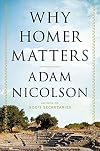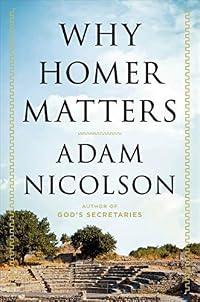
The Mighty Dead: Why Homer Matters
by Adam Nicolson
On This Page
Description
"In this passionate, deeply personal book, Adam Nicolson explains why Homer matters-- to him, to you, to the world--in a text full of twists, turns and surprises. In a spectacular journey through mythical and modern landscapes, Adam Nicholson explores the places forever haunted by their Homeric heroes. From Sicily, awash with wildflowers shadowed by Italy's largest oil refinery, to Ithaca, southern Spain, and the mountains on the edges of Andalusia and Extremadura, to the deserted, show more irradiated steppes of Chernobyl, where Homeric warriors still lie under the tumuli, unexcavated. This is a world of springs and drought, seas and cities, with not a tourist in sight. And all sewn together by the poems themselves and their great metaphors of life and suffering. Showing us the real roots of Homeric consciousness, the physical environment that fills the gaps between the words of the poems themselves, Nicholson's is itself a Homeric journey. A wandering meditation on lost worlds, our interconnectedness with our ancestors, and the surroundings we share. This is the original meeting of place and mind, our empathy with the past, our landscape as our drama. Following the acclaimed Gentry, which established him as one of the great landscape writers working today, Nicholson takes Homer's poems back to their source: beneath the distant, god-inhabited mountains, on the Trojan plains above the graves of the heroic dead, we find afresh the foundation level of human experience on Earth"-- show lessTags
Recommendations



Member Reviews
Adam Nicolson reaches across centuries and knits past and present together in his richly written book "Why Homer Matters." For Nicolson, Homer's epic poetry may enshrine the past, but the 'Iliad" and the "Odyssey" also live in a radiant present. Nicolson writes that the air Homer breathes "is the complexity of life, the bubbling vitality of a boat at sea, the resurgent energy...of the bright wake starting to gleam behind you." Nicolson guides us through our own journey of discovery as he helps us look beneath the stones of memory for a living Homer. Who was Homer? Was there one Homer or a series of writers over the centuries? Was Homer's poetry primarily a written art or was it based on oral tradition? What can Homer say to us about show more violence and bloodlust? Nicolson examines all of these questions in detail and allows us to weigh the evidence. The book carries us into the world of Homer through Nicolson's travels across the Mediterranean world. Nicolson's language is sensual, visceral, and at times extremely hard hitting - an idea of Homer not for the faint of heart. With Nicolson, we sail across Homer's "unharvestable sea" - in Greek pontos atrygetos - and finds clues to the painful and revelatory condition of life on earth. Reading "Why Homer Matters" has spurred me to pull the "Iliad" and the "Odyssey" off the shelf and reread them once again, but this time with Nicolson as a personal guide. Highly recommended. show less
 This review was written for LibraryThing Early Reviewers.
So hands up everyone who thought that the story of the Trojan Horse was in the Iliad? Its years since I read the Iliad, admittedly, but I could have sworn....
But its not. Its in the Odyssey. However Adam Nicolson spends a lot of time telling us, very engagingly and poetically, what is in the Iliad, where it comes from, and why it matters. He spends less time on the Odyssey.
Was there a Homer? If there was did he create a standardised version of an existing oral epic? Or was this very much Homer's work based on existing sources? The truth is that we don't know but Nicolson provides evidence for both possibilities, analysing the work of Macedonian bards (every version of a story is different - it can be thought of as composition in show more performance) and Scottish storytellers (every time a story is told its pretty nearly identical) . So we don't know.
What Nicolson does know, or thinks he knows, is that the origins of the Iliad go back a lot earlier than are popularly supposed. Perhaps the roots of the tale go back to 1800 BC rather than 700 BC, and tell the tale of a nomadic warrior people from the steppe arriving in the Aegean. With their individualist, warrior culture - Nicolson very insightfully identifies Achilles as the first pure individualist in the written canons - the "Greeks" arriving at the walls of the much more prosperous and civilised (at that moment in history) Troy, were very much the Barbarians at the Gate, bent on conquest, destruction, and spoil according to their ancestral practice as demonstrated by some of the shockingly graphic violence of the poem (and indeed in the Odyssey - see the way Odysseus dispatches the "suitors" and those of his female servants he deems faithless). In this view of the Iliad it represents the last gasps of a horse borne, steppe based, warrior culture as they slowly become civilised. In that sense, Troy may have lost the battle, but civilisation wins the war. Nicolson brings this theory vividly to life, and, empirically true or not, I think I buy it.
An engaging and erudite book show less
But its not. Its in the Odyssey. However Adam Nicolson spends a lot of time telling us, very engagingly and poetically, what is in the Iliad, where it comes from, and why it matters. He spends less time on the Odyssey.
Was there a Homer? If there was did he create a standardised version of an existing oral epic? Or was this very much Homer's work based on existing sources? The truth is that we don't know but Nicolson provides evidence for both possibilities, analysing the work of Macedonian bards (every version of a story is different - it can be thought of as composition in show more performance) and Scottish storytellers (every time a story is told its pretty nearly identical) . So we don't know.
What Nicolson does know, or thinks he knows, is that the origins of the Iliad go back a lot earlier than are popularly supposed. Perhaps the roots of the tale go back to 1800 BC rather than 700 BC, and tell the tale of a nomadic warrior people from the steppe arriving in the Aegean. With their individualist, warrior culture - Nicolson very insightfully identifies Achilles as the first pure individualist in the written canons - the "Greeks" arriving at the walls of the much more prosperous and civilised (at that moment in history) Troy, were very much the Barbarians at the Gate, bent on conquest, destruction, and spoil according to their ancestral practice as demonstrated by some of the shockingly graphic violence of the poem (and indeed in the Odyssey - see the way Odysseus dispatches the "suitors" and those of his female servants he deems faithless). In this view of the Iliad it represents the last gasps of a horse borne, steppe based, warrior culture as they slowly become civilised. In that sense, Troy may have lost the battle, but civilisation wins the war. Nicolson brings this theory vividly to life, and, empirically true or not, I think I buy it.
An engaging and erudite book show less
Marvelous book. I have wanted to read The Odyssey, interested in particular in the newest translation by Emily Wilson. I have attempted the Iliad and not got far. I picked up The Mighty Dead on a remainders table and it has hung around until the reading of Circe by Madeline Miller so enchanted me that I wanted to recommit to reading Homer. I know of myself that difficult works are sometimes made easier by reading something secondary to help orient myself. Beginning something, like The Iliad and The Odyssey, with a sense of why they are classics, why they are important, what they have meant and may mean can carry me through some of the difficulty. In short, The Mighty Dead: Why Homer Matters fit this bill.
Nicholson approaches his show more question of why Homer matters from many angles, including historical, linguistic, and personal. He draws on his own experience of sailing and the sea. In a stunning section, he describes his victimization at the hands of a stranger in Syria. He explores other artistic representations of the life-world of the Greeks, and speculates (convincingly enough for me) about pre-historic encounters between peoples of the Northern Steppes and those of the more advanced cultures from the Middle East. Much of this was completely new to me and I think it a testament to the book and to Nicholson's writing that it all coheres, and fascinatingly so.
In the later chapters, I did struggle--but with my expectations and desires. As everyone knows, The Iliad is about a war and revels in bloodletting. I, being peaceable, don't like that and want it to be rejected and argued against (it seems a little childish, sentimental and high-minded, but there you have it). As Nicholson makes clear this is not what Homer is up to. So I squirmed through pages of detailed exploration of the violence committed, reveled in, the thoughts about where it comes from and why. As I read, I recognized that my discomfort reflects back on our own days of violence and inhumanity. I demand of Nicholson and Homer: What will you say against this?
In the Conclusion, the final four pages of the book, Nicholson explicitly acknowledges the problem, the discomfort we all must feel. He writes:
"Homer's embrace of wrongness, his depiction of a world that stands at a certain angle to virtue, is the heart of why we love him. He does not give us a set of exemplars. These poems are not sermons. We do not want Achilles or even Odysseus to be our model as men. Nor Penelope or Helen as women. Nor do we want to worship at the shrine of Bronze Age thuggery. What we want is Homeric wisdom, his fearless encounter with the dreadful, his love of love and hatred of death, the sheer scale of his embrace, his energy and brightness, his resistance to nostalgia..." P. 250. The entirety of these last four pages could bear quoting, but instead you can read the book.
Nicholson is a fine writer with an intimate tone that I liked. He connects so many strands across literature, language, history. The book has excellent notes and a bibliography that I want to explore. I highly recommend. show less
Nicholson approaches his show more question of why Homer matters from many angles, including historical, linguistic, and personal. He draws on his own experience of sailing and the sea. In a stunning section, he describes his victimization at the hands of a stranger in Syria. He explores other artistic representations of the life-world of the Greeks, and speculates (convincingly enough for me) about pre-historic encounters between peoples of the Northern Steppes and those of the more advanced cultures from the Middle East. Much of this was completely new to me and I think it a testament to the book and to Nicholson's writing that it all coheres, and fascinatingly so.
In the later chapters, I did struggle--but with my expectations and desires. As everyone knows, The Iliad is about a war and revels in bloodletting. I, being peaceable, don't like that and want it to be rejected and argued against (it seems a little childish, sentimental and high-minded, but there you have it). As Nicholson makes clear this is not what Homer is up to. So I squirmed through pages of detailed exploration of the violence committed, reveled in, the thoughts about where it comes from and why. As I read, I recognized that my discomfort reflects back on our own days of violence and inhumanity. I demand of Nicholson and Homer: What will you say against this?
In the Conclusion, the final four pages of the book, Nicholson explicitly acknowledges the problem, the discomfort we all must feel. He writes:
"Homer's embrace of wrongness, his depiction of a world that stands at a certain angle to virtue, is the heart of why we love him. He does not give us a set of exemplars. These poems are not sermons. We do not want Achilles or even Odysseus to be our model as men. Nor Penelope or Helen as women. Nor do we want to worship at the shrine of Bronze Age thuggery. What we want is Homeric wisdom, his fearless encounter with the dreadful, his love of love and hatred of death, the sheer scale of his embrace, his energy and brightness, his resistance to nostalgia..." P. 250. The entirety of these last four pages could bear quoting, but instead you can read the book.
Nicholson is a fine writer with an intimate tone that I liked. He connects so many strands across literature, language, history. The book has excellent notes and a bibliography that I want to explore. I highly recommend. show less
4. Why Homer Matters by Adam Nicolson
published: 2014
format: 284 page hardcover
acquired: borrowed from my library.
listened: Jan 24 - 31
Rating: 4 stars
Nicolson is provocative in numerous ways, from the origins of the Homeric epics which he pulls back to the origins of indo-european civilization, to the inspiration of Keat's poem on Chapman's translation (a poem that is critical of the Alexander Pope translation). In short, he doesn't believe there was a Homer, but sees Homer as a collection of myth accumulated and standardized over time with origins around 2000 bce.
To understand Homer he goes in many different directions, collecting a variety of research into a pretty readable form. I loved his section on Keats. His sections on mining show more and Hades, and on the Hittite, Egyptian and Israelite views on a Greeks were really interesting. He puts a new light, for me, on David vs Goliath. His comparison of East St. Louis gangs to the Greek army in the Iliad was fascinating. He also includes his own sea faring experience, and bravely, the story of his own rape.
I thought it was interesting how he essentially disregards all modern archaeological research into Troy with the common sense comment that 1250 bce is a baseless date. We don't need to worry about whether Troy VI or VIIa matches Homer. Troy II, from a 1000 years earlier is not only just as valid, by maybe more valid because the Greeks were more raw and barbarous and Troy was wealthier at that time (and less Greek). Anyway, this isn't history, it's myth.
He's not perfect. And sometimes seems to think himself more a wordsmith then he really is. But, still, in summary, for the Homer curious, recommended.
2016
https://www.librarything.com/topic/209547#5453544 show less
published: 2014
format: 284 page hardcover
acquired: borrowed from my library.
listened: Jan 24 - 31
Rating: 4 stars
Nicolson is provocative in numerous ways, from the origins of the Homeric epics which he pulls back to the origins of indo-european civilization, to the inspiration of Keat's poem on Chapman's translation (a poem that is critical of the Alexander Pope translation). In short, he doesn't believe there was a Homer, but sees Homer as a collection of myth accumulated and standardized over time with origins around 2000 bce.
To understand Homer he goes in many different directions, collecting a variety of research into a pretty readable form. I loved his section on Keats. His sections on mining show more and Hades, and on the Hittite, Egyptian and Israelite views on a Greeks were really interesting. He puts a new light, for me, on David vs Goliath. His comparison of East St. Louis gangs to the Greek army in the Iliad was fascinating. He also includes his own sea faring experience, and bravely, the story of his own rape.
I thought it was interesting how he essentially disregards all modern archaeological research into Troy with the common sense comment that 1250 bce is a baseless date. We don't need to worry about whether Troy VI or VIIa matches Homer. Troy II, from a 1000 years earlier is not only just as valid, by maybe more valid because the Greeks were more raw and barbarous and Troy was wealthier at that time (and less Greek). Anyway, this isn't history, it's myth.
He's not perfect. And sometimes seems to think himself more a wordsmith then he really is. But, still, in summary, for the Homer curious, recommended.
2016
https://www.librarything.com/topic/209547#5453544 show less
This book is an exploration of the themes in Homer's Iliad and Odyssey and how they may relate to later human history and the world today. His central thesis is that Homer's epics probably originate about a millennium earlier than the 8th century BC period to which most historians assign it, and the Trojan War earlier than the 13th century BC period. This is based on comparing events and background details in the epics with archaeological evidence of the arrival of the ancestors of the Greek people in their current homeland, leading to the clash of two very different peoples, the nomadic proto-Greeks and the city-based Trojans ("The idea I have pursued is that the Homeric poems are legends shaped around the arrival of a people – the show more people who through this very process would grow to be the Greeks – in what became their Mediterranean homeland"). He pursues some interesting evidence about words existing or not in the Proto Indo European (PIE) language, to draw conclusions about the probable place of origin of these proto-Greeks, for example in small, inland communities, given that there are no PIE words for city or sea.
This is fascinating stuff, but I was not really convinced that this shows the epics were penned as early as he says, given that it is generally accepted anyway that Homer was recording, in the then very new medium of writing, epics passed down in oral form from generation to generation for centuries beforehand. Other scholars have pointed out that, given the similarity of style, the two epics were probably written down by the same person consecutively, as the Odyssey is aware of the existence of the Iliad, but not vice versa - "The Odyssey, with extraordinary care, is shaped around the pre-existence of the Iliad. It fills in details that are absent from the earlier poem – the Trojan Horse, the death of Achilles – but never mentions anything that is described there".
Despite this very interesting exploration of historical, archaeological, cultural and linguistic issues, I had a problem with aspects of his writing style and choice of material. The language is often rather elaborate and I found some of the description overblown and too "stream of consciousness" for my liking. I didn't see the point of including some of his personal material, in particular the inclusion of an incident from his youth when he was raped by a stranger of his own age, which seemed entirely gratuitous to me. So I was left with rather mixed feelings about this book. show less
This is fascinating stuff, but I was not really convinced that this shows the epics were penned as early as he says, given that it is generally accepted anyway that Homer was recording, in the then very new medium of writing, epics passed down in oral form from generation to generation for centuries beforehand. Other scholars have pointed out that, given the similarity of style, the two epics were probably written down by the same person consecutively, as the Odyssey is aware of the existence of the Iliad, but not vice versa - "The Odyssey, with extraordinary care, is shaped around the pre-existence of the Iliad. It fills in details that are absent from the earlier poem – the Trojan Horse, the death of Achilles – but never mentions anything that is described there".
Despite this very interesting exploration of historical, archaeological, cultural and linguistic issues, I had a problem with aspects of his writing style and choice of material. The language is often rather elaborate and I found some of the description overblown and too "stream of consciousness" for my liking. I didn't see the point of including some of his personal material, in particular the inclusion of an incident from his youth when he was raped by a stranger of his own age, which seemed entirely gratuitous to me. So I was left with rather mixed feelings about this book. show less
Wonderful. Made me eager to order a couple of the newer translations Nicholson quoted from and read the Iliad and the Odyssey again. In Why Homer Matters, Adam Nicholson explores the reasons why Homer, well over two thousand years after his poems were composed, still offers unique and precious gifts to modern readers, and also, on a personal level, he describes how reading Homer has enriched his own life.
Nicholson moves between sections describing his experiences with Homer – times and places where the some part of the poems has seemed to capture some essential truth – and sections describing the history of the poems, the peoples involved, and Homeric scholarship. He describes major shifts in how the poems have been believed to be show more composed, particularly in the early 20th century, largely through the work of Milman Parry. He then traces the work that led from Parry's insights about “composition in performance,” relying heavily on formulas, derived from his research among Slavic traditional singers, to more recent understandings, derived from work with Celtic and other storytellers, which have shown the ability of traditional storytellers to accurately retell stories, essentially without change, over centuries.
Nicholson believes that the poems' origins extend farther back than is typically proposed. He does a wonderful job describing the clues from the poems which might date elements of the stories to a period before 1400 BC. He even presents an interesting argument for the idea that the warriors Heinrich Schliemann found in Mycenaean shaft graves were, in fact, as he claimed, Homer's Greek kings. Having traced Homeric elements back to 16th century Mycenae, Nicholson then follows the story even farther back, going north and west, into Europe and Asia, and south and east, towards Egypt and Mesopotamia. Plenty of what he suggests is speculative, sometimes highly so, but he is quite up front about this, and the evidence he presents is intriguing (for example, the importance of horses in Homer as evidence of a background Indo-European steppe heritage).
Nicholson is a good writer, and he explores a subject where non-scholarly readers might easily get bogged down (he does a lovely job explaining Homeric hexameters, and also uses the example of the bedtime story-poems he composed for his children to illustrate the idea of formulaic composition). in a very readable, entertaining style. While recognizing that in many ways Homer's stories are utterly foreign and impossibly distant from us, Nicolson shows how, more essentially, the poems remain relevant and true to life, offering insights and clarity to readers today. show less
Nicholson moves between sections describing his experiences with Homer – times and places where the some part of the poems has seemed to capture some essential truth – and sections describing the history of the poems, the peoples involved, and Homeric scholarship. He describes major shifts in how the poems have been believed to be show more composed, particularly in the early 20th century, largely through the work of Milman Parry. He then traces the work that led from Parry's insights about “composition in performance,” relying heavily on formulas, derived from his research among Slavic traditional singers, to more recent understandings, derived from work with Celtic and other storytellers, which have shown the ability of traditional storytellers to accurately retell stories, essentially without change, over centuries.
Nicholson believes that the poems' origins extend farther back than is typically proposed. He does a wonderful job describing the clues from the poems which might date elements of the stories to a period before 1400 BC. He even presents an interesting argument for the idea that the warriors Heinrich Schliemann found in Mycenaean shaft graves were, in fact, as he claimed, Homer's Greek kings. Having traced Homeric elements back to 16th century Mycenae, Nicholson then follows the story even farther back, going north and west, into Europe and Asia, and south and east, towards Egypt and Mesopotamia. Plenty of what he suggests is speculative, sometimes highly so, but he is quite up front about this, and the evidence he presents is intriguing (for example, the importance of horses in Homer as evidence of a background Indo-European steppe heritage).
Nicholson is a good writer, and he explores a subject where non-scholarly readers might easily get bogged down (he does a lovely job explaining Homeric hexameters, and also uses the example of the bedtime story-poems he composed for his children to illustrate the idea of formulaic composition). in a very readable, entertaining style. While recognizing that in many ways Homer's stories are utterly foreign and impossibly distant from us, Nicolson shows how, more essentially, the poems remain relevant and true to life, offering insights and clarity to readers today. show less
This review was written for LibraryThing Early Reviewers.Like many students in Western schools, I read The Odyssey in high school. I regularly run across references to The Iliad and The Odyssey in books and essays. Maybe that's why the lessons have stayed with me for so long. What is it about Homer's works that gives them such a lasting influence?
Author Adam Nicolson looks at Homer's influence through the ages, traces the earliest remaining fragments of his works, closely examines internal evidence for the origin of the works, and describes the remnants of Homer's world that are still visible in modern landscapes. Nicolson makes a convincing case for a much earlier date for Homer's works than is generally believed.
Nicolson also reflects on Homeric parallels in his own life, particularly show more through his sailing experience. It is evident that Homer matters very much to Nicolson, and he writes so lovingly and persuasively that most readers will agree with him.
One short section of the book seemed discordant to me, and it affected my overall perception of the book. Nicolson surprises readers with a description of his experience as a victim of a sexual assault on his travels in Syria as a young adult. At that point the focus shifted from Homer to the author in a way that detracted from the book's theme, and it made me very uncomfortable as a reader.
This review is based on an advanced reading copy provided by the publisher through LibraryThing's Early Reviewers program. show less
Author Adam Nicolson looks at Homer's influence through the ages, traces the earliest remaining fragments of his works, closely examines internal evidence for the origin of the works, and describes the remnants of Homer's world that are still visible in modern landscapes. Nicolson makes a convincing case for a much earlier date for Homer's works than is generally believed.
Nicolson also reflects on Homeric parallels in his own life, particularly show more through his sailing experience. It is evident that Homer matters very much to Nicolson, and he writes so lovingly and persuasively that most readers will agree with him.
One short section of the book seemed discordant to me, and it affected my overall perception of the book. Nicolson surprises readers with a description of his experience as a victim of a sexual assault on his travels in Syria as a young adult. At that point the focus shifted from Homer to the author in a way that detracted from the book's theme, and it made me very uncomfortable as a reader.
This review is based on an advanced reading copy provided by the publisher through LibraryThing's Early Reviewers program. show less
This review was written for LibraryThing Early Reviewers.Members
- Recently Added By
Published Reviews
Nicolson has written a beautiful study: full of insight, generosity and unaffected passion. The writing is exhilarating. This is a book about what Homer means to him and, in some profound way, about what life means to him.
added by geoffmiles
Here is a book on Homer that has been reviewed in the New York Times, Washington Post, Wall Street Journal, Slate, and the Guardian, among others, but not, as far as I know, in any classical journal. Yet it is an important book for classical scholars to read—not because it offers anything both new and true about Homer, but because it shows an educated, widely experienced person creating show more deeply felt meaning out of Homer and some strands of Homeric scholarship. Nicolson belongs in the tradition of great amateurs of Homer: Keats, Gladstone, Matthew Arnold, or T. E. Lawrence. His book shows what Homer can do. show less
added by cinaedus
Author Information

33+ Works 5,763 Members
Adam Nicolson has been both a publisher and a travel writer, and is the author of many award-winning books. He lives on a farm with his family near Burwash, England
Awards and Honors
Distinctions
Common Knowledge
- Original publication date
- 2014
- People/Characters
- Homer
- Important places
- Ancient Greece
Classifications
- Genres
- Literature Studies and Criticism, Nonfiction
- DDC/MDS
- 883.01 — Literature & rhetoric Classical & modern Greek literatures Classical Greek epic poetry and fiction Pseudo-Callisthenes
- LCC
- PA4037 .N523 — Language and Literature Greek language and literature. Latin language and literature Greek literature Individual authors Homer
- BISAC
Statistics
- Members
- 615
- Popularity
- 47,215
- Reviews
- 19
- Rating
- (4.09)
- Languages
- English, Spanish
- Media
- Paper, Audiobook, Ebook
- ISBNs
- 11
- ASINs
- 7