dchaikin searches for Homer
This topic was continued by dchaikin searches for his inner Slothrop.
Talk Club Read 2016
Join LibraryThing to post.
This topic is currently marked as "dormant"—the last message is more than 90 days old. You can revive it by posting a reply.
1dchaikin

Achilles and Hektor?
I have a two-pronged plan this year. One plan is to read Homer, and carry on into Greek mythology. The other is to read all the novels by Thomas Pynchon. It might not all be realistic, but I have a plan laid out. At some point I'll have to bow down to reality, but that's for later. For now, I'm building momentum... I'll start the Iliad on Jan 1.
Both Homer and Pynchon will be new to me.
2dchaikin
Currently Reading:

- Poetry March 2016 (started Mar 22)
Currently Listening to:


- The Witches : Salem, 1692 (audio) by Stacy Schiff, read by Eliza Foss (started Jan 23-31. Now waiting to renew at library)
- Serial : Season Two, Fall 2015 (Podcast) by Sarah Koenig (started Dec 16. I'll try to follow as episodes are released)

- Poetry March 2016 (started Mar 22)
Currently Listening to:


- The Witches : Salem, 1692 (audio) by Stacy Schiff, read by Eliza Foss (started Jan 23-31. Now waiting to renew at library)
- Serial : Season Two, Fall 2015 (Podcast) by Sarah Koenig (started Dec 16. I'll try to follow as episodes are released)
3dchaikin
Recently read



Recently Listened to


Old threads: 2009 Part 1, 2009 Part 2, 2010 Part 1, 2010 Part 2, 2011 Part 1, 2011 Part 2, 2012 Part 1, 2012 Part 2, 2013 Part 1, 2013 Part 2, 2013 Part 3, 2014 Part 1, 2014 Part 2, 2014 Part 3 2015 Part 1, 2015 Part 2, 2015 Part 3


Recently Listened to


Old threads: 2009 Part 1, 2009 Part 2, 2010 Part 1, 2010 Part 2, 2011 Part 1, 2011 Part 2, 2012 Part 1, 2012 Part 2, 2013 Part 1, 2013 Part 2, 2013 Part 3, 2014 Part 1, 2014 Part 2, 2014 Part 3 2015 Part 1, 2015 Part 2, 2015 Part 3
4dchaikin
2016 list of Books read
Links go to posts in this thread
JANUARY
1. *** Archaeology and the Iliad: The Trojan War in Homer and History (The Modern Scholar) (CD Audio lecture) by Eric H. Cline (listened Dec 28 - Jan 6)
2. ***** The Iliad by Homer, translated by Robert Fagles (read Jan 1-23)
3. **** A God in Ruins (audio) by Kate Atkinson, read by Alex Jennings (listened Jan 6-23)
4. **** Why Homer Matters by Adam Nicolson (read Jan 24-31)
FEBRUARY
5. **** Our Souls at Night (audio) by Kent Haruf, read by Mark Bramhall (listened Jan 31 - Feb 3)
6. ****½ V. by Thomas Pynchon (read Dec 31 - Feb 11)
7. *** The Adventures of Ulysses: Homer's Epic in Pictures by Erich Lessing (read Feb 12-13)
8. *** In a Sunburned Country (Audio) by Bill Bryson, read by the author (listened Feb 4-17)
9. **** The Iliad, the Odyssey, and the Epic Tradition by Charles Rowan Beye (read Feb 13-18)
10. **** Dictionary of Word Origins by Linda Flavell & Roger Flavell (read roughly Sep 1, 2015 - Feb 23, 2016)
11. ***½ Homer (Past Masters) by Jasper Griffin (read Feb 24-25)
MARCH
12. ***** The Odyssey by Homer, Robert Fagles translation (read Feb 21 - Mar 3)
13. **** The Iliad of Homer (The Great Courses) by Elizabeth Vandiver (listened Feb 29 - Mar 7)
14. ***** Homer's Readers : A Historical Introduction to the Iliad and the Odyssey by Howard W. Clarke (read Feb 27 - Mar 13)
15. ***** Being Mortal : Medicine and What Matters in the End by Atul Gawande, read by Robert Petkoff (started Mar 7 - 17)
16. **** Poetry February 2016 (read Feb 28 - Mar 20)
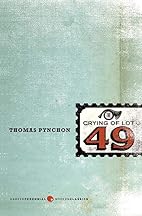
17. **** The Crying of Lot 49 by Thomas Pynchon (read Mar 14-21)
18. **** The Odyssey of Homer (The Great Courses) by Elizabeth Vandiver (listened Mar 17-24)
19. **** Gratitude (Audio) by Oliver Sacks, read by Dan Woren (Mar 24-25)
20. **** Mythology : Timeless Tales of Gods and Heroes by Edith Hamilton (read Mar 22-31)
21. **** The Story of America: Essays on Origins (Audio) by Jill Lepore, read by Colleen Devine (read Feb 22 - Mar 31)
Links go to posts in this thread
JANUARY
1. *** Archaeology and the Iliad: The Trojan War in Homer and History (The Modern Scholar) (CD Audio lecture) by Eric H. Cline (listened Dec 28 - Jan 6)
2. ***** The Iliad by Homer, translated by Robert Fagles (read Jan 1-23)
3. **** A God in Ruins (audio) by Kate Atkinson, read by Alex Jennings (listened Jan 6-23)
4. **** Why Homer Matters by Adam Nicolson (read Jan 24-31)
FEBRUARY
5. **** Our Souls at Night (audio) by Kent Haruf, read by Mark Bramhall (listened Jan 31 - Feb 3)
6. ****½ V. by Thomas Pynchon (read Dec 31 - Feb 11)
7. *** The Adventures of Ulysses: Homer's Epic in Pictures by Erich Lessing (read Feb 12-13)
8. *** In a Sunburned Country (Audio) by Bill Bryson, read by the author (listened Feb 4-17)
9. **** The Iliad, the Odyssey, and the Epic Tradition by Charles Rowan Beye (read Feb 13-18)
10. **** Dictionary of Word Origins by Linda Flavell & Roger Flavell (read roughly Sep 1, 2015 - Feb 23, 2016)
11. ***½ Homer (Past Masters) by Jasper Griffin (read Feb 24-25)
MARCH
12. ***** The Odyssey by Homer, Robert Fagles translation (read Feb 21 - Mar 3)
13. **** The Iliad of Homer (The Great Courses) by Elizabeth Vandiver (listened Feb 29 - Mar 7)
14. ***** Homer's Readers : A Historical Introduction to the Iliad and the Odyssey by Howard W. Clarke (read Feb 27 - Mar 13)
15. ***** Being Mortal : Medicine and What Matters in the End by Atul Gawande, read by Robert Petkoff (started Mar 7 - 17)
16. **** Poetry February 2016 (read Feb 28 - Mar 20)
17. **** The Crying of Lot 49 by Thomas Pynchon (read Mar 14-21)
18. **** The Odyssey of Homer (The Great Courses) by Elizabeth Vandiver (listened Mar 17-24)
19. **** Gratitude (Audio) by Oliver Sacks, read by Dan Woren (Mar 24-25)
20. **** Mythology : Timeless Tales of Gods and Heroes by Edith Hamilton (read Mar 22-31)
21. **** The Story of America: Essays on Origins (Audio) by Jill Lepore, read by Colleen Devine (read Feb 22 - Mar 31)
5dchaikin
books read by date published
BCE The Iliad by Homer
The Odyssey by Homer
1942 Mythology : Timeless Tales of Gods and Heroes by Edith Hamilton
1963 V. by Thomas Pynchon
1965 The Crying of Lot 49 by Thomas Pynchon
1966 The Iliad, the Odyssey, and the Epic Tradition by Charles Rowan Beye
1969 The Adventures of Ulysses: Homer's Epic in Pictures by Erich Lessing
1980 Homer (Past Masters) by Jasper Griffin
1981 Homer's Readers : A Historical Introduction to the Iliad and the Odyssey by Howard W. Clarke
1994 Dictionary of Word Origins by Linda Flavell & Roger Flavell (revised 2010)
1999 The Iliad of Homer (The Great Courses) by Elizabeth Vandiver
The Odyssey of Homer (The Great Courses) by Elizabeth Vandiver
2000 In a Sunburned Country by Bill Bryson
2006 Archaeology and the Iliad: The Trojan War in Homer and History (The Modern Scholar) by Eric H. Cline
2012 The Story of America: Essays on Origins by Jill Lepore
2014 Why Homer Matters by Adam Nicolson
Being Mortal : Medicine and What Matters in the End by Atul Gawande
2015 A God in Ruins by Kate Atkinson
Our Souls at Night by Kent Haruf
Gratitude by Oliver Sacks
2016 Poetry February 2016
BCE The Iliad by Homer
The Odyssey by Homer
1942 Mythology : Timeless Tales of Gods and Heroes by Edith Hamilton
1963 V. by Thomas Pynchon
1965 The Crying of Lot 49 by Thomas Pynchon
1966 The Iliad, the Odyssey, and the Epic Tradition by Charles Rowan Beye
1969 The Adventures of Ulysses: Homer's Epic in Pictures by Erich Lessing
1980 Homer (Past Masters) by Jasper Griffin
1981 Homer's Readers : A Historical Introduction to the Iliad and the Odyssey by Howard W. Clarke
1994 Dictionary of Word Origins by Linda Flavell & Roger Flavell (revised 2010)
1999 The Iliad of Homer (The Great Courses) by Elizabeth Vandiver
The Odyssey of Homer (The Great Courses) by Elizabeth Vandiver
2000 In a Sunburned Country by Bill Bryson
2006 Archaeology and the Iliad: The Trojan War in Homer and History (The Modern Scholar) by Eric H. Cline
2012 The Story of America: Essays on Origins by Jill Lepore
2014 Why Homer Matters by Adam Nicolson
Being Mortal : Medicine and What Matters in the End by Atul Gawande
2015 A God in Ruins by Kate Atkinson
Our Souls at Night by Kent Haruf
Gratitude by Oliver Sacks
2016 Poetry February 2016
6dchaikin
Homeric theme
The best laid plans, part 1
1. The Iliad - Robert Fagles translation - January (read)
2. The Odyssey - Robert Fagles translation - February (finished in March)
3. Mythology - Edith Hamilton - March
4. Hesiod - April
5. Homeric Hymns - May
6. Virgil’s Aeneid - June
7. Ovid’s Metamophoses - July
8. The White Goddess - Robert Graves - August
9. The Greek Myths - Robert Graves - September
10. The Quest for Theseus - Anne G. Ward - October
11. The Song of Achilles - Madeline Miller - November
12. Ulysses* - James Joyce - December
*because, why not?
Books I have read on this theme:
Homer's Readers : A Historical Introduction to the Iliad and the Odyssey by Howard W. Clarke - March
The Iliad of Homer (The Great Courses) by Elizabeth Vandiver - March
Homer (Past Masters) by Jasper Griffin - February
The Iliad, the Odyssey, and the Epic Tradition by Charles Rowan Beye - February
The Adventures of Ulysses: Homer's Epic in Pictures by Erich Lessing - February
Why Homer Matters by Adam Nicolson - January
the chapter of “Odysseus' Scar" in Mimesis by Erich Auerbach - January
The War That Killed Achilles by Caroline Alexander - December 2015
The Gods of Olympus: A History by Barbara Graziosi - November 2015
Ulysses Found - Ernle Bradford - July 2015
Stickman Odyssey : An Epic Doodle : Book One - Christopher Ford - 2013
Stickman Odyssey: Book Two: The wrath of Zozimos - Christopher Ford - 2013
Other books I might consider (I'm open to suggestions)
The Odyssey - Graphic novel -Gillian Cross & Neil Packer
Mary Renault - The King Must Die, The Bull From the Sea, The Mask of Apollo
Carl Kerenyi - The Gods of the Greeks (1951?) - bought in March
The Argonautikca - Apollonios Rhodios, trans Peter Green - bought in March
List from all the suggestions within this thread, below
Omeros by Derek Walcott
The Bloomsday Book by Harry Blamires - to read with Ulysses
The Penelopiad by Margaret Atwood
James Joyce's Ulysses by Stuart Gilbert - to read with Ulysses
Cassandra by Christa Wolf
O Brother Where Art Thou - the movie
Cold Mountain by Charles Frazier
Middle Passage by Charles Johnson
Perceval by Chrétien de Troyes
Going After Cacciato by Tim O'Brien - I've read this in 2010
Rime of the Ancient Mariner by Samuel Taylor Coleridge - I read this for the first time last year. A connection to the Odyssey never occurred to me...but of course!
Evil Hours by David J. Morris - on PTSD
Why Homer Matters by Adam Nicolson
The Long Ships by Frans G. Bengtsson
Homer's Daughter by Robert Graves
and the chapter of “Odysseus' Scar" in Mimesis by Erich Auerbach
Medea by Euripides
Medea by Christa Wolf
Jason and Medeia by John Gardner
(List from The War That Killed Achilles)
Epic Cycle scraps
Pindar
Simon Underwood - English Translations of Homer (1998)
Albert B. Lord - The Singer of Tales (1981) - a summary of Milman Parry’s search for the roots of Homer
Stolta & Shannon - Oral Literature and Formula (1976)
Jonathan Shay - Achilles in Vietnam
Michael Wood - In Search of the Trojan War (2005)
Mary Lefkowitz - Greek Gods, Human Lives (2003)
Laura M. Slatkin - The Power of Thetis : Allusion and Interpretation in the “Iliad”
Jasper Griffin - Homer on Life and Death
(List from Why Homer Matters)
War Music by Christopher Logue (2001)
Memorial: An Excavation of the Iliad by Alice Oswald (2011)
Traditional Oral Epic by John Miles Foley (1993)
The Horse, the Wheel, and Language by David Anthony (2007)
In Search of the Indo-Europeans by J. P. Mallory (1989)
Street Justice by Bruce A. Jacobs & Richard Wright (2006)
People of the Sea: The Search for the Philistines by T. Dothan & M. Dothan (1992)
The Great Sea: A Human History of the Mediterranean by David Abulafia (2011)
The best laid plans, part 1
1. The Iliad - Robert Fagles translation - January (read)
2. The Odyssey - Robert Fagles translation - February (finished in March)
3. Mythology - Edith Hamilton - March
4. Hesiod - April
5. Homeric Hymns - May
6. Virgil’s Aeneid - June
7. Ovid’s Metamophoses - July
8. The White Goddess - Robert Graves - August
9. The Greek Myths - Robert Graves - September
10. The Quest for Theseus - Anne G. Ward - October
11. The Song of Achilles - Madeline Miller - November
12. Ulysses* - James Joyce - December
*because, why not?
Books I have read on this theme:
Homer's Readers : A Historical Introduction to the Iliad and the Odyssey by Howard W. Clarke - March
The Iliad of Homer (The Great Courses) by Elizabeth Vandiver - March
Homer (Past Masters) by Jasper Griffin - February
The Iliad, the Odyssey, and the Epic Tradition by Charles Rowan Beye - February
The Adventures of Ulysses: Homer's Epic in Pictures by Erich Lessing - February
Why Homer Matters by Adam Nicolson - January
the chapter of “Odysseus' Scar" in Mimesis by Erich Auerbach - January
The War That Killed Achilles by Caroline Alexander - December 2015
The Gods of Olympus: A History by Barbara Graziosi - November 2015
Ulysses Found - Ernle Bradford - July 2015
Stickman Odyssey : An Epic Doodle : Book One - Christopher Ford - 2013
Stickman Odyssey: Book Two: The wrath of Zozimos - Christopher Ford - 2013
Other books I might consider (I'm open to suggestions)
The Odyssey - Graphic novel -Gillian Cross & Neil Packer
Mary Renault - The King Must Die, The Bull From the Sea, The Mask of Apollo
Carl Kerenyi - The Gods of the Greeks (1951?) - bought in March
The Argonautikca - Apollonios Rhodios, trans Peter Green - bought in March
List from all the suggestions within this thread, below
Omeros by Derek Walcott
The Bloomsday Book by Harry Blamires - to read with Ulysses
The Penelopiad by Margaret Atwood
James Joyce's Ulysses by Stuart Gilbert - to read with Ulysses
Cassandra by Christa Wolf
O Brother Where Art Thou - the movie
Cold Mountain by Charles Frazier
Middle Passage by Charles Johnson
Perceval by Chrétien de Troyes
Going After Cacciato by Tim O'Brien - I've read this in 2010
Rime of the Ancient Mariner by Samuel Taylor Coleridge - I read this for the first time last year. A connection to the Odyssey never occurred to me...but of course!
Evil Hours by David J. Morris - on PTSD
Why Homer Matters by Adam Nicolson
The Long Ships by Frans G. Bengtsson
Homer's Daughter by Robert Graves
and the chapter of “Odysseus' Scar" in Mimesis by Erich Auerbach
Medea by Euripides
Medea by Christa Wolf
Jason and Medeia by John Gardner
(List from The War That Killed Achilles)
Epic Cycle scraps
Pindar
Simon Underwood - English Translations of Homer (1998)
Albert B. Lord - The Singer of Tales (1981) - a summary of Milman Parry’s search for the roots of Homer
Stolta & Shannon - Oral Literature and Formula (1976)
Jonathan Shay - Achilles in Vietnam
Michael Wood - In Search of the Trojan War (2005)
Mary Lefkowitz - Greek Gods, Human Lives (2003)
Laura M. Slatkin - The Power of Thetis : Allusion and Interpretation in the “Iliad”
Jasper Griffin - Homer on Life and Death
(List from Why Homer Matters)
War Music by Christopher Logue (2001)
Memorial: An Excavation of the Iliad by Alice Oswald (2011)
Traditional Oral Epic by John Miles Foley (1993)
The Horse, the Wheel, and Language by David Anthony (2007)
In Search of the Indo-Europeans by J. P. Mallory (1989)
Street Justice by Bruce A. Jacobs & Richard Wright (2006)
People of the Sea: The Search for the Philistines by T. Dothan & M. Dothan (1992)
The Great Sea: A Human History of the Mediterranean by David Abulafia (2011)
7dchaikin
Pynchon Theme
The best laid plans, part 2
(1963) V. 560 pages - January (finished Feb 11)
(1966) The Crying of Lot 49 192 pages - February (finished Mar 21)
(1973) Gravity's Rainbow 800 pages - March/April (with A Gravity's Rainbow Companion by Steven C. Weisenburger)
(1984) Slow Learner (Short Stories) - May
(1990) Vineland 400 pages - June
(1997) Mason & Dixon 800 pages - July/August
(2006) Against the Day 1104 pages - September/October
(2009) Inherent Vice 384 pages - November
(2013) Bleeding Edge 500 pages - December
The best laid plans, part 2
(1963) V. 560 pages - January (finished Feb 11)
(1966) The Crying of Lot 49 192 pages - February (finished Mar 21)
(1973) Gravity's Rainbow 800 pages - March/April (with A Gravity's Rainbow Companion by Steven C. Weisenburger)
(1984) Slow Learner (Short Stories) - May
(1990) Vineland 400 pages - June
(1997) Mason & Dixon 800 pages - July/August
(2006) Against the Day 1104 pages - September/October
(2009) Inherent Vice 384 pages - November
(2013) Bleeding Edge 500 pages - December
8dchaikin
Some stats:
2016
Books read: 21
Pages: 3783; Audio time: 72:09 (audio pages = ~2004)
"regular books"**: 10
Formats: audio 9; hardcover 5; e-book 3; Paperback 3; eMagazine 1;
Subjects in brief: Non-fiction 14; On Literature and Books 7; Novel 4; History 4; Poetry 3; Essays 3; Classic 2; Ancient 2; Memoirs 2; Science 1; Anthology 1; Journalism 1;
Nationalities: United States 12; England 5; Greece 2; Austira 1;
Genders, m/f: 12/5 (mixed or indeterminate: 4)
Owner: Books I own 8; Library books 13;
Re-reads: 0
Year Published: 2010's 7; 2000's 2; 1990's 3; 1980's 2; 1960's 4; 1940's 1; BCE 2;
"Everything"*
Books read: 807
Pages: 229,113; Audio time: 744:22 (audio pages = ~20,677)
"regular books"**: 532
Formats: Hardcover 187; Paperback 447; ebooks 61; Audio 72; Lit magazines 36
Subjects in brief: Novels 216; Non-fiction 364; Poetry 61; Graphic 42; Juvenile 32; Speculative Fiction 65; History 140; Science 61; Journalism 70; Anthology 42; Short Story Collections 26; Essay Collections 30; Classics 57; Biographies/Memoirs 154; Interviews 11; On Literature and Books 41; Ancient 24
Nationalities: US 517; Other English speaking countries 150; Other countries: 137
Genders, m/f: 535/199
Owner: Books I owned 555; Library books 183; Books I borrowed 63; Online 6
Re-reads: 13
Year Published: 2010's 142; 2000's 254; 1990's 149; 1980's 99; 1970's 44; 1960's 32; 1950's 21; 1900-1949 24; 19th century 14; 18th century 0; 17th century 3; 16th century 3; 0-1499 1; BCE 21
*well, everything since I have kept track, beginning in Dec 1990
**"Regular Books" excludes audio, lit magazines, juvenile, graphic novels, podcasts, etc. It is just meant to count regular old books that I picked up and read.
2016
Books read: 21
Pages: 3783; Audio time: 72:09 (audio pages = ~2004)
"regular books"**: 10
Formats: audio 9; hardcover 5; e-book 3; Paperback 3; eMagazine 1;
Subjects in brief: Non-fiction 14; On Literature and Books 7; Novel 4; History 4; Poetry 3; Essays 3; Classic 2; Ancient 2; Memoirs 2; Science 1; Anthology 1; Journalism 1;
Nationalities: United States 12; England 5; Greece 2; Austira 1;
Genders, m/f: 12/5 (mixed or indeterminate: 4)
Owner: Books I own 8; Library books 13;
Re-reads: 0
Year Published: 2010's 7; 2000's 2; 1990's 3; 1980's 2; 1960's 4; 1940's 1; BCE 2;
"Everything"*
Books read: 807
Pages: 229,113; Audio time: 744:22 (audio pages = ~20,677)
"regular books"**: 532
Formats: Hardcover 187; Paperback 447; ebooks 61; Audio 72; Lit magazines 36
Subjects in brief: Novels 216; Non-fiction 364; Poetry 61; Graphic 42; Juvenile 32; Speculative Fiction 65; History 140; Science 61; Journalism 70; Anthology 42; Short Story Collections 26; Essay Collections 30; Classics 57; Biographies/Memoirs 154; Interviews 11; On Literature and Books 41; Ancient 24
Nationalities: US 517; Other English speaking countries 150; Other countries: 137
Genders, m/f: 535/199
Owner: Books I owned 555; Library books 183; Books I borrowed 63; Online 6
Re-reads: 13
Year Published: 2010's 142; 2000's 254; 1990's 149; 1980's 99; 1970's 44; 1960's 32; 1950's 21; 1900-1949 24; 19th century 14; 18th century 0; 17th century 3; 16th century 3; 0-1499 1; BCE 21
*well, everything since I have kept track, beginning in Dec 1990
**"Regular Books" excludes audio, lit magazines, juvenile, graphic novels, podcasts, etc. It is just meant to count regular old books that I picked up and read.
9Oandthegang
Happy New Year. Looking forward to your informative posts.
10Lunarreader
Hello dchaikin: i wish you all the best for 2016 and good luck with this fantastic challenge
11RidgewayGirl
Just as I enjoyed following your journey through Cormac McCarthy, I'm looking forward to learning about Pynchon.
13janeajones
Looking forward to your reviews, Dan. Happy New Year!
14theaelizabet
Great reading list. Looking forward to seeing what you think.
16FlorenceArt
Another impressive program. I look forward to reading about your journey.
17tonikat
Happy new Year Dan. What a plan, all the best for that, I look forward to following your progress.
19dchaikin
thanks for the visits. Plans are just plans of course. I've opened V and and Iliad (leaning toward Fagles over Latimer for no good reason) and they both look wonderful. But I don't think I could read them both this month and still enjoy them. Each seems to want a lazy, slow immersion - well, that's what my first thoughts are.
22AnnieMod
Dan, sound like another busy year for you. Maybe I should finally get around to reading Homer in English - the Iliad was mandatory reading in high school so I've read it in Bulgarian.
23janeajones
If you're going to plunge into all things Homeric, might I suggest Derek Walcott's Omeros? It's fabulous.
I don't know if this will download for you, but it's a PPT I did on some 20th c. re-visions of Homer: http://faculty.scf.edu/jonesj/JanesPPT/Greece/Revisioning%20Homer.ppt
I don't know if this will download for you, but it's a PPT I did on some 20th c. re-visions of Homer: http://faculty.scf.edu/jonesj/JanesPPT/Greece/Revisioning%20Homer.ppt
25dchaikin
Annie - How interesting to have read Homer in Bulgarian. (Well to me, since I didn't grow up speaking it.)
Jane - i know nothing about Walcott (except that he's a Nobel Prize winner and I thought a poet??) and I had not even heard of Omeros. You slide show is terrific. Maybe Omeros. Let's see where I am later in the year. I mean, let's see if I really manage to take to Homer.
I wanted to ask you about Ulysses, although that seems very far away and fanciful right now. Anyway you had a companion to U that once recommended somewhere. Any chance you recall it now?
Jane - i know nothing about Walcott (except that he's a Nobel Prize winner and I thought a poet??) and I had not even heard of Omeros. You slide show is terrific. Maybe Omeros. Let's see where I am later in the year. I mean, let's see if I really manage to take to Homer.
I wanted to ask you about Ulysses, although that seems very far away and fanciful right now. Anyway you had a companion to U that once recommended somewhere. Any chance you recall it now?
26fuzzy_patters
Wow! That is an aggressive reading list. I loved Ulysses, but wasn't as much of a fan of Gravity's Rainbow. I can't wait to read what you think!
27cabegley
What an exciting and ambitious plan, Dan! If you are looking for a good companion to Ulysses, I recommend Harry Blamires' The Bloomsday Book. There are also some decent online resources--I'll try to find the links from my last reread.
I also recommend Margaret Atwood's The Penelopiad if you're looking for other takes on the myth.
I also recommend Margaret Atwood's The Penelopiad if you're looking for other takes on the myth.
28dchaikin
Thank fuzzy. It would be something if I managed to get to Ulysses. Gravity's Rainbow is apparently a commonly unfinished book.
Chris - nice to see you around again. I would love to know about those sources. I'll look into The Bloomsday Book. I've heard of Atwoods The Penelopiad, but not wholly positive. I might need some convincing. (Although considering how few woman authors are on my to-read list, it might make a good addition for that reason alone....of course some experts believe Homer was a woman. )
Chris - nice to see you around again. I would love to know about those sources. I'll look into The Bloomsday Book. I've heard of Atwoods The Penelopiad, but not wholly positive. I might need some convincing. (Although considering how few woman authors are on my to-read list, it might make a good addition for that reason alone....of course some experts believe Homer was a woman. )
29janeajones
Dan -- The book I read alongside Ulysses, besides The Odyssey was Stuart Gilbert's James Joyce's Ulysses.
The Penelopiad is short and sweet. Another feminine view of Homer is Christa Wolf's Cassandra.
Yes, Walcott is a poet and a playwright-- from St. Lucia, but a citizen of the world.
The Penelopiad is short and sweet. Another feminine view of Homer is Christa Wolf's Cassandra.
Yes, Walcott is a poet and a playwright-- from St. Lucia, but a citizen of the world.
32ELiz_M
I second the Blamires book, the summaries read like chatty New Yorker articles -- way more fun than Gilbert.
33thebookmagpie
That's a really interesting project - I have to admit I tried a Pynchon this year (The Crying of Lot 49) and couldn't finish it even thought it was so short. However, I definitely would be willing to try him again and I'm always interested to see what other people think of authors I struggled with?
34Narilka
What an interesting reading plan. I tried Homer's Odyssey for the first time a couple years ago and just couldn't get through it. Epic poetry may not be my thing. Or maybe I choose a bad translation? Either way I'll be following along.
35dchaikin
>32 ELiz_M: Liz - you have read both? My only worry about Blamires is a "spark notes" comment I saw somewhere. But two good recommendations...I think I'll ignore that comment (whose source I've forgotten).
>34 Narilka: Narilka - This will be my first try. I've built up a lot of momentum before I started...actually I'm still reading the introduction. Anyway, I'm hoping the read will be more than just a read, but an experience -- the two books readability being secondary thing. :) Great if it's really magic, but OK if not.
>34 Narilka: Narilka - This will be my first try. I've built up a lot of momentum before I started...actually I'm still reading the introduction. Anyway, I'm hoping the read will be more than just a read, but an experience -- the two books readability being secondary thing. :) Great if it's really magic, but OK if not.
36dchaikin
84. from last year Kindred by Octavia Butler
1979, 296 page Kindle ebook
read Dec 26-30
Rating: 3 stars
This was my final book of 2015. I read it partially to fill in dead time, partially to honor an online group read commitment - especially since I nominated the book - and partially because I when I recently mentioned I don't read scifi, someone said I should try Octavia Butler, and i have been curious about her every since.
Unfortunately this isn't sci/fi. And while it's OK, and certainly not bad enough to thrash in any entertaining way, it's still just plain OK. (You can stop reading now, if you like)
Edana travels back in time from her 1976 suburban California to 1815 Maryland. And she's black (with a white husband). She travels back and forth through time. This allows Butler to explore slavery and, to a restrained degree, much of it's horrors, especially psychologically. And she mixes in a 20th-century perspective - someone with current day self perception suddenly perceived as somehow less than human and forced to act that way. There is no time travel mechanism or explanation, only a story wherein Edana must keep alive a son of a plantation manager long enough for him to grow up and father her great grandmother - hence the title Kindred.
This is a potent set up and she has a lot to explore. But she just doesn't go too deep. She keeps the story clean and light. Dipping her toes into the depth, and then moving the story along. There is lots of history recreation and thinking about how to get by and not much true emotion. Unfortunately the affect is Magic Treehouse for grownups And I could not get that thought out of my head while reading it.
Despite all that the book left me with stuff to think about. But in my head it will never overcome that Magic Treehouse comparison. I guess this review has become a thrashing anyway. But, well, life is short and there are better books out there to read.
37Poquette
Happy New Year, Dan! I am thrilled to see you are going to be reading Homer and the other ancient Greeks. Will try to be a better correspondent this year.
39janemarieprice
Interesting reading goals for this year. I highly recommend watching O Brother Where Art Thou after reading the Odyssey. I had a class in college on odysseys where we read/watched those along with Cold Mountain, Middle Passage, Perceval, Going After Cacciato, and Rime of the Ancient Mariner. Was an interesting grouping.
40dchaikin
Jane p - What a great class. I have read Going After Cacciato and did eventually figure out it was a play on the Odyssey. The others all interest ... Wait, really Rime of the Ancient Mariner? Hmmm. You might enjoy Janeajones' slide show in post 23. She mentions O Brother, Cold Mountain...can't remember whether Middle Passage is mentioned or not.

42dchaikin
Some thoughts on the Bernard Knox introduction to the Iliad: Knox has me convinced the Iliad is fundamentally a civilization vs barbarian story, where the civilized Trojans are basically spoiled to the point that they really don't want to fight and would rather just buy the Greeks off. And Hektor become a civilized warrior out to do his duty. Achilles becomes just a mad barbarian, an unstoppable force of rage. It's like Cain and Abel, but where Abel kills Cain. Maybe that says something about the different origins of Greek and Israelite culture. (Needless to say the Greeks were a lot more successful.) Of course, there is plenty more in the introduction, but that's the one concept that really stuck.
As for Thomas Pynchon - V is funny. He has his oddball underground perspectives, but mainly it's fun.
As for Thomas Pynchon - V is funny. He has his oddball underground perspectives, but mainly it's fun.
43dchaikin
>41 The_Hibernator: Thanks Rachel! I nominated Kindred because it seems to be her most popular book. Sometimes that also means it's a most accessible book, and hence simpler. Not sure that applies here.
44The_Hibernator
>42 dchaikin: I read a book a while back called Evil Hours about PTSD. It suggested that Illiad and Odyssey (especially the latter) could be interpreted as an allegory for PTSD. I think it was a very interesting thought, though I suppose any journey or war story could be interpreted that way, no?
45kidzdoc
Nice review of Kindred, Dan. Your description of it as "Magic Treehouse for grownups" is one I'll remember, and I probably won't read it.
46dchaikin
>44 The_Hibernator: interesting Rachel. I'll keep that in mind. Another book I might consider is Achilles in Vietnam about the psychology of when soldiers lose it like Achilles.
>45 kidzdoc: sadly it's an apt description. (I like Magic Treehouse- as a kids series).
>45 kidzdoc: sadly it's an apt description. (I like Magic Treehouse- as a kids series).
47reva8
>1 dchaikin: Happy New Year! I'm looking forward to your reading this year.
49OscarWilde87
Hey there! Just wanted to let you know that I'll be lurking around here (as every year) and following your thoughts. I'm amazed that there are already so many posts on January 6! Great!
51dchaikin
"Sing to me now, you Muses who hold the halls of Olympus! You are goddesses, you are everywhere, you know all things--all we hear is the distant ring of glory, we know nothing..."
Book two just before the catalog of ships.
Book two just before the catalog of ships.
52AlisonY
>51 dchaikin: like it...
53dchaikin
well, I'm struggling to get my year started. I'm not a good book starter, and I'm just having trouble figuring out the right place to be in for Homer and Pynchon. Not that there is one right place, but I've somehow been in a wrong one. Settling down a bit as time goes on. Progress is slow. But fretting about that is part of the problem - the fretting, not the pace.
The civilized vs barbarian stuff I mentioned in #42 above is coloring how I'm taking in Books 1 & 2 of The Iliad. Book one, on the Achaeans, is a book of savages - hey are pillagers who take women as prizes and then fight over them with swords, or go off and sulk with their armies in the midst of a war. It's a wonder anyone liked these Achaeans, even the Achaeans. But yet how you can not.
Then book two shows Troy, or Ilium (hence the Iliad, as in, about Ilium) is not savage. They aren't all fighting men, for one, but everyone in the city. The old sit around and talk, the king asks uses Helen for information. Hector trounces Paris with an insult, and Paris, offended, agrees with him. He, notably, does not begin to pull a sword or run off and sulk for 17 chapters, or do anything obvious to reveal that his blood is up...although it must be, or he wouldn't have suggested his duel with Menelaus.
Book two also has the catalogue of ships, which seems to serve as, among other things, a catalogue of stories, as in a display of wisdom.
I won't keep posting book by book, just feel the need to get my thoughts out, let my mindset work itself out.
Pynchon - I'm just touching V here and there, enough to get a sense of how crazy Pynchon seems to be, and maintain some working memory of that sense. I liked his opening character, Bennie Profane. I'm not as crazy about his trip back in time to fin de siecle expats in Egypt.
The civilized vs barbarian stuff I mentioned in #42 above is coloring how I'm taking in Books 1 & 2 of The Iliad. Book one, on the Achaeans, is a book of savages - hey are pillagers who take women as prizes and then fight over them with swords, or go off and sulk with their armies in the midst of a war. It's a wonder anyone liked these Achaeans, even the Achaeans. But yet how you can not.
Then book two shows Troy, or Ilium (hence the Iliad, as in, about Ilium) is not savage. They aren't all fighting men, for one, but everyone in the city. The old sit around and talk, the king asks uses Helen for information. Hector trounces Paris with an insult, and Paris, offended, agrees with him. He, notably, does not begin to pull a sword or run off and sulk for 17 chapters, or do anything obvious to reveal that his blood is up...although it must be, or he wouldn't have suggested his duel with Menelaus.
Book two also has the catalogue of ships, which seems to serve as, among other things, a catalogue of stories, as in a display of wisdom.
I won't keep posting book by book, just feel the need to get my thoughts out, let my mindset work itself out.
Pynchon - I'm just touching V here and there, enough to get a sense of how crazy Pynchon seems to be, and maintain some working memory of that sense. I liked his opening character, Bennie Profane. I'm not as crazy about his trip back in time to fin de siecle expats in Egypt.
54thebookmagpie
>53 dchaikin: I struggled and ultimately gave up with The Crying of Lot 49 last year despite its shortness, so you have my sympathies! I didn't dislike it, I just found it incredibly difficult to engage with.
56dchaikin
>54 thebookmagpie: so, random, but I recently learned the that the English word pie probably derives from the Frenchword for magpie - which is or was also pie, i think. The bird later became a magpie. But the food referenced the bird's kind of unkempt collections of stuff. Anyway- Crying Lot seems to be either really liked or really not liked, with few opinions in between. I guess that means he makes it hard on the reader. It clearly has that tendency in V. There is a nose job that about did me in. But, V is also very creative and thoughtful in places.
>55 AlisonY: thanks Alison. This comment only encourages me. But really the problem with Homer is the reader's state of mind. I'll come around-actually I am doing so.
>55 AlisonY: thanks Alison. This comment only encourages me. But really the problem with Homer is the reader's state of mind. I'll come around-actually I am doing so.
57Poquette
>53 dchaikin: I personally won't mind if you post book by book. Having read the Iliad fairly recently, I am very interested in your comments. Your take has already informed my own.
As to getting into multiple books at the same time, some lend themselves to that approach better than others. I have found that I do better with one "heavy" book alternating with a lighter one that requires less effort to absorb. And some books are so all consuming that even a lighter work is too much. It all depends. . .
As to getting into multiple books at the same time, some lend themselves to that approach better than others. I have found that I do better with one "heavy" book alternating with a lighter one that requires less effort to absorb. And some books are so all consuming that even a lighter work is too much. It all depends. . .
58dchaikin
Thanks Suzanne. If I have something interesting to say, I may post. But book by book - maybe if I'm very brief (and a bit more careful - I combined books 2&3 above)
As for the lighter books - at the moment I'm leaving those for audio. Sometimes spending time reading a lighter book actually makes me anxious. It's a strange response, I know.
As for the lighter books - at the moment I'm leaving those for audio. Sometimes spending time reading a lighter book actually makes me anxious. It's a strange response, I know.
59dchaikin
1. Archaeology and the Iliad: The Trojan War in Homer and History
The Modern Scholar lecture series
by Eric H. Cline
2006, ~8:00 (comes with 64 page booklet with all info, but I’m calling it 220 pages based on the time)
listened Dec 28 - Jan 6
Rating: 3 stars
Not much to this. If was informative, but really it was very thin.
I'm glad I listened because Cline gives a summary of the thinking, as of 2006, on what Troy was, on who the Trojans and Achaeans were, on what may have happened and when and why, and on how much truth there is in The Iliad. He also provides an overview of the history of the archaeology around all this, including the work of Heinrich Schliemann.
Schliemann, a self-made American millionaire, a compulsive liar and an all-around scoundrel, led the first excavation of Troy and Mycenae. In Troy he mistakenly dug right through the era of The Iliad straight down to a city that was 1000 year older. So, Homer's Troy was largely lost to archaeology. He also manipulated all his finds, making them very hard to use in any historical way. And he falsely proclaimed himself the discoverer of Troy, even though he was tipped off by someone else (an American council who found inscriptions on the site that he was able to read that said New Ilium). This last lie wasn't discovered for decades. He is considered the father of archaeology.
The is good in these lectures is that Cline is a highly regarded archaeologist who knows a lot about Troy and region. The problem is that he really does a lot of filler, stretching a 64 page pamphlet to 8 hours without really adding any substance. He spends a lot if time telling us what he will tell us and then what he told us - lots of intro and conclusion and repetition - but not much content.
60detailmuse
Ambitious reading plans again this year, Dan. And interesting notes about them already. Looking forward to following.
61Poquette
Sorry Archaeology and the Iliad was disappointing. Could have been a great topic.
62The_Hibernator
>46 dchaikin: That's interesting. I bet that's where Morris got the idea from in Evil Hours. (That book keeps popping up as Chronicles of Narnia for some reason. Weird.) Morris only briefly mentioned the idea - it was one sentence in many. The book itself was interesting, though I had been hoping for a more even-handed view of PTSD based on the title. He focused mainly on war veterans even though women (non-war veterans) have the highest PTSD prevalence in the US. He kept quoting Alice Sebold's memoir as his only rape victim example. I'll check out Achilles in Vietnam.
Hope you had a great weekend!
Hope you had a great weekend!
63dchaikin
Thanks MJ
>61 Poquette: It wasn't bad and it is a great topic, it was just very thin.
>62 The_Hibernator: It's an interesting idea to apply to Homer, PSTD, especially, maybe, to The Odyssey. I think it's fair to say mythic heroes aren't supposed have that kind of issue.
>61 Poquette: It wasn't bad and it is a great topic, it was just very thin.
>62 The_Hibernator: It's an interesting idea to apply to Homer, PSTD, especially, maybe, to The Odyssey. I think it's fair to say mythic heroes aren't supposed have that kind of issue.
64deebee1
Impressive reading plans for this year, dan. There's a title I've been wanting to get hold of, The Mighty Dead: Why Homer Matters which might interest you for the Homeric theme. LT reviews seem very favourable.
Looking forward to following your Homeric explorations.
Looking forward to following your Homeric explorations.
65dchaikin
Hi deebee1. I found Why Homer Matters at my library. (I think without "The Might Dead" in the title?). It sounded great, and I skimmed the intro and...decided not to read it. But I don't remember why. I still have it. Maybe I'll give it another look.
On a side note, my reading plan isn't working. I'm taking notes on The Iliad, and I'm not sure I need to. I think they are just slowing me down and lessening the book. And V was supposed to me my easier read, but it's so complicated and busy, there is so much going on...I think it's a more demanding book than The Iliad. Rethinking how to do this, or trying to. (I think I have How to Read a Book on my shelves somewhere. Perhaps it could be of use right now. )
On a side note, my reading plan isn't working. I'm taking notes on The Iliad, and I'm not sure I need to. I think they are just slowing me down and lessening the book. And V was supposed to me my easier read, but it's so complicated and busy, there is so much going on...I think it's a more demanding book than The Iliad. Rethinking how to do this, or trying to. (I think I have How to Read a Book on my shelves somewhere. Perhaps it could be of use right now. )
66deebee1
Do you think it's just a question of mood, dan? I've not found the courage or the time to tackle the classics yet, but I imagine one's mood is as important as one's determination to, not just read, but be "involved" in the reading of these heavies. On a more frivolous note, perhaps a trip to somewhere in the Aegean could provide you the needed inspiration!
67dchaikin
I'm ready for that trip!
Yes, mood is an issue deebee. I'm a moody reader with no sense of what controls the mood. It is definitely affecting me, but I can't really say in what way. I may try putting V on hold and maybe seeing if I can get more deeply immersed in Homer's Achaeans.
Another side note - I can't get it out if my head that these Achaeans are raiders and Hector ought wipe them out and be done with it. Of course he can't and won't and Troy is doomed. Hector needed a more devoted god.
Yes, mood is an issue deebee. I'm a moody reader with no sense of what controls the mood. It is definitely affecting me, but I can't really say in what way. I may try putting V on hold and maybe seeing if I can get more deeply immersed in Homer's Achaeans.
Another side note - I can't get it out if my head that these Achaeans are raiders and Hector ought wipe them out and be done with it. Of course he can't and won't and Troy is doomed. Hector needed a more devoted god.
68FlorenceArt
Gods are notoriously fickle. After reading the bible, you should know that!
Interesting idea about the Acheans being raiders. It seems obvious now that you pointed it out but it never occurred to me. But then, unlike you I think very little about what I read. I just go with the flow and hope to enjoy it.
Interesting idea about the Acheans being raiders. It seems obvious now that you pointed it out but it never occurred to me. But then, unlike you I think very little about what I read. I just go with the flow and hope to enjoy it.
69SassyLassy
A completely different "odyssey" that might kickstart you going and is lots of fun besides is The Long Ships, loved by many of your fellow LTers.
70baswood
>68 FlorenceArt: Gods are notoriously fickle. After reading the bible, you should know that! LOL
71dchaikin
Oh too true, those gods. (Our market gods of today are pretty fickle too)
Florence - you are exceptionally thoughtful reader.
Florence - you are exceptionally thoughtful reader.
72dchaikin
>69 SassyLassy: Sassy - I had kind of forgotten about the Long Ships. You know, if I make through my list, I think Beowulf is next. Maybe the Long Ships would make a nice pairing ?? ... well, actually the NT would be next... then, Beowulf.
73dchaikin
for fun, my reading from last year - the physical books anyway

ETA three more books to the picture.

ETA three more books to the picture.
74dchaikin
And, as a pairing - my to-read shelf for this year, so far. The little tiny Iliad and Odyssey are some old paperbacks I bought long ago. But they are not the versions I'm reading, but they are sitting in for my Kindle copies of Fagles translation.


75Helenliz
>72 dchaikin: I adore Beowulf I have the Seamus Heaney translation. Just fantastic. It went straight onto my top 10 and has stayed there. I've re-read it a couple of times and it remains fabulous. (sorry, is that a little to enthusiastic?)
I have both the Iliad and the Odyssey on my shelf to read, but keep lacking the courage to pick them up. I'm a smidge worried about how much hard work they will be. I don't mind a hard book when I have the time to concentrate, but my usual reading time is 30 minutes before bed, when unwinding is the order of the day.
I also recognise that Mason and Dixon I have read the first few pages, but never got any further. Not sure why, it just didn't connect.
I have both the Iliad and the Odyssey on my shelf to read, but keep lacking the courage to pick them up. I'm a smidge worried about how much hard work they will be. I don't mind a hard book when I have the time to concentrate, but my usual reading time is 30 minutes before bed, when unwinding is the order of the day.
I also recognise that Mason and Dixon I have read the first few pages, but never got any further. Not sure why, it just didn't connect.
76dchaikin
Helenliz - I was at the library this morning and briefly had my hand on Heaney's translation of Beowulf. I didn't actually check it out, or even open it. But, surely there was value in some physical contact...?
Fagles Iliad is not hard work. Once you get into it, it's fairly easy reading. Not sure it's the ideal bedtime book, although I have used it in that role on occasion.
Fagles Iliad is not hard work. Once you get into it, it's fairly easy reading. Not sure it's the ideal bedtime book, although I have used it in that role on occasion.
77Oandthegang
>75 Helenliz: Did you hear Heaney reading his translation? There's a short extract here http://www.openculture.com/2013/08/seamus-heaney-reads-his-exquisite-beowulf-tra... . I head him reading it on Radio 4 years ago and it was so exciting that I rushed out and bought the book. This reading doesn't sound like something that would make me do that. Don't know whether it's a different recording, or whether I just hear a much more exciting part. I must confess that my good intention ended with the purchase of the book. I subsequently decided I would only ever get through it listening to his reading over a series of journeys.
78theaelizabet
>75 Helenliz: >76 dchaikin: I agree with Dan about the Fagles translation. The first time I read the Iliad, I read the Lattimore translation and pored over critical texts. With Fagles I walked around the house a lot, reading it out loud, declaiming it, if you will. My cats and dogs enjoyed this immensely. Maybe I was well-prepped after the first read through, but I thought the Fagles translation was a real barn burner.
79dchaikin
>78 theaelizabet: you are just making me want to read Latimer. I'm wondering what I'm missing. I'm a bit underwhelmed by the Iliad so far. Sometimes it just feels like cinematic boasts and gore and short-sighted adolescent emotions with the gods thrown in for humorous breaks. (Other times I wonder if there are any parallels between how the Trojans saw the Greeks and how we see various possible means to the collapse of civilization today.)
>77 Oandthegang: interesting, O.
>77 Oandthegang: interesting, O.
80dchaikin
A Visual Guide to Drink by Ben Gibson & Patrick Mulligan
Random side note. My wife brought this home the other day. Wow am I impressed. It's all graphs, and maps. And they are detailed...and quite elegant.
A few examples (wish I could make them bigger):


81theaelizabet
>79 dchaikin: To borrow a hackneyed phrase, Ancient Greeks: you may just not be that into them. I love the Ancient Greeks, and I'm mostly versed in their plays (though no expert) and a bit of poetry and a tinier bit of philosophy. Oddly, my education left me with little exposure to the Iliad or the Odyssey. You might enjoy the Vandiver/Great Courses lectures I mentioned earlier. I got them through Audible. She's basic, but really good at context and dramatic action and quite ably makes the case that this is "Homer's" attempt at defining what it means to be human. I would listen to her and then read to the point in the text where the she left off.
Also, I think the Iliad picks up as goes along.
Also, I think the Iliad picks up as goes along.
82dchaikin
You know, this is my first step into the Greeks of any kind - excluding reading about them. I don't know that much about the plays or how they affect the tensions here - although I've read about them some. I just need to be patient and persevere a bit. Anyway, I don't mind the Iliad. It's just somehow simpler than I imagined...or I'm missing a great deal.
Noting Vandiver.
Noting Vandiver.
83Poquette
>74 dchaikin: Since you have Robert Graves' The White Goddess on your list of books to read, you might enjoy Homer's Daughter, which posits a) that Homer had a daughter and b) that she actually wrote the Odyssey. I found it amusing. You may have already seen commentary on the more domestic appeal of the Odyssey in contrast with the war obsessed Iliad, that some scholars have suggested "Homer" may be a construct and that the two works may have come from two different sources, knowledge of which is lost in the mists of pre-literate ancient Greece.
84dchaikin
Suzanne - there are a lot of interesting theories about who Homer was. I was thinking to avoid all that and be satisfied with Homer as a name for a mystery whose true contruct could be very complex. What surprises me is how confident authors are in the validity of this or that theory. But, it comes up everywhere, this puzzling on who is Homer. Some authors feel very confident there was a guy names Homer, and others that he was a she. And others that there were two distinct authors. Curious stuff - the mystery and those pondering it. I'll certainly keep Homer's Daughter in mind. Another interesting idea.
85dchaikin
Thea - if I can believe Harold Bloom, it would seem I'm having a bible/Homer conflict.
"Our cognition and aesthetics are Greek, but our religion and morality--whether Christian, Moslem, Judaic--make us people of the book, and the book is not the Iliad, as it was for classical culture. We are not at once very close to the Iliad, even when we first encounter it, and enormously estranged from it"
(although perhaps the 2nd "not " was a typo?)
"Our cognition and aesthetics are Greek, but our religion and morality--whether Christian, Moslem, Judaic--make us people of the book, and the book is not the Iliad, as it was for classical culture. We are not at once very close to the Iliad, even when we first encounter it, and enormously estranged from it"
(although perhaps the 2nd "not " was a typo?)
86FlorenceArt
>85 dchaikin: Yes, the quote would make more sense without the second "not".
The Illiad is not easy to get into I think. When I first read it at 18 or so, I came away with an impression of endless lists of killings (A kills B, then C kills D...), often with gory details. I liked the Odissey much better and even reread it. But when I read them again years later, I had a completely different outlook. Because it turns out that each man who gets killed is described with a flash biography: B is not just an anonymous warrior, he is the son of X and comes from the land of Y which he will never see again. Sometimes a characteristic feature or an anecdote is told about the man. And then this unique human being is killed before our eyes (sometimes with gory details). I found this very moving, and I liked the Illiad better that time.
The Illiad is not easy to get into I think. When I first read it at 18 or so, I came away with an impression of endless lists of killings (A kills B, then C kills D...), often with gory details. I liked the Odissey much better and even reread it. But when I read them again years later, I had a completely different outlook. Because it turns out that each man who gets killed is described with a flash biography: B is not just an anonymous warrior, he is the son of X and comes from the land of Y which he will never see again. Sometimes a characteristic feature or an anecdote is told about the man. And then this unique human being is killed before our eyes (sometimes with gory details). I found this very moving, and I liked the Illiad better that time.
87kidzdoc
A Visual Guide to Drink looks like an interesting read. I'll have to look out for it.
88dchaikin
>86 FlorenceArt: yeah, makes me think I could use a bit more patience and wonder more on these mini biographies. I would be more patient on a re-read. Harold Bloom pointed out that this would have been performed by singers. And, since it would take some 20 hours to perform the whole book, a single performance would only cover a piece. All of which means these small stories which slow the book would have enlivened the shorter parts.
89dchaikin
>87 kidzdoc: Darryl- A Visual Guide to Drink is absolutely terrific. There is so much information within. The map of Bordeaux is worth the whole book. Well, i'm sure there are other maps, but that's just one wonderful page. (My wife is a graphic designer and her boss at the moment recommended it. It certainly appeals to graphic designers. )
90The_Hibernator
>73 dchaikin: The Lego men really add to that picture. :) Now I need to put some Lego men on my bookshelf. All I have are a couple of cacti. And a Groot POP! Figure.

93dchaikin
>90 The_Hibernator: Rachel, I can't let the kids have all the Legos to themselves. The man in pajamas is about a close to a self portrait as Lego gets for me. He lost his teddie, which is probably appropriate too some how. But I'm partial to my goddesses.
94janemarieprice
>80 dchaikin: Instant add to the wishlist.
If I remember correctly, one of the issues with The Illiad's readability was that there's a lot of playing to the patrons. So a lot of the long series of specific people's accomplishments were chronicled to honor Homer's patrons' ancestors. So it gets a little repetitive at times. I may be conflating this with something else though.
If I remember correctly, one of the issues with The Illiad's readability was that there's a lot of playing to the patrons. So a lot of the long series of specific people's accomplishments were chronicled to honor Homer's patrons' ancestors. So it gets a little repetitive at times. I may be conflating this with something else though.
95dchaikin
ooh, maybe they are patrons. Anyway, the legacy stories are both part of what make reading it slow and part of the appeal. But they are really really mythical. It's not like it gives Plato's uncle. These lineages end with the characters in the Iliad (in, say, 1250 bc).
96avaland
Just popping in to see what you are up to, Dan. I certainly admire your ambition (alas, I have little to offer by way of discussion regarding either Homer or Pynchon).
97March-Hare
>85 dchaikin: You might want to take a look at "Odysseus' Scar" in Mimesis. It's a comparison of the style of Homer and the Old Testament.

99SassyLassy
>98 baswood: The best, though Bruichladdich in the days when it was still peated, pre Remy Cointreau, was a definite favourite! I bicycled out to the distillery one day from Port Ellen. The soft prevailing winds were coming toward me, encouraging me on with that scent. Coming back the wind had changed and was against me still, but now howling. Rabbits were bent on committing suicide by charging the bike. The tourist board omits the fact that the island is overrun with rabbits. The airport was closed as the winds were too strong. I would have taken any of the Islays by that stage. Dan, I'm sure Homer would have too; it would have been just his kind of sailing day if only he had been a Viking.


100theaelizabet
>85 dchaikin: Allowing for the typo, I'd say I probably agree with Bloom. (Is one allowed to disagree with Bloom?)
>97 March-Hare: That sounds really interesting.
>98 baswood: What a great story!
>97 March-Hare: That sounds really interesting.
>98 baswood: What a great story!
101dchaikin
Ok Sassy, I had to look Bruichladdich, and Port Ellen and Islay (and Lagavulin too) to make some sense of all that. But great story and lovely picture.
And Bas, maybe you could teach me a thing or two about scotch. My father is horrified I drink it with ice. (I think it knocks down the bitterness and brings out the flavor. He thinks I'm just diluting it. )
And Bas, maybe you could teach me a thing or two about scotch. My father is horrified I drink it with ice. (I think it knocks down the bitterness and brings out the flavor. He thinks I'm just diluting it. )
102dchaikin
>96 avaland: well, Lois, Pynchon is on hold. He definitely doesn't strike me as your fare.
>97 March-Hare: March-Hare - this chapter came up during my bible read (when it was still a group read and there was some discussion). I think it's time I checked it out.
>100 theaelizabet: Well, Bloom had an interesting point there. His book has excepts from critical essays and one compares Homer and the bible. I was tempted to copy the entire except, I'm still tempted. My boiled down version is that David is very complex and he changes through his story. While Achilles is static. (But actually Achilles changes a bit...but none of the other Iliad characters do. And only Paris is truly complex...and well, he's not all that likable.)
>97 March-Hare: March-Hare - this chapter came up during my bible read (when it was still a group read and there was some discussion). I think it's time I checked it out.
>100 theaelizabet: Well, Bloom had an interesting point there. His book has excepts from critical essays and one compares Homer and the bible. I was tempted to copy the entire except, I'm still tempted. My boiled down version is that David is very complex and he changes through his story. While Achilles is static. (But actually Achilles changes a bit...but none of the other Iliad characters do. And only Paris is truly complex...and well, he's not all that likable.)
103dchaikin
So, I finished The Iliad. I really stumbled through, trying to wrench my mind around to this ancient Greek mindset. I had a lot of trouble doing that. As mentioned above, Harold Bloom thinks I'm having a bible-Homer clash and he may be right. The Old Testament is very complex and understated (enormously understated!), whereas Homer is just out there for all to see, with drama and flair (and gore). I came around a bit. Near the end Hermes clandestinely introduces himself to Priam and I found this part wonderfully charming. Was it really, or was I just finally coming around? Don't know. Maybe I will try to read this again sometime. In the meantime, I have read it. So, one classic checked off.
104cabegley
>103 dchaikin: Well done, Dan. Here's hoping The Odyssey is more your cup of tea.
105dchaikin
>104 cabegley: thanks Chris. I hope so too.
106dchaikin
>64 deebee1: So, I'm reading Why Homer Matters and really enjoying it. I'm blaming you. Adam Nicolson has me wanting to read Chapman's translation (1598 - 1616 - so from Shakespeare's era).
107SassyLassy
>101 dchaikin: I'm also horrified you drink it with ice! Not so much for the dilution factor as for the temperature change.
>103 dchaikin: Congratulations on the Iliad. I am intrigued by the Bloom comment and think it may give me a better perspective on reading it next try than I had with my last attempt.
>103 dchaikin: Congratulations on the Iliad. I am intrigued by the Bloom comment and think it may give me a better perspective on reading it next try than I had with my last attempt.
108RidgewayGirl
On a tour of a small whisky distillers I was informed that it's best drunk with a small amount of added spring water added.
And there's the extent of my malt whisky knowledge right there.
And there's the extent of my malt whisky knowledge right there.
109Helenliz
On a tour of a small distillery, I discovered, after the smallest sip of the free sample, that I really don't like whiskey. I said as such to my then boyfriend, who said that they'd be offended if I left it. So I slammed the rest of the rather large measure.
I have no idea how you should drink whiskey, but it sure as hell isn't like that.
Cognac's my preferred poison, sipped from a brandy balloon warmed in the hands.
I have no idea how you should drink whiskey, but it sure as hell isn't like that.
Cognac's my preferred poison, sipped from a brandy balloon warmed in the hands.
110baswood
>101 dchaikin: I usually drink my whisky neat, I think your father has a point about diluting it with ice. However sometimes a blended whisky goes down well with ice on a hot day.
Congratulations on ticking off The Iliad
Congratulations on ticking off The Iliad
111dchaikin
>107 SassyLassy:, >108 RidgewayGirl:, >109 Helenliz:' >110 baswood: thinking I should try just adding a bit of water instead of ice.
Side note - last year I read The Drunken Botanist. The author claims that water enhances the flavor of alcohol because of how it reacts chemically with it.
Side note 2 - helenliz - I don't think I could do that, slam whiskey. I think that might do me in. But I also don't like cognac straight (not that I have ever had good cognac).
Side note - last year I read The Drunken Botanist. The author claims that water enhances the flavor of alcohol because of how it reacts chemically with it.
Side note 2 - helenliz - I don't think I could do that, slam whiskey. I think that might do me in. But I also don't like cognac straight (not that I have ever had good cognac).
112The_Hibernator
>103 dchaikin: Good that you got that one checked off the list. That's one I haven't attempted yet. What is this bible/Homer conflict of which you speak?
ETA: Oh. And I hope you have a great week ahead.
ETA: Oh. And I hope you have a great week ahead.
113janemarieprice
I'll speak up for whiskey rocks though I'm a bourbon drinker so perhaps not so great of a sin.
114dchaikin
>112 The_Hibernator: Rachel - Homer/bible - they are from such different worlds. What one does well the other doesn't do at all.
>113 janemarieprice: i had a drink served to me the other day - Buffalo Trace Bourbon, Aperol & sweet Vermouth. it was wonderful.
>113 janemarieprice: i had a drink served to me the other day - Buffalo Trace Bourbon, Aperol & sweet Vermouth. it was wonderful.
115janeajones
Homer/Old Testament -- not so different worlds. Patriarchal, conquering, denigrating women.
116dchaikin
Yeah, there is that...although I don't associate the Old Testament with conquering. (Of course there is Joshua. And David conquers a bit. But mostly it's really one loss after another. )
117deebee1
>106 dchaikin: Happy to be blamed. Does Nicolson argue convincingly? I hope to find out when you post your review.
118RidgewayGirl
An Aperol Spritz is the summer drink of Bavaria and it is delicious. I like the bitterness. I'll have to try the drink you described.
119dchaikin
>117 deebee1: wondering if you meant about Chapman's translation or Adam Nicolson's arguments in general. Regarding Chapman, like the King James Bible, read for elegance of expression, not accuracy. Although Chapman apparently captures elements of Homer that other authors don't. He is very much about feeling the meaning. As for Nicolson in general, he is interesting and more readable than about everything else I have tried. He claims Homeric origins go back to about 2000 bce, well before the 1250 presumed fall of a Troy (Cline, the archeologist, told me Troy was hit by an earthquake ~1250 and fell to the mysterious Sea Peoples in about 1170. Nicolson would argue none of that applies to the Iliad. )
120dchaikin
>118 RidgewayGirl: Now I would like to try just the Aperol sometime.
121SassyLassy
>119 dchaikin: Mysterious Sea Peoples... I need to find out more about them. I always learn something new here.
122dchaikin
Sassy - they are one of histories most mysterious mysteries. They took down Mycanae, the Hittites, Crete, all the other powers in the eastern Mediterranean except Egypt...but Egypt was rattled and reduced. They left behind the Greek dark ages of illiteracy, some interesting Egyptian inscriptions which name with names that have been associated with the words for Sardinia, Sicily, the Philistines and the Achaeans - Homer's Greeks. There is some mystery to how they might or might not relate the story of the Exodus, which would have been from this time period. In Troy the dead were left in the streets, to be uncovered by archaeologists. And, since they ended the written record, there is no clear record of who they were, or where they came from. I think they were best part of Cline's essays (see >59 dchaikin:). He kind of bring them and their significance to history alive. The wikipedia entry makes them sound kind of obscure and uninteresting.
123dchaikin
I'm not sure I will be able to write a review of The Iliad, or that I need to. I've procrastinated by making a list of all the Homer-related book suggestions everyone made on this thread. It's in post >6 dchaikin: above.
124dchaikin
How can something become "paradoxically clearer "? It's a phrase used by Adam Nicolson.
Nothing is certain, and the hints are fragmentary at best. But if you withdraw a little, and look not for exactness but for the broad northern culture-world out of which the Greeks emerged into Europe, perhaps at some time around 3000 BC, things become paradoxically clearer .
Nothing is certain, and the hints are fragmentary at best. But if you withdraw a little, and look not for exactness but for the broad northern culture-world out of which the Greeks emerged into Europe, perhaps at some time around 3000 BC, things become paradoxically clearer .
125dchaikin
2. The Iliad by Homer, translated by Robert Fagles
with an introduction and notes by Bernard Knox
composition: arguable, but let's say ~750 bce
format: 689 page Kindle e-book
read: Jan 1-23
acquired: Nov 2013, when I thought I might finish the Old Testament soonish
Rating: 5 stars sort of
It's remarkably difficult for me to formulate a response to this classic, Homer's Iliad. It's a foundational text. But it's very unfoundational in feeling.
A valid question is, is the Iliad great or just very old? And a typical answer will be that it has the whole essence of humanity within. But does it? And, if so, does Fagles' translation provide it?
It's a bit early in my thinking process to be asking these unanswerable questions. But really my question is how to approach it. I can come at it from the angle of history and the migrations of and clashing of peoples, from heroic imagery (or if you like, hot muscular long-haired blond men in shining golden-ish colored bronze armor and weaponry), at the style (and it's clash with the biblical style), at it's construction (which I'm reading about in Adam Nicolson's Why Homer Matters). And there is the translation issues. And eventually my response. What is my response anyway? I can think separately of all these (overwhelming) different things, but I'm having a lot of trouble tying it together into something coherent. It's like the different parts of my brain not only refuse to align, which is normal, but refuse to concede. Each aspect is holding its ground, and a mental stalemate conjures up, uselessly.
Adam Nicolson might like me to see this way. The Asian hordes rushed to the ends of the steppes an converted their nomadic culture to one that sea raiders with a home base. The combat hardened and ruthless pirates clash into the settled ancient cultures of the eastern Mediterranean, and made a living feeding off them. But the ancient cultures and their cities, with all their wealth and allies and mercenaries, with all their procured beauty, are at heart susceptible. At some point you can't buy off unreasonable and heroic passion. The bronze barbaric hordes will come even if we like to image them quite beautiful.
As ravening fire rips through big stands of timber high on a mountain ridge and the blaze flares miles away, so from the marching troops the blaze of bronze armor, splendid and superhuman, flared across the earth, flashing into the air to hit the skies.Through time, as these cultures clashed, stories evolved in song, and they later began to standardize, acquired an author and authority, and become our Homeric epics. Or maybe there was a Homer.
So, what is in these stories? Their origins date to one side of the Greek dark ages, the height of bronze age Mycenae culture circa 1250 bce. But their composition is dated to the other side, well into the iron age, to the dawn of the classical Greek world, around 750 bce. They preserve within what were otherwise long lost aspects of culture and warfare, including the bronze itself, as well as associations with an assortment of other largely lost stories. They create an oddly comedic mythology of quarreling gods who can charm, strengthen and lure humans, but also be hurt by them. And they create a heroic myth that is ultimately a tragedy, but also a blood and gore soaked work of entertainment. And that is one of the oddest things about the Iliad to me, that it is ultimately entertainment. And you can build it up as much as you like, but, well, doesn't that limit it? I mean is it ultimately an amusement, a distraction?
I've probably lingered on long enough, and I still haven't mentioned Achilles, Hector, the woman who launched those thousand ships, or even a single god by name. There is plenty to into read in how Achilles, in slaying Hector who wears his armor, is symbolically killing himself, and at the same time suicidally walking into his prophesied doom. Really I haven't touched on the story. Achilles rage, Agamemnon's foolish bravado, Odysseus's practical cruelty, Hector's limitations, the women in Troy who are on the verge of become subhuman possessions of the barbarian conquerors. In book one Athena seizes Achilles by the hair to “to check your rage, if only you will yield". Of course, he won't really do that. The battles must be fought and civilization must fall to reality.
126ChocolateMuse
I was shocked to see you read the Fagles translation, Dan. So much so I went searching for an old thread of mine from 2010, where I found this about The Odyssey:
---
I also picked up The Odyssey this morning and read a bit (I've read it before, back in Year 12). This is an odd translation (Robert Fagles), which throws in rather jarring all-too-contemprary phrases in the midst of all the 'wine-dark sea' stuff, for e.g. here's Athena: "Why, Zeus, why so dead set against Odysseus?"
If the whole thing was in that sort of language, it would be okay, though gimmicky, but the very next line goes, "'My child,' Zeus who marshals the thunderheads replied..."
This reader doesn't like it.
----
Great point, by the way, about entertainment and the limitations thereof. Maybe there was something of the preservation of a lost culture about its writing, though that's a very modern way of thinking - people in the past seem to often have been frankly eager to leave lost cultures behind.
Speaks me who has never read The Iliad, by the way!
---
I also picked up The Odyssey this morning and read a bit (I've read it before, back in Year 12). This is an odd translation (Robert Fagles), which throws in rather jarring all-too-contemprary phrases in the midst of all the 'wine-dark sea' stuff, for e.g. here's Athena: "Why, Zeus, why so dead set against Odysseus?"
If the whole thing was in that sort of language, it would be okay, though gimmicky, but the very next line goes, "'My child,' Zeus who marshals the thunderheads replied..."
This reader doesn't like it.
----
Great point, by the way, about entertainment and the limitations thereof. Maybe there was something of the preservation of a lost culture about its writing, though that's a very modern way of thinking - people in the past seem to often have been frankly eager to leave lost cultures behind.
Speaks me who has never read The Iliad, by the way!
127dchaikin
>126 ChocolateMuse: Fagles...I'm with you Muse. Really, he is good, but he's limited, too flush, too removed from the original text and not at all poetic or rhythmic. But, he's also very readable and I think he was good choice for my first time through. If I re-read this, I'll use another author. Maybe Lattimore. Chapman might be fun.
128dchaikin
>126 ChocolateMuse: "Maybe there was something of the preservation of a lost culture about its writing, though that's a very modern way of thinking - people in the past seem to often have been frankly eager to leave lost cultures behind. "
This is interesting. The word "preservation", and it's implied perfect and precise and true aspects are modern. But people have always wanted a history and they have always wanted one they believe is real. The preserved elements link to the stories to the real past, even if they just provide the touch of truth that makes the lie more convincing.
Nicolson tells me the Iliad looks backward at origins and the Odyssey looks forward to hope and uncertainty. I can't speak for the Odyssey, but I agree about the Iliad.
This is interesting. The word "preservation", and it's implied perfect and precise and true aspects are modern. But people have always wanted a history and they have always wanted one they believe is real. The preserved elements link to the stories to the real past, even if they just provide the touch of truth that makes the lie more convincing.
Nicolson tells me the Iliad looks backward at origins and the Odyssey looks forward to hope and uncertainty. I can't speak for the Odyssey, but I agree about the Iliad.
129ChocolateMuse
>127 dchaikin: Oh, it's gotta be Chapman!
Much have I travell'd in the realms of gold,
And many goodly states and kingdoms seen;
Round many western islands have I been
Which bards in fealty to Apollo hold.
Oft of one wide expanse had I been told
That deep-brow'd Homer ruled as his demesne;
Yet did I never breathe its pure serene
Till I heard Chapman speak out loud and bold:
Then felt I like some watcher of the skies
When a new planet swims into his ken;
Or like stout Cortez when with eagle eyes
He star'd at the Pacific—and all his men
Look'd at each other with a wild surmise—
Silent, upon a peak in Darien.
(Keats: On First Looking into Chapman's Homer)
Lol - I confess PG Wodehouse has heavily influenced my fondness for this sonnet.
Much have I travell'd in the realms of gold,
And many goodly states and kingdoms seen;
Round many western islands have I been
Which bards in fealty to Apollo hold.
Oft of one wide expanse had I been told
That deep-brow'd Homer ruled as his demesne;
Yet did I never breathe its pure serene
Till I heard Chapman speak out loud and bold:
Then felt I like some watcher of the skies
When a new planet swims into his ken;
Or like stout Cortez when with eagle eyes
He star'd at the Pacific—and all his men
Look'd at each other with a wild surmise—
Silent, upon a peak in Darien.
(Keats: On First Looking into Chapman's Homer)
Lol - I confess PG Wodehouse has heavily influenced my fondness for this sonnet.
130theaelizabet
Really, really great thoughts, Dan. There's so much to take in when you read something like this.
Now that you've read it I'd like to bore you with something I wrote in another group about my reading of the Iliad, but the real take away is in the thread I reference where "criel" notes that you just can't take it all in in a first read. He also offer some excellent thoughts on reading Lattimore.
"I want to note this thread discussion about the best translation of the Iliad: http://www.librarything.com/topic/9190 at post 10 I asked if anyone had read the Stanley Lombardo translation (which I still haven’t tried) and in post 11 I get a learned response from a gentleman named Criel and in post 14 his suggestion to stick with Lattimore gets seconded.
I only found that thread again because I wanted to find Criel. Unfortunately, he has “been removed,” so the questions I had for him this past year about Greek language particulars go unanswered. Too bad. We had pm’d a bit before my first go with Lattimore and he was helpful.
In any case, I found that you can’t go wrong with either translation. Fagles is more vivid. You’re in the midst of the action; the blood and sweat splatter you in the face. With Lattimore it’s more like you’re sitting among the throngs and at the feet of “Homer” or whoever was reciting the tale. Surprisingly, (at least to me) I found that I preferred Lattimore. His language is more elevated and epic, though there were many moments where I preferred Fagles’ construction..."
I'll cut some of my meandering, so as not to lengthen your thread.
I've also been tempted by the Chapman translation. Damn that Keats. Oh, and Odyssey, anyone?
Now that you've read it I'd like to bore you with something I wrote in another group about my reading of the Iliad, but the real take away is in the thread I reference where "criel" notes that you just can't take it all in in a first read. He also offer some excellent thoughts on reading Lattimore.
"I want to note this thread discussion about the best translation of the Iliad: http://www.librarything.com/topic/9190 at post 10 I asked if anyone had read the Stanley Lombardo translation (which I still haven’t tried) and in post 11 I get a learned response from a gentleman named Criel and in post 14 his suggestion to stick with Lattimore gets seconded.
I only found that thread again because I wanted to find Criel. Unfortunately, he has “been removed,” so the questions I had for him this past year about Greek language particulars go unanswered. Too bad. We had pm’d a bit before my first go with Lattimore and he was helpful.
In any case, I found that you can’t go wrong with either translation. Fagles is more vivid. You’re in the midst of the action; the blood and sweat splatter you in the face. With Lattimore it’s more like you’re sitting among the throngs and at the feet of “Homer” or whoever was reciting the tale. Surprisingly, (at least to me) I found that I preferred Lattimore. His language is more elevated and epic, though there were many moments where I preferred Fagles’ construction..."
I'll cut some of my meandering, so as not to lengthen your thread.
I've also been tempted by the Chapman translation. Damn that Keats. Oh, and Odyssey, anyone?
131ChocolateMuse
Yes, the power of advertising. Famous person recommends it, so now we all want to read it. Surely we all want to feel like stout Cortez staring at the Pacific?
I like your thoughts on Lattimore and Fagles, thea.
I like your thoughts on Lattimore and Fagles, thea.
132FlorenceArt
Dan, as usual you make me ask myself questions I would never have thought of asking. On the one hand, all literature, including the bible (the interesting parts at least), is entertainment. On the other hand... it's possible that yes, there is a difference. I don't remember ever feeling, while reading Homer, that I was missing something, that there was something untold that I had no access to because I don't have the cultural background. Everything is clear as day. That makes reading much easier, but then there is, possibly, something missing, that area of uncertainty and ambiguity where I can project myself.
This makes me think that I should read Gilgamesh again. Why? Because it's another very old written work for which we have lost the cultural background necessary to truly get it. I remember feeling when I read it that I was missing something. However, this may have been similar to what I felt when I read the Iliad for the first time (what, is that all, just a bunch of guys killing each other?) except that at the time I read Homer I was a teenager, and I thought I knew everything, so it never occurred to me that I might be "missing" something. I wonder how I would feel reading Gilgamesh now.
This makes me think that I should read Gilgamesh again. Why? Because it's another very old written work for which we have lost the cultural background necessary to truly get it. I remember feeling when I read it that I was missing something. However, this may have been similar to what I felt when I read the Iliad for the first time (what, is that all, just a bunch of guys killing each other?) except that at the time I read Homer I was a teenager, and I thought I knew everything, so it never occurred to me that I might be "missing" something. I wonder how I would feel reading Gilgamesh now.
133ELiz_M
>125 dchaikin: "And that is one of the oddest things about the Iliad to me, that it is ultimately entertainment."
>132 FlorenceArt:
But stories are never just entertainment. Stories are how humans make sense of the world and I don't think it is possible to tell a story that doesn't also convey social norms (whether to reinforce them or to upend them). I think, consciously or not, they teach how to behave and/or how to understand the world.
ETA: And thank you for such a thoughtful post on your reactions to the Iliad. I enjoyed it very much.
>132 FlorenceArt:
But stories are never just entertainment. Stories are how humans make sense of the world and I don't think it is possible to tell a story that doesn't also convey social norms (whether to reinforce them or to upend them). I think, consciously or not, they teach how to behave and/or how to understand the world.
ETA: And thank you for such a thoughtful post on your reactions to the Iliad. I enjoyed it very much.
134AlisonY
Enjoying your thread, Dan. Not a reading plan I can contribute much intelligence to (reading Virgil in Latin in school somehow put me off all the Roman and Greek greats), but learning from your reading nonetheless.
135ursula
>118 RidgewayGirl: I had no idea Aperol spritz were a thing in Bavaria too. Aperol comes from Padova. I prefer my spritz with Campari, though. :)
136SassyLassy
>124 dchaikin: I kind of like "paradoxically clearer", although I feel it should be 'paradoxically more clear'. Anyway, it gives a sort of stepping back, "can't see the forest for the trees" kind of distance, where the forest is Nicholson's "broad northern culture world".
>134 AlisonY: I have exactly the same problem. It is probably compounded by the fact that all the interesting bits were left out in those school translation exercises. For instance, I only found out about the Widow Dido a couple of weeks ago when reading The Tempest. She certainly didn't figure in my school's version of The Aeneid. Then there's all those bits removed from Shakespeare too.
>134 AlisonY: I have exactly the same problem. It is probably compounded by the fact that all the interesting bits were left out in those school translation exercises. For instance, I only found out about the Widow Dido a couple of weeks ago when reading The Tempest. She certainly didn't figure in my school's version of The Aeneid. Then there's all those bits removed from Shakespeare too.
137thorold
>124 dchaikin:, >136 SassyLassy: Looks as though Nicolson just had a brainstorm and forgot that "paradoxically" is modifying the whole phrase "things become clearer". A decent editor would probably have deleted the word altogether, or moved it right to the beginning of the sentence: "But, paradoxically, if you withdraw a little ... , things become clearer."
>129 ChocolateMuse: P.G. Wodehouse and Arthur Ransome, surely?
>129 ChocolateMuse: P.G. Wodehouse and Arthur Ransome, surely?
138dchaikin
sometimes I hate to interrupt my own thread and may kill the conversations. Well, I'll respond in reverse
>136 SassyLassy:, >137 thorold: to me paradox is by nature unclear. I better looks that up...
Paradox: a seemingly absurd or self-contradictory statement or proposition that when investigated or explained may prove to be well founded or true.
oh...my understanding was wrong! And now I get it. (Based on this definition it could be paradoxically clearer in the sense that while it doesn't seem clearer, it actually is. ) Anyway, you both understood it better than me (as, I'm sure, did some who chose not to post)
>135 ursula: I really want to try Aperol Spritz now. I looked it up a bit after Kay's comment and have been thinking about it.
>134 AlisonY: thanks Alison!
>136 SassyLassy:, >137 thorold: to me paradox is by nature unclear. I better looks that up...
Paradox: a seemingly absurd or self-contradictory statement or proposition that when investigated or explained may prove to be well founded or true.
oh...my understanding was wrong! And now I get it. (Based on this definition it could be paradoxically clearer in the sense that while it doesn't seem clearer, it actually is. ) Anyway, you both understood it better than me (as, I'm sure, did some who chose not to post)
>135 ursula: I really want to try Aperol Spritz now. I looked it up a bit after Kay's comment and have been thinking about it.
>134 AlisonY: thanks Alison!
139dchaikin
>132 FlorenceArt:/133 - on writing as entertainment.
I had trouble with the idea as I thought about it and wrote, hence all the question marks. It's an interesting conflict. For example, if we happen to read for entertainment, then no matter what it is we read, it is ultimately, for us at that time, entertainment.
And all literature is entertainment on some level.
So, does this mean that calling something pure entertainment is an empty criticism?
I had trouble with the idea as I thought about it and wrote, hence all the question marks. It's an interesting conflict. For example, if we happen to read for entertainment, then no matter what it is we read, it is ultimately, for us at that time, entertainment.
And all literature is entertainment on some level.
So, does this mean that calling something pure entertainment is an empty criticism?
140baswood
Great thoughts on your reading of Fagles translation of the Iliad. perhaps you should write a sonnet "on first looking into Fagles Translation of the Iliad.
Do you think you will be any further forward with your questions when you get to reading more?
Do you think you will be any further forward with your questions when you get to reading more?
141detailmuse
Enjoying the liquor and Iliad talk! And I love info-graphics, so A Visual Guide to Drink (what a boring cover compared to the insides) goes right into the shopping cart.
142dchaikin
>130 theaelizabet: thea thanks so much for the link. I enjoyed criel's post, especially the comment on how Homer's Greek is elevated, so the English should be too. Fagles is not.
>129 ChocolateMuse: Muse I'm a Wodehouse virgin (true of Arthur Ransome too, thorold), but I do adore this poem. Adam Nicolson talks about it, and it's maybe the best section of his book. Nicolson says Keats was softly attacking Alexander Pope. That basically Pope's very flowering translation cut out the essence of the Homer's meaning. And, of course, Keats didn't realize it until he read Chapman.
Nicolson's book prints a copy of Keat's original handwritten version of the poem. Where it now says " Yet did I never breathe its pure serene", Keats originally had the line "Yet could I never judge what Men could mean"
So, the stanzas went this way:
>129 ChocolateMuse: Muse I'm a Wodehouse virgin (true of Arthur Ransome too, thorold), but I do adore this poem. Adam Nicolson talks about it, and it's maybe the best section of his book. Nicolson says Keats was softly attacking Alexander Pope. That basically Pope's very flowering translation cut out the essence of the Homer's meaning. And, of course, Keats didn't realize it until he read Chapman.
Nicolson's book prints a copy of Keat's original handwritten version of the poem. Where it now says " Yet did I never breathe its pure serene", Keats originally had the line "Yet could I never judge what Men could mean"
So, the stanzas went this way:
Oft of one wide expanse had I been told,
That deep brow'd Homer ruled as his demesne;
Yet could I never judge what Men could mean
Till I heard Chapman speak out loud, and bold
143dchaikin
>140 baswood: getting further forward with those questions may just involve flipflopping several more times. (And, no, no sonnets coming from me at the moment)
>141 detailmuse: I'm enjoying it too MJ. And A Visual Guide to Drink is terrific. Enjoy.
>141 detailmuse: I'm enjoying it too MJ. And A Visual Guide to Drink is terrific. Enjoy.
144valkyrdeath
>139 dchaikin: It's interesting that that subject turns up now. I'm just reading Maps and Legends by Michael Chabon, and the very first essay in it starts by discussing that very thing. He talks about how entertainment has got a bad name and that serious people are supposed to dismiss anything that's entertaining and use the word as a criticism, and yet everything ultimately is written to entertain in some way. I'm not sure I'd actually heard it used as a criticism though, or if I had I hadn't realised it was being used in that way.
145ursula
>138 dchaikin: As you can see, spritz talk is more my speed than Homer. ;) My daughter said a spritz Campari was "the worst thing I've ever drunk", but an Aperol one was all right.
146SassyLassy
Arthur Ransome: definitely one of the most interesting writers of his time, though today, mostly known for the Swallows and Amazons series. He married Trotsky's secretary, wrote all those books, was a correspondent for the Guardian and an absolutely superb sailor. He's still out there today as these recent links from The Guardian show: http://www.theguardian.com/global/arthur-ransome They also include a brief interview with Trotsky.
On Ransome himself, from the Guardian's teaching archive: http://www.theguardian.com/gnmeducationcentre/archive-educational-resource-may-2...
On Ransome himself, from the Guardian's teaching archive: http://www.theguardian.com/gnmeducationcentre/archive-educational-resource-may-2...
147thorold
>146 SassyLassy:
...and in Chapter 1 of Swallows and Amazons, a book most people will be reading for the first time when they are about 8 or 9, you're expected to know what a "Peak in Darien" might be...
...and in Chapter 1 of Swallows and Amazons, a book most people will be reading for the first time when they are about 8 or 9, you're expected to know what a "Peak in Darien" might be...
148dchaikin
3. A God in Ruins (audio) by Kate Atkinson
reader: Alex Jennings
published: 2015
format: digital audiobook, 16:24 (480 pages in hardcover)
acquired: borrowed from my library. (It was nice of them to get it to me just as I was about to join audible.com. I’ve postponed that for a bit.)
listened: Jan 6 - 23
Rating: 4 stars
Boring for long stretches and very emotional in others. Probably listening instead of reading had some affect on that. But Atkinson seems to have a habit of getting carried away without letting the reader know where she is going.
But overall it's very good. Near the end there is a short section on Teddy's death that is brilliant, maybe the best part of the book. The audiobook also include a long and very interesting afterward by the author on both this book and Life After Life. These two sections combined had me much more endeared to the book, but I liked it before that too.
Atkinson creates an atmosphere with her writing, she really builds a whole world full of colorful characters. It's a texturing. I think it's the process of building the world that can try your patience, if you are like me. She also scuttles much of the atmosphere from LAL. I mean the writer and methodology is the same, but Ursula and her bombed out London barely get a mention. Here she kicks off with a drawn out portion on Teddy's problematic daughter and her toying with hippie-ness. So, instead of carrying LAL over into this, she builds another story, and many new characters.
As for Teddy himself, well, while the ending gives me pause, I would say I found his restrained, understated passive self quite moving. His bland life colored less by himself than by all the crazy characters who have wandered about him. There is, of course, extended stretches of his life as a WWII bomber pilot, as that experience is the focus of the book.
150thorold
>149 dchaikin:
The youth of today has it too easy. Wikis, forsooth. I was made to look it up in the Oxford dictionary of quotations when I asked about it.
The youth of today has it too easy. Wikis, forsooth. I was made to look it up in the Oxford dictionary of quotations when I asked about it.
151SassyLassy
>147 thorold: >149 dchaikin: My 8 or 9 year old mind would have gone to the Darien Disaster location, so not too far off. That's probably something the average 8 or 9 year old is not aware of today.
>150 thorold: I heard that answer again and again... "Look it up in the .... Dictionary, Quotations, Atlas, Bulfinch..." and on and on. It did teach me not to ask!
>149 dchaikin: Maybe you could try Arthur Ransome out on your kids. The kids in his books are wonderfully independent. It would be interesting to know what how a child views that now.
>150 thorold: I heard that answer again and again... "Look it up in the .... Dictionary, Quotations, Atlas, Bulfinch..." and on and on. It did teach me not to ask!
>149 dchaikin: Maybe you could try Arthur Ransome out on your kids. The kids in his books are wonderfully independent. It would be interesting to know what how a child views that now.
152dchaikin
I'm keeping this review a bit raw. I just now finished it.

4. Why Homer Matters by Adam Nicolson
published: 2014
format: 284 page hardcover
acquired: borrowed from my library.
read: Jan 24 - 31
Rating: 4 stars
Nicolson is provocative in numerous ways, from the origins of the Homeric epics which he pulls back to the origins of indo-european civilization, to the inspiration of Keat's poem on Chapman's translation (a poem that is critical of the Alexander Pope translation). In short, he doesn't believe there was a Homer, but sees Homer as a collection of myth accumulated and standardized over time with origins around 2000 bce.
To understand Homer he goes in many different directions, collecting a variety of research into a pretty readable form. I loved his section on Keats. His sections on mining and Hades, and on the Hittite, Egyptian and Israelite views on a Greeks were really interesting. He puts a new light, for me, on David vs Goliath. His comparison of East St. Louis gangs to the Greek army in the Iliad was fascinating. He also includes his own sea faring experience, and bravely, the story of his own rape.
I thought it was interesting how he essentially disregards all modern archaeological research into Troy with the common sense comment that 1250 bce is a baseless date. We don't need to worry about whether Troy VI or VIIa matches Homer. Troy II, from a 1000 years earlier is not only just as valid, by maybe more valid because the Greeks were more raw and barbarous and Troy was wealthier at that time (and less Greek). Anyway, this isn't history, it's myth.
He's not perfect. And sometimes seems to think himself more a wordsmith then he really is. But, still, in summary, for the Homer curious, recommended.
4. Why Homer Matters by Adam Nicolson
published: 2014
format: 284 page hardcover
acquired: borrowed from my library.
read: Jan 24 - 31
Rating: 4 stars
Nicolson is provocative in numerous ways, from the origins of the Homeric epics which he pulls back to the origins of indo-european civilization, to the inspiration of Keat's poem on Chapman's translation (a poem that is critical of the Alexander Pope translation). In short, he doesn't believe there was a Homer, but sees Homer as a collection of myth accumulated and standardized over time with origins around 2000 bce.
To understand Homer he goes in many different directions, collecting a variety of research into a pretty readable form. I loved his section on Keats. His sections on mining and Hades, and on the Hittite, Egyptian and Israelite views on a Greeks were really interesting. He puts a new light, for me, on David vs Goliath. His comparison of East St. Louis gangs to the Greek army in the Iliad was fascinating. He also includes his own sea faring experience, and bravely, the story of his own rape.
I thought it was interesting how he essentially disregards all modern archaeological research into Troy with the common sense comment that 1250 bce is a baseless date. We don't need to worry about whether Troy VI or VIIa matches Homer. Troy II, from a 1000 years earlier is not only just as valid, by maybe more valid because the Greeks were more raw and barbarous and Troy was wealthier at that time (and less Greek). Anyway, this isn't history, it's myth.
He's not perfect. And sometimes seems to think himself more a wordsmith then he really is. But, still, in summary, for the Homer curious, recommended.
153dchaikin
>151 SassyLassy: easier said then done, getting my kids to try something I recommend. Worth a try though. First I'll have to acquire a copy...
154The_Hibernator
>116 dchaikin: I definitely associate the Old Testament with conquering. But I think I was a bit shocked at Joshua when I read it several years ago, and I've been unable to let it go. Maybe when I read it soon I'll feel differently.
>125 dchaikin: great review. Such books can be really hard to review.
>152 dchaikin: That looks like a fantastic book. I'll have to read it whenever I study the Iliad and the Odyssey.
>125 dchaikin: great review. Such books can be really hard to review.
>152 dchaikin: That looks like a fantastic book. I'll have to read it whenever I study the Iliad and the Odyssey.
155ChocolateMuse
>142 dchaikin: I wonder why it got changed? The original line seems much more powerful than its rather flowery (Pope-like?) replacement.
156rachbxl
I stopped myself recently from buying a copy of Swallows and Amazons I found in a second-hand bookshop for my daughter. She's not even two yet! I know she'll have go make her own reading way, but that's one I long for her to love as much as I did, not just for the enjoyment of reading it, but also for the hours and hours spent playing at Swallows & Amazons with my sister and our 2 boy cousins. Happy days...
157RidgewayGirl
Rachel, that's one I bought and read to my kids when they were around six and nine. They were big fans of being read to, long after they could read on their own, so I was able to work in what I wanted to read to them, sometimes.
158deebee1
Don't really have anything intelligent to contribute, dan, but I'm noting your reviews and the talk here -- for when I will have the courage to pick up Homer...
159thorold
>152 dchaikin: - Interesting. I was underwhelmed by Nicolson's book on the AV (quite good on the bureaucracy of translation, but didn't have anything very original to say on the language of the AV or its influence). It sounds from what you say as though the Homer one might be worth a look, despite that.
I'm reading Reinaldo Arenas at the moment. The Iliad (presumably in a Spanish translation?) was the one book he had with him in prison, and he seems to have been very moved by it.
>155 ChocolateMuse:, >142 dchaikin: Instinctively, I'd have tagged "men could mean" as Enlightenment and "pure serene" as Romantic, with the idea that turning an adjective into an abstract noun is the sort of thing that was bread and butter to the Romantics, but the OED has both Cowper and Edward Young using "serene" as a noun, so I'd have been wrong! (Although Shelley does get in there as well, albeit a few years after Keats.)
I'm reading Reinaldo Arenas at the moment. The Iliad (presumably in a Spanish translation?) was the one book he had with him in prison, and he seems to have been very moved by it.
>155 ChocolateMuse:, >142 dchaikin: Instinctively, I'd have tagged "men could mean" as Enlightenment and "pure serene" as Romantic, with the idea that turning an adjective into an abstract noun is the sort of thing that was bread and butter to the Romantics, but the OED has both Cowper and Edward Young using "serene" as a noun, so I'd have been wrong! (Although Shelley does get in there as well, albeit a few years after Keats.)
160thorold
>153 dchaikin:, >156 rachbxl: - Based on a rather small sample of people I know who've tried to interest their (grand-)children in Arthur Ransome, the hit-rate with modern kids is rather low, but the one or two with whom it does strike a chord are likely to become big fans and demand sailing lessons and/or make serious plans for a career in piracy.
Stick to the hardback editions with the iconic "scrapbook-style" dustjackets: if the kids don't become interested, they are nice things to have on the shelves anyway.
Stick to the hardback editions with the iconic "scrapbook-style" dustjackets: if the kids don't become interested, they are nice things to have on the shelves anyway.
161rebeccanyc
>158 deebee1: Echoing deebee!
162cabegley
Really enjoying the Homer discussion. I liked the Fagles translation when I read it, but I didn't compare it to any others. Now I'm tempted to pick up Lattimore . . .
Looking forward to your continued exploration.
Looking forward to your continued exploration.
163sibylline
Wow, so much to think about. So I'll start with single malt! If it weren't morning I might even HAVE one before saying a thing about your own Homer Odyssey.
It turns out that the New Hampshire Liquor Store on 93 north up from Boston has a fabulous and ever-changing selection of single malts and we are over-run with the stuff now, from the peatiest (that would be, without question, the Laiphroig) to the smoothest (Balveinie, rum cask) and if you didn't know us you would think we have a Big Problem . . . but it is fun, learning and collecting. Recently I had a Japanese single malt that apparently swept up all the prizes last year . . . can't think of the name, but it was very nice, though nothing about it seemed extraordinary.
On to Homer. One of the more interesting "theories" about the Iliad is that it is all Achilles, Achilles, Achilles and that it represents a critical "moment" in human development. It's the bicameral mind thing -( if I remember this right and it has been awhile )- Achilles is a "whole" person, mind and body united and his own, and he takes his own fate in his own hands. Refuses to see himself as a person through whom the gods work their plans. I'm going to have to hunt around for the extraordinary book on this subject that I read when I was reading the Iliad. I have read the E.V. Rieu translation and the Lombardo translation and bits of the Fagles and some of the Lattimore. I loved the Fagles Aeneid, btw, but that is another subject altogether. I also, back in the day, although I never studied Ancient Greek, learned the alphabet well enough to sound out lines and look a few things up to get a better idea.
Finally, my oldest brother is a linguist and memorized large parts of the Odyssey, in a quest to get a feel for how it was recited. It is important, really, to remember that it was memorized and "sung" so to speak, as all the great "stories" were in those days. And yes, it was entertainment, but it was really Everything, instruction, entertainment, history, ethics --- we sort of scatter it all about and separate things now.
Here is a link to my bro, his thoughts and the recitation: Odyssey
Hmm, it might have been in the Jaynes, Bicameral Mind book after all, a book I found very interesting and probably onto something but not a something I can fully say yea or nay to, not knowing enough: Bicameral
Finally, I did not care for Life After Life and thought it dragged.
It turns out that the New Hampshire Liquor Store on 93 north up from Boston has a fabulous and ever-changing selection of single malts and we are over-run with the stuff now, from the peatiest (that would be, without question, the Laiphroig) to the smoothest (Balveinie, rum cask) and if you didn't know us you would think we have a Big Problem . . . but it is fun, learning and collecting. Recently I had a Japanese single malt that apparently swept up all the prizes last year . . . can't think of the name, but it was very nice, though nothing about it seemed extraordinary.
On to Homer. One of the more interesting "theories" about the Iliad is that it is all Achilles, Achilles, Achilles and that it represents a critical "moment" in human development. It's the bicameral mind thing -( if I remember this right and it has been awhile )- Achilles is a "whole" person, mind and body united and his own, and he takes his own fate in his own hands. Refuses to see himself as a person through whom the gods work their plans. I'm going to have to hunt around for the extraordinary book on this subject that I read when I was reading the Iliad. I have read the E.V. Rieu translation and the Lombardo translation and bits of the Fagles and some of the Lattimore. I loved the Fagles Aeneid, btw, but that is another subject altogether. I also, back in the day, although I never studied Ancient Greek, learned the alphabet well enough to sound out lines and look a few things up to get a better idea.
Finally, my oldest brother is a linguist and memorized large parts of the Odyssey, in a quest to get a feel for how it was recited. It is important, really, to remember that it was memorized and "sung" so to speak, as all the great "stories" were in those days. And yes, it was entertainment, but it was really Everything, instruction, entertainment, history, ethics --- we sort of scatter it all about and separate things now.
Here is a link to my bro, his thoughts and the recitation: Odyssey
Hmm, it might have been in the Jaynes, Bicameral Mind book after all, a book I found very interesting and probably onto something but not a something I can fully say yea or nay to, not knowing enough: Bicameral
Finally, I did not care for Life After Life and thought it dragged.
164kidzdoc
Nice review of God in Ruins, Dan. I liked it, and Life After Life, more than you did.
I'm enjoying reading about Homer here, although I have nothing to contribute.
I'm enjoying reading about Homer here, although I have nothing to contribute.
165NanaCC
I liked your take on A God in Ruins, Dan. I wondered how it would come across in audio. It was touted as a companion to Life After Life, rather than a sequel. That didn't stop me from reading it as a sequel, and comparing them.
Enjoying your journey through Homer.
Enjoying your journey through Homer.
166dchaikin
how nice to see so many visitors. Where to begin to respond... I'll have to skip about.
>154 The_Hibernator: Rachel, on the OT and conquering - interesting. I see the subject of these books as a small group in a big world. So, conquered comes to mind more than conquering. But, I guess that does still involve someone conquering...
>155 ChocolateMuse:/159 Muse - this is a great question. Was he afraid to be so obvious about bashing Pope and those who really like his translation? Or did he just like that use of serene? Thorold, I can only stair in awe at your instinct. I have no such concept. Feeling under-read. : )
> 159 What the AV? Is that some kind of abbreviation for the King James Version? I was hoping to read his book on it...and Robert Alter's too.
>158 deebee1:/>161 rebeccanyc: Thanks both!
>162 cabegley: Lattimore next time, perhaps...
> 164 Darryl, I liked them, but, yes, probably less than a lot of people here. I don't want to be too critical. I like what she did, especially in Life After Life.
>165 NanaCC: Colleen, I think the only issue with the Todd series in audio is that, as it's passive, it's actually harder to put down when it begins to feel like the reader in droning on. Also, Life After Life is really too complicated for me for audio, so I missed things. I would have enjoyed both better in print...but I'm not sure I would have read them. So, audio was nice.
I will come back to respond to these other posts - Lucy and the Arthur Ransom comments.
>154 The_Hibernator: Rachel, on the OT and conquering - interesting. I see the subject of these books as a small group in a big world. So, conquered comes to mind more than conquering. But, I guess that does still involve someone conquering...
>155 ChocolateMuse:/159 Muse - this is a great question. Was he afraid to be so obvious about bashing Pope and those who really like his translation? Or did he just like that use of serene? Thorold, I can only stair in awe at your instinct. I have no such concept. Feeling under-read. : )
> 159 What the AV? Is that some kind of abbreviation for the King James Version? I was hoping to read his book on it...and Robert Alter's too.
>158 deebee1:/>161 rebeccanyc: Thanks both!
>162 cabegley: Lattimore next time, perhaps...
> 164 Darryl, I liked them, but, yes, probably less than a lot of people here. I don't want to be too critical. I like what she did, especially in Life After Life.
>165 NanaCC: Colleen, I think the only issue with the Todd series in audio is that, as it's passive, it's actually harder to put down when it begins to feel like the reader in droning on. Also, Life After Life is really too complicated for me for audio, so I missed things. I would have enjoyed both better in print...but I'm not sure I would have read them. So, audio was nice.
I will come back to respond to these other posts - Lucy and the Arthur Ransom comments.
167dchaikin
>156 rachbxl:, >157 RidgewayGirl:, >160 thorold: - I've been thinking about Arthur Ransome. I've never read him and my wife has never heard of him, so he's missing here in our house. Kids are unpredictable. My daughter reads a lot, but surprisingly doesn't read anything I or my wife like or suggest. I'm not surprised with me, but my wife and daughter are very close and my wife is very attached to her books from childhood, which we still have, Including all the Anne of Green Gables. And she still rereads. But my daughter won't touch them. She wants more modern books. She's eleven. Not sure if that is too old for Ransome. My son is nine and he's more limited a reader, but does read and will take suggestions from me. We read Winnie the Pooh together a few years ago and it was a really special experience. So, maybe he would be interested in Ransome. I'm pretty sure you didn't need to know all that. Anyway, I wil request Swallows and Amazons from the library and see if anything happens.
168dchaikin
>163 sibylline: Lucy, that first video in the link to your brother's site will change how I read Homer. That was terrific. Now I have a rhythm to apply to the text. (but can I apply it to Fagles?!)
My geology side cannot take the bicameral mind thing seriously. We have done a lot in our 8000 years of human-friendly climate, but I think the people who built the ancient civilizations had minds very similar to have we have today. They were very intelligent and worked within their milieu. What was created then and has since been lost is just as amazing as anything we create today (Although it certainly must have been a lot harder back then.) Also, I think we are just as mythologically oriented today as we were when the ancient writers were compiling and manipulating the religious wisdom. (See the rapture!). If you told me that the mind was different 50,000 years ago, then I would be more open the idea. Maybe even 15,000 years ago. Of course I can be totally wrong, but that's just what makes sense to me (my own mythology, if you like)
The only whiskey I have in the house is Bushmills. It's very tempting right now.
My geology side cannot take the bicameral mind thing seriously. We have done a lot in our 8000 years of human-friendly climate, but I think the people who built the ancient civilizations had minds very similar to have we have today. They were very intelligent and worked within their milieu. What was created then and has since been lost is just as amazing as anything we create today (Although it certainly must have been a lot harder back then.) Also, I think we are just as mythologically oriented today as we were when the ancient writers were compiling and manipulating the religious wisdom. (See the rapture!). If you told me that the mind was different 50,000 years ago, then I would be more open the idea. Maybe even 15,000 years ago. Of course I can be totally wrong, but that's just what makes sense to me (my own mythology, if you like)
The only whiskey I have in the house is Bushmills. It's very tempting right now.
169thorold
>166 dchaikin:, >159 thorold: Yes, sorry, AV ="Authorised Version" = King James Version
>167 dchaikin: I don't think there's an upper age limit for Ransome, but they are rather obviously not "modern" books, so they might well fail at the first hurdle for your daughter. I would guess that they appeal to practical kids who want to know how a sailing boat works, how to put up tents, tie knots and send secret messages and so on, as well as to imaginative kids who like to write themselves into adventures. Anyway, good luck with the experiment!
>167 dchaikin: I don't think there's an upper age limit for Ransome, but they are rather obviously not "modern" books, so they might well fail at the first hurdle for your daughter. I would guess that they appeal to practical kids who want to know how a sailing boat works, how to put up tents, tie knots and send secret messages and so on, as well as to imaginative kids who like to write themselves into adventures. Anyway, good luck with the experiment!
170sibylline
Bushmill's is excellent! I have a snort at my every other Thursday irish music session!
I remember long discussions (mostly with the spousal unit) about the bicameral book and I think we concluded we didn't know enough (and probably won't ever) to make a judgment one way or the other. What remains intriguing and significant though, is that once one settles in one's mind that this story is about Achilles it makes it more absorbing.
Even in my long ago youth not so many were reading books like Swallows and Amazons but you never know! I adored them, but I was an odd one, reading wise. 11 might be about right if she's going to like them at all.
I remember long discussions (mostly with the spousal unit) about the bicameral book and I think we concluded we didn't know enough (and probably won't ever) to make a judgment one way or the other. What remains intriguing and significant though, is that once one settles in one's mind that this story is about Achilles it makes it more absorbing.
Even in my long ago youth not so many were reading books like Swallows and Amazons but you never know! I adored them, but I was an odd one, reading wise. 11 might be about right if she's going to like them at all.
171rachbxl
>157 RidgewayGirl: Six, you say, Kay? That's only 4 years off...excellent. It will make a welcome change from The Very Hungry Caterpillar.
>170 sibylline: Yes, I think you're right. I talked in my last post about pretending to be Swallows & Amazons with my sister and our cousins, but I think I was the only one of us to have read it (so I got to direct them!), and I don't recall the series being popular at school.
>167 dchaikin: Dan, I'm curious to see what your children make of them.
>170 sibylline: Yes, I think you're right. I talked in my last post about pretending to be Swallows & Amazons with my sister and our cousins, but I think I was the only one of us to have read it (so I got to direct them!), and I don't recall the series being popular at school.
>167 dchaikin: Dan, I'm curious to see what your children make of them.
172mabith
>167 dchaikin: I think the most you can do with a lot of kids is just have the books in the house. My parents were both big readers, but rarely suggested I read anything (they saw I was reading anyway). My dad was a librarian through my whole childhood so there were a lot of eight hour days spent there during school holidays. Some of my mom's favorites from her childhood, the Shoes books by Noel Streatfeild, were given horrible covers in the 1970s and 1980s so I refused to read them on the basis of those super stereotypically 'girly' covers (the books themselves are pretty neutral, and I think there's only one that doesn't have male main characters as well as female). If your kids are like me they'll get to age 18 or so, start reading those books you recommended, and then kick themselves for not reading them as kids. Of course since my parents didn't recommend much I got to blame them!
173reva8
>101 dchaikin: I learned recently that all the cool kids have whiskey stones, which you refrigerate and put in your drink so it keeps it cool without diluting it these days. (as >113 janemarieprice: has already pointed out, but here's a picture. It makes for a very industrial sort of glass in your hand).
https://s3.amazonaws.com/images1.vat19.com/covers/large/whiskey-stones.jpg
>163 sibylline: Was your Japanese whisky, perchance, a Suntory? I've heard only good things about their malts. I tried the Indian Amrut Gold last year, and was surprised: it's peaty (Laphroigish) but smoother. Like a more polite Laphroaig.
>152 dchaikin: This sounds like an interesting read, I'm curious about the links he draws to early Indo-European civilizations. And of course, great review.
>125 dchaikin: Great review! I liked the Fagles' translation the first but I think that for a re-read one might prefer something more ..sober?
https://s3.amazonaws.com/images1.vat19.com/covers/large/whiskey-stones.jpg
>163 sibylline: Was your Japanese whisky, perchance, a Suntory? I've heard only good things about their malts. I tried the Indian Amrut Gold last year, and was surprised: it's peaty (Laphroigish) but smoother. Like a more polite Laphroaig.
>152 dchaikin: This sounds like an interesting read, I'm curious about the links he draws to early Indo-European civilizations. And of course, great review.
>125 dchaikin: Great review! I liked the Fagles' translation the first but I think that for a re-read one might prefer something more ..sober?
174cabegley
>168 dchaikin: Recommending a book to my kids has generally been the kiss of death. The best I can do is put a book on the shelf and hope they discover it. Now that my oldest is in college, she has started asking for recommendations, but it's a long road to get there. >172 mabith: Ballet Shoes was one of my favorites as a kid, and I couldn't get either of my girls to read it. (The copy I was able to find did have a horrible girly cover.)
175mabith
>174 cabegley: Chris, they're such great, quality books! My sister read them, though just because they were on the shelf, I think (rather than my mom making any effort). I have "cool aunt" status with the niece and nephew I really know, so I'm hopeful I'll have better luck getting them to read my favorites. Maybe there's the key for all you parents of young children - get a different adult to recommend the books. My influence got my nephew wanting to learn cursive writing (and actually communicating that and starting to practice), so there's always hope.
176sibylline
One of my big successes with my daughter (there were plenty of flops)were the Elizabeth Enright Melendy Family (four novels and a novella) books. We read them all aloud TWICE. 11 is a great age for those. There are also two more books about a different family Gone-away Lake. I did the thing, mostly, of just putting books on her shelves -- and once when we were cleaning up, packing to move, I said something about a row she was putting in a box and she looked at me sideways and said, "Mom I've read them ALL. These are the ones I love." I was thrilled, but she never said a word or carried them around the house or anything, so as far as I knew she never read them.
177cabegley
>176 sibylline: I love those. I've tried to get my kids to read them, but no success.
178dchaikin
Haven't had a chance to give an update here. but first,
>170 sibylline: Lucy, I agree, I like Bushmills and it's not so crazy in price, iirc (I haven't bought any it a while). I'm still uncomfortable with the bicameral thing and applying it to Achilles, although I have to admit it does add a new element to him. I think he's mainly supposed to just be heroic - nice looking, musical, medicinally knowledgeable, pure (to the point of foolishness) and the ultimate badass.
>173 reva8: Reva, I'll skip the whiskey stones. (My father used glass beads to fill his unfinished wine bottles, leaving less air. I'm not so dedicated)
>170 sibylline: Lucy, I agree, I like Bushmills and it's not so crazy in price, iirc (I haven't bought any it a while). I'm still uncomfortable with the bicameral thing and applying it to Achilles, although I have to admit it does add a new element to him. I think he's mainly supposed to just be heroic - nice looking, musical, medicinally knowledgeable, pure (to the point of foolishness) and the ultimate badass.
>173 reva8: Reva, I'll skip the whiskey stones. (My father used glass beads to fill his unfinished wine bottles, leaving less air. I'm not so dedicated)
179dchaikin
so, my library didn't have Swallows and Amazons, or much else by Arthur Rasome. And it's not freely available. But I pulled a different kind of trick. I got a Kindle sample and offered my son a chance to read with me on my iPad. He asked me to buy it... (We're on page 6)
180rachbxl
>179 dchaikin: yay!
181SassyLassy
>179 dchaikin: That's fabulous! Swallows and Amazons forever!
I just discovered that the book is #57 on the BBC Big Read project in 2003, where the top 200 favourites of listeners were determined. It's amazing how many good children's books are there. https://en.wikipedia.org/wiki/The_Big_Read
I just discovered that the book is #57 on the BBC Big Read project in 2003, where the top 200 favourites of listeners were determined. It's amazing how many good children's books are there. https://en.wikipedia.org/wiki/The_Big_Read
182dchaikin
I have another trick to pull tonight. I'm going to offer to postpone his bedtime 15 minutes so he can read the book with me. (Feeling very manipulative. : ) )
>181 SassyLassy: i was a little turned off that His (forgettable) Dark Materials was #3. That certainly dates the list. But still fun, and cool that it scored a Wikipedia page.
>181 SassyLassy: i was a little turned off that His (forgettable) Dark Materials was #3. That certainly dates the list. But still fun, and cool that it scored a Wikipedia page.
183SassyLassy
>182 dchaikin: I have to confess I had never heard of that particular book and was surprised to see it at number 3. Jacqueline Wilson was new to me too and she has more than one spot.
184dchaikin
14 books by Jacqueline Wilson on the list! I had never heard of her either. She is a children's author. From wikipedia: "In 2002 she replaced Catherine Cookson as the most borrowed author in Britain's libraries, a position she retained until being overtaken by James Patterson in 2008."
185dchaikin
4. Mimesis: The Representation of Reality in Western Literature by Erich Auerbach
translated from German by Willard R. Trask, c1953
published: 1946
format: 563 page hardcover
acquired: borrowed from my library.
read: on Feb 3 I read chapter 1, "Odysseus' Scar", p 3-23
I finally followed up >97 March-Hare: and read the first chapter in Mimesis, Odysseus' Scar. Auerbach begins talking about Odysseus, and then in mid-essay begins to compare it to the Old Testament, especially the story of Abraham sacrificing Isaac. David and Absalom is mentioned too. It was a page of this essay that Harold Bloom had quoted. I didn't notice at the time, but I recognized the page in the essay here.
It's not the easiest essay, but it's not terribly difficult either and he makes a fascinating contrast, which he evaluates and expresses in several different ways. As he puts it, "It would be difficult, then, to imagine styles more contrasted than those of these two equally ancient and equally epic texts.
A key excerpt:
It would be difficult, then, to imagine styles more contrasted than those of these two equally ancient and equally epic texts. On the one hand {on Homer}, externalized, uniformly illuminated phenomena, at a definite time and in a definite place, connected together without lacunae in a perpetual foreground; thoughts and feeling completely expressed; events taking place in leisurely fashion and with very little of suspense. On the other hand {on the Old Testament}, the externalization of only so much of the phenomena as is necessary for the purpose of the narrative, all else left in obscurity; the decisive points of the narrative alone are emphasized, what lies between is nonexistent; time and place are undefined and call for interpretation; thoughts and feeling remain unexpressed, are only suggested by the silence and the fragmentary speeches; the whole, permeated with the most unrelieved suspense and directed toward a single goal (and to that extent far more of a unity), remains mysterious and “fraught with background.”From here he goes on to describe how the Old Testament implies truth and true history and expects to be believed, whereas Homer remains a story, and purely imaginative.
But the most important thing is the “multilayeredness” of the individual character; this is hardly to be met with in Homer, or at most in the form of a conscious hesitation between two possible courses of action; otherwise, in Homer, the complexity of the psychological life is shown only in the succession and alternation of emotions; whereas the Jewish writers are able to express the simultaneous existence of various layers of consciousness and the conflict between them.
At the end he states, "We have compared these two texts, and, with them, the two kinds of style they embody, in order to reach a starting point for an investigation into the literary representation of reality in European culture. The two styles, in their opposition, represent basic types..." But from here, I'll have to leave you to your own exploration, which could include Mark's (thorold's) review on the book page.
This chapter is available online here: http://www.westmont.edu/~fisk/articles/odysseusscar.html
186dchaikin
5. Our Souls at Night (audio) by Kent Haruf
reader Mark Bramhall
published: 2015
format: digital audiobook, 3:28 (192 pages in hardcover)
acquired: borrowed from my library.
listened: Jan 31 - Feb 3
Rating: 4 stars
When Addie Moore stops at Louis Waters door, he invites her in for tea. When they sit down, she asks him to sleep with her, as in to become her bedtime partner. It's a request that should be taught with tension - partially because of who we the readers are, but also because they live in a small town in the Colorado plains, Holt, CO. Louis gives a measured response. It all seems very civilized. My first impression was that of ritual, although I'm not sure anyone else might think of it that way.
And so it begins.
The story remains very simple, in the sense that we are told very little. Every comment is measured, partially for balance and partially in an expression of all the untold. As readers, we are left to fill in many details. (I'm thinking Biblical, see Mimesis above, and there is a sense of that.)
When I started listening to this I didn't know anything about Kent Haruf; that this book was published posthumously (He died in 2014), that his novel Plainsong is apparently pretty well known, or that all of his novels take place in Holt, CO, a fictionalized version Yuma, CO. I also didn't know it was so short (3.5 hours on audio). I feel a little bad telling you all this, because I think it was nice I didn't know. Instead, I just listened as the reader (Mark Bramhall) set a patient rhythmic pace... and I relaxed. It's overall, for all its effort to create story tension, it's a very comfortable book, a exploration of and meditation on aging and loneliness. Recommended.
187thorold
>185 dchaikin:
So, will you be able to resist the temptation to read the rest of Auerbach? :-)
So, will you be able to resist the temptation to read the rest of Auerbach? :-)
188dchaikin
>187 thorold: Well, I haven't returned it to the library yet, but I think I'll stick with V and the The Odyssey before I drift off plan further. I was thinking while reading this chapter that if I hadn't read these OT stories and the Iliad, it would have been a brutal essay. So I'm a bit worried about taking on a book that is sure to mostly cover works I'm unfamiliar with. But then just writing this out makes me want to scan the table of contents and see which chapters might have more for me...it's hard to know where my interests will wander.
189AlisonY
>186 dchaikin: there doesn't seem to ever be a bad review of a Haruf book. Looking forward to reading this one soon.
Dan, I was thinking about your holiday thread from last year, as my colleague brought us back durian chocolates today from a trip to Malaysia. The initial taste I could tolerate, but the after taste was something else. I could still taste it in my mouth 4 hours later, and by this time it had morphed into tasting as bad as it smelt. I'm sure my husband will be delighted with my breath when he gets home from work :).
Dan, I was thinking about your holiday thread from last year, as my colleague brought us back durian chocolates today from a trip to Malaysia. The initial taste I could tolerate, but the after taste was something else. I could still taste it in my mouth 4 hours later, and by this time it had morphed into tasting as bad as it smelt. I'm sure my husband will be delighted with my breath when he gets home from work :).
190dchaikin
Oh Alison, that made me laugh. So sorry for that bad taste. Durian confounds me. It's so terribly strange, and yet... Well...would you still try it again?
191AlisonY
No. The dead rat breath is not something I need to be repeating any time soon. I'm sure my family would agree.
192The_Hibernator
I see the subject of these books as a small group in a big world. So, conquered comes to mind more than conquering. But, I guess that does still involve someone conquering...
Yes, I can see your point there...it's more about the Hebrews being conquered than about them conquering. But I guess when I first read the OT (and the only time I've read all the way through) I considered the Hebrews the "good guys" and the Babylonians/Egyptians/etc. as "bad guys" in the story. Thus, the book of Joshua was a bit shocking to me because of all the killing they did to win their homeland back. Funny how that interpretation stuck with me all these years! Now that I talk to you about it, that interpretation feels so naive. That's why I'm eager to study the OT and NT in detail (both historically and as literature) - I'd like some new perspective. Hopefully erase some of those impressions left there by my teenaged self. :)
Yes, I can see your point there...it's more about the Hebrews being conquered than about them conquering. But I guess when I first read the OT (and the only time I've read all the way through) I considered the Hebrews the "good guys" and the Babylonians/Egyptians/etc. as "bad guys" in the story. Thus, the book of Joshua was a bit shocking to me because of all the killing they did to win their homeland back. Funny how that interpretation stuck with me all these years! Now that I talk to you about it, that interpretation feels so naive. That's why I'm eager to study the OT and NT in detail (both historically and as literature) - I'd like some new perspective. Hopefully erase some of those impressions left there by my teenaged self. :)
193dchaikin
Interesting Rachel. I can understand why you had that reaction. It's almost surreal sometimes, the violence in those books.
194janeajones
It's worth buying a copy of Mimesis to dip into periodically. But you definitely have to read the work he's discussing before you read his essay. Another interesting and maybe more approachable take on classic literature is Kenneth Rexroth's Classics Revisited.
I bought Haruf's Plainsong trilogy for my husband, but he couldn't get into it. I think maybe I should try it.
I bought Haruf's Plainsong trilogy for my husband, but he couldn't get into it. I think maybe I should try it.
195deebee1
Might be of interest, dan...
http://www.theguardian.com/books/booksblog/2016/feb/09/can-homers-iliad-speak-ac...
It's being discussed also by their Reading Group this month. There's a podcast as well.
http://www.theguardian.com/books/booksblog/2016/feb/09/can-homers-iliad-speak-ac...
It's being discussed also by their Reading Group this month. There's a podcast as well.
196dchaikin
Thanks deebee! The translation aspect was fascinating. And interesting that she use Caroline Alexander's translation as an example. I think chapter 2 gets a bad rap.
197dchaikin
>194 janeajones:, >187 thorold: so, I looked through the table of contents of Mimesis. That not making any sense, I switched to the index... I don't think I have read anything else covered in depth. But what really bothered me was how much is covered that I have not heard of or barely heard of and certainly never thought to read. Part of that us because most of the works are not in English. It would be quite a project to take this book chapter by chapter and read the works and then the chapter.
198theaelizabet
Hi Dan. This is kind of a drive-by posting. I haven't been able to be at LT much. I saw this and thought you would appreciate it. Will catch up on threads soon.
http://www.theguardian.com/books/booksblog/2016/feb/09/can-homers-iliad-speak-ac...
http://www.theguardian.com/books/booksblog/2016/feb/09/can-homers-iliad-speak-ac...
200dchaikin
6. V. by Thomas Pynchon
published: 1963
format: 534 page Kindle e-book
acquired: Dec 25, 2015
read: Dec 31 - Feb 11
Rating: 4½ stars
I know I should take more time and write out a more careful, and more thought-out review, one that actually captures all aspects of the book, but this just kind of poured out. And these moods are temporary things. So, posting as is - flaws and all.
I spent last night thinking about this book when I should have been sleeping. That's a far cry from where I was a few weeks ago, lost in Cairo and ready to toss the e-book...and where I was again in Florence. Namibia in 1922 was terribly disturbing, but I had to respect the effort. Malta was a bit slow too, in WWII, but had it's appeal. But Pynchon certainly never lost me for a second in Paris and when he got back to Malta again, I was fully engaged.
What the hell am I talking about, you might ask, if you haven't read this. (And probably you haven't ??) The real appeal for most of this book for me was Benny Profane, who lived a life on equal with his wonderful name. Just out of the Navy, he spent 1956 in the Virginia naval world and in the New York City underworld, until he graduated to the Whole Sick Crew, a crowd of very hippie-like eccentric, entertaining and generally useless souls (and also Rachel). The other leg of the V-ish plot includes the travelogue above and tried every which way to shake me off the book. Herbert Stencil searches for V., a woman of his father's generation, but also many other undefined and generally unobtainable mysteries. He takes us through the travelogue above by recreating other peoples stories of V. Pynchon just tries too hard in the early parts of these sections. It feels like he's showing off and it's very hard to take him seriously or care. But it pays out in the end. Eventually I not only adored the tragic lady V. but then sat wondering about all the different variations that V might be. I'm still wondering, even as I know there is no answer...I hope there is no answer.
So a gem of sorts comes out of this sometimes charming, sometimes just all too smart tangled mess.
V, by the way, could be Valletta, Malta, or Vesuvius, or many other things, but notably also a V2 rocket, which connects this book firmly with Gravity's Rainbow (which I haven't read. This is my first book by Pynchon). The rocket gets one very subtle mention. But I took it and ran. My head thinks Pynchon is, in 1963 and before, fretting about the modern world and all its destructive technology, with V2 rocket standing in for a nuclear missile. Profane yo-yo's, but he frets everything inanimate and V gets progressively more and more inanimate herself as she loses an eye and a few limbs. Humans are building and building and killing everything and Pynchon is trying to make sense of it. But it's not that simple. So he has V and we wonder. Mind you, my head could be a bit high on some Benny (a slang term for Benzedrine, an amphetamine).
201baswood
Ah your review sounded like someone high on benny. Hope you feel OK tomorrow. I have not read the book but I think you captured something. Great review Dan
202AlisonY
>200 dchaikin: - very intriguing review, Dan. I can't decide if this sounds like something I'd really love or a book that requires too much work as a reader. A review on Amazon has intrigued me further:
If I have one thing to say about reading Thomas Pynchon, it's this: that by the time I finish reading one of his books, I'm sure that I'd understand more of it if I started now.
I think I'm erring on the side of potentially liking it - on the wish list it goes (but perhaps for a time when I'm not especially seeking relaxation from reading).
If I have one thing to say about reading Thomas Pynchon, it's this: that by the time I finish reading one of his books, I'm sure that I'd understand more of it if I started now.
I think I'm erring on the side of potentially liking it - on the wish list it goes (but perhaps for a time when I'm not especially seeking relaxation from reading).
203FlorenceArt
Loved your review Dan! I read The Crying of Lot 49 years ago but I don't remember how I felt about it. Probably nothing very strong, since I forgot all about it. I need to try Pynchon again.
204ELiz_M
>200 dchaikin: You finished! Yay! I've only read Against the Day and The Crying of Lot 49 and both were an experience. I'm not ready yet for Pynchon's harder novels.
205dchaikin
>201 baswood: you were up late B. I'm thinking I could add a more sane overview. I do actually have some potentially coherent thoughts too.
>202 AlisonY: yeah, that's the problem, Alison. I had to really want to finish to get over some humps. The beginning is really nice, but then it began to try my dedication.
>203 FlorenceArt: thanks Florence. 49 will be my next Pynchon. A lot of readers think V is his best book, because it's less encyclopedic and more sincere than GR and his later books. Hopefully I'll find out.
>202 AlisonY: yeah, that's the problem, Alison. I had to really want to finish to get over some humps. The beginning is really nice, but then it began to try my dedication.
>203 FlorenceArt: thanks Florence. 49 will be my next Pynchon. A lot of readers think V is his best book, because it's less encyclopedic and more sincere than GR and his later books. Hopefully I'll find out.
206rebeccanyc
>200 dchaikin: I read V as a teenager and The Crying of Lot 49 too and of course I don't remember any of them. Thanks for bringing it back (I think).
207dchaikin
>206 rebeccanyc: Thanks for bringing it back (I think). - : ) What a pair of books for a teenager. You were a more literary hip teenager than me, by far.
208rebeccanyc
>207 dchaikin: Well, they had come out about that time (I'm dating myself).
209dchaikin
7. The Adventures of Ulysses: Homer's Epic in Pictures by Erich Lessing
introduction: Karl Kerényi
published: 1965 (This edition is from 1970)
translation main text translated from German (by?, when?). The Odyssey translated by T. E. Shaw, (1932)
format: Hardcover with 71 pages of text and 71 full page images
acquired: borrowed from my library
read: Feb 12-13
Rating: 3 stars
Not quite ready to jump into The Odyssey this weekend, I picked this up instead. It's a 1970 publication that mixes a the story of The Odyssey with various relics and scenery photographs. Lessing calls it a "museum of the imagination", or at least that is his goal. There are 71 images, so take it as you will. The text is a complete summary of the Odyssey, mixed with numerous excerpts from a 1932 translation by T. E. Shaw. One highlight is that the introduction is by Karl Kerényi - it's the first time I have read anything by him.
Overall there is nothing special here, although the big book is kind of cool, and I like that my library had a copy, with stamped due dates that range from June 6, 1979 to Feb 1, 1991.
211Linda92007
I'm finding your discussion of Homer and the different translations to be very interesting, Dan. I have the Fagles translation in a set and have been meaning to get to it. I will now also be watching for a copy of Auerbach's Mimesis. Your review of V. was fun to read, but I don't think Pynchon is for me.
212dchaikin
Hi Linda. Thanks! V. is a curiosity. Mimesis is a gem, but I recommend something Homer and also the story of Abraham and Jacob first. (You can read 1 & 2 Samuel, 1 Kings 1&2 afterward, if the bug gets you)
213dchaikin
>209 dchaikin: It is slowly dawning on me that the main appeal of The Adventures of Ulysses is Lessing's photography. Lessing was an important photographer. I didn't know that and I'm afraid I did not fully appreciate that from within this 46 year old printing. I did, however, appreciate this on his efforts to collect all the artifacts to photograph:
"Erich Lessing traveled some 15,000 miles, in car, train, ship and airplane, to gather the material for the plates. His efforts to trace Ulysses throughout the museums of the world were also a journey into the unknown. Sometimes days of search were needed to find in fact some representation of Ulysses which was catalogued among the possessions of a museum. The relief showing the ship of Ulysses and the Sirens (Plate 48) was finally discovered, thanks to the tireless efforts of a supervisor, at the top of a twelve-foot-high chest in the cellar of the Louvre. There was another troublesome search for a bronze statuette of Ulysses, only one and a half inches high in the Archaeological Museum of Vienna, the only indication of its location being a reference in the catalogue of the Louvre. The Vienna Museum contains some 4000 small antique bronzes, still not catalogued, but the officials were able to produce the article in the end"
214dchaikin
some quotes on V.:
"Nothing more intricately conceived than Thomas Pynchon's first novel," wrote Richard Poirier in The New York Review of Books in 1963, "has appeared in American fiction since the work in the thirties by Faulkner, Nathanael West and Djuna Barnes"
source: http://post45.research.yale.edu/2012/10/pynchons-malta/
The identity of V., what her many guises are meant to suggest, will cause much speculation. What will be remembered, whether or not V. remains elusive, is Pynchon's remarkable ability -- which includes a vigorous and imaginative style, a robust humor, a tremendous reservoir of information (one suspects that he could churn out a passable almanac in a fortnight's time) and, above all, a sense of how to use and balance these talents. True, in a plan as complicated and varied as a Hieronymus Bosch triptych, sections turn up which are dull -- the author backing and filling, shuffling the pieces of his enormous puzzle to no effect -- but these stretches are far fewer than one might expect.
source: 1963 New York Times review by George Plimpton: https://www.nytimes.com/books/97/05/18/reviews/pynchon-v.html
"I should confess that I have no idea what “V.” is about—and I have read it twice."
source: http://www.newyorker.com/books/page-turner/v-at-l-pynchons-first-novel-turns-fif...
" "V" may stand for Victoria or Vesuvius or Venus or Vogelsang or Vegetable or Vendetta or Victory or Vincent Van Gogh or Vagina or Von Vackvilliamsiviggelsven or Very Very Very Volumous. "
source: http://uncyclopedia.wikia.com/wiki/V.
Finally, no quote, but this site is pretty impressive, if not perfect: http://v.pynchonwiki.com/wiki/index.php?title=Main_Page
215dchaikin
An attempt at somewhat more coherent comments on V....
V. is a novel with two plot legs that intersect at the end, giving the book a V-ish shaped structure. One leg involves the wanderings of Benny Profane, as self-proclaimed Schlemihl*. Benny is recently out of the navy, but still intimately friendly with his navel buddies, including Pig Bodine, gone AWOL, who he meets up with in New York City. Benny is wandering the the 1956 underworld, especially in New York City, yo-yo'ing around, sometimes just going back and forth on subways. At one point he is literally underground, hunting alligators in the New York sewers (and unlikely thing, but still an alligator was reported there once. Most items in this book have non-fictional basis). He surfaces into the mix of the Whole Sick Crew, a group described by George Plimpton as an "American picaresque", as in "characters completely removed from socio-political attachments, thus on the loose, and, above all, uncommitted. " It's an ex-girlfriend, Rachel Owlglass* who brings him into the the Whole Sick Crew. Benny is generally harmless and drifts with the tides, and generally means well. Rachel, while a wild character in her own right, is a caregiver, something of the caretaker of the Whole Sick Crew. She and Benny give the book something of a moral foundation, if a drunken one.
The other leg is Herbert Stencil, an older character who speaks of himself only in third person, a lifelong wanderer who lives off the descendants of his father's milieu. Perhaps the name Stencil implies we never do see what is inside him, or maybe that there is nothing significant inside. The elder Stencil was a British spy who worked throughout the Mediterranean world and was last seen alive on Malta in the 1940's, post-WWII. Younger Stencil is obsessed with this father who was very distant and who he never knew. He spends his life searching for the meaning of V., and initial he found in his father's journals.
As Stencil finds his clues, he constructs a story for V. as woman, and expat teenager lost Cairo in 1898. She shows up in 1899 Florence, 1913 Paris, 1919 Valletta, Malta, 1922 Namibia and finally 1944 Malta. So, while Stencil spends his time with the Whole Sick Crew chasing various leads, he gives us warped views of a generation of history - the fin de siecle British or general expat spy world, the horrors of 1904 and 1922 Namibia through the eyes of those who perpetrated and enjoyed them, and the experience of continual bombing in WWII Malta, which the British refused to give up although it wasn't really all the strategically critical to them. (They did not put up such a fight in Malaysia or Burma or even Australia, which was never invaded.) Stencil provides a slowly evolving story of the mythical V, but also the a sense of a world of horrors controlled by a few careless insiders.
V. has many meanings, vagina and sexual implications prominent among them.
I think the single reference to the V2 rockets is also quite significant. The V is also half an X, a slashed line in a mirror and many other complicated and not so complicated ideas.
Stencil meanwhile makes me think of Infinite Jest in structure. Like IJ, V. has a mixture of characters living and breathing within a difficult worlds, and those removed from it, who try to control it and play with their self-centered philosophy. V then becomes a vague of equivalent of the movie Infinite Jest; both are a play on that poorly defined thing we search for and will give up so much for.
As I wrote above, V. is work. While Profane and Rachel are wonderful, Cairo is terrible. Florence, which originated as a published standalone short story, is only mildly better. But the book comes around. And V. will leave you a bit moved, and thinking.
*these wikipedia links are worth a look, especially if you read the book
ETA several grammatical fixes.
V. is a novel with two plot legs that intersect at the end, giving the book a V-ish shaped structure. One leg involves the wanderings of Benny Profane, as self-proclaimed Schlemihl*. Benny is recently out of the navy, but still intimately friendly with his navel buddies, including Pig Bodine, gone AWOL, who he meets up with in New York City. Benny is wandering the the 1956 underworld, especially in New York City, yo-yo'ing around, sometimes just going back and forth on subways. At one point he is literally underground, hunting alligators in the New York sewers (and unlikely thing, but still an alligator was reported there once. Most items in this book have non-fictional basis). He surfaces into the mix of the Whole Sick Crew, a group described by George Plimpton as an "American picaresque", as in "characters completely removed from socio-political attachments, thus on the loose, and, above all, uncommitted. " It's an ex-girlfriend, Rachel Owlglass* who brings him into the the Whole Sick Crew. Benny is generally harmless and drifts with the tides, and generally means well. Rachel, while a wild character in her own right, is a caregiver, something of the caretaker of the Whole Sick Crew. She and Benny give the book something of a moral foundation, if a drunken one.
The other leg is Herbert Stencil, an older character who speaks of himself only in third person, a lifelong wanderer who lives off the descendants of his father's milieu. Perhaps the name Stencil implies we never do see what is inside him, or maybe that there is nothing significant inside. The elder Stencil was a British spy who worked throughout the Mediterranean world and was last seen alive on Malta in the 1940's, post-WWII. Younger Stencil is obsessed with this father who was very distant and who he never knew. He spends his life searching for the meaning of V., and initial he found in his father's journals.
As Stencil finds his clues, he constructs a story for V. as woman, and expat teenager lost Cairo in 1898. She shows up in 1899 Florence, 1913 Paris, 1919 Valletta, Malta, 1922 Namibia and finally 1944 Malta. So, while Stencil spends his time with the Whole Sick Crew chasing various leads, he gives us warped views of a generation of history - the fin de siecle British or general expat spy world, the horrors of 1904 and 1922 Namibia through the eyes of those who perpetrated and enjoyed them, and the experience of continual bombing in WWII Malta, which the British refused to give up although it wasn't really all the strategically critical to them. (They did not put up such a fight in Malaysia or Burma or even Australia, which was never invaded.) Stencil provides a slowly evolving story of the mythical V, but also the a sense of a world of horrors controlled by a few careless insiders.
V. has many meanings, vagina and sexual implications prominent among them.
One alternate cover:

I think the single reference to the V2 rockets is also quite significant. The V is also half an X, a slashed line in a mirror and many other complicated and not so complicated ideas.
"Rachel was looking into the mirror at an angle of 45 degrees, and so had a view of the {clock} face turned toward the room and the face on the other side, reflected in the mirror; here were time and reverse-time, co-existing, canceling one another exactly out. Were there many such reference points, scattered through the world, perhaps only at nodes like this room ..."Benny's world reminds me of many carnival groups of literary characters, but especially that of Suttree's 1950's Knoxville - and it's notable that the times recreated overlap (and that V was published likely about the time McCarthy was most furiously trying to construct Suttree.) Despite his irreverence, he is one of characters with something of a soul in the book, even if it's swimming in alcohol and hormones. The profane should be all that isn't sacred, but Profane has his brushes with the sacred. I think Father Fairing is relevant. He was a Maltese Catholic priest who moved to New York City and then spent the rest of his life in the sewers, preaching to "a congregation of rats with saints' names", carefully recording their conversations. His brief appearance is one of the best parts of V. Stencil only hears of Father Fairing, who preached to V, both the woman and later a New York City rat. Profane walks in his footsteps, in the sewers.
Stencil meanwhile makes me think of Infinite Jest in structure. Like IJ, V. has a mixture of characters living and breathing within a difficult worlds, and those removed from it, who try to control it and play with their self-centered philosophy. V then becomes a vague of equivalent of the movie Infinite Jest; both are a play on that poorly defined thing we search for and will give up so much for.
As I wrote above, V. is work. While Profane and Rachel are wonderful, Cairo is terrible. Florence, which originated as a published standalone short story, is only mildly better. But the book comes around. And V. will leave you a bit moved, and thinking.
*these wikipedia links are worth a look, especially if you read the book
ETA several grammatical fixes.
216dchaikin
Feeling insecure about reviewing V. twice. (How many will start ignoring my thread now...how many more, I mean) But they are very different reviews. I'm wondering if one might have been better than other (and whether one of both were a waste of the readers time.) For anyone who might have actually put in the time to read both and yet still hasn't had enough, let me know your thoughts.
217FlorenceArt
I'm too drowsy for any coherent comments, but I enjoyed both reviews Dan. And I think I really must try reading Pynchon. The first time doesn't count since I don't remember it.
218The_Hibernator
Interesting all this talk about Mimesis, I own that book and started reading the introduction a while back. But it's good to know that I shouldn't try reading the essays until I've read the book. I'll start with the introduction and then use it as a reference thenceforth.
Happy Valentine's Day!

Happy Valentine's Day!

219dchaikin
>218 The_Hibernator: I returned my copy of Mimesis to the library. I'm thinking about buying a copy. You know, I never did read the introduction...
220dchaikin
>217 FlorenceArt: thanks Florence. Hope it wasn't my review that made you drowsy.
221AlisonY
I enjoyed both your V reviews Dan, but I must admit I still don't quite get it. But then as someone in one of your quotes said that they'd read the book twice and still didn't understand it perhaps that's par for the course with this book.
222baswood
I read your articles on V because I am curious as to what people make of some of Pynchon's stuff. I have never read any Pynchon and he is not on my radar yet.
keep the reviews going Dan I'll read em.
keep the reviews going Dan I'll read em.
223dchaikin
>221 AlisonY: - thanks Alison. I just wasn't too clear. I think it's a book that tries, and maybe overwhelms, a my abilities to be clear.
>222 baswood: I don't yet know what to make of Pynchon myself. He certainly has a following. (I wouldn't mind the cat's thoughts.) And that was nice motivation Bas. Thanks.
>222 baswood: I don't yet know what to make of Pynchon myself. He certainly has a following. (I wouldn't mind the cat's thoughts.) And that was nice motivation Bas. Thanks.
224NanaCC
I've been away this past week, and now catching up on your interesting thread. I'm not sure that I'll ever get to Pynchon, but your comments are always worth reading.
226cabegley
Late to the party, but I liked both reviews on V., Dan, and especially done in that order. Your additional information in between is great, as well. I read and loved Mason & Dixon a while back, but haven't attempted another Pynchon yet. Your tying it to Infinite Jest increases my curiosity--I think I'll try to get to it soon.
227dchaikin
Hi Chris. Thanks. I have a huge chunk of a hardcover book that is Mason & Dixon. Hopefully I'll get there. It seems to be one of his more liked books. I was interested in the parallels between IJ and V. and I imagine Pynchon was an influence on DFW. But I'm not sure DWF had V. in mind while writing. The parallels could be incidental, an accident of style, if that's the right word. Anyway, it's still interesting. IJ took me nine weeks to read way back when, so I don't think it's a book to rush to.
228cabegley
>227 dchaikin: I was unclear--I read Infinite Jest a few years ago, and your discussion of the parallels made me want to get to V. soon.
229dchaikin
8. In a Sunburned Country (Audio) by Bill Bryson
read by the author
published: 2000
format: digital audiobook, 11:54 (352 pages in paperback)
acquired: borrowed from my library.
listened: Feb 4 - 17
Rating: 3 stars
I really picked this audiobook only because I thought it would be mildly interesting and entertaining enough for my commute. It hadn't really occurred to me to be all that interested in an travelogue of Australia. But I have basically cleaned my library out of audiobooks I might want to listen to.
So, on the good, after opening with much real but mindlessly entertaining humor, the book did later bring me onboard. Bryson is Bryson and he can make stuff you didn't care all that much about become really interesting. I picture him having a tough time figuring how to go about this book, how to write a travel book that isn't really a travel book. First throw in as much humor as possible and then eventually stumble into substance. Anyway, that is what he seems to have done and it works.
That bad is that, after all this very interesting and sometimes wonderful stuff, he sidesteps the Australian Aboriginal issue. Of course it's a thorny issue and something rather complicated and negative for what is supposed to be a fun and non-controversial book. But, it felt like a great mistake, like the whole book became somehow half effort all because he couldn't figure out his way in. Did he try and just encounter too many problems? Did he decide that at 1.5% of the population maybe they aren't such a big deal? I don't know and wish he had found a better answer.
230dchaikin
>228 cabegley: Ah. That makes more sense. My brain's capabilities worry me...pretty much all the time. I would like to see how you take to V. You might just toss it across the room at page 75 or so.
231ChocolateMuse
Dan I read that book a long time ago. I recall that chapter where he gets to Alice Springs and has a conversation with someone about the Aboriginal 'issue', and they end up by saying "yeah, it's a problem all right". And he agrees that yeah, it is a problem. End of story. So I see your point. But all the same, I couldn't possibly expect Bill Bryson to solve, or even to analyse in adequate depth, a situation that defeats everyone in the end. Complicated doesn't begin to describe it. Theses could be written (and probably are) and still get no closer to it - even to understanding what the actual issue truly is, let alone how to fix it.
232sibylline
Your double review of V. thrilled me rest assured. Your first response - so very immediate and present- and what I consider a "specialty" of LT, that we can write that way about our reading-- and to your later, more considered thoughts. He's very consistent, you'll find, as you keep reading through his work--things that reflect and refract (including the shape, V) are part of his innermost lexicon (that I'm not sure I get, even now, but I have moments). But what I'm trying to say, really, is that he gets easier to read in some ways (never more so nowadays with search engines waiting on standby night and day). Bleeding Edge is different, downright fun, btw, a cyber-noir with heart. Accessible, I'm saying?
Decades ago when I read V. I was, frankly, too young to get it at all (same problem happened with GR) so that when I have "recovered" from GR I am going to read V again next, after several decades, it will be "like new" I'm sure.
I loved a Walk in the Woods and then later listened to a good bit of Bryson and nothing ever came close . . . he's all right, but he does stay on the surface of things.
Decades ago when I read V. I was, frankly, too young to get it at all (same problem happened with GR) so that when I have "recovered" from GR I am going to read V again next, after several decades, it will be "like new" I'm sure.
I loved a Walk in the Woods and then later listened to a good bit of Bryson and nothing ever came close . . . he's all right, but he does stay on the surface of things.
233March-Hare
Keep posting Dan. I'm not contributing but I am lurking.
234SassyLassy
Keep adding your thoughts on V. It is a tribute to the author and yourself that there is so much there to think about and mull over. I'm in the large group that has never read it, but it is becoming more and more interesting to contemplate.
235mabith
Enjoyed seeing your thoughts on Pynchon. I'm still staying well away from him for the time being, but it's good to see the discussion and reactions to his work.
236valkyrdeath
I'm enjoying the Pynchon reviews. I don't have anything to contribute, not having read the book, but it's interesting and I am planning on reading something by Pynchon, though I probably won't be starting with this one.
237dchaikin
Muse, Lucy, March-Hare, Sassy, mabith & valky - thanks for all the nice comments, especially on my V. posts.
>231 ChocolateMuse: Muse, I was hoping you might comment on this Bryson. That's a good argument. I know Bryson has this thing in that he's supposed to play himself off as the somewhat incompetent tourist (echoes of Twoflower?) and that this mess it outside that scope. It's for someone who wants to get more serious and really spend the time looking underneath. Byrson is a trivia guy. It's go to be written, then he's all over it. But still, it's Bryson. He could give a wonderful spiel on how complicated all this is and write a whole essay on how he can't write about Aboriginals. And, I think I would have been OK with that. But, he really just sidesteps it, very much as you have it in memory. I don't know. Maybe I just wanted to hear him handle it in a Bryson-way.
>232 sibylline:, >233 March-Hare:, >234 SassyLassy:, >235 mabith:, >236 valkyrdeath: - glad you all stopped by. To really feel comfortable, join me with a glass of port. It could help with V. too, maybe. And Hare, nice to know you are lurking.
>231 ChocolateMuse: Muse, I was hoping you might comment on this Bryson. That's a good argument. I know Bryson has this thing in that he's supposed to play himself off as the somewhat incompetent tourist (echoes of Twoflower?) and that this mess it outside that scope. It's for someone who wants to get more serious and really spend the time looking underneath. Byrson is a trivia guy. It's go to be written, then he's all over it. But still, it's Bryson. He could give a wonderful spiel on how complicated all this is and write a whole essay on how he can't write about Aboriginals. And, I think I would have been OK with that. But, he really just sidesteps it, very much as you have it in memory. I don't know. Maybe I just wanted to hear him handle it in a Bryson-way.
>232 sibylline:, >233 March-Hare:, >234 SassyLassy:, >235 mabith:, >236 valkyrdeath: - glad you all stopped by. To really feel comfortable, join me with a glass of port. It could help with V. too, maybe. And Hare, nice to know you are lurking.
238dchaikin
>232 sibylline: Lucy - Pynchon gets more accessible than V? This is super encouraging. I'm clearly too young to get V. now. I have The Crying of Lot 49 next...then the Gravity's Rainbow brick. But first more Homer...
239ursula
>238 dchaikin: Oh cool, something I can maybe have a comment about! I read The Crying of Lot 49 a couple of years ago.
241dchaikin
9. The Iliad, the Odyssey, and the Epic Tradition by Charles Rowan Beye
published: 1966
format: Hardcover
acquired: borrowed from my library
read: Feb 13-18
Rating: 4 stars
A prologue: I read this almost at random. It was one of several books that I requested from the library about Homer, and I no longer remember why I selected any specific ones. I brought four home Saturday* and, surprisingly, found them all of interest. So, I was in quite a mood. Was? still am. This appealed to me simply because if you search for Beye's name on google, you find a lot of acknowledgements of his personal influence. So, he sounded like maybe a nice guy. Who knows. But I chose to read this one simply because it was the oldest of those four, published in 1966. (This kind of cool cover didn't affect me because the copy I read doesn't have a dust jacket.)
actual review: These are literary essays on the Iliad, the Odyssey and the Aeneid, but really focusing on Homer. Virgil is only discussed as he is was influenced by Homer. Beye talks a lot about oral poetry and how it is of a different nature from written poetry. Homer, of course, came out of the oral tradition. There are within it elements to help the memory of the singer. About 1/3 of the Iliad and the Odyssey is repetition of some kind. And there is heavy use of epithets for characters and things ("wine dark sea" etc). These both simplify the poem for memory, and give the author flexibility in construction as different epithets can be chosen based on the metrical needs of the line. The composer can then learn to have a bag of tools and perhaps make things up on the fly. There are also many elements that play on the fleeting memory, or at least fleeting immediate awareness of the listener. A reader can look things up again, and listener can't. Virgil was writing, composing in prose and then later in verse and reworking and reworking. Homer's works, probably composed by a cultural tradition of singers, repeats profusely, contradicts itself, follows illogical or unlikely timelines - but likely worked fine for a listener (having read the Iliad, I missed all the contradictions until they were pointed out in notes...)
There is a lot more here. What I mainly liked was that Beye just seemed to like talking about these works. He is interesting and he had me thinking about the works in different ways, and that is where I wanted to be.
There are plenty of books on Homer. I can give you no reason why you should read this one over another, other than I have happened to have read and enjoyed it.
*The other three books were:
Homer (Past Masters) by Jasper Griffin (1980)
Homer's readers : a historical introduction to the Iliad and the Odyssey by Howard W. Clarke (1981)
The Iliad : structure, myth, and meaning by Bruce Louden (2006)
242sibylline
One thing I have learned about Pynchon is that it is really worth looking up everything as you read. I didn't do that with GR because I was listening and I think it really did diminish the experience.
Bleeding Edge is by far the most accessible TP book extant.
One thing I am realizing is that it might be worth getting copies of TP with BIG PRINT. Both my V and GR are nasty paperbacks from the 70's. Tiny print, yellowed pages. Nunh-unh.
Bleeding Edge is by far the most accessible TP book extant.
One thing I am realizing is that it might be worth getting copies of TP with BIG PRINT. Both my V and GR are nasty paperbacks from the 70's. Tiny print, yellowed pages. Nunh-unh.
244kidzdoc
Fabulous reviews of V., Dan! I would like to read Pynchon, but I may not get to him until I have some free and undedicated time to do so.
245janeajones
Interesting reviews of V -- I tried to read it back in the 70's and gave up pretty quickly. Don't think I shall try again. Just too arcane for me.
246baswood
>241 dchaikin:. Nothing wrong with older books on Lit. Crit.
247dchaikin
>242 sibylline: I have three Pynchon's in print. GR is essentially a mass market paperback and that might be an issue. I read V. on kindle and didn't like reading it that way.
>243 detailmuse: thanks MJ. Haruf seems like a good author for when the world just gets too complicated.
>244 kidzdoc: thanks Darryl. I haven't a clue whether you would like him or not. That's interesting. If you try him I certainly hope to read your response.
>245 janeajones: Interesting Jane.
>246 baswood: true Bas. I found out he rewrote the book in 1993 - completely rewrote it. It's not a second edition. Wonder how much different it is.
>243 detailmuse: thanks MJ. Haruf seems like a good author for when the world just gets too complicated.
>244 kidzdoc: thanks Darryl. I haven't a clue whether you would like him or not. That's interesting. If you try him I certainly hope to read your response.
>245 janeajones: Interesting Jane.
>246 baswood: true Bas. I found out he rewrote the book in 1993 - completely rewrote it. It's not a second edition. Wonder how much different it is.
248ChocolateMuse
I read this extract in The Guardian from Stan Grant's new book Talking to my country (no touchstone yet) and thought of this thread. A tiny taste of the "Aboriginal Issue": http://www.theguardian.com/australia-news/2016/feb/22/extract-from-stan-grants-n...
And just one more, from left-wing media New Matilda: https://newmatilda.com/2016/02/23/trickle-down-racism-white-leaders-taught-us-bl...
And just one more, from left-wing media New Matilda: https://newmatilda.com/2016/02/23/trickle-down-racism-white-leaders-taught-us-bl...
249dchaikin
10. Dictionary of Word Origins by Linda Flavell & Roger Flavell
published: 1994, revised 2010
format: Trade Paperback
acquired: in 2012, used
read: roughly Sep 1, 2015 - Feb 23, 2016
Rating: 4 stars
This was just really well done. I mean, it's a quirky kind a thing. There aren't enough words for this to work as a really usable reference dictionary. So, it must be meant to read it through. But does one really read a dictionary through? Seems a bit odd.
"Odd is a strange word. Its sense 'not even' derives from Old Norse oddi, which means 'point, triangle'..."The Flavell's selected about 1000(?) words with interesting etymologies, and then include full entries for maybe half of them. They give each headword a little summary of its history. The entries includes a simple definition, followed by a few quotations, then a prose etymology, and then brief notes on various related words.
"The Roman sailors coined the adjective opportunus, 'blowing in the direction of the harbour' (from ob-, 'to' and portus, 'harbour') to describe favorable winds with arose at the right time. Soon this particular application broadened to give the general sense of 'seasonable, timely, convenient'."So, how does one read a dictionary? Well, first, to its credit, it's a nicely designed volume that is pretty to look at and pleasant to hold. It makes you want to read it. The way I did it was to read a handful of words at a sitting. So it took me a long time. But yet I always found the first word absolutely fascinating. The second word would drag in the quotations a bit. And that is one complaint. The quotations hinder the reading flow...and, as chosen, they don't really add much. But they are not the point.
"The word for a book roll (a scroll) was volumen, a derivative of volvere, 'to roll'. It was borrowed into Middle English by way of Old French volume in the fourteenth century..."But the overall affect was really terrific. I always looked forward to picking this up for a new word. I would even read this book out loud to my wife, who actually found it this stuff fascinating too. So, I really enjoyed this book in bits and pieces, and I'm sad to have finished it.
...
"It is thought that early inscriptions among German tribes were scratched upon beechwood tablets, or that the bark of beechwood was used, since the unattested proto-Germanic words for book and beech appear to be connected..." (boks=book, boka=beech)
250rebeccanyc
I'm fascinated by word origins too!
251thorold
>249 dchaikin: Sounds fun!
I never realised that book was so controversial - judging by what it says in the OED, the "book=beech" theory must have been out of academic favour at the time the Flavells published their first edition, but back in again by 2010 (the OED editors cite scholarly articles from 1998 and 2006 in its defence).
I never realised that book was so controversial - judging by what it says in the OED, the "book=beech" theory must have been out of academic favour at the time the Flavells published their first edition, but back in again by 2010 (the OED editors cite scholarly articles from 1998 and 2006 in its defence).
252detailmuse
>249 dchaikin: Interesting book and fun review!
253janeajones
Etymology of English words is so intriguing.
254dchaikin
>250 rebeccanyc:, >251 thorold:, >252 detailmuse:, >253 janeajones: Thanks. You all might find this interesting (if you haven't found it before): http://www.etymonline.com
>251 thorold: too bad the controversyon the word "book" wasn't commented in this book.
>251 thorold: too bad the controversyon the word "book" wasn't commented in this book.
255baswood
>249 dchaikin: probably would not work as an audio book.
256dchaikin
Hmm. Because of the subject or because you can't follow the odd history of English spelling variations- part of the attraction? I think the subject would work, but then I loved The Drunken Botanist on audio... (it's basically a catalog of the plants from which alcohol is made. )
257dchaikin
11. Homer (Past Masters) by Jasper Griffin
published: 1980
format: 80 page little hardcover
acquired: borrowed from my library
read: Feb 24-25
rating: 3 stars
In his introduction Griffin quotes Matthew Arnold as saying Homer is great "in the noble and profound application of ideas to life.". Then he writes that he hopes "to explain and justify" this statement. I wish he hadn't. Actually all I wanted was a version of a very short introduction to Homer. But that's not really what this is. By taking the high ground in a way, he lets us down a bit. He never comes close to providing the explanation and justification promised, and he also never boils these poems down. But he does allow himself to go his own way, and, when he finally gets somewhere, he has some very interesting things to say.
He takes some time to get there. Shortly after telling the reader we should read the poems before we read his book and he goes on to use up many of his 80 pages with a plot summary of the Iliad. Finally - along about page 30 where he writes, "Perhaps even now, despite the long insistence by churches and philosophers that there is one single set of standards, unambiguously moral and the same for everybody, the common man still retains at heart some Homeric values. " - we start getting somewhere.
The rest of the book has really interesting things to say about the Iliad, which he claims is the greater poem, and the Odyssey. He tells us "And Helen is a legendary figure not for her achievements or her virtue but for her guilt and suffering." That is the expression of suffering is her purpose; and it's same for Achilles and Hektor, making the Iliad quite the tragedy. The main mechanism is heroism, and its restrictions and their consequences provide the plays tragedy. To put it another way, characters suffer and die because of choices forced on them in order to maintain their heroic role.
When he writes about the its largely to contrast it, where characters don't exactly abandon the heroic code, but certainly Odysseus stretches its definition.
So, overall I'm pleased I read this, even if I felt the need to beat it up a little bit.
258FlorenceArt
Strange. I don't remember Helen being mentioned much, let alone suffering. But then I rarely remember much of books I've read.
259dchaikin
She has a few sad cameo appearances where she tells how much she regrets what she has caused. Actually her inclusion is a nice touch to the Iliad - one of several inside the city.
260OscarWilde87
I love your thoughts on V. They got me interested in Pynchon. But I think Pynchon might be very strange.
>249 dchaikin: That definitely sounds like something I would be interested in. Thank you!
>249 dchaikin: That definitely sounds like something I would be interested in. Thank you!
261cabegley
>259 dchaikin: The troubled Helen is one of my favorite things about The Illiad.
262dchaikin
>260 OscarWilde87: Pynchon is certainly a good full step off the beaten paths. The dictionary was really fun
>261 cabegley: There is something romantic and special about Helen that none of the other characters obtain.
I was wondering if the world Hellenstic was actually a reference to Helen, or vice versa. But apparently that association is very unlikely to be anything other than coincidence. (https://en.wikipedia.org/wiki/Helen_of_Troy#Etymology )
>261 cabegley: There is something romantic and special about Helen that none of the other characters obtain.
I was wondering if the world Hellenstic was actually a reference to Helen, or vice versa. But apparently that association is very unlikely to be anything other than coincidence. (https://en.wikipedia.org/wiki/Helen_of_Troy#Etymology )

264FlorenceArt
Beautiful photo. Lost at sea?
266dchaikin
>264 FlorenceArt: I like the idea heading somewhere without any landmarks to tell you where are, and, silly as it sounds, I like it as a life metaphor. But it's not the best image for where I am in the book. Odysseus is firmly ensconced on Ithaca.
>265 misikolarz: dziękuję Misi. (Hope my translator got that right)
>265 misikolarz: dziękuję Misi. (Hope my translator got that right)
267baswood
>257 dchaikin: well you have read The Iliad and so you will; not disappoint Jasper Griffin. Good to see you are still reading around it.
268FlorenceArt
I'm still reading The Heroides and yesterday read an exchange of letters between Paris and Helen. I like this book a lot more than I would have thought. It's a bit like a bridge between archaic Greek myth and our modern point of view, Ovid is in the middle and renders the stories in a very modern way I feel.
Not that it's very useful for the discussion, but I just thought I'd mention it :-P
Not that it's very useful for the discussion, but I just thought I'd mention it :-P
269dchaikin
>267 baswood: I seem to be getting more obsessed. I finished the Odyssey today. I'm wondering if they will close my interest, or if I will keep looking for more on it.
>268 FlorenceArt: I want to read Ovid this year, but I have never heard of The Heriodes...I'm fascinated now. I'll have to check your thread to see what you post about it. (I'm not sure I realized there was more Ovid outside Metamorphosis.)
>268 FlorenceArt: I want to read Ovid this year, but I have never heard of The Heriodes...I'm fascinated now. I'll have to check your thread to see what you post about it. (I'm not sure I realized there was more Ovid outside Metamorphosis.)
270sibylline
My daughter (in college) read The Heroides last year and loved them. I've only read The Metamorphoses which i loved and have the former in me tbr pile.
271dchaikin
Hi Lucy. I would love to read both this year, but will have to see how it things work out.
I started to fade out here. Between the uncertainty of how to comment on the Odyssey and all the accumulating unread posts, I got to feeling a bit overwhelmed. Adjusting my head a bit...Still not sure I will be able to say much about the Odyssey.
I started to fade out here. Between the uncertainty of how to comment on the Odyssey and all the accumulating unread posts, I got to feeling a bit overwhelmed. Adjusting my head a bit...Still not sure I will be able to say much about the Odyssey.
272ChocolateMuse
Start over from here, Dan. No one will mind, I'm sure. If there's nothing to say about the Odyssey then no point saying it, right? :)
(I for one have read heaps of books this year that I've never even mentioned on my thread, though none approaching the calibre of The Odyssey).
(I for one have read heaps of books this year that I've never even mentioned on my thread, though none approaching the calibre of The Odyssey).
273FlorenceArt
I agree with >272 ChocolateMuse:. Don't let Homer keep you from CR, just forget about him and move on! Maybe you'll find something to say later, or maybe not.
274sibylline
I agree! It was a struggle to comment on Gravity's Rainbow and I almost didn't bother with some of it instead of just droning on. I do try to remind myself though that a good deal of the point of my "reviews" is to help me remember what I read and thought .... since I can forget just about anything and everything.
275dchaikin
>272 ChocolateMuse:, >273 FlorenceArt: & >274 sibylline: thanks for these nice posts.
I just need a mental reset. I'll post something on the Odyssey, just need to clear my head a bit. The problem is that all those chapters on the suitors (half the book) kind of dampened any thought process I might have had. So, I put it down and mentally was just done. Book over, goodbye.
I just need a mental reset. I'll post something on the Odyssey, just need to clear my head a bit. The problem is that all those chapters on the suitors (half the book) kind of dampened any thought process I might have had. So, I put it down and mentally was just done. Book over, goodbye.
276dchaikin
12. The Odyssey by Homer, translated by Robert Fagles
with an introduction and notes by Bernard Knox
composition: c ~750 bce
format: 535 page Kindle e-book
acquired: November 2013
read: Feb 21 - Mar 3
rating: 5 stars
The Odyssey works largely as a follow up to the Iliad. Despite several famous inconsistencies, and a completely different theme, it was remarkable to me how consistent it is with the Iliad. Characters don't change, and the plot only covers in detail parts of the Trojan War that weren't covered in the Iliad. But the feel is different, the structuring of a different sort. There is no tragedy in the Odyssey (other than the loss of all Odysseus's crew and the slaughter of all the suitors of his wife). The hero, despite his brutal trials, does make it home and his suffering wife not only stays true to him, but manages all the problems of his absence. It's a kind of happy ending. The structure is interesting in that it's not linear, but the complete story is told as stories within stories. And, as characters lie freely, it's not always clear that we should believe what they are saying. Most of Odysseus's famous path through the Mediterranean (and beyond?) is told in four chapters (9-12) by Odysseus himself as if he were the bard. Half the book, books 13-24, take place after Odysseus has returned to Ithaca. So the theme of finding one's way home gets somewhat reduced. Instead the themes on identity, hidden and revealed, take the foreground. Odysseus postpones sharing his identity in three major episodes, the main one being where he returns home in the guise of a elderly poor decrepit wander, a hobo of sorts. He's only in disguise, but there is also the sense that it's all come to this, to a facade of ruin.
It's odd to me that I think so much more about the Iliad than the Odyssey. For one thing I struggled with the Iliad a lot, and I just didn't get it, and that led me to try to look at it in many different ways. I didn't struggle with Odyssey, I just read it. I even got a carried away in parts - notably the Cyclops Polyphemus, and then again when he visits Hades and sees his mother and all the dead heroes. But, now I have read it. I'm done.
The critics I'm reading all prefer the Iliad. It's unanimous. Some will claim that anyone who has studied them will have no doubt that the Iliad is superior. This seems backwards to me for a few somewhat personal reasons. For one, the Iliad is all bravado, stilted rigid simplified characters who hide nothing. Each seems to represent some kind of thing and they just are that representation - no more, no less. The tragedy is a culmination of the consequences of them staying in character. The Odyssey is just not this uptight. Characters are subtle and their silences are very meaningful - notable examples are Menelaus when he is contradicting and undermining the story his wife Helen, and Penelope over and over - when her son confronts her, and in how she handles the stranger that is her husband in disguise. It's never clear whether or not she recognized Odysseus. I think she knows it's him right away, but several chapters go by, and still in the end she forces him to prove his identity. And, identity is a key theme. Also...the Iliad can be boring with repetition of similar minor battles scenes. The Odyssey isn't boring, its fun. It's also less of a bravado book. Many of the key characters are women. There are key male characters and the book is about a man. But while in the Iliad the women are nothing but victims and slaves, Penelope, Circe, Calypso, Areete and even Nausicaa are effectively manipulative to a degree. And Athena runs the show - even if she is weaker than Zeus and Poseidon. They all have some power despite living a heavily masculine world.
But really the Odyssey just fundamentally captures our imagination - our lives out sea, lost but searching for home. The appeal of the Iliad is really the tragedy of it all. When I say it that way it begins to sound something like these books compare life's curiosity vs tragedy - or even something like a comparison between the intellectual and emotional. Except that, well, however you look at it, it seems it's the Iliad that leaves us more to think about.
Not sure where I'm going with this all. As a reading experience these come across a nice but mainly mission accomplished. There is a great deal of play on these books throughout Western literature and that will begin to make some more sense now. They are also fun to read about. But all that may be more of the reward then actually reading these books themselves. (Perhaps reading Chapman or Pope or Lattimore or Fitzgerald or Caroline Alexander would change that.)
277dchaikin
13. The Iliad of Homer (The Great Courses) by Elizabeth Vandiver
published: 1999
format: 12 lecture CD set (6 hours)
acquired: borrowed from my library
read: Feb 29 - Mar 7
rating: 4 stars
Vandiver gets four stars because she does very well within the (limited) context of these Great Courses. Overall it's very light stuff, but she makes it interesting, captures a lot and adds in several interesting details. She has lectures on the Odyssey, the Aeneid and on Greek Mythology and I may just try them all.
278Narilka
>276 dchaikin: Based on your review I'm going to have to give The Odyssey another try in the future. I didn't get very far my first time. Perhaps I need to find a different translation.
279FlorenceArt
Dan, you make me want to reread both the Iliad and the Odyssey.
280ELiz_M
>276 dchaikin: Wow!
281dchaikin
>278 Narilka: what translation did you try? But, it does take a little patience with the "Telemachia" - the first four books on Telemachus. (Although I really enjoyed those books)
>279 FlorenceArt: Florence - thanks...but you didn't want to read them before? You could try the famous Frnch translation- Dacia? You know the only reason I haven't bought Ovid's Heroids yet is because I haven't seen a copy.
>280 ELiz_M: thanks Liz!
>279 FlorenceArt: Florence - thanks...but you didn't want to read them before? You could try the famous Frnch translation- Dacia? You know the only reason I haven't bought Ovid's Heroids yet is because I haven't seen a copy.
>280 ELiz_M: thanks Liz!
282FlorenceArt
Well, I've read them both at least twice (maybe more for the Odyssey). But the last one was some 10 years ago, and I'm sorry I gave that book away. Don't know of a translator called Dacia. I found a few discussions on the Internet and of course they don't agree. I read Bardollet the second time, and I'm pretty sure it must have been Bérard (in alexandrines) for the Odyssey the first time. Not sure about the Iliad. The "canonical" translations by Paul Mazon (Iliad) and Bérard (Odyssey) don't seem to be available as e-books.
283dchaikin
It's Anne Dacier - from the Quarrell of the Ancients and Moderns - c1710. How ambitious are you? : )
284FlorenceArt
Oh, right, I saw that name mentioned here. I had no idea it was so old, and by a woman? Wow.
The most widely available (especially in variously butchered e-book editions) version is Leconte de l'Isle, because it's the most recent version in the public domain I suppose. I have his Iliad in two editions, one butchered by thoughtless search and replace, and one with ugly formatting. Sigh.
I think if I decide to reread the Iliad, I might try the recent translation by Jean-Louis Backès, discussed in the article linked above.
The most widely available (especially in variously butchered e-book editions) version is Leconte de l'Isle, because it's the most recent version in the public domain I suppose. I have his Iliad in two editions, one butchered by thoughtless search and replace, and one with ugly formatting. Sigh.
I think if I decide to reread the Iliad, I might try the recent translation by Jean-Louis Backès, discussed in the article linked above.
286Narilka
>281 dchaikin: W. H. D. Rouse is the translator of my copy.
288dchaikin
>284 FlorenceArt: in English the newer ones are considered the best. Latimer, from the 1960's is considered the most accurate both in language and poetic metric. The classic translations (Chapman and Pope) have their own appeal - not that I've read them. Wish I could read that article.
>285 baswood: Thanks bas!
>286 Narilka: Narilka - i would try another translator. I have a Rouse. I picked up copies at various book sales before I thought about translators. I read the first few lines of the Iliad and thought it was terrible, and I stopped. Fagles is considered the most accessible and is available in almost any used book store. I read him on Kindle, but didn't like reading Homer that way.
>287 janeajones: re the rich and strange elements - any interest in the Argonautika? I just bought a copy (it hasn't arrived yet). Apparently some critics see strong elements of Jason and the Argonauts in the sea faring parts - the parts i think of as around Sicily) - and what I assume you are referring to. The argument is that the stories were moved from the Black Sea to the west. (Also Beye thinks the Argonautika text itself, which is later, influenced Virgil heavily.)
>285 baswood: Thanks bas!
>286 Narilka: Narilka - i would try another translator. I have a Rouse. I picked up copies at various book sales before I thought about translators. I read the first few lines of the Iliad and thought it was terrible, and I stopped. Fagles is considered the most accessible and is available in almost any used book store. I read him on Kindle, but didn't like reading Homer that way.
>287 janeajones: re the rich and strange elements - any interest in the Argonautika? I just bought a copy (it hasn't arrived yet). Apparently some critics see strong elements of Jason and the Argonauts in the sea faring parts - the parts i think of as around Sicily) - and what I assume you are referring to. The argument is that the stories were moved from the Black Sea to the west. (Also Beye thinks the Argonautika text itself, which is later, influenced Virgil heavily.)
289ChocolateMuse
>276 dchaikin: There is no tragedy in the Odyssey (other than the loss of all Odysseus's crew and the slaughter of all the suitors of his wife) - Lol! No tragedy at all...
How did you find the Fagles translation? Any strange modern Americanisms?
For someone who was stuck, that's a pretty awesome review.
How did you find the Fagles translation? Any strange modern Americanisms?
For someone who was stuck, that's a pretty awesome review.
290dchaikin
Thanks Muse! I found him here, in CR. I think I recall Rebeccanyc talking about him sometime...not in the context of a review, but just in the context of selecting which translation to use. He's basically the easiest of the high-profile translators to read, because he puts narrative over poetry ( and precision), while still trying to generally honor some kind of poetic metric.
The oddest phrase to me, which I noticed the first time but which is used over and over again, is "point by point" - as in, "tell me your whole story, everything, point by point". It sounds like the speaker has a PowerPoint slideshow in mind. There were other oddities. My main complain with Fagles is that it abandons the idea of using a higher sort of language - like KJV does for the bible. Not that it should be early 17th-century English, but it shouldn't be so commonplace. Also, it just didn't feel like poetry. But, still, I liked him overall.
The oddest phrase to me, which I noticed the first time but which is used over and over again, is "point by point" - as in, "tell me your whole story, everything, point by point". It sounds like the speaker has a PowerPoint slideshow in mind. There were other oddities. My main complain with Fagles is that it abandons the idea of using a higher sort of language - like KJV does for the bible. Not that it should be early 17th-century English, but it shouldn't be so commonplace. Also, it just didn't feel like poetry. But, still, I liked him overall.
291janeajones
286> Dan -- I've not read the Argonautika, though I'm very familiar with the story of Jason and the Argonauts from various sources and of Jason and Medea from Euripides play, Medea and Christa Wolf's novel, Medea. I had a copy of John Gardner's Jason and Medeia, but it was either appropriated by my son or I lent it to a student and never got it back. What version of the Argonautika have you ordered?
292dchaikin
Noting those three. I bought a translation by Peter Green - The Argonautika Expanded Edition by Apollonios Rhodios, translated by Peter Green. Do you know anything about it?
293rebeccanyc
>290 dchaikin: A few years ago I was ambitious and thought I might read Homer and wondered what translation to read so there was some discussion about different translations. But now, I'm reading in different directions and enjoying vicariously your reading.
294FlorenceArt
Wow. I didn't even know there was a book about the Argonauts! I'll be waiting for your comments, Dan.
295dchaikin
>293 rebeccanyc: R - well, that explains why I don't remember a review.
>294 FlorenceArt: Florence - it's new information to me too. The Beye book (>241 dchaikin:) made a big deal of it, and in Beye's c1990 update/re-write he added a chapter on Apollonios. (I haven't read that chapter)
>294 FlorenceArt: Florence - it's new information to me too. The Beye book (>241 dchaikin:) made a big deal of it, and in Beye's c1990 update/re-write he added a chapter on Apollonios. (I haven't read that chapter)
296dchaikin
14. Homer's Readers : A Historical Introduction to the Iliad and the Odyssey by Howard W. Clarke
published: 1981
format: 311 page Harcover
acquired: borrowed from library
read: Feb 27 - Mar 13
rating: 5 stars
Clarke provides a compilation of the history of the intellectual response to Homer. He tells us up front that there is nothing new or original here, that he is just summarizing other works. But wow, he is summarizing a huge well of more and less significant and obscure historical information. It's really brilliant stuff. It's also some work and takes some dedication to get through.
He begins with the era when Homer was lost to Western Europe, but the idea of Homer was present. (It was preserved and apparently loved in the Byzantine Empire.) Then an era of the early criticism which struggled to understand these works that were so far from their Renaissance world. Readers dug deep into the text, interpreting everything as moral allegory (Chapman was one culmination of this). As the allegories lost their attraction, critical views replaced them, some loving and others hating Homer. The works played a central role in the mostly French Quarrel of the Ancients and Moderns of the late 1600's and early 1700's. This was a bitter and public series a written (and spoken) arguments involving the likes of Charles Perrault - yes that Charles Perrault of fairy tale fame, who was a leading critic and hater of Homer. Alexander Pope seems to sum all of this up, closing both these eras, while defining the Neoclassical era of English literature. Pope's passing kind of marks the end of Homer as a prominent part of popular intellectual debate. What follows is an era of academic experts who progressed our understanding, but, however brilliant, remained divorced from most readers, and certainly far outside any popular debate. Homer was broken apart by concepts of multiple authorship, reduced and remolded and rethought. Heinrich Schliemann's finding Troy changed things a bit. Milman Parry's concepts of oral poetry, which were partially based on his careful study of generally illiterate Slavic singers in 1930's Yogoslavia, reframed how everyone looks at Homer and his creation. I haven't mentioned the geographic, anthropological or literary analysis. But are you still with me?
I just loved the first chapter, on the evolution of the various butchered versions of the Iliad. They follow such unpredictable and wonderful directions. Clarke covers these in quite some detail and they are absolutely fascinating if you don't mind that depth. Need a wikipedia binge? He covers Pindar, The Rawlinson Excidium Troie, The Seege of Troye, (also called The Batayle of Troye), Konrad von Würzburg’s Der trojanische Krieg, Dictys Cretensis, The Iliad of Dares the Phrygian. He more or less ends with Benoît's Le Roman de Troie (c1160) - whose hero is Troilus, a Trojan warrior; the other main character his captured love interest, Briseida. This Briseida, whose name is from Briseis, Achilles prize woman in the real Iliad, becomes Cressida in later related works. And Troilus and Cressida is a title of a Chaucer tale and, later, of a Shakespeare play.
Seeing this all laid out, I couldn't help feeling that the actual Iliad and Odyssey surely were just another variation that by happenstance were the ones that got preserved. Troilus, the later hero, has one insignificant mention in the Iliad. And Briseis, who had become his Romantic counterpart in the form of Cressida, was a war prize for Achilles in the Iliad. She couldn't have any more Trojan contacts, as they, along with her family, were wiped out by the Greeks.
But what I should have noticed was the detail.
Clarke is still quite interesting with the allegorists. In "times when no other interpretation would have sustained his prestige as a philosopher and seer...It {allegorism} encouraged an imaginative (!) reading of the poems, responding to the universal sense that there is something more in a story than meets the eye and that that something more is deeper and truer and directly applicable to life. “
And he as a nice point about allegory today: “Homer is still being allegorized. The Iliad remains recalcitrant, but the Odyssey continues to deliver messages for our times. ...contemporary practitioners read the Odyssey as an allegory (a word they choose to avoid) of man's search for identity or struggle for self-awareness, this theme acquiring for many of Homer's current readers the vogue that moral didacticism had for the Renaissance“
But once he gets to the Quarrell of the Ancients and Moderns, of Perrault, Anne Dacier and Antoine Houdar de La Motte, it got to be too much for me. By the 19th century I was reading at about 5 minutes a page, enthusiasm waning under detail I can admire only a distance. After this Clarke summaries the 20th century with interesting, and at the time up-to-date takes on key topics.
I gave this five stars because I really admire the amount of information that gets boiled down to fit these 300 pages. It deserved the rating. But that overstates my enjoyment. I loved the first chapter, but I merely survived the rest, with less and less enjoyment with each chapter.
298mabith
Homer's Readers sounds really good, definitely goes on my list. Plus I'm not sure I've ever read Odyssey in its entirety, I should really do that.
300baswood
I can recommend Chaucer's Troilus and Criseyde
Great review of Homer's Readers; A Historical introduction to the Iliad and the Odyssey. This sounds essential for those who want to dig deeper.
Great review of Homer's Readers; A Historical introduction to the Iliad and the Odyssey. This sounds essential for those who want to dig deeper.
301sibylline
I LOVE your review of The Odyssey! It exemplifies everything that makes me love LT; candor, responsive, totally genuine. Thank you!
What a good idea Homer's Readers is - I doubt I will read it, but I am glad you did and wrote it up for me!!
What a good idea Homer's Readers is - I doubt I will read it, but I am glad you did and wrote it up for me!!
302dchaikin
Wow Lucy, thank you. I'm listening to The Great Courses lecture series on the Odyssey now, which has me thinking about it differently (although not necessarily how the lecture intends). For example, in the opening lines the singer gives a very quick summary of the whole Odyssey, then asks to muse to start at any point in the story...I think that means a singer could take those opening lines and then immediately proceed to begin at any part of the poem. (Since it would take something like 24 hours to sing the whole thing, it's likely it was often only performed in parts...not that we know for sure)
303NanaCC
>302 dchaikin: That is such an interesting thought, Dan. It makes sense, given the length of the poem.
304dchaikin
Fagles opening lines:
Other versions, without the last two lines, here: http://www.bopsecrets.org/gateway/passages/homer.htm and here (yellowed column on right side): http://www.editoreric.com/greatlit/translations/Odyssey.html
Sing to me of the man, Muse, the man of twists and turns
driven time and again off course, once he had plundered
the hallowed heights of Troy.
Many cities of men he saw and learned their minds,
many pains he suffered, heartsick on the open sea,
fighting to save his life and bring his comrades home.
But he could not save them from disaster, hard as he strove –
the recklessness of their own ways destroyed them all,
the blind fools, they devoured the cattle of the Sun
and the Sungod blotted out the day of their return.
Launch out on his story, Muse, daughter of Zeus,
start from where you will--sing for our time too.
Other versions, without the last two lines, here: http://www.bopsecrets.org/gateway/passages/homer.htm and here (yellowed column on right side): http://www.editoreric.com/greatlit/translations/Odyssey.html
305dchaikin
For those you who need another lifetime reading plan: http://sonic.net/~rteeter/grtward.html
(The Odyssey comes in year 16, the Iliad in year 17.)
(The Odyssey comes in year 16, the Iliad in year 17.)
306FlorenceArt
A LIFETIME reading plan? Broken down by year? That's scary.
307thorold
>305 dchaikin: >306 FlorenceArt: Gombrich for neonates- why not? Not so sure about Lewis Carroll, though. That might be a bit scary for the very young.
308AnnieMod
>305 dchaikin:
It does look interesting. Although anyone that even believes that planning 50 years ahead is a great optimist. And Year 1 cannot be before one is 25-30 (most of those works in the early years require maturity (or classic training which schools do not provide anymore)
It does look interesting. Although anyone that even believes that planning 50 years ahead is a great optimist. And Year 1 cannot be before one is 25-30 (most of those works in the early years require maturity (or classic training which schools do not provide anymore)
309baswood
>305 dchaikin: that is an incredible list of books to read
310ChocolateMuse
A very daunting list indeed. I think its main purpose is to firmly squash the majority of us into a sense of humble inferiority. But fun to read the list at least! So a lifetime of reading leads us finally into Wittgenstein and Kant.
311dchaikin
"I think its main purpose is to firmly squash the majority of us into a sense of humble inferiority. "
>310 ChocolateMuse: Oh, Muse, I got a kick out of this comment. And interesting question, if it is a question. Does all lead to Wittgenstein and Kant? A very short introduction to Wittgenstein was not impressed by him.
>309 baswood: i was a bit awed too
>308 AnnieMod: maybe it's a commentary that those early books aren't worth such close reading. ?? Although I was wondering about rereads. Seemed some of that should be part of plan for some thematical consistency, if not just for memory after 50 years.
>307 thorold: - yeah to all that. Interesting first year. I have Gombrich. Maybe I should actually read it.
>306 FlorenceArt: - Come flo, buck up! : ) just 50 years.
>310 ChocolateMuse: Oh, Muse, I got a kick out of this comment. And interesting question, if it is a question. Does all lead to Wittgenstein and Kant? A very short introduction to Wittgenstein was not impressed by him.
>309 baswood: i was a bit awed too
>308 AnnieMod: maybe it's a commentary that those early books aren't worth such close reading. ?? Although I was wondering about rereads. Seemed some of that should be part of plan for some thematical consistency, if not just for memory after 50 years.
>307 thorold: - yeah to all that. Interesting first year. I have Gombrich. Maybe I should actually read it.
>306 FlorenceArt: - Come flo, buck up! : ) just 50 years.
312dchaikin
Just started Edith Hamilton's Mythology, which lead me to this page on the definition of myth: http://faculty.gvsu.edu/websterm/mythdefinitions.htm
313janeajones
305> I'll Pass : 13 1/2 women (Heloise and Abelard); 3 non-Muslim Africans, no African Americans, really heavy on the philosophers
314FlorenceArt
>310 ChocolateMuse: And maybe after that we're allowed to think for ourselves? And realize that we've missed all the great books of the past 50 years, but it's too late to read them now.
315AnnieMod
>311 dchaikin:
Maybe. Although I am more inclined to think that this is supposed to be an "after you finish standard school" list - and schools had changed a lot.
>312 dchaikin:
I will be interested to see what you think about that one - had been eyeing it for a while
Maybe. Although I am more inclined to think that this is supposed to be an "after you finish standard school" list - and schools had changed a lot.
>312 dchaikin:
I will be interested to see what you think about that one - had been eyeing it for a while
316RidgewayGirl
So I was listening to a podcast about The Lost Books of the Odyssey by Zachary Mason and thought of you. Have you encountered this yet? It sounds intriguing.
317dchaikin
>316 RidgewayGirl: first I've heard of it. Thanks! I'm very curious. Wandering_Star has a very nice and helpful review from 2012.
>315 AnnieMod: Annie - I'm only 20 pages into Mythology. I'm kind of hoping it's both a nice fun read and a good basic overview to help with later books. I also have Kerenyi and Graves waiting for sometime later. I just bought the Kerenyi.
>315 AnnieMod: Annie - I'm only 20 pages into Mythology. I'm kind of hoping it's both a nice fun read and a good basic overview to help with later books. I also have Kerenyi and Graves waiting for sometime later. I just bought the Kerenyi.
318ChocolateMuse
>311 dchaikin: I imagine myself aged 82, having read the whole list dutifully, gasping and crawling up the last slope of Parnassus, reaching with shaking hands for Wittgenstein... and saying, what?! Twas for this I laboured so earnestly and long?
You know, at risk of sounding all pretentious and twee, I honestly think that if I was going to write a similar list (not that I could), for the final decade Years 40 - 50, I'd list children's books, things like Mary Poppins and Winnie the Pooh. (Actually, now I think maybe I picked up that thought from Wit, that play that was made into such a brilliant and moving film with Emma Thompson).
You know, at risk of sounding all pretentious and twee, I honestly think that if I was going to write a similar list (not that I could), for the final decade Years 40 - 50, I'd list children's books, things like Mary Poppins and Winnie the Pooh. (Actually, now I think maybe I picked up that thought from Wit, that play that was made into such a brilliant and moving film with Emma Thompson).
319LolaWalser
Read Kant and die! :)
>318 ChocolateMuse:
Just what I was thinking. Surely younger brains are better at tackling "heavy" philosophy. Toil in youth--and have a lark in old age!
>318 ChocolateMuse:
Just what I was thinking. Surely younger brains are better at tackling "heavy" philosophy. Toil in youth--and have a lark in old age!
320dchaikin
For me it would be 92, so there's pretty fair chance his reading plan could save me from ever reading Kant and W.
>313 janeajones: that's just wrong.
>313 janeajones: that's just wrong.
321dchaikin
15. Being Mortal : Medicine and What Matters in the End by Atul Gawande
reader: Robert Petkoff
published: 2014
format: digital audiobook (9:03)
acquired: borrowed from my library
read: Mar 7-17
rating: 5 stars
Thanks Club Read for all the reviews that encouraged me to pick this up. I wouldn't have this touched otherwise. Gawande confronts us with the inevitability our own death, and the path there, straight on. This is disconcerting. It's scary. But the way he presents it, it's not scary in a bad way. Instead he left me thinking about my own life and where it's going and how I might want it end giving variously conceivable options. Difficult as that is, it's also nice to have a constructive way to think about it, and to know that there will be some priorities that come and that maybe they can be managed (although finances might be a issue). He also had me thinking about my parents and the types of conversations I should have with them and how much we could all benefit from it.
Saying this all another way, Gawande left me with a lot to think about, and he left me with productive ways to think about a generally difficult and scary topic - the end of life. And I've been thinking about it a lot. Recommended to everyone.
322dchaikin
16. Poetry February 2016
main editor: Don Share
format: eMagazine (and online: http://www.poetryfoundation.org/poetrymagazine/toc/2492 )
acquired: subscription
read: Feb 28 - Mar 20
rating: 4 stars
This was the first issue I picked up since February 2015 (and that was a December 2014 issue, so I missed all of 2015). As usual, I found the poetry difficult, unpredictably rewarding, and generally not rewarding in a way that really makes sense in a review - if I could remember these long enough to review them. It's also, for me, all too forgettable -- with the notable exception of the podcast.
I really like the Poetry podcast, and I like to listen to it after I have read all the poems on my own. I find they usually pick poems I have overlooked when I read; and, when they are read by the author, the poems suddenly become textured living things, and very memorable. This issue included the podcast presenters reading a poem by recently deceased C. D. Wright. She was supposed to read it herself, but passed away suddenly on Jan 12.
Issue and podcast are freely available online
issue: http://www.poetryfoundation.org/poetrymagazine/toc/2492
podcast: http://www.poetryfoundation.org/features/audioitem/5468
article on C. D. Wright: http://www.latimes.com/books/jacketcopy/la-et-jc-cd-wright-tribute-20160119-stor...
323dchaikin
17. The Crying of Lot 49 by Thomas Pynchon
published: 1965
format: 152 page paperback
acquired: in 2013, used from Half-Price Books
read: Mar 14-21
rating: 4 stars
I have no idea how to review this. It's too complicated to even get all the details, much less cover them, and it was too short to really get deeply involved in. Maybe that explains why Pynchon tends to do tomes.
On the surface it's humorous in a Pynchon way, which is to say it's a biting humor, but also a charming, and therefore palatable...although I had to read the first 10 pages three times before I got going. And it's set up as a mystery and goes through the motions of solving the mystery - but don't expect any pat conclusions. The ending is just as mysterious as original search. And, if it has a weakness, it's that it's never clear why Oedipa Maas cares so much about pursuing the mystery. It's also never clear why she is named Oedipa, or, at least to me, what the ending is all about.
The story line is that Oedipa Maas, housewife, becomes executor of the will of an old boyfriend millionaire she had lost contact with, one Pierce Inverarity. Lot 49 is one lot of his possessions that will go on auction, and the "crying of lot 49" is the actual auctioning of this lot. Oedipa heads to San Narciso, CA, a city that Pierce basically owned. (San Narciso...all these names tell something of Pynchon's humor.) The main mystery revolves around the symbol of a postal horn symbol, with a mute blocking it--like this:

The horn leads to an secret postal service that everyone seems to know about except Oedipa, and that has it's origins in a European medieval private postal monopoly that was real, Thurn and Taxis. Their symbol may have been the postal horn, and this secret group here in this book, in the US, derived from a competitor, hence the muted horn.
What all of this means, I have no idea. But, unlike Oedipa, it hasn't driven me to suicidal depression. Life still has meaning. Bring on the next book.
324FlorenceArt
Glad to hear life still has meaning! Thanks for the review. This is the only book I have read from Pynchon, but I have absolutely no recollection of it.
325dchaikin
18. The Odyssey of Homer (The Great Courses) by Elizabeth Vandiver
published: 1999
format: 12 lecture CD set (6 hours)
acquired: borrowed from my library
read: Mar 17-24
rating: 4 stars
Another good lecture series by Vandiver. She brought out several of the more subtle aspects of the Odyssey, which I really appreciated.
She spends a lot of time on the first conversation between Penelope and the old beggar who is actually Odysseus in disguise. On the surface they are just talking, Odysseus exploring and Penelope just asking innocent questions. There is a lot of debate about whether or not Penelope recognizes that she is in fact talking to Odysseus (as I like to think). Since it takes place in front of unreliable slaves, it's essential to maintain the disguise, even if Penelope did crack it. Vandiver shows that if you think Penelope does recognize Odysseus, the whole conversation can be broken down into a coded and emotional messaging. Penelope could be pleading her innocence, and then making (mass murder) plans for the suitors.
Another feature was the smashing rocks that come after the sirens. I didn't understand when I read it that these rocks actually move back and forth and smash against each other. They are like ice bergs! This emphasizes the imaginary aspects of the geography, and which seems to help explain to me why the Laestrygonians live on what I can only conceive as a fjord.
And lastly, I couldn't help thinking about all the alternative stories that still work within this book. These are outside Vandiver's coverage, but it was listening about the book that led me to them. My favorite: same story, but unsaid, behind it, is that Penelope has found a lover without the resources of the suitors. The lover is, of course, a master liar and story teller, maybe even a bard. He arrives on the island with nothing and, as planned, convinces her son he is Odysseus, the father Telemachus never knew. Then, with Penelope's help, he convinces everyone else he really is Odysseus and kills anyone he can't convince. The slaves are all aptly rewarded to keep their mouth shut, some are even freed.
326dchaikin
>324 FlorenceArt: Florence - I thought about your comment about not remembering the story the whole time while I read it. I kept trying to make things substantial so they would sit better in memory. : ) I think his methods work better in longer books, where he can come around to and develop his never-so-clear points from many different angles.
327AnnieMod
>321 dchaikin: *sigh* And after resisting this book for a long time, now it is on hold in the library for me (well - I am on the wait list anyway - will take a while)...
328detailmuse
Dan, congratulations on your deep Homer project! And for prompting a fine conversation about it.
>321 dchaikin: a constructive way to think about it is an excellent summary of Being Mortal. Required reading.
>322 dchaikin: How interesting: a poetry podcast. Definitely going to pair up the print and the audio.
>321 dchaikin: a constructive way to think about it is an excellent summary of Being Mortal. Required reading.
>322 dchaikin: How interesting: a poetry podcast. Definitely going to pair up the print and the audio.
329dchaikin
>327 AnnieMod: resistance is futile...well, anyway, it's a really great book.
>328 detailmuse: Thanks MJ. And you are certainly one of those who nudged me on to Being Mortal. As for the podcast, yeah, it's really nice to hear authors read there work.
>328 detailmuse: Thanks MJ. And you are certainly one of those who nudged me on to Being Mortal. As for the podcast, yeah, it's really nice to hear authors read there work.
330dchaikin
19. Gratitude (Audio) by Oliver Sacks
reader: Dan Woren
published: 2015
format: 36 minute digital audiobook (64 pages in hardback)
acquired: borrowed from my library
read: Mar 24-25
rating: 4 stars
Last one today, although hardly a "book" in length. 36 minutes on audio means really about 16 full pages of text. The physical book must have a large text and line spacing.
Oliver Sacks passed away last year, age 82, about two years after he learned he had terminal cancer. The four personal essays each cover a distinct time period and mind set. The first is on his turning 80, before he learned about his cancer. The second is just after he learned about the cancer. And the last was written shortly before he died, and it's by far the best, most interesting and most touching essay. He had already written a biography that included his childhood
Listening, it came across more like a podcast than a book. But there is a lot in these few words. I'm glad I picked it up.
331wandering_star
>317 dchaikin: thanks! Funnily enough I was just looking at this book last week during a big book clearout - that one stayed on my shelves instead of going to the charity shop.
332AnnieMod
>317 dchaikin:
Re: The mythology book(s). Growing up in Bulgaria meant that my Greek myths are the ones that Kuhn told - and each of the retellers had their own agenda and specifics. Graves is very different for example - I cannot articulate why as I am yet to get around and read the whole thing but the few I saw were... different. That had shadowed any reading of the Greeks I had had (the usual program was Kuhn in the small grades, then a term on the Greek authors a few years later, starting with a quick trip through Kuhn again. I have been following your reading here but rarely chiming in - and some of the things you had been saying make me think on how one looks at a work based on their background.
Re: The mythology book(s). Growing up in Bulgaria meant that my Greek myths are the ones that Kuhn told - and each of the retellers had their own agenda and specifics. Graves is very different for example - I cannot articulate why as I am yet to get around and read the whole thing but the few I saw were... different. That had shadowed any reading of the Greeks I had had (the usual program was Kuhn in the small grades, then a term on the Greek authors a few years later, starting with a quick trip through Kuhn again. I have been following your reading here but rarely chiming in - and some of the things you had been saying make me think on how one looks at a work based on their background.
333dchaikin
Interesting Annie. I'm not familiar with Kuhn. And I'm intrigued by your last sentence - on what you see regarding the affects of our background.
I understand Graves as going his own way with things, and none too clearly. Hamilton keeps it simple. As for background...i have vague memories of school teachers verbally telling us stories of mythology - Achilles heel, Theseus and the minotaur and Daedalus'' wings and Icarus. Oedipis and others. But I can't remember reading anything, oddly.
I understand Graves as going his own way with things, and none too clearly. Hamilton keeps it simple. As for background...i have vague memories of school teachers verbally telling us stories of mythology - Achilles heel, Theseus and the minotaur and Daedalus'' wings and Icarus. Oedipis and others. But I can't remember reading anything, oddly.
334AnnieMod
Nikolay Kun (managed to add a h that does not exist n the name somehow) is not very popular in the West - he was the Eastern Europe to go guy for Greek myths basically.
When I was taught the Iliad, any time when there was a point that was covered in the myths, it was brought up and compared (including cases where nothing was in common but the action was similar to a myth). All my reading of anything from the Greeks had always had Kun's styling and stories in the background. Some things did sound way too close to some Slavic tales (mainly Russian) - not in the characters or the actions but in some of the smaller details. It had been a very long time since I've touched either the works themselves or Kun's book.
When I was taught the Iliad, any time when there was a point that was covered in the myths, it was brought up and compared (including cases where nothing was in common but the action was similar to a myth). All my reading of anything from the Greeks had always had Kun's styling and stories in the background. Some things did sound way too close to some Slavic tales (mainly Russian) - not in the characters or the actions but in some of the smaller details. It had been a very long time since I've touched either the works themselves or Kun's book.
335AlisonY
Interesting reviews of late. I read a few essays by Oliver Sacks in the New York Times in the last year or so of his death - I wonder are these the same ones that are in Gratitude?
Being Mortal is still a book I'm curious about but one I'm not sure if I should read or not. I'm not great with death - I've been known to ball my eyes out at near strangers' funerals. Either this book would help clear my head a bit on the subject, or would start me thinking too much about something I try hard not to think about.
Being Mortal is still a book I'm curious about but one I'm not sure if I should read or not. I'm not great with death - I've been known to ball my eyes out at near strangers' funerals. Either this book would help clear my head a bit on the subject, or would start me thinking too much about something I try hard not to think about.
336dchaikin
>334 AnnieMod: thanks Annie. Very interesting about Nikolay Kun.
>335 AlisonY: Hi Alison. Thanks for stopping by. I know three of these Sacks essays were published somehow and widely shared online. I had come across one through Facebook. The last was probably also published, although I'm not 100% sure. (Audiobooks aren't great with copyright documentation and publishing history. )
And Being Mortal is helpful. It got me thinking about this in a constructive way. Based on your last sentence, I only want to encourage you more to read it.
>335 AlisonY: Hi Alison. Thanks for stopping by. I know three of these Sacks essays were published somehow and widely shared online. I had come across one through Facebook. The last was probably also published, although I'm not 100% sure. (Audiobooks aren't great with copyright documentation and publishing history. )
And Being Mortal is helpful. It got me thinking about this in a constructive way. Based on your last sentence, I only want to encourage you more to read it.
337dchaikin
>334 AnnieMod: Kun only has three copies on LT?!!
338AnnieMod
>337 dchaikin:
:) LT is English (or Western world centric) for the most part. I am not sure that Kun's books were ever translated outside of the Eastern world (there is a Chinese edition I think - anything else I had seen is from Eastern Europe). Not so unusual. With Graves in English, no much reason to translate another of those books I guess.
:) LT is English (or Western world centric) for the most part. I am not sure that Kun's books were ever translated outside of the Eastern world (there is a Chinese edition I think - anything else I had seen is from Eastern Europe). Not so unusual. With Graves in English, no much reason to translate another of those books I guess.
339AlisonY
>336 dchaikin: you're persuading me, but this book still scares me a little bit.
340dchaikin
>338 AnnieMod: True Annie, LT is really English centered. But interesting how such an influential book that has been so widely translated is not really know by the the LT world.
>339 AlisonY: : ) Hope if works for you.
>339 AlisonY: : ) Hope if works for you.
341cliometrician
Until the Spring of 2015 I had read only passages from the Iliad in my youth. But I read it last year and enjoyed it so much that I read it again a few months later. So engrossing I plan to read it again this year.
342dchaikin
>331 wandering_star: I meant to respond to your post but got distracted. Good to know. I have a large list Homeric follow ups now - way up in post >6 dchaikin:.
>341 cliometrician: hello! I think I fought with the Iliad more than I got engrossed - which is still rewarding, but in a different way. Which translation(s) did you use, and will your next re-read try another translation?
>341 cliometrician: hello! I think I fought with the Iliad more than I got engrossed - which is still rewarding, but in a different way. Which translation(s) did you use, and will your next re-read try another translation?
343AnnieMod
>340 dchaikin:
I was surprised as well initially. It may be because a lot of people consider it part of the school books or from the books you do not read when you grow up. Who knows. Mine is still somewhere at Mom's :) Sometimes it just is weird...
I was surprised as well initially. It may be because a lot of people consider it part of the school books or from the books you do not read when you grow up. Who knows. Mine is still somewhere at Mom's :) Sometimes it just is weird...
344bragan
>335 AlisonY: For whatever it's worth I just wanted to jump in and say that I found Being Mortal remarkably good for clearing one's head on the subject. In fact, it's hard to think of a better description for what it accomplishes. And this is probably going to sound dumb, maybe even insulting, but I've found that thinking about the things Gawande has to say about human death and aging is helping me to deal better and more peacefully with the decline of my elderly cat right now.
346dchaikin
I have a new thread up. I was organized enough to use the "continue this topic" feature, so link is below.
347bragan
>345 dchaikin: Thanks. He's an old and not terribly well cat, but he's still mostly enjoying his life, and it's actually something of a relief for me to be able to find a mindset that says it's OK for me to let him do that and not make both of us crazy trying to "fix" him.
This topic was continued by dchaikin searches for his inner Slothrop.

