On This Page
Description
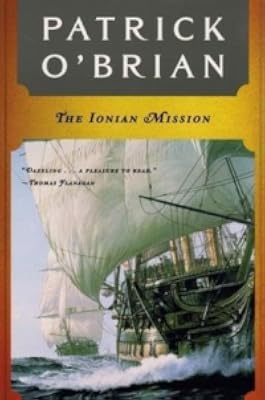
Jack Aubrey and Stephen Maturin, veterans now of many battles, return to the seas where they first sailed as shipmates. But Jack is now a senior captain commanding a line-of-battle ship in the Royal Navy's blockade of Toulon, and this is a longer, harder, colder war than the dashing frigate actions of his early days. A sudden turn of events takes him and Stephen off on a hazardous mission to the Greek Islands, where all his old skills of seamanship and his proverbial luck when fighting show more against odds come triumphantly into their own.The fierce, thrilling action in this historical adventure novel will keep listeners riveted until the final page is read.
. show less
Tags
Recommendations









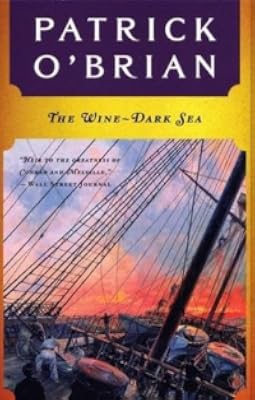
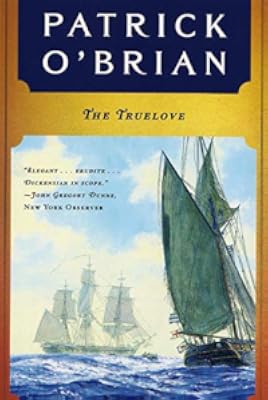





Member Reviews
‘The Ionian Mission’ successfully cheered me up after the emotional trauma of [b:The Whisperers: Private Life in Stalin's Russia|721038|The Whisperers Private Life in Stalin's Russia|Orlando Figes|https://images.gr-assets.com/books/1312030519s/721038.jpg|3337574]. As ever with the Aubery & Maturin series, there are exciting sea battles and political machinations, but the highlights are bickering between characters, instances of perfect comic timing, and cameos from wild animals. Of especial note, the exercising of the rhino, Babbington’s adventure with Lesbians, Jack snuffling about with a cold and missing Stephen, the younger officers arguing about poetry, Killick’s annoyance at the staining of Jack’s sleeve, the admiral’s show more angry pug, bargain firework gunpowder for the cannons, and the perpetually delayed production of Hamlet. My absolute favourite passage, however, is on pages 280-1. I quote here only part of the faultlessly hilarious exchange:
I remember the sloth from, I think, the third book. It lived in the rigging, Jack attempted to curry favour with it using cake soaked in rum, and Stephen was much displeased to find his sloth an alcoholic. I do so love this series. show less
‘Why, as to that,’ said Jack, blowing on his coffee-cup and staring out of the stern window at the harbour, ‘as to that… if you do not choose to call him a pragmatical clinch-poop and kick his breech, which you might think ungenteel, perhaps you could tell him to judge the pudding by its fruit.’
‘You mean prove the tree by its eating.’
‘No, no, Stephen, you are quite out: eating a tree would prove nothing. And then you might ask him, had he ever seen many poltroons in the navy?’
‘I am not quite sure what you mean by poltroons.’
‘You might describe them as something that cannot be attempted to be tolerated in the Navy - like wombats,’ he added, with a sudden recollection of the creatures Stephen had brought aboard an earlier command. ‘Mean-spirited worthless wretches: cowards, to put it in a word.’
‘You are unjust to wombats, Jack; and you were unjust to my three-toed sloth - such illiberal reflections.’
I remember the sloth from, I think, the third book. It lived in the rigging, Jack attempted to curry favour with it using cake soaked in rum, and Stephen was much displeased to find his sloth an alcoholic. I do so love this series. show less
The Ionian Mission, book eight of twenty, is maybe the first real spell of doldrums in this rich, ever-rewarding saga; and even its relatively uneventful story is still rich with authenticity, and brimming with dry wit, facetiousness and farce (poor Dr. Maturin still comically uncomfortable with sea life). The prose is pleasing as ever, and Lucky Jack & Stephen's conversations, musical or otherwise, are engrossing and relatable. This is no 'Desolation Island', but it is still extremely good and comforting.
The book starts strong with charming account of Stephen and Diana's curious married and social lives, and transitions hilariously to Stephen's most undignified arrival yet on Jack's latest command (the maligned 'Worcester'). O'Brian's show more pacing is very brisk and never, ever in danger of sagging, despite the voyage's singularly idle nature. The endless Toulon blockade, Stephen's ill-fated intelligence rendezvous, and tedious diplomacy with the Turks tread water narratively, placing on our favorite characters a new kind of trial - these action-primed veterans are perpetually blueballed for real warfare. Everything pays off however, in a thrilling ship battle as satisfying as any O'Brian has written. As always, I finished the book with a great excitement to begin the next. show less
The book starts strong with charming account of Stephen and Diana's curious married and social lives, and transitions hilariously to Stephen's most undignified arrival yet on Jack's latest command (the maligned 'Worcester'). O'Brian's show more pacing is very brisk and never, ever in danger of sagging, despite the voyage's singularly idle nature. The endless Toulon blockade, Stephen's ill-fated intelligence rendezvous, and tedious diplomacy with the Turks tread water narratively, placing on our favorite characters a new kind of trial - these action-primed veterans are perpetually blueballed for real warfare. Everything pays off however, in a thrilling ship battle as satisfying as any O'Brian has written. As always, I finished the book with a great excitement to begin the next. show less
The Ionian Mission gives the people what the want in an Aubrey/Maturin book, with a straightforward tale of rousing naval action. Captain Aubrey's new command is a ship of the line, the unfortunate HMS Worchester, one of the notoriously poorly built "40 Thieves", and his new assignment is blockade duty off Toulon.
I appreciate the return towards normalcy. Few captains have careers like Lucky Jack, and a lot of naval warfare is cutting tacks in almost the same place, stores and ships running down, waiting for the French to make their move. We see the issues of the fleet at sea, waiting for the French to do something stupid so that there can finally be a battle--and there's a couple of close calls.
Fortunately for us, intrigues with the show more ramshackle Ottoman government in the Eastern Mediterranean require a senior captain with a fast ship, and we're back in the good old HMS Surprise to determine which of three local Turkish governors should get a gift of cannons to drive the French out of a nearby port. These political intrigues twist out of Aubrey's control, and there's a sharp battle at the end. Huzzah!
This book is probably the most traditional in the series since book three, a safe and thrilling exploration of the formula. But that's what we're here for. Lighter elements include Aubrey getting a supply of brightly colored fireworks powder for gunnery practice (Royal Navy captains had to supply their own powder for practice), the difficulties of putting on a performance of Hamlet and a choral concert, and a wardroom poetry contest on the theme of ships, where O'Brien demonstrates his own wit. show less
I appreciate the return towards normalcy. Few captains have careers like Lucky Jack, and a lot of naval warfare is cutting tacks in almost the same place, stores and ships running down, waiting for the French to make their move. We see the issues of the fleet at sea, waiting for the French to do something stupid so that there can finally be a battle--and there's a couple of close calls.
Fortunately for us, intrigues with the show more ramshackle Ottoman government in the Eastern Mediterranean require a senior captain with a fast ship, and we're back in the good old HMS Surprise to determine which of three local Turkish governors should get a gift of cannons to drive the French out of a nearby port. These political intrigues twist out of Aubrey's control, and there's a sharp battle at the end. Huzzah!
This book is probably the most traditional in the series since book three, a safe and thrilling exploration of the formula. But that's what we're here for. Lighter elements include Aubrey getting a supply of brightly colored fireworks powder for gunnery practice (Royal Navy captains had to supply their own powder for practice), the difficulties of putting on a performance of Hamlet and a choral concert, and a wardroom poetry contest on the theme of ships, where O'Brien demonstrates his own wit. show less
The Ionian Mission is the eighth chapter in the adventures of Aubrey and Maturin - although "adventures" might be just a tad misleading for this particular volume. As O'Brian continues his series he also continues to play with and explore the roman fleuve form, quite obviously enjoying the freedom from structural constraints the serial format grants him.
For the umpteenth part in a potentially infinite series of novels there is no need to bother with even the most basic Aristotelian structure of having a beginning, a middle and an end; instead, just like a chapter in a novel, it has to fit in with the parts surrounding it and the overall picture, a mosaic piece rather than an independent entity, part of a whole rather than something that show more needs to stand on its own. This appears to have suited O'Brian perfectly - even the early Aubrin-Maturin novels, before he was planning them as a series, are characterized by a free, easy flow rather than a tightly drawn structure and as the series progresses O'Brian happily throws all limiting constraints of a formal framework overboard, in the end jettisoning even plausibility as his Napoleonic War drags on an improbably long time, stretching the series' timeframe far beyond any realistic limits.
This time, O'Brian's target seems to have been to find out with just how few things actually happening he could get away with - there have been earlier volumes which have been low on action but in The Ionian Mission absolutely nothing at all happens until the novel's final fifteen pages or so. And by "nothing at all" I do mean nothing at all - in spite of several attempts to engage French ships, to Jack Aubrey's increasing frustration there is no action actually happening, engagements always avoided at the last moment by the singularly evasive French. Instead, we get an extensive portrait of life on sea at the start of the nineteenth century, with special emphasis on songs and poetry (and yes, that is to be taken quite literally, too - the reader should be prepared for an uncommon lot of - really not very good - naval poetry when embarking on The Ionian Mission).
But as it turns out (not really surprisingly, for anyone who has followed the series this far) is that Captain Aubrey's frustration is the reader's delight. A novel describing nothing but the daily routine life on a Royal Navy vessel at the start of the nineteenth century might at first glance not sound like exciting reading material for anyone who does not happen to have a special interest in that particular subject, in fact from the bare description it sounds exceedingly boring. But somehow, Patrick O'Brian manages to make reading about sailors and officers going about their work and relaxing afterwards during a lengthy sea voyage appear like the most fascinating thing ever and not for a single moment through three hundred pages of non-plot, non-adventure and non-action did I feel even faintly bored. In a way, the reader becomes both Jack Aubrey and Stephen Maturin when reading an Aubrey-Maturin novel: like the former he enjoys navigating the sea of O'Brian's prose, gliding smoothly and easily, always with a favourable wind at his back, while, like the latter, delighting in all the wonders he encounters along the way, the original similes and metaphors, the well-turned periods, the vivid descriptions. The Ionian Mission presents readers with the pure essence of the Aubrey-Maturin series, stripped bare of everything that is extraneous to it until all that remains is the flow of O'Brian's language; and this novel proves conclusively that he really can write about absolutely anything and make it a joy to read, that his prose breathes life into even the most dry-seeming subject matter, and that even the most trifling and insignificant things sparkle when he touches them with the magic wand of his pen. show less
For the umpteenth part in a potentially infinite series of novels there is no need to bother with even the most basic Aristotelian structure of having a beginning, a middle and an end; instead, just like a chapter in a novel, it has to fit in with the parts surrounding it and the overall picture, a mosaic piece rather than an independent entity, part of a whole rather than something that show more needs to stand on its own. This appears to have suited O'Brian perfectly - even the early Aubrin-Maturin novels, before he was planning them as a series, are characterized by a free, easy flow rather than a tightly drawn structure and as the series progresses O'Brian happily throws all limiting constraints of a formal framework overboard, in the end jettisoning even plausibility as his Napoleonic War drags on an improbably long time, stretching the series' timeframe far beyond any realistic limits.
This time, O'Brian's target seems to have been to find out with just how few things actually happening he could get away with - there have been earlier volumes which have been low on action but in The Ionian Mission absolutely nothing at all happens until the novel's final fifteen pages or so. And by "nothing at all" I do mean nothing at all - in spite of several attempts to engage French ships, to Jack Aubrey's increasing frustration there is no action actually happening, engagements always avoided at the last moment by the singularly evasive French. Instead, we get an extensive portrait of life on sea at the start of the nineteenth century, with special emphasis on songs and poetry (and yes, that is to be taken quite literally, too - the reader should be prepared for an uncommon lot of - really not very good - naval poetry when embarking on The Ionian Mission).
But as it turns out (not really surprisingly, for anyone who has followed the series this far) is that Captain Aubrey's frustration is the reader's delight. A novel describing nothing but the daily routine life on a Royal Navy vessel at the start of the nineteenth century might at first glance not sound like exciting reading material for anyone who does not happen to have a special interest in that particular subject, in fact from the bare description it sounds exceedingly boring. But somehow, Patrick O'Brian manages to make reading about sailors and officers going about their work and relaxing afterwards during a lengthy sea voyage appear like the most fascinating thing ever and not for a single moment through three hundred pages of non-plot, non-adventure and non-action did I feel even faintly bored. In a way, the reader becomes both Jack Aubrey and Stephen Maturin when reading an Aubrey-Maturin novel: like the former he enjoys navigating the sea of O'Brian's prose, gliding smoothly and easily, always with a favourable wind at his back, while, like the latter, delighting in all the wonders he encounters along the way, the original similes and metaphors, the well-turned periods, the vivid descriptions. The Ionian Mission presents readers with the pure essence of the Aubrey-Maturin series, stripped bare of everything that is extraneous to it until all that remains is the flow of O'Brian's language; and this novel proves conclusively that he really can write about absolutely anything and make it a joy to read, that his prose breathes life into even the most dry-seeming subject matter, and that even the most trifling and insignificant things sparkle when he touches them with the magic wand of his pen. show less
Book number eight in O'Brian's Aubrey/Maturin series, featuring action on the high seas during the Napoleonic Wars.
Although there is less action in this one than usual. Indeed, for much of the novel, there is incident after incident of utterly failing to engage with the enemy for one reason or another. You'd think this might be dull, but I found this one as pleasantly readable as any of them. And you'd think it would be frustrating, which is actually is, but it's frustrating the way I believe it's meant to be, as you vividly experience the characters' desire for battle and success along with them.
And, of course, there is O'Brian's usual low-key humor scattered throughout it all to make it much more fun, no matter what is or isn't going show more on, plot-wise. show less
Although there is less action in this one than usual. Indeed, for much of the novel, there is incident after incident of utterly failing to engage with the enemy for one reason or another. You'd think this might be dull, but I found this one as pleasantly readable as any of them. And you'd think it would be frustrating, which is actually is, but it's frustrating the way I believe it's meant to be, as you vividly experience the characters' desire for battle and success along with them.
And, of course, there is O'Brian's usual low-key humor scattered throughout it all to make it much more fun, no matter what is or isn't going show more on, plot-wise. show less
I've heard people say that this isn't one of his better novels, but I think that's mostly people griping because there's not enough action in it - the battles that are threatened in the earlier half of the book never come off, and the titular Ionian Mission is confined to the last quarter or so of the book. But his trademark wit and historical vibrancy are there in bucketloads; and I think it's a good reminder of the fact that life in the royal navy at the time didn't consist of non-stop battles, but very ferocious and bloody conflicts which were then followed by long periods of boredom and monotony.
In conclusion:
In conclusion:
The eighth in the adventures of Captain Aubrey and Dr.Maturin. After a peak into their respective home lives (Maturin's is my particular favorite: he and Diana have homes of their own because their lives are so different--plus he needs privacy for all his intelligence work--but he visits often for shared breakfast in bed and dinner parties), they ship off to support the blockade against the French. It's a long, boring period for them, made more troubling by the leadership. One of Aubrey's old commanders is in charge of the blockade, and too long without action or hope have severely depressed his spirits and health. His second in command is one of the many captains Aubrey has disobliged over the years--this time, not by sleeping with his show more wife, but instead by catching him cheating at cards. At last, the French make a break for it, giving the squadron a chance to finally fight--and they can't catch them. The commander is so depressed he must go home for his health, and Aubrey is placed under the command of a man who deeply hates him. Then some other stuff happens that I have forgotten because I took a few months' break (purely because I listen to these books rather than read them), and then somehow Aubrey manages to get off his slow decrepit ship and onto the dear old Surprise! Moreover, he's off blockade duty and instead, gets to travel up and down the coast determining which Turkish leader to throw his support (and canons) behind. The book ends with a very exciting ship battle.
This is a wonderful episode in the lives of Maturin and Aubrey. Both characters are adorably showcased here, plus Aubrey gets to be a serious badass, which he's missed out on in the last few books. Additionally, this book is particularly funny--I cannot count the number of times I cackled. show less
This is a wonderful episode in the lives of Maturin and Aubrey. Both characters are adorably showcased here, plus Aubrey gets to be a serious badass, which he's missed out on in the last few books. Additionally, this book is particularly funny--I cannot count the number of times I cackled. show less
Members
- Recently Added By
Lists

Folio Society
831 works; 49 members

Huxley's reading log 2017
45 works; 1 member

Books Read in 2018
4,360 works; 110 members
Author Information

153+ Works 76,866 Members
Patrick O'Brian is the author of twenty volumes in the highly respected Aubrey/Maturin series of novels. (Publisher Provided) Patrick O'Brien was born in Ireland in 1914. His education included the Sorbonne. O'Brian has produced a variety of works, including biographies of Picasso and Sir Joseph Banks and translations of the novels and memoirs of show more Simone de Beauvoir, but he is best known for the creation of an unlikely pair of Napoleonic War-era heroes in the Aubrey-Maturin Series. British naval officer Jack Aubrey and Irish scholar and physician Stephen Maturin have been featured in more than a novels published in Great Britain (five of which have also appeared in America). He died on January 2, 2000. (Bowker Author Biography) show less
Some Editions
Series

Work Relationships
Common Knowledge
- Canonical title*
- De Ionische missie
- Original title
- The Ionian Mission
- Original publication date
- 1981
- People/Characters
- Jack Aubrey; Stephen Maturin; Sophie Aubrey; Diana Villiers; Ebenezer Graham (Professor); Gedymin Jagiello (show all 14); Barrett Bonden; Tom Pullings; Harte (Admiral); William Mowett; Preserved Killick; William Babbington; Nathaniel Martin; Thornton (Admiral)
- Important places
- HMS Worcester; HMS Surprise
- Important events
- Toulon Blockade (1813)
- Dedication
- Mariae sacrum.
- First words
- Marriage was once represented as a field of battle rather than a bed of roses, and perhaps there are some who may still support this view; but just as Dr Maturin had made a far more unsuitable match than most, so he set about... (show all) dealing with the situation in a far more compendious, peaceable and efficacious way than the great majority of husbands.
- Last words
- (Click to show. Warning: May contain spoilers.)'You had better get back to the barky, sir,' said Bonden in a low voice, tucking the ensign and the other officers' swords under his arm. 'This here is going to Kingdom Come.'
- Publisher's editor
- Lawrence, Starling
*Some information comes from Common Knowledge in other languages. Click "Edit" for more information.
Classifications
Statistics
- Members
- 3,071
- Popularity
- 5,722
- Reviews
- 37
- Rating
- (4.10)
- Languages
- 8 — Dutch, English, French, German, Italian, Latin, Norwegian (Bokmål), Spanish
- Media
- Paper, Audiobook, Ebook
- ISBNs
- 59
- ASINs
- 19