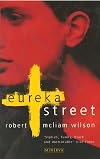
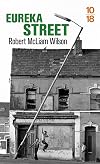
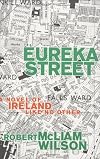
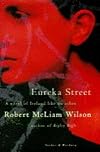
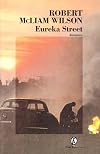
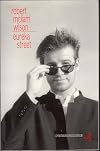
Eureka Street
by Robert McLiam Wilson
On This Page
Description
A look at life in Northern Ireland through the eyes of two Belfast men who are friends, one Catholic, the other Protestant. The novel shows them coping with the war, with an American girlfriend and with a sudden influx of foreign investors.Tags
Recommendations






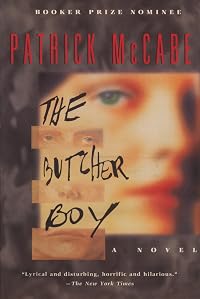
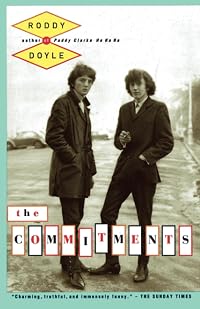
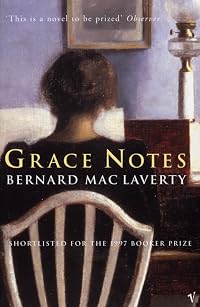
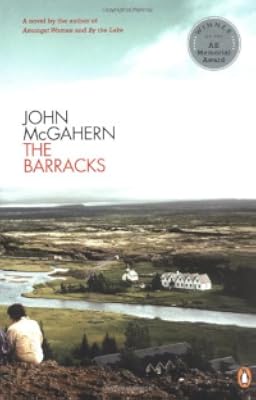




Member Reviews
Having recently seen Kenneth Brannaugh’s Belfast and in anticipation of an upcoming work-related trip to Ireland, I somewhat carelessly googled “Best Novels Set in Ireland,'' clicking the first search result that popped up - a top ten piece that appeared in the Irish Times. My 30 seconds of research pointed me to [a:Robert McLiam Wilson|90361|Robert McLiam Wilson|https://images.gr-assets.com/authors/1418504173p2/90361.jpg]'s [b:Eureka Street: A Novel of Ireland Like No Other|2779559|Eureka Street A Novel of Ireland Like No Other|Robert McLiam Wilson|https://i.gr-assets.com/images/S/compressed.photo.goodreads.com/books/1348083161l/2779559._SY75_.jpg|150765] (set in the early 90s in Belfast) which I downloaded during a bout of show more insomnia earlier this week and proceeded to devour over this Thanksgiving holiday weekend.
I’m embarrassed by my ignorance of the history (both longstanding and relatively recent) of Northern Ireland and Ireland, particularly as someone who: a) has been alive for half a century b) has traveled to Ireland c) has great grandparents who were born in both Northern Ireland and Ireland. I wish I had known about, and read, Eureka Street when it was published over twenty five years ago. But, I wonder if it would have affected me the same way then as it has now.
As I read Eureka Street, I was in some ways reminded of [a:Mark Winegardner|12608|Mark Winegardner|https://images.gr-assets.com/authors/1381548465p2/12608.jpg]’s [b:Crooked River Burning|134217|Crooked River Burning|Mark Winegardner|https://i.gr-assets.com/images/S/compressed.photo.goodreads.com/books/1328876396l/134217._SX50_.jpg|1270498], also the story of a place (Cleveland) and the people who inhabit it. I read Crooked River Burning 18 years ago when I first moved to the Midwest after spending the first 30 years of my life in California. It was like I moved to another planet and I needed to better understand why I felt like such an outsider. Every few years or so I pick up Crooked River and re-read large chunks, understanding a bit more as time passes -- all the contradictions of this city that has a hard time shaking the Mistake on the Lake nickname...the beauty and the blight, the pride and the shame, the hope and the misery, the resilience and the fragility, the compassion and the cruelty.
Like Crooked River Burning, the main character of Eureka Street is the city itself. And while I won’t be able to ever fully understand what it was like to live in Belfast, I spent nearly 400 pages feeling like I was right there. We learn about Belfast by hearing the stories of two friends, Jake and Chuckie. The men are very different from each other, likely representing the contradictory aspects of Belfast - but this is not at all heavy-handed. They are nuanced and multi-dimensional characters, and Wilson is skilled at conveying all the complicated emotions that are universal. My digital library copy of the book is filled with highlights (I have just ordered my own copy with pages so I can revisit my favorite passages on occasion) - and there are simply so many. It is common for similes to sound cliche, but Wilson’s comparisons are unique and brilliant, conveying many things in a few words. Is it a uniquely Irish gift to be so very funny when discussing things that are so heartbreaking?
In Chapter Ten, Wilson devotes every word to characterizing Belfast itself. When he discusses the way residents show their allegiance through “the flags, the writing on the walls…” I think back to the fall of 2020 here in Ohio as this state readied for the presidential election. Lawn signs escalated, growing bigger and more numerous (and sometimes menacing) as each week passed. It wasn’t uncommon to see giant pick-up trucks with gun racks and huge Trump flags drive down our leafy street - a parade of sorts but not by any means celebratory...it was more of a reminder that they were around. I thought of this when I read, “But deep at night Belfast whispers in cool breaths that hatred is something like God. You can’t see what you can’t see, but if you fight and follow it blindly enough, it will keep you warm at night.”
When I walk our dog, I see that one of our neighbors has a giant sign reading TRUTH MATTERS in their front living room window, covering about 85% of the glass. I imagine it is something they had to have custom made. When I walked by it the first time back in the fall of 2020, I agreed - truth does matter. The following week, they added a giant Trump flag to the front of their house, where one would typically fly the United States flag. Now, nearly a year into Biden’s first year as President, my neighbor’s TRUTH MATTERS sign still covers his entire front window. I always thought that the truth was one definitive, factual thing, but this is not the case. In the last year or two, I have heard people using the phrase “my truth.” I wonder if we should rethink this saying (a product of the self-care movement, in many ways), and perhaps just say “my experience,” as it’s a tricky business to make the truth subjective.
So much of Eureka Street is distinctly Belfast. Yet, the love, suffering, friendship, conviction, and hope would resonate with anyone, I think. show less
I’m embarrassed by my ignorance of the history (both longstanding and relatively recent) of Northern Ireland and Ireland, particularly as someone who: a) has been alive for half a century b) has traveled to Ireland c) has great grandparents who were born in both Northern Ireland and Ireland. I wish I had known about, and read, Eureka Street when it was published over twenty five years ago. But, I wonder if it would have affected me the same way then as it has now.
As I read Eureka Street, I was in some ways reminded of [a:Mark Winegardner|12608|Mark Winegardner|https://images.gr-assets.com/authors/1381548465p2/12608.jpg]’s [b:Crooked River Burning|134217|Crooked River Burning|Mark Winegardner|https://i.gr-assets.com/images/S/compressed.photo.goodreads.com/books/1328876396l/134217._SX50_.jpg|1270498], also the story of a place (Cleveland) and the people who inhabit it. I read Crooked River Burning 18 years ago when I first moved to the Midwest after spending the first 30 years of my life in California. It was like I moved to another planet and I needed to better understand why I felt like such an outsider. Every few years or so I pick up Crooked River and re-read large chunks, understanding a bit more as time passes -- all the contradictions of this city that has a hard time shaking the Mistake on the Lake nickname...the beauty and the blight, the pride and the shame, the hope and the misery, the resilience and the fragility, the compassion and the cruelty.
Like Crooked River Burning, the main character of Eureka Street is the city itself. And while I won’t be able to ever fully understand what it was like to live in Belfast, I spent nearly 400 pages feeling like I was right there. We learn about Belfast by hearing the stories of two friends, Jake and Chuckie. The men are very different from each other, likely representing the contradictory aspects of Belfast - but this is not at all heavy-handed. They are nuanced and multi-dimensional characters, and Wilson is skilled at conveying all the complicated emotions that are universal. My digital library copy of the book is filled with highlights (I have just ordered my own copy with pages so I can revisit my favorite passages on occasion) - and there are simply so many. It is common for similes to sound cliche, but Wilson’s comparisons are unique and brilliant, conveying many things in a few words. Is it a uniquely Irish gift to be so very funny when discussing things that are so heartbreaking?
In Chapter Ten, Wilson devotes every word to characterizing Belfast itself. When he discusses the way residents show their allegiance through “the flags, the writing on the walls…” I think back to the fall of 2020 here in Ohio as this state readied for the presidential election. Lawn signs escalated, growing bigger and more numerous (and sometimes menacing) as each week passed. It wasn’t uncommon to see giant pick-up trucks with gun racks and huge Trump flags drive down our leafy street - a parade of sorts but not by any means celebratory...it was more of a reminder that they were around. I thought of this when I read, “But deep at night Belfast whispers in cool breaths that hatred is something like God. You can’t see what you can’t see, but if you fight and follow it blindly enough, it will keep you warm at night.”
When I walk our dog, I see that one of our neighbors has a giant sign reading TRUTH MATTERS in their front living room window, covering about 85% of the glass. I imagine it is something they had to have custom made. When I walked by it the first time back in the fall of 2020, I agreed - truth does matter. The following week, they added a giant Trump flag to the front of their house, where one would typically fly the United States flag. Now, nearly a year into Biden’s first year as President, my neighbor’s TRUTH MATTERS sign still covers his entire front window. I always thought that the truth was one definitive, factual thing, but this is not the case. In the last year or two, I have heard people using the phrase “my truth.” I wonder if we should rethink this saying (a product of the self-care movement, in many ways), and perhaps just say “my experience,” as it’s a tricky business to make the truth subjective.
So much of Eureka Street is distinctly Belfast. Yet, the love, suffering, friendship, conviction, and hope would resonate with anyone, I think. show less
E’ bellissimo perché è fresco come una Guinness, morbido come una torba, magico come un elfo. W. dà un senso di futuro alla triste palude nella quale gli abitanti di Belfast hanno vissuto e ancora vivono. E lo fa senza mentire spudoratamente come nei film americani, ma con grazia e leggerezza, la stessa grazia ruvida di un dodicenne abbandonato dai genitori, che vive in una costante disillusione che viene stemperata dalla dirompente felicità per aver ricevuto una carezza, un sostegno, un gesto amico. E’ un libro burbero, che sa di verde e di pioggia, e fa sentire vivi; che dà speranza e lascia con l’idea che se ce l’ha fatta Chuckie ce la possiamo fare anche noi. E questa è una grandissima convinzione.
Okay, I can't deny it, I didn't finish this book. As the saying goes, I really wanted to like this book, but alas, didn't. A caveat, I realize this book has many positive reviews from not-to-be-ignored reviewers. But, this review is mine and I didn't like the book.
First, the author seems to try way too hard to be trendy, smart, and a little edgy. So much so that it becomes tiring. If I concede that you're smart will you stop trying to prove you're hip in every sentence. There are some appealing sentences but they are buried in an avalanche of "clever" verbiage. Enough already.
Me thinks the gentleman protests too much. The author spends considerable time trying to convince us he's not bigoted, racist, or sectarian. But, some material show more begins to make one wonder about his degree of self-awareness. He states that the phrase "all black people look the same" to ridicule it as stupid. Then goes on to say that all white people look alike to him. Give me a break. For a guy who sees everyone alike, he sure spends a lot of time describing the physical appearance of men, and, in some detail, women. Sounds suspiciously like those who eschew "Black Lives Matter" in favor of "All Lives Matter". What's really underneath this?
The author's treatment of women characters is often sexist.
The author's treatment of working class characters often appears condescending and painfully stereotypical.
Many, if not most of his characters are depicted (intentionally?) as shallow, witless, but none-the-less somehow cute. Feels like we're watching the author's pet hamsters running in their cages. Can we have a respectful, meaningful presentation of a character please?
As I think I've made it abundantly clear that I didn't like the book, I need to stop now. show less
First, the author seems to try way too hard to be trendy, smart, and a little edgy. So much so that it becomes tiring. If I concede that you're smart will you stop trying to prove you're hip in every sentence. There are some appealing sentences but they are buried in an avalanche of "clever" verbiage. Enough already.
Me thinks the gentleman protests too much. The author spends considerable time trying to convince us he's not bigoted, racist, or sectarian. But, some material show more begins to make one wonder about his degree of self-awareness. He states that the phrase "all black people look the same" to ridicule it as stupid. Then goes on to say that all white people look alike to him. Give me a break. For a guy who sees everyone alike, he sure spends a lot of time describing the physical appearance of men, and, in some detail, women. Sounds suspiciously like those who eschew "Black Lives Matter" in favor of "All Lives Matter". What's really underneath this?
The author's treatment of women characters is often sexist.
The author's treatment of working class characters often appears condescending and painfully stereotypical.
Many, if not most of his characters are depicted (intentionally?) as shallow, witless, but none-the-less somehow cute. Feels like we're watching the author's pet hamsters running in their cages. Can we have a respectful, meaningful presentation of a character please?
As I think I've made it abundantly clear that I didn't like the book, I need to stop now. show less
I actually was turned on to this book by another American in my Irish Studies program at Queens Belfast during the summer of 2004. I adored this book for both its amusing nature and for the way that the city is treated in the reading. For anyone who has spent time in Belfast it is difficult to get a 'feel' for the city the way a native can. This book treated the city as its own character and allowed the reader to understand a city that has been marred by overly biased, violent, or sentimental reviews.
Jake bor på Poetry Street i Belfast, hvor bomberne fra tis til anden skaber kaos. Jakes liv er også et kaos. Hans kæreste har lige forladt ham for at flytte til England. Ikke engena et brev har hun skrevet - og det med andre damer kører ikke rigtigt for ham. Som han selv siger: "Der findes nætter, når man nærmer sig de tredive, og livet synes at være forbi. Når man føler, at man ikke vil kysse ens læber igen!. Anderledes går det for Jakes lidt kiksede ven Chuckie, som tjener en formue på at postordresælge ikke-eksisterende gummidildoer
Powerful tale of love and friendship set against the backdrop of the tail end of the troubles.
I am an unabashed Hibernophile, but this book missed for me. I read the other reviews on this page and think, wow, they were able to find a richness and meaning that I completely missed.
Members
- Recently Added By
Author Information

6+ Works 1,109 Members
Some Editions
Series
Belongs to Publisher Series
Otavan kirjasto (126)
Common Knowledge
- Canonical title
- Eureka Street
- Original title
- Eureka Street
- Original publication date
- 1996
- People/Characters*
- Chuckie Lurgan; Jake Jackson; Luke Findlater; Aoirghe Jenkins
- Important places
- Belfast, Northern Ireland, UK
- First words
- All stories are love stories.
- Original language*
- Inglese
*Some information comes from Common Knowledge in other languages. Click "Edit" for more information.
Classifications
Statistics
- Members
- 739
- Popularity
- 38,048
- Reviews
- 16
- Rating
- (4.14)
- Languages
- 12 — Catalan, Danish, Dutch, English, Estonian, Finnish, French, German, Italian, Polish, Spanish, Swedish
- Media
- Paper, Ebook
- ISBNs
- 36
- ASINs
- 5