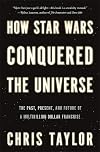
How Star Wars Conquered the Universe: The Past, Present, and Future of a Multibillion Dollar Franchise
by Chris Taylor
On This Page
Description
Business. Performing Arts. Nonfiction. Economics. HTML:In 1973, a young filmmaker named George Lucas scribbled some notes for a far-fetched space-fantasy epic. Some forty years and 37 billion later, Star Wars — related products outnumber human beings, a growing stormtrooper army spans the globe, and "Jediism" has become a religion in its own right. Lucas's creation has grown into far more than a cinematic classic; it is, quite simply, one of the most lucrative, influential, and interactive show more franchises of all time. Yet incredibly, until now the complete history of Star Wars — its influences and impact, the controversies it has spawned, its financial growth and long-term prospects — has never been told.In How Star Wars Conquered the Universe, veteran journalist Chris Taylor traces the series from the difficult birth of the original film through its sequels, the franchise's death and rebirth, the prequels, and the preparations for a new trilogy. Providing portraits of the friends, writers, artists, producers, and marketers who labored behind the scenes to turn Lucas's idea into a legend, Taylor also jousts with modern-day Jedi, tinkers with droid builders, and gets inside Boba Fett's helmet, all to find out how Star Wars has attracted and inspired so many fans for so long.
Since the first film's release in 1977, Taylor shows, Star Wars has conquered our culture with a sense of lightness and exuberance, while remaining serious enough to influence politics in far-flung countries and spread a spirituality that appeals to religious groups and atheists alike. Controversial digital upgrades and poorly received prequels have actually made the franchise stronger than ever. Now, with a savvy new set of bosses holding the reins and Episode VII on the horizon, it looks like Star Wars is just getting started.
An energetic, fast-moving account of this creative and commercial phenomenon, How Star Wars Conquered the Universe explains how a young filmmaker's fragile dream beat out a surprising number of rivals to gain a diehard, multigenerational fan base — and why it will be galvanizing our imaginations and minting money for generations to come. show less
Tags
Recommendations








Member Reviews
I knew at the outset, I would find the book interesting, but was surprised by how much joy I had while reading it. How often do you read a non-fiction book and can’t stop smiling? What’s great is not merely that the author knows how to tell the Lucas story well, it’s that he _gets_ it. He shares the true fan’s alternating reverential and mocking attitudes. He calls George “the Creator” throughout the book (yes, that is spelled with a divine capital ), but is keenly aware that this storytelling genius can’t write dialog—or even a well-structured story without plot holes.
The book is filled with the beats we all know (like the drafts’ evolution from Starkiller to Skywalker), plus many details I found fascinating (did show more you know _Splinter of the Mind’s Eye_ was written as a sequel—something they could cheaply rush into production if Star Wars failed? This is why Han Solo isn’t in it, as Ford wasn’t signed on for another movie.) As he tells the stories of each film’s development, he has summaries and quotes from earlier drafts. Shockingly, I came away thankful for the quality of dialog in Episode 2—yes, the excerpts from the final draft were even worse than what made it on screen. _Clones_ is hard enough to watch every five years or so—I don’t think I’d be able to bear watching it that much, had the “final” version had more of Anakin’s romantic political bantering with Padmé. (Yes, I know. Referring to a “final” version of a Star Wars film is like referring to a Kessel Run that took less than 12 parsecs—it doesn’t exist.)
The portrayal of the fans was probably the best part of the book. I would have thought reading about people who stood in line for a month or spent a decade creating a “screen-realistic R2-D2” would have made me despair in human’s ability to lose touch with reality. Instead, I discovered people whose me nostalgic for the 80s when I pretended to be Han Solo on the playground or the 90s when I roleplayed West End Games with my brother. In short, reading about how fans (through cosplay, spoof filmmaking, and armchair quarterbacking Comic Book Guy style) interact with Star Wars chased away any regret I may have had for initiating my nephew and sons into that fandom—even if this next generation doesn’t seem to get the original trilogy. [sigh] Idiots!
Anyway, check the book out—the first chapter’s introduction will grab you, so get a free sample on your ereader. I suspect, you’ll find that once the narrative gets to 1973, you won’t be able to stop reading it. show less
The book is filled with the beats we all know (like the drafts’ evolution from Starkiller to Skywalker), plus many details I found fascinating (did show more you know _Splinter of the Mind’s Eye_ was written as a sequel—something they could cheaply rush into production if Star Wars failed? This is why Han Solo isn’t in it, as Ford wasn’t signed on for another movie.) As he tells the stories of each film’s development, he has summaries and quotes from earlier drafts. Shockingly, I came away thankful for the quality of dialog in Episode 2—yes, the excerpts from the final draft were even worse than what made it on screen. _Clones_ is hard enough to watch every five years or so—I don’t think I’d be able to bear watching it that much, had the “final” version had more of Anakin’s romantic political bantering with Padmé. (Yes, I know. Referring to a “final” version of a Star Wars film is like referring to a Kessel Run that took less than 12 parsecs—it doesn’t exist.)
The portrayal of the fans was probably the best part of the book. I would have thought reading about people who stood in line for a month or spent a decade creating a “screen-realistic R2-D2” would have made me despair in human’s ability to lose touch with reality. Instead, I discovered people whose me nostalgic for the 80s when I pretended to be Han Solo on the playground or the 90s when I roleplayed West End Games with my brother. In short, reading about how fans (through cosplay, spoof filmmaking, and armchair quarterbacking Comic Book Guy style) interact with Star Wars chased away any regret I may have had for initiating my nephew and sons into that fandom—even if this next generation doesn’t seem to get the original trilogy. [sigh] Idiots!
Anyway, check the book out—the first chapter’s introduction will grab you, so get a free sample on your ereader. I suspect, you’ll find that once the narrative gets to 1973, you won’t be able to stop reading it. show less
I should start this review with a disclaimer—I’m a dyed-in-the-wool, dedicated life-long Star Wars fan. When I talk about the most important formative influences of my childhood—the forces that shaped me most profoundly—the list includes my parents, my teachers, Sesame Street / Mr. Rogers…
And Star Wars.
As you can imagine, I couldn’t wait to get my hands on How Star Wars Conquered the Universe by Chris Taylor. I’m exactly the kind of audience this book was written for.
Which is why it pains me that I can’t give it 5 stars. There are parts of this book that absolutely deserve 5 stars. But it also has some significant flaws.
First, let’s talk about what this book gets right:
Mr. Taylor is hugely well-informed on the subject show more of Star Wars. I’m in awe of the sheer volume of research he did for this book. As such, the work is packed with details, interesting tidbits, and information that’s not widely known. Just about every page contained something that I was delighted to learn or confirmation of knowledge I already had.
The chapter, “The First Reel”, made me smile from ear-to-ear. It’s a shot-by-shot analysis of the first reel—the first ten minutes—of the first film of the first trilogy and it perfectly captures the excitement and joy of seeing it for the first time.
Most importantly—with this book, Mr. Taylor sets the record straight on several of the persistent myths and rumors that have accumulated around the Star Wars legend over the years. For that reason alone, How Star Wars Conquered the Universe is an invaluable contribution to the literature and study of Star Wars.
It’s possible, though, that the incredible level of detail, the depth and breadth of knowledge contained in this work, will limit the book’s appeal. It’s dense with information and gets a bit overwhelming at times. Mr. Taylor’s writing style is easy and conversational, so I can’t say that this book is a slog to get through—but to be honest, I’m not sure if this book will reward anyone but the most hardcore Star Wars fans.
I wouldn’t recommend How Star Wars Conquered the Universe to casual readers.
Despite how rewarding I found this book, I have a problem with how it’s structured. It feels disjointed to me. And that would be fine, if such disjointedness served a purpose. But there’s nothing in the book that explains to me why Mr. Taylor structured it the way that he did.
For the first few chapters, the book jumps all over the timeline of Star Wars. It starts with a present-day story of a screening of the original trilogy dubbed into Navajo (with an eye-opening theory of the Navajo influences on Star Wars); then there’s a brief history of science fiction and science fantasy—the literary and popular media progenitors of Star Wars from Verne & Wells, to John Carter, to Flash Gordon and Buck Rogers; then we get a chapter that tells the story of George Lucas’ childhood; then a chapter about a couple of the largest fan clubs started in the late 1990s; back to George in high school through enrolling in film school; to a present-day Jedi school in San Francisco...
At this point, the book has established that it’s going to be a non-chronological survey of interesting stories gleaned from throughout the Star Wars Universe, regularly looking back into the history of Lucas and the films' development. Which is fine.
But then Mr. Taylor gives us three chapters in a row that are pure chronological history—Lucas through film school, beginning in the professional world, and right up to the point when Star Wars is set to begin filming…
At which point he skips to a survey of the major Star Wars spoofs that followed after the first film was released, from Hardware Wars through Family Guy & Robot Chicken (the latter of which Lucas utterly loved, I was delighted to learn).
Then we get thrown back in time to the production of the first film. This transition in particular—from pre-release, to post-release spoofs, back to just pre-release—I found very jarring.
The rest of the book—the entire second half of it—is purely a chronological history of the films, the merchandising, and the fan culture that Star Wars engendered. No more skipping around on the timeline.
Given that 80% of the book is a chronological history, I don’t understand why Mr. Taylor felt the need to throw in those few out-of-order chapters in the first half. The way he structured this doesn’t make sense to me.
Despite my absolute, unbridled love for the subject, these strange structural issues made it difficult for me to invest myself in the first half of the book the way I wanted to.
By contrast, the second half of How Star Wars Conquered the Universe—the straightforward chronological history—sucked me in and wouldn't let me go. I stayed up 'til the wee hours just to finish it.
Beyond the overall structure, I also have some confusion about how he chose the amount of page-space he devotes to different topics. For example, he spends more time talking about a handful of fan clubs than he spends talking about the entire Expanded Universe.
That boggles my mind.
In a book that’s, in part, about the phenomenon of Star Wars fandom, you need to tell interesting stories about the fans. I understand that, and appreciate that Mr. Taylor focuses on the largest and most important groups. I would never deny them their rightful place in this story and I truly enjoyed this look into them.
But this book is also about the development and growth of the fictional Star Wars Universe over the decades: aka the Expanded Universe. The Expanded Universe contains the vast majority of the content of the complete Star Wars Universe and represents almost all of the creative contributions of the Star Wars fanbase. Yet Mr. Taylor dedicates only one chapter to it, with occasional references to it in a few others.
Compared to how much page-space Mr. Taylor grants to his survey of fan clubs, and the multiple chapters about merchandising, I feel like the Expanded Universe gets short shrift.
In the end, I get the distinct impression that Mr. Taylor didn’t really have a specific vision for How Star Wars Conquered the Universe. Beyond the history of Lucas and the six movies, I feel like he focuses on bits and pieces of the Star Wars Universe more or less at random. A general desire to explore the subject isn’t enough to properly guide the structure and writing of a 400 page book. The work would have been well-served by a more clearly defined focus.
That being said—for a die hard Star Wars fan, this book offers significant rewards and makes a valuable contribution to the literature on the subject. I'm very glad I read it.
(5 star content 3 star structural issues) / 2 = a mean value of 4 stars show less
And Star Wars.
As you can imagine, I couldn’t wait to get my hands on How Star Wars Conquered the Universe by Chris Taylor. I’m exactly the kind of audience this book was written for.
Which is why it pains me that I can’t give it 5 stars. There are parts of this book that absolutely deserve 5 stars. But it also has some significant flaws.
First, let’s talk about what this book gets right:
Mr. Taylor is hugely well-informed on the subject show more of Star Wars. I’m in awe of the sheer volume of research he did for this book. As such, the work is packed with details, interesting tidbits, and information that’s not widely known. Just about every page contained something that I was delighted to learn or confirmation of knowledge I already had.
The chapter, “The First Reel”, made me smile from ear-to-ear. It’s a shot-by-shot analysis of the first reel—the first ten minutes—of the first film of the first trilogy and it perfectly captures the excitement and joy of seeing it for the first time.
Most importantly—with this book, Mr. Taylor sets the record straight on several of the persistent myths and rumors that have accumulated around the Star Wars legend over the years. For that reason alone, How Star Wars Conquered the Universe is an invaluable contribution to the literature and study of Star Wars.
It’s possible, though, that the incredible level of detail, the depth and breadth of knowledge contained in this work, will limit the book’s appeal. It’s dense with information and gets a bit overwhelming at times. Mr. Taylor’s writing style is easy and conversational, so I can’t say that this book is a slog to get through—but to be honest, I’m not sure if this book will reward anyone but the most hardcore Star Wars fans.
I wouldn’t recommend How Star Wars Conquered the Universe to casual readers.
Despite how rewarding I found this book, I have a problem with how it’s structured. It feels disjointed to me. And that would be fine, if such disjointedness served a purpose. But there’s nothing in the book that explains to me why Mr. Taylor structured it the way that he did.
For the first few chapters, the book jumps all over the timeline of Star Wars. It starts with a present-day story of a screening of the original trilogy dubbed into Navajo (with an eye-opening theory of the Navajo influences on Star Wars); then there’s a brief history of science fiction and science fantasy—the literary and popular media progenitors of Star Wars from Verne & Wells, to John Carter, to Flash Gordon and Buck Rogers; then we get a chapter that tells the story of George Lucas’ childhood; then a chapter about a couple of the largest fan clubs started in the late 1990s; back to George in high school through enrolling in film school; to a present-day Jedi school in San Francisco...
At this point, the book has established that it’s going to be a non-chronological survey of interesting stories gleaned from throughout the Star Wars Universe, regularly looking back into the history of Lucas and the films' development. Which is fine.
But then Mr. Taylor gives us three chapters in a row that are pure chronological history—Lucas through film school, beginning in the professional world, and right up to the point when Star Wars is set to begin filming…
At which point he skips to a survey of the major Star Wars spoofs that followed after the first film was released, from Hardware Wars through Family Guy & Robot Chicken (the latter of which Lucas utterly loved, I was delighted to learn).
Then we get thrown back in time to the production of the first film. This transition in particular—from pre-release, to post-release spoofs, back to just pre-release—I found very jarring.
The rest of the book—the entire second half of it—is purely a chronological history of the films, the merchandising, and the fan culture that Star Wars engendered. No more skipping around on the timeline.
Given that 80% of the book is a chronological history, I don’t understand why Mr. Taylor felt the need to throw in those few out-of-order chapters in the first half. The way he structured this doesn’t make sense to me.
Despite my absolute, unbridled love for the subject, these strange structural issues made it difficult for me to invest myself in the first half of the book the way I wanted to.
By contrast, the second half of How Star Wars Conquered the Universe—the straightforward chronological history—sucked me in and wouldn't let me go. I stayed up 'til the wee hours just to finish it.
Beyond the overall structure, I also have some confusion about how he chose the amount of page-space he devotes to different topics. For example, he spends more time talking about a handful of fan clubs than he spends talking about the entire Expanded Universe.
That boggles my mind.
In a book that’s, in part, about the phenomenon of Star Wars fandom, you need to tell interesting stories about the fans. I understand that, and appreciate that Mr. Taylor focuses on the largest and most important groups. I would never deny them their rightful place in this story and I truly enjoyed this look into them.
But this book is also about the development and growth of the fictional Star Wars Universe over the decades: aka the Expanded Universe. The Expanded Universe contains the vast majority of the content of the complete Star Wars Universe and represents almost all of the creative contributions of the Star Wars fanbase. Yet Mr. Taylor dedicates only one chapter to it, with occasional references to it in a few others.
Compared to how much page-space Mr. Taylor grants to his survey of fan clubs, and the multiple chapters about merchandising, I feel like the Expanded Universe gets short shrift.
In the end, I get the distinct impression that Mr. Taylor didn’t really have a specific vision for How Star Wars Conquered the Universe. Beyond the history of Lucas and the six movies, I feel like he focuses on bits and pieces of the Star Wars Universe more or less at random. A general desire to explore the subject isn’t enough to properly guide the structure and writing of a 400 page book. The work would have been well-served by a more clearly defined focus.
That being said—for a die hard Star Wars fan, this book offers significant rewards and makes a valuable contribution to the literature on the subject. I'm very glad I read it.
(5 star content 3 star structural issues) / 2 = a mean value of 4 stars show less
In 1973, George Lucas sketched the first notes of what would become his epic space fantasy movie, Star Wars. More than four decades on, Star Wars has become a $37 billion movie franchise and media empire, and an enormous cultural force.
Taylor gives us both the history forward from that beginning through the making of the films and the sale and rebirth of the franchise under Disney, and the path from the middle class kid growing up in Modesto to the man who made that first Star Wars film and its two sequels. (No, it wasn't originally called A New Hope; I saw the first movie when it first came out. And yes, Han Solo did shoot first, whatever George Lucas now wants us to believe.) Both Lucas' own story, and the story of the Star Wars show more franchise, are complicated, confusing, and fascinating. Taylor gets quite thoroughly caught up in the story and his own pursuit of it, and makes it reasonably inviting for the reader or listener to jump on that ride with him.
Carrie Fisher, Harrison Ford, and Mark Hamill had no idea they were signing on for roles that would be defining factors for the remainder of their careers. It seems clear that, despite later statements to the contrary, even Lucas wasn't seriously planning sequels at that point. He'd loved the Buck Rogers and Flash Gordon serials, and wanted to make a space fantasy that would have the same fun and adventure. Yet what he really wanted to do were small, serious movies, personal movies... No, really. He kept saying so!
Those small, serious movies never got made, as Lucas continued to pursue a career that looked nothing like that.
We follow the growth of Lucas as a filmmaker, the friendships and rivalries with other producers that helped shape him and his career, and the successes and missteps along the way. I started out merely curious, and became very interested in this odd, compelling story and the man at its center.
Recommended.
I bought this audiobook. show less
Taylor gives us both the history forward from that beginning through the making of the films and the sale and rebirth of the franchise under Disney, and the path from the middle class kid growing up in Modesto to the man who made that first Star Wars film and its two sequels. (No, it wasn't originally called A New Hope; I saw the first movie when it first came out. And yes, Han Solo did shoot first, whatever George Lucas now wants us to believe.) Both Lucas' own story, and the story of the Star Wars show more franchise, are complicated, confusing, and fascinating. Taylor gets quite thoroughly caught up in the story and his own pursuit of it, and makes it reasonably inviting for the reader or listener to jump on that ride with him.
Carrie Fisher, Harrison Ford, and Mark Hamill had no idea they were signing on for roles that would be defining factors for the remainder of their careers. It seems clear that, despite later statements to the contrary, even Lucas wasn't seriously planning sequels at that point. He'd loved the Buck Rogers and Flash Gordon serials, and wanted to make a space fantasy that would have the same fun and adventure. Yet what he really wanted to do were small, serious movies, personal movies... No, really. He kept saying so!
Those small, serious movies never got made, as Lucas continued to pursue a career that looked nothing like that.
We follow the growth of Lucas as a filmmaker, the friendships and rivalries with other producers that helped shape him and his career, and the successes and missteps along the way. I started out merely curious, and became very interested in this odd, compelling story and the man at its center.
Recommended.
I bought this audiobook. show less
This is an excellent book to read as a prelude to embarking on the Disney-produced Star Wars movies coming later this year. The autobiography of the franchise goes from Lucas' youthful fascinations with Flash Gordon and fast cars to the film inspirations of 28-17, Silent Running and more. Political motivations and technological disappointments color the success of the original film trio. The wilderness years of Lucas' personal life, multi-media empire, mixed animation and game success, and declining film popularity mark the long years to the multi-billion sale to Disney giving them the hat trick of Pixar, Marvel, and Star Wars.
This was a great book to read in the ramp up to the *new* Star Wars trilogy - something long time fans thought would never happen. This book provides a great backstory to the whole creation and growth of the franchise/fandom that is Star Wars.
Taylor is most definitely a die-hard Star Wars fan. I suppose I am too, and maybe that is why I found this mostly an irritating read. Most of the book is a history of the franchise, and I found very little new. Taylor recycles fandom's conventional wisdom about the films (Empire rocks! The prequels suck! Lucas needed people to say "no" to him!). The original research he seems to have done is on the collective efforts of fans to celebrate Star Wars, which I did not find terribly interesting.
I'd only recommend this for Star Wars super-fans. Star Wars is an interesting phenomenon, and Taylor dives deep, but I wanted a more critical perspective, at least for one chapter.
> As well as kicking the space fantasy genre into high gear, Carter has a good claim on being the first superhero: he’s the progenitor of both Superman and Luke Skywalker. Burroughs bought a ranch called Tarzana in present-day LA, quit the pencil job, and churned out three more serialized sequels—plus the story he named for his new home, Tarzan of the Apes
> Lucas only proceeded to pitch Star Wars after he couldn’t get the movie rights to Flash Gordon. One early draft of Star Wars used a Raymond panel, Flash and Ming engaged in a fencing duel, for its show more cover. Lucas has never been shy about referring to Flash Gordon as the most direct and prominent inspiration for Star Wars. … “Loving them that much when they were so awful,” he said, “I began to wonder what would happen if they were done really well? Surely, kids would love them even more.” Lucas paid direct homage with his roll-up—the words that scroll at the beginning of every Star Wars movie, just as they do in Flash Gordon Conquers the Universe. His elaborate screen-wipes are recognizably inspired by the serial, too.
> Francis Ford Coppola suggested to Lucas that the two of them actually start a religion using the Force as its scripture. Lucas feared for his friend’s sanity. But it wasn’t out of character for Coppola, a man who once joked that he was modeling his career on Hitler’s rise to power
> Originally called the Lucas Computer Division, Pixar had essentially started off as a skunkworks operation, and Apple cofounder Steve Jobs had bought it in 1986, in a postdivorce fire sale. Lucas had been desperate to unload assets in order to hang onto Skywalker Ranch and sacrificed the computer division on the altar of that utopian dream. Jobs gave him $5 million show less
> As well as kicking the space fantasy genre into high gear, Carter has a good claim on being the first superhero: he’s the progenitor of both Superman and Luke Skywalker. Burroughs bought a ranch called Tarzana in present-day LA, quit the pencil job, and churned out three more serialized sequels—plus the story he named for his new home, Tarzan of the Apes
> Lucas only proceeded to pitch Star Wars after he couldn’t get the movie rights to Flash Gordon. One early draft of Star Wars used a Raymond panel, Flash and Ming engaged in a fencing duel, for its show more cover. Lucas has never been shy about referring to Flash Gordon as the most direct and prominent inspiration for Star Wars. … “Loving them that much when they were so awful,” he said, “I began to wonder what would happen if they were done really well? Surely, kids would love them even more.” Lucas paid direct homage with his roll-up—the words that scroll at the beginning of every Star Wars movie, just as they do in Flash Gordon Conquers the Universe. His elaborate screen-wipes are recognizably inspired by the serial, too.
> Francis Ford Coppola suggested to Lucas that the two of them actually start a religion using the Force as its scripture. Lucas feared for his friend’s sanity. But it wasn’t out of character for Coppola, a man who once joked that he was modeling his career on Hitler’s rise to power
> Originally called the Lucas Computer Division, Pixar had essentially started off as a skunkworks operation, and Apple cofounder Steve Jobs had bought it in 1986, in a postdivorce fire sale. Lucas had been desperate to unload assets in order to hang onto Skywalker Ranch and sacrificed the computer division on the altar of that utopian dream. Jobs gave him $5 million show less
Members
- Recently Added By
Author Information
1 Work 272 Members
Chris Taylor is a romance author who started out as a nurse, then a career in law, then a wife and mother. She finally found time to dedicate to writing and she found her calling. In 2013, she had success as a finalist in the RWA Golden Heart Award and in the Romantic Suspense category. She also won the RWA Australian Emerald Award. Her career as show more a criminal lawyer came in handy as she writes mystery and intrigue. She combines both in her romantic suspense stories. She writes the Sydney Legal Series and the Sydney Harbour Hospital Series. (Bowker Author Biography) show less
Some Editions
Classifications
- Genres
- Nonfiction, General Nonfiction, Biography & Memoir
- DDC/MDS
- 791.43 — Arts & recreation Recreation, sports, and performing arts Public performances Motion pictures, radio, television, podcasting Motion pictures
- LCC
- PN1995.9 .S695 .T39 — Language and Literature Literature (General) Literature (General) Drama Motion pictures
- BISAC
Statistics
- Members
- 276
- Popularity
- 116,784
- Reviews
- 11
- Rating
- (4.02)
- Languages
- English, German, Portuguese
- Media
- Paper, Audiobook, Ebook
- ISBNs
- 18
- UPCs
- 2
- ASINs
- 8