There are 2 current discussions about this work.
On This Page
Description
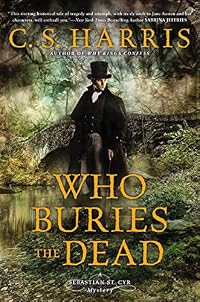
The grisly murder of a West Indies slave owner and the reappearance of a dangerous enemy from Sebastian St. Cyr's past combine to put C. S. Harris's troubled but compelling antihero to the ultimate test in this taut, thrilling mystery. London, 1813. The vicious decapitation of Stanley Preston, a wealthy, socially ambitious plantation owner, at Bloody Bridge draws Sebastian St. Cyr, Viscount Devlin, into a macabre and increasingly perilous investigation. The discovery near the body of an aged show more lead coffin strap bearing the inscription King Charles, 1648 suggests a link between this killing and the beheading of the deposed seventeenth-century Stuart monarch. Equally troubling, the victim's kinship to the current Home Secretary draws the notice of Sebastian's powerful father-in-law, Lord Jarvis, who will exploit any means to pursue his own clandestine ends. Working in concert with his fiercely independent wife, Hero, Sebastian finds his inquiries taking him from the wretched back alleys of Fish Street Hill to the glittering ballrooms of Mayfair as he amasses a list of suspects who range from an eccentric Chelsea curiosity collector to the brother of an unassuming but brilliantly observant spinster named Jane Austen. But as one brutal murder follows another, it is the connection between the victims and ruthless former army officer Sinclair, Lord Oliphant, that dramatically raises the stakes. Once, Oliphant nearly destroyed Sebastian in a horrific wartime act of carnage and betrayal. Now the vindictive former colonel might well pose a threat not only to Sebastian but to everything-and everyone-Sebastian holds most dear. show lessTags
Recommendations















Member Reviews
The grisly murder of a West Indies slave owner and the reappearance of a dangerous enemy from Sebastian St. Cyr’s past puts C. S. Harris’s “troubled but compelling "anti-hero” to the ultimate test.
Set in 1813, Lord Devlin, or as he is also known, Sebastian St. Cyr, is investigating a vicious crime, the murder and decapitation of a wealthy, socially ambitious man who owns a plantation in Jamaica and collects some really strange things.... among them, severed heads, and there are lot of those, both old and new, in this story. Now his own head has joined someone's private collection. A coffin strap with the inscription “King Charles, 1648” has been left at the crime scene but what does the message mean...and where did the show more murderer get the coffin strap to start with?
As the body...or rather "head-count" rises, Devlin and his wife, Hero, find themselves drawn into a powder keg of intrigue, involving everyone from the Home Secretary to Jane Austen...yes, THAT Jane Austen.... to Devlin’s greatest enemy, responsible for almost destroying Devlin during the war. Now the stakes are higher than they were before: Devlin and Hero now have baby son, Simon, that they need to protect.
This author is one of the best historical mystery writers I have ever read. She captures the reader’s interest and imagination from the very first page. Devlin is a magnificent character, moving through 19th century London from its glamorous Mayfair balls to its seedy Fish Street, fearlessly and with determination. Devlin is going to find the killer, but will he survive to tell the tale.
This was a very enjoyable read and this is also a series, but the books can all be read out of order. show less
Set in 1813, Lord Devlin, or as he is also known, Sebastian St. Cyr, is investigating a vicious crime, the murder and decapitation of a wealthy, socially ambitious man who owns a plantation in Jamaica and collects some really strange things.... among them, severed heads, and there are lot of those, both old and new, in this story. Now his own head has joined someone's private collection. A coffin strap with the inscription “King Charles, 1648” has been left at the crime scene but what does the message mean...and where did the show more murderer get the coffin strap to start with?
As the body...or rather "head-count" rises, Devlin and his wife, Hero, find themselves drawn into a powder keg of intrigue, involving everyone from the Home Secretary to Jane Austen...yes, THAT Jane Austen.... to Devlin’s greatest enemy, responsible for almost destroying Devlin during the war. Now the stakes are higher than they were before: Devlin and Hero now have baby son, Simon, that they need to protect.
This author is one of the best historical mystery writers I have ever read. She captures the reader’s interest and imagination from the very first page. Devlin is a magnificent character, moving through 19th century London from its glamorous Mayfair balls to its seedy Fish Street, fearlessly and with determination. Devlin is going to find the killer, but will he survive to tell the tale.
This was a very enjoyable read and this is also a series, but the books can all be read out of order. show less
A book that works as a standalone murder mystery, or as part of the series by C. S. Harris set in Regency England. And for any Jane Austen fans out there, she makes a couple of appearances, as does her brother Henry.
The book opens with a grisly murder, even by murder mystery standards: two young lovers are about to cross Bloody Bridge when they come upon a man's head stuck on a wall near the entrance. And his body laying nearby.
Naturally, Sebastian St Cyr is called in by his Bow Street friend, Sir Henry Lovejoy, to investigate not just this murder but the oddity of it. Seems there is a lead coffin wrapper with "King Charles 1648" inscribed on it, referencing the decapitated King Charles I. And it turns out, his tomb has recently been show more re-discovered (an actual event in 1813) and the King's head is missing. To make matters worse, the Prince Regent has asked his powerful cousin, Lord Jarvis, to give him a guided tour of the burial chamber. Jarvis is also Sebastian's father-in-law and he grudgingly asks Sebastian to help find the King's missing head.
Which brings in what I love about this series: the amount of historical research that C.S. Harris puts into her books. Not only was the coffin containing King Charles I found after long last, but it was in the burial chamber with King Henry VIII and Jane Seymour! And Hero, Sebastian's wife and Jarvis' daughter, interviews costermongers as part of her research on the poor of London. I had heard the word mentioned, but now I know more about them than I did before I read it.
Oh, and the victim, Stanley Preston? Turns out he avidly collected oddities. Including heads. And the shops that deal in oddities are the Regency equivalent of a comic book and collectibles store. They contain everything from an executioner's axe to a be-jeweled, wind-up nightingale.
The cast of characters is fairly light and nearly all are unsavory. They include a former governor of Jamaica as well as a plantation owner, the lurker Diggory Flynn, and Jane Austen's brother and sister-in-law. What brought down this book by a half star was the enormous running around London that Sebastian does that detracts from his interactions with several ongoing characters: Lovejoy and Paul Gibson, who form much of the basis of this series. show less
The book opens with a grisly murder, even by murder mystery standards: two young lovers are about to cross Bloody Bridge when they come upon a man's head stuck on a wall near the entrance. And his body laying nearby.
Naturally, Sebastian St Cyr is called in by his Bow Street friend, Sir Henry Lovejoy, to investigate not just this murder but the oddity of it. Seems there is a lead coffin wrapper with "King Charles 1648" inscribed on it, referencing the decapitated King Charles I. And it turns out, his tomb has recently been show more re-discovered (an actual event in 1813) and the King's head is missing. To make matters worse, the Prince Regent has asked his powerful cousin, Lord Jarvis, to give him a guided tour of the burial chamber. Jarvis is also Sebastian's father-in-law and he grudgingly asks Sebastian to help find the King's missing head.
Which brings in what I love about this series: the amount of historical research that C.S. Harris puts into her books. Not only was the coffin containing King Charles I found after long last, but it was in the burial chamber with King Henry VIII and Jane Seymour! And Hero, Sebastian's wife and Jarvis' daughter, interviews costermongers as part of her research on the poor of London. I had heard the word mentioned, but now I know more about them than I did before I read it.
Oh, and the victim, Stanley Preston? Turns out he avidly collected oddities. Including heads. And the shops that deal in oddities are the Regency equivalent of a comic book and collectibles store. They contain everything from an executioner's axe to a be-jeweled, wind-up nightingale.
The cast of characters is fairly light and nearly all are unsavory. They include a former governor of Jamaica as well as a plantation owner, the lurker Diggory Flynn, and Jane Austen's brother and sister-in-law. What brought down this book by a half star was the enormous running around London that Sebastian does that detracts from his interactions with several ongoing characters: Lovejoy and Paul Gibson, who form much of the basis of this series. show less
Sebastian St Cyr is an English nobleman-cum-investigator who is frequently asked to assist the police in murder investigations. St Cyr sees this work as a way to atone for acts he witnessed and was a party to while fighting against Napoleon’s army in the early 1800s. But now, in 1813, St Cyr has a wife and infant son and must be increasingly careful to ensure he and his family are not harmed as a result of his work.
The crimes in this installment are particularly grisly, as the victims literally lose their heads, and the investigation ends up delving into those who collect relics from royal executions (yes, we’re talking about heads here). In a more lighthearted vein, this book also includes a meeting between St Cyr and Jane Austen, show more whose novels were hugely popular, but published anonymously. It was fun to imagine how fictional characters may have encountered actual historic figures. Best of all, this part of the novel meshed well with the rest of the story and did not seem at all contrived.
St Cyr’s investigations typically involve talking to anyone and everyone who may have had a connection to the victims, and following further leads from those conversations. While his colleague Paul Gibson serves as medical examiner, at that time there was only so much that could be learned from that process. As he builds evidence and identifies suspects, St Cyr invariably ends up returning to certain people again to see if he can learn more. And even though he knows better, he also invariably puts himself in danger. The outcome is mostly positive, and leaves a loose end in St Cyr’s personal life to be explored further in the next book(s). show less
The crimes in this installment are particularly grisly, as the victims literally lose their heads, and the investigation ends up delving into those who collect relics from royal executions (yes, we’re talking about heads here). In a more lighthearted vein, this book also includes a meeting between St Cyr and Jane Austen, show more whose novels were hugely popular, but published anonymously. It was fun to imagine how fictional characters may have encountered actual historic figures. Best of all, this part of the novel meshed well with the rest of the story and did not seem at all contrived.
St Cyr’s investigations typically involve talking to anyone and everyone who may have had a connection to the victims, and following further leads from those conversations. While his colleague Paul Gibson serves as medical examiner, at that time there was only so much that could be learned from that process. As he builds evidence and identifies suspects, St Cyr invariably ends up returning to certain people again to see if he can learn more. And even though he knows better, he also invariably puts himself in danger. The outcome is mostly positive, and leaves a loose end in St Cyr’s personal life to be explored further in the next book(s). show less
Any author who manages to use the real Jane Austen as a character in her book has my undying loyalty! But seriously, this latest murder that Sebastian St. Cyr has to solve highlights all that he has gained and all that he has to lose.
Who Buries the Dead
4 Stars
When the decapitated corpse of a West Indies slave owner is discovered on an isolated bridge next to a relic from Charles I's coffin, Sebastian St. Cyr and his wife Hero are drawn into a macabre investigation with a host of suspects. These include a malicious curiosity dealer, an injured officer in His Majesty's army as well as Jane Austen's banker brother, and a vindictive foe from Sebastian's past.
An entertaining addition to the series and the inclusion of Jane Austen as a minor secondary character is an added bonus as the intertextual clues from her works have an interesting effect on the reader's perceptions of characters and motivations.
Although Sebastian's investigation is a garden-variety murder and show more the suspect pool is rather limited, there are still some gripping moments that keep one turning the pages. The identity of the villain is not easy to discern although there are sufficient clues to figure it all out.
As with all of Harris's books, the historical detail is fascinating and the stories behind the various relics and curiosities mentioned throughout the storyline are captivating.
In terms of Sebastian's personal life, he and Hero are growing ever closer and their marriage is becoming a true partnership in every sense. One inevitable effect of this, however, is an understanding of the perils of their work and the realization that they have so much more to lose now.
All in all, a well-crafted story with characters that become more and more engaging with every installment. Unfortunately, the next book is the most recent and it will be long wait until April 2017 for the follow-up. show less
4 Stars
When the decapitated corpse of a West Indies slave owner is discovered on an isolated bridge next to a relic from Charles I's coffin, Sebastian St. Cyr and his wife Hero are drawn into a macabre investigation with a host of suspects. These include a malicious curiosity dealer, an injured officer in His Majesty's army as well as Jane Austen's banker brother, and a vindictive foe from Sebastian's past.
An entertaining addition to the series and the inclusion of Jane Austen as a minor secondary character is an added bonus as the intertextual clues from her works have an interesting effect on the reader's perceptions of characters and motivations.
Although Sebastian's investigation is a garden-variety murder and show more the suspect pool is rather limited, there are still some gripping moments that keep one turning the pages. The identity of the villain is not easy to discern although there are sufficient clues to figure it all out.
As with all of Harris's books, the historical detail is fascinating and the stories behind the various relics and curiosities mentioned throughout the storyline are captivating.
In terms of Sebastian's personal life, he and Hero are growing ever closer and their marriage is becoming a true partnership in every sense. One inevitable effect of this, however, is an understanding of the perils of their work and the realization that they have so much more to lose now.
All in all, a well-crafted story with characters that become more and more engaging with every installment. Unfortunately, the next book is the most recent and it will be long wait until April 2017 for the follow-up. show less
Sebastian St. Cyr mystery #10
A revenge-laden plot to do away with Sebastian is intertwined with his convoluted investigation of Stanley Preston's murder. While Sebastian's difficulties in determining Preston's final movements lead him into the wretched back alleys and byways of impoverished London, his history of betrayal during the war in Portugal adds to his personal danger.
The twinned intrigues were rather discordant in that the two scenarios could have perhaps been better told as stand-alone plots in separate books. The elaborate interwoven situation, with attempted assassinations and searches for witnesses to Preston’s murder, derailed a great deal of the enjoyment with these storylines. Conflicting motivations with disreputable show more characters made for an inconsistent narrative which took me out of the mystery a little too often.
Historically, factual details added an interesting depth to bringing the scene alive with captivating events. Hero’s research on the social condition of the impoverished costermongers was a clever device to weave into the mystery since it placed her in a useful setting to help Sebastian, but never felt contrived. My major niggle with this ongoing series was my disappointment in (this really is a big spoiler) the author “killing off” Jamie Knox . After considerable writerly development, I had a great liking for that character. Now, so much fascinating potential for participating in future tales is lost. show less
A revenge-laden plot to do away with Sebastian is intertwined with his convoluted investigation of Stanley Preston's murder. While Sebastian's difficulties in determining Preston's final movements lead him into the wretched back alleys and byways of impoverished London, his history of betrayal during the war in Portugal adds to his personal danger.
The twinned intrigues were rather discordant in that the two scenarios could have perhaps been better told as stand-alone plots in separate books. The elaborate interwoven situation, with attempted assassinations and searches for witnesses to Preston’s murder, derailed a great deal of the enjoyment with these storylines. Conflicting motivations with disreputable show more characters made for an inconsistent narrative which took me out of the mystery a little too often.
Historically, factual details added an interesting depth to bringing the scene alive with captivating events. Hero’s research on the social condition of the impoverished costermongers was a clever device to weave into the mystery since it placed her in a useful setting to help Sebastian, but never felt contrived. My major niggle with this ongoing series was my disappointment in
Note: There are necessarily spoilers for previous books in this series.
Background:
This is the tenth book in the historical crime fiction series set in Regency England, this one in March of 1813, and featuring Sebastian St. Cyr, the twenty-nine year old Viscount Devlin. In the first book, he was suspected of a murder he did not commit, and had to become something of a Sherlock Holmes to find the real murderer to save his own skin.
In subsequent books, he was consulted on murders that involved the nobility, because he had an entrée into the upper level of society that would have been denied to the regular police. He agrees because the thought of anybody stealing away someone else’s life is an abomination to him, especially after the show more traumatic instances of unjust murder he witnessed in the army, and for which he still feels guilt, even though he could not have prevented any of it.
Devlin is aided by the counsel of his friend, the surgeon Paul Gibson, who serves as a Watson to St. Cyr’s Holmes, as well as by Sir Henry Lovejoy, now a "Bow Street Runner" (detective) who has become a friend of Devlin’s. Devlin also has his young horse handler Tom, a former street urchin, to do reconnaissance work for him.
You may also wish to consult my post on "An Introduction to the Regency Era."
As this book begins, almost two months have elapsed since the previous book. Devlin and Hero’s new young son, Simon St. Cyr, is seven weeks old, giving one more reason for Devlin to worry about the safety of his loved ones, especially since he becomes involved in another murder.
In this case, Stanley Preston, the irascible cousin of the Home Secretary, has been found not only murdered, but with his severed head up on a pike on the small bridge where his body was found. Devlin’s friend Sir Henry Lovejoy, one of the Bow Street magistrates, has called on Devlin for his help.
Ironically, that the same year, the burial vault of King Charles I had been discovered. The king was beheaded almost 200 years before. The vault also contained the coffins of Henry VIII and Jane Seymour, and was located quite near to the location where Preston met his grisly death. It happened that Preston was a collector of “curiosities” including severed heads. Was there a correspondence?
Complicating matters was the fact that any number of people had recently quarreled with Preston, including Henry Austen, a banker who was the real life brother of Jane Austen, both of whom also play a part in the story. [The author consulted Jane Austen’s letters and biographies for her portrayal of the Austen family, and also adds humorous references in her book to some of Austen’s characters. (For example, Hero names their cat Mr. Darcy.) At this time, Jane Austen’s books were the talk of the “ton” although the books had been published anonymously. Sense and Sensibility first appeared in 1811 under the pseudonym "A Lady”, and Pride and Prejudice was published early in 1812. Austen’s authorship of the books did not remain a secret for long, and in this book, Devlin is one of those who discovers it early on, in the course of his investigation.]
Devlin keeps getting shot at however, and he isn’t sure how it is related to the death of Preston, and the others who turn up dead.
Hero has been putting herself in the way of danger as well; she is working on a series of articles about London’s working poor, a project which takes her into less than salubrious areas. Moreover, those who threaten Devlin seem to be targeting his wife and child as well. Naturally Hero’s ruthless father-in-law, the powerful Lord Jarvis, promises to kill Devlin if any harm should befall Hero or Simon.
Other continuing plot threads include the worsening opium addiction of Devlin’s friend, the surgeon Paul Gibson, and Devlin’s deepening feelings for Hero:
“He loved her with a tenderness and a passion that humbled, awed, and frightened him; he was closer to her than he had ever been to anyone.”
Devlin does end up losing someone with whom he feels an inexorable bond, and this tragedy will inevitably affect what he does in the next book.
Evaluation: I’ve become quite invested in these characters by this tenth book, and can’t wait to see what happens to them next. I also love the historical aspects of the books; I learn more about the Regency Era with each one. show less
Background:
This is the tenth book in the historical crime fiction series set in Regency England, this one in March of 1813, and featuring Sebastian St. Cyr, the twenty-nine year old Viscount Devlin. In the first book, he was suspected of a murder he did not commit, and had to become something of a Sherlock Holmes to find the real murderer to save his own skin.
In subsequent books, he was consulted on murders that involved the nobility, because he had an entrée into the upper level of society that would have been denied to the regular police. He agrees because the thought of anybody stealing away someone else’s life is an abomination to him, especially after the show more traumatic instances of unjust murder he witnessed in the army, and for which he still feels guilt, even though he could not have prevented any of it.
Devlin is aided by the counsel of his friend, the surgeon Paul Gibson, who serves as a Watson to St. Cyr’s Holmes, as well as by Sir Henry Lovejoy, now a "Bow Street Runner" (detective) who has become a friend of Devlin’s. Devlin also has his young horse handler Tom, a former street urchin, to do reconnaissance work for him.
You may also wish to consult my post on "An Introduction to the Regency Era."
As this book begins, almost two months have elapsed since the previous book. Devlin and Hero’s new young son, Simon St. Cyr, is seven weeks old, giving one more reason for Devlin to worry about the safety of his loved ones, especially since he becomes involved in another murder.
In this case, Stanley Preston, the irascible cousin of the Home Secretary, has been found not only murdered, but with his severed head up on a pike on the small bridge where his body was found. Devlin’s friend Sir Henry Lovejoy, one of the Bow Street magistrates, has called on Devlin for his help.
Ironically, that the same year, the burial vault of King Charles I had been discovered. The king was beheaded almost 200 years before. The vault also contained the coffins of Henry VIII and Jane Seymour, and was located quite near to the location where Preston met his grisly death. It happened that Preston was a collector of “curiosities” including severed heads. Was there a correspondence?
Complicating matters was the fact that any number of people had recently quarreled with Preston, including Henry Austen, a banker who was the real life brother of Jane Austen, both of whom also play a part in the story. [The author consulted Jane Austen’s letters and biographies for her portrayal of the Austen family, and also adds humorous references in her book to some of Austen’s characters. (For example, Hero names their cat Mr. Darcy.) At this time, Jane Austen’s books were the talk of the “ton” although the books had been published anonymously. Sense and Sensibility first appeared in 1811 under the pseudonym "A Lady”, and Pride and Prejudice was published early in 1812. Austen’s authorship of the books did not remain a secret for long, and in this book, Devlin is one of those who discovers it early on, in the course of his investigation.]
Devlin keeps getting shot at however, and he isn’t sure how it is related to the death of Preston, and the others who turn up dead.
Hero has been putting herself in the way of danger as well; she is working on a series of articles about London’s working poor, a project which takes her into less than salubrious areas. Moreover, those who threaten Devlin seem to be targeting his wife and child as well. Naturally Hero’s ruthless father-in-law, the powerful Lord Jarvis, promises to kill Devlin if any harm should befall Hero or Simon.
Other continuing plot threads include the worsening opium addiction of Devlin’s friend, the surgeon Paul Gibson, and Devlin’s deepening feelings for Hero:
“He loved her with a tenderness and a passion that humbled, awed, and frightened him; he was closer to her than he had ever been to anyone.”
Devlin does end up losing someone with whom he feels an inexorable bond, and this tragedy will inevitably affect what he does in the next book.
Evaluation: I’ve become quite invested in these characters by this tenth book, and can’t wait to see what happens to them next. I also love the historical aspects of the books; I learn more about the Regency Era with each one. show less
Members
- Recently Added By
Talk Discussions
Current Discussions
Chat in Book Discussion : Who Buries The Dead by C S Harris (June 2025)
Series Update in Book Discussion : Who Buries The Dead by C S Harris (June 2025)
Author Information

24 Works 9,092 Members
Some Editions
Awards and Honors
Distinctions
Series

Common Knowledge
- Canonical title
- Who Buries the Dead
- Original publication date
- 2015-03-03
- People/Characters
- Sebastian Alistair St. Cyr, Viscount Devlin; Hero Jarvis (as Lady Devlin); Simon Alistair St. Cyr (Sebastian and Hero's infant son); Mr. Darcy (the Devlins' green-eyed, long-haired black cat); Charles, Lord Jarvis (Hero's father, the power behind the throne); Paul Gibson (surgeon, Sebastian's friend) (show all 24); Alexandrie Sauvage (doctor not allowed to practice in England); George IV, King of the United Kingdom; Sir Henry Lovejoy (Bow Street magistrate); Henry Austen (banker, Jane's brother); Jane Austen (anonymous author of popular novels); Henrietta St. Cyr, Dowager Duchess of Claiborne (Alistair's sister); Alistair St. Cyr, Earl of Hendon (Chancellor of the Exchequer); Tom (Sebastian's 'tiger,' or small, young groom); Jamie Knox (tavern owner who looks like Sebastian); Stanley Preston (avid collector); Anne Preston (Stanley's daughter); Claire Bisette; Lord Sinclair Oliphant (a thoroughgoing rotter); Basil Thistlewood (coffee house owner & collector); Priss Mulligan (barmaid, mother of Jamie Knox's son); Diggery Flynn (suspicious individual); Sir Galen Knightly; Douglas Sterling
- Important places
- London, England, UK; Windsor Castle, Windsor, Berkshire, England, UK; Tower Hill, London, England, UK; Devlins' house, London, England, UK; Bloody Bridge, London, England, UK (nickname for Blandel)
- Important events
- Regency Era
- Epigraph
- Let the dead bury their dead.
Luke 9:60 - Dedication
- For my own Aunt Henrietta:
Henrietta Wegmann Ecuyer
1909-2005
A grand and inspiring lady - First words
- Sunday, 21 March 1813
They called it Bloody Bridge. - Last words
- (Click to show. Warning: May contain spoilers.)"I want you," he said, his throat tight with emotion as a gust of wind shuddered the trees overhead and sent a scattering of leaves spinning down to lie pale and shriveled against the cold, dark earth.
Classifications
Statistics
- Members
- 370
- Popularity
- 84,426
- Reviews
- 22
- Rating
- (4.05)
- Languages
- English
- Media
- Paper, Audiobook, Ebook
- ISBNs
- 7
- UPCs
- 1
- ASINs
- 4