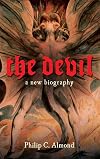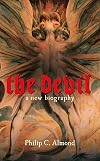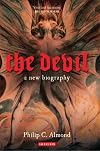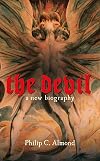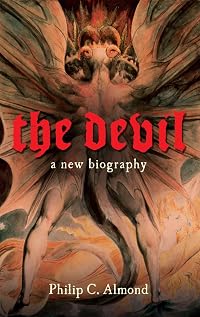
The Devil: A New Biography
by Philip C. Almond
On This Page
Description
"Although the Devil still 'lives' in modern popular culture, for the past 250 years he has become marginal to the dominant concerns of Western intellectual thought. That life could not be thought or imagined without him, that he was a part of the everyday, continually present in nature and history, and active at the depths of our selves, has been all but forgotten. It is the aim of this work to bring modern readers to a deeper appreciation of how, from the early centuries of the Christian show more period through to the recent beginnings of the modern world, the human story could not be told and human life could not be lived apart from the 'life' of the Devil. With that comes the deeper recognition that, for the better part of the last two thousand years, the battle between good and evil in the hearts and minds of men and women was but the reflection of a cosmic battle between God and Satan, the divine and the diabolic, that was at the heart of history itself."-from The DevilLucifer, Mephistopheles, Beelzebub; Ha-Satan or the Adversary; Iblis or Shaitan: no matter what name he travels under, the Devil has throughout the ages and across civilizations been a compelling and charismatic presence. In Christianity, Judaism, and Islam, the supposed reign of God has long been challenged by the fiery malice of his opponent, as contending forces of good and evil have between them weighed human souls in the balance.In The Devil, Philip C. Almond explores the figure of evil incarnate from the first centuries of the Christian era. Along the way, he describes the rise of demonology as an intellectual and theological pursuit, the persecution as witches of women believed to consort with the Devil and his minions, and the decline in the belief in Hell and in angels and demons as corporeal beings as a result of the Enlightenment. Almond shows that the Prince of Darkness remains an irresistible subject in history, religion, art, literature, and culture.Almond brilliantly locates the "life" of the Devil within the broader Christian story of which it is inextricably a part; the "demonic paradox" of the Devil as both God's enforcer and his enemy is at the heart of Christianity. Woven throughout the account of the Christian history of the Devil is another complex and complicated history: that of the idea of the Devil in Western thought. Sorcery, witchcraft, possession, even melancholy, have all been laid at the Devil's doorstep. Until the Enlightenment enforced a "disenchantment" with the old archetypes, even rational figures such as Thomas Aquinas were obsessed with the nature of the Devil and the specific characteristics of the orders of demons and angels. It was a significant moment both in the history of demonology and in theology when Benedict de Spinoza (1632-1677) denied the Devil's existence; almost four hundred years later, popular fascination with the idea of the Devil has not yet dimmed. show lessTags
Recommendations














Member Reviews
Guess who made me do it?
The Devil: A Biography by Philip C. Almond (Cornell University Press, $29.95).
He’s a character we could do without. Seriously, fear of the devil—and excuses for our own bad and/or crazy behavior—have certainly caused more trouble than the concept of a personified adversary for the holy is worth, not to mention setting us up for a Manichean perspective that diminishes our ability to see nuance and shades of gray.
That said, we’re stuck with him. We’ve gone to the Devil.
In Philip C. Almond’s new biography of a personage who encapsulates an idea fills a particular niche. A professor of humanities at the University of Queensland in Australia, Almond has pulled off quite a feat: He’s created a book that show more is solidly academic in its precision and research, yet remains accessible to the general reader.
The story of the Devil begins a good four centuries before Christ—although the Satan of the Hebrew Bible differs in many regards from the Christian Devil, as Almond makes clear, and that differs even more from Iblis, the Islamic Devil.
Including both the canonical Bible and non-canonical works such as the Book of Enoch (the source of the “Watchers” in the recent Darren Aronofsky movie, Noah), as well as non-biblical texts, Almond shows how the Devil as we’ve come to understand it evolved from the earliest representations, including a betting adversary hanging around heaven with God in the book of Job.
The concept of the Devil as God’s enemy is—as these things go—fairly recent, first occuring in the book of Zecharia, and going from there. Up until this point, though, the Devil was an agent of God; in short, he did nothing without orders and approval.
Bottom line: The “tempting” Devil of the New Testament, God’s sworn enemy, didn’t really exist before the first century after Christ, and probably owes much of his/her/its existence to non-canonical literature. What’s more, the imagery we associate with the Devil—cloven hoofs, red skin, horns, a tail and a pitchfork—came much, much later, and owes far more to European bogeymen than it does to anything in the actual Bible.
The Devil’s purpose has mostly been the same as the bogeyman: To scare the (literal) bejesus out of people so that they’ll toe the line of whatever religious hierarchy is in charge. To that end, he/she/it has changed form and fashion just as culture has over the centuries, from monster stalking the night to unseen demonic force emanating from rock music, as the case may be.
The biggest advantage to Almond’s volume is that it makes wide use of all available scholarship, but does so in a very friendly way for the non-academic. Organized chronologically, it also includes some fascinating art that illustrates the changing face of an idea. That makes it a nice addition to the shelf of anyone who is interested in religion, belief and superstition.
Reviewed on Lit/Rant: www.litrant.tumblr.com show less
The Devil: A Biography by Philip C. Almond (Cornell University Press, $29.95).
He’s a character we could do without. Seriously, fear of the devil—and excuses for our own bad and/or crazy behavior—have certainly caused more trouble than the concept of a personified adversary for the holy is worth, not to mention setting us up for a Manichean perspective that diminishes our ability to see nuance and shades of gray.
That said, we’re stuck with him. We’ve gone to the Devil.
In Philip C. Almond’s new biography of a personage who encapsulates an idea fills a particular niche. A professor of humanities at the University of Queensland in Australia, Almond has pulled off quite a feat: He’s created a book that show more is solidly academic in its precision and research, yet remains accessible to the general reader.
The story of the Devil begins a good four centuries before Christ—although the Satan of the Hebrew Bible differs in many regards from the Christian Devil, as Almond makes clear, and that differs even more from Iblis, the Islamic Devil.
Including both the canonical Bible and non-canonical works such as the Book of Enoch (the source of the “Watchers” in the recent Darren Aronofsky movie, Noah), as well as non-biblical texts, Almond shows how the Devil as we’ve come to understand it evolved from the earliest representations, including a betting adversary hanging around heaven with God in the book of Job.
The concept of the Devil as God’s enemy is—as these things go—fairly recent, first occuring in the book of Zecharia, and going from there. Up until this point, though, the Devil was an agent of God; in short, he did nothing without orders and approval.
Bottom line: The “tempting” Devil of the New Testament, God’s sworn enemy, didn’t really exist before the first century after Christ, and probably owes much of his/her/its existence to non-canonical literature. What’s more, the imagery we associate with the Devil—cloven hoofs, red skin, horns, a tail and a pitchfork—came much, much later, and owes far more to European bogeymen than it does to anything in the actual Bible.
The Devil’s purpose has mostly been the same as the bogeyman: To scare the (literal) bejesus out of people so that they’ll toe the line of whatever religious hierarchy is in charge. To that end, he/she/it has changed form and fashion just as culture has over the centuries, from monster stalking the night to unseen demonic force emanating from rock music, as the case may be.
The biggest advantage to Almond’s volume is that it makes wide use of all available scholarship, but does so in a very friendly way for the non-academic. Organized chronologically, it also includes some fascinating art that illustrates the changing face of an idea. That makes it a nice addition to the shelf of anyone who is interested in religion, belief and superstition.
Reviewed on Lit/Rant: www.litrant.tumblr.com show less
In The Devil: A New Biography, Philip C. Almond seeks “to bring modern readers to a deeper appreciation of how, from the early centuries of the Christian period through to the recent beginnings of the modern world, the human story could not be told and human life could not be lived apart from the ‘life’ of the Devil” (pg. xviii). In that way, “This book is a new ‘life’ of the Devil, one that locates his life within the broader Christian story of which it is inextricably a part” while, “at the same time, this book tells another story. Woven throughout the account of the Christian history of the Devil there is another complex and complicated history, one that precedes, parallels, intersects and overlaps with the show more Christian story – that of the ‘idea’ of the Devil in Western thought” (pg. xvi).
Discussing the 3rd century Alexandrian scholar, Origen, and his contribution, Almond writes, “In terms of the story of the Devil, Origen’s legacy was twofold. He had given a new name to the Devil – Lucifer – through his identification of the Devil with the Day Star of Isaiah 14. And, perhaps more important, his locating of the revolt of Satan and his angels before the creation of the world as the result of the sin of pride became a commonplace” (pg. 46). The Gospel of Nicodemus linked Satan with the harrowing of Hell. According to Almond, “for the first time in Christian demonology, we have demons in hell both tormented and tormenting the damned. Satan has at last, in principle at least, assumed the role of the overseer of the punishments of the damned in hell” (pg. 59). Demonology grew during the thirteenth century. According to Almond, “this was the consequence of four intellectual moments during that period: first, the rise of the Cathars; second, the rise of academic angelology and its demonological counterpoint; and third, the arrival in the West of Arab learning and the occult sciences. Finally…it was the result of an apocalyptic thematic in the theology of Joachim of Fiore” (pg. 70).
Discussing witchcraft, Almond writes, “In the 1430s, there developed the notion that magicians were part of a secret heretical sect that rejected Christianity, gathered regularly in the presence of the Devil to worship him and performed evil deeds by magic. From this time onwards, in the history of Western thought, magic and witchcraft developed along separate intellectual paths” (pg. 96-97). Works like the Malleus Maleficarum linked witchcraft with femininity as, “no longer the involuntary victims of Satanic assaults, female witches were now willing participants in Satanic sex. Thus, female sexuality and evil were intimately connected” (pg. 103). Furthermore, “the pact between the Devil and the magician or the witch was perceived as a precondition of any and all magical powers. Following Augustine, superstitious practices in general, and witchcraft and sorcery in particular, were viewed as originating in a compact between men and demons. The pact could be either explicit or tacit” (pg. 129).
Later Protestants identified “the papacy with the Antichrist, together with an historicist approach to the book of Revelation, [which] became the key to Reformation Protestant readings of history and its completion. Secular and sacred history, the history of kingdoms and the Kingdom of God coalesced. As a consequence, the book of Revelation assumed an importance it had not previously had” (pg. 184). By the eighteenth century, “the gradual exclusion of the spiritual – both the supernatural (miracles worked by God) and the preternatural (wonders, often worked by demons) – from the domain of the natural. It signalled [sic] the development of new forms of Christian spirituality that grounded personal faith and religion not in divine revelation, Scripture or the presence of the divine or the demonic world, but in the rational contemplation of a disenchanted world” (pg. 198). Almond writes in the wake of this tradition, showing how the Devil, as an idea, continues to influence our culture through these various permutations he experienced over the centuries. show less
Discussing the 3rd century Alexandrian scholar, Origen, and his contribution, Almond writes, “In terms of the story of the Devil, Origen’s legacy was twofold. He had given a new name to the Devil – Lucifer – through his identification of the Devil with the Day Star of Isaiah 14. And, perhaps more important, his locating of the revolt of Satan and his angels before the creation of the world as the result of the sin of pride became a commonplace” (pg. 46). The Gospel of Nicodemus linked Satan with the harrowing of Hell. According to Almond, “for the first time in Christian demonology, we have demons in hell both tormented and tormenting the damned. Satan has at last, in principle at least, assumed the role of the overseer of the punishments of the damned in hell” (pg. 59). Demonology grew during the thirteenth century. According to Almond, “this was the consequence of four intellectual moments during that period: first, the rise of the Cathars; second, the rise of academic angelology and its demonological counterpoint; and third, the arrival in the West of Arab learning and the occult sciences. Finally…it was the result of an apocalyptic thematic in the theology of Joachim of Fiore” (pg. 70).
Discussing witchcraft, Almond writes, “In the 1430s, there developed the notion that magicians were part of a secret heretical sect that rejected Christianity, gathered regularly in the presence of the Devil to worship him and performed evil deeds by magic. From this time onwards, in the history of Western thought, magic and witchcraft developed along separate intellectual paths” (pg. 96-97). Works like the Malleus Maleficarum linked witchcraft with femininity as, “no longer the involuntary victims of Satanic assaults, female witches were now willing participants in Satanic sex. Thus, female sexuality and evil were intimately connected” (pg. 103). Furthermore, “the pact between the Devil and the magician or the witch was perceived as a precondition of any and all magical powers. Following Augustine, superstitious practices in general, and witchcraft and sorcery in particular, were viewed as originating in a compact between men and demons. The pact could be either explicit or tacit” (pg. 129).
Later Protestants identified “the papacy with the Antichrist, together with an historicist approach to the book of Revelation, [which] became the key to Reformation Protestant readings of history and its completion. Secular and sacred history, the history of kingdoms and the Kingdom of God coalesced. As a consequence, the book of Revelation assumed an importance it had not previously had” (pg. 184). By the eighteenth century, “the gradual exclusion of the spiritual – both the supernatural (miracles worked by God) and the preternatural (wonders, often worked by demons) – from the domain of the natural. It signalled [sic] the development of new forms of Christian spirituality that grounded personal faith and religion not in divine revelation, Scripture or the presence of the divine or the demonic world, but in the rational contemplation of a disenchanted world” (pg. 198). Almond writes in the wake of this tradition, showing how the Devil, as an idea, continues to influence our culture through these various permutations he experienced over the centuries. show less
Ratings
Members
- Recently Added By
Author Information

23+ Works 367 Members
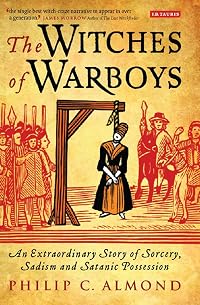
Philip C. Almond is Professor Emeritus of Religion at the University of Queensland. His ten previous books include The Witches of Warboys: An Extraordinary Story of Sorcery, Sadism and Satanic Possession (2008), The Lancashire Witches: A Chronicle of Sorcery and Death on Pendle Hill (2012) and The Devil: A New Biography (2014), all published by show more I.B. Tauris. show less
Classifications
Statistics
- Members
- 91
- Popularity
- 351,634
- Reviews
- 2
- Rating
- (3.50)
- Languages
- Dutch, English
- Media
- Paper, Ebook
- ISBNs
- 9
- ASINs
- 1