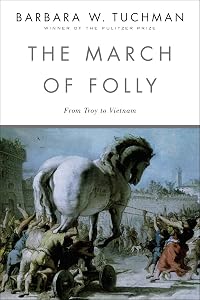
The March of Folly: From Troy to Vietnam
by Barbara Tuchman
On This Page
Description
In The March of Folly, two-time Pulitzer Prize-winning historian Barbara Tuchman tackles the pervasive presence of folly in governments through the ages. Defining folly as the pursuit by governments of policies contrary to their own interests, despite the availability of feasible alternatives, Tuchman details four decisive turning points in history that illustrate the very heights of folly in government: the Trojan War, the breakup of the Holy See provoked by the Renaissance popes, the loss show more of the American colonies by Britain's George III, and the United States' persistent folly in Vietnam. The March of Folly brings the people, places, and events of history magnificently alive for today's reader. show lessTags
Recommendations

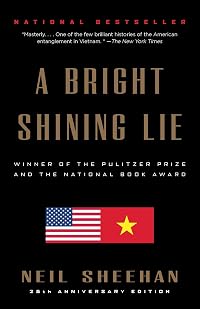









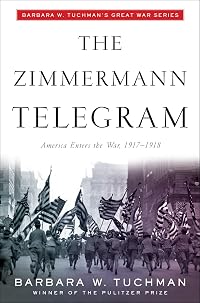












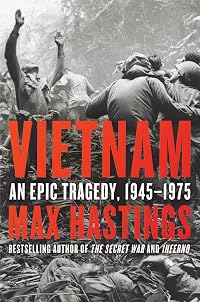











Member Recommendations

rakerman I was interested to read the section on the Renaissance Popes as it reminded me of Garry Wills book Papal Sin: Structures of Deceit.
CGlanovsky Books investigating decision-making through history, especially instances of catastrophically poor decision-making.
11
Member Reviews
In the early 21st century, we like to think that we’re living in an age of extraordinary political incompetence, but Tuchman — writing forty years ago — makes it clear that people in positions of power have been taking stupid (i.e. unforced, contrary to their own interests and against good advice) decisions for at least as long as there has been recorded history. Rehoboam destroyed the viability of the kingdom he had inherited by unnecessarily alienating ten of the twelve tribes of Israel, the Trojans failed to heed the warnings of Laocoön and Cassandra and brought the suspicious package left on their doorstep by the departing Greeks into the city, and so on.
Tuchman gives us three detailed case-studies to show some of the show more factors typically involved: the renaissance Popes piling on the abuses of power and doing nothing to keep nails and ink-bottles out of the hands of pesky Saxons; the British government of George III’s day needlessly provoking the American colonists into an armed rising; and US presidents from Truman to Nixon failing to realise that the US had nothing to gain from interfering in SE Asia and a great deal to lose.
She puts her finger on a few common failings. The most common and fundamental problem seems to be that of leaders getting distracted from the job they are supposed to be doing by the business of getting into and staying in power, as well as the opportunities power provides for personal advantage and helping out friends and family. This was clearly the main problem for the renaissance Popes (as it is for the current US president) — all decisions are framed in relation to local power struggles and personal advantage, and ultimate effects of those policies are overlooked. Another classic seems to be lack of empathy — if you don’t understand how your policies will be perceived by the people on the receiving end, you risk provoking unintended consequences. George III’s ministers, brought up in a tradition of English upper-class arrogance, consistently underrated the American colonists, just as the mid-20th-century White House failed to take into account the strength of Vietnamese nationalism (and confused it with communist internationalism). But “persistence in error” is probably the most glaring fault: no-one likes to admit that they have been wrong, so we will always have a tendency to grasp at straws to justify continuing with the course we have embarked upon, usually turning a minor snafu into a world-class disaster in the process. (The progress from David Cameron’s misguided referendum to Brexit was a classic example of this.)
As always, Tuchman’s prose is clear, concise and devastating. A very entertaining, and often illuminating, book. She’s probably at her best on the Popes, but the Vietnam section also gives her the chance to add a little bit of personal venom, which adds to the fun. One rather hopes that Nixon and Kissinger, at least, got the chance to read this book (LBJ, sadly, wasn’t around any more)…
Tuchman gives us three detailed case-studies to show some of the show more factors typically involved: the renaissance Popes piling on the abuses of power and doing nothing to keep nails and ink-bottles out of the hands of pesky Saxons; the British government of George III’s day needlessly provoking the American colonists into an armed rising; and US presidents from Truman to Nixon failing to realise that the US had nothing to gain from interfering in SE Asia and a great deal to lose.
She puts her finger on a few common failings. The most common and fundamental problem seems to be that of leaders getting distracted from the job they are supposed to be doing by the business of getting into and staying in power, as well as the opportunities power provides for personal advantage and helping out friends and family. This was clearly the main problem for the renaissance Popes (as it is for the current US president) — all decisions are framed in relation to local power struggles and personal advantage, and ultimate effects of those policies are overlooked. Another classic seems to be lack of empathy — if you don’t understand how your policies will be perceived by the people on the receiving end, you risk provoking unintended consequences. George III’s ministers, brought up in a tradition of English upper-class arrogance, consistently underrated the American colonists, just as the mid-20th-century White House failed to take into account the strength of Vietnamese nationalism (and confused it with communist internationalism). But “persistence in error” is probably the most glaring fault: no-one likes to admit that they have been wrong, so we will always have a tendency to grasp at straws to justify continuing with the course we have embarked upon, usually turning a minor snafu into a world-class disaster in the process. (The progress from David Cameron’s misguided referendum to Brexit was a classic example of this.)
As always, Tuchman’s prose is clear, concise and devastating. A very entertaining, and often illuminating, book. She’s probably at her best on the Popes, but the Vietnam section also gives her the chance to add a little bit of personal venom, which adds to the fun. One rather hopes that Nixon and Kissinger, at least, got the chance to read this book (LBJ, sadly, wasn’t around any more)…
In paucity of cause, vain perseverance and ultimate self-damage, the belligerency that Johnson's Administration initiated and pursued was folly of an unusual kind in that absolutely no good can be said to have come of it; all results were malign — except one, the awakening of the "public ire." Too many Americans had come to feel that the war was wrong, out of all proportion to the national interest and unsuccessful besides. Populists like to speak of the "wisdom of the people"; the American people were not so much wise as fed up, which in certain cases is a kind of wisdom.show less
For her 1984 book, The March of Folly, Barbara Tuchman defined “folly” as the ”Pursuit of Policy Contrary to Self-Interest,” as the first chapter is entitled. In this book, she explored and detailed the action of governmental regimes that persisted in policies that were manifestly failures despite knowing that they would not, indeed could not, succeed.
She cites numerous examples of such folly, but she focuses on four prominent and famous instances: the Trojans bringing Greek soldiers into their midst despite warnings from Cassandra; the Renaissance popes continuing their avaricious practices despite rumblings of discontent from their followers; successive British governments attempting to tax their American colonies; and the show more decades-long efforts of the American government to prevent Vietnam from becoming communist. [The American war aim of securing a stable non-communist south was “unattainable…short of total war and invasion, which [the USA] was unwilling to undertake.” The same lesson took many years for Americans to learn about Afghanistan.]
In every case, the government had plenty of warning that its policies were ineffective, but it continued its vain efforts. It seems that the economic concept of “sunk costs” does not register to many policy makers, who would rather persist in futility than admit prior error.
Notably, she averred that “wooden-headedness” in statecraft, i.e., “assessing a situation in terms of preconceived fixed notions while ignoring or rejecting any contrary signs,” has become a politically desirable option.
The forces driving such obstinacy are lust for power, blind tribal loyalty, and “the refusal to acknowledge that your chief or your kind could be wrong.”
So. How can we avoid future disasters? Clearly the forces that led to disaster in the past still operate, as seen so graphically recently in the United States. Tuchman opines that:
"The problem may be not so much a matter of educating officials for government as educating the electorate to recognize and reward integrity of character and to reject the ersatz. [Good luck with that.] Perhaps better men flourish in better times, and wiser government requires the nourishment of a dynamic rather than a troubled and bewildered society. If John Adams was right, and government is ‘little better practiced now than three or four thousand years ago,’ we cannot reasonably expect much improvement. We can only muddle on as we have done in those same three or four thousand years, through patches of brilliance and decline, great endeavor and shadow.”
Evaluation: Despite the author’s pessimistic conclusion, the book is an enjoyable and informative read.
(JAB) show less
She cites numerous examples of such folly, but she focuses on four prominent and famous instances: the Trojans bringing Greek soldiers into their midst despite warnings from Cassandra; the Renaissance popes continuing their avaricious practices despite rumblings of discontent from their followers; successive British governments attempting to tax their American colonies; and the show more decades-long efforts of the American government to prevent Vietnam from becoming communist. [The American war aim of securing a stable non-communist south was “unattainable…short of total war and invasion, which [the USA] was unwilling to undertake.” The same lesson took many years for Americans to learn about Afghanistan.]
In every case, the government had plenty of warning that its policies were ineffective, but it continued its vain efforts. It seems that the economic concept of “sunk costs” does not register to many policy makers, who would rather persist in futility than admit prior error.
Notably, she averred that “wooden-headedness” in statecraft, i.e., “assessing a situation in terms of preconceived fixed notions while ignoring or rejecting any contrary signs,” has become a politically desirable option.
The forces driving such obstinacy are lust for power, blind tribal loyalty, and “the refusal to acknowledge that your chief or your kind could be wrong.”
So. How can we avoid future disasters? Clearly the forces that led to disaster in the past still operate, as seen so graphically recently in the United States. Tuchman opines that:
"The problem may be not so much a matter of educating officials for government as educating the electorate to recognize and reward integrity of character and to reject the ersatz. [Good luck with that.] Perhaps better men flourish in better times, and wiser government requires the nourishment of a dynamic rather than a troubled and bewildered society. If John Adams was right, and government is ‘little better practiced now than three or four thousand years ago,’ we cannot reasonably expect much improvement. We can only muddle on as we have done in those same three or four thousand years, through patches of brilliance and decline, great endeavor and shadow.”
Evaluation: Despite the author’s pessimistic conclusion, the book is an enjoyable and informative read.
(JAB) show less
The March of Folly is an unfortunate title. Or maybe not so unfortunate. Because, after all, what is folly?
Barbara Tuchman gives us several examples of the human animal at its worst — but parading at its best. From Ancient Troy right up through Vietnam (can a sequel including Chechnia, the former Yugoslavia, Iraq and Afghanistan be far behind?), we have proved ourselves to be little better than the apes. If there’s a difference, it’s only in the splendor of our rebarbative behavior. Kings, Popes, Ministers, Generals … it’s all the same. And the tragedy? Invariably, the loss of so many young lives to no real purpose other than to serve the interests of ambition, pride, ignorance, stubbornness — in short, of vanity.
Yes, show more vanitas, vanitatis. It’s all right there in Ecclesiastes, and not much has changed. We are a prideful, belligerent, deceitful, artful, malignant, umbragious — a word I learned in reading this book—species. In short, we’re prone to folly.
And who pays the ultimate price of that folly? Our youth.
I cannot remember being so disheartened by a book since I read, at a young and impressionable age, A History of Torture — or more recently, Martha Gellhorn’s The Face of War. If you want to continue believing that “all is best in the best of all possible worlds,” don’t read this book. If you want to continue believing that we are governed by people who know what’s best for us, don’t read this book. If you want to believe that the march of history is inevitable, don’t read this book.
Ignore my suggestions at your own risk. But if you don’t, be prepared to undertake a life of activism — and don’t expect it to be a happy life. To buck folly is to question our very essence. And our essence would appear — if Ms. Tuchman’s major premise is to be believed — to be tragically farcical. That, or farcically tragic. The case of the former President Lyndon B. Johnson in one of this book’s final chapters could easily rival that of Shakespeare’s King Lear.
RRB
07/19/13
Brooklyn, NY show less
Barbara Tuchman gives us several examples of the human animal at its worst — but parading at its best. From Ancient Troy right up through Vietnam (can a sequel including Chechnia, the former Yugoslavia, Iraq and Afghanistan be far behind?), we have proved ourselves to be little better than the apes. If there’s a difference, it’s only in the splendor of our rebarbative behavior. Kings, Popes, Ministers, Generals … it’s all the same. And the tragedy? Invariably, the loss of so many young lives to no real purpose other than to serve the interests of ambition, pride, ignorance, stubbornness — in short, of vanity.
Yes, show more vanitas, vanitatis. It’s all right there in Ecclesiastes, and not much has changed. We are a prideful, belligerent, deceitful, artful, malignant, umbragious — a word I learned in reading this book—species. In short, we’re prone to folly.
And who pays the ultimate price of that folly? Our youth.
I cannot remember being so disheartened by a book since I read, at a young and impressionable age, A History of Torture — or more recently, Martha Gellhorn’s The Face of War. If you want to continue believing that “all is best in the best of all possible worlds,” don’t read this book. If you want to continue believing that we are governed by people who know what’s best for us, don’t read this book. If you want to believe that the march of history is inevitable, don’t read this book.
Ignore my suggestions at your own risk. But if you don’t, be prepared to undertake a life of activism — and don’t expect it to be a happy life. To buck folly is to question our very essence. And our essence would appear — if Ms. Tuchman’s major premise is to be believed — to be tragically farcical. That, or farcically tragic. The case of the former President Lyndon B. Johnson in one of this book’s final chapters could easily rival that of Shakespeare’s King Lear.
RRB
07/19/13
Brooklyn, NY show less
A highly readable account of four instances of human folly over the last 2800 years. These include the Trojans's unaccountable bringing of the Trojan horse into Troy; the transgressions of the Renaissance Popes which brought on the Reformation; the loss by Britain of the American colonies; and America's own pointless war in Vietnam. The last section reminds me very much of Neil Sheehan's Bright Shining Lie, which was written several years later than Tuchman's narrative. Her book is vivid, clear, unfussy, with just the right density of diction. It never flags. Highly recommended.
Folly: the pursuit of policy contrary to self-interest.
Not an easy read, but VERY interesting. Keep a dictionary handy - it is a Tuchman book.
This book needs to be required reading for all government leaders. The most interesting part was on the American engagement in Viet Nam. Maybe because I lived through it and was a part of finale in Southeast Asia, I found it fascinating.
Had we known what we know now, that entire situation may have been avoided. Funny thing. We did know enough to avoid the folly.
This book significantly changed my attitude about that conflict. It's making me take harder looks at current and future foreign engagements and domestic policies. It is timely.
Not an easy read, but VERY interesting. Keep a dictionary handy - it is a Tuchman book.
This book needs to be required reading for all government leaders. The most interesting part was on the American engagement in Viet Nam. Maybe because I lived through it and was a part of finale in Southeast Asia, I found it fascinating.
Had we known what we know now, that entire situation may have been avoided. Funny thing. We did know enough to avoid the folly.
This book significantly changed my attitude about that conflict. It's making me take harder looks at current and future foreign engagements and domestic policies. It is timely.
Tuchman does a fantastic job of telling history through her own lens--the lens of "folly," as she calls it. It may be one side of the story, but she supports it so well that one feels like it can be the only honest interpretation of the events as they shook down. I especially enjoyed the chapter on Vietnam, since I hadn't really understood America's role and read Tuchman's book primarily to remedy that ignorance. Interesting that my opinion on the Vietnam war didn't change--I still think it was really really stupid, and now, thanks to Tuchman, I have arguments to support that opinion!
This book takes a quite distinctive approach in focusing on incompetence or folly in history. Most historians don't go this far, perhaps limiting themselves to discussing errors or mistakes made or by having good versus bad (e.g. Hitler, Stalin). Even tragedy is more often detailed in history books than folly. This book makes the commonsense and yet radical observation that governments and leaders and perhaps whole groups can take actions which go beyond error into wholesale foolishness. It is obvious and yet eye-opening approach.
It is also interesting yet depressing while reading this book to play compare and contrast between the Vietnam war and the current mess in Iraq. There are many differences and a few similarities. The profound show more glaring similarity is the ability of wealthy powerful elites to lead a powerful nation into a fundamentally foolish endevour that is deeply hurtful to the the nations self interest in the long run. Perhap every generation has to learn that it can fail profoundly and tragically. show less
It is also interesting yet depressing while reading this book to play compare and contrast between the Vietnam war and the current mess in Iraq. There are many differences and a few similarities. The profound show more glaring similarity is the ability of wealthy powerful elites to lead a powerful nation into a fundamentally foolish endevour that is deeply hurtful to the the nations self interest in the long run. Perhap every generation has to learn that it can fail profoundly and tragically. show less
Members
- Recently Added By
Lists

LT picks: Blue Books
197 works; 44 members

Recommend the 20 best books you've read in the last five years
2,168 works; 602 members

Ten books that most shaped your view of history
91 works; 12 members

Non-Fiction Worth Reading
1,015 works; 254 members

My List
302 works; 1 member

THE WAR ROOM
813 works; 24 members

Top Five Books of 2023
767 works; 317 members

Club Read's Recommended Nonfiction Written by Women
618 works; 30 members
Author Information

28+ Works 29,833 Members
Barbara W. Tuchman achieved prominence as a historian with The Zimmermann Telegram, and international fame with The Guns of August--a huge bestseller and winner of the Pulitzer Prize. There followed other successes, including The Proud Tower, Stilwell and the American Experience in China (also awarded the Pulitzer Prize), A Distant Mirror, The show more March of Folly, and The First Salute. show less
Some Editions
Awards and Honors
Distinctions
Notable Lists
Work Relationships
Common Knowledge
- Canonical title
- The March of Folly: From Troy to Vietnam
- Original title
- An inquiry into the persistence of folly in government
- Original publication date
- 1984
- Important places
- Troy; Vietnam; Rome, Italy
- Epigraph
- "And I can see no reason why anyone should suppose that in the future the same motifs already heard will not be sounding still...put to use by reasonable men to reasonable ends, or by madmen to nonsense and disaster." -- Jose... (show all)ph Campbell, Forward to The Masks of God: Primitive Mythology, 2969
- First words
- A phenomenon noticeable throughout history regardless of place or period is the pursuit by government of policies contrary to their own interests.
- Last words
- (Click to show. Warning: May contain spoilers.)We can only muddle on as we have done in those same three or four thousand years, through patches of brilliance and decline, great endeavor and shadow.
- Publisher's editor
- Gottlieb, Robert
- Canonical DDC/MDS
- 909.08
- Canonical LCC
- D210
Classifications
Statistics
- Members
- 3,146
- Popularity
- 5,546
- Reviews
- 38
- Rating
- (3.96)
- Languages
- 9 — Dutch, English, French, German, Hebrew, Portuguese, Russian, Spanish, Swedish
- Media
- Paper, Audiobook, Ebook
- ISBNs
- 42
- UPCs
- 1
- ASINs
- 29