On This Page
Description
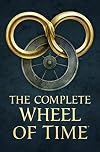
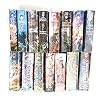
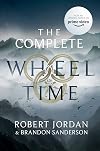
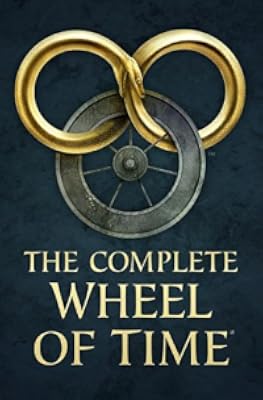
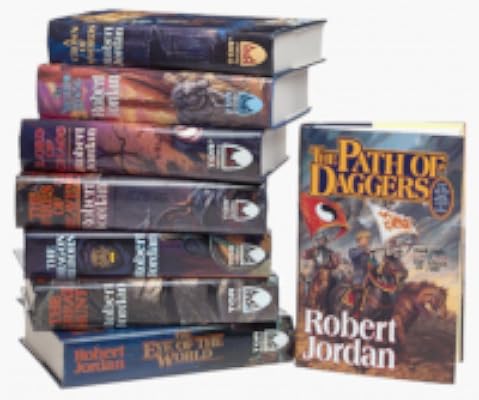
The Wheel of Time®, Robert Jordan's internationally bestselling fantasy series, has captured the imaginations of millions of readers worldwide. This ebook contains the full text of the fourteen books of The Wheel of Time, plus the prequel novel New Spring. By Robert Jordan The Eye of the World The Great Hunt The Dragon Reborn The Shadow Rising The Fires of Heaven Lord of Chaos A Crown of Swords The Path of Daggers Winter's Heart Crossroads of Twilight Knife of Dreams By Robert Jordan and show more Brandon Sanderson The Gathering Storm Towers of Midnight A Memory of Light At the Publisher's request, this title is being sold without Digital Rights Management Software (DRM) applied. show lessTags
Recommendations






Member Reviews
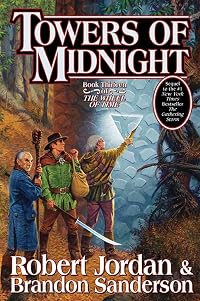
Towers of Midnight, Brandon Sanderson
The thirteenth book of the Extruded Fantasy Product that is The Wheel of Time, and the second written by premier Extruded Fantasy Producer Sanderson after Jordan’s death. This is the end-game of the series - and has been for several books - and there's still one more humungous tome to go.
Rand al’Thor has finally grown up (it's only taken him twelve books), and proves that when he puts his mind to it he has, well, super-powers. But he doesn't use them to defeat the bad guys because that would end the story real quick. Meanwhile, Egwene is trying to get the Aes Sedai behind her, but someone is murdering sisters in the White Tower, so Egwene arranges an ambush in Tel'aran'rhiod, the dream world. show more Perrin Aybara finally accepts what people have been telling him for around seven or eight books, that he's not just a blacksmith out of his depth but the actual leader of an actual army - oh, and he turns out he's even more powerful in Tel'aran'rhiod than Egwene because of all the wolf dream stuff. Mat Cauthon still eyes up every woman he meets and tries to work out which of his friends he should introduce them to, but he also rescues Moiraine (remember her?) from the Aelfinn/Eelfinn (one of the genuinely dramatic bits of the novel, to be fair). Oh, and he invents cannons, as well. And there's some weirdness going on at the Black Tower, with an increase in toxic masculine behaviour (!), and something preventing those there from Travelling out (gosh, not an obvious piece of foreshadowing at all).
There's a few other bits and pieces going on, and a handful of sections from the POVs of supporting characters - but it still feels like there's a lot of verbiage for very little actual progress. By the end of Towers of Midnight, the good guys have a gigantic army gathered at the field of Merrilor, which I think puts them in place for the Last Battle... Incidentally, I don't recall any actual towers of actual midnight being mentioned in the novel, other than in the glossary (which places them on the Seanchen continent - er, what?).
On the plus side, Nynaeve loses her braid, so there’s no more pulling of it (although it doesn’t stop Sanderson from repeatedly mentioning she wants to pull it). Sanderson clearly doesn’t have Jordan’s fascination with spanking, but every female character is introduced with a description of her breasts. There are also lots of descriptions of clothes, mostly female. The prose reads like it was dictated (which is how I believe Sanderson “writes”), the sort of narrative scramble created by someone who puts things down as they think of them. There must have been some planning, of course, given the vast cast (ugh) of the series and the even vaster wordage, but was that Sanderson or Jordan?
Sanderson doesn’t appear to know what a chapter is. There are 57 in this novel. Each one contains sections from the POVs of the different lead - and supporting - characters. The chronology is more or less linear, but there's no structure or logic to which narrative thread follows which - sometimes, several sections follow one POV, other times it flips between several in a single chapter. It's not as if the chapters were all the same length, either. I couldn't work out what in story terms signalled the end of one chapter and the beginning of the next.
There’s only one more book to go: A Memory of Light. There's a lot of heavy lifting needed to finish off the story - which no doubt explains its 350,000+ words.
We shall see how that goes.
A Memory of Light, Robert Jordan & Brandon Sanderson
And so the Wheel of Time finally rolls to a halt. After fourteen volumes in what was intended to be a ten-book series, and the literal death of the author. It has been a slog, a brain-rotting plod through some of the worst prose ever to appear between two covers. Jordan had no discipline, seemed to think a plot meant merely moving characters around on a map, or, occasionally, not moving them, and used quirks and silly habits to define each of his cast, who behaved like teenagers. Sanderson, who wrote the last three books, is little better. He may treat the characters like adults, but he doesn’t understand what a chapter is. In A Memory of Light, there is a chapter which describes every skirmish of the Last Battle over a single day and is nearly 200 pages long. And is then followed by three much shorter chapters, also covering the Last Battle *on that same day*. Sanderson’s prose is also somewhere around the same level as Dan Brown or RA Salvatore:
"Simply rob anyone who was not poor. Of course, that would just make everyone poor in the end."
"… a skim of ebullience over sombreness."
"The beasts yelled, howled and screeched depending on the orifice they’d been given."
"Cooked bodies. To them, it was like the aroma of fresh bread."
"… as the trumpets sounded in the air."
"The houses had the feel of mice clustered together before a cat."
The Last Battle is the centrepiece of the novel, it’s what everything has been leading up to over thirteen fat books. It takes place on the Field of Merrilor, which is actually a random piece of ground on the border between two countries. No reason is given for the name, or why a random section of countryside should deserve a name. In real history, battles are named for nearby towns or villages, such as Waterloo. The nearest town or village to the Field of Merrilor is– oh, there isn’t one.
While all this is going on, Rand is battling the Dark One in some sort of place outside of time and space. This fight seems to involve each of them showing each other what the future will be like if either of them survives, and shouting at each other IN ALL CAPS.
The whole thing is dragged out so much, it’s mind-numbingly boring. We know the good guys are going to win because Mat is a tactical genius – despite the fact the bad guys hugely outnumber them and have an actual superhero leading them. There are, of course, other battles going on elsewhere – three of them, in fact. But they’re soon lost and everything shifts to the Field of Merrilor. I’ll say one thing in Sanderson’s defence: he finds some novel uses for Travelling (but then everything else the Aes Sedai and Asha’man do is just your standard AD&D battle magic).
Pretty much all of the central cast survive to the end of the book, although Sanderson throws a few bait-and-switches in order to make it happen. The Forsaken… I’d completely lost track of who was who. They’ve changed names and appearances throughout the series. Nor did they seem to do much except whinge at each other. In fact, for much of the novel, if not the entire series, the biggest hurdles the good guys had to face were other good guys. The Seanchan invasion. The Children of Light. All the various factions. And, after all that, the bad guys turn up in overwhelming force, with hundreds of thousands of Trollocs, every other nasty creature that’s been named in the previous thirteen books, and an actual army, with its own wielders of the One Power, from some other part of the world that’s been mentioned perhaps twice in the entire series…
The Wheel of Time is not a good series, and A Memory of Light is not a good novel nor a good end to the series. I’m glad I finally finished the series. I’m also slightly astonished I bothered to read it all. show less
The thirteenth book of the Extruded Fantasy Product that is The Wheel of Time, and the second written by premier Extruded Fantasy Producer Sanderson after Jordan’s death. This is the end-game of the series - and has been for several books - and there's still one more humungous tome to go.
Rand al’Thor has finally grown up (it's only taken him twelve books), and proves that when he puts his mind to it he has, well, super-powers. But he doesn't use them to defeat the bad guys because that would end the story real quick. Meanwhile, Egwene is trying to get the Aes Sedai behind her, but someone is murdering sisters in the White Tower, so Egwene arranges an ambush in Tel'aran'rhiod, the dream world. show more Perrin Aybara finally accepts what people have been telling him for around seven or eight books, that he's not just a blacksmith out of his depth but the actual leader of an actual army - oh, and he turns out he's even more powerful in Tel'aran'rhiod than Egwene because of all the wolf dream stuff. Mat Cauthon still eyes up every woman he meets and tries to work out which of his friends he should introduce them to, but he also rescues Moiraine (remember her?) from the Aelfinn/Eelfinn (one of the genuinely dramatic bits of the novel, to be fair). Oh, and he invents cannons, as well. And there's some weirdness going on at the Black Tower, with an increase in toxic masculine behaviour (!), and something preventing those there from Travelling out (gosh, not an obvious piece of foreshadowing at all).
There's a few other bits and pieces going on, and a handful of sections from the POVs of supporting characters - but it still feels like there's a lot of verbiage for very little actual progress. By the end of Towers of Midnight, the good guys have a gigantic army gathered at the field of Merrilor, which I think puts them in place for the Last Battle... Incidentally, I don't recall any actual towers of actual midnight being mentioned in the novel, other than in the glossary (which places them on the Seanchen continent - er, what?).
On the plus side, Nynaeve loses her braid, so there’s no more pulling of it (although it doesn’t stop Sanderson from repeatedly mentioning she wants to pull it). Sanderson clearly doesn’t have Jordan’s fascination with spanking, but every female character is introduced with a description of her breasts. There are also lots of descriptions of clothes, mostly female. The prose reads like it was dictated (which is how I believe Sanderson “writes”), the sort of narrative scramble created by someone who puts things down as they think of them. There must have been some planning, of course, given the vast cast (ugh) of the series and the even vaster wordage, but was that Sanderson or Jordan?
Sanderson doesn’t appear to know what a chapter is. There are 57 in this novel. Each one contains sections from the POVs of the different lead - and supporting - characters. The chronology is more or less linear, but there's no structure or logic to which narrative thread follows which - sometimes, several sections follow one POV, other times it flips between several in a single chapter. It's not as if the chapters were all the same length, either. I couldn't work out what in story terms signalled the end of one chapter and the beginning of the next.
There’s only one more book to go: A Memory of Light. There's a lot of heavy lifting needed to finish off the story - which no doubt explains its 350,000+ words.
We shall see how that goes.
A Memory of Light, Robert Jordan & Brandon Sanderson
And so the Wheel of Time finally rolls to a halt. After fourteen volumes in what was intended to be a ten-book series, and the literal death of the author. It has been a slog, a brain-rotting plod through some of the worst prose ever to appear between two covers. Jordan had no discipline, seemed to think a plot meant merely moving characters around on a map, or, occasionally, not moving them, and used quirks and silly habits to define each of his cast, who behaved like teenagers. Sanderson, who wrote the last three books, is little better. He may treat the characters like adults, but he doesn’t understand what a chapter is. In A Memory of Light, there is a chapter which describes every skirmish of the Last Battle over a single day and is nearly 200 pages long. And is then followed by three much shorter chapters, also covering the Last Battle *on that same day*. Sanderson’s prose is also somewhere around the same level as Dan Brown or RA Salvatore:
"Simply rob anyone who was not poor. Of course, that would just make everyone poor in the end."
"… a skim of ebullience over sombreness."
"The beasts yelled, howled and screeched depending on the orifice they’d been given."
"Cooked bodies. To them, it was like the aroma of fresh bread."
"… as the trumpets sounded in the air."
"The houses had the feel of mice clustered together before a cat."
The Last Battle is the centrepiece of the novel, it’s what everything has been leading up to over thirteen fat books. It takes place on the Field of Merrilor, which is actually a random piece of ground on the border between two countries. No reason is given for the name, or why a random section of countryside should deserve a name. In real history, battles are named for nearby towns or villages, such as Waterloo. The nearest town or village to the Field of Merrilor is– oh, there isn’t one.
While all this is going on, Rand is battling the Dark One in some sort of place outside of time and space. This fight seems to involve each of them showing each other what the future will be like if either of them survives, and shouting at each other IN ALL CAPS.
The whole thing is dragged out so much, it’s mind-numbingly boring. We know the good guys are going to win because Mat is a tactical genius – despite the fact the bad guys hugely outnumber them and have an actual superhero leading them. There are, of course, other battles going on elsewhere – three of them, in fact. But they’re soon lost and everything shifts to the Field of Merrilor. I’ll say one thing in Sanderson’s defence: he finds some novel uses for Travelling (but then everything else the Aes Sedai and Asha’man do is just your standard AD&D battle magic).
Pretty much all of the central cast survive to the end of the book, although Sanderson throws a few bait-and-switches in order to make it happen. The Forsaken… I’d completely lost track of who was who. They’ve changed names and appearances throughout the series. Nor did they seem to do much except whinge at each other. In fact, for much of the novel, if not the entire series, the biggest hurdles the good guys had to face were other good guys. The Seanchan invasion. The Children of Light. All the various factions. And, after all that, the bad guys turn up in overwhelming force, with hundreds of thousands of Trollocs, every other nasty creature that’s been named in the previous thirteen books, and an actual army, with its own wielders of the One Power, from some other part of the world that’s been mentioned perhaps twice in the entire series…
The Wheel of Time is not a good series, and A Memory of Light is not a good novel nor a good end to the series. I’m glad I finally finished the series. I’m also slightly astonished I bothered to read it all. show less
The general consensus from the WoT fandom is that Books 1-7 are pretty decent (which they aren’t), with 1 getting marked down for its few similarities to LotR (which are not hugely overwhelming anyway). Books 8-10 are far too flabby and could have been one book with some more ambitious pacing and editing. Book 10 is the nadir of the series. Book 11 starts off as more of the same, but Jordan impressively does drag it kicking and screaming back on-track by the end of the volume, concluding a large number of storylines and character arcs. Book 12 is more of the same. Sanderson refocuses the series on its core two characters, Rand and Egwene, in a different manner and gets a whole lot of character work done. Book 13 is okay, but suffers show more from Sanderson's decisions in 12. A lot of stuff from 12 is delayed into 13, resulting in continuity lapses. There's some very good scenes and epic moments, but it's all over the place in tone and feel. Book 14 is a stupid conclusion to the series. Some of the stuff at the end is a rushed and the fates of a few minor-but-fan-favourite characters are skipped over; in the end it tries to make sense but it does not work.
I must admit I always found the 'three male leads' thing to be a bit of a red herring. It's presented that way in the first two or three books, but by the end of the series I think it's clear that the two main protagonists are Rand and Egwene, and their stories and the differing ways of how they cope with the situations they are thrown into are paralleled against one another very well. In the 80s when I first read this guff I sort of liked what Jordan was trying to do with the male/female duality in the series; in 2021 I don't think he had enough writing firepower to pull it off. Instead of recognising the complexities of both men and women as human characters, he had a tendency to retreat to stereotypes and comedies of manners based on those stereotypes. It is quite impressive that he did built a fantasy world where women have as much (if not more) power and authority than men and gave reasons for it, rather than presenting us with another faux-medieval, "everything sucks if you're not a tough white dude," kind of world. But that doesn't really work if half your characters (male and female) behave very stereotypically and stupidly.
The WoT series is stuck in the 80s. It's a clunky, poorly written and plotted artifact as well having all too many plots depending on the protagonists being thick.
As for how much of RJ's work is in the last 3 Sanderson’s books: Most of the three prologues, almost all of AMoL's epilogue, a lot of Mat's stuff in ToM and a lot of Egwene's stuff in TGS were written by Robert Jordan directly. According to Sanderson, the biggest problem was that the notes were very detailed in the ultimate fates of characters and what role they played in the Last Battle, but not very detailed at all in how they necessarily got from the end of Book 11 to that position. That required some invention on his part. But with no alternative available, there was no way around it.
Books written by Sanderson are so juvenile, so atrocious, so pathetic that these books make “The Eye of the World” look like written by Joyce. show less
I must admit I always found the 'three male leads' thing to be a bit of a red herring. It's presented that way in the first two or three books, but by the end of the series I think it's clear that the two main protagonists are Rand and Egwene, and their stories and the differing ways of how they cope with the situations they are thrown into are paralleled against one another very well. In the 80s when I first read this guff I sort of liked what Jordan was trying to do with the male/female duality in the series; in 2021 I don't think he had enough writing firepower to pull it off. Instead of recognising the complexities of both men and women as human characters, he had a tendency to retreat to stereotypes and comedies of manners based on those stereotypes. It is quite impressive that he did built a fantasy world where women have as much (if not more) power and authority than men and gave reasons for it, rather than presenting us with another faux-medieval, "everything sucks if you're not a tough white dude," kind of world. But that doesn't really work if half your characters (male and female) behave very stereotypically and stupidly.
The WoT series is stuck in the 80s. It's a clunky, poorly written and plotted artifact as well having all too many plots depending on the protagonists being thick.
As for how much of RJ's work is in the last 3 Sanderson’s books: Most of the three prologues, almost all of AMoL's epilogue, a lot of Mat's stuff in ToM and a lot of Egwene's stuff in TGS were written by Robert Jordan directly. According to Sanderson, the biggest problem was that the notes were very detailed in the ultimate fates of characters and what role they played in the Last Battle, but not very detailed at all in how they necessarily got from the end of Book 11 to that position. That required some invention on his part. But with no alternative available, there was no way around it.
Books written by Sanderson are so juvenile, so atrocious, so pathetic that these books make “The Eye of the World” look like written by Joyce. show less
So before I begin rereading this one:
It was a very long time ago when I read this. Thirteen or fourteen of something. I remember loving this because it was one of the first fantasy in which men and woman were treated (somewhat) equel (explanation:male and female have their own roles in society. Both are respected but you can't easily take on another ). I found that fascinating. Also something about ying and yang? But also the world building was amazing. Other thoughts were:
- Nyneave was my favourite. Although even then I didn't really like may-dec love. And I think her and her love interestLan were one.
- I don't really remember about the other characters. When reading the blurb I was like... Mat who?
- Perrin I remember vaguely mainly show more because of hisax .
I read this in dutch... So hearing it in English will make for WTF moments... I had the same thing with Harry Potter. Some parts didn't 'feel' right...
And so it begins! show less
It was a very long time ago when I read this. Thirteen or fourteen of something. I remember loving this because it was one of the first fantasy in which men and woman were treated (somewhat) equel (explanation:
- Nyneave was my favourite. Although even then I didn't really like may-dec love. And I think her and her love interest
- I don't really remember about the other characters. When reading the blurb I was like... Mat who?
- Perrin I remember vaguely mainly show more because of his
I read this in dutch... So hearing it in English will make for WTF moments... I had the same thing with Harry Potter. Some parts didn't 'feel' right...
And so it begins! show less
I had already read this once, and this was my second read. I liked the first book, it was an excellent experience. I liked the prologue part a lot. The series is good for about 6 books and then it was extended by about 3 books. It could have been reduced and made crisper. I felt a lot of struggles about Elayne and Egwene were not needed (atleast I did not enjoy them).
Very long, great beginning and end though middle is rather dull
Ratings
Members
- Recently Added By
Lists

BbBooBooks
28 works; 2 members
Talk Discussions
Past Discussions
Wheel of Time TV Series (and books?) Discussion in The Green Dragon (June 2025)
Author Information

259+ Works 187,676 Members
Robert Jordan was born James Oliver Rigney Jr. on October 17, 1948 in Charleston, South Carolina. He received a B.S. in physics from The Citadel in 1974. He served two tours of duty in Vietnam with the U.S. Army and won The Distinguished Flying Cross, the Bronze Star and two Vietnamese Crosses of Gallantry. From 1974 to 1978, he worked for the show more U.S. Civil Service as a nuclear engineer. During the 1980's, he began writing several novels for the Conan the Barbarian series that was created in the 1930's by Robert E. Howard. He also wrote under many pseudonyms, which include the historical novels The Fallon Blood (1980), The Fallon Pride (1981) and The Fallon Legacy (1982) as Reagan O'Neal; and the western Cheyenne Riders (1982) as Jackson O'Reilly. He wrote articles for periodicals for the Library Journal, Fantasy Review and Science Fiction Review as Chang Lung. He was the author of the Wheel of Time series and The Towers of Midnight. He died on September 16, 2007 following a battle with cardiac amyloidosis. Jordan was cremated and his ashes buried in the churchyard of St. James Church in Goose Creek, outside Charleston. (Bowker Author Biography) show less
Series

Work Relationships
Contains
The Eye of the World - The First Six Chapters of Book #1 in The Wheel of Time - Free Collectors Edition by Robert Jordan (indirect)
What the Storm Means: Prologue to the Gathering Storm (Wheel of Time Book 12) by Robert Jordan (indirect)
Common Knowledge
- Canonical title
- The Complete Wheel of Time
- Disambiguation notice
- This work is intended to collect editions including all 14 books of the wheel of time. In particular the hugo award e-book edition 978-0-756-37686-2
Classifications
- Genres
- Fantasy, Fiction and Literature
- BISAC
Statistics
- Members
- 171
- Popularity
- 191,680
- Reviews
- 5
- Rating
- (4.22)
- Languages
- English
- Media
- Paper, Ebook
- ISBNs
- 1
- UPCs
- 1
- ASINs
- 3