On This Page
Description
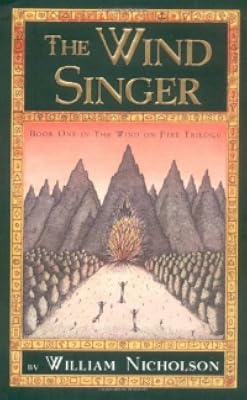
After Kestrel Hath rebels against the stifling rules of Amaranth society and is forced to flee, she, along with her twin brother and a tagalong classmate, follow an ancient map in quest of the legendary silver voice of the wind singer, in an attempt to heal Amaranth and its people.Tags
Recommendations



Member Recommendations
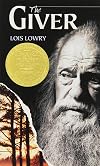
by klarusu
Member Reviews
A brother and sister team rebel against their city's soulless and color-coded caste system, face dire consequences from the Chief Examiner, and instead escape the city walls and head out in search of the key to the Wind Singer (a strange and ancient device in the middle of the city). There are hints that finding and replacing the key will unlock the Wind Singer's song and along with it, the freedom of the citizens of Aramanth. But to get it they must travel a long way and face the Big Bad, Morah, and his creepy sort-of-undead marching-band army.
A good story with good characters (the twins' parents, who also rebel in their own ways, are excellent too), but the world-building has some bare patches and the ending was a bit pat. I may show more continue the series at some point, but not just now, I think. show less
A good story with good characters (the twins' parents, who also rebel in their own ways, are excellent too), but the world-building has some bare patches and the ending was a bit pat. I may show more continue the series at some point, but not just now, I think. show less
Kestrel Hath and her Brother, Bowman, are twins in the city of Aramanth in a wonderfully imagined world full of magic and surprises. But their world is not the perfect place it once was, for the Wind Singer that overlooks their city has been broken for many years, and in the mean time the city has been overtaken by a rigidly enforced regime that ensures everyone is put to work in the place best suited to their skills and effort.
From the age of 2, children are educated and examined repeatedly, and their scores are added to the scores of their parents who also undertake regular examinations. The scores then calculate their priveleges, where they may live and what colour clothing they may wear.
But the Hath family think differently to other show more people, and they see that the system - rather than achieving a wonderful egalitarian society - actually binds them and imprisons them. And when Kestrel one day snaps in a school lesson, she awakes a chain of events that bring down the wrath of the chief examiner and set in motion something much larger and more dangerous than anyone would have believed possible.
I first looked at this book when it was newly published. I picked it up to buy it, but it was on one of those "3 for 2" displays where you can get 3 books for the price of two. As I could not find 3 books I wanted I resented paying full price for it and put it back! (Waterstones take note - you would sell me more books just by discounting them a little instead!)
It is a pity it took me so long to actually buy this book, becauise it is excellent. I was expecting a good fantasy story, but the story I read exceeded my expectations on two counts:
1) The characterisations were very well done, and often very amusing. The conversation Bowman had with an official as Kestrel climbed the Wind Singer had me laughing out loud. I instantly fell in love with the Hath family. Not that they were a perfect family, and you see their warts and all - particularly as the discover friendship in an unlikely place.
2) The world that Aramanth sits in is a richly imagined but very fresh and non stereotyped world. I get very fed up with fantasy books that set themselves in a kind of medieval world, just because that is how Tolkien did it. But this is not one of those books. The world described here shows the ability of the author to imagine something bold and new and very engaging.
The book is written with young adults as an intended audience, but adult readers should enjoy this too - and younger children may well love it too. As a rough guide, I would probably not give it to anyone much younger than 10, or older than 95 (although the latter only because the print might then be a little too small!)
All in all this was a richly imagined book with good characters, some good humour and plenty of action as well as things to make the reader pause and consider afterwards - particularly on the nature of freedom. show less
From the age of 2, children are educated and examined repeatedly, and their scores are added to the scores of their parents who also undertake regular examinations. The scores then calculate their priveleges, where they may live and what colour clothing they may wear.
But the Hath family think differently to other show more people, and they see that the system - rather than achieving a wonderful egalitarian society - actually binds them and imprisons them. And when Kestrel one day snaps in a school lesson, she awakes a chain of events that bring down the wrath of the chief examiner and set in motion something much larger and more dangerous than anyone would have believed possible.
I first looked at this book when it was newly published. I picked it up to buy it, but it was on one of those "3 for 2" displays where you can get 3 books for the price of two. As I could not find 3 books I wanted I resented paying full price for it and put it back! (Waterstones take note - you would sell me more books just by discounting them a little instead!)
It is a pity it took me so long to actually buy this book, becauise it is excellent. I was expecting a good fantasy story, but the story I read exceeded my expectations on two counts:
1) The characterisations were very well done, and often very amusing. The conversation Bowman had with an official as Kestrel climbed the Wind Singer had me laughing out loud. I instantly fell in love with the Hath family. Not that they were a perfect family, and you see their warts and all - particularly as the discover friendship in an unlikely place.
2) The world that Aramanth sits in is a richly imagined but very fresh and non stereotyped world. I get very fed up with fantasy books that set themselves in a kind of medieval world, just because that is how Tolkien did it. But this is not one of those books. The world described here shows the ability of the author to imagine something bold and new and very engaging.
The book is written with young adults as an intended audience, but adult readers should enjoy this too - and younger children may well love it too. As a rough guide, I would probably not give it to anyone much younger than 10, or older than 95 (although the latter only because the print might then be a little too small!)
All in all this was a richly imagined book with good characters, some good humour and plenty of action as well as things to make the reader pause and consider afterwards - particularly on the nature of freedom. show less
The opening chapters may make this seem to be simply a satire on the extreme value sometimes placed on a certain form of education, but it swiftly becomes something far broader and more imaginative.
Kestrel and her twin brother Bowman are citizens of Aramanth, a mysterious walled city in which exams determine everything, from where people live, to how they dress, to their ambitions. Essentially, Kestrel rebels against the ethos of Aramanth and then refuses to accept the awful punishment that the Chief Examiner has planned for her. This leads her to accept that the only hope for herself, her family and her city is to retrieve the voice of the mysterious wind singer that dominates the centre of the city. Thus Kestrel, Bowman and the class show more dunce, Mumpo, set out on a dangerous quest to retrieve the voice and meet some unlikely allies along the way. This is where the fantastical elements begin to creep in but the way other characters live makes them seem plausible and warm characters.
It is unclear whether or not this city state is set in the past of future, but it contains damning similarities with our own stratified culture, which are most clearly revealed when the Hath family are forced to move from Orange to Grey, from a whole house to a dank room. Class envy and ambition are rife; the citizens of Aramanth watch the Hath family's fall gleefully and without a trace of understanding or pity. It becomes clear that Kestrel's wrath at life in Aramanth has a foundation not simply in the way education is used, but in the way its people are treated and treat each other: there is a deep evil pervading a society which sees itself as fair and just. Some people have criticized these books for lacking the depth of Philip Pullman's tales, but I would argue this view fails to recognise the subtle comparisons that Nicholson invites.
Another example of depth may be seen in the relationships between the characters. As the twins continue on this journey they begin to adjust their attitude to Mumpo, whom they are used to thinking of (when they deign to think of him at all) with a vague pity. Initially only tolerated because he refuses to leave, Mumpo soon demonstrates that academic achievements are not the only valuable accomplishments a person might possess. Gradually, the twins come to value him for his own skills and personality, a key lesson that Nicholson demonstrates without ever preaching about.
That said, the book is massively enjoyable and almost unputdownable (the Wind battle does go on a bit), which may account for some people's reactions to it - it seems too enjoyable to contain real depth of meaning! Certainly, there are events and characters that are not yet explained, like the history of the Zars, and presumably will be later on in the trilogy, but the events themselves are chillingly and clearly told. One event leads seamlessly into another and the drama ebbs and flows perfectly until the dramatic climax of the novel.
Overall, this is an imaginative read that will engage children and adults alike in a world where compassionate values are successfully enmeshed with danger and excitement. show less
Kestrel and her twin brother Bowman are citizens of Aramanth, a mysterious walled city in which exams determine everything, from where people live, to how they dress, to their ambitions. Essentially, Kestrel rebels against the ethos of Aramanth and then refuses to accept the awful punishment that the Chief Examiner has planned for her. This leads her to accept that the only hope for herself, her family and her city is to retrieve the voice of the mysterious wind singer that dominates the centre of the city. Thus Kestrel, Bowman and the class show more dunce, Mumpo, set out on a dangerous quest to retrieve the voice and meet some unlikely allies along the way. This is where the fantastical elements begin to creep in but the way other characters live makes them seem plausible and warm characters.
It is unclear whether or not this city state is set in the past of future, but it contains damning similarities with our own stratified culture, which are most clearly revealed when the Hath family are forced to move from Orange to Grey, from a whole house to a dank room. Class envy and ambition are rife; the citizens of Aramanth watch the Hath family's fall gleefully and without a trace of understanding or pity. It becomes clear that Kestrel's wrath at life in Aramanth has a foundation not simply in the way education is used, but in the way its people are treated and treat each other: there is a deep evil pervading a society which sees itself as fair and just. Some people have criticized these books for lacking the depth of Philip Pullman's tales, but I would argue this view fails to recognise the subtle comparisons that Nicholson invites.
Another example of depth may be seen in the relationships between the characters. As the twins continue on this journey they begin to adjust their attitude to Mumpo, whom they are used to thinking of (when they deign to think of him at all) with a vague pity. Initially only tolerated because he refuses to leave, Mumpo soon demonstrates that academic achievements are not the only valuable accomplishments a person might possess. Gradually, the twins come to value him for his own skills and personality, a key lesson that Nicholson demonstrates without ever preaching about.
That said, the book is massively enjoyable and almost unputdownable (the Wind battle does go on a bit), which may account for some people's reactions to it - it seems too enjoyable to contain real depth of meaning! Certainly, there are events and characters that are not yet explained, like the history of the Zars, and presumably will be later on in the trilogy, but the events themselves are chillingly and clearly told. One event leads seamlessly into another and the drama ebbs and flows perfectly until the dramatic climax of the novel.
Overall, this is an imaginative read that will engage children and adults alike in a world where compassionate values are successfully enmeshed with danger and excitement. show less
This reminded me a bit of The Giver by Lois Lowry when I first read it. It still kinda does. I didn't much like The Giver when I had to read it for school so I guess it made it hard to get into the first time through. But as much as there are dystopian vibes, The Wind Singer has a lot of fantasy elements once you get past the dystopian society. And I've evolved as a reader. Or something like that anyway.
The story follows the Hath family, an orange ranked family in the city state of Aramanth. The Hath family are smart but they're not much good at tests meaning their family ranking is and remains low. When Kestrel and her twin brother Bowman forget their homework they have to move towards the back of the classroom but Kestrel is resentful show more of the punishment and decides to move all the way to the back of the class where a boy named Mumpo sits in rebellion. The teacher is furious at her dissent. Mumpo is excited that he might have a friend and he tries to hug Kestrel but she's disgusted by his running nose and terrible odour. The teacher sees this and takes it as a win, making sure to mock Kestrel and her new friend Mumpo for the rest of class. At lunch, Kestrel decides to ditch and Bowman and Mumpo both follow her.
She ends up climbing the Wind Singer - a mysterious tower that was built many years ago and is said to sing but has been silenced for many years. Kestrel climbs to the top and insults and mocks the entirety of Aramanth, the people, the structure and the mindlessness in the loudest voice she can. Her punishment sees not just her, but the entire family punished for their disobedience. But in the midst the family finds that there may be more sinister behind the sameness of Aramanth - that great evil runs afoot. And so starts Kestrel's journey to find the key of the Wind Singer and restore uniqueness to her people.
I liked Kestrel for the most part. She can be a bit whiny but she's brave and daring and set on marching to the beat of her own drum. Bowman was the perfect foil to her brashness, full of kindness and heart and compassion. I liked Bowman as well - I liked the loyalty he had to Kess. Mumpo was sad. I felt really sorry for him and the life he leads. I liked the bravery he portrayed and the loyalty he had when it came to his friends and I liked that Kess and Bowman may not have been overly nice to him but they did return his loyalty, doing their best to keep him safe.
Ira Hath (the mum) amused me with her prophetess routine. And I liked the gentleness and caring Hanno (the father) has for his family. The plot was a bit slow at times. Although I did enjoy the craziness of Ombaraka and Omchaka and the logic they used convinced if you weren't one, you had to be the other.
There are still quite a few questions left unanswered but it is the first book in a trilogy. I vaguely remember them being answered when I first read the series. Overall it was an average fantasy read. It will likely appeal more to fans of dystopian societies than true fantasy readers. If you liked The Giver by Lois Lowry this will probably be a real win for you. 3 stars. show less
The story follows the Hath family, an orange ranked family in the city state of Aramanth. The Hath family are smart but they're not much good at tests meaning their family ranking is and remains low. When Kestrel and her twin brother Bowman forget their homework they have to move towards the back of the classroom but Kestrel is resentful show more of the punishment and decides to move all the way to the back of the class where a boy named Mumpo sits in rebellion. The teacher is furious at her dissent. Mumpo is excited that he might have a friend and he tries to hug Kestrel but she's disgusted by his running nose and terrible odour. The teacher sees this and takes it as a win, making sure to mock Kestrel and her new friend Mumpo for the rest of class. At lunch, Kestrel decides to ditch and Bowman and Mumpo both follow her.
She ends up climbing the Wind Singer - a mysterious tower that was built many years ago and is said to sing but has been silenced for many years. Kestrel climbs to the top and insults and mocks the entirety of Aramanth, the people, the structure and the mindlessness in the loudest voice she can. Her punishment sees not just her, but the entire family punished for their disobedience. But in the midst the family finds that there may be more sinister behind the sameness of Aramanth - that great evil runs afoot. And so starts Kestrel's journey to find the key of the Wind Singer and restore uniqueness to her people.
I liked Kestrel for the most part. She can be a bit whiny but she's brave and daring and set on marching to the beat of her own drum. Bowman was the perfect foil to her brashness, full of kindness and heart and compassion. I liked Bowman as well - I liked the loyalty he had to Kess. Mumpo was sad. I felt really sorry for him and the life he leads. I liked the bravery he portrayed and the loyalty he had when it came to his friends and I liked that Kess and Bowman may not have been overly nice to him but they did return his loyalty, doing their best to keep him safe.
Ira Hath (the mum) amused me with her prophetess routine. And I liked the gentleness and caring Hanno (the father) has for his family. The plot was a bit slow at times. Although I did enjoy the craziness of Ombaraka and Omchaka and the logic they used convinced if you weren't one, you had to be the other.
There are still quite a few questions left unanswered but it is the first book in a trilogy. I vaguely remember them being answered when I first read the series. Overall it was an average fantasy read. It will likely appeal more to fans of dystopian societies than true fantasy readers. If you liked The Giver by Lois Lowry this will probably be a real win for you. 3 stars. show less
Unlike many young adult dystopian fictions, I find this one most challenging for my own blinkered inability to see the dis in the utopia. The society is built on a meritocracy, with people who work hard, meet targets and perform well in exams being promoted up the colours and into larger houses. When the heroine, Kestrel, rebels and announces 'I won't reach higher! I won't strive harder! I won't make tomorrow better than today!' I have a very instinctive squick against her.
Anyway, that is mostly about me and not about the book. The book is a fantasy where Kestrel and her brother Bowman journey out of her city to recover the voice of the wind singer and set her people free to love and be merry. And it is much more of a fantasy / fairy show more tail / mythical quest than most other young adult dystopias. The Morah and the Zars don't make sense, and there is no attempt to rationalise the mystery of why Kestrel has to do what she does and how it works. But there are some beautiful, poetic insightful bits in this novel. One of the saddest bits for me was the Emperor, who dare not leave his room because he is afraid the chocolate buttens will run out - he does not particularly like them, but the fear of living without them consumes him. show less
Anyway, that is mostly about me and not about the book. The book is a fantasy where Kestrel and her brother Bowman journey out of her city to recover the voice of the wind singer and set her people free to love and be merry. And it is much more of a fantasy / fairy show more tail / mythical quest than most other young adult dystopias. The Morah and the Zars don't make sense, and there is no attempt to rationalise the mystery of why Kestrel has to do what she does and how it works. But there are some beautiful, poetic insightful bits in this novel. One of the saddest bits for me was the Emperor, who dare not leave his room because he is afraid the chocolate buttens will run out - he does not particularly like them, but the fear of living without them consumes him. show less
The Wind Singer by William Nicholson is first in the Wind on Fire trilogy. It is my first time reading this author so I didn't buy the second book in the series...yet.
I know this book won the Nestle Smarties™ Prize, and I LOVE Smarties™ but I thought it was a bit wordy. Some ideas/information like the use of gobbeldygook swear words and the colour stratification of the society were stated over and over and over. The book seemed written for older children but the redundancy spoke of a younger or less smart audience.
The Hath family does not strive for continuing excellence and this is a stumbling block in their city. The people of Aramanth pledge to always do better than before; it is the national pledge. Kestrel and Bowman, twins, show more to not try harder and challenge the system to do any worse to them than bump them to the back of the class. The whole family rebels, even the baby pees on authority's leg. While Kestrel is running from the strange, energy sucking "old children" she meets the emporer who pleads with her to save the city/state and gifts her with a map to the Voice of the Windsinger. Kestrel, Bowman, and their tagalong friend Mumpo head off to find a way to defeat the terrible Zars though they know nothing about them. The trios journeys and struggles include run-ins with several groups which adhere to rigid sets of thinking - anyone who is not us is the enemy - and the trio uses inclusionary practices and logic to find their way through trouble. The Zars are a conglomeration (think the Borg) of minds put to one joyous yet hideous purpose.
I would recommend this book to a 14 year old boy who likes made-up swear books but can read the violence and state mandated single-mindedness of "The Wind Singer" without losing sight of the message the author seeks to send. show less
I know this book won the Nestle Smarties™ Prize, and I LOVE Smarties™ but I thought it was a bit wordy. Some ideas/information like the use of gobbeldygook swear words and the colour stratification of the society were stated over and over and over. The book seemed written for older children but the redundancy spoke of a younger or less smart audience.
The Hath family does not strive for continuing excellence and this is a stumbling block in their city. The people of Aramanth pledge to always do better than before; it is the national pledge. Kestrel and Bowman, twins, show more to not try harder and challenge the system to do any worse to them than bump them to the back of the class. The whole family rebels, even the baby pees on authority's leg. While Kestrel is running from the strange, energy sucking "old children" she meets the emporer who pleads with her to save the city/state and gifts her with a map to the Voice of the Windsinger. Kestrel, Bowman, and their tagalong friend Mumpo head off to find a way to defeat the terrible Zars though they know nothing about them. The trios journeys and struggles include run-ins with several groups which adhere to rigid sets of thinking - anyone who is not us is the enemy - and the trio uses inclusionary practices and logic to find their way through trouble. The Zars are a conglomeration (think the Borg) of minds put to one joyous yet hideous purpose.
I would recommend this book to a 14 year old boy who likes made-up swear books but can read the violence and state mandated single-mindedness of "The Wind Singer" without losing sight of the message the author seeks to send. show less
I typically don't read Young Reader books. But, when my son's 7th grade teacher recommended this to me, I took it on. Glad I did. "The Wind Singer" is an amazing story on par with J.R.R. Tolkien's "The Hobbit". It is an illustrative and adventurous story about Kestrel, her brother Bowman, and Mumpo who flee from an oppressive, performance-based society in order to find the voice to the Wind Singer machine built many generations ago by an unknown people. If found and brought back to Aramanth, this voice would restart the Wind Singer, ultimately resulting in happiness being restored, void of academic achievement and oppression. While encountering everything from an underground Mud People, desert warriors, overly-aged children, oversized show more flying predators, wolves, and a marching army; Kestrel and her team must hurry home with the voice in order to save her parents and the people of Aramanth.
If you like fantasy along the lines of The Hobbit with a real-life message behind it, I highly recommend "The Wind Singer". show less
If you like fantasy along the lines of The Hobbit with a real-life message behind it, I highly recommend "The Wind Singer". show less
Members
- Recently Added By
Lists

Best Fantasy Novels
821 works; 357 members

1001 Children's Books You Must Read Before You Grow Up
774 works; 101 members

Books Read in 2015
3,299 works; 129 members

al.vick-series
381 works; 2 members

Kindle Fantasy/Science Fiction
206 works; 1 member

Twins, fantasy -- children's/young adult fiction
62 works; 6 members
Talk Discussions
Past Discussions
Dystopian society- exams determines person's social status in Name that Book (September 2011)
Author Information

37+ Works 8,645 Members
William Nicholson worked for the BBC as the director/producer of more than forty documentary films, and has authored screenplays for such feature films as Shadowlands, Sarafina!, Nell, First Knight, and Gladiator, as well as books one and two of The Wind on Fire trilogy, The Wind Singer and Slaves of the Mastery. Mr. Nicholson lives with his show more family in England show less
All Editions
Some Editions
Awards and Honors
Awards
Distinctions
Series

Belongs to Publisher Series
Work Relationships
Is contained in
Common Knowledge
- Canonical title
- The Wind Singer
- Original title
- The Wind Singer
- Original publication date
- 2000-09-01
- People/Characters
- Kestrel Hath; Bowman Hath; Pinpin Hath
- Dedication
- For Edward, Julia, and Maria
- First words
- At the time the strangers came, the Manth people were still living in the low mat-walled shelters that they had carried with them in their hunting days.
- Last words
- (Click to show. Warning: May contain spoilers.)Out in the streets of Aramanth, the wind that sang in the wind singer blew the dust from their bones, and swirled it away into gardens and gutters, until all that was left of the invincible army of the Morah was a long line of skeletons, swords at their sides, glinting in the sun.
- Original language*
- Englisch
*Some information comes from Common Knowledge in other languages. Click "Edit" for more information.
Classifications
- Genres
- Fiction and Literature, Fantasy, Teen, Young Adult
- DDC/MDS
- 823.914 — Literature & rhetoric English & Old English literatures English fiction 1900- 1901-1999 1945-1999
- LCC
- PZ7 .N5548 .W — Language and Literature Fiction and juvenile belles lettres Fiction and juvenile belles lettres Juvenile belles lettres
- BISAC
Statistics
- Members
- 2,029
- Popularity
- 10,299
- Reviews
- 39
- Rating
- (3.78)
- Languages
- 15 — Catalan, Czech, Dutch, English, Finnish, French, German, Italian, Polish, Portuguese, Serbian, Croatian, Slovenian, Spanish, Turkish
- Media
- Paper, Audiobook, Ebook
- ISBNs
- 60
- UPCs
- 2
- ASINs
- 8