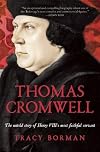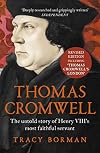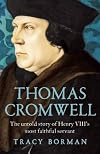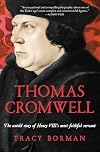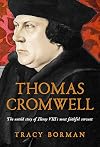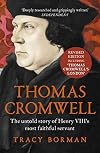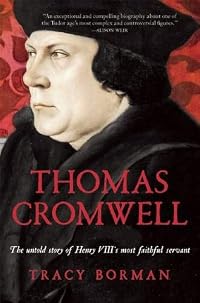
Thomas Cromwell: The Untold Story of Henry VIII's Most Faithful Servant
by Tracy Borman
On This Page
Description
Thomas Cromwell has captured the imagination for centuries, including recently in Hilary Mantel's Wolf Hall and its stage and television adaptations. Long reviled as a Machiavellian schemer who stopped at nothing in his quest for power, in Thomas Cromwell, Tracy Borman reveals a different side of one of the most notorious figures in history: that of a caring husband and father, a fiercely loyal servant and friend, and a revolutionary who helped make medieval England into a modern state. Born show more in the mid-1480s to a lowly blacksmith, Cromwell left home to make his fortune abroad, serving in the French army, and working in Florence at the height of the Renaissance. Back in England, Cromwell built a flourishing legal practice, became the protégé of Cardinal Thomas Wolsey, and went on to become Henry VIII's top aide, where he was at the heart of the most momentous events of his time, from the Reformation to the downfall of Anne Boleyn. His seismic political, religious, and social reforms can still be felt today. show lessTags
Recommendations






Member Reviews
This is a masterful biography of one of the most influential non-Royal figures in British history. His profile is high at the moment, what with the success of Hilary Mantel's novels and the TV adaptation on our screens at the time of my reading this, so this is a very timely book. It offers a very balanced assessment of a controversial figure whose stock has gone from one extreme to the other in the near five centuries since his death, being very high during the Protestant ascendancy of the late 16th, 17th and 18th centuries, very low during the Romantic revival of the 19th, and more balanced in the 20th century and beyond.
Cromwell was a man of his time, holding religious convictions of a type that led to his believing that his show more opponents should be crushed - but then so did Thomas More on the other side of the religious divide, and his later nemeses such as the Duke of Norfolk and Stephen Gardiner. At the same time, Cromwell was nearly always careful not to go beyond the bounds of King Henry VIII's religious policy at any given moment - and when he did, it contributed towards his final downfall in 1539-40 (though he had a brief elevation as Earl of Essex during his final two months at liberty from April to June of the latter year). Undoubtedly, he was ruthless, as shown by his operation to bring down Anne Boleyn in April-May 1536 which, looked at dispassionately, was a highly skilled and breathtakingly rapidly planned and executed manoeuvre. At the same time, he showed great personal charity towards the poor, and also executed laws to promote social justice and to organise the Medieval model of government into something closer to a modern departmental system. He also masterminded the first introduction of the Bible in English into parish churches. At a personal level, he was loyal to his friends and family, and even to his mentor Cardinal Wolsey after his fall from grace. Much of the antagonism towards him from his noble rivals at the top of politics derived from his having pulled himself up from his humble origins as the son of a disreputable Putney blacksmith through intelligence and hard work to the notice of first Wolsey and then King Henry. Norfolk and the others could never forgive someone from such lowly origins who had come to be the most influential adviser to the King over a period of nearly a decade. All in all, I think Cromwell was more sinned against than sinning and this biography recognises his very important place in British history. show less
Cromwell was a man of his time, holding religious convictions of a type that led to his believing that his show more opponents should be crushed - but then so did Thomas More on the other side of the religious divide, and his later nemeses such as the Duke of Norfolk and Stephen Gardiner. At the same time, Cromwell was nearly always careful not to go beyond the bounds of King Henry VIII's religious policy at any given moment - and when he did, it contributed towards his final downfall in 1539-40 (though he had a brief elevation as Earl of Essex during his final two months at liberty from April to June of the latter year). Undoubtedly, he was ruthless, as shown by his operation to bring down Anne Boleyn in April-May 1536 which, looked at dispassionately, was a highly skilled and breathtakingly rapidly planned and executed manoeuvre. At the same time, he showed great personal charity towards the poor, and also executed laws to promote social justice and to organise the Medieval model of government into something closer to a modern departmental system. He also masterminded the first introduction of the Bible in English into parish churches. At a personal level, he was loyal to his friends and family, and even to his mentor Cardinal Wolsey after his fall from grace. Much of the antagonism towards him from his noble rivals at the top of politics derived from his having pulled himself up from his humble origins as the son of a disreputable Putney blacksmith through intelligence and hard work to the notice of first Wolsey and then King Henry. Norfolk and the others could never forgive someone from such lowly origins who had come to be the most influential adviser to the King over a period of nearly a decade. All in all, I think Cromwell was more sinned against than sinning and this biography recognises his very important place in British history. show less
This is a thoroughly researched, balanced and informative biography of Thomas Cromwell. Much of the historic evidence is opinion recorded by Cromwell's contemporaries, and Borman weighs this evidence fairly. Her writing is clear and crisp - she makes her points well and doesn't wrap them up in flummery. I like that she acknowledged the inspiration she gained to research Cromwell from Hilary Mantel's novels. I read this biography for the same reason. It has been a delight to discover that Mantel's imagined Cromwell is grounded in fact. Borman presents a less romantic Cromwell, of course, but assesses his actions against the times he lived through and against the evidence of his character that can be gleaned from original source material. show more Through the way they were taught when I was at school, I have always thought the Tudors were dull, but Borman has brought the era to life for me and put human flesh on the dry bones of history. show less
Excellent biography of a controversial figure in English history. Its a warts and portrayal of a seasoned and skilful bureaucrat of humble origins who rose to become the most powerful man in the land after the king. Pragmatic and ruthless in the extreme when he wanted to be, Cromwell was also a loyal friend, a devoted father and a man who genuinely thought he was doing the right thing by his king and country. In the end he soared too high and attained too much power, and those courtiers of aristocratic birth who despised him as a low-born commoner were only too eager to consign him to the headsman's axe when the king's fickle favour deserted him. Apart from Cromwell's life story it is a fascinating and nuanced look at Tudor politics and show more society, where merely uttering the wrong words at the wrong time could easily have you in the Tower awaiting an appointment with the block. Anyone who loved Wolf Hall will find this
book a gripping read, this is the real Cromwell and his world. show less
book a gripping read, this is the real Cromwell and his world. show less
With so many Tudor histories focusing on Henry VIII and his wives, it's refreshing to read about one of Henry's administrators, especially one whose profile has risen in the past few years (considering the books published by Hiliary Mantel.) A very pragmatic Thomas Cromwell emerges in this biography, discussing what is know of the man's early life, but focusing on his remarkable rise and dominance in Tudor politics. A good, accessible history which plenty of detail for average readers and scholars alike.
Thomas Cromwell, favorite of Henry VIII, is presented in a serious well referenced historical work with very little fictional account. True, when Borman relates what some of the characters were thinking during a certain event, the thoughts are fictional re-creation but are based on documents which are not only referenced in footnotes and bibliography but in many cases with document wording inserted in the main text. This should be fascinating for students of the evolution of the English language.
There is a mystery in this work. How can a man so powerful have missed the fact of imminent demise? This exploration of Cromwell’s personality examines the important anchors which lead to some predictability in his behavior. 1) He was a show more businessman motivated by profit. Not considered corrupt when measured relative to others of his time and station, but neither did he live in poverty. Today, we would call him goal oriented. Success in business both predated and antedated skillful political maneuvering. 2) He was loyal to his friends and those who had helped him; some would say fiercely loyal. 3) He was a faithful, loyal family man at a time when this was not the norm. 4) He was very religious. There were a few religious anomalies, one surprise is revealed near the end of the book (no spoiler from me). 5) He was loyal to Henry VIII. This may not have been one of his better choices and this is where the mystery comes in. How could he have read the sovereign so wrong? How could he been so accepting of his ultimate fate? I do not feel this was answered for me, but I certainly came to understand the five various loyalties and the way they were woven into Cromwell’s political dealings.
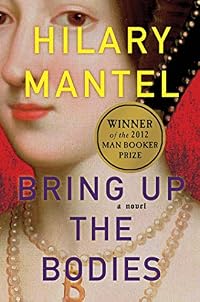
I am not well organized as far as reading plans. THE SECRET DIARY OF ANNE BOLEYN led me to BRING UP THE BODIES. That sparked the interest in Cromwell that led to this book. Next will be WOLF HALL, then a trilogy by Peter Ackroyd on a more far ranging history of England. I need to plan my readings better to avoid a time warp feeling show less
There is a mystery in this work. How can a man so powerful have missed the fact of imminent demise? This exploration of Cromwell’s personality examines the important anchors which lead to some predictability in his behavior. 1) He was a show more businessman motivated by profit. Not considered corrupt when measured relative to others of his time and station, but neither did he live in poverty. Today, we would call him goal oriented. Success in business both predated and antedated skillful political maneuvering. 2) He was loyal to his friends and those who had helped him; some would say fiercely loyal. 3) He was a faithful, loyal family man at a time when this was not the norm. 4) He was very religious. There were a few religious anomalies, one surprise is revealed near the end of the book (no spoiler from me). 5) He was loyal to Henry VIII. This may not have been one of his better choices and this is where the mystery comes in. How could he have read the sovereign so wrong? How could he been so accepting of his ultimate fate? I do not feel this was answered for me, but I certainly came to understand the five various loyalties and the way they were woven into Cromwell’s political dealings.
I am not well organized as far as reading plans. THE SECRET DIARY OF ANNE BOLEYN led me to BRING UP THE BODIES. That sparked the interest in Cromwell that led to this book. Next will be WOLF HALL, then a trilogy by Peter Ackroyd on a more far ranging history of England. I need to plan my readings better to avoid a time warp feeling show less
This is actually quite a nice and balanced biography of Cromwell. He isn't white washed, he isn't made a saint. It is pretty darn good. And you don't need a background in the Tudors to read it.
I found this somewhat hard to get through. Part of that was the large number of quotations in Tudor English. Cromwell was an interesting person, and this was a different angle on the history of Henry VIII.
(I am not familiar with Mantel's novels.)
(I am not familiar with Mantel's novels.)
Members
- Recently Added By
Lists

Best Biographies
216 works; 26 members

Books Read in 2016
4,666 works; 199 members
Author Information

22 Works 2,725 Members
Tracy Borman is a British writer and historian. She studied and taught history at the University of Hull and was awarded a Ph. D in 1997. Tracy is now Chief Executive of the Heritage Education Trust, a charity that encourages children to visit and learn from historic properties. She has recently been appointed Interim Chief Curator for Historic show more Royal Palaces, the charity that manages Hampton Court Palace, the Tower of London, Kensington Palace, Kew Palace and the Banqueting House, Whitehall. Her works include: Elizabeth's Women: The Hidden Story of the Virgin Queen, Henrietta Howard: King's Mistress, Queen's Servant, and Witches: A Tale of Sorcery, Scandal and Seduction. (Bowker Author Biography) show less
Some Editions
Common Knowledge
- Original publication date
- 2014-01
- People/Characters
- Thomas Cromwell, 1st Earl of Essex; Henry VIII, King of England; Thomas Wolsey; Anne Boleyn; Anne of Cleves
- Important places
- England, UK
Classifications
- Genres
- History, Biography & Memoir, Nonfiction, General Nonfiction, Religion & Spirituality
- DDC/MDS
- 942.052092 — History & geography History of Europe England and Wales England 1485-1603, Tudors Henry VIII 1509-47
- LCC
- DA334 .C9 .B67 — History of Europe, Asia, Africa and Oceania Great Britain History of Great Britain England History By period Modern, 1485- Tudors, 1485-1603
- BISAC
Statistics
- Members
- 421
- Popularity
- 72,983
- Reviews
- 8
- Rating
- (4.05)
- Languages
- English
- Media
- Paper, Audiobook, Ebook
- ISBNs
- 13
- UPCs
- 2
- ASINs
- 9