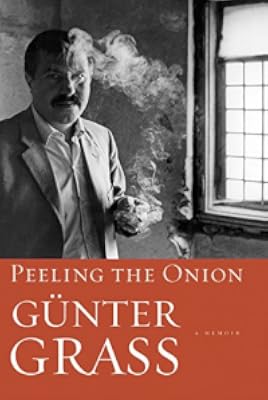
Peeling the Onion
by Günter Grass
On This Page
Description
Nobel Prize-winning author Gunter Grass remembers his early life, from his boyhood in a cramped two-room apartment in Danzig through the late 1950s, when The Tin Drum was published. During the Second World War, Grass volunteered for the submarine corps at the age of fifteen but was rejected; two years later, in 1944, he was instead drafted into the Waffen-SS. Taken prisoner by American forces as he was recovering from shrapnel wounds, he spent the final weeks of the war in an American POW show more camp. After the war, Grass resolved to become an artist and moved with his first wife to Paris, where he began to write the novel that would make him famous. Full of the bravado of youth, the rubble of postwar Germany, the thrill of wild love affairs, and the exhilaration of Paris in the early fifties, this book reveals Grass at his most intimate.--From publisher description. show lessTags
Recommendations

































Member Reviews
Günter Grass is one of the best novelists to come out of Germany. In PEELING THE ONION, Grass’ memoir of his life up until the 1959 publishing of his first major novel, THE TIN DRUM, he reflects on the objects, people, and situations that ultimately wove their way into his stories. As in the peeling of an onion, one layer leads to the next, but all are part and parcel of the whole, which is his life.
It helps if one is familiar with Grass’ writings before reading this memoir. I myself have read THE TIN DRUM, and I found this memoir fascinating in the revelations of what was behind some of the details in that wonderful story. The style is almost free-flowing reminiscing, but in the end Grass masterfully wraps it all together as if show more carefully closing up the onion layers he had slowly peeled away.
I love Grass’ writing. It feels like he is speaking directly to me. It’s as if we were talking over a cup of coffee. He isn’t a perfect man and he expects us to understand that without having to make excuses. I’m so glad he wrote this book! show less
It helps if one is familiar with Grass’ writings before reading this memoir. I myself have read THE TIN DRUM, and I found this memoir fascinating in the revelations of what was behind some of the details in that wonderful story. The style is almost free-flowing reminiscing, but in the end Grass masterfully wraps it all together as if show more carefully closing up the onion layers he had slowly peeled away.
I love Grass’ writing. It feels like he is speaking directly to me. It’s as if we were talking over a cup of coffee. He isn’t a perfect man and he expects us to understand that without having to make excuses. I’m so glad he wrote this book! show less
A magnificent and brutally honest memoir. Having been conscripted into the SS youth, the author describes what it was to be an adolescent in a war. He was forced into service, yet makes no bones about having believed in Nazi ideology, until the horrors of the war, having to face the reality of concentration camps, and the corruption he witnessed from politicians and profiteers afterward, transform the young man he became in post-war Germany, into an accomplished painter and sculptor, and anti-war political activist. He spends the rests of his life shamed and trying to redress his youthful infatuation with Fascist ideology. The book, by the way, is beautifully illustrated with his sketches. Everybody can learn from this story about the show more follies of youth and how easy it is to manipulate the young with group-belonging "ideals". In the end, the book is an elegy to his mother, who never failed to believe in him and love him, and who died tragically before he was able to truly appreciate her. Her love--and death--fueled and inspired him to become a writer. As for me, I plan to read ALL his books! show less
In 2006, Grass caused controversy with his disclosure in this autobiography of his not unwilling Waffen-Schutzstaffel service during World War II, which he had kept a secret until publishing this memoir that year. I have been interested since to read it and finally got around to it. For his WW II service he is reflective, humble, and repentant. I don't have a problem with it as he acknowledges a misguided youthful jingoism.
In his full life, he also touches on his love of jazz which includes a moment where Louis Armstrong joined in on a jam.
Before that, Grass' war service ended in a POW camp where he feels he came across another of Hitler's veterans:
In his full life, he also touches on his love of jazz which includes a moment where Louis Armstrong joined in on a jam.
Before that, Grass' war service ended in a POW camp where he feels he came across another of Hitler's veterans:
...the friend I had so longed to have in the dark pine wood, who now actually had ashow more
name, Joseph, and spoke a bookish, Bavarian-tinted German. We talked about God and the world, about our experiences as altar boys – his permanent, mine very much auxiliary. He believed I thought nothing was holy.show less
Grass returns to the topic of his conversations with this Joseph from Bavaria later:
Once, while still at the Bad Aibling camp, I got a bag of caraway seeds in exchange for three Camels and chewed them in memory of the caraway sauerkraut recipe of my missing master, though I saved some from the friend I’d made during those endless rains under the tarp, when we told each other’s fortunes with the three dice. I can still see him – Joseph – and hear his unfailingly soft, even gentle voice. I can’t get him out of my mind.
I wanted to be this, he that.
I said, There are many truths.
He said, There is only one.
I said, I don’t believe in anything anymore.
He saddled one dogma onto the next.
Joseph, I cried, you sound like an inquisitor. Or are you aiming higher?
He always beat me at dice, quoting Saint Augustine when he threw them, as if he had the Confessions in Latin at his side.
http://nwhyte.livejournal.com/1644670.html
A fascinating autobiography - though in fact it covers only the years from the outbreak of the second world war, in the late 1930s, to Grass's first marriage 20 years later. I don't think you can read it without also reading or having read The Tin Drum, which has a lot of autobiographical elements in it, here carefully untangled and explained. Grass of course did not have the option of not growing up; he ended up rapidly inducted into the SS as the Eastern Front crumbled, hints at being interned together with the future Pope Benedict XVI, and was cast adrift in the Rhineland like so many other easterners after the war ended, finding his way to literature through a sculpture career which began show more with making tombstones. Often horrifying, at times sexy and funny, it's not quite the book I expected but I think it is a hugely important contribution to understanding how Germany has become the sort of country it is now from the country it once was. The book's revelation that Grass had been in the SS was apparently news when it came out, though this basically illustrates the whole problem of Vergangenheitsbewältigung. Strongly recommended. show less
A fascinating autobiography - though in fact it covers only the years from the outbreak of the second world war, in the late 1930s, to Grass's first marriage 20 years later. I don't think you can read it without also reading or having read The Tin Drum, which has a lot of autobiographical elements in it, here carefully untangled and explained. Grass of course did not have the option of not growing up; he ended up rapidly inducted into the SS as the Eastern Front crumbled, hints at being interned together with the future Pope Benedict XVI, and was cast adrift in the Rhineland like so many other easterners after the war ended, finding his way to literature through a sculpture career which began show more with making tombstones. Often horrifying, at times sexy and funny, it's not quite the book I expected but I think it is a hugely important contribution to understanding how Germany has become the sort of country it is now from the country it once was. The book's revelation that Grass had been in the SS was apparently news when it came out, though this basically illustrates the whole problem of Vergangenheitsbewältigung. Strongly recommended. show less
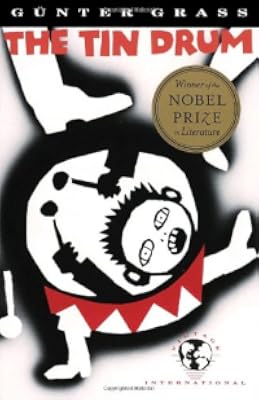
They had tried doing it by themselves in her room with a cheap onion, but it wasn't the same. You needed an audience. It was so much easier to cry in company. It gave you a real sense of brotherhood in sorrow when to the right and left of you and in the gallery overhead your fellow students were all crying their hearts out. The Tin Drum
The Goodreads/Amazon imbroglio only shocked me by being so predictable. Not to sound like a hungover Schopenhauer, but decay and disagreeable ends are to be expected, aren't they? When Herr Grass acknowledged that he'd been in the SS, my knees did feel weak. I did call most everything into question, then I kept on. Grass was in NYC shortly thereafter, he gave a reading from Peeling The Onion and my best show more friend Joel attended, bought me copy and had the author sign such. I was moved by his memoir. I suffer from being human myself. Dark times place everything in crisis. Normal metrics distort and blur. show less
The Goodreads/Amazon imbroglio only shocked me by being so predictable. Not to sound like a hungover Schopenhauer, but decay and disagreeable ends are to be expected, aren't they? When Herr Grass acknowledged that he'd been in the SS, my knees did feel weak. I did call most everything into question, then I kept on. Grass was in NYC shortly thereafter, he gave a reading from Peeling The Onion and my best show more friend Joel attended, bought me copy and had the author sign such. I was moved by his memoir. I suffer from being human myself. Dark times place everything in crisis. Normal metrics distort and blur. show less
Unreliable memoirs; but not merely of a houseboat on London's bohemian fringe. Here it's coming of age in Nazi Germany and serving in the Waffen SS. Peeling back layers of onion skin is one of several metaphors of detachment Grass resorts to for not recalling quite what he did or why, as is switching to the third person or passive voice. Yet he can portray clearly the mindset and motives of the future Pope Ratzinger whose path he briefly crosses in a postwar internment camp. It is a long time ago but more candour would have been better. Still, some interesting passages, and plenty of "Tin Drum" prehistory.
I felt there was something lacking in this memoir, as if he wrote it because it was expected of him.
Members
- Recently Added By
Lists

Best Autobiographies and Memoirs
370 works; 67 members

Books Set in Germany
74 works; 12 members

German Literature
518 works; 56 members

Llibres que he llegit el 2020
50 works; 1 member
Author Information

213+ Works 22,872 Members
Günter Wilhelm Grass was born on October 16, 1927 in the Free City of Danzig, which is now Gdansk, Poland. He was a member of the Hitler Youth and at the age of 17, he was drafted into the German army. Near the end of the war, he served as a tank gunner in the 10th SS Panzer Division. He was captured by the Americans and forced to visit the newly show more liberated Dachau concentration camp. After his release from a POW camp in 1946, he worked in a potash mine and as a stonemason's apprentice and studied painting and sculpture in Düsseldorf. His first novel, The Tin Drum, was published in 1959. It was adapted into a film and won the Academy Award for Best Foreign Film in 1979. His other works included Cat and Mouse, Dog Years, From the Diary of a Snail, The Flounder, The Rat, and Crabwalk. He also wrote a memoir entitled Peeling the Onion. He received the Nobel Prize for Literature in 1999. He was also a political activist and liberal provocateur. He advocated for environmental conservation, debt relief for poor countries, and generous policies regarding political asylum. He died on April 13, 2015 at the age of 87. (Bowker Author Biography) show less
Some Editions
Awards and Honors
Awards
Distinctions
Series
Belongs to Publisher Series
Common Knowledge
- Canonical title
- Peeling the Onion
- Original title
- Beim Häuten der Zwiebel
- Alternate titles
- Peeling the Onion
- Original publication date
- 2006 (original German) (original German); 2007 (English: Heim) (English: Heim)
- People/Characters*
- Günter Grass
- Important places
- Danzig; Danzig, Prussia; Danzig, Prussia, German Empire; Danzig (Free City); Gdańsk, Pomeranian Voivodeship, Poland; Berlin, Germany (show all 7); Düsseldorf, North Rhine-Westphalia, Germany
- Blurbers
- Irving, John
- Original language
- German
*Some information comes from Common Knowledge in other languages. Click "Edit" for more information.
Classifications
- Genre
- Biography & Memoir
- DDC/MDS
- 838.91409 — Literature & rhetoric German & related literatures German miscellaneous writings 1900- 1900-1990 1945-1990 Individual authors not limited to one specific form : description; critical appraisal; biography; collected works
- LCC
- PT2613 .R338 .Z46 — Language and Literature German, Dutch and Scandinavian literatures German literature Individual authors or works 1860/70-1960
- BISAC
Statistics
- Members
- 1,005
- Popularity
- 26,012
- Reviews
- 18
- Rating
- (3.84)
- Languages
- 18 — Catalan, Chinese, Danish, Dutch, English, Finnish, French, German, Hebrew, Hungarian, Italian, Lithuanian, Norwegian (Bokmål), Portuguese, Romanian, Russian, Spanish, Swedish
- Media
- Paper, Audiobook, Ebook
- ISBNs
- 51
- ASINs
- 12