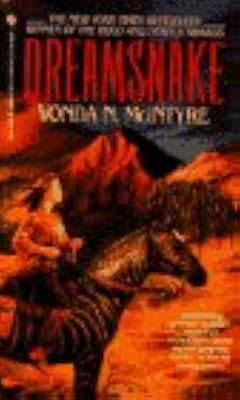
Dreamsnake
by Vonda N. McIntyre
On This Page
Description
On an Earth scarred by nuclear war, Snake harnesses the power of venom to cure illnesses and vaccinate against disease. The healer can even ease patients into death with the power of her dreamsnake. But she is not respected and trusted by all, and when she tries to help a sick nomad child, the frightened clan kills her dreamsnake. Ashamed of being misjudged and grieving the loss of her dreamsnake, Snake has one choice to maintain her livelihood: she must travel to the city, which jealously show more guards its knowledge. And before she faces the prejudices and arrogance of the people there, Snake must make her way across a barren desert, surviving storms and radiation poisoning, helping those she can-all while a madman stalks her every. show lessTags
Recommendations






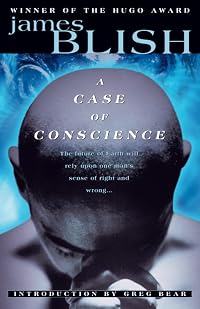




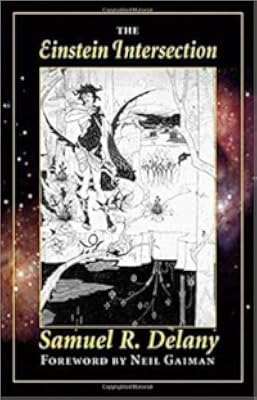


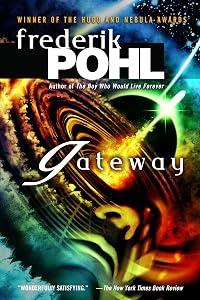
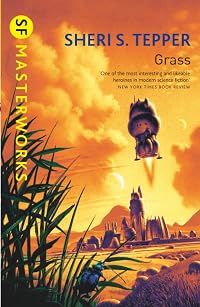






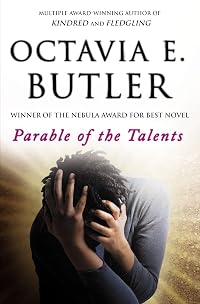





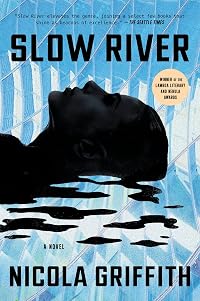


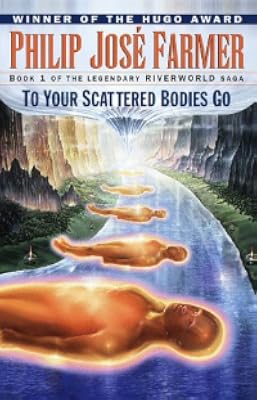
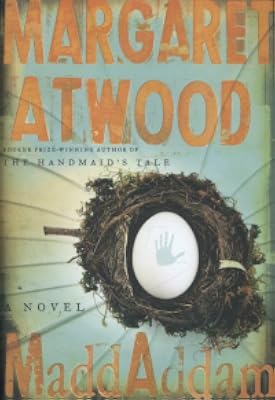


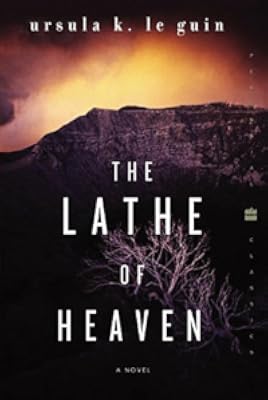

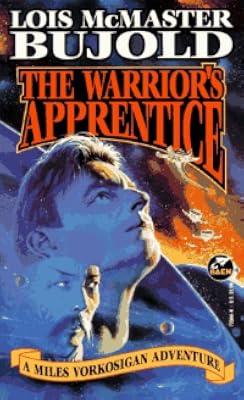

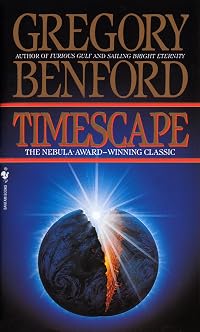

Member Recommendations
Member Reviews
I thoroughly enjoyed this old sci fi. As a snakekeeper, I grew quite fond of the main character handling her healing snakes.
The plot was enthralling, and the imagery was vivid. I could never forget Snake's adopted daughter Melissa, she was such a beautiful soul. I loved what the author did with the intertwining of all these memorable characters, with just enough drama to keep you on edge.
I recently had my own dream of snakes: my bed was full of them coiling together, and I attempted to tame them, and while I was getting bitten, it occured to me that I was also immune to their venom. It was delightful! I would love to read another sci fi from this realm, but I doubt I will enjoy it as much as this one!
The plot was enthralling, and the imagery was vivid. I could never forget Snake's adopted daughter Melissa, she was such a beautiful soul. I loved what the author did with the intertwining of all these memorable characters, with just enough drama to keep you on edge.
I recently had my own dream of snakes: my bed was full of them coiling together, and I attempted to tame them, and while I was getting bitten, it occured to me that I was also immune to their venom. It was delightful! I would love to read another sci fi from this realm, but I doubt I will enjoy it as much as this one!
I abandoned this at about page 183. Why? I fully admit much of it is me, in this particular mood in my life at this moment. But some of the responsibility needs to go to McIntyre for writing what 100% seems like Women's Sci-Fi, 1970s-Style. Call it the Female version of Dune. Not to mention the novel-length 'plot' feels a great deal a series of short stories strung together into a novel. It turns out that my feeling was not inaccurate; the book sprung out of an award-winning novellete.
What's Women's Sci-Fi, you ask? Oh, it's simple stuff; it's the stuff that's about being a female and owning (female) power. In the 1970s, it also includes sexual inequity, possibly insta-love with a man who struggles with women's equity, and quite show more probably about rape. It's always about being a biological and gendered girl in a structure that resembles the Quest of the (Male) Hero. If I sound dismissive, it's only because I grew up in heavily genderized sci-fi and it appears that I can't even revisit it for long. It reminded me a bit of Carol Nelson Douglas' [b:Six of Swords|1462462|Six of Swords|Carole Nelson Douglas|https://i.gr-assets.com/images/S/compressed.photo.goodreads.com/books/1183859483l/1462462._SY75_.jpg|1592007] series.
So the premise is that this woman, nicknamed 'Snake,' is a healer, who uses her specially bred snakes and healer training to basically create individually tailored vaccines and cures. It's pretty fucking brilliant for 1978, I have to say. Here we are, 2021 and CAR-T engineered cells are all the rage for curing cancer, which is essentially the same idea. At any rate, best I can guess, these 'dreamsnakes' actually come from alien/foreigners to the world who are holed up in a city that is controlled by a wealthy, hierarchical system. Shocking, I know.
This newly-minted healer is out, far past anywhere known to her, the post-apocalyptic wastelands, bringing vaccines and healing to the people trying to make a living on the edges of the world. Unfortunately, something not unsurprising happens to her dreamsnake, at almost the exact moment she forges a deep and lasting insta-love, and she's left somewhat bereft.
Traveling happens, followed by an interlude with a trio of traders, where we can see how a three-way relationship may work. Then travel and an interlude at a village where the headman has been bold enough to ban indentured servitude but is blind to its inequities in his own enclave. We probably learn something about how awful and unequitable male relationships can be in this section. Back at the farm, the insta-love has decided to set off in pursuit of his object. The best thing I can say about this is that he's portrayed in a very typically 'feminine' way, being very family-minded, relatively powerless and a caretaker spirit. Yay.
Then we set up the encounter with a 'madman.' I've no doubt I would learn some other thing about how generally male-female dynamics are abusive and sucky at this point, as the 'madman' uses the girl she rescued as an emotional lever.
What I've learned in my old age is that the most insidious chains are the ones we apply ourselves. I appreciate the consciousness-raising, of a sorts, and the idea that Snake is the hero in her own story. But the actual story-telling is too weak, and the plot points are too tired and familiar for me to want to stay in the world any longer, because it's not going anywhere I haven't already been. show less
What's Women's Sci-Fi, you ask? Oh, it's simple stuff; it's the stuff that's about being a female and owning (female) power. In the 1970s, it also includes sexual inequity, possibly insta-love with a man who struggles with women's equity, and quite show more probably about rape. It's always about being a biological and gendered girl in a structure that resembles the Quest of the (Male) Hero. If I sound dismissive, it's only because I grew up in heavily genderized sci-fi and it appears that I can't even revisit it for long. It reminded me a bit of Carol Nelson Douglas' [b:Six of Swords|1462462|Six of Swords|Carole Nelson Douglas|https://i.gr-assets.com/images/S/compressed.photo.goodreads.com/books/1183859483l/1462462._SY75_.jpg|1592007] series.
So the premise is that this woman, nicknamed 'Snake,' is a healer, who uses her specially bred snakes and healer training to basically create individually tailored vaccines and cures. It's pretty fucking brilliant for 1978, I have to say. Here we are, 2021 and CAR-T engineered cells are all the rage for curing cancer, which is essentially the same idea. At any rate, best I can guess, these 'dreamsnakes' actually come from alien/foreigners to the world who are holed up in a city that is controlled by a wealthy, hierarchical system. Shocking, I know.
This newly-minted healer is out, far past anywhere known to her, the post-apocalyptic wastelands, bringing vaccines and healing to the people trying to make a living on the edges of the world. Unfortunately, something not unsurprising happens to her dreamsnake, at almost the exact moment she forges a deep and lasting insta-love, and she's left somewhat bereft.
Traveling happens, followed by an interlude with a trio of traders, where we can see how a three-way relationship may work. Then travel and an interlude at a village where the headman has been bold enough to ban indentured servitude but is blind to its inequities in his own enclave. We probably learn something about how awful and unequitable male relationships can be in this section. Back at the farm, the insta-love has decided to set off in pursuit of his object. The best thing I can say about this is that he's portrayed in a very typically 'feminine' way, being very family-minded, relatively powerless and a caretaker spirit. Yay.
Then we set up the encounter with a 'madman.' I've no doubt I would learn some other thing about how generally male-female dynamics are abusive and sucky at this point, as the 'madman' uses the girl she rescued as an emotional lever.
What I've learned in my old age is that the most insidious chains are the ones we apply ourselves. I appreciate the consciousness-raising, of a sorts, and the idea that Snake is the hero in her own story. But the actual story-telling is too weak, and the plot points are too tired and familiar for me to want to stay in the world any longer, because it's not going anywhere I haven't already been. show less
The cover above is the edition of "Dreamsnake" that snagged my attention back in 1980. The graphics were original and intriguing. Winning the Hugo AND the Nebula awards placed it alongside "Dune ", "The Left Hand of Darkness", "Ringworld " and "The Dispossessed " all by authors I knew well. Yet I had never heard of Vonda McIntyre.
I bought the book, was hooked from the first scene, read it compulsively for the next few days and have carried it with me from house to house ever since.
When I came across the audiobook version (with a much less inspired cover), I decided to find out whether the book was impressive because it was of its time or whether it was simply a good book.
The audiobook itself must have been pioneering as it was recorded show more by Blackstone Audio in 1999. You can hear its age from time to time in the sound quality but Anna Fields' talent as a narrator more than makes up for that.
I'm happy to say that "Dreamsnake" is just as good now as I remember it being then.
Even on the first read, I was aware of how deftly Vonda McIntyre tells her tale. She builds a complete view of a complex world, not by using info-dumps/quotes from historical chronicles, but by showing what people take for granted and what they question.
Back then I was also impressed by the liberal sexual mores of societies that embraced, polyamory and required adults to have control over their own reproductive capabilities. These were radical ideas back then but "Dreamsnake" neither sensationalises them nor pushes them as dogma.
On a second read, I became aware that Vonda McIntyre had done something truly remarkable that I didn't notice the first time around: she has written an exciting adventure that calls for bravery and self-sacrifice in the face of physical danger but where problems are never resolved through violence.
The strongest themes in this book are freedom, responsibility, and mutual obligation. Yet the book also reads as a quest-based adventure.
"Snake", the Healer in the book, remains one of my favourite characters in Science Fiction. She is honest, brave, determined to help others but not superhuman. She is prone to anger, guilty of arrogance from time to time and often endangers herself and others because of a fundamentally naive world-view. Yet she is the kind of person who will always inspire fierce loyalty without ever seeking to do so.
"Dreamsnake" is a short book by modern SF standards. On the re-read, I was aware of how much more I wanted to know about this world and the people in it. There is enough here to power at least a trilogy. "Dreamsnake" was actually built on a short story "Of Mist and Grass and Sand" which perhaps explains its compact power and there were no sequels.
If you are an SF fan, you should count "Dreamsnake" as part of the cannon.
If you're not sure if SF is for you, give "Dreamsnake" a try and see if Snake and her serpents can win your heart the way they did mine. show less
The story takes us to a world that has been devastated by nuclear warfare. Scattered tribes live in deserts and mountains. There is only one city ("Center") of note. Healthcare is almost non-existent except for the healers. The healers devote themselves to travel, giving out vaccinations and treating people. Genetically engineered snakes significantly augment the healer's medical skills. There's just one problem - the dreamsnake - is in short supply. The dreamsnakes comes from "off-world," and there are not enough available for the healers to use.
The long journeys of the novel -
Reading this 1970s novel in the 2020s, I can't help but see the dreamsnakes as a metaphor for the opiod crisis. Dreamsnakes (like powerful pain medication) can be used to alleviate suffering when used with care. Yet, both can also become crippling addictions that destroy lives.
My one critique was the very light touch world building. Very little of the backstory is ever revealed. How long ago was the nuclear war? What is the story of these "offworlders" who introduced dreamsnakes? How do the healers have genetic engineering/manipulation technology but nearly nothing else advanced?
One of the blurbs on the back from Frank Herbert describes this book as "readable", and it is just about that, in the sense that Keystone Light is "drinkable" or Taco Bell "edible." Treacly characters, flopsy world-building, and shoddy writing combine for a book that is just embarrassing. What do I mean?
In a post-apocalyptic Earth, ravaged by nuclear war and contact with aliens, Snake is a Healer who used advanced biotechnology in the form of altered snake venom to cure disease. The dreamsnake is a strange alien creature, with a mind-altering bite that brings painless death to those who cannot be cured. Crude and superstitious herders kill Snake's precious dreamsnake, and so she wanders around the wasteland helping out people and trying show more to find another dreamsnake. Snake is really just the best. She cares about everybody: Snake does what she can for an prospector with a broken back, teaches a nervous young man about love, saves a dying lord, rescues a child from a sexually abusive guardian, fulfills a dying wish, helps an addict, and breaks up a cult that is abusing the powers of the dreamsnake, before finding Tru Wuv. She rides a fancy racehorse when she's not riding the tiger-striped pony she genetically engineered. But Snake's not perfect: she just cares so much it makes her tired and lonely; but she'd never abuse her healing powers in the wasteland for personal benefit; and sometimes she hurts from arthritis brought on by her snake-venom-juiced immune system.
The wasteland is the nicest post-apocalypse I've seen, with honest tribes of nomads, peaceful and prosperous cities, and the right craftsman when you need one. The only hints of conflict or desperation come from Central City, the sole humans who trade with aliens who are divided into paranoid clans. Of course, Snake doesn't actually go into Central City, or interact with them beyond the gatekeeper, because conflict isn't interesting or something. By the way, accidental pregnancy (and related drama) is avoided through "biocontrol" techniques that are explained in detail during awkward sex scenes. The atomic apocalypse, the aliens, the hints of more advanced technologies and hidden schools of esoteric knowledge, seem to be cargo culted from the genre at large rather than included for any actual reason. The seemingly benevolent Healers, like Snake, limit their numbers to the scarce dreamsnakes, rather than using their "mundane" techniques like tumor-melting vipers and vaccine-producing rattlesnakes, to serve as many people as possible. Some humanitarians!
As for the writing, it is overall juvenile, and in places cringe-worthy. And even though the language is simple, it's unclear in critical descriptions of action and physicality. I found myself flipping back a page to check where people were relative to each other, and who had been shot with a crossbow, multiple times. A few nice descriptions of deserts can't save this. The idea of the dreamsnake is woefully underused. We're told Snake needs one to be a healer, but she gets on perfectly well saving lives without one for the entire novel. Compared to other Hugo stinkers, Fritz Lieber at least writes with energy, and the ponderous psuedo-intellectualism of "yeast vat accident Mark Clifton’s They’d Rather Be Right" (props to Scott Lynch) fit the scope of the topics. Dreamsnake can't even live up to it's meager ambitions.
On an interesting historical note, 4 of the 5 Hugo nominees this year were women, with Vonda McIntyre, Ann McCaffrey, C.J. Cherryh, and a withdrawn entry from James Tiptree Jr. Both McCaffrey and Cherryh submitted the third book in a trilogy, which may have hurt their chances in the voting. Neither are my favorite authors, but they have to be better than this book. show less
In a post-apocalyptic Earth, ravaged by nuclear war and contact with aliens, Snake is a Healer who used advanced biotechnology in the form of altered snake venom to cure disease. The dreamsnake is a strange alien creature, with a mind-altering bite that brings painless death to those who cannot be cured. Crude and superstitious herders kill Snake's precious dreamsnake, and so she wanders around the wasteland helping out people and trying show more to find another dreamsnake. Snake is really just the best. She cares about everybody: Snake does what she can for an prospector with a broken back, teaches a nervous young man about love, saves a dying lord, rescues a child from a sexually abusive guardian, fulfills a dying wish, helps an addict, and breaks up a cult that is abusing the powers of the dreamsnake, before finding Tru Wuv. She rides a fancy racehorse when she's not riding the tiger-striped pony she genetically engineered. But Snake's not perfect: she just cares so much it makes her tired and lonely; but she'd never abuse her healing powers in the wasteland for personal benefit; and sometimes she hurts from arthritis brought on by her snake-venom-juiced immune system.
The wasteland is the nicest post-apocalypse I've seen, with honest tribes of nomads, peaceful and prosperous cities, and the right craftsman when you need one. The only hints of conflict or desperation come from Central City, the sole humans who trade with aliens who are divided into paranoid clans. Of course, Snake doesn't actually go into Central City, or interact with them beyond the gatekeeper, because conflict isn't interesting or something. By the way, accidental pregnancy (and related drama) is avoided through "biocontrol" techniques that are explained in detail during awkward sex scenes. The atomic apocalypse, the aliens, the hints of more advanced technologies and hidden schools of esoteric knowledge, seem to be cargo culted from the genre at large rather than included for any actual reason. The seemingly benevolent Healers, like Snake, limit their numbers to the scarce dreamsnakes, rather than using their "mundane" techniques like tumor-melting vipers and vaccine-producing rattlesnakes, to serve as many people as possible. Some humanitarians!
As for the writing, it is overall juvenile, and in places cringe-worthy. And even though the language is simple, it's unclear in critical descriptions of action and physicality. I found myself flipping back a page to check where people were relative to each other, and who had been shot with a crossbow, multiple times. A few nice descriptions of deserts can't save this. The idea of the dreamsnake is woefully underused. We're told Snake needs one to be a healer, but she gets on perfectly well saving lives without one for the entire novel. Compared to other Hugo stinkers, Fritz Lieber at least writes with energy, and the ponderous psuedo-intellectualism of "yeast vat accident Mark Clifton’s They’d Rather Be Right" (props to Scott Lynch) fit the scope of the topics. Dreamsnake can't even live up to it's meager ambitions.
On an interesting historical note, 4 of the 5 Hugo nominees this year were women, with Vonda McIntyre, Ann McCaffrey, C.J. Cherryh, and a withdrawn entry from James Tiptree Jr. Both McCaffrey and Cherryh submitted the third book in a trilogy, which may have hurt their chances in the voting. Neither are my favorite authors, but they have to be better than this book. show less
Dreamsnake by Vonda N. McIntyre
Vonda N. McIntyre wrote books with well-developed female characters at a time when they were relatively uncommon in science fiction literature. I think you would be hard-pressed to find another novel from the 1970s which features a stronger female lead role. And Snake is no cliched Amazon warrior woman. In fact, she is quite the opposite, since she eschews violence whenever possible on principle. Rather, Snake is a healer, and is described with all the nuances and contradictions that a complete human being should have.
The worldbuilding in this post-apocalyptic story is superb, which is surprising if you consider how little we are told about it by the author. There are no tedious information dumps show more masquerading as conversations, and everything about the history and state of the world is achieved through well-timed hints and oblique references. The landscape of the semi-desert environment is described in sumptuous detail, but this is seamlessly merged into the lyrical and fast-paced narrative so that the reader absorbs the atmosphere effortlessly. The author evidently devoted considerable effort to developing the emotional identities of her principal characters, since the novel possesses a strongly introspective element which adds a satisfying dimension of depth and meaning.
Since Snake is a practitioner of medicine in a world which has in many ways returned to primitive conditions, and probably due to the need for sufficiently powerful and convincing scenarios to drive the plot forward, some of the descriptions of medical conditions and procedures may be disconcerting to more squeamish readers. Also, this may not be the ideal book for people who suffer from herpetophobia, unless they are actively seeking to overcome the condition. While reading the first third of the novel, I was impressed by the author's ability to make me feel quite an intense level of concern about the fate of one particular snake, which I think is quite an achievement in itself.
Dreamsnake works well on several levels, not least as a tightly-plotted mystery and adventure story which culminates in a gratifying climax. For me, the whole work was suffused with a surreal quality which evoked an engaging sense of wonder. show less
Vonda N. McIntyre wrote books with well-developed female characters at a time when they were relatively uncommon in science fiction literature. I think you would be hard-pressed to find another novel from the 1970s which features a stronger female lead role. And Snake is no cliched Amazon warrior woman. In fact, she is quite the opposite, since she eschews violence whenever possible on principle. Rather, Snake is a healer, and is described with all the nuances and contradictions that a complete human being should have.
The worldbuilding in this post-apocalyptic story is superb, which is surprising if you consider how little we are told about it by the author. There are no tedious information dumps show more masquerading as conversations, and everything about the history and state of the world is achieved through well-timed hints and oblique references. The landscape of the semi-desert environment is described in sumptuous detail, but this is seamlessly merged into the lyrical and fast-paced narrative so that the reader absorbs the atmosphere effortlessly. The author evidently devoted considerable effort to developing the emotional identities of her principal characters, since the novel possesses a strongly introspective element which adds a satisfying dimension of depth and meaning.
Since Snake is a practitioner of medicine in a world which has in many ways returned to primitive conditions, and probably due to the need for sufficiently powerful and convincing scenarios to drive the plot forward, some of the descriptions of medical conditions and procedures may be disconcerting to more squeamish readers. Also, this may not be the ideal book for people who suffer from herpetophobia, unless they are actively seeking to overcome the condition. While reading the first third of the novel, I was impressed by the author's ability to make me feel quite an intense level of concern about the fate of one particular snake, which I think is quite an achievement in itself.
Dreamsnake works well on several levels, not least as a tightly-plotted mystery and adventure story which culminates in a gratifying climax. For me, the whole work was suffused with a surreal quality which evoked an engaging sense of wonder. show less
A post-apocalyptic landscape, in which a healer woman and her three poisonous snakes wander the lands looking for people in need of her services. When her rare dreamsnake is killed, she must find the means to replace it and faces dangers and meets new friends along the way.
After reading the first three pages I nearly put this one down (I have a snake phobia and I didn't think I could manage an entire book in which they play such a big part and are described in such detail). I'm so glad that I decided to stick with it, because it's such an excellent read. The characters are wonderfully drawn, the world is interesting and imaginative, and the story compelling and smart. Highly recommended.
After reading the first three pages I nearly put this one down (I have a snake phobia and I didn't think I could manage an entire book in which they play such a big part and are described in such detail). I'm so glad that I decided to stick with it, because it's such an excellent read. The characters are wonderfully drawn, the world is interesting and imaginative, and the story compelling and smart. Highly recommended.
Members
- Recently Added By
Published Reviews
ThingScore 50
Denn die größtenteils gute Übersetzung holpert doch an manchen Stellen, weist ab und zu falsche Konjugierungen von Verben auf (auffallend hier vor allem das immer wiederkehrende und zur sonstigen Atmosphäre absolut nicht passende, altertümliche "Schnoben" der Pferde, anstatt daß sie schnaubten, wie die ansonsten modernere Sprache nahelegen würde), und auch im Satzbau erweist sich diese show more Übersetzung nicht immer als die sattelfesteste. show less
added by rat_in_a_cage
Lists

Favorite Science Fiction by Women Authors
737 works; 202 members

Best Science Fiction Novels
816 works; 430 members

Hugo Award Winning Novels
63 works; 23 members
Survey of Classic Science Fiction
171 works; 48 members

Science fiction novels with a female protagonist
105 works; 30 members

Hugo Awards - Best Novel
69 works; 10 members
Locus Award for Best Novel/SF Novel
53 works; 6 members
Dystopian and Apocalyptic Literature
350 works; 74 members

20th Century Literature
1,161 works; 55 members
Recommended Speculative Fiction by Women and People of Color
298 works; 45 members
Nebula Award
111 works; 14 members

Speculative Fiction to Read
706 works; 32 members
tell me where it hurts
36 works; 7 members

2025 Christmas Gifts
70 works; 19 members

Books Read in 2023
5,638 works; 147 members

Books Read in 2012
816 works; 34 members
Favorite Science Fiction
456 works; 218 members

Books Read in 2020
4,379 works; 124 members
Best Fantasy Novels
821 works; 361 members

infjsarah's wishlist
408 works; 2 members

Female Protagonist
1,056 works; 57 members

Literature About Women and Girls
394 works; 39 members
Animals in the Title
498 works; 11 members

Books Read in 2016
4,666 works; 199 members
An evolving science fiction novel canon
50 works; 2 members
Talk Discussions
Past Discussions
Found: A healer who uses snake venom in Name that Book (July 2021)
Author Information

70+ Works 14,575 Members
Vonda Neel McIntyre was born in Louisville, Kentucky on August 28, 1948. She received a bachelor's degree in biology from the University of Washington in 1970 and studied genetics there as a postgraduate until ending her studies in 1971. In 1973, her short story, Of Mist, Grass, and Sand, won a Nebula Award for best novelette. Her novel, show more Dreamsnake, won a Nebula Award and a Hugo Award in 1978. She wrote five Star Trek novels including The Entropy Effect and Enterprise: The First Adventure. Her other novels included Curve of the World and The Moon and the Sun, which won a Nebula Award in 1997. She died from pancreatic cancer on April 1, 2019 at the age of 70. (Bowker Author Biography) show less
Some Editions
Awards and Honors
Awards
Distinctions
Notable Lists
Series
Belongs to Publisher Series
Work Relationships
Is contained in
Is abridged in
Is an expanded version of
Common Knowledge
- Canonical title*
- Traumschlange
- Original title
- Dreamsnake
- Original publication date
- 1978-03
- People/Characters
- Snake; Melissa; Arevin; Pauli; North; Larril (show all 13); Grum; Merideth; Gabriel; Jesse; Ras; Jean; Alex
- Dedication
- to my parents
- First words
- The little boy was frightened.
- Last words
- (Click to show. Warning: May contain spoilers.)"Healers mend quickly, you know."
- Blurbers
- Herbert, Frank; Le Guin, Ursula K.; Silverberg, Robert
- Original language
- English
*Some information comes from Common Knowledge in other languages. Click "Edit" for more information.
Classifications
Statistics
- Members
- 2,110
- Popularity
- 9,780
- Reviews
- 69
- Rating
- (3.84)
- Languages
- 13 — Czech, Danish, Dutch, English, Finnish, French, German, Italian, Latin, Polish, Portuguese, Spanish, Swedish
- Media
- Paper, Audiobook, Ebook
- ISBNs
- 35
- ASINs
- 32