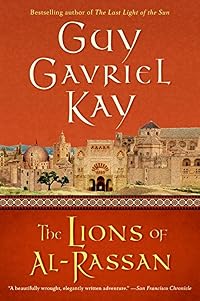
The Lions of al-Rassan
by Guy Gavriel Kay
On This Page
Description
The ruling Asharites of Al-Rassan have come from the desert sands, but over centuries, seduced by the sensuous pleasures of their new land, their stern piety has eroded. The Asharite empire has splintered into decadent city-states led by warring petty kings. King Almalik of Cartada is on the ascendancy, aided always by his friend and advisor, the notorious Ammar ibn Khairan poet, diplomat, soldier until a summer afternoon of savage brutality changes their relationship forever. Meanwhile, in show more the north, the conquered Jaddites' most celebrated and feared military leader, Rodrigo Belmonte, driven into exile, leads his mercenary company south. In the dangerous lands of Al-Rassan, these two men from different worlds meet and serve for a time the same master. Sharing their interwoven fate and increasingly torn by her feelings is Jehane, the accomplished court physician, whose own skills play an increasing role as Al-Rassan is swept to the brink of holy war, and beyond. Hauntingly evocative of medieval Spain, The Lions of Al-Rassan is both a brilliant adventure and a deeply compelling story of love, divided loyalties, and what happens to men and women when hardening beliefs begin to remake or destroy a world. show lessTags
Recommendations
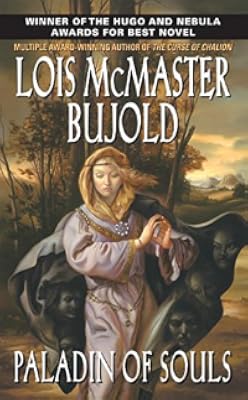
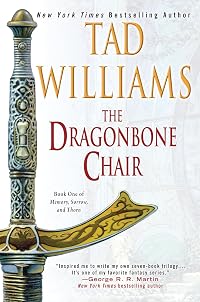
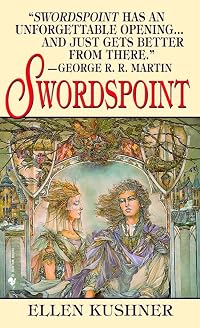
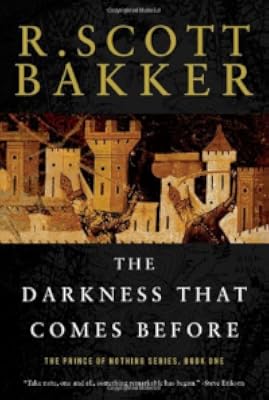
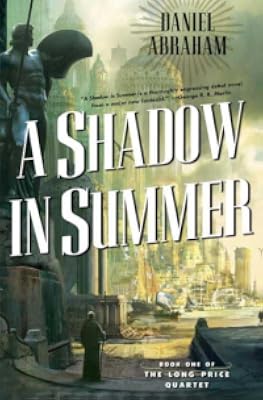
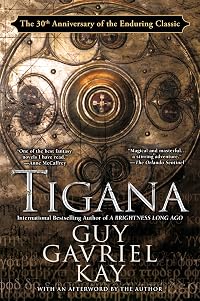
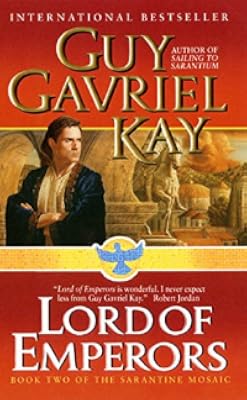




Member Recommendations

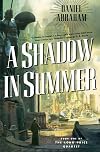
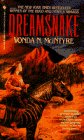
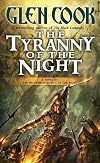
Jarandel Both a simile, with Fantasy treatment, of European history in the era of the Crusades. Lions of Al-Rassan centers on the Spanish Reconquista, while the Tyranny of the Night has a wider scope.
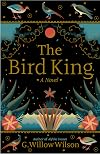
anonymous user Fantasy retellings of the last days of Muslim Spain.
Member Reviews
One could be forgiven for mistaking Kay’s novels for historical fiction: they are meticulously researched, and offer the immersive believability rendered by skilled practitioners of the more traditional craft. The Lions of Al-Rassan delivers a satisfying fictionalization of the Reconquista - the difficulties with that term notwithstanding - during the period of El Cid set in a fictional Iberia of the 11th century. In a convincing portrayal, Kay restores the culture, architecture and politics of late al-Andalus, replete with characters who could have been a part. And romance, no, let’s not overlook the romance.
The novel is almost three decades old now. There were moments where I was shaken out of my reading engagement by a show more discovery. The intervening years have altered the experience of the book at least in a small way. Let me explain.
Why is it that Kay writes historical fantasy rather than historical fiction? The fantasy elements in his works are generally small ones, just enough to inform the reader that while the events may feel like the past of our own world, that is not actually the case. This world has two moons, not one. And a boy with some special knowledge, not particularly crucial to the plot.
Kay loves the description of his work as “history with a quarter-turn to the fantastic”. He has said he does this quarter-turn because he doesn’t like using real lives for his fiction. To The Guardian he said, “I’ve been calling it an epidemic of co-opting real lives, to do whatever we want to do with them. And as an artist, for my own process, I have a problem with this…..I’m happier not pretending I know anything about El Cid in Spain,” he says. “He’s a Spanish national hero. I’d rather invent a character inspired by him but clearly not identical to him. And then I feel liberated creatively. I steep myself in a period and then I twist it just that little bit to give myself the ethical and creative space that seems to work for me.”
Kay does his research and delivers fulfilling worldbuilding, but he is free to make things up, to get things wrong, to play with the history as he wishes. So why was I was periodically jolted from my reading? Memories of Salman Rushdie. Ayatollah Khomeini issued his fatwa in 1989, the year after the publication of The Satanic Verses. Rushdie’s book is often called magical realism; apparently the realism was insufficiently magical. In the decades since the publication of The Lions of Al-Rassan and its narrative of the ending of Muslim rule in Spain, this thread of intolerance has not appreciably diminished. In numerous attentional interludes, I considered the safety of two moons and an alternate universe. What an affront to the imagination that such machinations may offer actual physical safety!
I like Kay’s work very much. This novel has a poignant beauty, as sympathetic characters committed to their loves, their people, their religions, teeter toward the inexorable end of a vanishing world. show less
The novel is almost three decades old now. There were moments where I was shaken out of my reading engagement by a show more discovery. The intervening years have altered the experience of the book at least in a small way. Let me explain.
Why is it that Kay writes historical fantasy rather than historical fiction? The fantasy elements in his works are generally small ones, just enough to inform the reader that while the events may feel like the past of our own world, that is not actually the case. This world has two moons, not one. And a boy with some special knowledge, not particularly crucial to the plot.
Kay loves the description of his work as “history with a quarter-turn to the fantastic”. He has said he does this quarter-turn because he doesn’t like using real lives for his fiction. To The Guardian he said, “I’ve been calling it an epidemic of co-opting real lives, to do whatever we want to do with them. And as an artist, for my own process, I have a problem with this…..I’m happier not pretending I know anything about El Cid in Spain,” he says. “He’s a Spanish national hero. I’d rather invent a character inspired by him but clearly not identical to him. And then I feel liberated creatively. I steep myself in a period and then I twist it just that little bit to give myself the ethical and creative space that seems to work for me.”
Kay does his research and delivers fulfilling worldbuilding, but he is free to make things up, to get things wrong, to play with the history as he wishes. So why was I was periodically jolted from my reading? Memories of Salman Rushdie. Ayatollah Khomeini issued his fatwa in 1989, the year after the publication of The Satanic Verses. Rushdie’s book is often called magical realism; apparently the realism was insufficiently magical. In the decades since the publication of The Lions of Al-Rassan and its narrative of the ending of Muslim rule in Spain, this thread of intolerance has not appreciably diminished. In numerous attentional interludes, I considered the safety of two moons and an alternate universe. What an affront to the imagination that such machinations may offer actual physical safety!
I like Kay’s work very much. This novel has a poignant beauty, as sympathetic characters committed to their loves, their people, their religions, teeter toward the inexorable end of a vanishing world. show less
Lions of Al-Rassan is one of the best fantasy books I've ever read, and I say this even though I'm not entirely convinced it is fantasy.
Whatever its genre, it tells the tale of Moorish Spain and events leading to the Reconquista, but through the lens of the fantastical. The major powers and players are sufficiently mixed up and layered with new details to make it clear this is not earth (there are two moons in the sky!) and it's not a historical account , but things are also immediately recognizable, even as an American. Instead of Christians, Muslims and Jewish peoples, you have the Jaddites, Asharites, and the Kindath - with all the same customs, stereotypes, challenges, and desires. It's a little weird, to tell the truth, but more on show more that later.
Thankfully, it is much more than just a fantastical retelling of Cantar de mio Cid. At the heart of Lions of Al-Rassan are the lives and personal stories of impossibly powerful, emotional, and clever men and women. There's The Captain himself, Rodrigo Belmonte, a genius tactician and leader of the strongest band of Jaddites on the peninsula. Opposing, or allied, with him is Ammar ibn Khairan, an Asharite poet, advisor to kings, killer of kings, and lovable rogue. Finally there's the woman that stands between them, Jehane bet Ishak, a Kindath doctor whose life is defined equally by love, war, and medicine.
These three heroes are the pillars of the book, with themselves and the people that follow and love them serving as a metaphor for the mishmash of cultures and the inevitable conflict arising on the peninsula itself.
Al-Rassan is a ticking timebomb of external pressures and irreconcilable differences, but there is a compelling argument made by its characters that it doesn't have to be. There's a dream shared by many characters that conflict is not inevitable, that it is possible to blend disparate cultures (in some cases quite literally) to create something new, better, but fragile. This struggle is the source of its many emotional highs and lows.
I don't think I've ever read a more human book, especially in the fantasy genre. Characters frequently stop and appreciate beauty, celebrate companionship, weep at tragedy, and profess respect for their friends and rivals.
The key here is that, with few exceptions, there are no evil men. There are competing and incompatible cultures, religions, and political systems, but humans are human, and their shared likenesses are as important as their differences. These are crafty and intelligent men having crafty and intelligent conversations with each other, even in conflict. You end up sympathizing with everyone, even going so far as hoping, naively, that they somehow all get what they want.
They won't, of course. One of the greatest themes running throughout the book is that these men would be great and lifelong friends if not for just one small problem - the tragedy being that these "small" problems are often the most defining parts of their lives.
It is a nearly flawless book, though there are a few problems I couldn't get past.
I've read plenty of books that straddle the line between fantasy and historical fiction, but this is the first time it's been a source of distraction. Events and characters are so close to their real world counterparts - often with comically referential names, titles, or descriptions - yet at the same time are very clearly not.
I kept wishing that the book fully committed to fantasy or history.
Take the three major religions as example. Going by their descriptions, you'd likely say they are sufficiently fantastical: the Jaddites worship the sun as god, the Kindath worship the two moons, twin sisters of the sun god, and the Asharites worship not the gods but the stars and the human prophet who preached their glory.
And yet when you read of their cultures, practices, and so on, you'll quickly find they are literally Christians, Jews, and Muslims. The Kindath (Jews) are called the Wanderers, valued for their skills and trades when times are good, but immediately blamed, persecuted, segregated, expelled, and labeled as sorcerers and baby eaters when times are bad. It's not subtle!
It's also not a bad thing, necessarily, because the fantastical framing is as good of a teacher as any historical drama would be. And yet... it remains distracting, taking me away from its world and putting me back in my own.
More distracting are the names of its characters: Rodrigo "The Captain" Belmonte is of course El Cid himself, Rodrigo "The Lord" Diaz. The character of Ammar ibn Khairan is based on a man named Muhammad ibn Ammar. A major city in the book is named Silveness (Seville), ruled by the khalifate (caliphate), which eventually falls and is replaced by the Almalik (Almoravid) dynasty.
Both book and reality contain a Sancho the Fat, yet they are different people... sorta?
On more mundane annoyances, there are a number of writing 'tricks' that Guy Gavriel Kay goes back to a few too many times.
Often - too often - there will be a scene in which an important event is viewed through the perspective of one of the characters. It will then end on a cliffhanger - like a character's death, not yet named - and then the perspective shifts. Sometimes the cliffhanger is resolved, but more often than not this trick happens a 2nd or even 3rd time, or the time frame jumps suddenly and you're left to infer what happened before the book eventually just tells you.
The writing is very clearly aware that it's dangling the reveal in front of you, and it'll purposefully lead you down false conclusions to stretch out the tension even more. Once you notice the trick it's hard not to get impatient or even frustrated by it.
There are also a number of repetitive words and phrases that grate after a time - people can only talk about "dissembling" or "diverting" so many times before it becomes irksome - but they're minor.
Indeed, all of its problems and distractions are minor when compared with the work as a whole. They are primarily noted only because the rest of the work is so phenomenal that even the smallest error stands out of place.
It's a remarkable book, one that should be on the shelves of every fantasy fan, and it's made me a Guy Gavriel Kay for life. Just don't read it too close to taking a test or quiz on the history of Spain, because it will cause you to fail spectacularly. show less
Whatever its genre, it tells the tale of Moorish Spain and events leading to the Reconquista, but through the lens of the fantastical. The major powers and players are sufficiently mixed up and layered with new details to make it clear this is not earth (there are two moons in the sky!) and it's not a historical account , but things are also immediately recognizable, even as an American. Instead of Christians, Muslims and Jewish peoples, you have the Jaddites, Asharites, and the Kindath - with all the same customs, stereotypes, challenges, and desires. It's a little weird, to tell the truth, but more on show more that later.
Thankfully, it is much more than just a fantastical retelling of Cantar de mio Cid. At the heart of Lions of Al-Rassan are the lives and personal stories of impossibly powerful, emotional, and clever men and women. There's The Captain himself, Rodrigo Belmonte, a genius tactician and leader of the strongest band of Jaddites on the peninsula. Opposing, or allied, with him is Ammar ibn Khairan, an Asharite poet, advisor to kings, killer of kings, and lovable rogue. Finally there's the woman that stands between them, Jehane bet Ishak, a Kindath doctor whose life is defined equally by love, war, and medicine.
These three heroes are the pillars of the book, with themselves and the people that follow and love them serving as a metaphor for the mishmash of cultures and the inevitable conflict arising on the peninsula itself.
Al-Rassan is a ticking timebomb of external pressures and irreconcilable differences, but there is a compelling argument made by its characters that it doesn't have to be. There's a dream shared by many characters that conflict is not inevitable, that it is possible to blend disparate cultures (in some cases quite literally) to create something new, better, but fragile. This struggle is the source of its many emotional highs and lows.
I don't think I've ever read a more human book, especially in the fantasy genre. Characters frequently stop and appreciate beauty, celebrate companionship, weep at tragedy, and profess respect for their friends and rivals.
The key here is that, with few exceptions, there are no evil men. There are competing and incompatible cultures, religions, and political systems, but humans are human, and their shared likenesses are as important as their differences. These are crafty and intelligent men having crafty and intelligent conversations with each other, even in conflict. You end up sympathizing with everyone, even going so far as hoping, naively, that they somehow all get what they want.
They won't, of course. One of the greatest themes running throughout the book is that these men would be great and lifelong friends if not for just one small problem - the tragedy being that these "small" problems are often the most defining parts of their lives.
It is a nearly flawless book, though there are a few problems I couldn't get past.
I've read plenty of books that straddle the line between fantasy and historical fiction, but this is the first time it's been a source of distraction. Events and characters are so close to their real world counterparts - often with comically referential names, titles, or descriptions - yet at the same time are very clearly not.
I kept wishing that the book fully committed to fantasy or history.
Take the three major religions as example. Going by their descriptions, you'd likely say they are sufficiently fantastical: the Jaddites worship the sun as god, the Kindath worship the two moons, twin sisters of the sun god, and the Asharites worship not the gods but the stars and the human prophet who preached their glory.
And yet when you read of their cultures, practices, and so on, you'll quickly find they are literally Christians, Jews, and Muslims. The Kindath (Jews) are called the Wanderers, valued for their skills and trades when times are good, but immediately blamed, persecuted, segregated, expelled, and labeled as sorcerers and baby eaters when times are bad. It's not subtle!
It's also not a bad thing, necessarily, because the fantastical framing is as good of a teacher as any historical drama would be. And yet... it remains distracting, taking me away from its world and putting me back in my own.
More distracting are the names of its characters: Rodrigo "The Captain" Belmonte is of course El Cid himself, Rodrigo "The Lord" Diaz. The character of Ammar ibn Khairan is based on a man named Muhammad ibn Ammar. A major city in the book is named Silveness (Seville), ruled by the khalifate (caliphate), which eventually falls and is replaced by the Almalik (Almoravid) dynasty.
Both book and reality contain a Sancho the Fat, yet they are different people... sorta?
On more mundane annoyances, there are a number of writing 'tricks' that Guy Gavriel Kay goes back to a few too many times.
Often - too often - there will be a scene in which an important event is viewed through the perspective of one of the characters. It will then end on a cliffhanger - like a character's death, not yet named - and then the perspective shifts. Sometimes the cliffhanger is resolved, but more often than not this trick happens a 2nd or even 3rd time, or the time frame jumps suddenly and you're left to infer what happened before the book eventually just tells you.
The writing is very clearly aware that it's dangling the reveal in front of you, and it'll purposefully lead you down false conclusions to stretch out the tension even more. Once you notice the trick it's hard not to get impatient or even frustrated by it.
There are also a number of repetitive words and phrases that grate after a time - people can only talk about "dissembling" or "diverting" so many times before it becomes irksome - but they're minor.
Indeed, all of its problems and distractions are minor when compared with the work as a whole. They are primarily noted only because the rest of the work is so phenomenal that even the smallest error stands out of place.
It's a remarkable book, one that should be on the shelves of every fantasy fan, and it's made me a Guy Gavriel Kay for life. Just don't read it too close to taking a test or quiz on the history of Spain, because it will cause you to fail spectacularly. show less
A knife, a poet, and a sunset that lasts three hundred pages.
I have read this book five times. Each time, I reach the final section, I tell myself I will not cry this time. Each time, I am wrong.
The Lions of Al-Rassan is Guy Gavriel Kay's masterpiece of moral complexity. It is a fantasy novel with almost no magic, set in a peninsula that resembles medieval Spain (Al-Andalus) during the Reconquista. Three faiths: Jadites (Christians), Asharites (Muslims), and Kindath (Jews), struggle for control of a land that has known centuries of uneasy coexistence. The year is 714 in the Gazian calendar. The kingdom of Al-Rassan is fragmenting. And three people will decide its fate.
What it is:
A physician named Jehane bet Ishak, a Kindath woman show more trained in the greatest hospital of the world, flees her home after a coup. She falls in with two men: Rodrigo Belmonte, a Jadite captain who is the greatest military genius of of the three Jaddite kingdoms and Ammar ibn Khairan, an Asharite poet and warrior who once assassinated the last caliph of Al-Rassan. These two men are enemies by birth, by faith, by allegiance. But they are also mirror images: honorable, brilliant, and doomed.
Over the course of the novel, Jehane travels with them, heals them, falls into a love triangle that is never resolved because the resolution would require one to betray everything he stands for. The plot moves from desert raids to palace intrigues to a final, inevitable confrontation that Kay has been building from page one. You know it is coming. You dread it. And when it arrives, you cannot breathe.
Why it is a masterpiece (and why it breaks me):
1. The moral complexity is unmatched. Kay forces you to love characters on opposite sides of a war; then forces you to watch them destroy each other. Rodrigo and Ammar respect each other more than they respect their own allies. They share wine, stories, and a grudging admiration. But they also know that the politics of their world will demand one kill the other. The novel never pretends there is a third option. This is not a story where friendship conquers all. It is a story where friendship makes the killing worse.
2. The prose is Kay at his most lyrical. Every sentence is crafted. Descriptions of the sunset over the peninsula, the dust of the cavalry, the smell of oranges and blood; it is poetry without sacrificing clarity. Kay has a habit of using the same phrase ("a small, quiet voice") across multiple scenes, and by the end, that repetition becomes a dirge. The dialogue is sharp, witty, and devastating. Ammar's farewell line to Rodrigo: "What I am trying to say is that I have never had a friend like you." Read that in context. It will ruin you.
3. The historical grounding is a lesson for any writer. Kay based Al-Rassan on 11th-century Spain: the taifa kingdoms, El Cid, the crumbling convivencia. But he does not simply copy history. He bends it, names it anew, and respects the emotional truth of the period. As someone writing Islamic-inspired fantasy, Kay's approach is my north star: treat history with respect, characters with empathy, and readers with intelligence. He never lectures. He never reduces the Asharites to villains or the Jadites to heroes. He shows you the beauty and the horror on both sides, and trusts you to draw your own conclusions.
4. The characters are unforgettable. Rodrigo is the honorable warrior who knows his honor will kill him but cannot act otherwise. Ammar is the poet-assassin who has killed for friendship and now questions everything. Jehane is the rational physician who learns that the heart does not follow the same logic as the body. And the supporting casts each has a complete arc. No one is wasted.
5. The scene where Rodrigo and Ammar part ways. Devastating. It happens at night, after a battle that could have ended them both. They speak of their wives, their sons, their regrets. And then they walk away, knowing that the next time they meet, it will be on a battlefield. Kay writes the goodbye in short, clipped sentences, as if the characters themselves cannot bear to linger. I have read that scene ten times. I have cried ten times.
Where it might lose some readers (honest critiques):
1. The pacing is slow. Kay luxuriates in description, in interior monologue, in the quiet moments before violence. If you need constant action or tight plotting, this will frustrate you. The Lions of Al-Rassan is a book to be savored, not devoured.
2. The love triangle is frustrating. Jehane is drawn to both Rodrigo and Ammar, and the novel never resolves which she loves more. Some readers find this realistic; others find it unsatisfying. Kay himself has said he wanted to avoid a "choice" that would diminish either man. Personally, I think the ambiguity is the point. But I understand the frustration.
Who should read this:
Lovers of literary fantasy (Ursula Le Guin, Patrick Rothfuss, Guy Gavriel Kay's other works).
Readers who appreciate historical fiction with the serial numbers filed off.
Anyone who wants to see how to write morally complex characters without easy villains.
Writers of fantasy, especially those inspired by non-European history.
Who should skip it:
If you need fast-paced action or clear good-vs-evil binaries.
If slow, lyrical prose bores you.
Final verdict:
The Lions of Al-Rassan is not a book. It is an elegy. Kay wrote it about a place that never existed: a peninsula of three faiths, uneasy peace, and inevitable war, but the grief is real. I finished it, closed the cover, and sat in silence for a long time. Then I turned back to the first page and read the poem that opens the novel. Then I started again.
Five stars. Not because it is flawless. Because it is necessary.
If you love fantasy that breaks your heart in the best way, read this. But do not read the last fifty pages in public. I learned that the hard way.
P.S. My love for this book's rich atmosphere heavily inspired my own new historical fantasy novella, set in 11th-century Seljuk Persia, The Ever-Changing Sands; which explores similar themes of political intrigue and moral complexity! If you enjoyed this, I'd love for you to check it out. show less
I have read this book five times. Each time, I reach the final section, I tell myself I will not cry this time. Each time, I am wrong.
The Lions of Al-Rassan is Guy Gavriel Kay's masterpiece of moral complexity. It is a fantasy novel with almost no magic, set in a peninsula that resembles medieval Spain (Al-Andalus) during the Reconquista. Three faiths: Jadites (Christians), Asharites (Muslims), and Kindath (Jews), struggle for control of a land that has known centuries of uneasy coexistence. The year is 714 in the Gazian calendar. The kingdom of Al-Rassan is fragmenting. And three people will decide its fate.
What it is:
A physician named Jehane bet Ishak, a Kindath woman show more trained in the greatest hospital of the world, flees her home after a coup. She falls in with two men: Rodrigo Belmonte, a Jadite captain who is the greatest military genius of of the three Jaddite kingdoms and Ammar ibn Khairan, an Asharite poet and warrior who once assassinated the last caliph of Al-Rassan. These two men are enemies by birth, by faith, by allegiance. But they are also mirror images: honorable, brilliant, and doomed.
Over the course of the novel, Jehane travels with them, heals them, falls into a love triangle that is never resolved because the resolution would require one to betray everything he stands for. The plot moves from desert raids to palace intrigues to a final, inevitable confrontation that Kay has been building from page one. You know it is coming. You dread it. And when it arrives, you cannot breathe.
Why it is a masterpiece (and why it breaks me):
1. The moral complexity is unmatched. Kay forces you to love characters on opposite sides of a war; then forces you to watch them destroy each other. Rodrigo and Ammar respect each other more than they respect their own allies. They share wine, stories, and a grudging admiration. But they also know that the politics of their world will demand one kill the other. The novel never pretends there is a third option. This is not a story where friendship conquers all. It is a story where friendship makes the killing worse.
2. The prose is Kay at his most lyrical. Every sentence is crafted. Descriptions of the sunset over the peninsula, the dust of the cavalry, the smell of oranges and blood; it is poetry without sacrificing clarity. Kay has a habit of using the same phrase ("a small, quiet voice") across multiple scenes, and by the end, that repetition becomes a dirge. The dialogue is sharp, witty, and devastating. Ammar's farewell line to Rodrigo: "What I am trying to say is that I have never had a friend like you." Read that in context. It will ruin you.
3. The historical grounding is a lesson for any writer. Kay based Al-Rassan on 11th-century Spain: the taifa kingdoms, El Cid, the crumbling convivencia. But he does not simply copy history. He bends it, names it anew, and respects the emotional truth of the period. As someone writing Islamic-inspired fantasy, Kay's approach is my north star: treat history with respect, characters with empathy, and readers with intelligence. He never lectures. He never reduces the Asharites to villains or the Jadites to heroes. He shows you the beauty and the horror on both sides, and trusts you to draw your own conclusions.
4. The characters are unforgettable. Rodrigo is the honorable warrior who knows his honor will kill him but cannot act otherwise. Ammar is the poet-assassin who has killed for friendship and now questions everything. Jehane is the rational physician who learns that the heart does not follow the same logic as the body. And the supporting casts each has a complete arc. No one is wasted.
5. The scene where Rodrigo and Ammar part ways. Devastating. It happens at night, after a battle that could have ended them both. They speak of their wives, their sons, their regrets. And then they walk away, knowing that the next time they meet, it will be on a battlefield. Kay writes the goodbye in short, clipped sentences, as if the characters themselves cannot bear to linger. I have read that scene ten times. I have cried ten times.
Where it might lose some readers (honest critiques):
1. The pacing is slow. Kay luxuriates in description, in interior monologue, in the quiet moments before violence. If you need constant action or tight plotting, this will frustrate you. The Lions of Al-Rassan is a book to be savored, not devoured.
2. The love triangle is frustrating. Jehane is drawn to both Rodrigo and Ammar, and the novel never resolves which she loves more. Some readers find this realistic; others find it unsatisfying. Kay himself has said he wanted to avoid a "choice" that would diminish either man. Personally, I think the ambiguity is the point. But I understand the frustration.
Who should read this:
Lovers of literary fantasy (Ursula Le Guin, Patrick Rothfuss, Guy Gavriel Kay's other works).
Readers who appreciate historical fiction with the serial numbers filed off.
Anyone who wants to see how to write morally complex characters without easy villains.
Writers of fantasy, especially those inspired by non-European history.
Who should skip it:
If you need fast-paced action or clear good-vs-evil binaries.
If slow, lyrical prose bores you.
Final verdict:
The Lions of Al-Rassan is not a book. It is an elegy. Kay wrote it about a place that never existed: a peninsula of three faiths, uneasy peace, and inevitable war, but the grief is real. I finished it, closed the cover, and sat in silence for a long time. Then I turned back to the first page and read the poem that opens the novel. Then I started again.
Five stars. Not because it is flawless. Because it is necessary.
If you love fantasy that breaks your heart in the best way, read this. But do not read the last fifty pages in public. I learned that the hard way.
P.S. My love for this book's rich atmosphere heavily inspired my own new historical fantasy novella, set in 11th-century Seljuk Persia, The Ever-Changing Sands; which explores similar themes of political intrigue and moral complexity! If you enjoyed this, I'd love for you to check it out. show less
As usual for Kay's fantasy, this book takes place in a setting that is very clearly based on a real historical place and time: in this case, Spain during the time just before the "Reconquest".
It didn't take me long to realize that the Jaddites, Asharites, and Kindath were equivalent to the Christians, Muslims, and Jews that lived together in Spain under Islamic law. (When I was in Spain, I visited Toledo for this very reason, because it was a city in which these three groups had lived and interacted.)
And that's what earned this novel a place on my "with theological themes" shelf: we get a main viewpoint character from each of the three religions, and the author plays no favorites. We get to see the world through each character's, and show more thus each religion's, eyes. We get to see them navigate the tension between the exclusiveness expounded by their religious or civic leaders, and the commonality, respect, friendship, and love they find with people of other faiths.
Kay's usual strengths are in evidence here: he places his characters in poignant, personally difficult situations, and then makes it more intense for them; and his writing is evocative and beautiful. I particularly enjoyed the playfulness that characterized the friendships among the main characters, especially Jehane's with the two men. Although the novel doesn't pass the Bechdel test, it was nevertheless refreshing to see a woman portrayed as having interesting, multidimensional relationships with men that don't revolve entirely around sexual or romantic tension. show less
It didn't take me long to realize that the Jaddites, Asharites, and Kindath were equivalent to the Christians, Muslims, and Jews that lived together in Spain under Islamic law. (When I was in Spain, I visited Toledo for this very reason, because it was a city in which these three groups had lived and interacted.)
And that's what earned this novel a place on my "with theological themes" shelf: we get a main viewpoint character from each of the three religions, and the author plays no favorites. We get to see the world through each character's, and show more thus each religion's, eyes. We get to see them navigate the tension between the exclusiveness expounded by their religious or civic leaders, and the commonality, respect, friendship, and love they find with people of other faiths.
Kay's usual strengths are in evidence here: he places his characters in poignant, personally difficult situations, and then makes it more intense for them; and his writing is evocative and beautiful. I particularly enjoyed the playfulness that characterized the friendships among the main characters, especially Jehane's with the two men. Although the novel doesn't pass the Bechdel test, it was nevertheless refreshing to see a woman portrayed as having interesting, multidimensional relationships with men that don't revolve entirely around sexual or romantic tension. show less
After River of Stars, I felt I had to read another work by Kay to see how much of the first was unique to that book. I think I now have a good feel for Kay. He starts with historical settings, but then creates his own world based on them. You can’t even call this an alternate history. Cleary this book is based on medieval Spain in the time El Cid, with its clash of peoples from three major religions, but instead of Christians, Muslims, and Jews, he calls them Jadists, Asharites, and Kindrath, and they worship sun, stars, and moons (there are two), respectively. Similarly, all of the city names are his inventions. I didn’t even try to match up his places with sites on the Iberian Peninsula.
Kay's writing is very impressive in that he show more can make the events of people’s lives feel really significant almost no matter what they are. The three central characters in this story, one woman and two men, are all extraordinary people and the events they live through in this book are unquestionably of great significance to them. When all is said and done, though, this story is really just a mirror for the Christian re-conquest of the Iberian Peninsula from the Muslims who had conquered it centuries before – with Jews caught in the middle. Even though I wasn’t sure exactly what had happened at the end until the last few pages, there was still a certain inevitability about the whole thing. It’s not a “good” ending, certainly not a happy ending for all involved, but Kay makes it feel like a necessary ending. It was the power of his writing that held me through to the conclusion of this glorious train-wreck.
Really, what this book is about is honor and integrity on the one hand and friendship, love and beauty on the other, and how the first sometimes necessitates the destruction of the second. show less
Kay's writing is very impressive in that he show more can make the events of people’s lives feel really significant almost no matter what they are. The three central characters in this story, one woman and two men, are all extraordinary people and the events they live through in this book are unquestionably of great significance to them. When all is said and done, though, this story is really just a mirror for the Christian re-conquest of the Iberian Peninsula from the Muslims who had conquered it centuries before – with Jews caught in the middle. Even though I wasn’t sure exactly what had happened at the end until the last few pages, there was still a certain inevitability about the whole thing. It’s not a “good” ending, certainly not a happy ending for all involved, but Kay makes it feel like a necessary ending. It was the power of his writing that held me through to the conclusion of this glorious train-wreck.
Really, what this book is about is honor and integrity on the one hand and friendship, love and beauty on the other, and how the first sometimes necessitates the destruction of the second. show less
Though there are a handful of Kay’s books I abhor (The Fionavar Tapestry, Ysabel), I enjoy the vast majority a lot. Then there are the ones I simply adore, and The Lions of Al-Rassan is possibly the one I love the most. It was my first Kay novel, and I’ve read it multiple times since.
The setting, a fantasy version of Moorish Spain, the believable characters, and the lyrical prose all come together into a sublimely bittersweet book. I’m a huge sucker for the delicious anguish Kay writes so well, and I’ll no doubt re-read “Lions” again in a couple of years.
The setting, a fantasy version of Moorish Spain, the believable characters, and the lyrical prose all come together into a sublimely bittersweet book. I’m a huge sucker for the delicious anguish Kay writes so well, and I’ll no doubt re-read “Lions” again in a couple of years.
(...)
But even with all that in mind, it’s somehow puzzling Kay managed to evoke sympathy for Rodrigro or Ammar. Technically, I understand how he did it. They are manly men, strong, smart, caring for their own, and loved by the female main characters. We get to know them and their families. We root for them. What male reader secretly doesn’t want to turn out to be “the unacknowledged son of the King”, to paraphrase Richard Rorty? Dreams of power and glory are all too human, and Kay exploits them expertly.
I also understand that other characters call these warrior-murderers “good” and “noble” – again, that is the context these characters live in, and these feelings echo nationalist or religious mantras that are still used show more today. Said fictional context was also the context my consciousness was transported to for 504 pages.
I guess what I’m trying to say is that I can’t make up my mind what I rationally think about our heroes. Is Rodrigo really a loving father if he’s absent from his family for years? If he willingly puts himself into mortal danger while he could have retired just as easily? Does Ammar deserve his ending? And how do I feel about Kay for writing a story that presents these pragmatically cruel characters as likeable, even though he also presents us characters such as Alvar and Jehane who are critical of war and bloodshed?
True – everything is grey, and reality is what it is. There are smooth criminals, sympathetic murderers, democratic elected officials that order bloodshed, and every soldier is indeed human. I know all this. But I’m conflicted about it. I guess I’m conflicted about reality? Do I kid myself when I think I would not commit atrocities beyond what’s needed for self-defense or defense of my family in a real life war context? Even if I don’t believe in free will, shouldn’t we hold soldiers and their generals to higher standards?
In the end, while Kay’s message of tolerance and diversity is to be applauded, and certain brutal scenes of heroic life & death and brought me to deep and heartfelt tears, at the same time, he wrote a feelgood book, ending with most of the protagonists happy together, sipping wine, celebrating a birthday, cosy by a fountain.
So there’s a conflict at the heart of The Lions of Al-Rassan. At one hand, Kay criticizes bigotry & political greed for the suffering it causes, and luckily he tries to present a balanced view of why these things happen, never pointing fingers at people that are terrified of the Other or blinded by their upbringing. But on the other hand, it also revels in the heroism associated with warriors and violence, and glorifies it to a certain extent.
It may not have been his intention, and it probably is the unavoidable result of trying to show the human side of things. As for historical fantasy’s true benefit: it’s probably easier to do when there is historical distance – imagine a book published in 6 months, that tries to balance a certain Russian soldier as a hero too.
(...)
More on Weighing A Pig show less
But even with all that in mind, it’s somehow puzzling Kay managed to evoke sympathy for Rodrigro or Ammar. Technically, I understand how he did it. They are manly men, strong, smart, caring for their own, and loved by the female main characters. We get to know them and their families. We root for them. What male reader secretly doesn’t want to turn out to be “the unacknowledged son of the King”, to paraphrase Richard Rorty? Dreams of power and glory are all too human, and Kay exploits them expertly.
I also understand that other characters call these warrior-murderers “good” and “noble” – again, that is the context these characters live in, and these feelings echo nationalist or religious mantras that are still used show more today. Said fictional context was also the context my consciousness was transported to for 504 pages.
I guess what I’m trying to say is that I can’t make up my mind what I rationally think about our heroes. Is Rodrigo really a loving father if he’s absent from his family for years? If he willingly puts himself into mortal danger while he could have retired just as easily? Does Ammar deserve his ending? And how do I feel about Kay for writing a story that presents these pragmatically cruel characters as likeable, even though he also presents us characters such as Alvar and Jehane who are critical of war and bloodshed?
True – everything is grey, and reality is what it is. There are smooth criminals, sympathetic murderers, democratic elected officials that order bloodshed, and every soldier is indeed human. I know all this. But I’m conflicted about it. I guess I’m conflicted about reality? Do I kid myself when I think I would not commit atrocities beyond what’s needed for self-defense or defense of my family in a real life war context? Even if I don’t believe in free will, shouldn’t we hold soldiers and their generals to higher standards?
In the end, while Kay’s message of tolerance and diversity is to be applauded, and certain brutal scenes of heroic life & death and brought me to deep and heartfelt tears, at the same time, he wrote a feelgood book, ending with most of the protagonists happy together, sipping wine, celebrating a birthday, cosy by a fountain.
So there’s a conflict at the heart of The Lions of Al-Rassan. At one hand, Kay criticizes bigotry & political greed for the suffering it causes, and luckily he tries to present a balanced view of why these things happen, never pointing fingers at people that are terrified of the Other or blinded by their upbringing. But on the other hand, it also revels in the heroism associated with warriors and violence, and glorifies it to a certain extent.
It may not have been his intention, and it probably is the unavoidable result of trying to show the human side of things. As for historical fantasy’s true benefit: it’s probably easier to do when there is historical distance – imagine a book published in 6 months, that tries to balance a certain Russian soldier as a hero too.
(...)
More on Weighing A Pig show less
Members
- Recently Added By
Lists

Best Fantasy Novels
821 works; 361 members

Top-Rated Books on LibraryThing
272 works; 119 members

Books That Made Me Cry
199 works; 105 members
Favorite Long Books
330 works; 42 members

The Best of Canadian Literature
235 works; 33 members

Top Five Books of 2013
1,562 works; 721 members
Favourite Books
1,820 works; 316 members

Jean's Sci Fi/Fantasy Reading list
189 works; 12 members

Slipstream or Interstitial Fiction
160 works; 19 members

Top Five Books of 2022
736 works; 272 members

Top Five Books of 2018
802 works; 265 members

Books tagged favorites
390 works; 30 members

Fantasy novels with a female protagonist
76 works; 15 members

Books Read in 2023
5,638 works; 147 members
Animals in the Title
498 works; 11 members
Speculative Fiction to Read
706 works; 32 members
Religion in Fantasy and Horror
38 works; 9 members

Historical Fantasy
93 works; 14 members

Five star books
1,767 works; 110 members
Literature About Women and Girls
426 works; 41 members

Favourite Books by Male Authors
29 works; 2 members

Sarah's Wish List
48 works; 1 member

Books Read in 2021
5,361 works; 113 members

Character-driven SF
59 works; 1 member

Books Read in 2013
1,630 works; 51 members

Books Read in 2018
4,360 works; 110 members

mom
729 works; 1 member
Books We Love to Reread
695 works; 299 members
Books We Couldn't Put Down
443 works; 197 members

BookTube Fantasy Recommendations
37 works; 1 member
Books We Want To Read Again For The First Time
384 works; 160 members

Canadian Jurist-Novelists
316 works; 1 member
Talk Discussions
Past Discussions
The Lions of Al Rassan (in part assumes you've read it...) in The Green Dragon (January 2010)
Author Information

35+ Works 38,865 Members
Guy Gavriel Kay was born on November 7, 1954 in Weyburn, Saskatchewan, Canada. He became interested in fantasy fiction while working as an assistant to Christopher Tolkien. He assisted him with the editing of J. R. R. Tolkien's The Silmarillion. After receiving a law degree from the University of Toronto, he became principal writer and associate show more producer for the CBC radio series, The Scales of Justice. He also wrote several episodes when the series moved to television. He has written social and political commentary for several publications including the National Post, The Globe and Mail, and The Guardian. His first fantasy novels were The Summer Tree, The Wandering Fire, and The Darkest Road, which make up the Fionavar Tapestry Trilogy. His other works include A Song for Arbonne, The Lions of Al-Rassan, Beyond This Dark House, The Last Light of the Sun, and Under Heaven. He has received numerous awards including and the Aurora Award for Tigana and The Wandering Fire, the 2008 World Fantasy Award for Best Novel for Ysabel, and the International Goliardos Award for his work in the fantasy field. (Bowker Author Biography) show less
Some Editions
Awards and Honors
Awards
Series
Belongs to Publisher Series
Work Relationships
Is contained in
Is abridged in
Common Knowledge
- Original publication date
- 1995-05
- People/Characters
- Jehane bet Ishak; Ammar ibn Khairan; Rodrigo Belmonte; Alvar del Pellino
- Important places
- Al-Rassan; Fezana; Cartada; Spain
- Epigraph
- The evening is deep inside me forever
Many a blond, northern moonrise,
like a muted reflection, will softly
remind me and remind me again and again.
It will be my bride, my alter ego.
An in... (show all)centive to find myself. I myself
am the moonrise of the south.
Paul Klee, The Tunisian Diaries - Dedication
- For Harry Karlinksy and Mayer Hoffer, after thirty-five years.
- First words
- Always remember they come from the desert.
It was just past midday, not long before the third summons to prayer, that Ammar ibn Khairan passed through the Gate of the Bells and entered the Al-Fontina in Silvenes to kill the last of the khalifs of Al-Rassan. [prologue] - Last words
- (Click to show. Warning: May contain spoilers.)And it cast its pale light upon the three glasses of wine that had each been left deliberately behind, brim-full, on a stone table, a stone bench, on the rim of the fountain there.
- Original language
- English
Classifications
- Genres
- Fantasy, Fiction and Literature, General Fiction, Historical Fiction
- DDC/MDS
- 813.54 — Literature & rhetoric American literature in English American fiction in English 1900-1999 1945-1999
- LCC
- PR9199.3 .K39 .L56 — Language and Literature English English Literature English literature: Provincial, local, etc.
- BISAC
Statistics
- Members
- 3,502
- Popularity
- 4,763
- Reviews
- 114
- Rating
- (4.25)
- Languages
- 10 — Chinese, Czech, English, French, German, Hebrew, Polish, Portuguese, Croatian, Spanish
- Media
- Paper, Audiobook, Ebook
- ISBNs
- 34
- ASINs
- 15