
On This Page
Description
Award-winning author Guy Gavriel Kay evokes the dazzling Tang Dynasty of 8th-century China in an masterful story of honor and power.It begins simply. Shen Tai, son of an illustrious general serving the Emperor of Kitai, has spent two years honoring the memory of his late father by burying the bones of the dead from both armies at the site of one of his father's last great battles. In recognition of his labors and his filial piety, an unlikely source has sent him a dangerous gift: 250 Sardian show more horses.
You give a man one of the famed Sardian horses to reward him greatly. You give him four or five to exalt him above his fellows, propel him towards rank, and earn him jealousy, possibly mortal jealousy. Two hundred and fifty is an unthinkable gift, a gift to overwhelm an emperor.
Wisely, the gift comes with the stipulation that Tai must claim the horses in person. Otherwise he would probably be dead already... show less
Tags
Recommendations
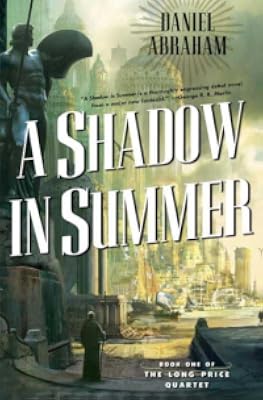
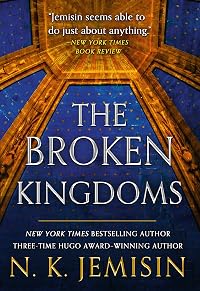
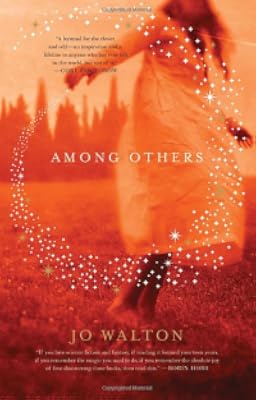
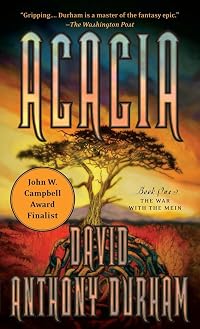
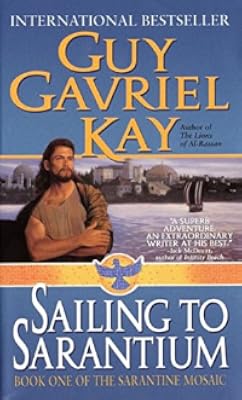
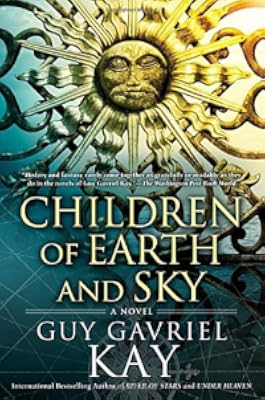
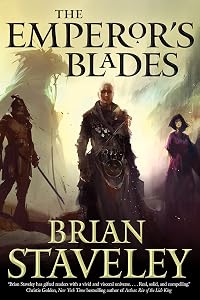
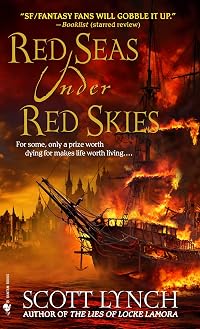
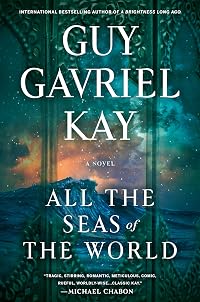
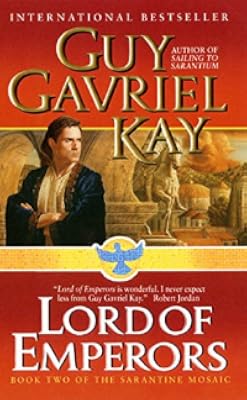
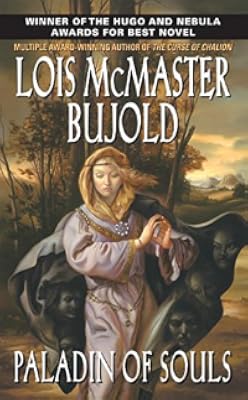
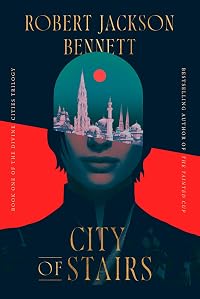

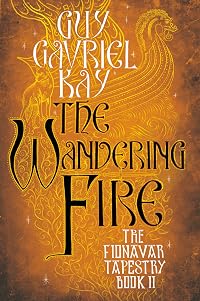
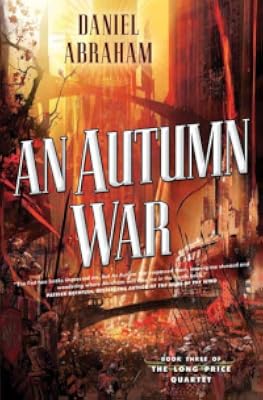
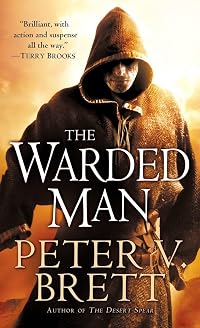
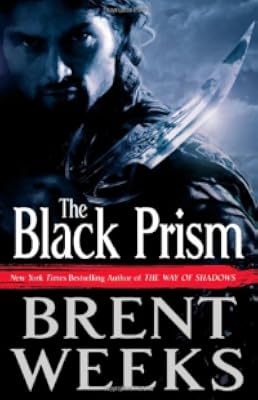

Member Recommendations
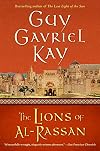

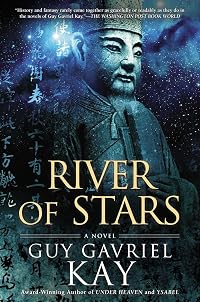
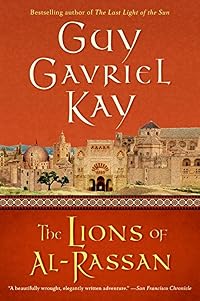
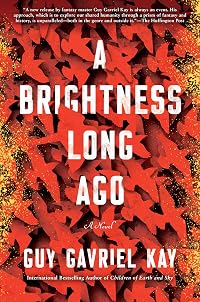
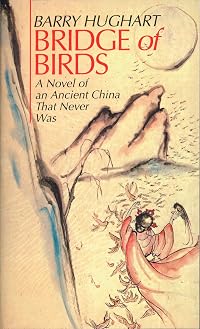
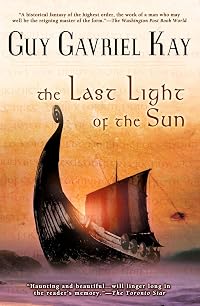
Cecrow A historical fiction novel of the Tang Dynasty, ably relating the same events upon which 'Under Heaven' is based but in their actual Chinese setting.
by ajwseven
by anonymous user
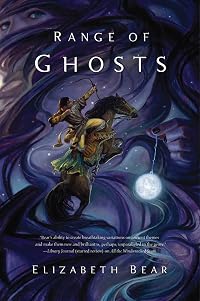
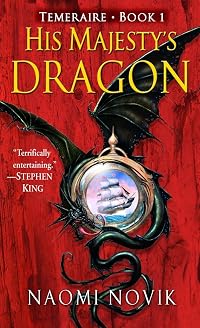
Cecrow A more playful fantasy take on ancient China.
Also recommended by MyriadBooks
32
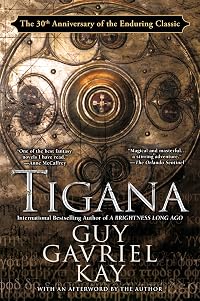
lottpoet I think these books have in common a person caught up in the machinations of a highly formal society.
02
In Love with the Way: Chinese Poems of the Tang Dynasty (The Calligrapher's Notebooks) by François Cheng
aulsmith A historical novel about a Tang poet and the poetry of the period. If you like one, you should try the other
Member Reviews
A river of bones, a cup of stars.
I came to Under Heaven expecting another Lions of Al-Rassan; a slow, beautiful tragedy set in a peninsula that resembled medieval Spain. Instead, Kay took me to a different world: a vast, broken empire inspired by Tang Dynasty China, where ghosts walk the battlefields, poets outlive warriors, and the simplest gift can carry the weight of a kingdom.
I finished this book in a state of quiet awe. Not because it broke me the way Tigana did. But because it made me feel small in the best way, like standing at the edge of a lake at dawn, watching the mist lift, and realizing that the water stretches further than I can see.
What it is:
Shen Tai, a junior officer of the Kitai Empire, has spent two years alone in a show more desolate mountain pass, burying the bones of the dead from a terrible battle that killed tens of thousands. His father, a famous general, died in that battle. Tai hopes to honor him and find peace. But his act of devotion attracts attention: the Kitan Emperor awards him a magnificent giftL: two hundred and fifty Sardian horses, the most valuable treasure in the known world. The horses are worth a fortune. They are also a death sentence. Because in the politics of the Kitai court, no one receives such a gift without making enemies.
The novel follows Tai as he travels from the remote pass back to the imperial capital, carrying a secret that could change the balance of power between the empire and its northern rivals. Along the way, he encounters a restless princess, a drunken poet, a ghost‑guardian of a lake, and the woman who taught him that love and betrayal are sometimes the same thing. The plot spans two years, two wars, and a rebellion that will decide the fate of millions.
Why it is a masterpiece (and why it lingers):
1. The world feels ancient and real. Kay based Under Heaven on the An Lushan Rebellion (8th century Tang China), but he does not copy history. He distills it. You feel the weight of the bureaucracy, the reverence for poetry, the cruelty of the court, and the exhaustion of soldiers who have fought too many wars. The fantasy elements are light: ghosts, a curse, a goddess of the lake; but they are woven in so delicately that you accept them without question.
2. The prose is Kay at his most restrained. In Tigana and Lions, Kay's sentences sometimes call attention to themselves. Here, he steps back. The language is clear, almost spare, but every word is precise. There is a passage where Tai watches a woman pour tea, and the description of her hands: steady, deliberate, hiding everything, tells you more about her than a page of monologue could. Kay trusts you to notice.
3. The theme of honor vs. survival. Tai is the son of a great general. He carries the weight of his father's name. He wants to do the right thing. But the empire is rotten, and doing the right thing will likely get him killed. His arc asks: can you be a good man in a corrupt system? The answer is not simple. And Kay does not pretend it is.
4. The secondary characters are unforgettable. Wen Jian, the courtesan who becomes a spy, is one of Kay's greatest creations. She is brilliant, compromised, and heartbreakingly lonely. Sima Zian, the alcoholic poet, delivers lines that will stay with you for years: "We grow old, Tai. We grow old, and we don't intend to, and we cannot stop." And Spring Rain, the princess who was married to a barbarian as a child, returns as a woman with a sword and a plan. No one is wasted.
5. The poetry woven into the prose. Kay includes original poems within the narrative, attributed to characters. They are not just decoration. They reveal emotion that the characters cannot speak aloud. One poem, written by a dying general, begins: "I have left my bones at the Jade Gate Pass. Tell my wife I died with my face to the enemy." I closed the book and whispered that line to myself for days.
6. The ending is perfect. Not happy. Not tidy. But earned. Kay does not give you catharsis. He gives you a cup of wine shared between two people who have lost everything except each other. And that, he suggests, is enough.
Where it might lose some readers (honest critiques):
1. The pacing is slow. Very slow. Kay spends pages on a journey across a salt plain, a conversation in a tea house, a night of poetry under the stars. If you need action or tight plotting, this will frustrate you. Under Heaven is a book to be savored, not devoured.
2. The names can be confusing. Kay uses Tang‑style names (Shen Tai, Wen Jian, Sima Zian, Li Bai). They blur together if you are not paying attention. A cast list is provided. Use it.
3. The romance is understated. There is a love story, but it unfolds in glances and silences. If you need grand declarations or passionate scenes, you will be disappointed. Kay's lovers express their feelings through a shared cup of wine, a hand brushed against a sleeve, a single line of poetry. Some readers find this beautiful. Others find it cold.
4. The first hundred pages are a gentle slope. The book opens with Tai burying bones. It is quiet, meditative, and seemingly without urgency. You may wonder, Where is this going? Trust Kay. The slope eventually becomes a cliff.
5. The fantasy elements are minimal. If you come from Sanderson or Rothfuss expecting elaborate magic systems, you will find almost nothing. A ghost appears. A goddess grants a vision. That is it. The magic here is the poetry, the history, the aching human truth.
Who should read this:
Lovers of literary fantasy (Ursula Le Guin, Guy Gavriel Kay's other works).
Readers who appreciate historical fiction with a light touch of the supernatural.
Anyone who wants to understand how honor can be both a virtue and a cage.
Poets, or those who wish they were poets.
Who should skip it:
If you need fast‑paced action or clear good‑vs‑evil binaries.
If slow, atmospheric prose bores you.
If you dislike books where the real climax is a conversation, not a battle.
Final verdict:
Under Heaven is not Kay's most devastating book (Tigana holds that crown). It is not his most morally complex (Lions of Al‑Rassan). But it is his most humane. It is a book about grief, duty, and the small acts of decency that keep us human when empires crumble around us. I finished it and felt not broken, but quieted; as if I had been given permission to mourn for things I had never lost.
Five stars. For the two hundred and fifty horses. For the poet who drinks himself to death because he cannot bear the world. For the woman who pours tea with steady hands while her heart is breaking. And for the final line, which I will not spoil, but which made me close the book and sit in silence for a long time.
Read it slowly. Let the dust of that salt plain settle in your lungs. You will not regret the journey.
P.S. There is a sequel of sorts, River of Stars, set four hundred years later in the same world. You do not need to read it to feel complete, but if you loved Under Heaven, you will want to. The two books together form a diptych about the rise and fall of empires, the persistence of poetry, and the way that grief echoes across generations. show less
I came to Under Heaven expecting another Lions of Al-Rassan; a slow, beautiful tragedy set in a peninsula that resembled medieval Spain. Instead, Kay took me to a different world: a vast, broken empire inspired by Tang Dynasty China, where ghosts walk the battlefields, poets outlive warriors, and the simplest gift can carry the weight of a kingdom.
I finished this book in a state of quiet awe. Not because it broke me the way Tigana did. But because it made me feel small in the best way, like standing at the edge of a lake at dawn, watching the mist lift, and realizing that the water stretches further than I can see.
What it is:
Shen Tai, a junior officer of the Kitai Empire, has spent two years alone in a show more desolate mountain pass, burying the bones of the dead from a terrible battle that killed tens of thousands. His father, a famous general, died in that battle. Tai hopes to honor him and find peace. But his act of devotion attracts attention: the Kitan Emperor awards him a magnificent giftL: two hundred and fifty Sardian horses, the most valuable treasure in the known world. The horses are worth a fortune. They are also a death sentence. Because in the politics of the Kitai court, no one receives such a gift without making enemies.
The novel follows Tai as he travels from the remote pass back to the imperial capital, carrying a secret that could change the balance of power between the empire and its northern rivals. Along the way, he encounters a restless princess, a drunken poet, a ghost‑guardian of a lake, and the woman who taught him that love and betrayal are sometimes the same thing. The plot spans two years, two wars, and a rebellion that will decide the fate of millions.
Why it is a masterpiece (and why it lingers):
1. The world feels ancient and real. Kay based Under Heaven on the An Lushan Rebellion (8th century Tang China), but he does not copy history. He distills it. You feel the weight of the bureaucracy, the reverence for poetry, the cruelty of the court, and the exhaustion of soldiers who have fought too many wars. The fantasy elements are light: ghosts, a curse, a goddess of the lake; but they are woven in so delicately that you accept them without question.
2. The prose is Kay at his most restrained. In Tigana and Lions, Kay's sentences sometimes call attention to themselves. Here, he steps back. The language is clear, almost spare, but every word is precise. There is a passage where Tai watches a woman pour tea, and the description of her hands: steady, deliberate, hiding everything, tells you more about her than a page of monologue could. Kay trusts you to notice.
3. The theme of honor vs. survival. Tai is the son of a great general. He carries the weight of his father's name. He wants to do the right thing. But the empire is rotten, and doing the right thing will likely get him killed. His arc asks: can you be a good man in a corrupt system? The answer is not simple. And Kay does not pretend it is.
4. The secondary characters are unforgettable. Wen Jian, the courtesan who becomes a spy, is one of Kay's greatest creations. She is brilliant, compromised, and heartbreakingly lonely. Sima Zian, the alcoholic poet, delivers lines that will stay with you for years: "We grow old, Tai. We grow old, and we don't intend to, and we cannot stop." And Spring Rain, the princess who was married to a barbarian as a child, returns as a woman with a sword and a plan. No one is wasted.
5. The poetry woven into the prose. Kay includes original poems within the narrative, attributed to characters. They are not just decoration. They reveal emotion that the characters cannot speak aloud. One poem, written by a dying general, begins: "I have left my bones at the Jade Gate Pass. Tell my wife I died with my face to the enemy." I closed the book and whispered that line to myself for days.
6. The ending is perfect. Not happy. Not tidy. But earned. Kay does not give you catharsis. He gives you a cup of wine shared between two people who have lost everything except each other. And that, he suggests, is enough.
Where it might lose some readers (honest critiques):
1. The pacing is slow. Very slow. Kay spends pages on a journey across a salt plain, a conversation in a tea house, a night of poetry under the stars. If you need action or tight plotting, this will frustrate you. Under Heaven is a book to be savored, not devoured.
2. The names can be confusing. Kay uses Tang‑style names (Shen Tai, Wen Jian, Sima Zian, Li Bai). They blur together if you are not paying attention. A cast list is provided. Use it.
3. The romance is understated. There is a love story, but it unfolds in glances and silences. If you need grand declarations or passionate scenes, you will be disappointed. Kay's lovers express their feelings through a shared cup of wine, a hand brushed against a sleeve, a single line of poetry. Some readers find this beautiful. Others find it cold.
4. The first hundred pages are a gentle slope. The book opens with Tai burying bones. It is quiet, meditative, and seemingly without urgency. You may wonder, Where is this going? Trust Kay. The slope eventually becomes a cliff.
5. The fantasy elements are minimal. If you come from Sanderson or Rothfuss expecting elaborate magic systems, you will find almost nothing. A ghost appears. A goddess grants a vision. That is it. The magic here is the poetry, the history, the aching human truth.
Who should read this:
Lovers of literary fantasy (Ursula Le Guin, Guy Gavriel Kay's other works).
Readers who appreciate historical fiction with a light touch of the supernatural.
Anyone who wants to understand how honor can be both a virtue and a cage.
Poets, or those who wish they were poets.
Who should skip it:
If you need fast‑paced action or clear good‑vs‑evil binaries.
If slow, atmospheric prose bores you.
If you dislike books where the real climax is a conversation, not a battle.
Final verdict:
Under Heaven is not Kay's most devastating book (Tigana holds that crown). It is not his most morally complex (Lions of Al‑Rassan). But it is his most humane. It is a book about grief, duty, and the small acts of decency that keep us human when empires crumble around us. I finished it and felt not broken, but quieted; as if I had been given permission to mourn for things I had never lost.
Five stars. For the two hundred and fifty horses. For the poet who drinks himself to death because he cannot bear the world. For the woman who pours tea with steady hands while her heart is breaking. And for the final line, which I will not spoil, but which made me close the book and sit in silence for a long time.
Read it slowly. Let the dust of that salt plain settle in your lungs. You will not regret the journey.
P.S. There is a sequel of sorts, River of Stars, set four hundred years later in the same world. You do not need to read it to feel complete, but if you loved Under Heaven, you will want to. The two books together form a diptych about the rise and fall of empires, the persistence of poetry, and the way that grief echoes across generations. show less
As Kay says in his Afterword, he isn't sure why he writes history as fantasy -- but to me it seems obvious that he has a freedom to explore beyond facts, to find the emotional truth of the rise and fall of a culture, in this case the Tang dynasty in China. The main characters are vivid and there are plenty of minor characters too, all in a dance of a kind and most of them pivotal in what transpires. Kay leads us from moment to moment to the 'choice' or 'turning' points. Demonstrating how some events are random/accidental, some are the result of an independent and free decision, and some are taken entirely out of the hands of those that experience them. Every aspect of the novel is pitch perfect. It is a work, entirely, of the show more imagination but has weight and is grounded in the realities of human nature. Lovely. ***** show less
You have to Know the Worlds to Break Them: Under
Heaven, by Guy Gavriel Kay Was Wonderful
~~~
Under Heaven is historical fantasy set in a fictional version of ancient (roughly 8th century) China. It slips gracefully between several sub-genres (magical realism, historical fiction, military fantasy, or even “dark fantasy”, as one website called it, which is a stretch). It is epic both in size and scope, doing what “Song of Fire and Ice” has been trying for over 1.7 millions words (and probably will never truly accomplish)—In only one book, it delivers an epic tale of magic, multi-national intrigue, and poignant resolution.
In an era of #ownvoices, where it is often presumed that all fiction is memoir, it's also extremely refreshing show more to see an author employ research and empathy to craft a truly great work. I read in an interview where Kay, a Canadian, listed all of his research. And, honestly, it resembled what your typical doctoral student would review as part of their dissertation. It was amazing.
But, of course, all of that research would have been for naught without Kay's tremendously deft prose. Here's a snippet I felt compelled to post on my blog:
“At the absolute summit of accomplishment
the insects chewing from within at the most
extravagant sandalwood may be heard,
if the nights are quiet enough.”
This book (published in 2010) is also a throwback in another way—as it uses omniscient point-of-view, moving back and forth between two main characters' viewpoints, as well as a number of minor characters whose takes on particular scenes and happenings add amazing depth to this world.
Unfortunately, a couple of times he also has the narrator make independent comments. The comments are subtle and fall into the category of 'author's musings' as much as anything else, so they are only a little bit intrusive. I guess this was a nod to his editors, or perhaps to modern tastes. For me, the few pages where he zooms all the way out and has the narrator do that kicked me out of the story because the absolute strength of the story was his characterizations.
My personal preference is always what Brandon Sanderson calls “Power Omniscient”, as in, for example, Dune, where the narrator stays neutral and allows the reader into people's heads as needed to deliver the story. There are certain stories, and even scenes, where that is the best way to go: for example, consider a poker game...how much less suspense is there for that to be only told from one character's point of view?
I went for broke and used 'Power Omniscient' in my own debut novel, The Be(k)nighted. I felt the cosmic scope of the story was more grounded from the perspective of various people throughout. Also, one other reason for that was that, because it uses a couple of public domain characters from the history of superhero comics, I figured comics fans (who are used to thought balloons, remember those?) would appreciate the omniscient storytelling.
Fortunately, nothwithstanding those zoomouts, the character portrayals were all very intimate and believable, in the face of enormous internal and external stakes.
This was a remarkable tale. show less
Heaven, by Guy Gavriel Kay Was Wonderful
~~~
Under Heaven is historical fantasy set in a fictional version of ancient (roughly 8th century) China. It slips gracefully between several sub-genres (magical realism, historical fiction, military fantasy, or even “dark fantasy”, as one website called it, which is a stretch). It is epic both in size and scope, doing what “Song of Fire and Ice” has been trying for over 1.7 millions words (and probably will never truly accomplish)—In only one book, it delivers an epic tale of magic, multi-national intrigue, and poignant resolution.
In an era of #ownvoices, where it is often presumed that all fiction is memoir, it's also extremely refreshing show more to see an author employ research and empathy to craft a truly great work. I read in an interview where Kay, a Canadian, listed all of his research. And, honestly, it resembled what your typical doctoral student would review as part of their dissertation. It was amazing.
But, of course, all of that research would have been for naught without Kay's tremendously deft prose. Here's a snippet I felt compelled to post on my blog:
“At the absolute summit of accomplishment
the insects chewing from within at the most
extravagant sandalwood may be heard,
if the nights are quiet enough.”
This book (published in 2010) is also a throwback in another way—as it uses omniscient point-of-view, moving back and forth between two main characters' viewpoints, as well as a number of minor characters whose takes on particular scenes and happenings add amazing depth to this world.
Unfortunately, a couple of times he also has the narrator make independent comments. The comments are subtle and fall into the category of 'author's musings' as much as anything else, so they are only a little bit intrusive. I guess this was a nod to his editors, or perhaps to modern tastes. For me, the few pages where he zooms all the way out and has the narrator do that kicked me out of the story because the absolute strength of the story was his characterizations.
My personal preference is always what Brandon Sanderson calls “Power Omniscient”, as in, for example, Dune, where the narrator stays neutral and allows the reader into people's heads as needed to deliver the story. There are certain stories, and even scenes, where that is the best way to go: for example, consider a poker game...how much less suspense is there for that to be only told from one character's point of view?
I went for broke and used 'Power Omniscient' in my own debut novel, The Be(k)nighted. I felt the cosmic scope of the story was more grounded from the perspective of various people throughout. Also, one other reason for that was that, because it uses a couple of public domain characters from the history of superhero comics, I figured comics fans (who are used to thought balloons, remember those?) would appreciate the omniscient storytelling.
Fortunately, nothwithstanding those zoomouts, the character portrayals were all very intimate and believable, in the face of enormous internal and external stakes.
This was a remarkable tale. show less
When I began reading Guy Gavriel Kay's books a few years ago, a key part of the appeal was that his books were often stand-alone novels in a genre where the epic storylines are usually unpacked over multiple volumes. This appealed as the reader got closure on the story within the same book, and did not have to commit to a three- or four-volume series that might not, by the end, have proven worthy of your time. With this in mind, I recognize the irony that my main criticism of Under Heaven is that it is not longer, that it is only one volume.
In books like Tigana – Kay's best book I have read, and this seems to be the popular consensus too – the story is complete, and though you want more, this comes from how much you have loved the show more story and the characters and your unwillingness to accept that it is over. But in Under Heaven, by about 300 pages in (about half the book) you still get a sense of something building, building, building, and I started to think: when are things going to start 'going down'? Surely, there's not enough room left in the next 300 pages for things to crescendo and fulfil our anticipation, and then to wind down again?
And, to be honest, there's not. After all the slow and patient (and beautiful) build-up, we go straight into prose that has a tone that seems to suggest the book is winding down. Once the political events start in Xinan, it reads like an extended epilogue, a summary of events rather than an experience of them. The crucial thing is that Under Heaven felt like it was missing a middle act, and I did wonder if perhaps it would not have been better to add another 100 pages worth of material to flesh out the Roshan and Wen Zhou stuff, or even make the story a multi-volume one. And after this extended-epilogue vibe, we get the actual winding-down of the plot, which is very short too. Some of the romantic couplings at the end seemed rushed, like dangling threads hastily sewn up. Even here, key points are left unresolved and, indeed, ignored completely (such as why the princess in Tagura made this gift to Shen Tai).
What saves Under Heaven from any opprobrium for this flaw is Kay's beautiful writing. It is rather presumptuous of me to criticize his storytelling structure above when he is so impressive at so many things. At imagination, character and pace. He delivers many beautiful lines of both dialogue and description, and many scenes are well-staged. It is intoxicating to read at times, and in truth this quality does indeed overwhelm any criticism I have made. But the fact remains that the story didn't have the 'balance' that the Kitan poets of his story crave. I wanted more, as I do with all of Kay's stories that I have read, but for the first time I felt it needed more. It needed that middle act, that centre around which the heavens and the earth could revolve. show less
In books like Tigana – Kay's best book I have read, and this seems to be the popular consensus too – the story is complete, and though you want more, this comes from how much you have loved the show more story and the characters and your unwillingness to accept that it is over. But in Under Heaven, by about 300 pages in (about half the book) you still get a sense of something building, building, building, and I started to think: when are things going to start 'going down'? Surely, there's not enough room left in the next 300 pages for things to crescendo and fulfil our anticipation, and then to wind down again?
And, to be honest, there's not. After all the slow and patient (and beautiful) build-up, we go straight into prose that has a tone that seems to suggest the book is winding down. Once the political events start in Xinan, it reads like an extended epilogue, a summary of events rather than an experience of them. The crucial thing is that Under Heaven felt like it was missing a middle act, and I did wonder if perhaps it would not have been better to add another 100 pages worth of material to flesh out the Roshan and Wen Zhou stuff, or even make the story a multi-volume one. And after this extended-epilogue vibe, we get the actual winding-down of the plot, which is very short too. Some of the romantic couplings at the end seemed rushed, like dangling threads hastily sewn up. Even here, key points are left unresolved and, indeed, ignored completely (such as why the princess in Tagura made this gift to Shen Tai).
What saves Under Heaven from any opprobrium for this flaw is Kay's beautiful writing. It is rather presumptuous of me to criticize his storytelling structure above when he is so impressive at so many things. At imagination, character and pace. He delivers many beautiful lines of both dialogue and description, and many scenes are well-staged. It is intoxicating to read at times, and in truth this quality does indeed overwhelm any criticism I have made. But the fact remains that the story didn't have the 'balance' that the Kitan poets of his story crave. I wanted more, as I do with all of Kay's stories that I have read, but for the first time I felt it needed more. It needed that middle act, that centre around which the heavens and the earth could revolve. show less
This book was the February selection for our SF Book Club. Though known for his “fantastical” books, Under Heaven is less a fantasy book than a historical period piece. Kay’s books each have different styles, and are set in very different eras. This one is less lyrical than his other work, which for me was a good thing.
Set in a fictional world that closely mirrors China in the T’ang Dynasty, it is a story about what constitutes honour, duty, and loyalty. Told primarily from the perspective of General Shen’s three oldest children (now adults), the narration switches among several other characters as well: soldiers from several armies, courtesans, staff in key households, and civil servants of various rank in the Emperor’s show more court. It is a credit to Kay that he weaves these story threads so skillfully that you are always aware of where you are in the overall timeline.
In discussing this book, the Club members agreed to classify it as “historical fantasy” rather than “magical realism”. The “magic” in the book is more akin to superstitions and shamanism, and though becomes an element in one of the plots, is not a pervasive part of the story’s environment. I would not hesitate to recommend this to non-SF readers.
As a character-driven novel, Kay spends some time introducing us to the main protagonist (Second Son Shen Tai). But rather than merely describing him, he allows us to learn of his character, morality, and history through describing his actions. Thus we build a more complete picture of him in our minds; this is all the more powerful when, further in the novel, he must make critical choices and we are fully engaged in the consequences of his decisions.
Kay, with a few strokes, paints a complete picture of the established class hierarchy. It is clear that people not only understand their place in society, but also use established mechanisms of manipulation and guile to secure resources, influence, and power. The impression is of a large, multi-layered, multi-generational chess game. The best players plan moves years in advance.
Court politics are the backdrop through which we see how the several protagonists exercise individualism within the context of a collectivist society. Kay brings these characters to life. By being introduced to them through their thoughts, dreams, desires, they are more real to us than a superficial physical description would accomplish.
The strong societal rules and structures are seen through the reactions of different layers of society to how Shen Tai shows honour to his father. Very early in the book we see that what he did was viewed by royalty and soldiers alike as poetic and respectful, and so demands to be acknowledged in a public way.
By being historical, and yet not real history, we can be objective and view the times with a more critical lens. By the time a key member of the Emperor’s Court is killed, we understand that it is collateral damage to the larger issues of State. We feel how the dictates of rigid societal customs require putting the needs of the population ahead of what is fair or just for an individual. The novel has set up the world so that we accept this injustice while at the same time regretting its necessity.
Women in this time live in the interstitial spaces created by the men. Since the men have overt power over the women, the women must manipulate events in indirect ways, using the complex rules of society and custom to their advantage. This requirement in no way diminishes the intelligence, power, or strength (both physical and mental) of the main female characters. In fact, because they must do things within such constraints, their importance to the larger picture is more apparent to us. The main female protagonists in the novel (Shen Li Mai, the consort Spring Rain, the neighbouring Queen, the Emperor’s Consort, the ninjas) all used the tools available to them to affect major political change.
General Shen, the father of the three Shen children, also has agency. Certain actions in his past haunt him; he communicates this to the Second Son (Shen Tai). This directly influences Shen Tai’s choice of how to grieve, which sets the whole novel into motion. Though already dead at the beginning of the novel, the General still strongly influences the behaviour of his children throughout the book.
I had been exposed to Kay’s work many years ago and did not recollect liking what I read. However, after a slow first chapter, the book’s characters and story gripped me and I finished it in two marathon sittings. At 592 pages, it cannot be called a “quick read”; it is, however, absorbing and engaging. The writing is superior and the story makes it a real page-turner. The map at the front of the book is also very helpful when geographic/travel info is imparted and Kay does a good job reusing character names to help keep the narrative thread straight.
At the beginning of the novel, we are introduced to people whose lives are about to be thrown into flux; when we take our leave they have come to peace with their role in their country’s story. When the novel ended, I was keen to know more about what happened next to the various characters I had met, and searched to see if Kay had written a sequel. Nope.
I am still thinking about the book weeks later. show less
Set in a fictional world that closely mirrors China in the T’ang Dynasty, it is a story about what constitutes honour, duty, and loyalty. Told primarily from the perspective of General Shen’s three oldest children (now adults), the narration switches among several other characters as well: soldiers from several armies, courtesans, staff in key households, and civil servants of various rank in the Emperor’s show more court. It is a credit to Kay that he weaves these story threads so skillfully that you are always aware of where you are in the overall timeline.
In discussing this book, the Club members agreed to classify it as “historical fantasy” rather than “magical realism”. The “magic” in the book is more akin to superstitions and shamanism, and though becomes an element in one of the plots, is not a pervasive part of the story’s environment. I would not hesitate to recommend this to non-SF readers.
As a character-driven novel, Kay spends some time introducing us to the main protagonist (Second Son Shen Tai). But rather than merely describing him, he allows us to learn of his character, morality, and history through describing his actions. Thus we build a more complete picture of him in our minds; this is all the more powerful when, further in the novel, he must make critical choices and we are fully engaged in the consequences of his decisions.
Kay, with a few strokes, paints a complete picture of the established class hierarchy. It is clear that people not only understand their place in society, but also use established mechanisms of manipulation and guile to secure resources, influence, and power. The impression is of a large, multi-layered, multi-generational chess game. The best players plan moves years in advance.
Court politics are the backdrop through which we see how the several protagonists exercise individualism within the context of a collectivist society. Kay brings these characters to life. By being introduced to them through their thoughts, dreams, desires, they are more real to us than a superficial physical description would accomplish.
The strong societal rules and structures are seen through the reactions of different layers of society to how Shen Tai shows honour to his father. Very early in the book we see that what he did was viewed by royalty and soldiers alike as poetic and respectful, and so demands to be acknowledged in a public way.
By being historical, and yet not real history, we can be objective and view the times with a more critical lens. By the time a key member of the Emperor’s Court is killed, we understand that it is collateral damage to the larger issues of State. We feel how the dictates of rigid societal customs require putting the needs of the population ahead of what is fair or just for an individual. The novel has set up the world so that we accept this injustice while at the same time regretting its necessity.
Women in this time live in the interstitial spaces created by the men. Since the men have overt power over the women, the women must manipulate events in indirect ways, using the complex rules of society and custom to their advantage. This requirement in no way diminishes the intelligence, power, or strength (both physical and mental) of the main female characters. In fact, because they must do things within such constraints, their importance to the larger picture is more apparent to us. The main female protagonists in the novel (Shen Li Mai, the consort Spring Rain, the neighbouring Queen, the Emperor’s Consort, the ninjas) all used the tools available to them to affect major political change.
General Shen, the father of the three Shen children, also has agency. Certain actions in his past haunt him; he communicates this to the Second Son (Shen Tai). This directly influences Shen Tai’s choice of how to grieve, which sets the whole novel into motion. Though already dead at the beginning of the novel, the General still strongly influences the behaviour of his children throughout the book.
I had been exposed to Kay’s work many years ago and did not recollect liking what I read. However, after a slow first chapter, the book’s characters and story gripped me and I finished it in two marathon sittings. At 592 pages, it cannot be called a “quick read”; it is, however, absorbing and engaging. The writing is superior and the story makes it a real page-turner. The map at the front of the book is also very helpful when geographic/travel info is imparted and Kay does a good job reusing character names to help keep the narrative thread straight.
At the beginning of the novel, we are introduced to people whose lives are about to be thrown into flux; when we take our leave they have come to peace with their role in their country’s story. When the novel ended, I was keen to know more about what happened next to the various characters I had met, and searched to see if Kay had written a sequel. Nope.
I am still thinking about the book weeks later. show less
This is classic Kay, his style and tone of voice is unmistakeable. One of Kay's strengths is to take a period of history and re-imagine it, so that wonderful characters; a fascinating society; poetry and culture; all the layers of his imagined world — come together in a masterful way.
Based on 8th century China, Kitan is a world of the emperor and his court; generals; bureaucrats; concubines. Shen Tai is the second son of one of the generals. Following the death of his father his period of mourning takes him away from his time as a student; what he does with this time leads him to receive a gift that thrusts him to the centre of politics and society.
Part of what Kay does so well is to describe consequences; paths travelled; the way a show more life is shaped by others. As he says himself:-
Every single tale carries within it many others, noted in passing, hinted at, entirely overlooked. Every life has moments when it branches, importantly (even if only for one person) and every one of those branches will have offered a different story.
I, for one, will always follow where his imagination takes us. He touches my emotions — with enjoyment; sorrow and pain. I loved it. show less
Based on 8th century China, Kitan is a world of the emperor and his court; generals; bureaucrats; concubines. Shen Tai is the second son of one of the generals. Following the death of his father his period of mourning takes him away from his time as a student; what he does with this time leads him to receive a gift that thrusts him to the centre of politics and society.
Part of what Kay does so well is to describe consequences; paths travelled; the way a show more life is shaped by others. As he says himself:-
Every single tale carries within it many others, noted in passing, hinted at, entirely overlooked. Every life has moments when it branches, importantly (even if only for one person) and every one of those branches will have offered a different story.
I, for one, will always follow where his imagination takes us. He touches my emotions — with enjoyment; sorrow and pain. I loved it. show less
[This is a review I wrote in 2010]
**Very accomplished 'historical' fantasy**
A very good book. This is a novel that can't be pigeonholed. Some reviewers have had problems with 'Under Heaven' largely because they haven't been able to fit it neatly into a genre; therefore saying that its failing, is that it doesn't fit into their personal perceptions of what it should be, or should have been. Don't be put off by these reviews. Call it fantasy, call it magic realism, historical fantasy, historical romance, literary fiction, supernatural - whatever - it doesn't matter! It's a superb book and its ready to be judged on its own merits, whatever the genre of fiction you generally favour.
The story is that of Tai (Shen Tai), a young man in his show more late twenties (or thereabouts), searching for a sense of self and his life's purpose during a period of official mourning for his late father, General Shen Gao. Events take a surprising turn for Tai when he discovers that someone is out to kill him and he is simultaneously honoured with a prize which thrusts him reluctantly into the limelight. The setting is a 'sort of' alternate Eighth-Century China, so war is not uncommon, values and strict moral codes are of great importance, birthright and inheritance may decide your future, women can be warriors, or palmed off by their menfolk for marriage as prizes of war or enemy alliance. Poetry is revered but punishment is swift for words spoken agains the Empire.
Kay's storytelling is deft; he weaves thoughts through multiple layers of plot, all the time playing on your emotions in a quite subtle way. A major theme throughout is 'the past' and in particular how the past distorts through the years - with the retelling and with the documents we are left to pick through and learn from. An historian (or a storyteller) cannot delve into all places, all people, all events of time, but has to choose from material that has been left behind; they have to select, and in this way 'the past' is selected for us, shaped by records, and not necessarily by the experiences of the majority. As well as the historiography, philosophy, shamanism, spiritual thoughts and poetry all add additional dimensions - and don't forget the great story too. show less
**Very accomplished 'historical' fantasy**
A very good book. This is a novel that can't be pigeonholed. Some reviewers have had problems with 'Under Heaven' largely because they haven't been able to fit it neatly into a genre; therefore saying that its failing, is that it doesn't fit into their personal perceptions of what it should be, or should have been. Don't be put off by these reviews. Call it fantasy, call it magic realism, historical fantasy, historical romance, literary fiction, supernatural - whatever - it doesn't matter! It's a superb book and its ready to be judged on its own merits, whatever the genre of fiction you generally favour.
The story is that of Tai (Shen Tai), a young man in his show more late twenties (or thereabouts), searching for a sense of self and his life's purpose during a period of official mourning for his late father, General Shen Gao. Events take a surprising turn for Tai when he discovers that someone is out to kill him and he is simultaneously honoured with a prize which thrusts him reluctantly into the limelight. The setting is a 'sort of' alternate Eighth-Century China, so war is not uncommon, values and strict moral codes are of great importance, birthright and inheritance may decide your future, women can be warriors, or palmed off by their menfolk for marriage as prizes of war or enemy alliance. Poetry is revered but punishment is swift for words spoken agains the Empire.
Kay's storytelling is deft; he weaves thoughts through multiple layers of plot, all the time playing on your emotions in a quite subtle way. A major theme throughout is 'the past' and in particular how the past distorts through the years - with the retelling and with the documents we are left to pick through and learn from. An historian (or a storyteller) cannot delve into all places, all people, all events of time, but has to choose from material that has been left behind; they have to select, and in this way 'the past' is selected for us, shaped by records, and not necessarily by the experiences of the majority. As well as the historiography, philosophy, shamanism, spiritual thoughts and poetry all add additional dimensions - and don't forget the great story too. show less
Members
- Recently Added By
Lists

Best Fantasy Novels
821 works; 361 members

ALA The Reading List
490 works; 28 members

Top Five Books of 2013
1,562 works; 721 members

Best Fiction Set in China
43 works; 27 members

Best 21st Century Books (So Far)
670 works; 86 members

Jean's Sci Fi/Fantasy Reading list
189 works; 12 members

Top Five Books of 2014
1,064 works; 398 members

Historical Fantasy
93 works; 14 members

New Authors to Read
21 works; 3 members

Best Books Read for TIOLI
49 works; 14 members
Speculative Fiction to Read
706 works; 32 members

Ghosts
278 works; 18 members

Books Read in 2016
4,666 works; 199 members

Allie's List of Books I Want To Read
93 works; 1 member

Modern Fantasy Novels based on Non-Western Mythology or Folklore
24 works; 7 members

Books I Own But Haven't Read
144 works; 2 members

XB-1: Osobnosti zanru doporucuji
67 works; 1 member

Alphabetical Books
211 works; 3 members

Books Read in 2024
4,623 works; 126 members
Books We Love to Reread
688 works; 296 members

Books We Want To Read Again For The First Time
384 works; 160 members

Global Reads: Books Set in East Asia
139 works; 12 members

Canadian Jurist-Novelists
313 works; 1 member
Author Information

35+ Works 38,761 Members
Guy Gavriel Kay was born on November 7, 1954 in Weyburn, Saskatchewan, Canada. He became interested in fantasy fiction while working as an assistant to Christopher Tolkien. He assisted him with the editing of J. R. R. Tolkien's The Silmarillion. After receiving a law degree from the University of Toronto, he became principal writer and associate show more producer for the CBC radio series, The Scales of Justice. He also wrote several episodes when the series moved to television. He has written social and political commentary for several publications including the National Post, The Globe and Mail, and The Guardian. His first fantasy novels were The Summer Tree, The Wandering Fire, and The Darkest Road, which make up the Fionavar Tapestry Trilogy. His other works include A Song for Arbonne, The Lions of Al-Rassan, Beyond This Dark House, The Last Light of the Sun, and Under Heaven. He has received numerous awards including and the Aurora Award for Tigana and The Wandering Fire, the 2008 World Fantasy Award for Best Novel for Ysabel, and the International Goliardos Award for his work in the fantasy field. (Bowker Author Biography) show less
Some Editions
Awards and Honors
Series

Work Relationships
Common Knowledge
- Canonical title
- Under Heaven
- Original title
- Under Heaven
- Original publication date
- 2010-05
- People/Characters
- Shen Tai; Sima Zian; Spring Rain; Li Mei; Wei Song
- Important places
- Xinan, Kitai
- Epigraph
- With bronze as a mirror one can correct one's appearance; with history as a mirror, one can understand the rise and fall of a state; with good men as a mirror, one can distinguish right from wrong.
—LI SHIMIN, TANK EM... (show all)PEROR TAIZONG - Dedication
- to Sybil,
with love - First words
- Amid the ten thousand noises and the jade-and-gold and the whirling dust of Xinan, he had often stayed awake all night among friends, drinking spiced wine in the North District with the courtesans.
- Quotations
- And it isn't worth hating. It really isn't. . . . You did need to decide what mattered, and concentrate on that. Otherwise your life force would be scattered to the five directions, and wasted.
He would be among them today. And he couldn't learn that rhythm, not in the time he had. So he wouldn't even try. He'd go another way, like a holy wanderer of the Sacred Path choosing at a fork in the road, following his ... (show all)own truth, a hermit laughing in the mountains.
Sometimes fear is proper. It is what we do that matters. - Last words
- (Click to show. Warning: May contain spoilers.)It drifted into that night, within the ring of mountains, above the lake, rising there, and gone.
- Blurbers
- Sanderson, Brandon
- Original language
- English
Classifications
- Genres
- Fantasy, Fiction and Literature, General Fiction, Historical Fiction
- DDC/MDS
- 813.54 — Literature & rhetoric American literature in English American fiction in English 1900-1999 1945-1999
- LCC
- PR9199.3 .K39 .U53 — Language and Literature English English Literature English literature: Provincial, local, etc.
- BISAC
Statistics
- Members
- 2,098
- Popularity
- 9,828
- Reviews
- 125
- Rating
- (4.13)
- Languages
- 9 — Chinese, Czech, English, French, German, Greek, Italian, Spanish, Turkish
- Media
- Paper, Audiobook, Ebook
- ISBNs
- 33
- UPCs
- 1
- ASINs
- 16