On This Page
Description
Number Ten Ox brings Master Li Kao back to his village of Ku-fu to find the cure for a mysterious sleeping plague that has struck the villagers' children.Tags
Recommendations











Member Recommendations

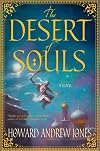
DemetriosX Although not as light-hearted as Master Li, the adventures of Dabir and Asim in the world of the Arabian Nights are similar in their pursuit of the solutions to problems with the mythical and magical.
40


Cecrow For the record, this work cited by Hughart for containing Miser Shen's prayer to his daughter Ah Chen actually does exist.
41

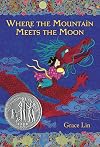

DCBlack Collection of short ghost stories from Chinese folklore.
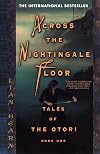
fugitive Co-winner (with this book) in 1985 of the World Fantasy Award (Novel).
14



Member Reviews
A wonderfully irreverent romp through an Ancient China that never was and back again several times, in the company of Number Ten Ox (surname Lu, personal name Yu; the tenth of his father's sons and rather strong) and Master Li (surname Li, personal name Kao; with a slight flaw in his character).
All the children of Number Ten Ox's village of Ku-fu in the valley of Cho have been struck down by a mysterious illness, and in desperation, he races to the Street of Eyes in Peking to find a wise man to help them, returning with Li Kao. And so begins a quest that will take them through (and under and over) China ...
... acquiring and disposing of fortunes and meeting on the way a host of memorable characters, such as the Key Rabbit, Pretty Ping, show more Cut-off-their-balls Wang and the Ancestress (concubine and then wife to the former Emperor) :
And what a glorious ending to the story.
It's a classic, and an award winner, and I was wondering what rating to give it (hoping that I'm not being influenced by everyone else's view). But, you know what? This book, unlike Master Li's character, doesn't have any flaws. (Other than it being out of print, and hard to get hold of)
5 stars.
Now, if only I can lay my hands on those sequels ... show less
All the children of Number Ten Ox's village of Ku-fu in the valley of Cho have been struck down by a mysterious illness, and in desperation, he races to the Street of Eyes in Peking to find a wise man to help them, returning with Li Kao. And so begins a quest that will take them through (and under and over) China ...
... acquiring and disposing of fortunes and meeting on the way a host of memorable characters, such as the Key Rabbit, Pretty Ping, show more Cut-off-their-balls Wang and the Ancestress (concubine and then wife to the former Emperor) :
In case anyone wonders why she used the phoenix symbols of an imperial consort rather than the dragon
symbols of an emperor, the answer is simple. The imperial dragons were embroidered all over a large silken pillow,
and the Ancestress was sitting on it.
And what a glorious ending to the story.
It's a classic, and an award winner, and I was wondering what rating to give it (hoping that I'm not being influenced by everyone else's view). But, you know what? This book, unlike Master Li's character, doesn't have any flaws. (Other than it being out of print, and hard to get hold of)
5 stars.
Now, if only I can lay my hands on those sequels ... show less
So I read this a long time ago, and I mostly didn't remember it. I finally found a copy, and on a re-read, I found an amazing book set in a fictional China. When all the children in Number Ten Ox's Village end up in a deep sleep, the village elders task him with finding a master scholar who can help, Unfortunately (or fortunately), Ten Ox finds Li Kao, a Master with a slight flaw. What the flaw is.... I'll leave it up to you to figure out.
Where the story really shines is the way mythology and common sense/trickery are merged together, into something that's half con-job story, half fairy tale.The fairy tale is weaved in gracefully, and I'm not entirely sure its a common tale in China, or if the author took it from a European story.
The show more story is incredibly well written, and is always solidly grounded. When magic does happen its surprising, but adds to the mystique of this world. show less
Where the story really shines is the way mythology and common sense/trickery are merged together, into something that's half con-job story, half fairy tale.The fairy tale is weaved in gracefully, and I'm not entirely sure its a common tale in China, or if the author took it from a European story.
The show more story is incredibly well written, and is always solidly grounded. When magic does happen its surprising, but adds to the mystique of this world. show less
What fun! A great puzzle, too. I didn't actually know it would be a mystery until the mystery happened. A young man, Number 10 Ox, sets out to find a cure for the children of his village who have all eaten poison. He seeks the services of a man named Li Kao who introduces himself, "My surname is Li, my personal name is Kao and there is a slight flaw in my character." My new favorite introduction, as good as "Hello, my name is Inigo Montoya, you killed my father, prepare to die." Together, they seek the cure for the children on an adventure which touches myth, fairy tales and lore, all with a Chinese tone.
At first, the anachronism's in the tale put me off, but by the second chapter I was so immersed I barely noticed them. I don't think show more the author was trying to recreate an authentic fairy tale from China, he was simply writing a good story which had to be set in China. Good it is, lovely in fact. There are horrific tortures and crimes mentioned, but in the style of fairy tales, so not devastating. There is earthy humor and passion, also sadness and joy. Many of the characters which the reader thinks are simply passing villains or unimportant end up having a story of their own, usually teaching that our actions of greed or selfishness have consequences we cannot imagine. These are not preached at the reader. Rather they are told gently and allowed to slowly sink in .
The fact that I could not guess where the story would take me gave additional reading pleasure. I will most certainly seek out more of this author's work. show less
At first, the anachronism's in the tale put me off, but by the second chapter I was so immersed I barely noticed them. I don't think show more the author was trying to recreate an authentic fairy tale from China, he was simply writing a good story which had to be set in China. Good it is, lovely in fact. There are horrific tortures and crimes mentioned, but in the style of fairy tales, so not devastating. There is earthy humor and passion, also sadness and joy. Many of the characters which the reader thinks are simply passing villains or unimportant end up having a story of their own, usually teaching that our actions of greed or selfishness have consequences we cannot imagine. These are not preached at the reader. Rather they are told gently and allowed to slowly sink in .
The fact that I could not guess where the story would take me gave additional reading pleasure. I will most certainly seek out more of this author's work. show less
“Nothing on the face of this earth–and I do mean nothing–is half so dangerous as a children’s story that happens to be real, and you and I are wandering blindfolded through a myth devised by a maniac.”
Bridge of Birds opens on a pastoral setting, a remote unicorn-shaped village in the peaceful valley of Cho in ancient China. Narrated by Yu Lu, also known as Number Ten Ox (the tenth of his father’s sons and as strong as an ox), it begins with a promising silk season coming to an abrupt end. A plague strikes the village’s youth and at the same time decimates the silk harvest. Number Ten Ox volunteers to run to Peking to bring a wise man back to the village. Unfortunately, all of the cosmopolitan wise men laugh at Ox and his show more mere five thousand copper, all except a hung-over Master Li. “Could this be the great Li Kao… who had been elevated to the highest rank of mandarin, and whose mighty head was now being used as a pillow for drunken flies?” After a brief restorative, Master Li takes pity on Ox’s plight and determines they need to make haste back to the village. Poor Number Ten Ox. He has never met the likes of Master Li, former first place scholar among all the scholars in China (a mere seventy-eight years ago). But he has a slight flaw in his character.
“The abbot paused to consider his words…’You are a good boy, and I would not like to meet the man who can surpass you in physical strength, but you know very little about this wicked world,’ the abbot said slowly. ‘To tell you the truth, I am not so worried about the damage to your body as I am about the damage to your soul. You see, you know nothing whatsoever about men like Master Li… His voice trailed off, and he groped for the proper words. Then he decided that it would take several years to prepare me properly.”
What follows is along the lines of traditional folk tales and orphan adventures; the quest to save the children of the village, Ox as the innocent youth and Li as the wise man/guide–except Master Li’s wisdom often comes from knowing the wicked ways of human nature and his own participation in debauchery. He also seems to have read all the great tales, as his solutions sound suspiciously familiar. One of the first chapters is how Master Li tricks a rich miser out of enough gold to finance their trip (and gets Ox a night with the young concubine to boot). Their third or fourth adventure is an exceptional revenge on a selfish princess, and another one a bloody mess. Hughart is able to manage the delicate balance humorous violence requires, perhaps by invoking our earliest folk tales, such as the one where Bluebeard keeps bodies in a locked room, or the version of Little Red where the huntsman hacks open the wolf to free her and grandma. Horrific, but so clearly symbolic, so clearly not real.
Their adventures take them throughout China, and from one frying pan to another. There’s ghosts, dungeons, a tricksy duo, an evil duke, a labyrinth, an enormously rich man, a tower, treasure, fond friends, a torture chamber, redemption, gods (and there’s even a little kissing). If it lacks the R.O.U.S., it makes up for it with an invisible hand.
“The supernatural can be very annoying until one finds the key that transforms it into science,’ he observed mildly. ‘I’m probably imagining complications that don’t exist. Come on, Ox, let’s go out and get killed.'”
Writing is lovely and contains a satisfactory balance of description and action. Gentle humor abounds. There’s a motif where Li and Ox are certain they are going to die and share hopes of what they will be reborn as on the Great Wheel. Li prefers the three-toed-sloth, Ox a cloud. Later, a third company member adds another angle to their bucolic reincarnation. But Master Li is clearly the cynic of the bunch, and his comments usually provide comic relief:
“‘Well, it’s an idea, and even a bad idea is better than none,’ said Master Li. ‘Error can point the way to truth, while empty-headedness can only lead to more empty-headedness or to a career in politics.'”
It’s silly, sweet, subversive and really clever. Ox’s youthful innocence is charming and believable, and while Master Li knows much, he is clearly puzzling his way through the quest as well. The end was a lovely synthesis, satisfying both emotionally and in plotting, both immediate and symbolic. Barry Hughart clearly has a flaw in his character. The world needs more Master Li.
“‘O great and might Master Li, pray impart to me the Secret of Wisdom!’ he bawled… To my great credit I never batted an eyelash. ‘Take a large bowl,’ I said. ‘Fill it with equal measure of fact, fantasy, history, mythology, science, superstition, logic, and lunacy. Darken the mixture with bitter tears, brighten it with howls of laughter, toss in three thousand years of civilization, bellow kan pei–which means ‘dry cup’–and drink to the dregs.’ Procopius stared at me. ‘And I will be wise,’ he asked. ‘Better,’ I said. ‘You will be Chinese.'” show less
Bridge of Birds opens on a pastoral setting, a remote unicorn-shaped village in the peaceful valley of Cho in ancient China. Narrated by Yu Lu, also known as Number Ten Ox (the tenth of his father’s sons and as strong as an ox), it begins with a promising silk season coming to an abrupt end. A plague strikes the village’s youth and at the same time decimates the silk harvest. Number Ten Ox volunteers to run to Peking to bring a wise man back to the village. Unfortunately, all of the cosmopolitan wise men laugh at Ox and his show more mere five thousand copper, all except a hung-over Master Li. “Could this be the great Li Kao… who had been elevated to the highest rank of mandarin, and whose mighty head was now being used as a pillow for drunken flies?” After a brief restorative, Master Li takes pity on Ox’s plight and determines they need to make haste back to the village. Poor Number Ten Ox. He has never met the likes of Master Li, former first place scholar among all the scholars in China (a mere seventy-eight years ago). But he has a slight flaw in his character.
“The abbot paused to consider his words…’You are a good boy, and I would not like to meet the man who can surpass you in physical strength, but you know very little about this wicked world,’ the abbot said slowly. ‘To tell you the truth, I am not so worried about the damage to your body as I am about the damage to your soul. You see, you know nothing whatsoever about men like Master Li… His voice trailed off, and he groped for the proper words. Then he decided that it would take several years to prepare me properly.”
What follows is along the lines of traditional folk tales and orphan adventures; the quest to save the children of the village, Ox as the innocent youth and Li as the wise man/guide–except Master Li’s wisdom often comes from knowing the wicked ways of human nature and his own participation in debauchery. He also seems to have read all the great tales, as his solutions sound suspiciously familiar. One of the first chapters is how Master Li tricks a rich miser out of enough gold to finance their trip (and gets Ox a night with the young concubine to boot). Their third or fourth adventure is an exceptional revenge on a selfish princess, and another one a bloody mess. Hughart is able to manage the delicate balance humorous violence requires, perhaps by invoking our earliest folk tales, such as the one where Bluebeard keeps bodies in a locked room, or the version of Little Red where the huntsman hacks open the wolf to free her and grandma. Horrific, but so clearly symbolic, so clearly not real.
Their adventures take them throughout China, and from one frying pan to another. There’s ghosts, dungeons, a tricksy duo, an evil duke, a labyrinth, an enormously rich man, a tower, treasure, fond friends, a torture chamber, redemption, gods (and there’s even a little kissing). If it lacks the R.O.U.S., it makes up for it with an invisible hand.
“The supernatural can be very annoying until one finds the key that transforms it into science,’ he observed mildly. ‘I’m probably imagining complications that don’t exist. Come on, Ox, let’s go out and get killed.'”
Writing is lovely and contains a satisfactory balance of description and action. Gentle humor abounds. There’s a motif where Li and Ox are certain they are going to die and share hopes of what they will be reborn as on the Great Wheel. Li prefers the three-toed-sloth, Ox a cloud. Later, a third company member adds another angle to their bucolic reincarnation. But Master Li is clearly the cynic of the bunch, and his comments usually provide comic relief:
“‘Well, it’s an idea, and even a bad idea is better than none,’ said Master Li. ‘Error can point the way to truth, while empty-headedness can only lead to more empty-headedness or to a career in politics.'”
It’s silly, sweet, subversive and really clever. Ox’s youthful innocence is charming and believable, and while Master Li knows much, he is clearly puzzling his way through the quest as well. The end was a lovely synthesis, satisfying both emotionally and in plotting, both immediate and symbolic. Barry Hughart clearly has a flaw in his character. The world needs more Master Li.
“‘O great and might Master Li, pray impart to me the Secret of Wisdom!’ he bawled… To my great credit I never batted an eyelash. ‘Take a large bowl,’ I said. ‘Fill it with equal measure of fact, fantasy, history, mythology, science, superstition, logic, and lunacy. Darken the mixture with bitter tears, brighten it with howls of laughter, toss in three thousand years of civilization, bellow kan pei–which means ‘dry cup’–and drink to the dregs.’ Procopius stared at me. ‘And I will be wise,’ he asked. ‘Better,’ I said. ‘You will be Chinese.'” show less
I'd been hearing good things about the Master Li and Number Ten Ox series for year, and all I can say is that I wish I'd listened to them sooner. This series is an amazing picaresque novel about a crafty and wizened con-artist/detective and his client, a strong and pure-hearted villager, as they wander through mythic China getting into trouble and setting things to right. The setting, the word-play, the fully-realized cleverness of every aspect of this novel make it as masterpiece of modern fantasy.
"It's yours for a song," said Master Li. "In this case a song means a large purse of fake gold coins, two elegant suits of clothes, the temporary use of a palatial palanquin and suitably attired bearers, a cart of garbage, and a goat."
One-Eyed Wong did some mental addition.
"No goat."
And to think I had never even heard of this book until a couple of weeks ago! Such a wonderful book as this is a true joy to find. Bridge of Birds is simultaneously wry, wise, earthy, hilarious, subversive, and full of human warmth; it would have been on my favorites list for ages had I known to read it years ago. Fantasy, fable, folk tale, ripping yarn, or what have you: it's all these and a bit more. If anything, I was struck by the acts and thoughts of show more kindness throughout. It is, in a way, about working to find joy, after all.
Read it if you can. show less
One-Eyed Wong did some mental addition.
"No goat."
And to think I had never even heard of this book until a couple of weeks ago! Such a wonderful book as this is a true joy to find. Bridge of Birds is simultaneously wry, wise, earthy, hilarious, subversive, and full of human warmth; it would have been on my favorites list for ages had I known to read it years ago. Fantasy, fable, folk tale, ripping yarn, or what have you: it's all these and a bit more. If anything, I was struck by the acts and thoughts of show more kindness throughout. It is, in a way, about working to find joy, after all.
Read it if you can. show less
I do wonder about this from a cultural appropriation perspective... but from a writing perspective it is *so* tightly plotted even when it seems to be purely picaresque, it's an absolute masterpiece.
Members
- Recently Added By
Published Reviews
ThingScore 100
"This is a very funny book, and in Number Ten Ox we have a narrator whose ingenious outlook lends reality to the most fantastic of adventures..."
added by octopedingenue
Lists

Best Fantasy Novels
821 works; 361 members

Top-Rated Books on LibraryThing
272 works; 117 members

Best Fiction Set in China
43 works; 27 members

Top Five Books of 2013
1,562 works; 721 members

Best Books About Journeys and Quests
117 works; 30 members

Pleasant Surprises: Books That Exceeded Our Expectations
418 works; 143 members

20th Century Literature
1,161 works; 55 members

Books tagged favorites
390 works; 30 members

Diversity in Fantasy and Science Fiction
219 works; 33 members

Myth (Reuse and Retelling)
188 works; 24 members

Genre Benders: Comic Fantasy
97 works; 16 members

Historical Fantasy
93 works; 14 members

made me cackle as I read (fiction)
20 works; 3 members

once upon a time ~ ancient world
46 works; 7 members
Animals in the Title
498 works; 11 members
Favourite Discoveries Through LT
12 works; 2 members

SantaThing 2014 Gifts
299 works; 17 members
Speculative Fiction to Read
706 works; 32 members

Books Read in 2016
4,666 works; 199 members

Books Read in 2020
4,379 works; 123 members
Books Read in 2015
3,299 works; 129 members
Modern Fantasy Novels based on Non-Western Mythology or Folklore
24 works; 7 members

SHOULD Read Books!
354 works; 9 members

Our Favorite Comfort Reads
334 works; 200 members
Books We Love to Reread
688 works; 297 members

Books We Discovered On LibraryThing
530 works; 130 members

Favorite Fairy Tales
269 works; 103 members

KayStJ's to-read list
1,616 works; 11 members

Books I may read for February 2012 TIOLI
23 works; 5 members

Global Reads: Books Set in East Asia
139 works; 12 members

Books discovered on LibraryThing
256 works; 36 members

The Five Books That Represent Us
391 works; 149 members

Slipstream or Interstitial Fiction
160 works; 19 members
Author Information

4 Works 5,098 Members
Some Editions
Awards and Honors
Awards
Series

Belongs to Publisher Series
Work Relationships
Is contained in
Common Knowledge
- Canonical title
- Bridge of Birds
- Original title
- Bridge of birds : a novel of an ancient China that never was
- Original publication date
- 1984
- People/Characters
- Number Ten Ox; Li Kao; Lu Yu; Duke of Ch'in; the Ancestress; Lotus Cloud (show all 11); Henpecked Ho; the Key Rabbit; Ma the Grub; the Old Man of the Mountain; Miser Shen
- Important places
- China; Ku-fu, China
- Important events
- Tang Dynasty (618 | 907)
- Epigraph
- Caveat Oriens
prolepsis (prō lep' sis), n., pl. -ses (-sēz). 1. Rhet. the anticipation of possible objections in order to answer them in advance. 2. the assigni... (show all)ng of a person, event, etc. to a period earlier than the actual one.
- The Random House Dictionary of the English Language
Caveat Occidens
Chen. To stand still. To gallop at full speed.
Wan. A small mouth. Some say a large mouth.
Ch'he. Devoid of intelligence, deficiency of wit, silly, idiotic. Als... (show all)o used for borrowing and returning books.
Pee. A dog under the table.
A dog with short legs.
A short-headed dog.
Maou Tsaou. A scholar not succeeding and giving himself over to liquor.
- The Chinese Unicorn, edited, from Chinese-English dictionaries, by Thomas Rowe; printed for Robert Gilkey (private circulation). - Dedication
- For Ann and Pete
- First words
- I shall clasp my hands together and bow to the corners of the world.
- Quotations
- My surname is Lu and my personal name is Yu, but I am not to be confused with the eminent author of The Classic of Tea.
"Take a large bowl, fill it with equal measures of fact, fantasy, history, mythology, science, superstition, logic and lunacy. Darken the mixture with bitter tears, brighten it with howls of laughter, toss in three thousand y... (show all)ears of civilisation, bellow 'kan pei' - which means 'dry cup' - and drink to the dregs."
Procopius stared at me. "And I will be wise?" he asked.
"Better, you will be Chinese."
"My surname is Li and my personal name is Kao, and there is a slight flaw in my character."
"Immortality is only for the gods," he whispered. "I wonder how they can stand it." - Last words
- (Click to show. Warning: May contain spoilers.)Farewell.
- Blurbers
- McCaffrey, Anne
- Original language
- English
- Disambiguation notice
- This is not to be combined with BRIDGE OF BIRDS - ORIGINAL DRAFT as they are both radically different works.
Do not combine this with BRIDGE OF BIRDS - A TALE OF AN ANCIENT CHINA THAT NEVER WAS as they are two radically different works. The Original Draft of Bridge of Birds has been published to accompany the limited edition (200 si... (show all)gned and numbered copies; Subterranean Press) of Master Li and Number Ten Ox and is not available for sale separately.
Classifications
- Genres
- Fantasy, Fiction and Literature, General Fiction, Historical Fiction
- DDC/MDS
- 813.54 — Literature & rhetoric American literature in English American fiction in English 1900-1999 1945-1999
- LCC
- PS3558 .U347 .B7 — Language and Literature American literature American literature Individual authors 1961-
- BISAC
Statistics
- Members
- 2,695
- Popularity
- 6,893
- Reviews
- 101
- Rating
- (4.36)
- Languages
- 9 — Bulgarian, English, Estonian, French, German, Hebrew, Japanese, Russian, Spanish
- Media
- Paper
- ISBNs
- 17
- ASINs
- 5